How I actually spent 72 hours in Siem Reap
I had exactly three days between other obligations and decided to see how much of Siem Reap I could actually do properly, rather than just checklist through. This isn’t a plan-ahead itinerary — for that, the 3-day itinerary is the more useful, structured version. This is what I actually did, including the parts I’d change.
Day one: landing, the pass, and an afternoon I regret rushing
My flight landed at Siem Reap–Angkor International Airport (SAI) at 11 AM, and I underestimated the 40-50 km, 45-60 minute drive into town — a habit left over from the old in-town airport that closed in 2023. By the time I’d checked into my guesthouse near Wat Bo, it was early afternoon, and I made the mistake of trying to squeeze in Angkor Wat the same day, arriving hot, jet-lagged, and rushed. I bought the 3-day Angkor Pass ($62) at the ticket checkpoint on the way in — worth doing on arrival day if your flight timing allows it, since it saves a dedicated stop later. But I’d tell my past self to spend day one on the town instead: Psar Chaa, a proper meal, an early night. Angkor deserves fresher legs than jet-lagged, rushed ones.
If you are landing at SAI yourself, the airport guide and the post on what changed with the new airport cover the transfer options, so you can sort out how you get into town before you leave the terminal. For the pass itself, the Angkor Pass tickets guide explains where to buy it, and official vs resellers is worth a read before you hand money to anyone. A quiet first evening also leaves room for Old Market and Psar Chaa, and a first dinner from the best restaurants list is a gentle way to start. Getting around the town on that first day is easy enough, and the getting around guide covers the basics.
Day two: the actual temple day, done right
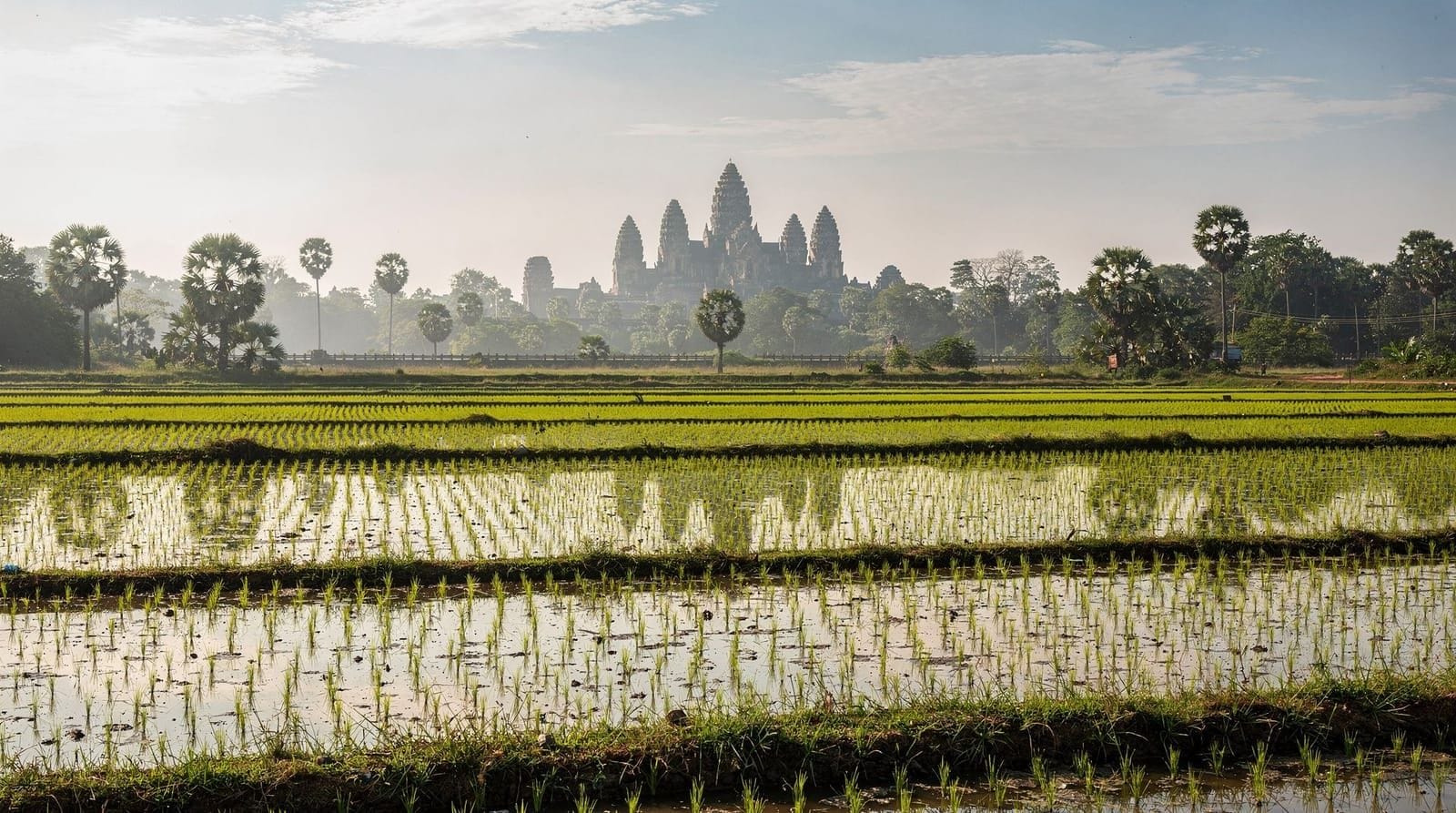
This is the day I’d point to as the template. Up at 4:30 AM, at the reflecting pond by 5:00 for sunrise — crowded, as expected, but genuinely worth it in the dry-season month I was visiting. From there, the rest of the Small Circuit: Angkor Thom’s Bayon with its stone faces, the Elephant Terrace, then Ta Prohm before the midday heat made the jungle-swallowed ruins feel more like an endurance test than a photo opportunity. I broke for a long lunch and a real rest back at the guesthouse between roughly 11 AM and 3 PM — the heat during those hours isn’t worth fighting through, and nearly everyone with a flexible schedule ends up adopting this rhythm within a day or two anyway.
Book the same sunrise-to-Small-Circuit tuk-tuk routeA few things made that day smoother. Dress properly for the temples before you leave the guesthouse — the Angkor Wat dress code and the temple etiquette guide are short reads. The Angkor Wat sunrise guide and the sunrise reality check are honest about the crowds, and avoiding the crowds has ideas for the rest of the morning. If you would rather have someone explain the stonework, going with a guide or without lays out the trade-off, and a guided visit such as a guided half-day around Ta Prohm and its neighbouring temple is one way to do it. For the places themselves, see Angkor Thom and the Bayon, Ta Prohm and the Small Circuit, and compare small vs grand circuit if you are weighing which loop to do.
Late afternoon, I went back out for Banteay Srei — a genuine detour from the standard Small Circuit, about 40 minutes each way, but the pink sandstone carvings there are sharper and more intricate than almost anything on the main circuit, and it’s worth the extra driving time if you have it. The Banteay Srei page explains what to look for once you are there.
Day three: floating village and slowing down
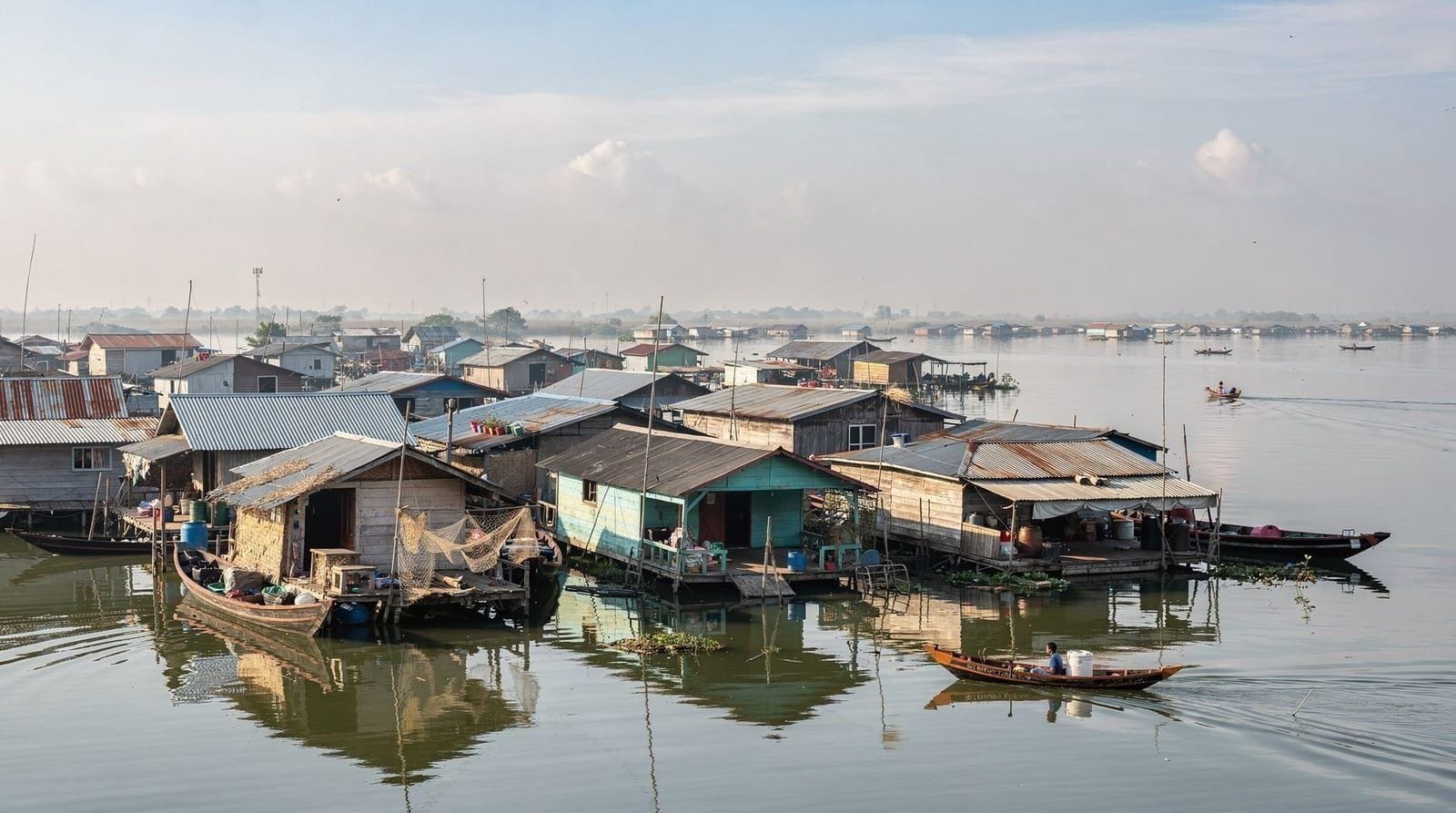
With one temple day already behind me, day three went to Kompong Phluk rather than a second round of ruins. I’d read enough by then to skip Chong Kneas, the closer but more commercialized floating village near town, in favor of the extra drive to Kompong Phluk — a genuine stilt-and-flooded-forest village rather than a boat-dock operation built mainly around souvenir stops. The floating villages guide explains the trade-offs between the three main options if you’re choosing.
See the Kompong Phluk half-day boat tourThe afternoon went to the Old Market and a cooking class rather than another temple — by this point in the trip, the temples themselves needed a break more than my legs did, and a change of activity type made the third day feel additive rather than like more of the same. If a class appeals, the cooking classes guide compares the options, and the street food guide and Khmer cuisine guide help you eat well around it. The Kompong Phluk page and which floating village to visit are useful if you are still choosing between villages, and the first-timer’s overview is a good companion for the rest of the trip.
What worked
Splitting the Small Circuit and Banteay Srei into one focused day rather than spreading it thin across two half-days. Building in the midday rest block deliberately instead of fighting the heat. And choosing one non-temple day-three activity instead of trying to cram in a second temple circuit just because the pass allowed it.
What I’d change
Not visiting Angkor Wat rushed on arrival afternoon — that hour would have been better spent resting and starting temple day fresh the next morning. I’d also, with the benefit of hindsight, have booked the 3-day pass explicitly to include a fourth loose day rather than treating 72 hours as a hard boundary — the Angkor Pass math post covers this trade-off if your schedule has any flex at all.
How this compares to the standard 3-day plan
The structured 3-day itinerary generally recommends Small Circuit on day one, Grand Circuit or an outlier temple on day two, and a non-temple day on day three — a cleaner split than what I actually did, since I compressed Small Circuit and Banteay Srei together and skipped Grand Circuit entirely. If I’d had a true 72 hours without a jet-lagged arrival afternoon eating into it, I’d lean toward that more even structure. Real trips rarely run as cleanly as the planned version, and that’s fine — the point of both versions existing is that you can adapt from whichever comes closer to your actual constraints.
Frequently asked questions about a 72-hour Siem Reap trip
Is 72 hours enough time in Siem Reap?
It’s workable for the Small Circuit, one additional temple or outlier stop, and one non-temple activity like a floating village or cooking class — see how many days in Siem Reap for how this scales with more time.
Should I visit temples on arrival day?
Generally no, unless your flight lands early morning. A jet-lagged, rushed first temple visit tends to be worse than starting fresh the next day.
Which floating village fits best into a short trip?
Kompong Phluk offers the more authentic experience for a bit more driving time than Chong Kneas, which is closer but more commercialized. See the floating villages guide for the full comparison.
Is the 3-day Angkor Pass the right choice for a 72-hour trip?
Yes, in most cases — it covers a realistic two temple days within the trip without paying for unused days, and the 10-day usage window gives some scheduling flexibility if plans shift.
More tours on Viator
Top-rated experiences with verified reviews, bookable on Viator (a Tripadvisor company).