Old Market and Pub Street
Siem Reap's Old Market and Pub Street: what's there, honest prices, night market comparison and the tourist-trap patterns to know.
Siem Reap: Private City Tour by Tuk-Tuk
Quick facts
- Location
- Central Siem Reap, walkable from most Old Town hotels
- What's there
- Old Market (Psar Chas) for shopping, Pub Street (Street 8) for bars/nightlife
- Best time
- Market: morning for produce/less heat; Pub Street: after 8:00 PM
- Money note
- Bargaining expected at the market, fixed prices at most Pub Street bars/restaurants
- Nearby
- Angkor Night Market, a short walk away
What most visitors actually experience here in practice
For the majority of visitors, this area functions less as a single “sight” to check off and more as a recurring backdrop across a whole trip — the place you return to for lunch between temple visits, the spot you meet a driver, the strip you end up at most evenings almost by default given how centrally located it is relative to most Old Town accommodation. That repeated, low-stakes familiarity is part of the area’s genuine value: unlike a temple visit that happens once, Old Market and Pub Street tend to get better the more times you pass through, as you develop favorite stalls, a preferred restaurant, a bar you return to rather than treating every visit as a first-time exploration.
The tourist core of Siem Reap, in two parts
Old Market (Psar Chas in Khmer) and Pub Street are, functionally, two adjacent zones that together form central Siem Reap’s tourist core — the highest concentration of restaurants, bars, souvenir stalls and budget-to-mid-range hotels in the city, and the natural walking-distance base for most first-time visitors. They’re distinct experiences that happen to sit next to each other: Old Market is a covered, daytime shopping market; Pub Street (officially Street 8, though almost nobody calls it that) is a pedestrianized strip that comes alive after dark.
Old Market — what’s actually worth buying, and what isn’t
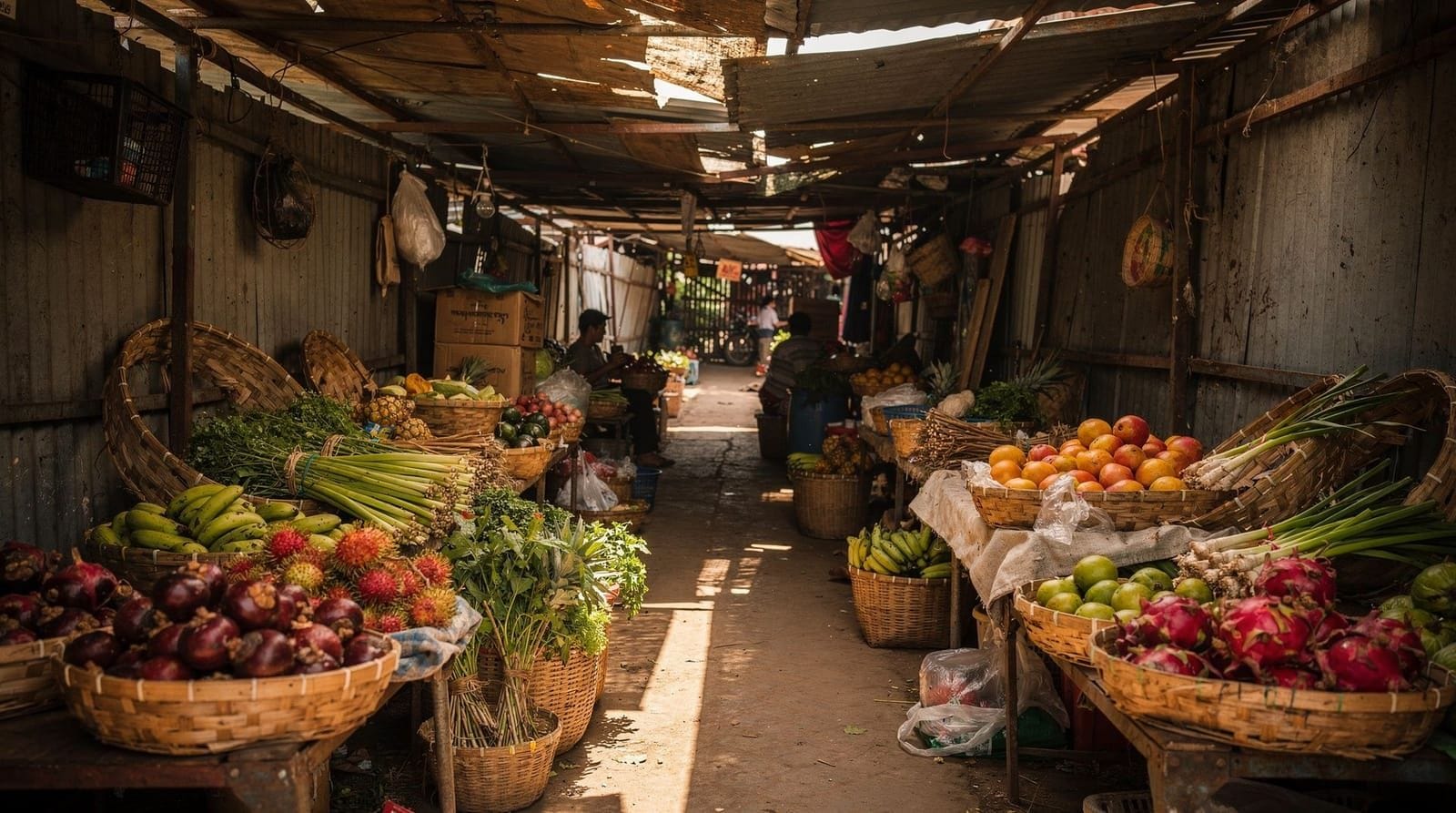
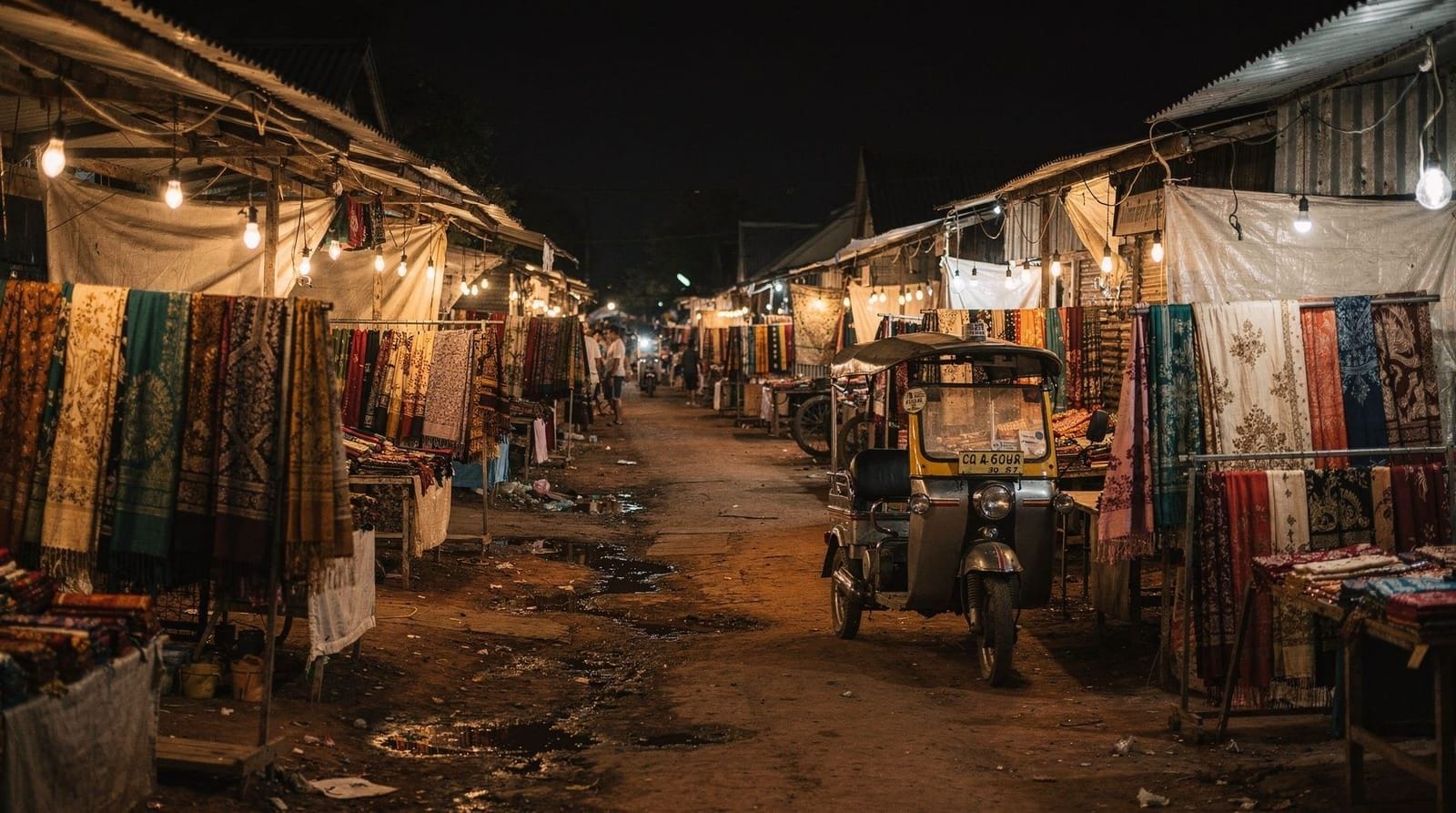
Old Market is a genuine working market — part of it sells fresh produce, meat and fish primarily to locals, while the sections closer to the tourist entrances shift toward textiles, silk scarves, wood carvings, spices, and the usual souvenir staples (elephant pants, magnets, keychains). Prices are not fixed; bargaining is expected and, for tourist-facing goods specifically, initial asking prices are often 2-3x what a reasonable final price should be. A rough rule many repeat visitors use: counter at roughly 40-50% of the initial ask and negotiate from there, and be willing to walk away — vendors often call you back with a better price rather than lose the sale entirely.
The produce and food sections toward the market’s interior are less visited by tourists and give a more genuine sense of daily Siem Reap life, worth a look even if you’re not buying anything. Morning visits (before 10:00 AM) are cooler and less crowded than midday, when the covered market’s heat and humidity build up noticeably.
Pub Street — honest expectations
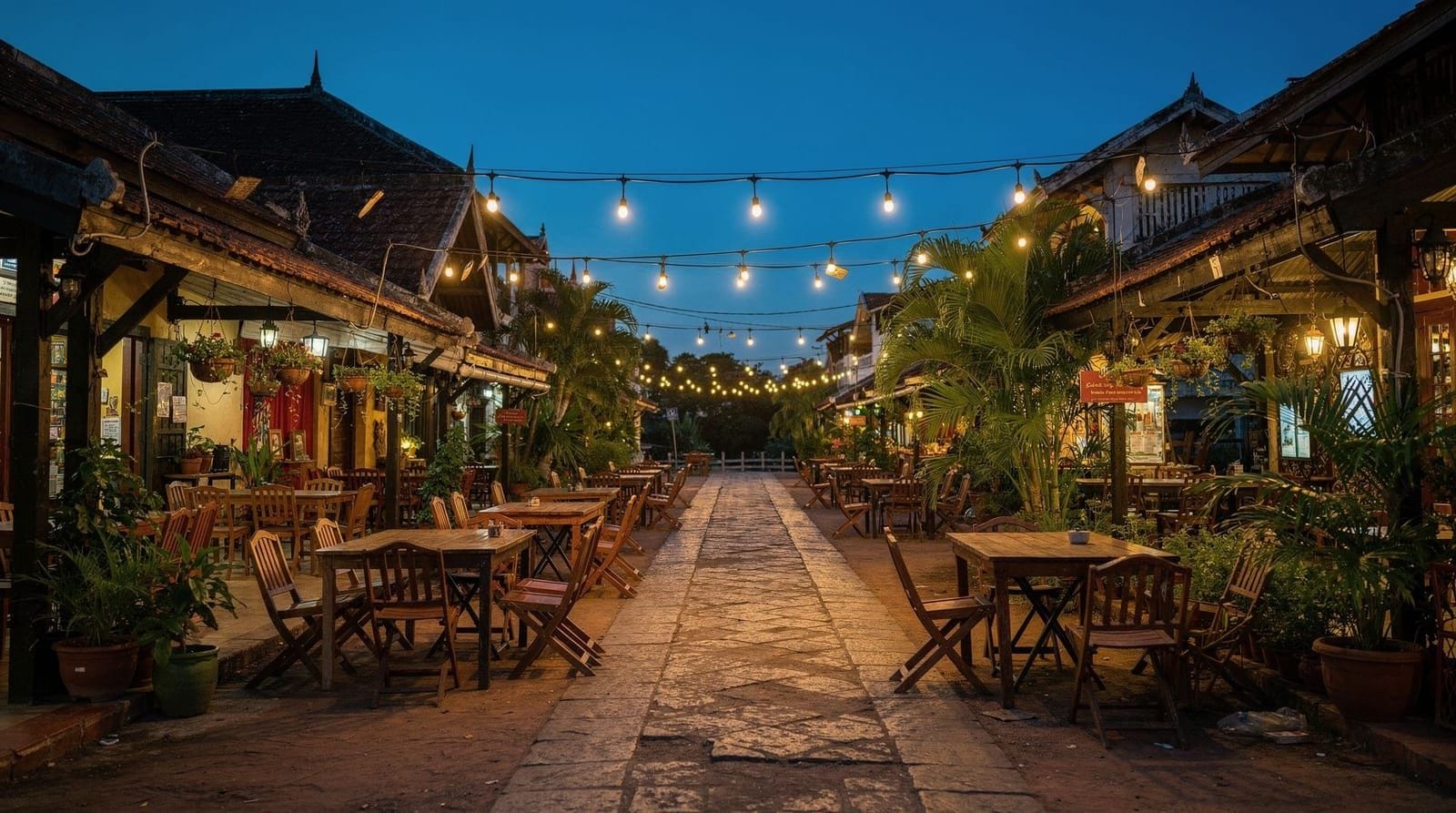
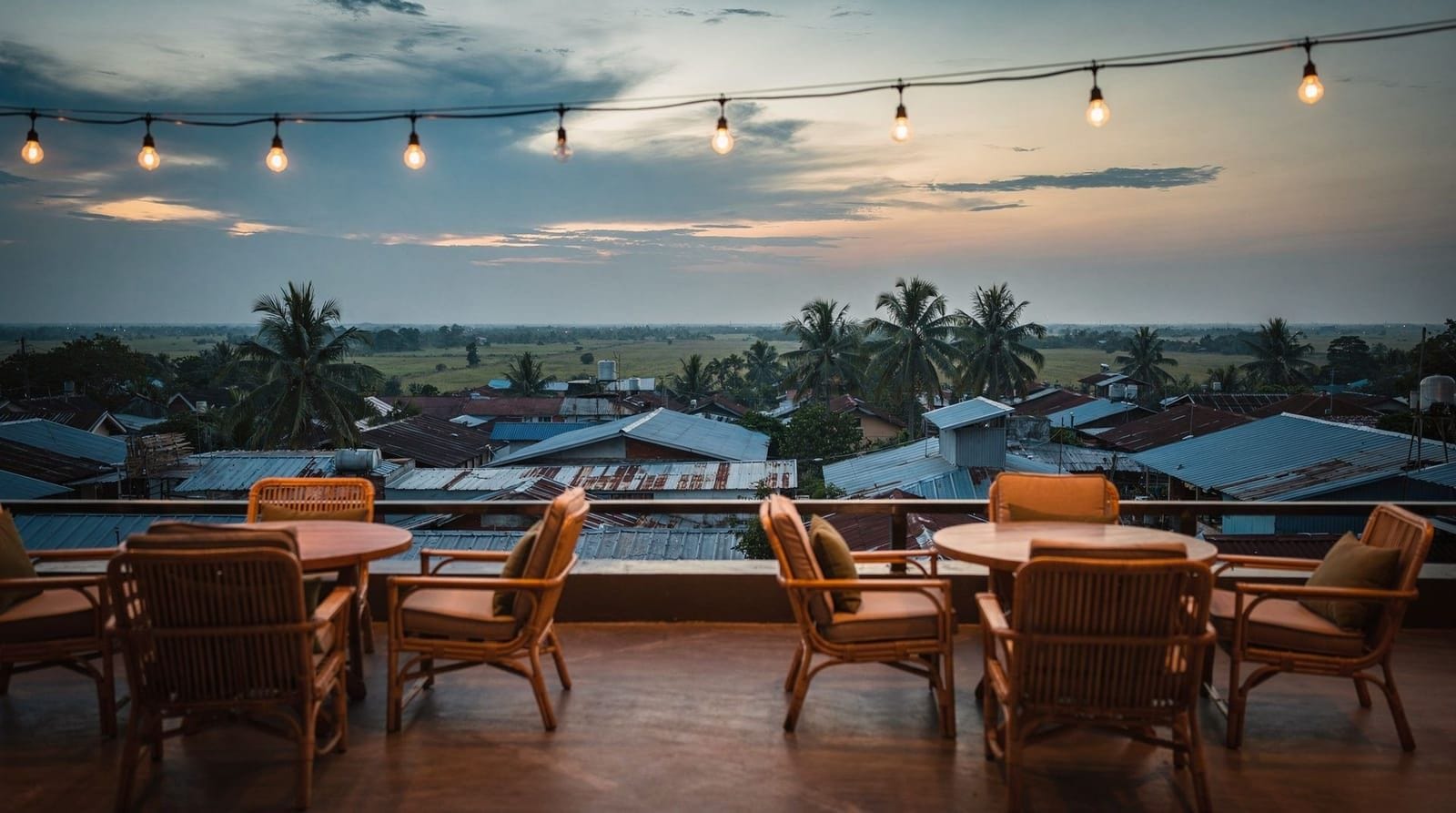
Pub Street is a short pedestrianized strip lined with bars, restaurants and a few clubs, most lively from around 8:00 PM onward, with happy-hour deals common in the earlier evening. It’s unapologetically a tourist strip — don’t expect the most authentic Khmer food or the best prices in the city here, since both are readily available a short walk or tuk-tuk ride away in less central areas (see our Wat Bo and Sala Kamreuk guide for a quieter, better-value alternative base). What Pub Street does deliver reliably: a walkable concentration of options, easy for solo travelers or groups to find something for everyone without much planning, and genuinely good people-watching.
Prices at Pub Street bars and restaurants are generally fixed and posted, unlike the market — a $2-4 draft beer and $4-8 mains are typical, higher than elsewhere in town but not egregious by regional tourist-strip standards. The Angkor Night Market, a short walk from Pub Street, offers a second round of souvenir shopping in the evening with a different vendor mix from Old Market.
A short history of the area
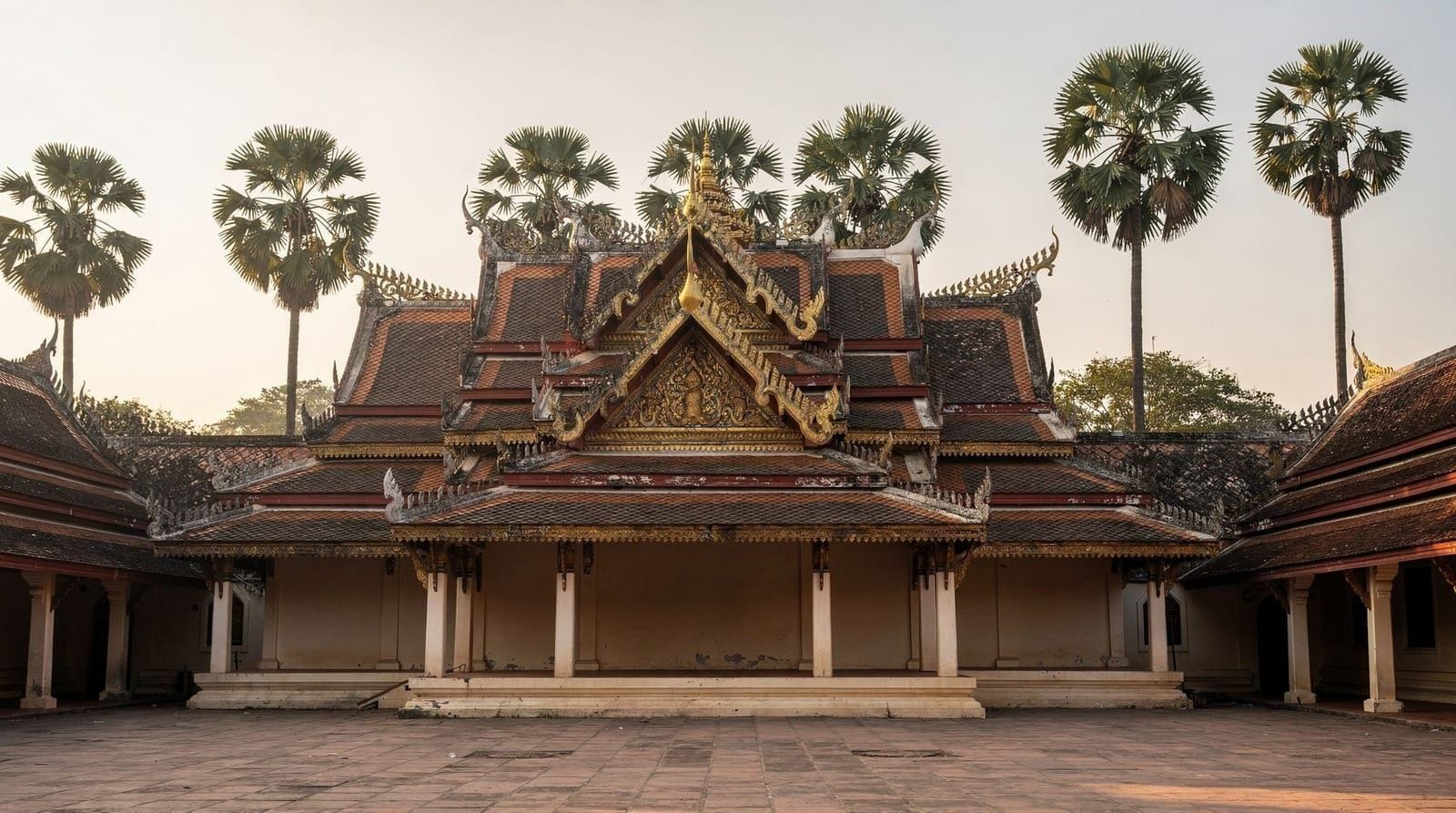
Old Market’s core structure and the surrounding grid of streets date to the French colonial period in the early-to-mid 20th century, when Siem Reap developed as a small administrative and gateway town for visitors to the Angkor temples, then a far more modest tourist draw than today. The market building itself and the surrounding shophouse architecture reflect this era’s building style — a genuine, if modest, piece of colonial-period urban history rather than a purpose-built tourist construction.
Pub Street’s transformation into a dedicated nightlife strip is much more recent, largely a product of Siem Reap’s tourism boom from the 2000s onward as visitor numbers to Angkor grew dramatically following Cambodia’s post-conflict stabilization — meaning the “old town” character of the surrounding blocks and the specifically tourist-oriented Pub Street function are really two different eras layered on top of each other, not one continuous historical development.
A walking loop that covers both areas well
For visitors wanting a single self-guided route through the area, a reasonable loop starts at Old Market’s main covered section (best in the morning), continues through the surrounding streets of galleries, spas and boutique shops that have grown up around the market’s tourist-facing edge, crosses toward the Siem Reap River for a look at the promenade (a pleasant, shaded walk, particularly appealing in the late afternoon), and finishes at Pub Street for the evening.
This whole loop is comfortably walkable in under 30 minutes end-to-end without stops, meaning the actual time commitment is entirely a function of how long you linger at each stage rather than the distances involved — genuinely one of the more compact, walkable tourist zones in Southeast Asia relative to what it packs in.
What’s overrated, what’s underrated
Pub Street itself is fairly accurately rated — it’s a tourist strip and mostly delivers what it promises, without pretending to be more authentic than it is. What’s genuinely underrated is Old Market’s produce and daily-life section, which most visitors walk straight past on their way to the souvenir stalls. For nightlife specifically, some of the better bars in Siem Reap now sit just off Pub Street proper rather than on the main strip itself — see our nightlife guide for specific recommendations beyond the obvious central strip.
Common patterns to watch for
Tuk-tuk drivers waiting outside Old Market and along Pub Street sometimes quote inflated fares for onward trips, banking on tourists not knowing standard rates — see our tuk-tuk pricing guide for what a fair price actually looks like. Currency exchange counters clustered near this area often offer worse rates than banks or ATMs; if you need to change money, compare a couple of rates rather than using the first counter you see. Neither pattern is unique to Old Market/Pub Street — they’re general Siem Reap tourist-zone patterns — but the concentration of both here means it’s worth extra awareness in this specific area. Our tourist traps guide covers this in more depth.
Food beyond Pub Street’s tourist-strip options
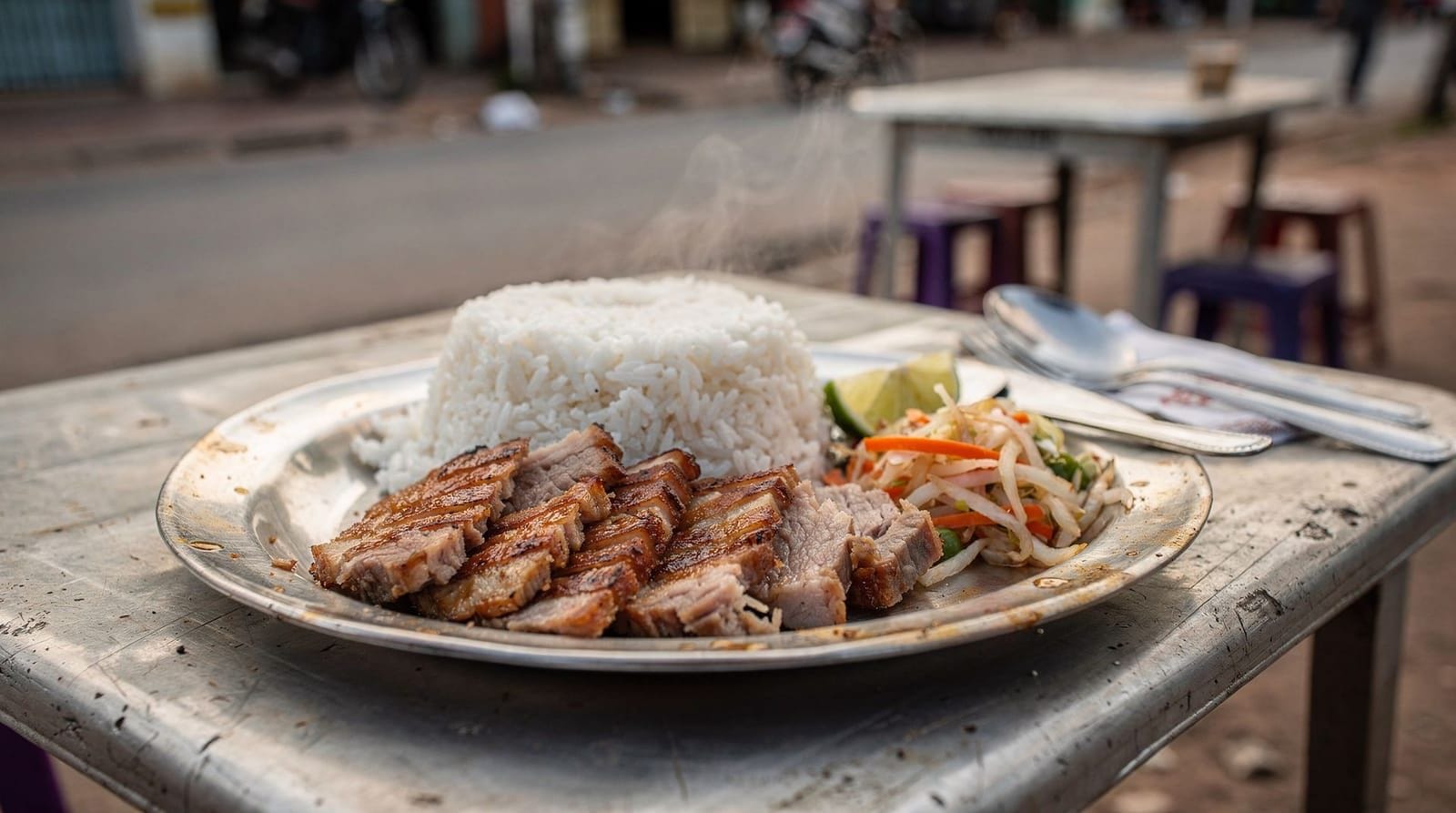
While Pub Street itself leans toward broadly international, tourist-friendly menus, the streets immediately surrounding it — within a five-minute walk in almost any direction — hold a noticeably wider range of genuinely good Khmer restaurants, from simple noodle and rice stalls to more polished sit-down establishments serving amok (steamed fish curry in banana leaf), lok lak (stir-fried marinated beef) and other Khmer staples at prices well below Pub Street’s tourist-strip markup.
Visitors who eat every meal directly on Pub Street itself are, by most local and long-stay expat accounts, missing the better and cheaper food available a short walk away — worth factoring in if food quality and value matter more to you than the convenience of not having to walk anywhere after dark. See our best restaurants guide and street food guide for specific recommendations in this broader area.
How to combine it with the rest of your day
Old Market and Pub Street work well as a midday break between temple visits — many visitors return from a morning Small Circuit trip, have lunch and browse the market, then head back out to Pub Street in the evening after resting. If you want a guided introduction to local food culture rather than navigating the market alone, our hands-on cooking class with a market tour and evening market tour and cooking class both start with a guided walk through a local market (context on ingredients most visitors wouldn’t otherwise get) before a cooking session.
The Khmer cooking class and market tour is a similar option worth comparing on schedule and price. For an evening focused specifically on food rather than shopping, the guided street food tour by tuk-tuk covers stalls and stops most visitors wouldn’t find independently — see our street food guide for the self-guided version of the same idea.
Accessibility
Old Market’s interior aisles are narrow and can get crowded, with uneven flooring in places and limited wheelchair access through the covered stalls — the outer, more open sections nearer the street are easier to navigate. Pub Street itself is a flat, pedestrianized strip, generally easy walking, though the crowd density on busy evenings can make it awkward for wheelchair users or anyone needing more space. The riverside promenade nearby is the most consistently accessible option in this immediate area — flat, paved, and rarely as crowded as either the market or Pub Street.
Practical notes
Cash (small USD bills) is more useful than cards at most market stalls; card acceptance is more common at Pub Street restaurants and bars but not universal. Bring small bills specifically — vendors and tuk-tuk drivers routinely can’t break large notes, and damaged or heavily worn USD bills are sometimes refused entirely, a genuine Cambodia-wide quirk worth knowing before you land.
See our tuk-tuk and money scams guide for more on cash logistics. ATMs are reasonably plentiful in this immediate area, though most charge a foreign-transaction fee on top of whatever your home bank charges — withdrawing larger amounts less frequently generally works out cheaper than several small withdrawals over the course of a trip.
Frequently asked questions about Old Market and Pub Street
Is bargaining expected at Old Market?
Yes, for tourist-facing goods (textiles, souvenirs, carvings) — initial asking prices are often inflated, and countering at roughly 40-50% of the first quote is a reasonable starting point. Food-section prices for locals are generally not negotiated.
Is Pub Street worth visiting, or is it just a tourist trap?
It’s a genuine tourist strip, not pretending otherwise, and it delivers reliably on convenience and variety. It’s not the place for the most authentic or cheapest food in Siem Reap, but it’s a reasonable, low-effort evening option, especially for a first night in town.
What’s the difference between Old Market and the Angkor Night Market?
Old Market operates primarily during the day and includes a genuine local produce section; the Angkor Night Market, a short walk from Pub Street, is an evening-only market with a different vendor mix, more purely tourist-oriented.
Are prices fixed at Pub Street restaurants and bars?
Generally yes, and posted — unlike the market, where bargaining is the norm.
Is it safe to walk around Old Market and Pub Street at night?
Yes, this is one of the best-lit, most heavily trafficked areas in Siem Reap at night, and it’s generally considered safe for walking, including for solo travelers.
Where should I stay if I want to be near Old Market and Pub Street?
Most Old Town hotels and guesthouses are within easy walking distance. See our where to stay guide for a fuller neighborhood comparison, including quieter nearby alternatives like Wat Bo.
How old is Old Market, and is the building itself historic?
The market building and much of the surrounding shophouse architecture date to the French colonial period in the early-to-mid 20th century, when Siem Reap was a modest administrative and gateway town rather than the major tourism hub it is today.
Is Pub Street a recent development, or has it always been Siem Reap’s nightlife center?
It’s a comparatively recent phenomenon, largely developing from the 2000s onward as tourist numbers to Angkor grew significantly following Cambodia’s post-conflict stabilization. The surrounding streets have a longer colonial-era history than Pub Street’s specific nightlife function.
Can I walk from Old Market to Pub Street, or do I need transport?
They’re directly adjacent — a couple of minutes’ walk at most, part of the same compact central tourist zone.
Is there a quieter alternative to Pub Street for an evening out?
Yes — see our nightlife guide for options just off the main strip, and consider Wat Bo for a calmer evening base with good cafés and restaurants at a step removed from the busiest tourist crowds.
What’s the Siem Reap River promenade near Old Market like?
A shaded, pleasant walking path along the river, a short walk from both Old Market and Pub Street — a good option for a quieter break between the market’s daytime bustle and Pub Street’s evening activity, particularly appealing in late afternoon light.
Is Old Market wheelchair accessible?
Only partly — the outer, more open sections near the street entrances are manageable, but the interior aisles are narrow, crowded and unevenly floored. The nearby riverside promenade is a more consistently accessible option if mobility is a concern.
Can I use a card instead of cash at Old Market and Pub Street?
Cards work at most Pub Street bars and restaurants but are far less reliable at Old Market stalls, where cash — ideally small USD bills in good condition — is the practical default. Carry enough small cash for a day of market browsing even if you plan to card-pay for dinner.
Top experiences
Bookable activities with verified prices and instant confirmation on GetYourGuide.

Siem Reap: Private City Tour by Tuk-Tuk

Siem Reap: Khmer Cooking Class at a Local's Home
Siem Reap: Evening Market Tour and Cooking Class
Siem Reap: Khmer Cooking Class and Market Tour in the Angkor Area

Siem Reap: Guided Authentic Street Food Tour
More tours on Viator
Top-rated experiences with verified reviews, bookable on Viator (a Tripadvisor company).