A guide to Khmer cuisine in Siem Reap
Siem Reap: Khmer Traditional Cooking Class
What is Khmer food, and how is it different from Thai or Vietnamese food?
Khmer food is milder and less chili-forward than Thai food, built on prahok (fermented fish paste), freshwater fish, and kroeung (a lemongrass-galangal-turmeric paste) rather than curry pastes or fish sauce alone. The signature dish is amok trey, a steamed fish custard; everyday staples are kuy teav noodle soup and bai sach chrouk (pork and rice) for breakfast.
Why Khmer food gets overlooked
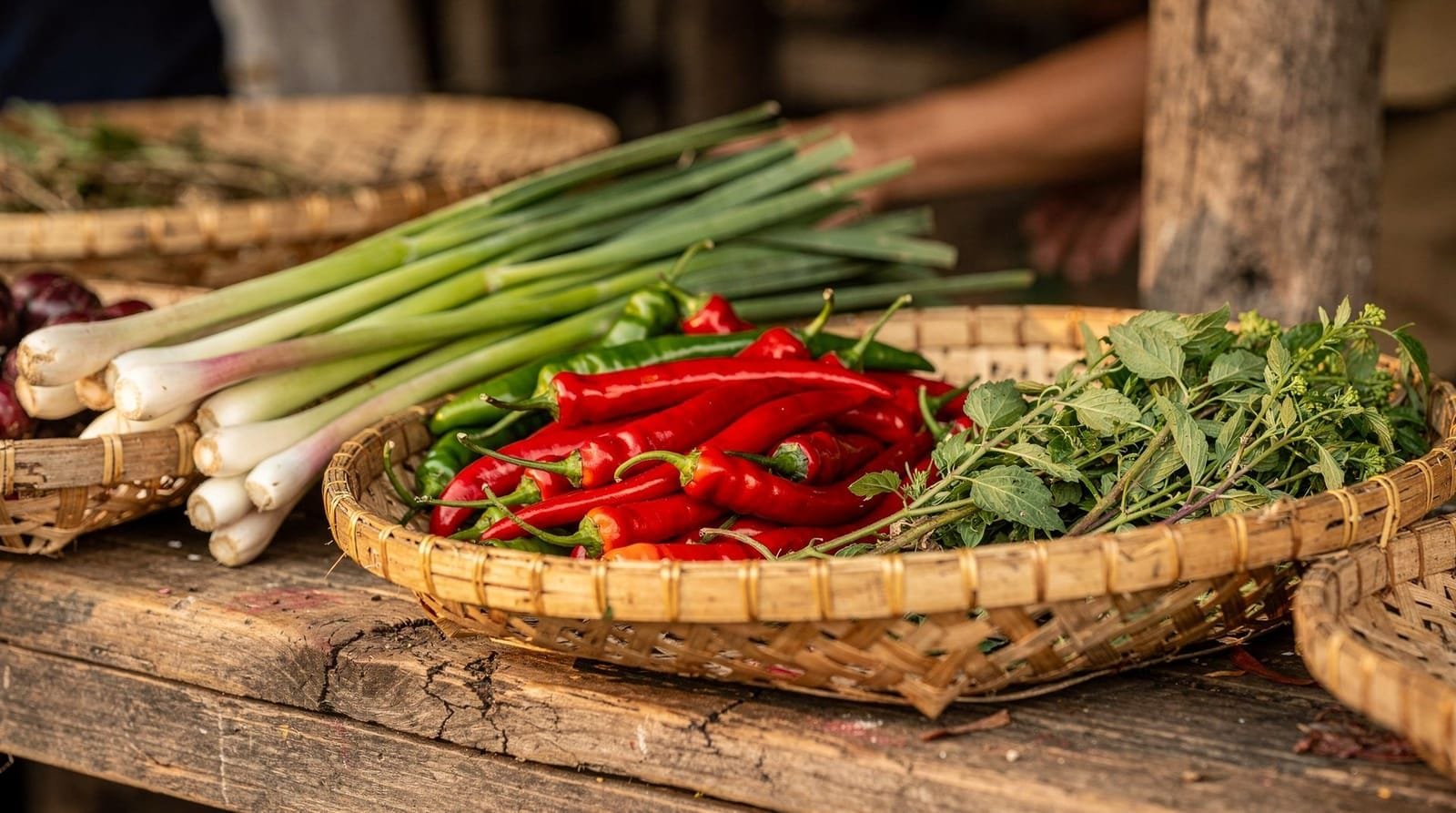
Most travelers arrive in Siem Reap having eaten Thai or Vietnamese food and assume Cambodian food is a variation on one or the other. It isn’t. Khmer cuisine has its own base ingredients — prahok (fermented fish paste), kroeung (a pounded paste of lemongrass, galangal, turmeric, garlic and shallot), and freshwater fish and river prawns from the Tonlé Sap — and its own balance, which leans milder and less sweet than Thai food and less herb-forward than Vietnamese food.
Cambodia’s decades of conflict and isolation meant its food culture never got the global export push that Thailand’s did in the 1980s and 90s, so it’s still under-known relative to how good it is. Siem Reap, sitting next to the country’s largest source of freshwater fish (the Tonlé Sap) and surrounded by rice paddies, is one of the best places in the country to eat it properly.
This guide covers the dishes worth learning before you order, how Khmer food differs from its neighbors, what to drink, and how to navigate a menu that mixes genuinely Khmer cooking with the pizza-and-pad-thai fallback most restaurants near Pub Street also offer. For where to actually sit down and eat, see our restaurant guide and street food guide; for a hands-on introduction, see Siem Reap cooking classes.
The dishes to know
Amok trey (steamed fish curry)
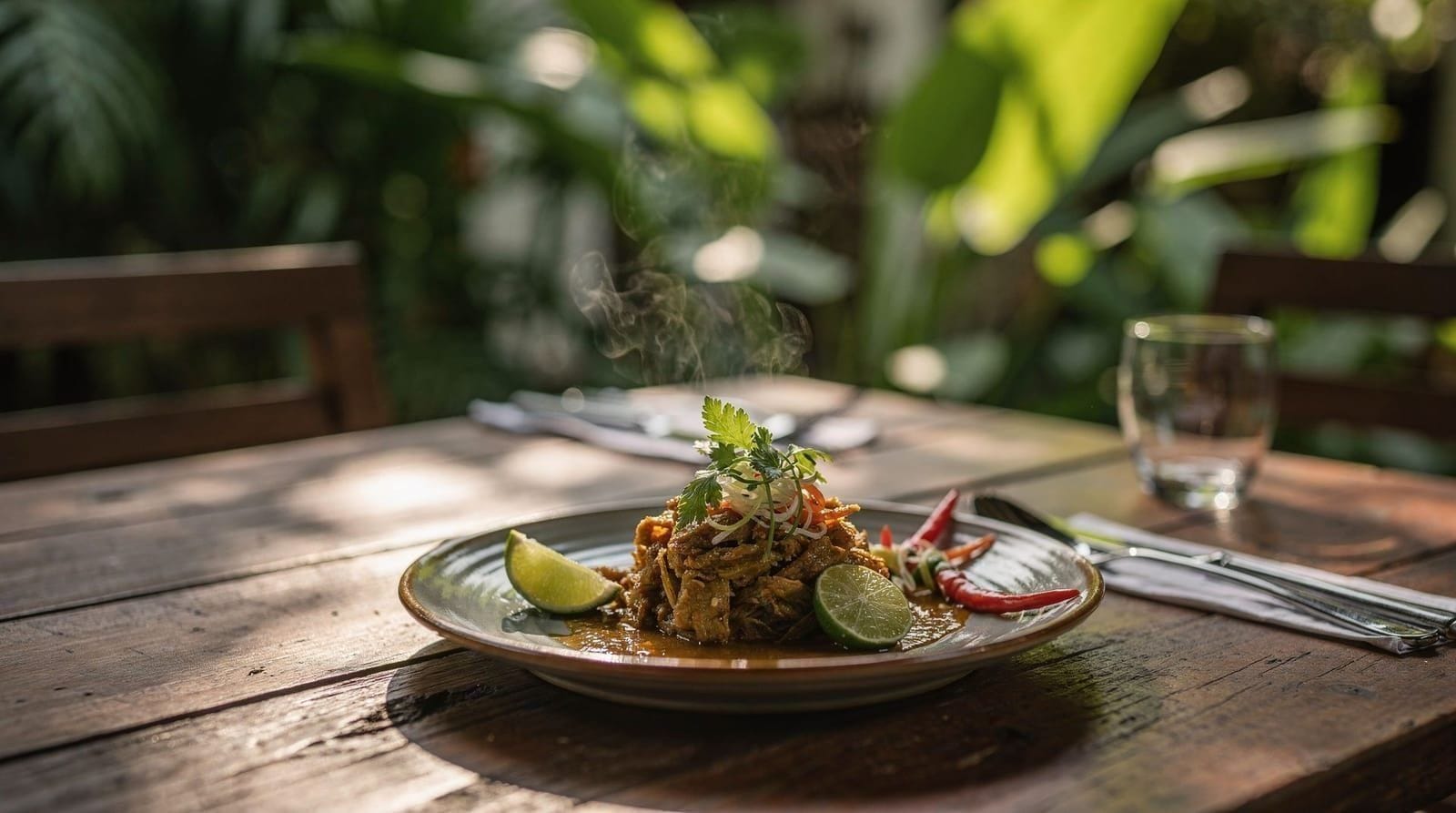
Amok trey is the dish most associated with Cambodia internationally, and for good reason. Firm white fish (usually snakehead or catfish from the Tonlé Sap) is mixed with kroeung and coconut cream, then steamed — traditionally in a banana-leaf cup, though restaurants often use a small bowl or coconut shell — until it sets into a soft, custard-like texture. It’s not a curry in the Thai sense: there’s no simmering in liquid, and the texture is closer to a savory soufflé than a soup. Expect $4-8 at a local restaurant, $8-14 at a mid-range or riverside restaurant. A well-made amok should taste of fish and kroeung first, coconut second — if it tastes mostly of coconut milk, it’s been simplified for tourist palates.
Lok lak (Khmer beef stir-fry)
Cubes of beef (or occasionally chicken or pork) wok-seared with garlic and a dark, slightly sweet sauce, served over lettuce, tomato, and cucumber with rice on the side, and a small dish of lime juice mixed with salt and black pepper — usually Kampot pepper — for dipping. It’s Cambodia’s answer to a quick, satisfying lunch, sold everywhere from street stalls to hotel restaurants, and a safe, reliable order if you’re not sure what else to try. $3-6 at a local spot.
Kuy teav (noodle soup)
Cambodia’s breakfast noodle soup: thin rice noodles in a clear pork or beef bone broth, topped with sliced pork, pork balls, bean sprouts, garlic oil, and fresh herbs, with lime, chili, and fish sauce added at the table to taste. It’s closest in spirit to Vietnamese pho but with a lighter, less star-anise-forward broth. Best eaten early — the good stalls sell out of broth by mid-morning. $1.50-3.
Bai sach chrouk (pork and rice)
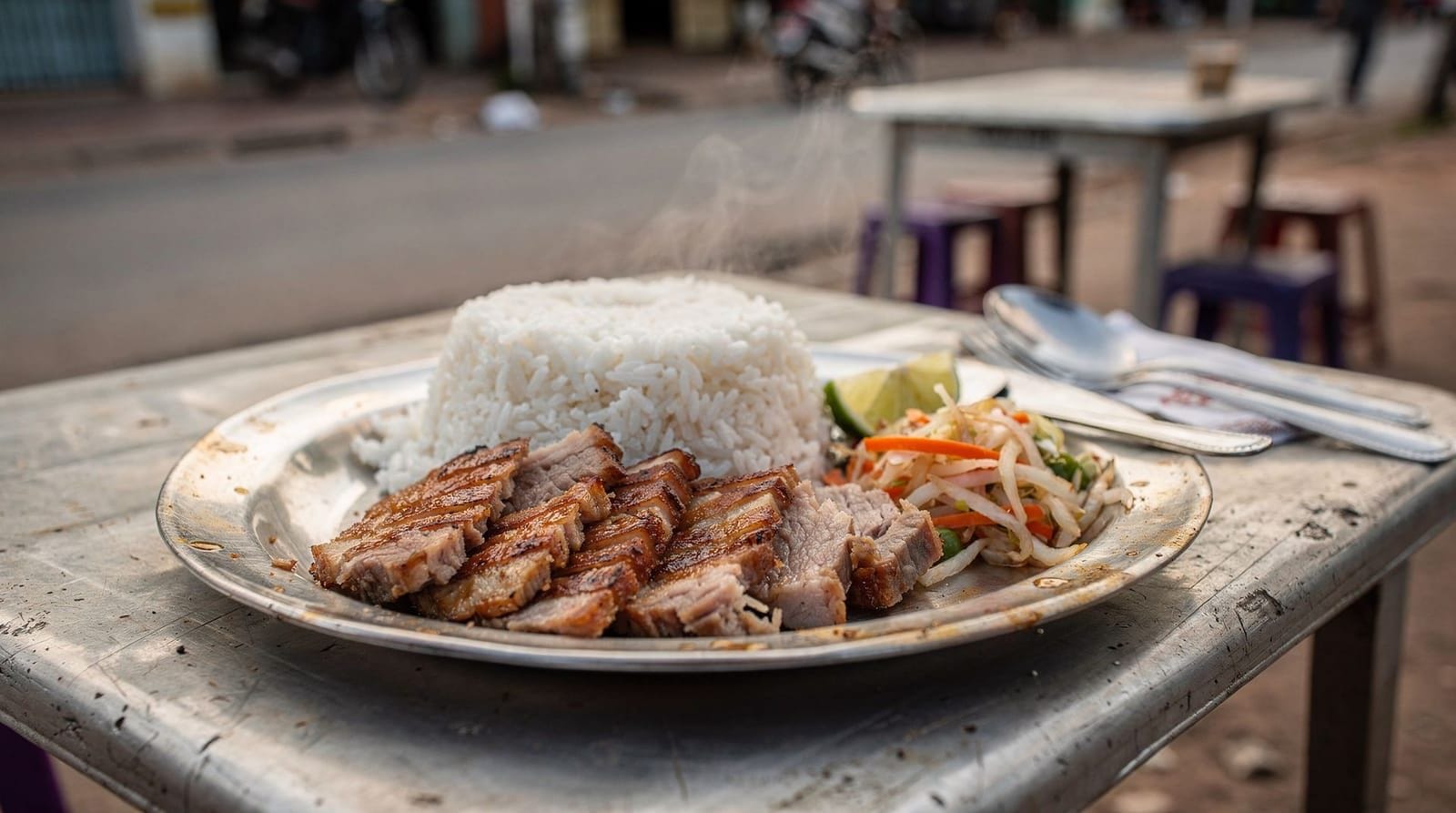
The other breakfast staple: thin slices of pork marinated and grilled over charcoal, served over broken rice with pickled vegetables (cucumber, carrot, daikon) and a light broth on the side. Look for stalls with a charcoal grill out front and a queue of locals in the early morning — that’s the tell of a good one. $1.50-2.50.
Num banh chok (Khmer noodles)
Considered Cambodia’s national dish by many locals, though it’s less visible to visitors than amok. Fresh rice noodles served at room temperature or slightly warm, topped with a fish-based green curry sauce (made with kroeung, fish, and often morning glory or banana blossom) and a pile of fresh herbs, bean sprouts, and cucumber. Traditionally a breakfast or morning-market dish, usually sold by women carrying baskets or at fixed market stalls rather than in restaurants — Psar Chaa (the Old Market) is a reliable place to find it in the morning. Around $1-2.
Prahok (fermented fish paste)
The base flavor underneath much of Khmer cooking, made from fish (often small mudfish) salted and fermented for months. Used sparingly as a seasoning, it gives dishes their savory depth the way fish sauce does in Vietnamese food or shrimp paste does in parts of Thailand — but prahok’s smell is much stronger on its own, which is why first-time visitors sometimes mistake a good, prahok-seasoned dish for something “off.” Prahok ktis — a dip of minced pork, prahok, coconut milk, and kroeung eaten with raw vegetables and rice — is a good way to try it in a controlled dose.
Nom (Khmer sweets and snacks)
Cambodian desserts lean on coconut milk, sticky rice, palm sugar, and tropical fruit rather than the sugar-heavy pastries found elsewhere. Look for num ansom (sticky rice and banana or mung bean wrapped in banana leaf, steamed), num sarlaut (grilled coconut-rice-and-black-bean parcels sold by street vendors, often near the Old Market in the evening), and cha houy teuk, a layered jelly and coconut cream dessert sold cold from carts.
Other dishes worth ordering
- Samlor korko — a thick, mixed-vegetable soup with prahok, pork, and often green papaya or pumpkin, sometimes called Cambodia’s “national soup.” Home-style and rarely fancy, but a good indicator of a restaurant’s kitchen skill.
- Cha kroeung — meat (usually beef or chicken) stir-fried directly with kroeung paste rather than a sauce, giving a drier, more aromatic dish than lok lak.
- Trey aing — whole grilled fish, typically river fish from the Tonlé Sap, served with a tamarind or prahok-based dipping sauce and fresh vegetables. Common at riverside and countryside restaurants rather than in-town.
- Nataing — a rich pork and coconut cream relish similar to a paste, eaten scooped onto rice or with rice crackers; a common appetizer.
- Khmer red curry (kari sach moan) — closer to what visitors expect from a Southeast Asian curry, made with coconut milk, potatoes, and either chicken or beef, and generally milder than a Thai red curry.
Kampot pepper and other Cambodian ingredients
Kampot pepper — grown in Kampot province in southern Cambodia and holding EU protected-origin status since 2016 — turns up on better Siem Reap menus as a garnish for lok lak’s dipping sauce or crusted onto grilled meat and seafood. It’s worth seeking out specifically; the black, red, and white varieties come from the same vine, differing by ripeness and processing, and the flavor is noticeably more floral and less flat than commodity pepper.
Palm sugar, made by boiling down sap tapped from sugar palms (the trees that dot the countryside around Siem Reap), sweetens most Khmer desserts and some savory sauces; it has a caramel note that white sugar doesn’t. Tropical fruit is seasonal and cheap at the markets — rambutan and mangosteen in May-July, durian in April-June, and dragon fruit and papaya nearly year-round.
Markets as a food destination
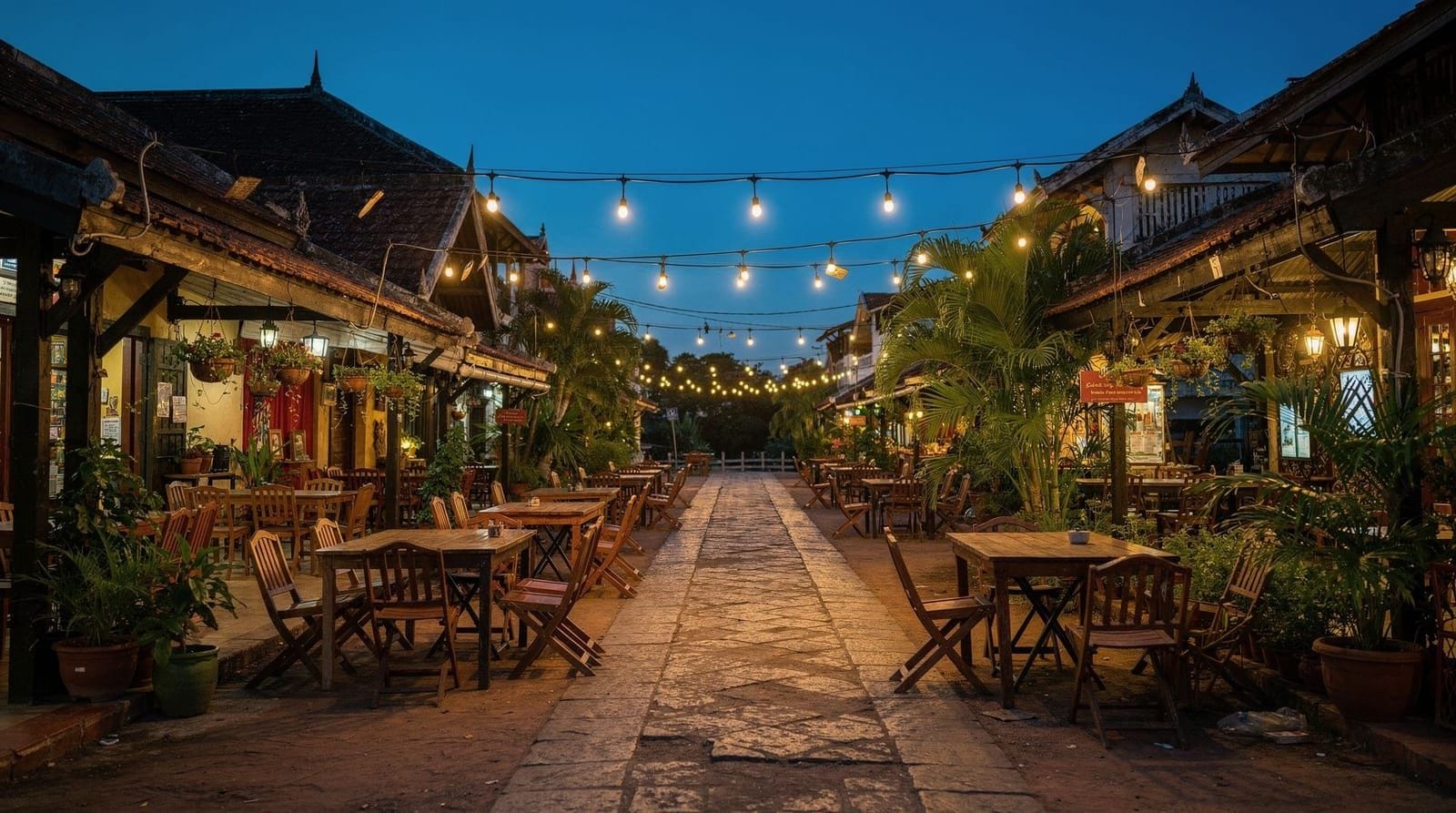
Psar Chaa (the Old Market) and Psar Leu, a larger, more local market a short tuk-tuk ride from the center, are both worth a morning visit purely for the food stalls — num banh chok vendors, fresh fruit, dried fish, and prepared curries sold by the scoop for locals to take home. See our Old Market guide for a full layout. Evening food markets, including stalls around the Angkor Night Market, lean more toward tourist-friendly skewers and fruit shakes than deep Khmer cooking, but they’re a fine, low-commitment way to graze after a temple day.
How to order like a local
Rice (“bai”) is assumed with most meals and often not listed separately on informal menus — if it doesn’t show up, ask for “bai” on the side. Dishes are typically shared rather than plated individually when eating with a group, so ordering two or three dishes for two people plus rice is normal, not excessive. At markets and street stalls, pointing at what you want or showing a photo works fine; English is widely understood in tourist-facing restaurants but far less so at local stalls, where a phrase or two of Khmer (or a translation app) goes a long way.
How Khmer food differs from Thai and Vietnamese food
| Khmer | Thai | Vietnamese | |
|---|---|---|---|
| Core seasoning | Prahok + kroeung | Fish sauce + curry paste | Fish sauce + fresh herbs |
| Heat level | Mild to moderate; chili added at the table, not cooked in | Often hot, chili cooked into the dish | Mild, herb-driven |
| Broth style | Lighter, less anise/spice | Often rich, coconut- or tom yum-based | Clear, often star anise/cinnamon |
| Sweetness | Present but restrained | Frequently sweet-salty-sour balance | Balanced, less sweet |
| Signature texture | Steamed/custard (amok) | Stir-fried, curried | Fresh, raw herbs and rice paper |
The practical upshot: if you found Thai food too spicy, Khmer food is a safe landing spot — most dishes let you add heat rather than assuming you want it. If you loved Vietnamese pho, kuy teav is your entry point into Khmer breakfast food.
What to drink
Cambodia’s national beer is Angkor Beer, brewed in Sihanoukville — a light lager, sold everywhere, and the cheapest draft beer in the country at $0.50-1 during Pub Street happy hours (see our Pub Street guide for exact times and spots). Cambodia Beer and Anchor are the other common local lagers.
For something local and non-alcoholic, sugarcane juice (tuk ampeou) pressed to order from street carts is everywhere and costs under $1. Sombai, a Siem Reap-made infused rice liqueur (flavors include ginger, cashew nut, and red ants — genuinely) makes a distinctive souvenir and is featured on some food-and-drink tours. Palm wine (tuk tnaot), tapped from sugar palms and mildly fermented, is a rural specialty worth trying if you’re out in the countryside.
Vegetarian and dietary notes
Strict vegetarian Khmer food is harder to find than in Thailand, because prahok and fish sauce show up as background seasoning even in dishes that look vegetable-based. If you’re vegetarian or vegan, say “kh’nhom si mangsavirat” (I am vegetarian) and specifically ask for no fish sauce and no prahok (“kh’nhom min si trei” — I don’t eat fish), since “vegetarian” alone is sometimes interpreted loosely. Buddhist vegetarian days (roughly twice a month, tied to the lunar calendar) mean some local restaurants run a fully vegetarian menu — worth asking about if you’re staying a while. Gluten is less of an issue: rice, not wheat, is the base starch throughout.
Price cheat sheet
| Dish | Local restaurant / stall | Mid-range or riverside restaurant |
|---|---|---|
| Amok trey | $4-8 | $8-14 |
| Lok lak | $3-6 | $6-10 |
| Kuy teav (breakfast) | $1.50-3 | $4-6 |
| Bai sach chrouk (breakfast) | $1.50-2.50 | $4-5 |
| Num banh chok | $1-2 | Rarely on sit-down menus |
| Draft Angkor Beer | $0.50-1 (happy hour) | $1.50-2.50 |
| Cooking class (half-day, with market visit) | — | $18-35 per person |
These are Siem Reap town prices; expect a small premium at restaurants directly bordering Pub Street or with river views, and lower prices at market stalls and residential-area spots.
Where this fits into your trip
A single-day temple circuit doesn’t leave much room for food exploration beyond lunch near Angkor Wat or Angkor Thom, which tends to be tourist-priced and average. Food is better handled as its own half-day or evening activity in town — see our how many days in Siem Reap guide for how to budget the time. A guided introduction removes the guesswork on your first night:
Book a Khmer traditional cooking class Join an 11-tasting street food and Sombai spirits tourFrequently asked questions about Khmer food
Is Khmer food spicy?
Not inherently. Chili is usually served on the side (fresh sliced chili in fish sauce, or dried chili flakes) rather than cooked into the dish, so you control the heat. This is the opposite of much Thai cooking, where chili is often built into the curry paste itself.
What is amok, exactly?
A steamed fish custard made with kroeung (lemongrass-galangal-turmeric paste) and coconut cream, traditionally cooked in a banana leaf cup. It’s not a curry or a soup — the texture is closer to a savory flan. Fish (snakehead or catfish) is standard; chicken and tofu versions exist for those who prefer them.
What’s the difference between amok and lok lak?
Amok is a steamed fish custard; lok lak is stir-fried cubes of beef served over salad with a lime-pepper dipping sauce. They’re often ordered together as a two-dish introduction to Khmer cooking.
Is street food in Siem Reap safe to eat?
Generally yes if you follow the usual rules: eat where there’s a visible queue of locals, choose stalls cooking food to order in front of you rather than food that’s been sitting out, and drink bottled or filtered water only — Siem Reap tap water isn’t safe to drink. See our street food guide for specific areas and stalls.
What is prahok and why does it smell strong?
Prahok is fermented fish paste, the savory backbone of much Khmer cooking, similar in role to fish sauce elsewhere in Southeast Asia but stronger-smelling on its own because it’s fermented whole fish rather than pressed liquid. Used in small amounts in cooking, it’s much milder than it smells in the jar.
Can vegetarians eat well in Siem Reap?
It takes more specific requests than in Thailand or Vietnam, since fish sauce and prahok appear as background seasoning in many dishes that look vegetable-only. Ask explicitly for no fish sauce and no prahok, and look for restaurants that list a dedicated vegetarian menu — several exist in town, particularly around the Old Market and Wat Bo areas.
What’s a typical breakfast in Siem Reap?
Bai sach chrouk (grilled pork over rice) or kuy teav (noodle soup), both sold from street stalls from early morning until they sell out, usually by 9-10am. Both cost $1.50-3.
Should I take a cooking class or just eat out?
Both, if time allows — a cooking class (see our cooking class guide) teaches you what you’re tasting so restaurant meals make more sense afterward, while eating out lets you sample more dishes in less time. If you only have one evening for food, a guided street food tasting tour covers more ground than a single restaurant meal.
Top experiences
Bookable activities with verified prices and instant confirmation on GetYourGuide.


More tours on Viator
Top-rated experiences with verified reviews, bookable on Viator (a Tripadvisor company).