Banteay Srei
Banteay Srei's fine pink sandstone carving: distance from Siem Reap, ticket, best light and why it needs a dedicated half-day.
Angkor Wat: Small Circuit Private Tour with Banteay Srei
Quick facts
- Distance from Old Market
- ~37 km, ~1 hour by tuk-tuk (more by car in traffic)
- Ticket needed
- Angkor Pass (same pass as Angkor Wat)
- Time to allow
- 1-1.5 hours at the temple, plus travel time
- Nickname
- Citadel of the Women, for the delicacy of its carving
- Best light
- Mid-morning; the pink sandstone glows warmest before midday
The finest carving in the entire Angkor style, on a smaller scale
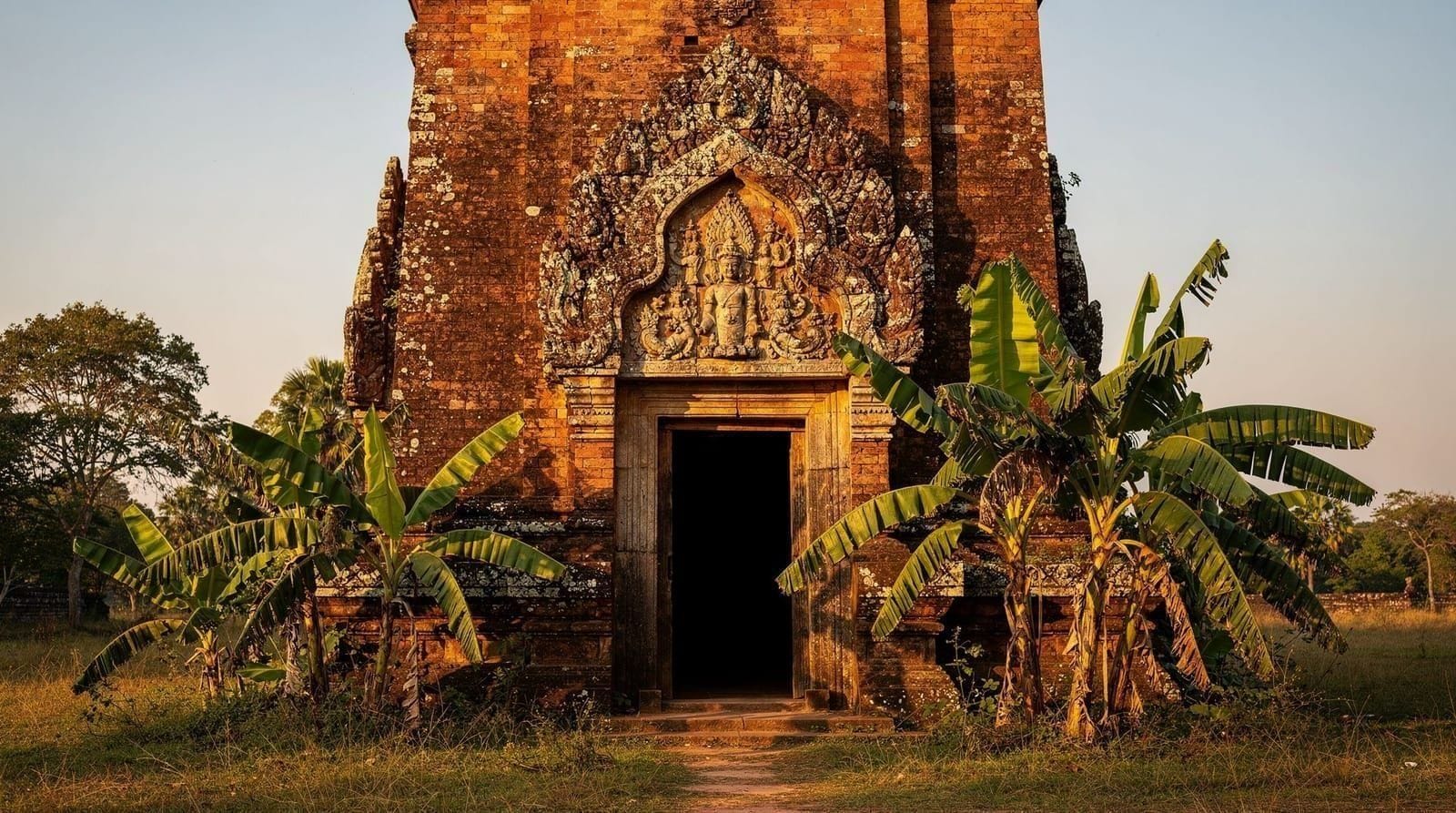
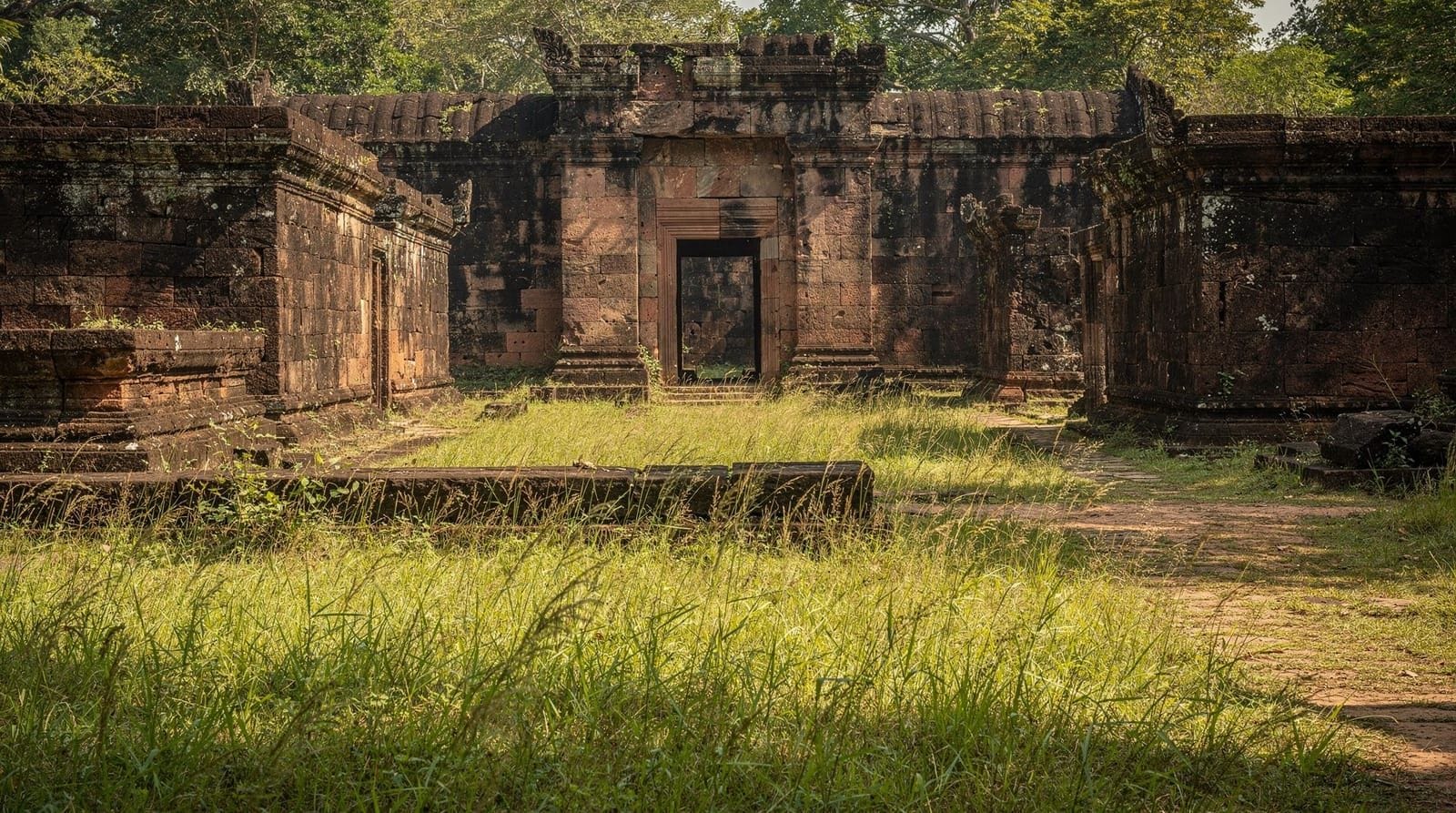
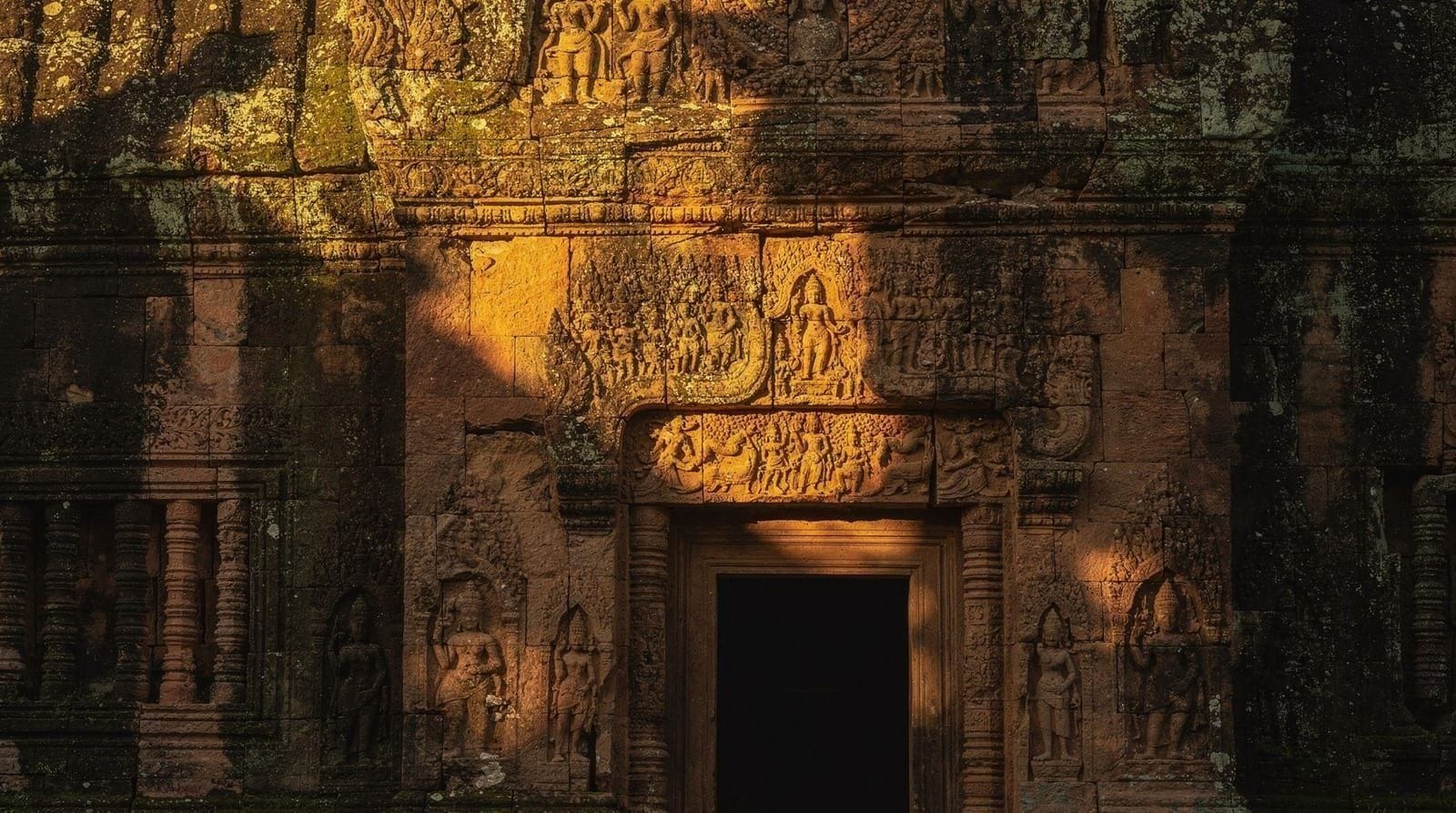
Banteay Srei (“Citadel of the Women”) is a 10th-century temple built in 967 AD, notably not by a king but by a Brahmin advisor to King Rajendravarman, dedicated to Shiva. It’s built from a fine-grained pink-red sandstone that allowed far more intricate, deep relief carving than the coarser grey stone used at Angkor Wat or Angkor Thom — the result is widely considered the most detailed decorative carving anywhere in the Angkor style, on temple towers that are noticeably smaller in scale than the park’s headline monuments.
That combination — miniature scale, maximal detail — is why some visitors are initially surprised by how small Banteay Srei is compared to its reputation, and why it rewards slow, close viewing over the sweeping-scale photography that works at Angkor Wat.
The material that made the detail possible
The pink-red sandstone used at Banteay Srei deserves its own explanation, since it’s the single physical fact that determines everything else distinctive about the temple. Most Angkor-era temples were built from a coarser grey sandstone quarried from the Kulen mountains, durable but limiting in how fine a carving could be cut before the stone crumbled.
Banteay Srei’s builders instead used a harder, finer-grained sandstone with a naturally pinkish hue — comparable in some respects to the material used for fine sculpture rather than large-scale construction elsewhere in the region — which allowed the deep, almost lace-like relief carving the temple is known for, cut to a level of detail genuinely difficult to replicate at Angkor Wat’s scale using the coarser stone available there. This is also why Banteay Srei’s towers, doorways and lintels have survived in unusually crisp condition relative to their age — the same material properties that allowed the fine carving in the first place have also resisted erosion better than the softer stone used elsewhere.
Distance and how to get there
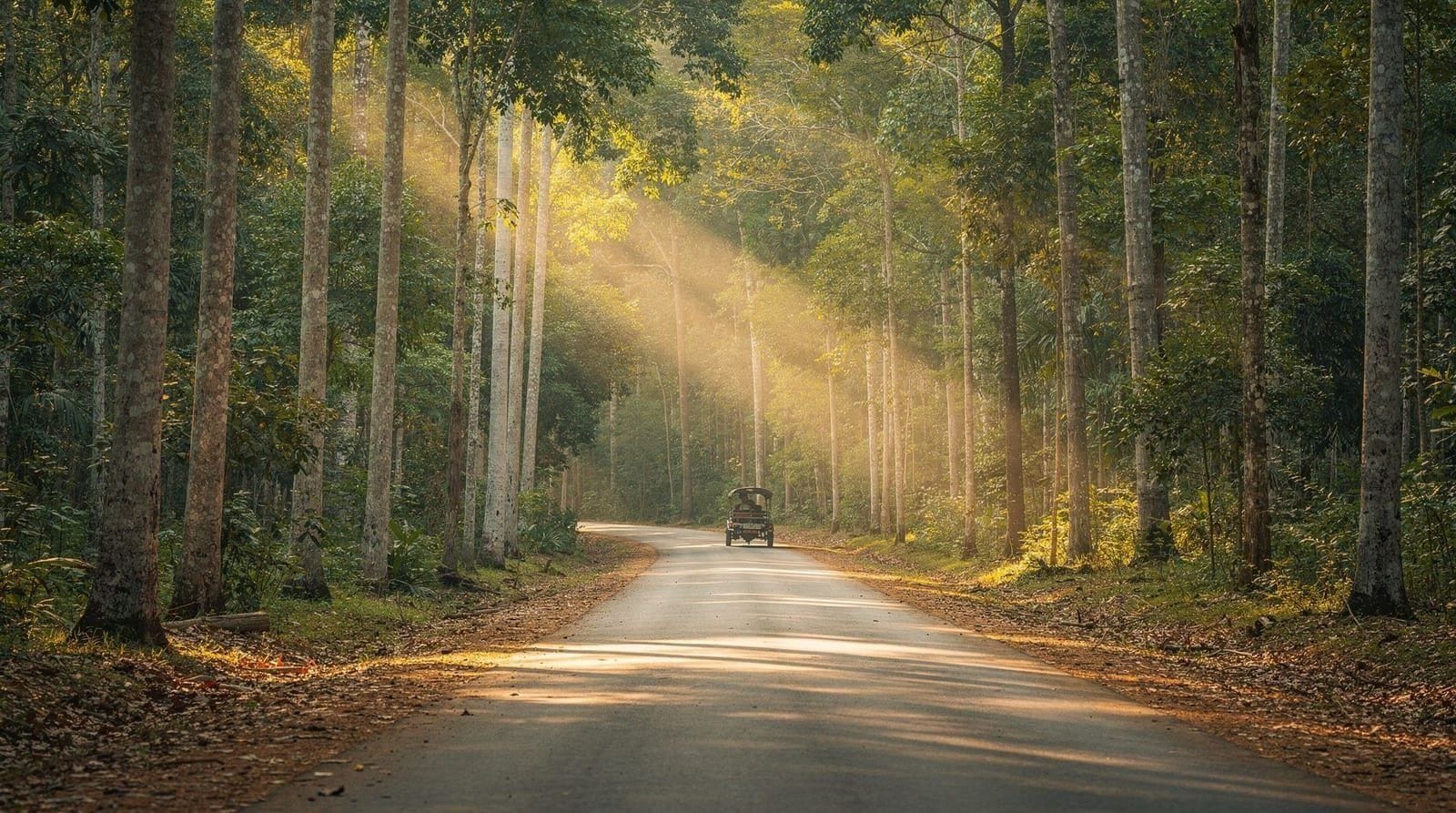
Banteay Srei is about 37 km from central Siem Reap, roughly an hour by tuk-tuk each way (longer by shared van in traffic, though the road itself is paved and in good condition). That round-trip travel time is the main reason it needs a dedicated half-day rather than being tacked onto a Small Circuit morning — most visitors who try to combine both end up rushing one or the other.
Ticket
Covered by the standard Angkor Pass — no separate charge, same pass used at Angkor Wat. See our Angkor Pass guide for 1/3/7-day pricing ($37/$62/$72).
Best time to arrive
Banteay Srei sees a second wave of visitors mid-to-late morning, once Small Circuit tour groups finish their sunrise-to-Ta Prohm loop and head out here for an afternoon add-on. Arriving by 8:30-9:00 AM, ahead of that wave, is the most reliable way to see the temple’s central sanctuary towers without a crowd in every photo. The pink sandstone also photographs best in mid-morning light — direct midday sun washes out some of the carving’s depth, and by afternoon the crowd volume has usually built up.
What to look for
The three central sanctuary towers, ringed by a moat and a low enclosure wall, carry the temple’s most famous carvings: scenes from the Ramayana and Mahabharata epics, including a well-known panel of the demon king Ravana shaking Mount Kailasa, and dvarapala (guardian) figures carved with a precision that’s genuinely different in character from the bolder, larger-scale reliefs at Angkor Wat. Because the whole complex is compact, most visitors find that slowing down and looking closely — rather than trying to “see everything” the way you might at a larger site — is the better approach here.
The rediscovery story, and why it matters for how the temple is displayed today
Banteay Srei has a distinct modern history worth knowing before you visit. It was largely forgotten and overgrown until its rediscovery by French explorers in 1914, and it became internationally notorious in 1923 for an unrelated reason: the French writer André Malraux (later France’s Minister of Culture) was arrested and prosecuted for attempting to remove several carved panels from the temple — a widely publicized case that helped draw attention both to the temple itself and to the broader issue of looting at Angkor-era sites.
Restoration began in the 1930s using the anastylosis technique (the same approach later used more extensively at Baphuon), making Banteay Srei one of the first Angkor temples to undergo this kind of systematic, evidence-based rebuilding rather than simple stabilization.
Because of Banteay Srei’s location outside the safer, more heavily controlled central Angkor zone, it also remained partially mined and was considered unsafe to visit for stretches during Cambodia’s civil conflict in the late 20th century — a reminder that “outer temple” status here isn’t purely about tourist convenience; some of these sites only became reliably visitable in recent decades.
What to look for beyond the headline carvings
Beyond the famous Ravana and Mahabharata panels, look for the temple’s guardian statues — copies of the originals, which were removed for preservation and are now displayed at Phnom Penh’s National Museum, a useful complementary stop if you’re extending your trip to the capital (see our Phnom Penh destination guide). The intricacy of the false doors — carved doorways that don’t actually open, a common decorative device in Khmer temple architecture — is easiest to appreciate at Banteay Srei precisely because the smaller scale puts you physically closer to the carving than the more monumental doorways at Angkor Wat allow.
What’s overrated
Very little — Banteay Srei consistently ranks among visitors’ favorite single stops precisely because it’s different in character from the larger park temples, not a smaller version of the same thing. The one caveat: visitors expecting Angkor Wat-scale grandeur are sometimes let down by the temple’s modest size; it rewards close attention to detail, not sweeping vistas.
Comparing Banteay Srei to the other outer temples
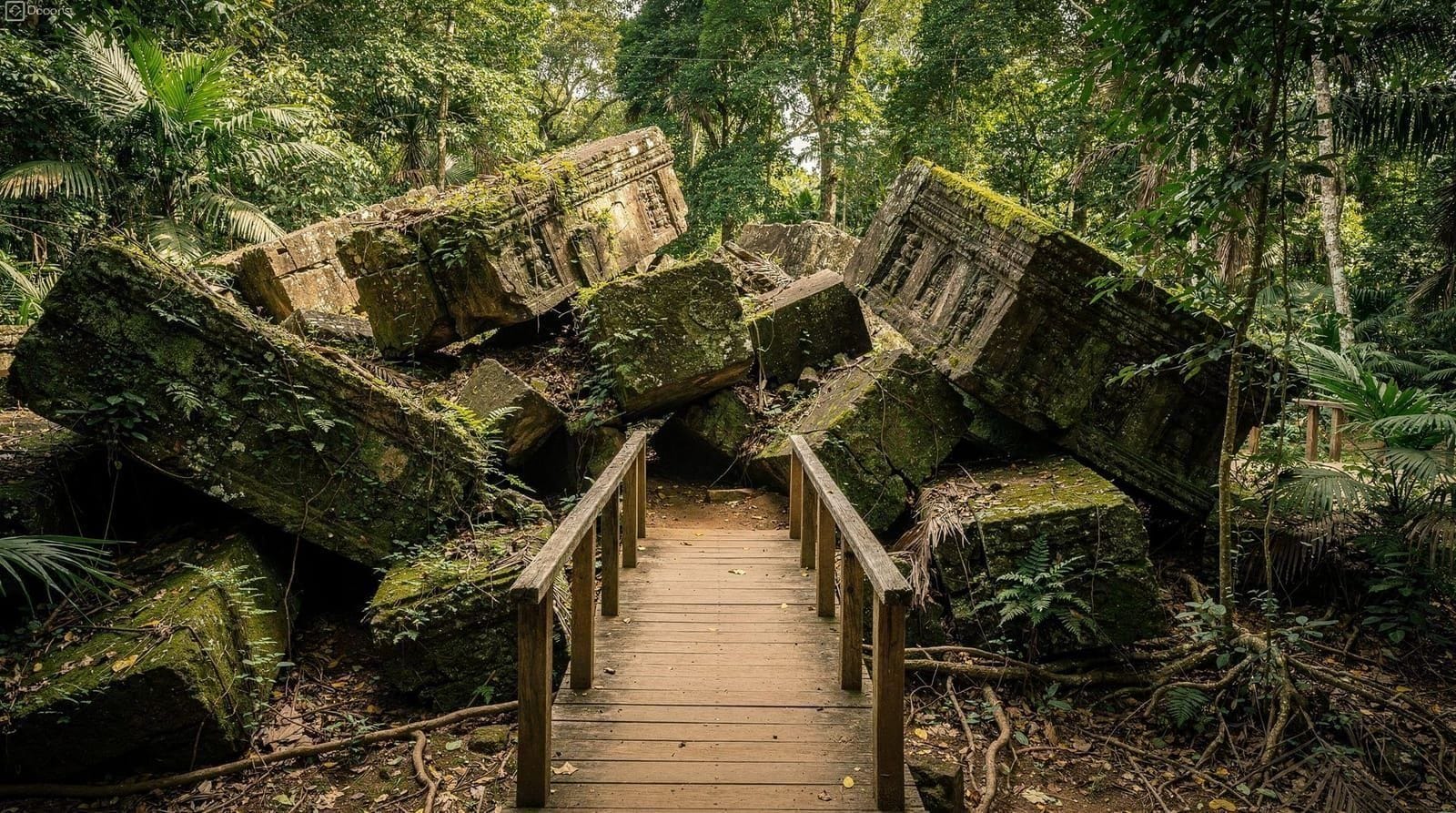
Banteay Srei sits alongside Beng Mealea, Koh Ker and Phnom Kulen as the four major “outer temple” destinations requiring a dedicated trip beyond the Small and Grand Circuits, but each delivers something genuinely different. Where Beng Mealea and Koh Ker reward visitors seeking scale, remoteness and unrestored collapse, Banteay Srei rewards the opposite instinct — close, careful looking at a compact, exceptionally well-preserved site.
It’s also the closest of the four to Siem Reap (37 km, versus Koh Ker’s 120 km or Phnom Kulen’s 50 km), which makes it the most approachable outer-temple add-on for visitors without a full extra day to spare, and the only one of the four where a half-day round trip is genuinely realistic without excessive driving fatigue.
What a typical guided Banteay Srei visit actually covers
Most guided visits spend 45-60 minutes at the temple itself, plus a stop at Kbal Spean if it’s included in the itinerary — a further 15-minute drive and then a 30-45 minute uphill forest walk to a riverbed carved with lingas and reclining Vishnu reliefs, similar in concept to Phnom Kulen’s River of a Thousand Lingas but on a smaller, quieter scale, and requiring genuine physical effort to reach (sturdy shoes, moderate fitness). Some itineraries also include a stop at a local silk farm or handicraft workshop along the return route, giving a look at traditional weaving techniques — a lower-key cultural add-on rather than a major attraction in its own right, but a reasonable way to break up the drive.
How to combine it with the rest of your day
Banteay Srei pairs naturally with the Roluos Group (though Roluos is in the opposite direction, so this typically means a longer day) or with Kbal Spean, a “river of a thousand lingas” carved riverbed a further 15 minutes up the same road, not currently a standalone destination page on this site but often bundled into Banteay Srei tours. Our private Small Circuit tour with Banteay Srei added covers both areas in one long day if your schedule is tight; a cleaner two-day split is the 2-day Small and Big Circuit tour with Banteay Srei.
If you’re already doing Angkor Thom the same day, the Angkor Wat, Angkor Thom and Banteay Srei tour combines them in a single, well-paced day. For a Grand Circuit pairing instead, the Grand Circuit and Banteay Srei small-group tour is the more logical route given the driving directions involved.
Some visitors combine Banteay Srei with an outer-temple day trip to Koh Ker and Beng Mealea instead, since all three sit roughly along the same eastern approach roads — the Koh Ker, Beng Mealea and Banteay Srei join-in tour covers this longer combined route.
Practical notes
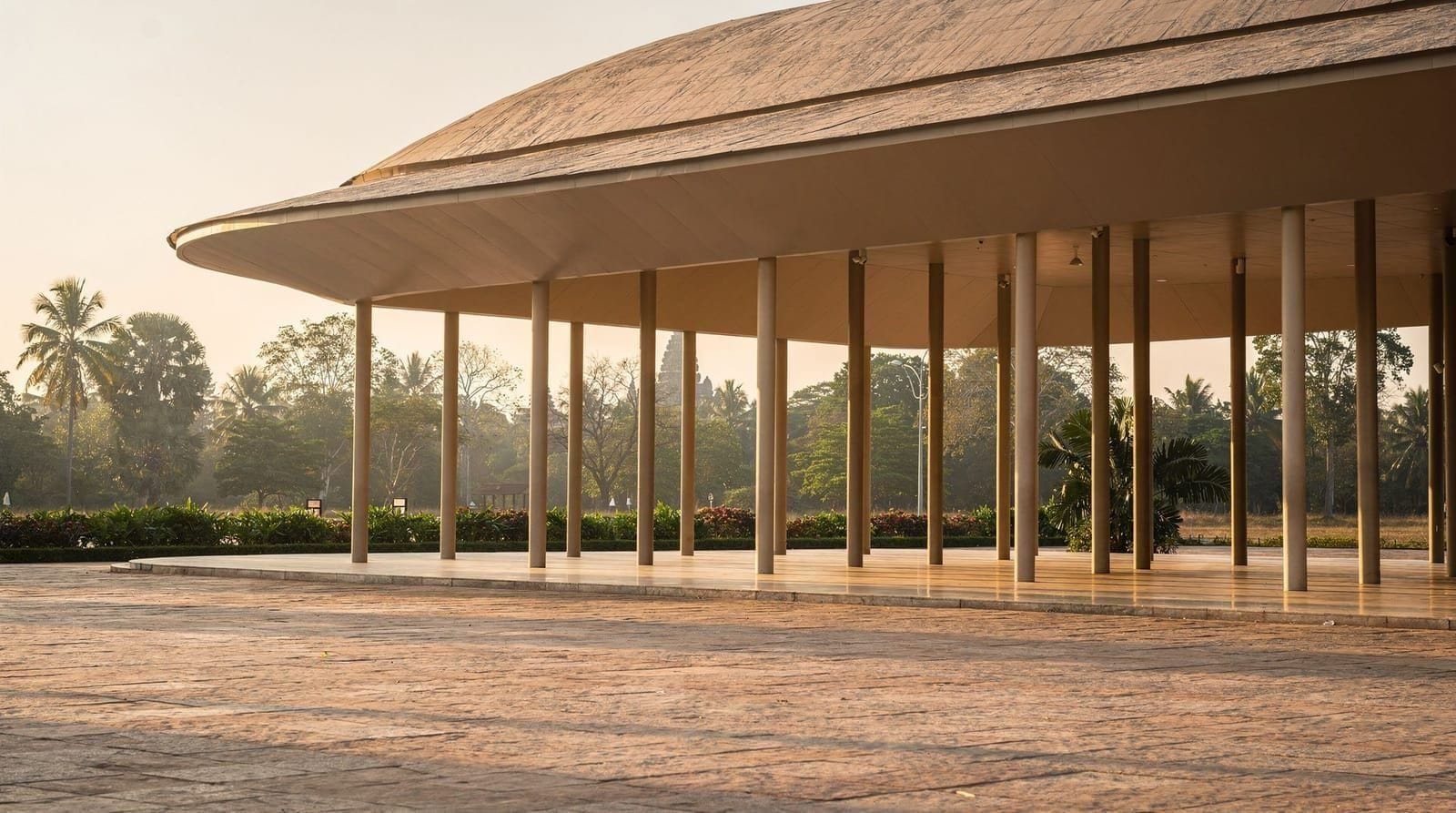
Dress code (shoulders and knees covered) applies as at every Angkor temple — see the dress code guide. There’s minimal shade around the central sanctuary; the walk from the parking area is longer than at most in-park temples, so allow extra time and water. Small restaurants and drink stalls cluster near the entrance, reasonably priced for a tourist site this far from town.
Because the temple’s most valuable draw is the carving detail rather than sheer scale, a modest zoom lens or even a smartphone with good macro capability genuinely improves the photography here relative to Angkor Wat or Angkor Thom, where wide shots dominate. If mobility or time is limited and you can only manage one “outer temple” stop on your trip, Banteay Srei’s combination of short travel time, manageable walking distance and universally strong visitor feedback makes it the safest single choice among the four major outlier destinations.
Frequently asked questions about Banteay Srei
Is Banteay Srei covered by the Angkor Pass?
Yes, fully — the same 1/3/7-day pass used at Angkor Wat covers Banteay Srei with no extra charge.
Why is Banteay Srei called the “pink temple”?
Its fine-grained sandstone has a distinct pink-red tone, quite different from the grey sandstone used at Angkor Wat and Angkor Thom, and it allowed far deeper, more intricate carving.
How long does it take to get to Banteay Srei from Siem Reap?
About an hour each way by tuk-tuk on paved roads — roughly 37 km. Budget half a day round-trip including time at the temple.
Is Banteay Srei worth the extra travel time?
Most visitors say yes — it’s frequently cited as a highlight precisely because its carving detail and intimate scale contrast so strongly with the larger in-park temples.
What’s the best time of day to visit?
Before 9:00 AM, ahead of the mid-morning wave of Small Circuit tour groups arriving for an afternoon add-on, and for the best light on the pink sandstone carving.
Can I combine Banteay Srei with the Small Circuit in one day?
It’s possible but makes for a long day — the roughly 2-hour round-trip travel time on top of a full Small Circuit means a very early start and a late finish. Many visitors prefer to give Banteay Srei its own half-day.
Why is Banteay Srei located so far from the other main Angkor temples?
Its founder was a royal advisor rather than a king, and the temple was built at some remove from the main royal capital area, closer to what may have been an ancestral estate. This positioning is part of why it needs a dedicated trip rather than fitting neatly into the Small or Grand Circuit loops.
Are the carvings at Banteay Srei original or restored replicas?
Most of the carving is original 10th-century work, remarkably well preserved thanks to the durability of the fine-grained sandstone. Some of the freestanding guardian statues seen on-site are replicas — the originals were relocated to the National Museum in Phnom Penh for preservation.
Is Banteay Srei accessible for visitors with mobility limitations?
More so than Ta Prohm or Beng Mealea — the central sanctuary area is on relatively flat ground, though the walk from the parking area to the temple itself is longer than at most in-park sites, and there’s minimal shade along the way.
What happened to Banteay Srei during the 20th century?
It was rediscovered by French explorers in 1914 after centuries of neglect, became internationally notorious in 1923 following writer André Malraux’s arrest for attempting to remove carved panels, and was later affected by land mines and instability during Cambodia’s civil conflict, delaying safe, reliable tourist access until more recent decades.
Top experiences
Bookable activities with verified prices and instant confirmation on GetYourGuide.

Angkor Wat: Small Circuit Private Tour with Banteay Srei

Siem Reap: 2-Day Angkor Wat Tour, Small and Big Circuit with Banteay Srei

Siem Reap: Angkor Wat, Angkor Thom and Banteay Srei Tour

Angkor: Small-Group Grand Circuit Temples Tour with Banteay Srei
Siem Reap: Koh Ker, Beng Mealea and Tonlé Sap Private Tour
More tours on Viator
Top-rated experiences with verified reviews, bookable on Viator (a Tripadvisor company).