The Angkor Small Circuit
The Small Circuit route explained: which temples, in what order, how long, and how it fits an Angkor Pass day.
Angkor Wat: Half-Day Sunrise Tour
Quick facts
- Loop distance
- ~17 km
- Ticket needed
- Angkor Pass, any tier (1/3/7-day)
- Time to allow
- One full day (6-8 hours including breaks)
- Core temples
- Angkor Wat, Angkor Thom/Bayon, Ta Prohm, plus Banteay Kdei and Sras Srang if time allows
- Best for
- First-time visitors, single-day Angkor trips
The default route for a first Angkor day, and why it works
The Small Circuit is the roughly 17 km loop that covers the three temples most visitors come to Cambodia specifically to see: Angkor Wat, Angkor Thom with the Bayon, and Ta Prohm. If someone books a single-day Angkor Pass and asks a tuk-tuk driver or tour operator for “the main temples,” this is the route they’ll run — and for good reason: it’s compact enough to complete comfortably in one day, includes the three most photographed structures in the entire park, and requires no long backcountry drives the way Banteay Srei or Beng Mealea do.
It’s a genuinely different route from the Grand Circuit — a separate, roughly 26 km loop covering Preah Khan, Neak Pean and Pre Rup — and the two are rarely combined into one day by anyone not on a very tight single-visit trip. See our Small Circuit vs Grand Circuit guide if you’re deciding how to split a multi-day pass.
The standard order, and why it’s structured this way
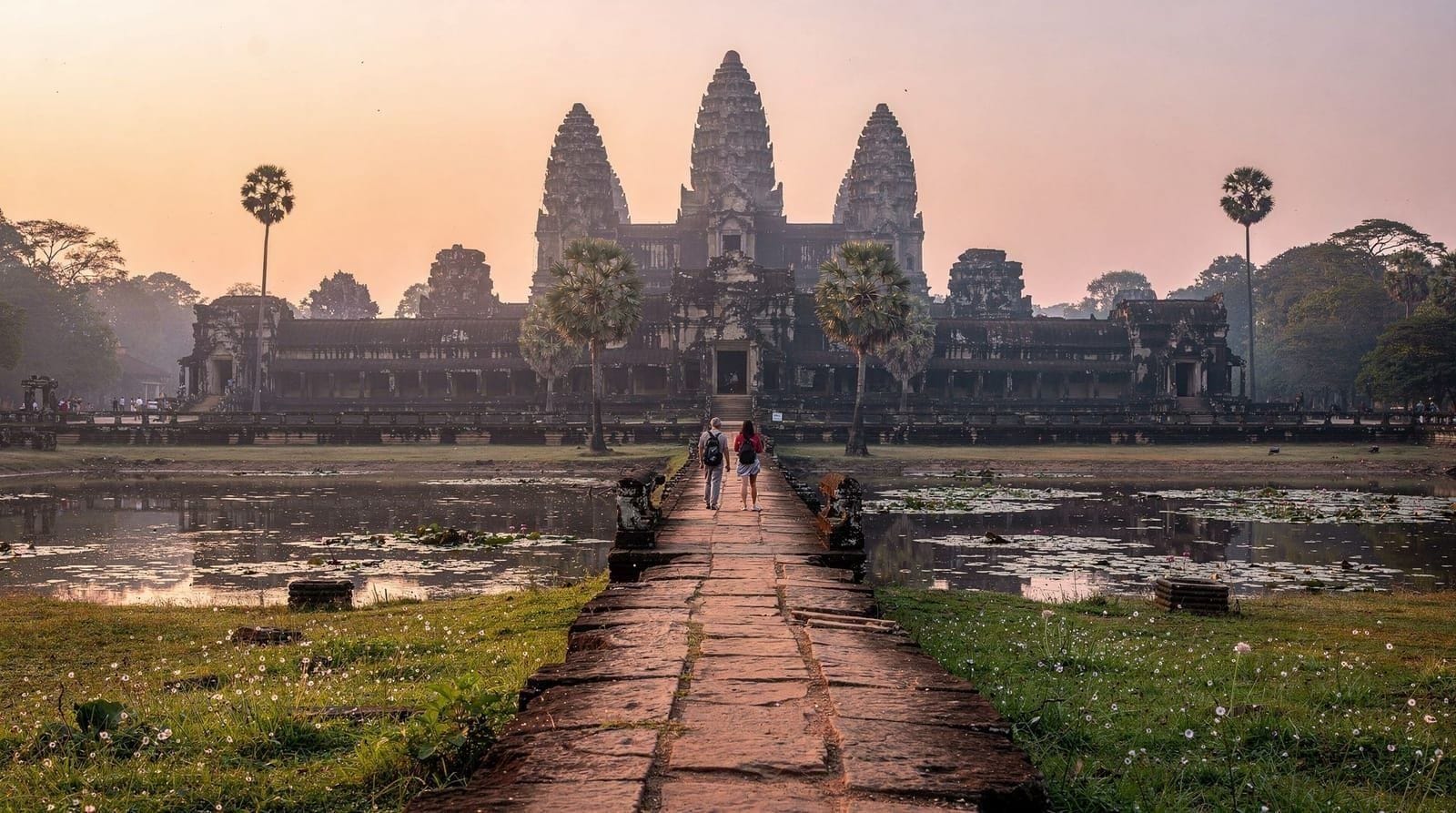
1. Angkor Wat (sunrise, 5:00-7:30 AM). Gates open at 5:00 AM specifically so visitors can catch sunrise over the temple’s five towers. Almost every Small Circuit itinerary starts here for this reason — see our full Angkor Wat destination guide and our sunrise guide for exact timing by month. Budget 2-2.5 hours including the walk to the towers, the outer gallery bas-reliefs, and (optionally) the upper-level climb.
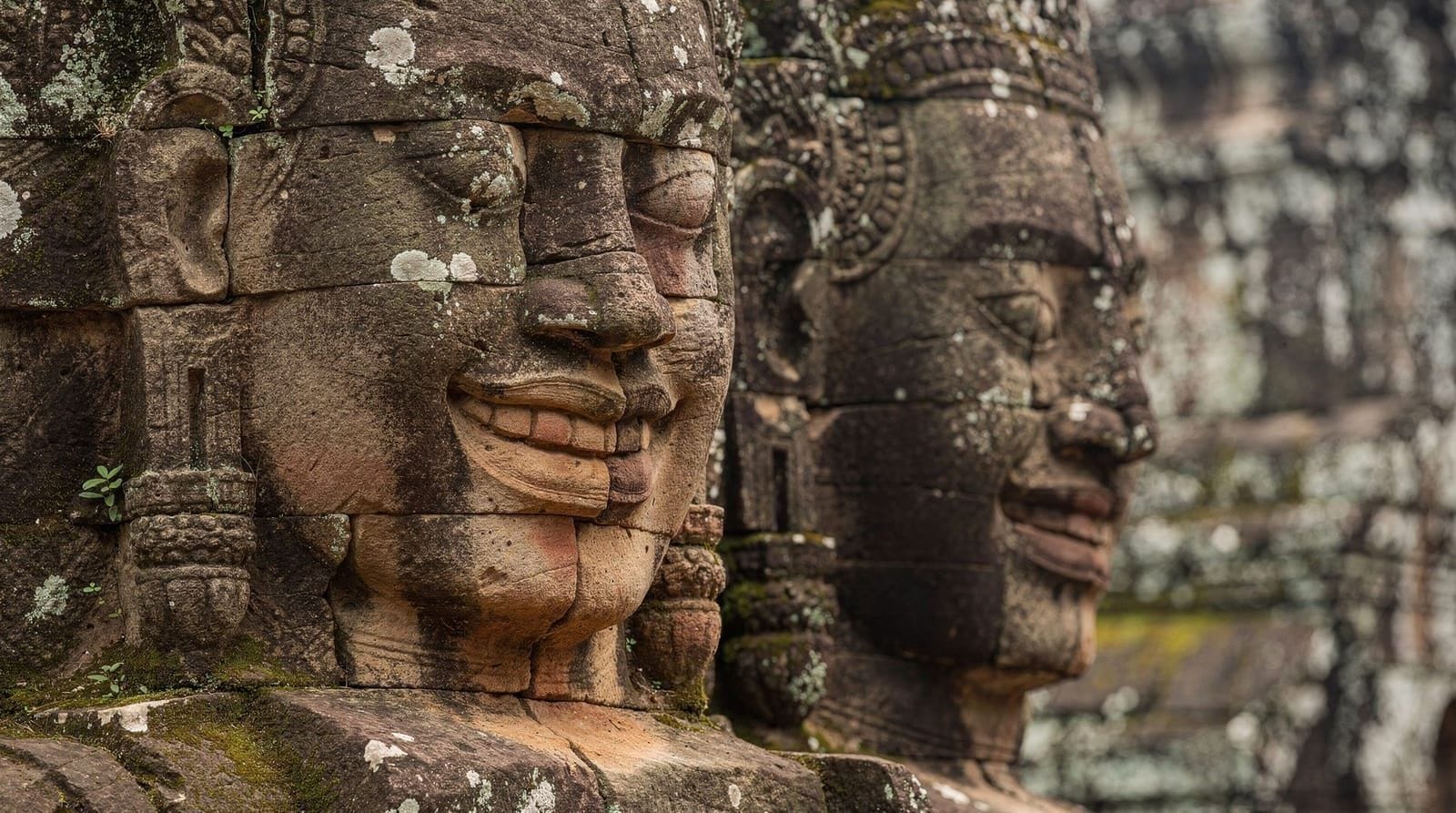
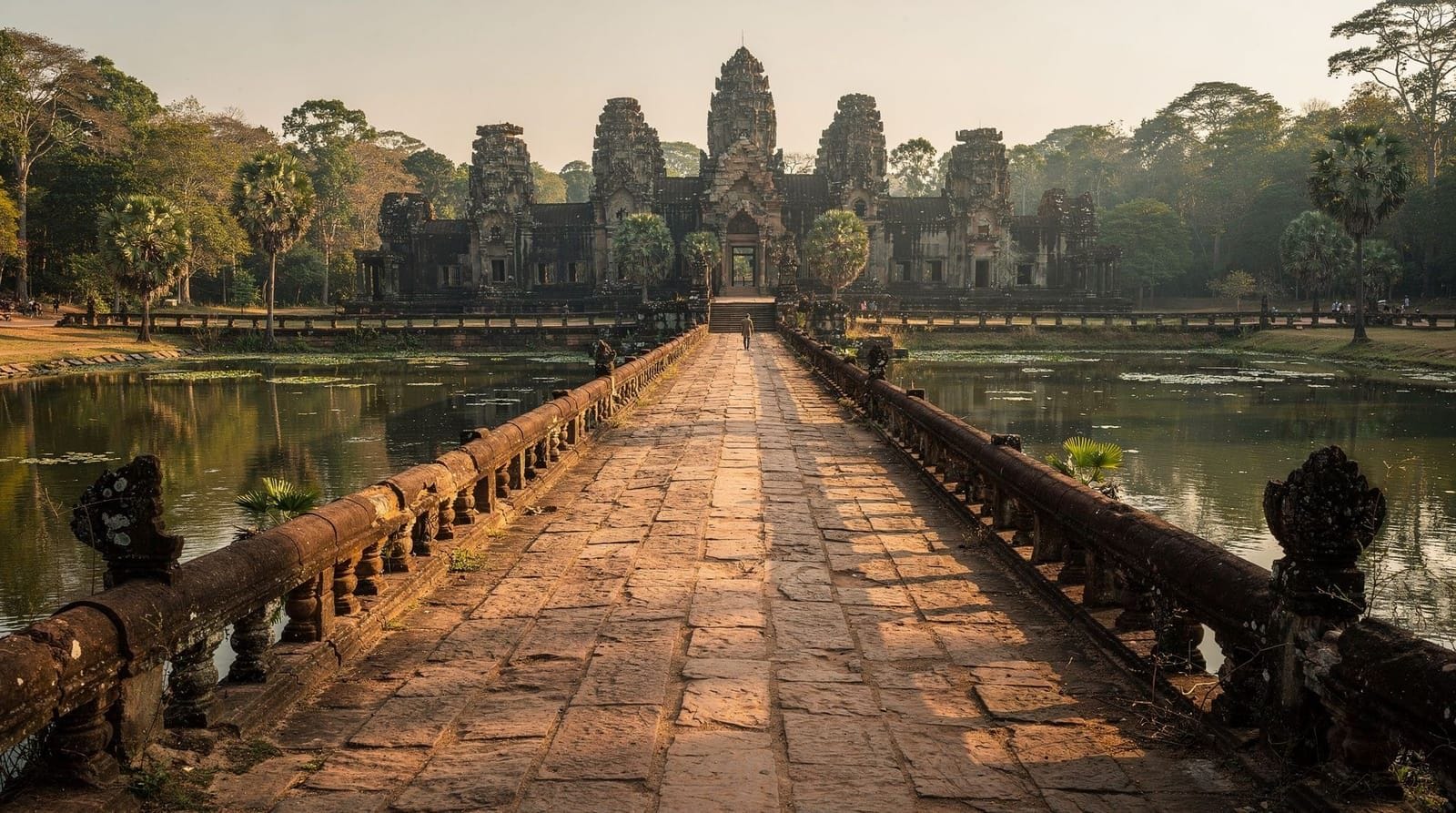
2. Angkor Thom — South Gate, then Bayon (8:00-10:00 AM). After Angkor Wat, most routes head north to Angkor Thom’s South Gate, then to the Bayon at the city’s center. This timing works well: the pure sunrise crowd has usually thinned by 8:00 AM, but the midday heat and the big-bus tour surge haven’t hit yet. See the Angkor Thom and Bayon guide for what to prioritize inside the walled city (the Terrace of the Elephants and Baphuon get skipped constantly and shouldn’t be).
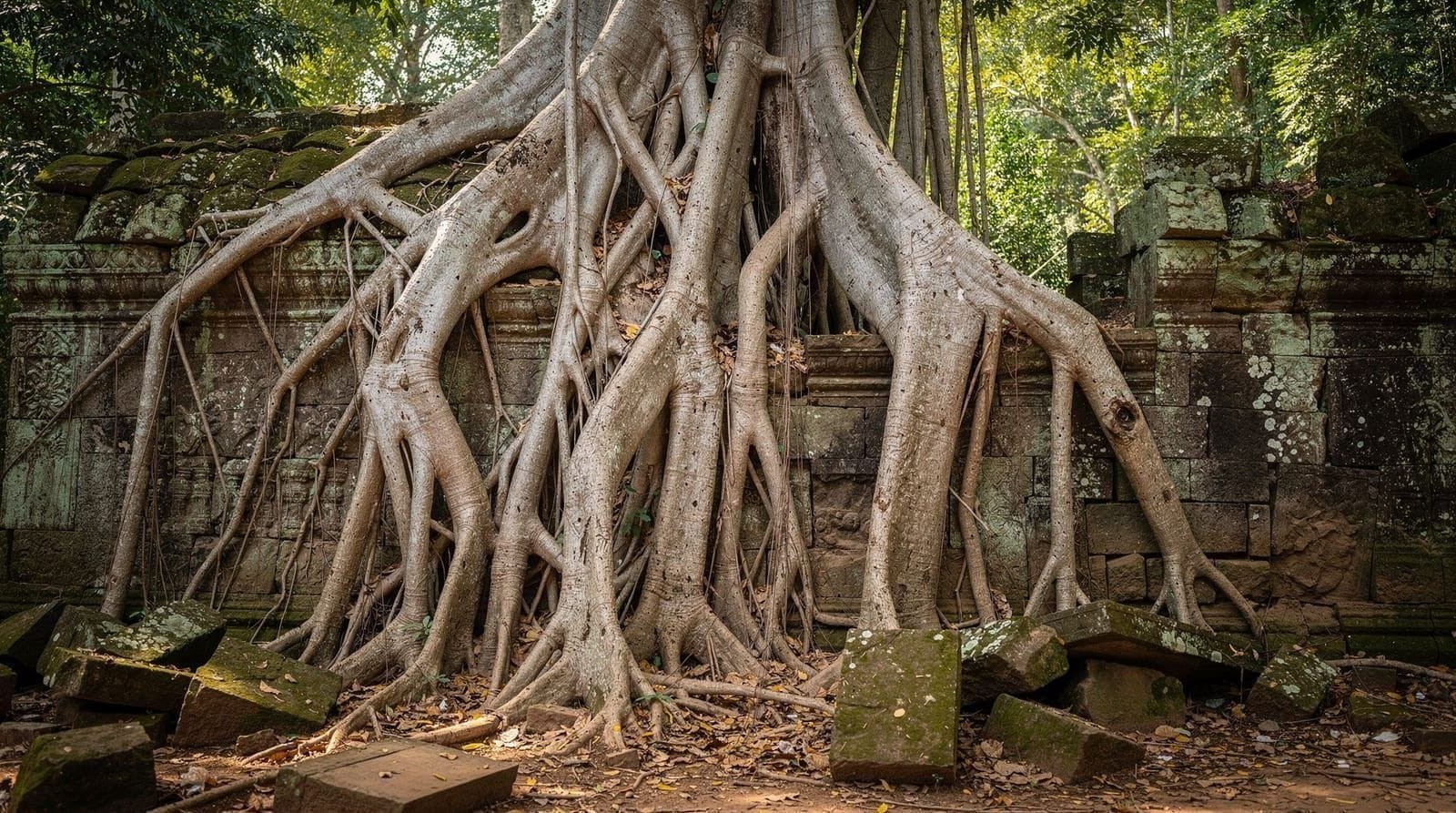
3. Ta Prohm (10:00-11:30 AM, or reversed to first thing). Ta Prohm’s narrow tree-root walkway bottlenecks badly between roughly 9:30 AM and 2:00 PM in peak season — see our full Ta Prohm guide for why some experienced visitors now reverse the whole order and hit Ta Prohm first at 7:30 AM, working backward to Bayon and Angkor Wat once the light has softened.
4. Banteay Kdei and Sras Srang (optional, if time and energy allow). Banteay Kdei, a Buddhist monastery temple similar in style to Ta Prohm but far less visited, and Sras Srang, a large ceremonial reservoir across the road, are both technically on the Small Circuit and frequently skipped by tour groups sticking to the headline three. If you’ve got energy left by early afternoon, both are worth a stop specifically because almost nobody else does.
How long the whole loop actually takes
A full Small Circuit day — sunrise at Angkor Wat through to Ta Prohm, with reasonable time at each stop — runs 6-8 hours including a lunch break, typically finishing by mid-afternoon. Compressing it into a half-day is possible (skip the upper-level Angkor Wat climb, skip Baphuon and the terraces, skip Ta Prohm’s deeper interior courtyards) but rushes exactly the parts most visitors say they wished they’d spent longer on. Our Angkor in one day guide has a realistic hour-by-hour version of both the full and compressed options.
How it fits a 1-day, 3-day or 7-day Angkor Pass
If you’re on a 1-day pass ($37), the Small Circuit is almost certainly your route — it covers the three temples most people specifically travel to Cambodia to see, and trying to add Grand Circuit or outer-temple stops on the same day usually means rushing all of them. See our Angkor Pass guide and Angkor Pass calculator for the full ticket math.
If you’re on a 3-day pass ($62), the standard split is: Small Circuit day one, Grand Circuit day two, Banteay Srei plus the Roluos Group (or an outer-temple day trip to Beng Mealea or Koh Ker) day three. Days don’t need to be consecutive within the pass’s 10-day validity window, which matters if you want a rest day between temple days in the heat.
A 7-day pass ($72) is really for slow-travel visitors who want to return to Angkor Wat at different times of day, revisit favorites, and add farther outliers like Phnom Kulen without feeling rushed on any single day.
Why this specific loop exists
The Small Circuit isn’t a modern tourism invention laid over the ruins — it broadly follows a logical geographic clustering of temples built across different centuries but concentrated close to what was, in Angkorian times, the area around the royal palace and state temples.
Angkor Wat (early-to-mid 12th century), Angkor Thom (late 12th century) and its satellite temples were built by different kings across roughly a century, but their physical proximity to each other — all within a few kilometres — is what makes a single-day loop possible in the first place. The Grand Circuit’s temples, by contrast, ring a wider area further from this historical center, which is the underlying reason it takes longer to drive and covers more ground for a comparable number of major stops.
A realistic hour-by-hour version for a first-time visitor
5:00 AM — Gates open, arrive at Angkor Wat’s west entrance. 5:35-6:20 AM (varies by month) — sunrise. 6:30-8:00 AM — walk the outer galleries, optional upper-level climb. 8:00 AM — depart for Angkor Thom’s South Gate, a short drive. 8:20-8:40 AM — South Gate photo stop. 8:40-10:00 AM — Bayon, ideally including the outer gallery bas-reliefs, not just the face towers. 10:00-10:45 AM — Terrace of the Elephants and Terrace of the Leper King, plus Baphuon if you have the energy for the climb. 11:00 AM — depart for Ta Prohm.
11:15 AM-12:30 PM — Ta Prohm (accepting this is not the ideal crowd window, but workable for a first, single-day visit). 12:30-1:30 PM — lunch near the road between Angkor Thom and Ta Prohm. 1:30-2:30 PM — Banteay Kdei and Sras Srang if energy allows, or head back to town to rest. This schedule assumes a fit, motivated visitor; families with young children or anyone sensitive to heat should expect to move slower and may want to cut the day short after Ta Prohm rather than push through the early afternoon heat.
What’s overrated, what’s underrated on this route
The rushed 9:30-11:00 AM Ta Prohm crush is the single most avoidable frustration on the whole circuit — see the timing note above. On the underrated side: Banteay Kdei and Sras Srang, both included in the loop and skipped by most groups, and the Terrace of the Elephants inside Angkor Thom, which gets far less attention than the Bayon faces despite being one of the best-preserved carved surfaces in the park.
Common mistakes on a first Small Circuit day
Underestimating cumulative walking distance. Each individual temple doesn’t look far on a map, but between parking-area walks, gallery loops and terrace crossings, a full Small Circuit day easily adds up to 6-8 km of walking in direct heat — more than most visitors budget for mentally. Packing too much into the morning and running out of steam by early afternoon, which is exactly when Ta Prohm (if visited in the standard order) needs your best energy and patience for the crowd.
Not eating enough before setting out — the 4:15 AM wake-up for sunrise means many visitors skip breakfast entirely and are running on empty by mid-morning; a light pre-dawn snack and a proper lunch stop matter more than they might elsewhere on a trip. Assuming any single day can comfortably include both circuits — see the pass-tier guidance above; splitting circuits across separate days is consistently the better-reviewed approach.
Doing it with a driver vs. a guided tour
A private tuk-tuk hired for the day (roughly $15-20, negotiate before boarding — see our tuk-tuk pricing guide) gives you full control over pacing and is the most common way to do the Small Circuit. If you’d rather not manage the sunrise wake-up and route logistics yourself, our sunrise Small Circuit tour and the broader one-day Small Circuit tour both handle the full route with an included guide, which is genuinely useful for the bas-relief galleries at Angkor Wat and the symbolism at Bayon.
For a private pace without a shared group, the private Small Circuit tour with Banteay Srei added extends the standard loop to include the outer temple in one longer day — a reasonable option if you’re short on time and want to combine the two without a second day trip. A simpler tuk-tuk-only option without a formal guide, the Small Circuit tuk-tuk tour, suits visitors who mainly want reliable transport and flexible stop times.
Practical notes
Dress code (shoulders and knees covered) applies at every stop — see the dress code guide. Bring more water than you think you’ll need; shade is inconsistent across the loop and the heat compounds over a full day. Lunch options cluster near the road between Angkor Thom and Ta Prohm — simple Khmer and Western food at tourist-area prices, not the best food in Siem Reap but convenient mid-loop.
Frequently asked questions about the Small Circuit
What temples are on the Angkor Small Circuit?
The core three are Angkor Wat, Angkor Thom (including the Bayon, Baphuon, and the Terrace of the Elephants), and Ta Prohm. Ta Keo, Banteay Kdei and Sras Srang are also technically on the loop and worth adding if you have time.
How is the Small Circuit different from the Grand Circuit?
The Small Circuit (~17 km) covers the headline temples closest to the ticket checkpoint. The Grand Circuit (~26 km) is a separate, longer loop covering Preah Khan, Neak Pean, Ta Som, East Mebon and Pre Rup — see our Small Circuit vs Grand Circuit guide for the full comparison.
Can I do the Small Circuit in half a day?
Yes, but it means cutting the upper-level Angkor Wat climb, Baphuon, and Ta Prohm’s quieter interior courtyards — the parts many visitors end up wishing they’d had more time for.
Do I need a guide for the Small Circuit, or is a tuk-tuk driver enough?
A tuk-tuk driver handles transport and logistics but won’t explain the bas-reliefs or temple symbolism. A guide is most valuable at Angkor Wat’s galleries and the Bayon; less essential at Ta Prohm, which is mostly a visual experience.
What ticket do I need for the Small Circuit?
Any tier of the standard Angkor Pass — 1-day ($37), 3-day ($62) or 7-day ($72) — covers every temple on this loop with no separate charges.
Should I do the Small Circuit or Grand Circuit first if I have multiple days?
Most visitors do the Small Circuit first since it covers the temples they’re most likely to have specifically traveled to see. The Grand Circuit rewards having already “gotten” the headline temples out of the way, since it’s a quieter, more contemplative day by comparison.
Is the Small Circuit suitable for visitors with limited mobility or elderly travelers?
Angkor Wat’s ground-level galleries and Angkor Thom’s main terraces are reasonably accessible on flat or gently uneven paths; the Angkor Wat upper-level climb, Baphuon’s climb, and Ta Prohm’s uneven interior are the sections most likely to be difficult. A tuk-tuk driver can adjust the day’s pace and skip the more strenuous stops without disrupting the rest of the loop.
What should families with young children prioritize on the Small Circuit?
Angkor Thom’s flatter terraces and the Bayon’s ground-level courtyard tend to hold kids’ attention better than the longer gallery walks at Angkor Wat. See our Siem Reap with kids guide for a fuller family-specific pacing strategy, including realistic nap-time and heat-break planning.
Can I do the Small Circuit by bicycle instead of tuk-tuk or car?
Yes — the roads connecting the three main temples are paved and relatively flat, and cycling the Small Circuit is a popular, more active alternative, though the total distance (roughly 17 km plus whatever you walk inside each temple) makes for a genuinely tiring day in the heat. See our cycling around Angkor blog post for a first-hand account of what this actually involves.
Does the order of temples matter if I’m not chasing sunrise?
Less so — if you’re not trying to catch sunrise at Angkor Wat, starting with Ta Prohm (to beat its crowd window) and finishing at Angkor Wat in the late afternoon light is a completely reasonable alternative sequence, and arguably more comfortable overall.
Top experiences
Bookable activities with verified prices and instant confirmation on GetYourGuide.

Angkor Wat: Half-Day Sunrise Tour

Angkor: Sunrise Small Circuit Temple Tour

Angkor: One-Day Small Circuit Tour, Angkor Wat, Bayon and Ta Prohm
Angkor Wat: Small Circuit Private Tour with Banteay Srei

Siem Reap: Angkor Small Circuit Tuk-Tuk Tour with Guide
More tours on Viator
Top-rated experiences with verified reviews, bookable on Viator (a Tripadvisor company).