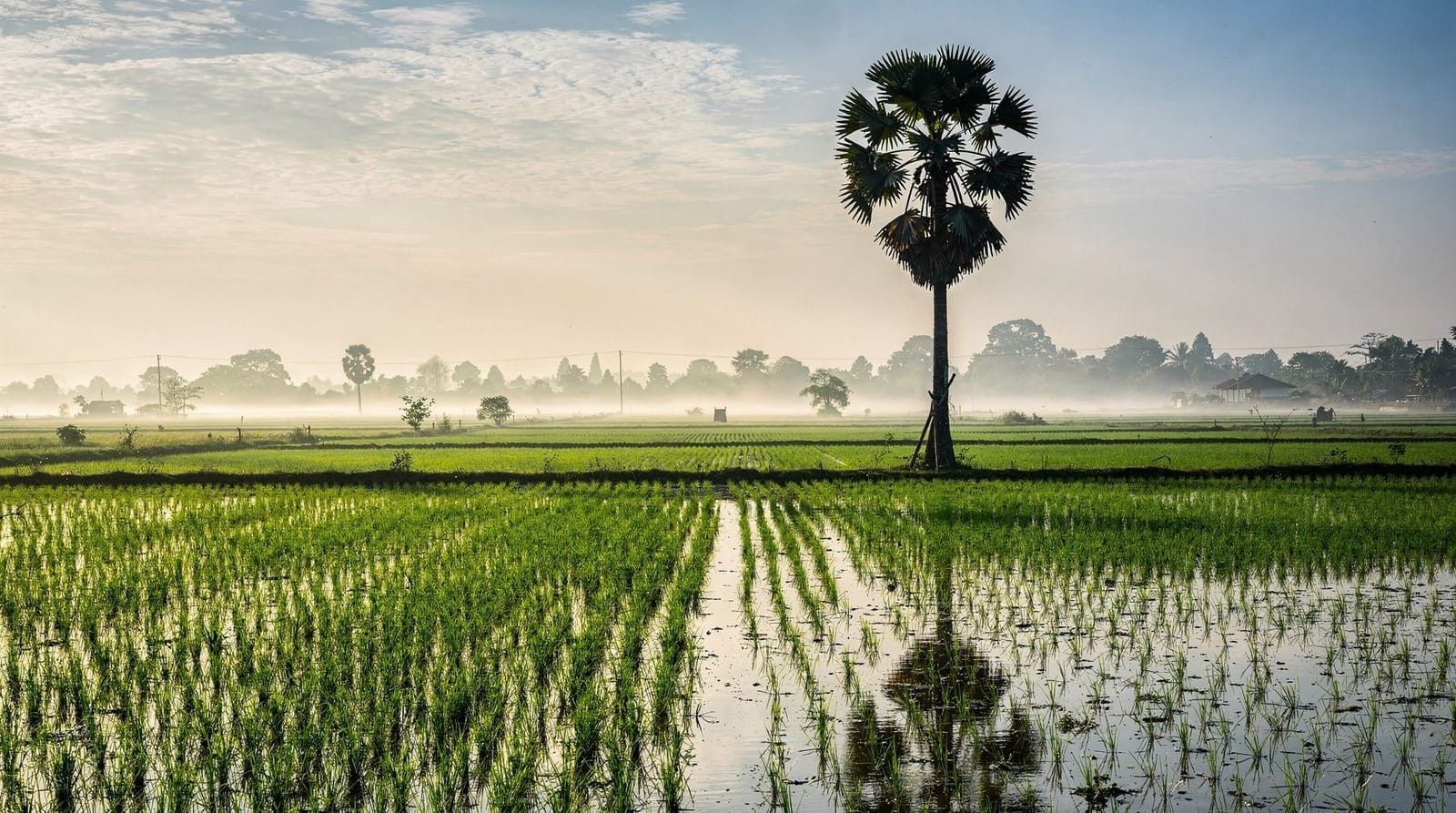
Phnom Kulen
Phnom Kulen's sacred mountain, waterfall and river of a thousand lingas: the separate $20 ticket, distance, and what's worth your time.
Phnom Kulen: Waterfall and the Sacred 1,000 Lingas Tour with Lunch
Quick facts
- Distance from Old Market
- ~50 km, ~1.5 hours by car (steep mountain road, private vehicle needed)
- Ticket needed
- Separate $20 ticket — NOT covered by the Angkor Pass
- Time to allow
- 3-5 hours including the waterfall, river carvings and reclining Buddha
- Highlight
- Birthplace of the Khmer Empire (802 AD), waterfall swimming, riverbed carvings
- Access
- Access road one-way controlled by time slots; a private driver or tour handles this
Where the Khmer Empire was declared, now a waterfall day trip
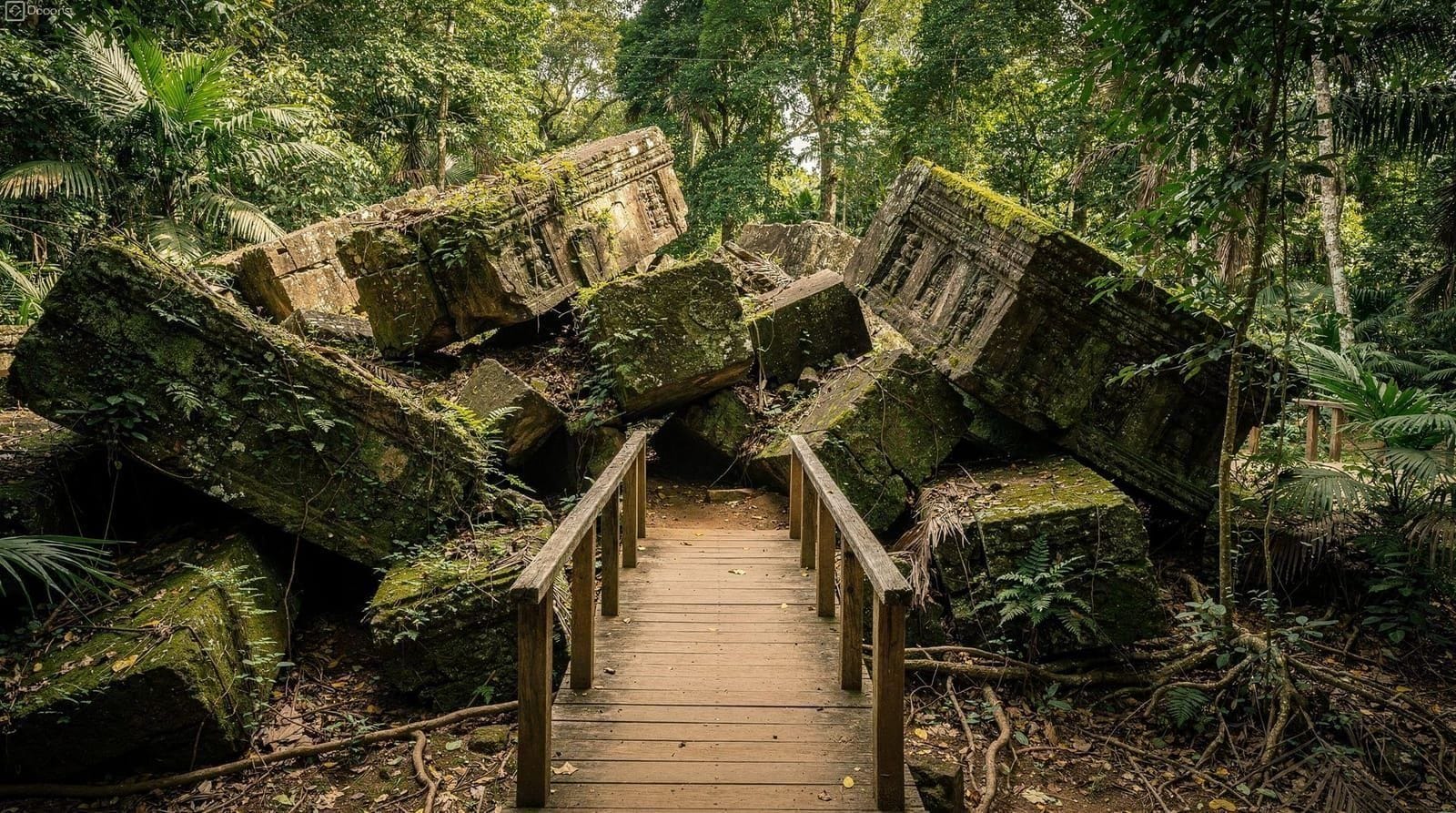
Phnom Kulen is the sacred mountain plateau where, in 802 AD, King Jayavarman II declared himself a “universal monarch” (chakravartin) and founded what would become the Khmer Empire — a founding moment specifically tied to this mountain, centuries before Angkor Wat or any of the temples inside the main park were built. Today it’s visited less for temple ruins (there are some, but they’re minor compared to the rest of this list) and more for three specific things: a waterfall popular for swimming, a stretch of riverbed carved with hundreds of small lingas (the “River of a Thousand Lingas”), and a large reclining Buddha carved into a single sandstone boulder near the summit.
Practicalities for visitors combining swimming with a temple-focused trip
Because Phnom Kulen is genuinely different in character from every other stop on this site — recreational and religious rather than purely archaeological — it’s worth planning your day’s logistics slightly differently than a standard temple visit. Bring a dry bag or at minimum a plastic bag to protect phones, cameras and other electronics if you plan to get in the water, since the waterfall area doesn’t have secure storage the way a hotel or more developed attraction would.
A change of clothes for the ride home is worth packing separately from your main day bag, and sandals that can get wet (rather than shoes you’ll need dry for later temple visits the same day) make the transition between waterfall, walking, and pagoda sections considerably more comfortable.
Distance, road, and access
Phnom Kulen is about 50 km from central Siem Reap, roughly 1.5 hours by car — the mountain access road is steep and winds up the plateau, and it’s managed with a one-way traffic control system (vehicles are only permitted up or down during set windows at certain times of day), which makes independent tuk-tuk visits impractical for most travelers. A private car, driver, or organized tour is the realistic way to visit.
Ticket
Phnom Kulen requires a separate $20 ticket, not covered by the standard Angkor Pass. It’s the most expensive of the outer-temple separate tickets (Koh Ker $15, Beng Mealea $10), reflecting the site’s different management and the infrastructure required to maintain the waterfall and access road area. Factor this into your trip budget alongside your Angkor Pass — see our Angkor Pass calculator for the combined math.
The waterfall — genuinely popular, genuinely crowded at peak times
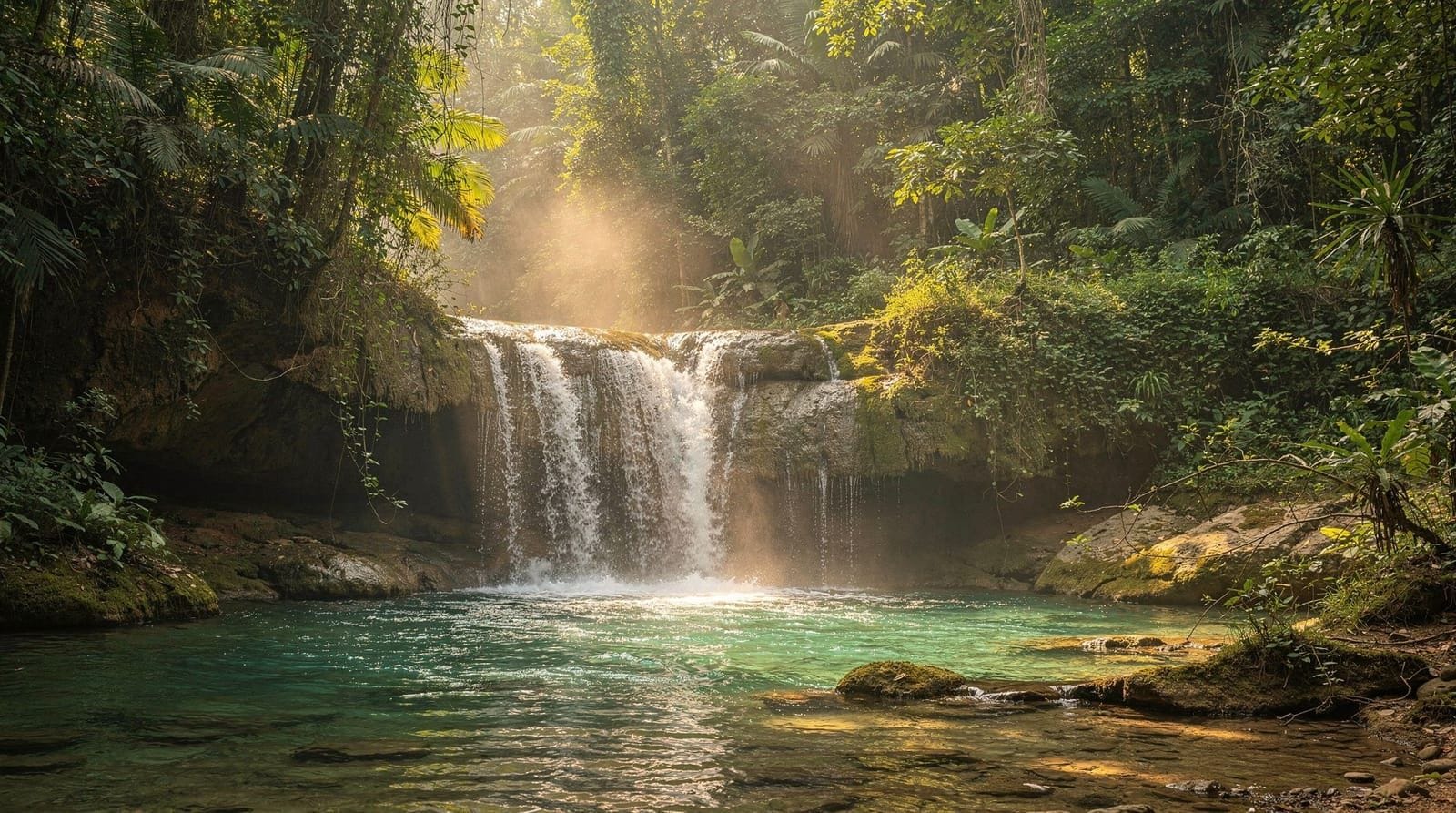
The main waterfall (there are technically two cascades, upper and lower) is a legitimate swimming spot, unusual among Angkor-region attractions, and it draws a mixed crowd of foreign tourists and Cambodian domestic visitors, especially on weekends. Water levels and swimmability vary seasonally — fuller and more dramatic in the rainy season (roughly May-October), lower and calmer in the dry months. Changing facilities are basic; bring a swimsuit under your clothes rather than expecting private changing rooms. The area around the falls can get genuinely crowded at midday, particularly on weekends and Cambodian public holidays — an early or late visit avoids the worst of it.
The River of a Thousand Lingas
A short walk or drive from the waterfall, a stretch of riverbed has hundreds of small lingas (phallic symbols representing Shiva) carved directly into the underlying sandstone, along with some larger relief carvings visible when water levels are low. It’s a genuinely unusual sight — nothing comparable exists at the in-park temples — and takes 20-30 minutes to walk and view properly.
The reclining Buddha
Near the plateau’s summit, a large reclining Buddha is carved into the top of a single sandstone boulder, housed within a working pagoda that remains an active pilgrimage site for Cambodian Buddhists, not purely a tourist stop. Modest dress applies here as at temple sites, and it’s worth remembering this is a living religious site with regular worshippers present, not a museum piece.
The founding legend, and why it still matters to Cambodians today
Jayavarman II’s declaration atop Phnom Kulen in 802 AD is not a minor historical footnote — it’s the foundational moment most historical accounts point to as the start of the unified Khmer Empire that would go on to build Angkor Wat, Angkor Thom and every other temple on this site over the following six centuries. The declaration involved a Brahmin priest performing a ritual establishing a devaraja (“god-king”) cult, asserting Jayavarman II’s independence from Javanese overlordship (the exact nature of this prior relationship is debated among historians) and his sole, divinely sanctioned authority over Khmer territory.
For contemporary Cambodians, Phnom Kulen retains genuine religious and national significance beyond its tourist-facing waterfall and swimming reputation — a fact reflected in the volume of domestic Cambodian visitors, particularly around Buddhist holidays and weekends, who come specifically for pilgrimage and merit-making at the mountain’s temples and shrines rather than for recreation.
Sras Damrei and the lesser-visited ruins
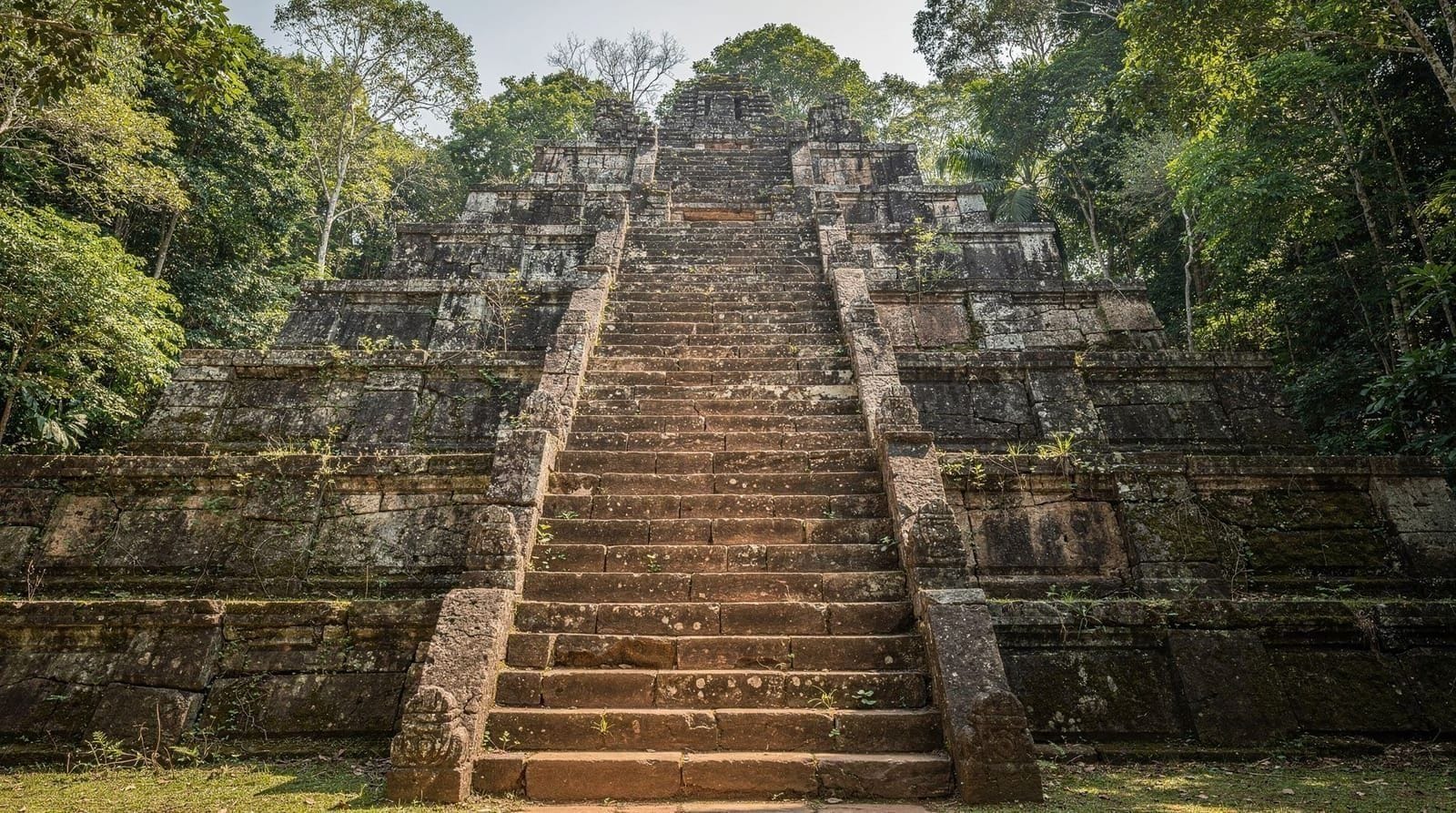
Beyond the waterfall and the River of a Thousand Lingas, Phnom Kulen’s plateau holds scattered, more minor Angkorian-era ruins, including Sras Damrei (the “Elephant Pond”), a carved stone elephant statue and associated water feature, along with several small brick and sandstone temple remnants predating even the Roluos Group in some cases. These are genuinely secondary to the mountain’s main draws and require more specific local knowledge or a guide familiar with the wider plateau to locate — most standard day tours don’t include them, but they’re worth asking about if you’re visiting with a private guide and have interest in the earliest, least-documented phase of Khmer temple architecture.
What’s overrated, what’s underrated
The waterfall at peak midday on a weekend is the one part of Phnom Kulen that can genuinely disappoint — treat it as a swim, not a serene nature moment, if you’re visiting at that time. The River of a Thousand Lingas is comparatively underrated; many visitors focused on the waterfall skip it or rush through, when it’s arguably the most historically distinct part of the whole site.
How to combine it with the rest of your day
Phnom Kulen is usually its own dedicated half-to-full day given the driving and access-road timing constraints — it doesn’t combine as cleanly with other outer temples like Beng Mealea or Koh Ker the way those two combine with each other, since it’s in a different direction. Our Phnom Kulen waterfall and 1,000 lingas tour with lunch covers the standard full-day version with transport, guide and a meal included — worth it given the access-road logistics involved in doing this independently.
For a smaller-group option, the Phnom Kulen waterfall small-group day tour and Kulen Waterfall Park small-group guided tour both cover the core sites with a smaller group size than the largest shared tours. The Kulen Mountain tour covering the waterfall, lingas and reclining Buddha is the most complete single-tour option if you want all three highlights without piecing together a custom itinerary.
For our full comparison of what a Phnom Kulen day actually involves hour by hour, see the Phnom Kulen waterfall guide.
Comparing Phnom Kulen to Beng Mealea and Koh Ker
Of the three major outer-temple/outer-attraction destinations requiring a dedicated day trip, Phnom Kulen is the odd one out: it’s less about temple architecture and more about landscape, water and living religious practice. If you’re choosing between a Phnom Kulen day and a Beng Mealea and Koh Ker combined day, the decision generally comes down to what kind of experience you want more — swimming, a cooler mountain environment and a genuinely different pace (Phnom Kulen), versus more ruins, more climbing, and a drier, hotter, more archaeology-focused day (Beng Mealea/Koh Ker).
Families traveling with kids who need a physical outlet after days of temple-walking often gravitate toward Phnom Kulen specifically for the swimming; visitors more singularly focused on Khmer architecture tend to prioritize the other two.
What to expect from the drive itself
The road up to Phnom Kulen climbs steadily through forest and rural countryside, a genuinely scenic drive in its own right compared to the flatter approach roads to most other Angkor-region destinations. Motion sensitivity is worth considering — the switchback sections near the top are more pronounced than anything on the routes to Angkor Wat, Banteay Srei or the floating villages, and passengers prone to car sickness may want to plan accordingly (window seat, avoid reading on the phone during the climb, consider medication if you know this is an issue for you).
Practical notes
Bring a swimsuit, a change of clothes, and a dry bag for electronics if you plan to swim. Water levels and swimmability vary by season — check before committing if swimming is your main reason for going. The reclining Buddha pagoda requires modest dress; don’t assume swim attire from the waterfall is appropriate there. Food options on the mountain are limited to a handful of local restaurants near the parking areas, generally simple Khmer fare served to a mixed local and tourist clientele — many tours include lunch for this reason, and it’s a reasonable convenience given how spread out the plateau’s individual sights are relative to the amount of walking already involved in a full Phnom Kulen day.
Frequently asked questions about Phnom Kulen
Is Phnom Kulen covered by the Angkor Pass?
No — it requires a separate $20 ticket, the most expensive of the outer-temple add-on tickets.
Can I swim at the Phnom Kulen waterfall?
Yes, it’s a popular and legitimate swimming spot, though conditions vary by season and it can get crowded at midday on weekends.
How do I get to Phnom Kulen — can I take a tuk-tuk?
Not practically. The steep access road has a one-way, time-slot traffic control system, making a private car, driver or organized tour the realistic option rather than an independent tuk-tuk trip.
What is the River of a Thousand Lingas?
A stretch of riverbed near the waterfall carved with hundreds of small lingas (Shiva symbols) directly into the sandstone bed — a genuinely unusual sight not replicated at any in-park temple.
Is Phnom Kulen worth visiting if I’m not interested in swimming?
Yes — the River of a Thousand Lingas and the historical significance as the founding site of the Khmer Empire in 802 AD both stand on their own, independent of the waterfall.
How much time should I set aside for Phnom Kulen?
3-5 hours on-site is typical, plus roughly 3 hours of round-trip driving — realistically a half-to-full day from Siem Reap.
Why is Phnom Kulen significant to Cambodians beyond its waterfall?
It’s the site where King Jayavarman II declared himself a universal monarch in 802 AD, the founding moment historians point to for the unified Khmer Empire that later built Angkor Wat and the rest of the temple network. It remains an active pilgrimage and merit-making destination for Cambodian Buddhists today, not purely a tourist attraction.
Is Phnom Kulen busy with local Cambodian visitors as well as tourists?
Yes, notably more so than most other destinations on this list — the mountain’s religious significance draws substantial domestic visitor traffic, especially on weekends and Buddhist holidays, alongside international tourists focused on the waterfall.
What’s the one-way traffic system on the Phnom Kulen access road?
The steep mountain road is managed with scheduled windows for uphill versus downhill traffic at certain times of day, a safety measure given the road’s narrowness and gradient. This is handled automatically by your driver or tour operator and isn’t something you need to plan around yourself.
Is there anything to see at Phnom Kulen beyond the waterfall, lingas and reclining Buddha?
Yes, though more minor — scattered early Angkorian-era ruins including Sras Damrei (a carved stone elephant) exist across the plateau, though these require a guide with specific local knowledge and aren’t part of most standard day-tour itineraries.
Top experiences
Bookable activities with verified prices and instant confirmation on GetYourGuide.
Phnom Kulen: Waterfall and the Sacred 1,000 Lingas Tour with Lunch

Phnom Kulen: Waterfall Day Tour

Siem Reap Province: Kulen Waterfall Park Small-Group Guided Tour

Cambodia: Kulen Waterfall at Phnom Kulen, Siem Reap

Cambodia: Kulen Mountain Waterfall, 1,000 Lingas and Reclining Buddha Tour
More tours on Viator
Top-rated experiences with verified reviews, bookable on Viator (a Tripadvisor company).