Tonlé Sap floating villages: a complete guide
Siem Reap: Kompong Phluk Floating Village Half-Day Tour
What is a Tonlé Sap floating village visit actually like?
A boat tour through a community of houses built on stilts or floating platforms on Southeast Asia's largest freshwater lake, whose water level rises and falls dramatically by season. There are three distinct village options near Siem Reap — Chong Kneas, Kompong Phluk and Kompong Khleang — that differ significantly in distance, authenticity and crowd level; see our comparison guide before booking.
The lake that changes shape by season
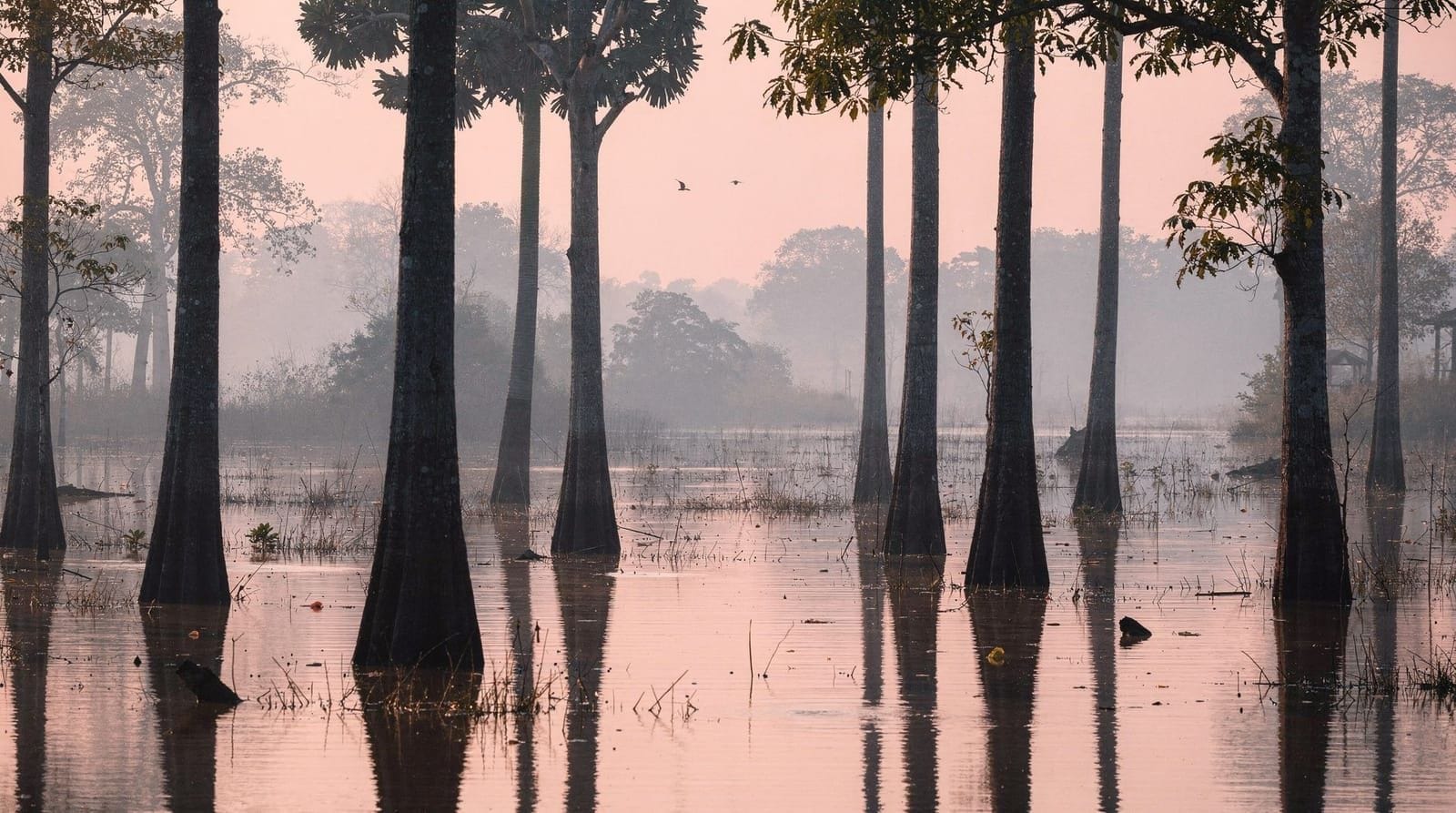
Tonlé Sap is Southeast Asia’s largest freshwater lake, and its most remarkable feature isn’t visible from a single photo — it’s the scale of its seasonal transformation, something no still image fully conveys until you’ve actually seen the same shoreline at two different points in the year. During the dry season, the lake shrinks to roughly 2,500-3,000 square kilometers; during the wet season, backed-up flow from the Mekong River system reverses the Tonlé Sap River’s direction and swells the lake to as much as four or five times that area, flooding surrounding forest and farmland — a hydrological reversal genuinely unusual among the world’s major river-lake systems.
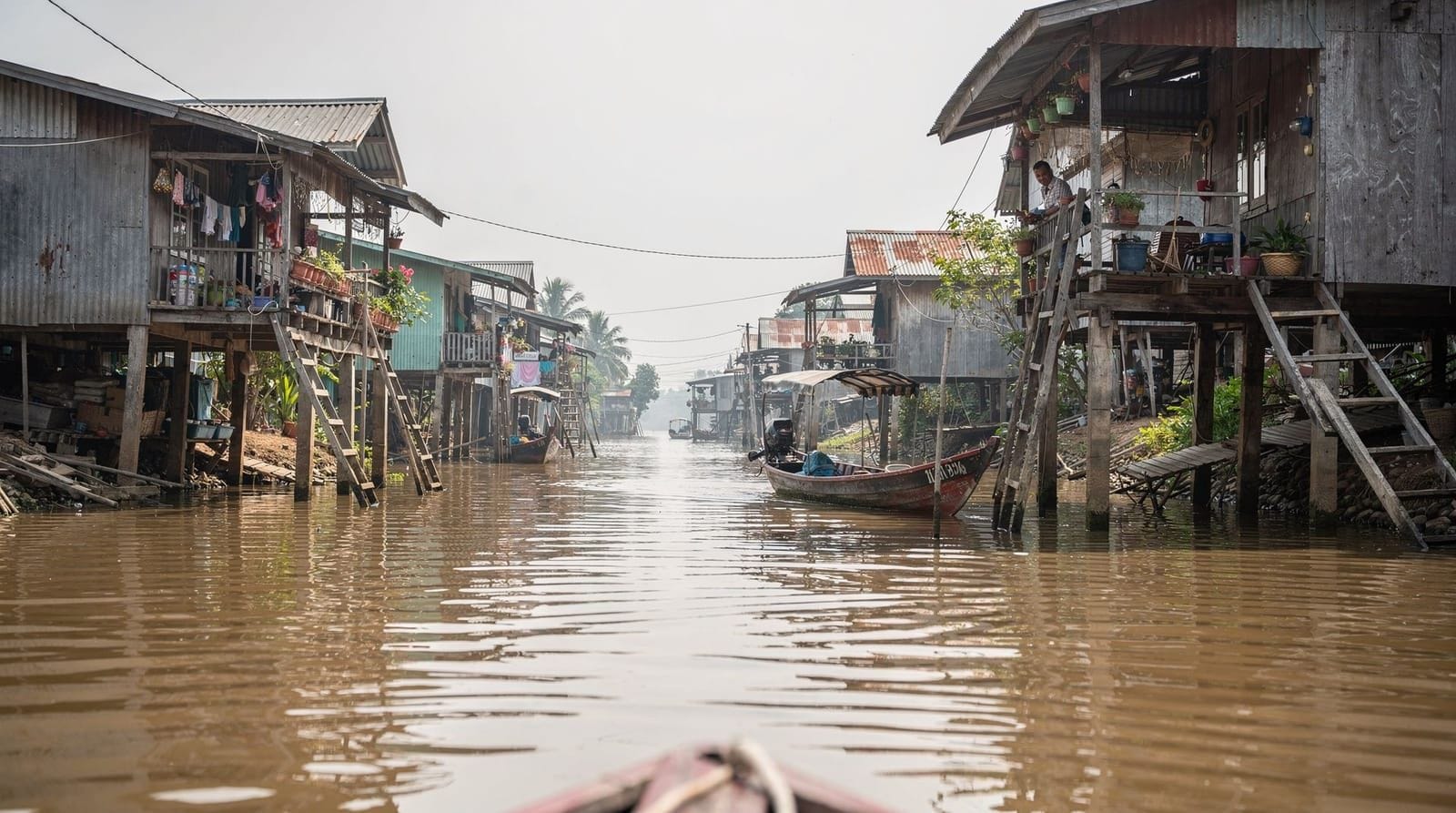
Communities living on and around the lake have adapted with houses built on tall stilts, or literally floating on the water itself, rising and falling with the lake through a cycle that repeats every year, a pattern of life shaped almost entirely around water rather than fixed, dry-land geography. Visiting a floating village means seeing that adaptation firsthand — boats replacing roads, markets and schools built on platforms, and, depending on season, an entirely different landscape than you’d see six months earlier or later, a genuinely rare kind of human settlement to witness firsthand anywhere in the world.
Three villages, three different experiences
Near Siem Reap, three floating or stilted villages are commonly visited, and they differ enough in distance, atmosphere and crowd level that picking the right one matters more than most visitors expect going in:
- Chong Kneas (~16 km, ~20 min from town): the closest and quickest option, but also the most touristy, with a well-documented history of overpriced boat packages and pressure-sale stops.
- Kompong Phluk (~30 km, ~45 min-1 hr): a stilted village at the flooded-forest edge of the lake, generally considered the best balance of accessibility and authenticity.
- Kompong Khleang (~50 km, ~1-1.5 hr): the largest of the three (around 6,000 residents), the least touristy, and the closest to a genuine working town rather than a tour-oriented stop.
Because the differences between these three are significant enough to change your entire experience, we’ve written a dedicated comparison — which floating village to visit — covering distance, crowd level, authenticity and price side by side. If you’re deciding which village to book, start there; this page focuses on what a floating village visit involves generally.
Seasonality: when the water is actually high
The visual impact of a floating village visit depends heavily on water level, which follows the broader wet/dry season cycle. Roughly August through January sees the highest water levels near the villages, when houses genuinely appear to float and boat routes penetrate deep into flooded forest. By March through May, water levels drop substantially — some structures that appeared to float in October sit on exposed stilts over mud or dry ground by April, and certain boat routes become impassable or require walking sections instead. This isn’t a reason to avoid a dry-season visit entirely, but it does change what you’ll see, and it’s worth checking current conditions with your operator if the “floating” visual specifically is your priority.
How the three villages differ, briefly
Because this page focuses on what a floating village visit generally involves rather than a village-by-village breakdown, it’s worth a brief summary here even though the dedicated comparison guide covers this in full detail. Chong Kneas is closest (~16 km, ~20 minutes) but carries the strongest reputation for pressure-sale tactics.
Kompong Phluk (~30 km, ~45 minutes-1 hour) is the most commonly recommended balance of access and authenticity. Kompong Khleang (~50 km, ~1-1.5 hours) is the largest and least touristy, functioning more as a genuine working town than a tour stop. If you’re deciding which specific village to book rather than researching floating villages generally, that comparison guide is the more useful starting point.
What a typical visit involves
Most floating village tours run as a half-day outing: a drive from town to the boat launch, a guided boat trip through the village itself — passing houses, a floating school, sometimes a floating market or church depending on the village — and, at some villages, an optional stop at a flooded mangrove forest area accessible by smaller boat. Kompong Phluk in particular is known for its flooded-forest boat routes during high water, a genuinely distinct sub-experience from the village itself.
Cost and how to book
Independently arranged boat trips, negotiated at the launch point or through a hotel, typically run $15-30 per person depending on village, boat size and how many people share it. Pre-booked tours through platforms like GetYourGuide run somewhat higher, generally $30-60, but include private boat use, fixed pricing with no on-site negotiation, and usually hotel pickup — a Kompong Phluk half-day tour or a Kompong Khleang full-day tour both remove the on-site pricing uncertainty that’s a recurring complaint about independently arranged Chong Kneas trips specifically.
The ethics question, honestly addressed
Not every floating village tour is equal on the ethics front. Chong Kneas in particular has a well-documented reputation for high-pressure add-on sales during the boat trip itself — unnecessary “donations” to a floating school or orphanage-style stop, or pressure to buy overpriced rice or supplies “for the village” mid-tour. These practices exploit the emotional impact of seeing a genuinely under-resourced community up close, and they’re worth knowing about before booking, not discovering mid-tour.
Kompong Phluk and Kompong Khleang see fewer of these documented issues, partly because they attract a smaller volume of exactly the kind of high-turnover tourist traffic these tactics rely on. See our broader Siem Reap tourist traps guide for more on how to spot and avoid pressure-sale patterns generally.
Life on the lake: how communities actually adapt
Beyond the visual novelty of houses on stilts or floating platforms, Tonlé Sap’s floating and stilted communities represent a genuinely sophisticated adaptation to one of the most dramatic seasonal water-level swings of any inhabited freshwater system in the world. Houses in the more fully floating villages are built on bamboo or wood platforms resting on empty drums or buoyant logs, rising and falling with the water and, in some cases, physically towed to different anchor points as the lake’s shoreline shifts through the year.
Stilted villages, more common at Kompong Phluk, use tall wooden stilts — sometimes six meters or more — that leave houses well above even peak flood levels, with the space beneath used for boat storage or fish farming during high water and as a partial living or working space when the lake recedes. Schools, churches, pagodas, medical posts and even small shops follow the same adaptive logic, meaning an entire functioning settlement — not just housing — moves with the water.
The fishing economy behind the villages
Fishing is the economic backbone of most Tonlé Sap communities, and the lake itself is one of the most productive freshwater fisheries in the world, seasonally flooded forest providing crucial breeding grounds for fish that supply a significant share of Cambodia’s protein intake nationally. Visiting a floating village during a boat tour often means passing fishing families actively at work — casting nets, tending fish traps, or processing a catch — a live economic activity rather than a staged demonstration, though tour guides typically point this out explicitly so visitors understand what they’re seeing rather than assuming it’s performed for tourists.
What a boat actually looks like, and how many people share one
Boats used for floating village tours range from small, simple motorized wooden boats seating 2-6 people (typical for a private or small-group booking) up to larger vessels seating 15-20+ for bigger group tours, particularly common at Chong Kneas given its higher visitor volume.
A private boat, whether independently negotiated or booked through a platform, gives more flexibility to linger at a specific spot or ask your boatman to slow down for photos — a shared boat with a larger group moves on a fixer schedule set by the group’s collective interest rather than your own. If a specific, unhurried pace matters to you, confirming boat size and whether it’s shared or private before booking is worth the extra question, since “tour” alone doesn’t specify this.
The role of the boat driver versus a separate guide
Depending on how you book, the person operating your boat may or may not be the same person providing narration and context about what you’re seeing — some tours combine both roles into one boatman-guide, while others (particularly higher-end platform bookings) provide a separate English-speaking guide alongside a dedicated boat operator. A combined boatman-guide is the more common, lower-cost arrangement and works perfectly well for most visitors, but if detailed narration about the community’s history, the lake’s ecology, or specific structures you’re passing matters to you, checking whether a listing specifically includes a dedicated guide (rather than just a boat operator with limited English) is worth doing before booking.
Longer-stay options: floating village homestays
Beyond a standard half-day boat tour, a small number of operators offer overnight homestay experiences within or near a floating village, typically at Kompong Phluk or Kompong Khleang given their more community-oriented character relative to Chong Kneas. This is a considerably more immersive, and considerably rarer, option than the standard day visit — sleeping arrangements are basic by international standards, and the experience trades comfort for a genuinely deeper look at daily life on the lake beyond what a few hours passing through can offer.
This isn’t the right fit for most travelers on a standard Siem Reap itinerary, but it’s worth knowing about as an option for anyone with a specific, deeper interest in Tonlé Sap life and enough trip flexibility to accommodate an overnight departure from the standard temple-focused schedule.
What first-time visitors are often surprised by
Visitors expecting a purely photogenic, postcard-style village sometimes find the reality more complicated and more interesting: visible poverty alongside genuine community resilience, floating trash collection points that reflect real infrastructure challenges rather than neglect, and a pace of daily life that continues regardless of the tour boats passing through. Approaching the visit with curiosity rather than a purely aesthetic expectation tends to produce a more meaningful experience — and a more honest one — than treating it as simply another photo opportunity on the day’s itinerary.
Combining a floating village with the rest of your trip
Chong Kneas’s proximity makes a same-day combination with temple sightseeing physically possible, though it tends to rush both halves of the day. Kompong Phluk and Kompong Khleang, given their distance, work better as their own dedicated half-day or full-day outing — many visitors slot a floating village into a rest day between temple circuit days, a pairing our 3-day itinerary builds in directly. If birdwatching interests you specifically, the Prek Toal bird sanctuary, reached via the lake itself, is a further, more specialized extension for a dedicated nature day rather than a standard village visit.
Boat prices in detail: what independent vs. pre-booked actually costs
Independently arranged boat trips, negotiated directly at a village’s launch point, generally offer the lowest headline price but carry the most pricing uncertainty — the $15-30 per-person range cited above assumes successful negotiation to a fair rate, which isn’t guaranteed, particularly at Chong Kneas where pressure-sale tactics are most documented. Pre-booked tours through GetYourGuide or similar platforms cost more ($30-60) but remove negotiation entirely: the price is fixed and confirmed before you arrive, typically includes hotel pickup, and usually means a private rather than shared boat.
For first-time visitors unfamiliar with typical local pricing, or anyone who’d simply rather not negotiate on arrival, the pre-booked option’s price premium buys genuine certainty rather than just convenience — a trade many visitors find worthwhile specifically for Chong Kneas, less critical at Kompong Phluk or Kompong Khleang where pricing pressure is less commonly reported.
The “extra fee” pattern explained
A recurring complaint in floating village trip reports, again concentrated most heavily around Chong Kneas, involves a price that seemed reasonable at the outset expanding once you’re already on the water — a request for more money to go “a bit further,” to see a specific additional stop, or framed as a donation that feels mandatory despite being presented as optional.
This pattern relies on the practical difficulty of declining or renegotiating mid-trip once you’re on a boat with no easy way to simply walk away. Establishing the complete scope of what’s included — not just a headline price — before departing the launch point is the most effective single defense, and it’s precisely the friction that a fixed-price, platform-booked tour is designed to eliminate.
Prek Toal’s seasonal calendar, for context
Worth noting for anyone considering both a standard village visit and Prek Toal on the same trip: Prek Toal’s best viewing season (roughly December-May) runs largely opposite to Kompong Phluk’s peak season (August-January), meaning the two experiences don’t naturally share an ideal travel window. Kompong Khleang’s broader access period (mid-August through April) overlaps more with both, making it the more flexible pairing if your trip timing needs to accommodate both a standard floating village visit and a Prek Toal excursion within the same trip.
Frequently asked questions about Tonlé Sap floating villages
Which Tonlé Sap village should I visit?
It depends on your priorities — Chong Kneas is closest but most touristy and has documented pressure-sale practices; Kompong Phluk balances access and authenticity well; Kompong Khleang is the least touristy and most 'real working town' feel but requires the longest drive. See our dedicated which floating village to visit comparison for the full breakdown.Is the Tonlé Sap floating village worth visiting?
For most visitors, yes — it's a genuinely different landscape and way of life from anything in the temple circuit, and Southeast Asia's largest freshwater lake with a water level that fluctuates by season is a striking natural phenomenon on its own. The caveat is picking the right village and tour operator, since not every option delivers an equally authentic or ethical experience.What time of year is best for the floating villages?
Roughly August through January sees the highest water levels and the most dramatic 'floating' visual, since the villages sit deepest into flooded forest or open water during this stretch. By the dry season's end (April-May), some structures sit on exposed mud flats or stilts well above any visible water, which changes the visual significantly and can limit boat access at certain villages.How much does a floating village boat tour cost?
Independently arranged half-day boat trips typically run $15-30 per person depending on village and boat-sharing arrangement, while private or guided tours through booking platforms run higher, generally $30-60, reflecting private boat use and often a hotel pickup included.Are floating village tours ethical?
It depends heavily on the specific operator and village — Chong Kneas in particular has a well-documented history of high-pressure sales tactics and, in some cases, dubious 'orphanage' or 'school donation' stops designed to extract extra payment from visitors. Booking through a reputable operator and researching the specific tour's stops in advance meaningfully reduces this risk; see our comparison guide for village-specific detail.Can I combine a floating village visit with temple sightseeing on the same day?
Physically yes for Chong Kneas given its proximity, but it's a rushed combination that shortchanges both experiences. Kompong Phluk and Kompong Khleang, being farther from the temples, work better as their own dedicated half-day or full-day outing rather than a temple add-on.
Top experiences
Bookable activities with verified prices and instant confirmation on GetYourGuide.


More tours on Viator
Top-rated experiences with verified reviews, bookable on Viator (a Tripadvisor company).