Angkor Wat dress code: what you can and can't wear
What is the dress code for Angkor Wat?
Shoulders and knees must be covered to enter Angkor Wat and every other Angkor temple. This applies to all genders and is actively checked by guards at the entrance — tank tops, short shorts and mini-skirts will get you turned away, not just frowned at.
The rule, stated plainly
Shoulders and knees must be covered to enter Angkor Wat, and the same standard applies across every temple inside the Angkor Archaeological Park. This isn’t a soft cultural suggestion — it’s actively enforced by guards stationed at temple entrances, and being out of compliance means being turned away, not lectured and waved through. The rule applies to every gender equally: it’s not a women-only dress code, despite what some older travel blogs imply.
What’s not allowed
- Tank tops, sleeveless shirts, or anything exposing the shoulders
- Shorts or skirts that end above the knee
- Sheer or see-through fabric over bare shoulders or thighs
- Swimwear, even as a base layer under other clothing
What works
- A T-shirt or short-sleeved shirt, or any top with sleeves reaching at least to the top of the shoulder
- Trousers, capri pants, or a skirt/dress that reaches at least to the knee when standing
- A light scarf or sarong long enough to wrap over shoulders or around the waist as a knee-covering layer if your main outfit falls short
Loose, breathable fabric is worth prioritizing over strict coverage minimums — Siem Reap’s heat, especially outside the cooler December-February window, makes lightweight long trousers and short-sleeved shirts a more comfortable compliant outfit than anything heavy or tight.
Where enforcement is strictest
Angkor Wat itself is where the dress code is checked most consistently, particularly at the entrance to the upper Bakan sanctuary level, which historically has applied an even stricter standard than the temple’s outer galleries — steep original stairs, limited access windows, and staff positioned directly at the entry point make this the spot most likely to catch non-compliant clothing.
Bayon and Ta Prohm are checked with similar consistency given their crowd volume. Smaller, less-staffed outlying sites on the Grand Circuit or outlier temples like Banteay Srei may see lighter enforcement in practice, but treating the dress code as optional anywhere in the park is a bad bet — guards rotate, and a site checked loosely one week can tighten up the next.
The easy fix: pack for it before you land
The simplest solution is packing two or three lightweight, knee-and-shoulder-covering outfits specifically for temple days before you arrive in Siem Reap — breathable trousers or a maxi skirt, plus short-sleeved tops, cost little and pack small. See our Siem Reap packing guide for a fuller list geared toward the climate and the temple dress code together.
If you show up without compliant clothing
Vendors cluster near the main Angkor Wat entrance and other major temple gates selling inexpensive elephant-print pants, sarongs and light scarves aimed squarely at travelers who didn’t dress appropriately — a few dollars buys a passable cover-up on the spot. It works as a backup, but it’s a worse outcome than simply packing correctly: gate-side vendor prices run several times what the same items cost in an Old Market shop, and you lose time queuing at the stall instead of getting an early start on a sunrise or Small Circuit visit.
Etiquette beyond clothing
Dress code is only part of the picture — Angkor’s temples are active religious sites as well as archaeological monuments, and a handful of related etiquette points matter alongside what you wear: no touching or climbing on carvings, no smoking or eating inside temple structures, and quiet, respectful behavior around monks or active shrines, particularly at Angkor Wat’s still-functioning Buddhist sanctuary areas. Our temple etiquette guide covers the full set of expectations beyond clothing, including photography etiquette around monks and worshippers.
Why the rule exists
Angkor Wat remains an active Buddhist religious site, not purely an archaeological ruin — monks still use parts of the complex, and the dress code reflects standard Southeast Asian Buddhist temple etiquette applied consistently across the entire park rather than a rule invented for tourism management. Framing it this way helps explain why enforcement is genuinely non-negotiable rather than a loosely applied suggestion: it’s the same baseline respect expected at any active Buddhist temple across Cambodia, Thailand or Laos, simply applied at a much larger, more visited site.
Fabric and comfort in Siem Reap’s climate
Because the dress code requires more coverage than many travelers default to in tropical heat, fabric choice matters as much as cut. Lightweight linen or technical hiking fabric in loose-fitting trousers breathes far better under direct sun than denim or heavier cotton, and a similar principle applies to tops — a loose short-sleeved linen or technical shirt stays cooler than a fitted cotton T-shirt despite covering the same amount of skin. Local markets around Old Market sell inexpensive, specifically climate-appropriate cotton trousers and shirts if you’d rather buy on arrival than pack heavier fabric from home; just budget the trip there before your first temple morning rather than assuming you’ll pass a shop en route to a 5am sunrise.
A common point of confusion: temple-appropriate vs. beach-appropriate
Visitors combining a Cambodia trip with a beach extension (Sihanoukville or the southern islands) sometimes pack primarily beachwear and assume it’ll flex to cover temple visits too — it generally doesn’t. Beach shorts and tank tops fail the dress code outright, and even beach cover-ups and sarongs, while sometimes usable as an improvised knee-covering layer, aren’t a reliable substitute for genuinely temple-appropriate clothing. If your itinerary includes both, pack the two wardrobes as distinct categories rather than assuming overlap.
What guards are actually checking for
In practice, guards are scanning for three things at a glance: exposed shoulders (sleeveless tops), exposed knees (shorts or skirts ending above the knee), and, less commonly enforced but still relevant, sheer or overly form-revealing fabric. They’re not measuring hemlines with a ruler — a skirt or shorts that clearly, visibly covers the knee when standing passes without scrutiny, while anything hovering right at the kneecap invites a closer look or a request to adjust with a wrap or scarf before entering.
When genuinely borderline, guards commonly offer the option to tie a rented or purchased scarf around the waist as a fix on the spot rather than an outright refusal — but this isn’t guaranteed at every checkpoint, and treating it as a backup plan rather than your primary strategy is the safer approach.
Footwear at the temples
Dress code enforcement focuses on shoulders and knees specifically, but footwear matters practically even though it isn’t formally regulated the same way. Closed or sturdy sandals handle Angkor’s uneven original stone steps and occasionally muddy pathways (particularly during rainy season, roughly May-October) better than flip-flops, which can be genuinely hazardous on the steep, worn stairs at sites like Phnom Bakheng or the upper levels of Angkor Wat itself. Some temple areas require removing shoes entirely before entering active shrine spaces — a normal part of Buddhist temple etiquette across the region — so footwear that’s quick to slip on and off is more practical than lace-up hiking boots for a day involving multiple temple stops.
What happens step by step if you’re stopped at the gate
If a guard flags your outfit as non-compliant, the process is usually straightforward rather than confrontational: you’ll typically be asked to step aside briefly, and offered the option to adjust with a wrap or scarf if you have one, or directed to a nearby vendor selling cover-up items if you don’t.
Refusal to enter isn’t presented as a punishment — it’s a straightforward “not today, adjust and come back” outcome, and re-entering after covering up appropriately is normal and doesn’t carry any additional fee or paperwork beyond the time lost. The practical cost is mainly time: if this happens during the narrow sunrise window, losing 10-15 minutes to a wardrobe fix can mean missing the best light, which is the strongest reason to get the outfit right before you leave your hotel rather than relying on a same-day fix.
Packing list specifically for temple-compliant days
A short, practical list for anyone building a Siem Reap packing list around temple days specifically:
- 2-3 short-sleeved or lightweight long-sleeved shirts (avoid sleeveless entirely for temple days)
- 2-3 pairs of lightweight trousers or a knee-length-or-longer skirt/dress in breathable fabric
- One light scarf or sarong, packed in your day bag every temple day as a backup layer
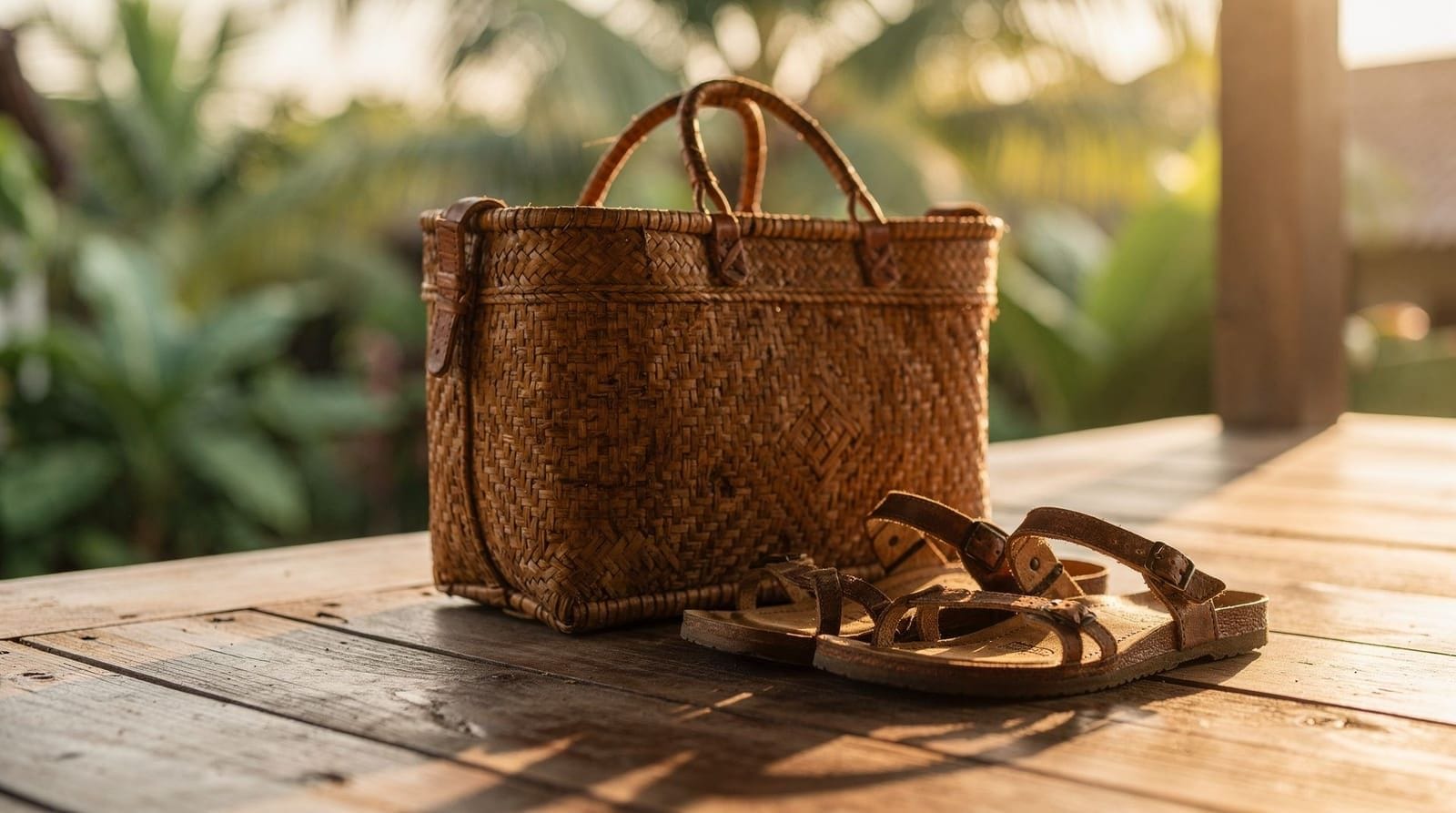
- Closed or sturdy sandals rather than flip-flops for the stone steps
- A hat and sunscreen — not dress-code items, but worth packing alongside for the same early-morning temple routine
See our Siem Reap packing guide for the fuller list covering the rest of a trip beyond temple days specifically.
How this compares to dress codes at other Southeast Asian temples
Travelers arriving in Cambodia after Thailand, Laos, or Vietnam will recognize this dress code — shoulders and knees covered — as broadly consistent with active Buddhist temple etiquette across the region, including well-known examples like Bangkok’s Grand Palace and Wat Phra Kaew, which enforce a similarly strict standard. What differs at Angkor specifically is scale and volume: the sheer number of daily visitors across dozens of individual temple structures means enforcement happens at many more checkpoints simultaneously than at a single-site destination, which is part of why treating the rule as consistently enforced everywhere in the park, rather than assuming smaller sites are lax, is the safer approach.
Bottom line
Pack shoulders-and-knees-covering clothing for every day you plan to enter a temple, not just Angkor Wat itself — the rule applies park-wide, guards do check it, and refusal at the gate is a real outcome, not an exaggerated warning. A light scarf in your day bag is the cheapest insurance against getting caught out mid-visit by a spontaneous stop at a temple you hadn’t planned that morning’s outfit around.
Frequently asked questions about Angkor Wat dress code
Will I really be refused entry for wearing shorts?
Yes, at the main temples — particularly Angkor Wat itself, where guards enforce the rule consistently, especially at the upper level where the central towers sit (a stricter dress code zone within the temple). Some outlying, less-staffed sites are checked less rigorously, but you shouldn't count on it. Bring cover-up options rather than gambling on lax enforcement.What counts as knees covered — do capri pants work?
Capri pants or knee-length skirts that fully cover the knee when standing are generally accepted. Skirts or shorts that sit right at or just above the kneecap are the most common borderline case guards will stop — if in doubt, go a few centimeters longer.Can men wear tank tops at Angkor Wat?
No. The shoulders-covered rule applies equally to men and women — sleeveless shirts and tank tops are not permitted for anyone. A basic T-shirt or short-sleeved shirt is fine.Is there anywhere to buy appropriate clothing near the temples?
Vendors near the main entrances sell inexpensive elephant-print pants and light scarves specifically marketed to cover shoulders or knees on the spot, usually for a few dollars. It's a reliable backup, but paying tourist-stall prices at the gate is more expensive than simply packing the right clothes from your hotel.Does the dress code apply to children too?
Enforcement is generally more relaxed for young children, but older kids and teenagers are held to the same shoulders-and-knees standard as adults, particularly at Angkor Wat's central sanctuary level.Are there stricter rules for the upper level of Angkor Wat?
Yes. Access to Angkor Wat's uppermost tier — Bakan sanctuary — has historically applied an even stricter standard, and it's also where lines form and staff have the most direct sightline to check compliance. Wear your most conservative outfit if you plan to climb to the top level.
More tours on Viator
Top-rated experiences with verified reviews, bookable on Viator (a Tripadvisor company).