Chong Kneas vs. Kompong Phluk vs. Kompong Khleang: which floating village to visit
Chong Khneas: Discover the Floating Village
Which is the best Tonlé Sap floating village to visit — Chong Kneas, Kompong Phluk or Kompong Khleang?
Kompong Phluk offers the best overall balance of accessibility and authenticity for most visitors. Chong Kneas is closest but the most touristy, with documented pressure-sale practices. Kompong Khleang is the least touristy and most authentic but requires the longest drive.
A question that deserves a straight answer
“Which floating village should I visit” is one of the most frequently asked, and most poorly answered, questions in Siem Reap trip planning. Blog after blog lists all three options with vague, interchangeable descriptions — “authentic,” “scenic,” “off the beaten path” — without directly stating the practical differences that actually determine whether you’ll have a good visit or a frustrating one. This guide is deliberately built around a direct, decision-oriented comparison rather than three separate, equally-weighted descriptions, since in practice most travelers only have time for one of the three. Here’s the direct comparison.
The comparison table
| Chong Kneas | Kompong Phluk | Kompong Khleang | |
|---|---|---|---|
| Distance from town | ~16 km | ~30 km | ~50 km |
| Drive/boat time | ~20 min | ~45 min-1 hr | ~1-1.5 hr |
| Best season | Year-round access, but most dramatic Aug-Jan | Mid-August to end of January (water level dependent) | Mid-August to April, best March-April |
| Crowd level | High — the default choice for time-pressed tours | Moderate | Low |
| Authenticity | Lowest — heavily tour-oriented | Good — stilted village + flooded forest | Highest — genuine working town, ~6,000 residents |
| Typical price | $15-25, but on-site pricing can be inflated | $20-35 | $25-45 (longer drive reflected in price) |
| Known issues | Documented pressure-sale tactics, “donation” stops | Fewer reported issues | Fewer reported issues |
| Best suited to | Time-pressed visitors, short stopovers | Most first-time visitors wanting a balance | Visitors prioritizing authenticity and low crowds over convenience |
Chong Kneas: closest, and the reason to know its reputation first
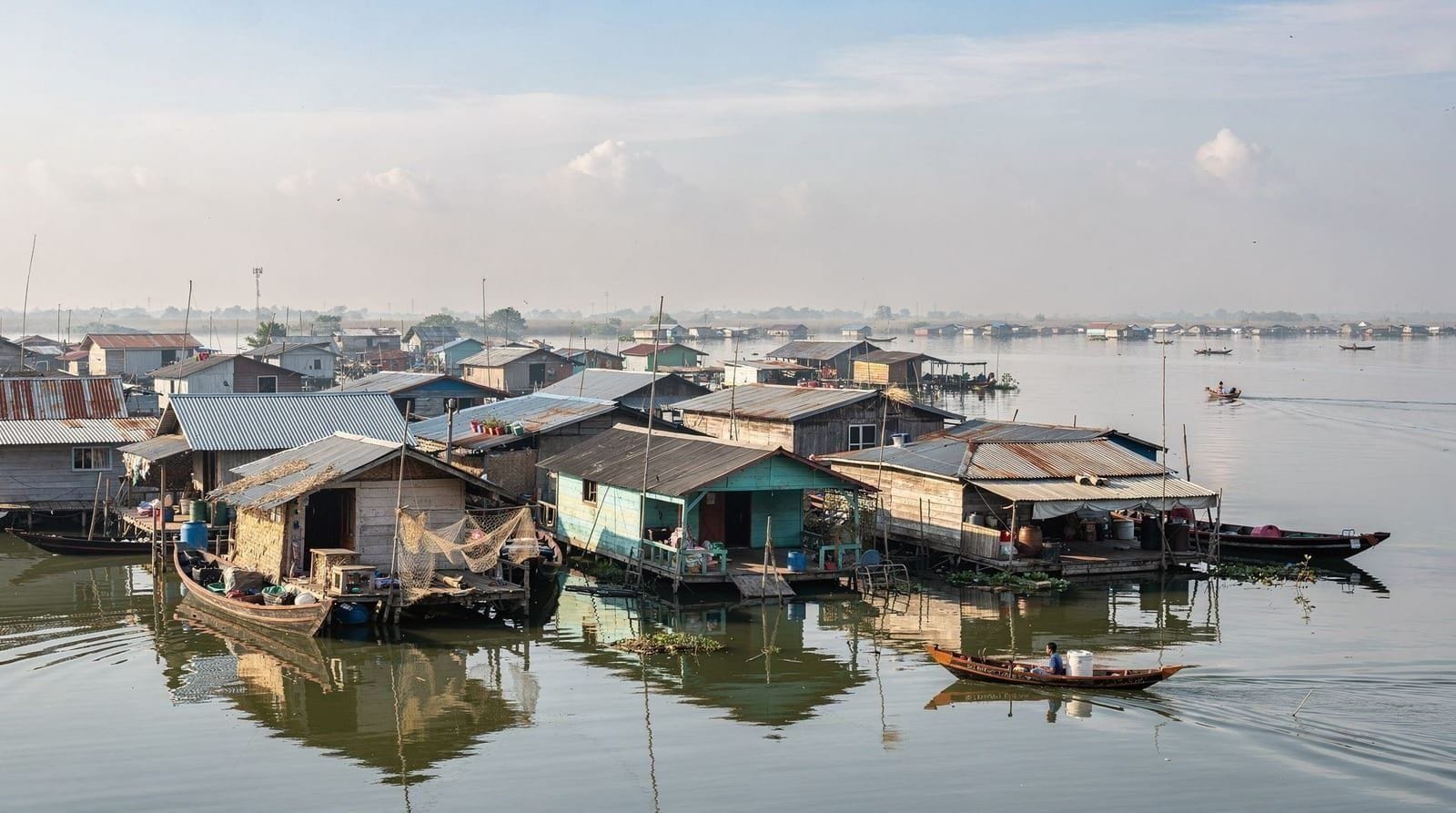
Chong Kneas is roughly 20 minutes from town, which makes it the automatic default for tour operators packaging a “floating village” add-on into a temple day or a short stopover, and by far the most frequently booked of the three villages simply on the basis of proximity. That convenience comes at a real cost to the experience: Chong Kneas has a well-documented history of high-pressure boat package sales at the launch point, along with “donation” stops at floating schools or claimed orphanages that pressure visitors into extra payments mid-tour, sometimes for causes that don’t reach the people they’re presented as helping.
None of this means Chong Kneas has nothing to offer — the core visual of a floating settlement on open water is genuinely there — but it means going in informed, ideally with a fixed-price tour booked in advance through a reputable operator like a Chong Kneas guided boat tour rather than negotiating on-site, where pricing pressure is most acute.
Kompong Phluk: the balanced choice
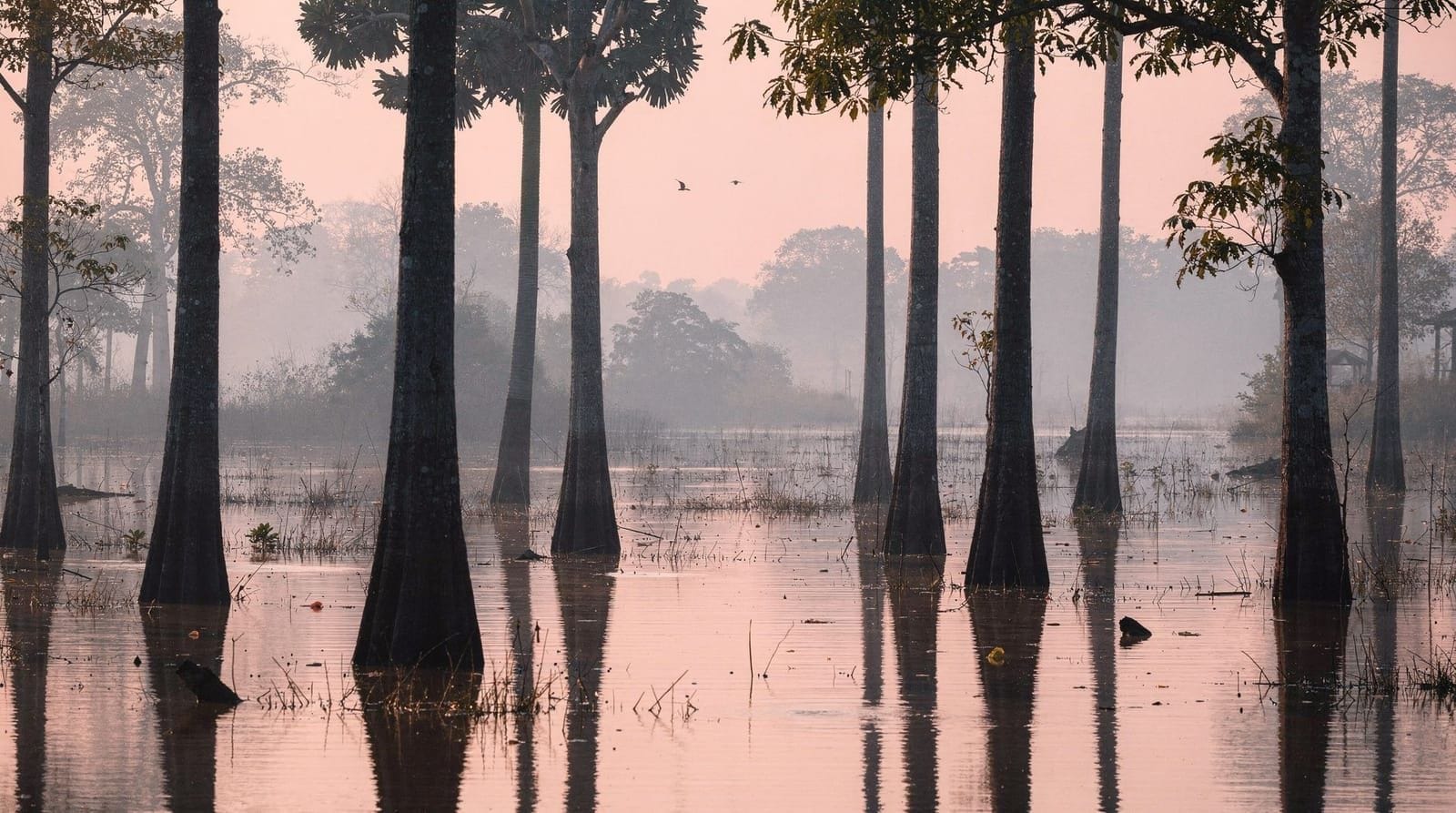
At roughly 30 km and 45 minutes to an hour from town, Kompong Phluk sits in a practical middle ground — far enough to filter out the most casual, time-pressed tour traffic, close enough to remain a comfortable half-day trip without eating into an entire day of your itinerary. The village itself is built on genuinely tall stilts at the edge of a flooded mangrove forest, and during high water (roughly mid-August through January) small boats navigate directly through the flooded forest itself, a visually striking sub-experience distinct from the village tour.
For most first-time visitors without a strong reason to prioritize either maximum convenience or maximum authenticity, Kompong Phluk is the recommended default — see our Kompong Phluk half-day tour option.
Kompong Khleang: the authentic, least-touristy choice
Kompong Khleang, roughly 50 km and up to 1.5 hours from town, is the largest of the three villages by population — around 6,000 residents — and feels less like a tour stop and more like visiting a genuine, functioning local town that happens to be built on stilts and, seasonally, water, rather than a destination shaped primarily around visiting tourists. Its market, less oriented toward tourist purchases than toward local daily life, is a highlight for visitors who want to see the community’s actual rhythm rather than a curated tour experience built primarily to be photographed.
The tradeoff is straightforward: the longest drive of the three, and consequently the highest price point given the added transport time and fuel involved in reaching a village this far from the standard tourist infrastructure. A guided Kompong Khleang tour is the most common way to visit, since independent transport logistics are more involved at this distance and negotiating a fair boat price without a pre-arranged guide is harder here than at the closer two villages.
How to choose based on your actual priorities
Short on time or making a brief stopover: Chong Kneas is the realistic option, but book a fixed-price, reputable tour rather than negotiating on-site, and go in aware of the reputation covered above.
Want the best overall balance for a first Tonlé Sap visit: Kompong Phluk, especially if your visit falls within the high-water season (August-January) when the flooded-forest boat routes are accessible.
Prioritize authenticity and low crowds above convenience, and have a full half-day to dedicate: Kompong Khleang delivers the most genuine, least tour-oriented experience of the three, closer in feel to visiting an ordinary Cambodian provincial town than a curated tourist stop.
Interested in birdwatching specifically: none of these three is primarily a birding destination — see our separate Prek Toal bird sanctuary guide, reached via the lake and requiring its own dedicated, highly seasonal trip.
Combining a village visit with a countryside route
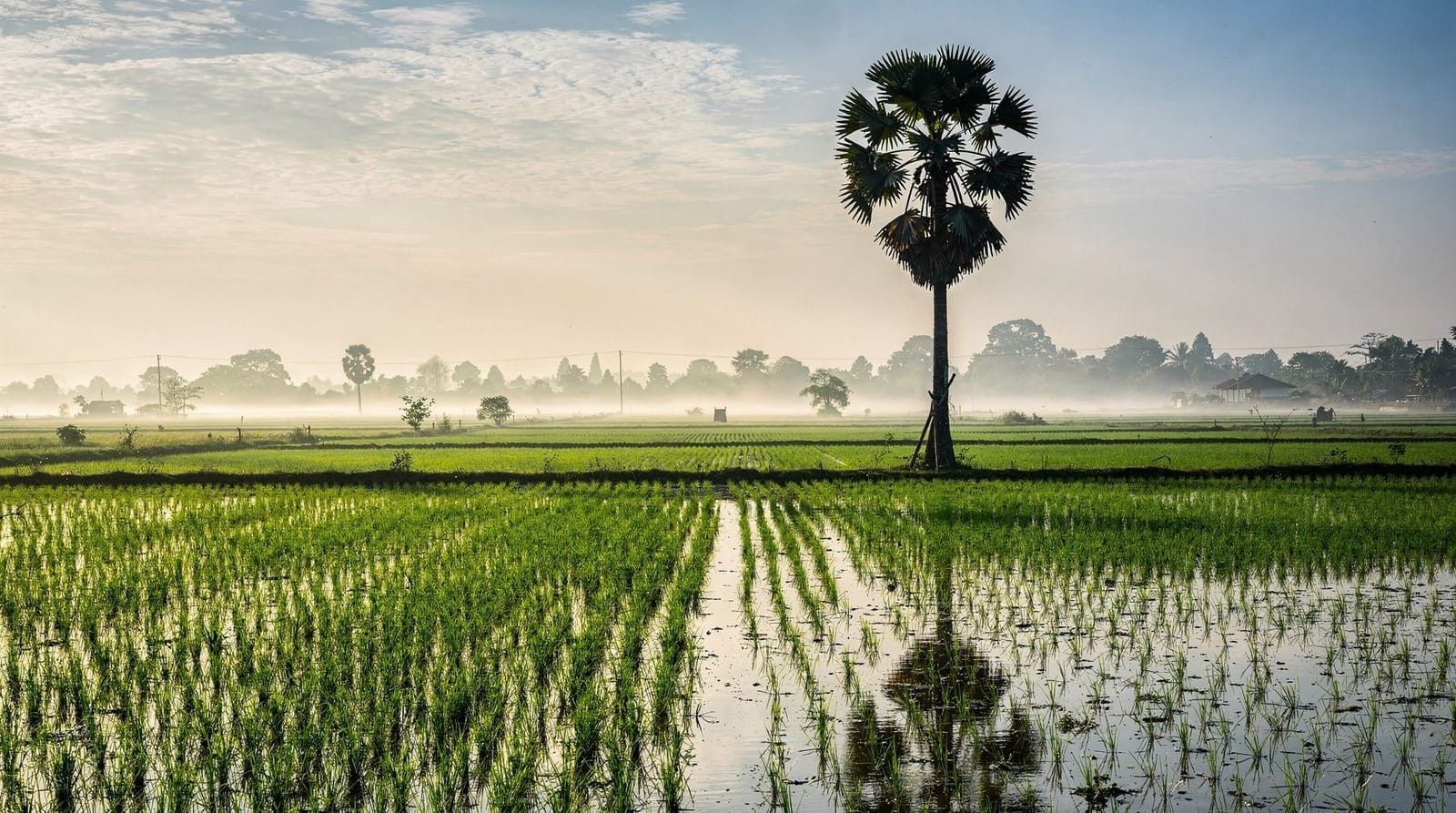
The road out toward all three villages, but Kompong Phluk and Kompong Khleang in particular given their greater distance, passes through the same rice-farming countryside covered in our countryside and rice fields guide, and several operators build a rural stop or a short countryside detour into the drive itself rather than treating the transit time as pure travel. If seeing rural Cambodia and a floating village both matter to your trip but time is limited, checking whether your chosen village tour already includes this kind of combined routing can save arranging two separate half-day outings for what’s substantially overlapping geography.
What each village looks like at different times of year
Water level changes each village’s character enough that the “same” destination can feel meaningfully different depending on when you visit. At Chong Kneas, the closest lake access point, the village itself partially relocates closer to or further from the permanent shoreline as the lake expands and contracts, meaning the boat route length genuinely varies by season.
Kompong Phluk’s defining flooded-forest boat routes are only fully navigable during the higher-water months (roughly August-January) — visiting in the driest part of the year (March-May) means missing this specific sub-experience even though the stilted village itself remains visitable year-round. Kompong Khleang, given its position and the surrounding terrain, retains reasonable boat access across a longer stretch of the year (mid-August through April) than Kompong Phluk, with the best conditions generally falling in March-April as water recedes enough to reveal more of the village’s stilted structure without cutting off boat routes entirely.
Transport and logistics differences
Chong Kneas is reachable by ordinary tuk-tuk given its short, paved-road distance from town. Kompong Phluk’s greater distance means most visitors arrange a car or a tour package rather than a standalone tuk-tuk, given the combination of drive time and the need to coordinate a boat at the village’s specific launch point. Kompong Khleang, the furthest of the three, is almost always visited via an organized tour or a pre-arranged private driver familiar with the route, since independent logistics (finding a boat, negotiating a fair price on arrival) are considerably more involved at this distance than at the closer two villages.
How on-board “extra fees” typically get presented
Beyond the headline boat price, a specific pattern worth recognizing at all three villages, though most associated with Chong Kneas, is the mid-tour add-on fee — a request for additional payment once you’re already on the water, framed in a way that’s awkward to decline given you’re now physically committed to the boat and the person asking. Common framings include an offer to take you “a bit further” to see something specific for an extra charge, a stop at a floating shop or structure with pressure to buy something before continuing, or the donation-stop pattern covered in the ethics section.
The most reliable defense is asking directly, before departure, “is this the complete price for the full route” and getting a clear answer, rather than assuming a quoted price is necessarily the final one. Pre-booked platform tours with a fixed, published price are structurally more resistant to this pattern than an independently negotiated boat, since the price and route are agreed and confirmed before you ever step onto the water.
Group size and tour style differences
Chong Kneas sees the largest volume of big-group, bus-tour-style visits given its proximity and the sheer number of operators running standard packages there — this is part of what drives its more commercialized, pressure-sale reputation. Kompong Phluk sees a mix of small-group and private tours, generally with a more personal, less rushed pace than Chong Kneas’s higher-volume operations. Kompong Khleang, given the lower overall visitor volume, is almost exclusively visited in smaller private or small-group arrangements, contributing directly to its more authentic, less tourist-oriented feel.
A note on ethics across all three
Pressure-sale tactics are most associated with Chong Kneas specifically, but the underlying dynamic — a genuinely under-resourced community juxtaposed against relatively wealthy visitors passing through by boat — exists to some degree at all three villages. Approaching any floating village visit with a fixed-price, pre-arranged tour, being wary of any on-site “donation” requests presented as mandatory, and directing any charitable giving through vetted local organizations rather than mid-tour cash asks are good practices regardless of which village you choose. For more on this pattern across Siem Reap generally, see our tourist traps guide.
Boat prices in more detail: what you’re actually paying for
The price ranges in the comparison table above ($15-25 Chong Kneas, $20-35 Kompong Phluk, $25-45 Kompong Khleang) reflect a combination of boat rental, driver/guide time, and distance-based fuel cost, but the way these get bundled or itemized varies considerably by how you book. An independently negotiated boat at the launch point typically quotes a single all-in price for the boat (sometimes shared with other travelers to split cost, sometimes private), while a pre-booked platform tour usually itemizes a private boat, hotel pickup, and a guide into one fixed price with no on-site negotiation required.
The most common on-site “extra” beyond the initial quoted price, particularly at Chong Kneas, is pressure to pay an additional amount partway through the trip — for a “closer look” at a specific stop, for a longer route than initially agreed, or the donation-stop pressure covered above. Confirming the full scope of what a quoted price covers before departing the launch point, not just the headline number, is the most effective single defense against these mid-trip add-on requests.
Month-by-month water level reference for all three villages
Tonlé Sap’s dramatic seasonal swing — from roughly 2,500-3,000 square kilometers in the dry season to four or five times that size at wet-season peak — drives nearly everything about how each village looks and how accessible its boat routes are during a given month:
| Month | General water trend | What it means on the ground |
|---|---|---|
| December-January | High, beginning to recede | Villages at their most visually “floating,” all three fully boat-accessible |
| February-March | Receding steadily | Kompong Phluk’s flooded-forest routes start narrowing; Kompong Khleang still strong |
| April-May | Lowest point | Some Kompong Phluk structures sit on exposed stilts; Chong Kneas boat routes shorten |
| June-July | Rains begin, level starts rising | Transitional — variable conditions depending on how early/late rains arrive that year |
| August-September | Rising quickly | Kompong Phluk’s flooded-forest season begins; Kompong Khleang access improving |
| October-November | Near or at peak | All three villages at or approaching their most dramatic, fullest “floating” appearance |
This table is a general guide rather than a precise yearly forecast, since actual flood timing shifts somewhat year to year with rainfall variation — confirming current conditions with your operator close to your travel dates is worth doing if the specific visual (flooded forest vs. exposed stilts, for instance) matters to your decision.
Prek Toal’s season relative to the three villages
Worth flagging explicitly since it runs on the opposite seasonal logic from all three villages covered in this comparison: Prek Toal bird sanctuary’s best viewing window is roughly December through May, the drier half of the year, when receding water concentrates nesting bird colonies into more visible, boat-accessible zones.
This is nearly inverted from Kompong Phluk’s peak season (August-January) and only partially overlaps with Kompong Khleang’s broader window (mid-August through April). If your trip timing is flexible and you’re deciding between a village visit and Prek Toal specifically, checking which season you’re traveling in is a genuinely useful input — see our dedicated Prek Toal guide for the full detail on why its calendar runs opposite to the villages.
Frequently asked questions about Chong Kneas vs. Kompong Phluk vs. Kompong Khleang
Why is Chong Kneas considered the most touristy option?
It's the closest village to town (~16 km, ~20 minutes), which makes it the default choice for time-pressed visitors, tour operators and cruise-ship-style day tours — that high, concentrated traffic volume is exactly what's fueled the pressure-sale tactics the village has become known for, including overpriced boat packages negotiated on the spot and 'donation' stops that aren't always what they claim to be.Is Kompong Khleang worth the extra drive time over Kompong Phluk?
If low crowds and a genuine working-town feel are your top priority, yes — Kompong Khleang is the largest of the three (around 6,000 residents) and functions as a real local market town rather than a tour-oriented stop. If you have less time or a tighter budget for transport, Kompong Phluk delivers most of the same authenticity at a shorter drive.Which village has the best photography?
Kompong Phluk's flooded mangrove forest routes, accessible by smaller boat during high water (roughly August-January), offer some of the most visually striking scenes of any Tonlé Sap village — tall stilted trees rising directly from still water. Kompong Khleang's market and open-water scenes offer a different, more documentary-style photographic appeal.Do all three villages have the same entrance or boat fee?
No fixed park-style ticket applies to any of them the way it does at Angkor — pricing is set by boat operators and varies by village, tour arrangement and negotiation. Chong Kneas has drawn the most criticism for inflated, non-transparent on-site pricing; Kompong Phluk and Kompong Khleang, especially when booked in advance, tend to have clearer upfront pricing.Can I visit more than one village in a single day?
It's possible in theory but not recommended — each village visit, including drive time, realistically takes a half-day, and combining two turns into a long, rushed day that undercuts the slower, observational pace that makes a floating village visit worthwhile in the first place.Is Chong Kneas worth visiting at all, given its reputation?
If time is genuinely limited and a floating village experience matters more than avoiding tourist-heavy stops, Chong Kneas still delivers the core visual — stilted and floating structures on open water. Booking through a reputable, fixed-price operator rather than negotiating on-site meaningfully reduces the pressure-sale risk that's given the village its reputation.
Top experiences
Bookable activities with verified prices and instant confirmation on GetYourGuide.


More tours on Viator
Top-rated experiences with verified reviews, bookable on Viator (a Tripadvisor company).