Siem Reap in 3 days: the complete Angkor and Tonlé Sap itinerary
Siem Reap: Angkor Wat 3-Day Tour
Why three days is the sweet spot
Three days is the itinerary length most first-time visitors end up needing, and it maps directly onto the 3-day Angkor Pass ($62, usable on any 3 days within a 10-day window — see the full pass guide). This plan is the 2-day itinerary plus a third day built around Tonlé Sap and the town itself, so if you’ve already read that plan, Days 1 and 2 below will look familiar — the difference is a Tonlé Sap floating village and unhurried town time on Day 3, rather than trying to squeeze everything into two exhausting days.
Budget roughly $15–25/day for a tuk-tuk or car depending on distance, and confirm the fare with your driver each morning before setting off.
Day 1: sunrise and the Small Circuit
4:15am — Wake-up; 4:30am tuk-tuk pickup, 15–20 minutes to Angkor Wat’s West Gate.
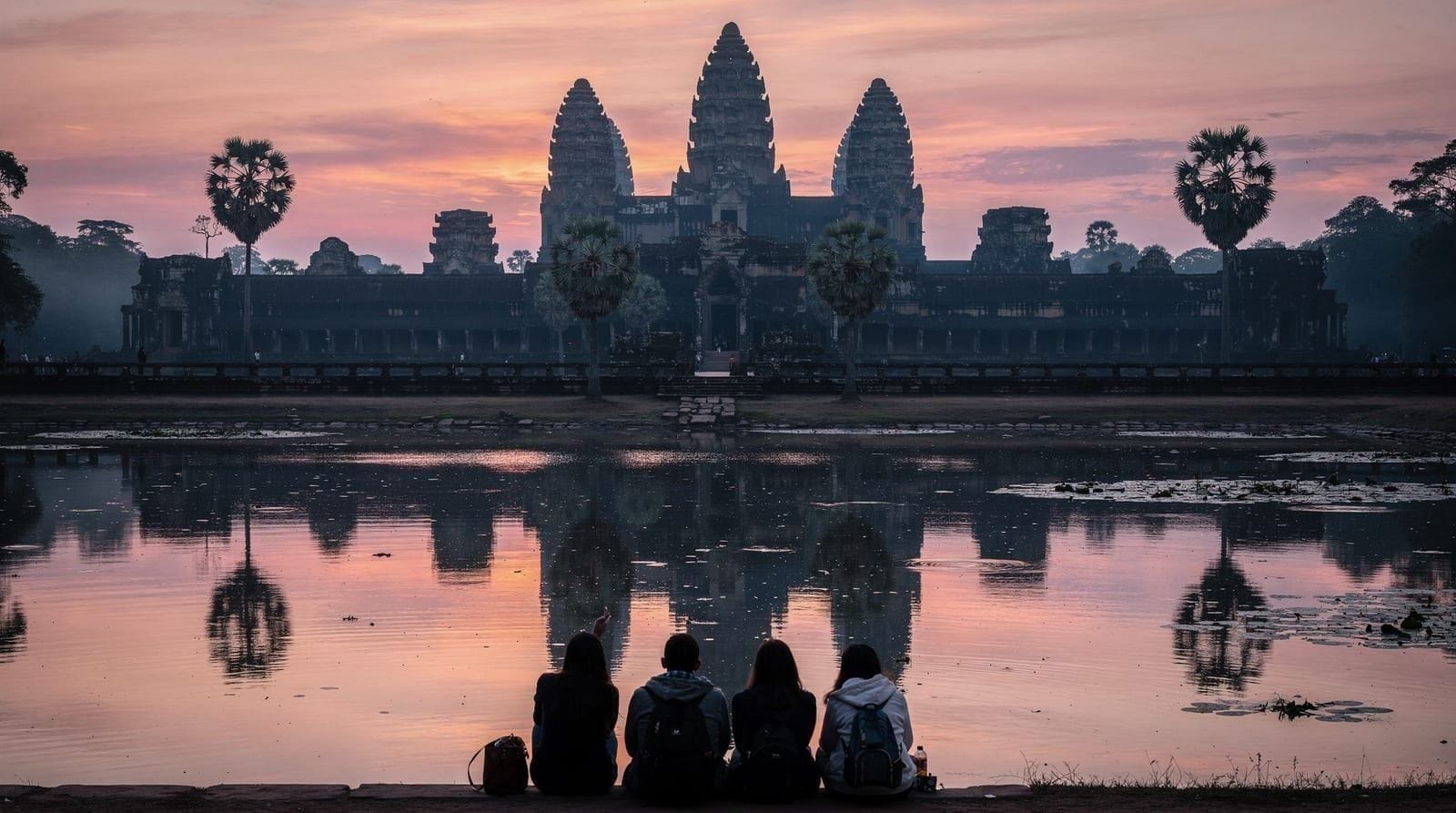
5:00–5:45am — Sunrise at the reflection pools. Our sunrise guide covers which pool tends to be less crowded and what a cloudy morning means for your plan.
6:00–8:00am — Angkor Wat’s interior: outer gallery bas-reliefs (the churning of the ocean of milk on the east wall is the standout), then the upper level via the steep stairs if the queue is under 20 minutes.
8:15am — Coffee and a light breakfast at the West Gate stalls.
8:45–10:00am — Angkor Thom: the South Gate causeway of guardian statues, Bayon and its 216 carved faces (before 9:30am beats the bulk of the tour-bus arrivals), Baphuon, and the Terraces of the Elephants and the Leper King.
10:30–11:45am — Ta Prohm, the root-swallowed “Tomb Raider” temple, roughly 20–25 minutes from Angkor Thom.
12:15–1:30pm — Lunch in town (25–30 minutes back from Ta Prohm). Khmer Kitchen Restaurant near Old Market or Marum, a TREE Alliance training restaurant on the Wat Damnak side, both handle a hungry, hot group well.
2:00–4:00pm — Rest during the hottest part of the day, or the air-conditioned Angkor National Museum (separate ~$12 ticket) if you want a midday activity.
7:00pm onward — Dinner around Pub Street or Old Market.
Day 2: the Grand Circuit and Banteay Srei
6:30am — A normal-hour start; breakfast at your hotel.
7:15am — Depart for Banteay Srei, about 37km / roughly 1 hour from town — worth doing first, before the mid-morning tour-bus wave.
8:15–9:15am — Banteay Srei’s pink-sandstone carving, the finest and deepest in the Angkor style. It’s a small, compact site; an hour does it justice without dragging.
9:30–10:00am — Optional detour to the Roluos Group (Bakong, Preah Ko, Lolei) on the way back — the oldest Angkorian temples, 9th century, and near-empty compared to the Small Circuit.
10:30am–12:30pm — The Grand Circuit: Preah Khan, Neak Pean, Ta Som, and either Pre Rup or East Mebon, roughly 26km of driving loop with less obvious signage than the Small Circuit — a guide adds real value on this stretch if you’re not driving with one already.
12:45–2:00pm — Lunch, either near the park or back in town.
2:30–4:30pm — Free time: Old Market shopping, a spa, or simply resting.
5:00–6:00pm — Sunset at Pre Rup, a genuinely elevated brick pyramid with far less crush than Phnom Bakheng, or a quieter option back at Angkor Wat’s moat.
7:00pm onward — Dinner. This is a good night to book the Phare Cambodian Circus (8pm show) — a Cambodian contemporary-circus performance with a real social mission behind it, and a welcome change from another temple-themed evening.
Day 3: Tonlé Sap and the town
This is where the 3-day itinerary earns its place over a rushed 2-day version — a full day away from temples, split between a Tonlé Sap floating village in the morning and Siem Reap’s town core in the afternoon and evening.
7:00am — Breakfast at your hotel; no early start needed today.
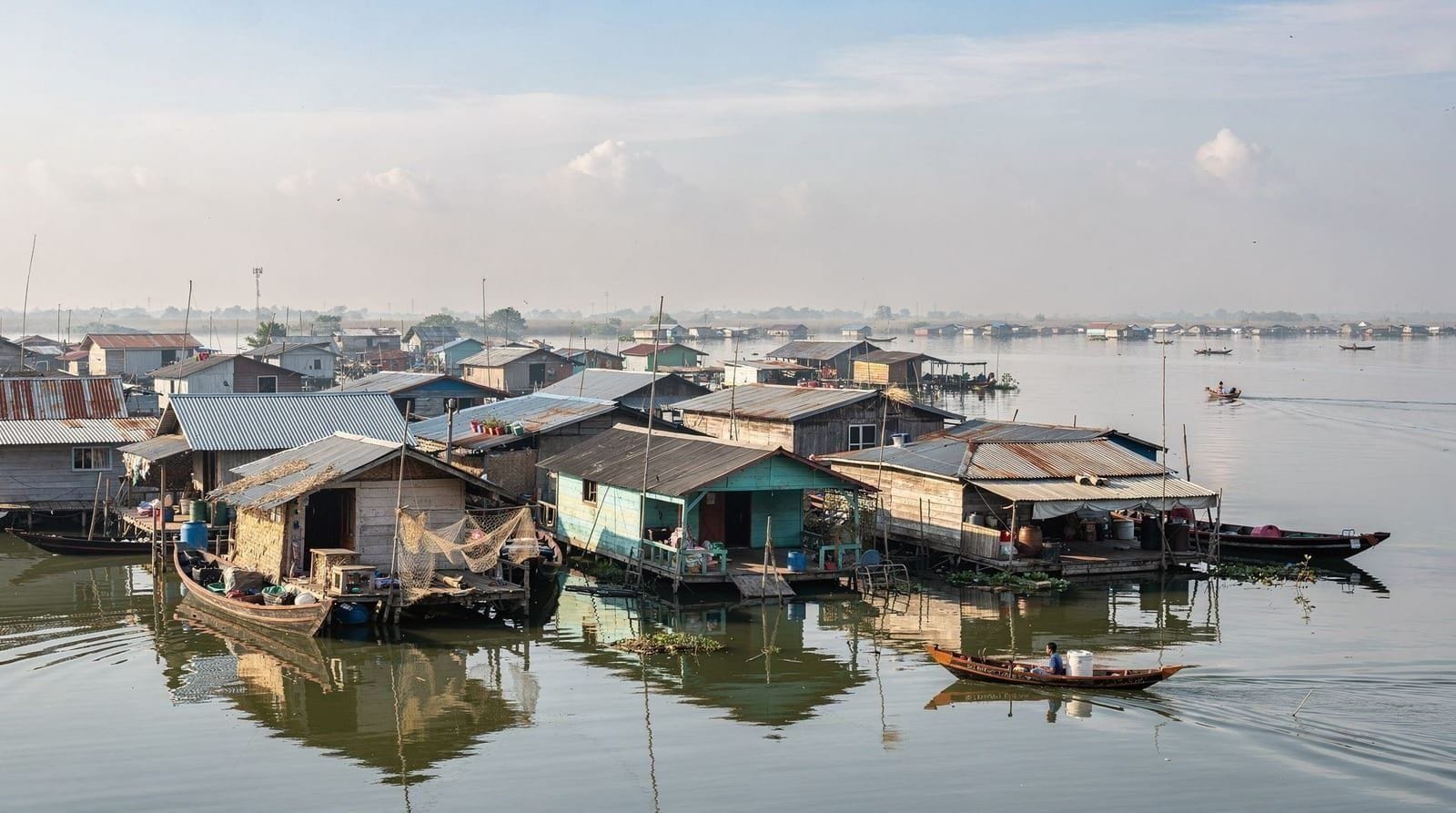
8:00am — Depart for Kompong Phluk, roughly 30km / 45 minutes–1 hour from town. Skip Chong Kneas, the closest floating village (~20 minutes) — it’s the most touristy of the three and best known for overpriced boat “tours” and aggressive orphanage-donation pitches rather than an authentic look at stilt-village life; see our tourist traps guide for why. Kompong Phluk balances access and authenticity far better, though it’s only reliably reachable by boat from mid-August through January when water levels are high enough — check the season before booking. Our floating villages guide compares all three in detail.
9:00–11:00am — Boat tour through Kompong Phluk’s stilted houses and flooded mangrove forest. Boats are typically arranged on arrival or pre-booked; expect $20–25 per person for a shared boat, more for a private one.
11:30am–12:30pm — Return to town, lunch at a riverside restaurant (Chanrey Tree or similar) — a good moment to sit somewhere with a view after a morning on the water.
1:00–3:00pm — Rest, or a Khmer cooking class if you’d rather stay active — several operators run afternoon sessions starting around this time.
3:30–5:30pm — Old Market and Pub Street: browse for souvenirs (see our souvenirs guide for what’s actually worth buying versus mass-produced filler), and the Angkor Night Market nearby if you want a second, less chaotic browsing option.
6:00pm onward — Final dinner in Siem Reap. If you didn’t catch Phare Circus on Day 2, this is your last chance before departure — book ahead in high season, as shows do sell out.
What to pack for three days
Dress code — shoulders and knees covered — applies at every temple gate across all three days, including Banteay Srei and the Grand Circuit’s less-visited stops. Closed shoes matter more here than on a shorter trip; three consecutive days of stone stairs and uneven paths add up. Bring enough small-denomination USD for two Angkor Pass verification days, tuk-tuk tips, stall snacks, and the Kompong Phluk boat fare — card acceptance is essentially nonexistent once you’re outside town on the temple circuits or at the floating village. A dry bag or simple plastic sleeve for your phone is worth having for the Day 3 boat trip, especially in the last weeks of the wet season when spray is more likely.
Where each day differs from a rushed version
It’s worth being explicit about what three days buys you that a rushed two-day trip doesn’t: Day 1 and Day 2 here run at roughly the same pace as the 2-day itinerary, but Day 3 is the genuine addition — a full day away from ancient stonework entirely, split between water (Kompong Phluk) and town (Old Market, Pub Street, and an evening show). Visitors consistently report Day 3 as the most memorable of the three precisely because it’s different in kind, not just in location, from the two temple-heavy days before it.
What a guided version looks like
A private 3-day Angkor Wat tour covers Days 1 and 2 of this plan with a driver and guide handling the Small Circuit, Grand Circuit, and Banteay Srei end to end, leaving you to add Day 3’s Kompong Phluk floating village tour independently or as a bundled add-on. As always: the tour price is transport and guiding, not the Angkor Pass — that’s a separate $62 purchase from Angkor Enterprise regardless of which platform or operator you book through. Our GYG vs. Viator comparison covers how to read a listing’s inclusions correctly.
Budget for the three days
| Item | Cost |
|---|---|
| Angkor Pass (3-day) | $62 |
| Tuk-tuk/car, 3 days | $50–65 |
| Meals, 3 days | $40–60 |
| Kompong Phluk boat tour | $20–25 |
| Phare Circus (optional) | ~$18–38 |
| Total (without optional extras) | ~$190–230 |
If Kompong Phluk isn’t accessible on your dates
Kompong Phluk’s boat access depends on Tonlé Sap’s water level, reliably high enough mid-August through January. If your Day 3 falls outside that window — say a February or March visit — ask your hotel or driver which floating village is currently reachable; Kompong Khleang, farther but with a slightly longer accessible season (mid-August through April), is the usual fallback. In the rare case neither is practically reachable, substitute a countryside cycling route or a Khmer cooking class for the morning block and keep the afternoon town plan unchanged — Day 3’s value comes from the change of pace as much as the specific water activity.
Extending beyond three days
If three days leaves you wanting more, the natural next step is the 5-day itinerary, which adds Beng Mealea, Koh Ker, and a Battambang day trip on top of exactly this same three-day core. The 7-day itinerary goes further still, adding Phnom Kulen and a second floating village.
Frequently asked questions about a 3-day Siem Reap itinerary
Is three days enough for Siem Reap?
For most first-time visitors, yes — three days comfortably covers the Small Circuit, Grand Circuit, Banteay Srei, a Tonlé Sap floating village, and real time in town without feeling rushed. Photographers, temple enthusiasts wanting the outlier sites, or anyone adding Battambang or Phnom Penh should plan for five days or more.
Can I rearrange the days if my flight schedule is different?
Yes — the three days don’t need to run in this exact order. If you arrive in the afternoon, start with Day 3’s town/floating-village content and save the temple days for when you’ve had a full night’s sleep before an early start.
Do I need to book Kompong Phluk in advance?
Not strictly, though pre-booking through a hotel tour desk or online removes the need to negotiate a boat price on arrival. If Kompong Phluk’s water level is too low for its season, ask your driver or hotel which floating village is currently accessible before departing.
Is one tuk-tuk driver for all three days a good idea?
Often, yes — many visitors negotiate a flat multi-day rate with one driver, which tends to be cheaper than booking fresh each morning and means the driver learns your pace and preferences by Day 2.
What’s the biggest mistake in a 3-day plan?
Trying to add a fourth destination — Phnom Kulen, Koh Ker, or Battambang — without adding a fourth day. Each of those requires a half-day or full day on its own; bolting one onto this three-day core usually means cutting Tonlé Sap or the Grand Circuit short, which defeats the point of having three days in the first place.
Should I buy the 3-day pass even if I might only use it twice?
Yes — this itinerary is built around using all three days, but even a shortened two-day version benefits from the 3-day pass’s lower cost per day and its 10-day flexible window, as explained in our Angkor Pass guide.
What’s the ideal time of year to run this exact itinerary?
November through March gives the most reliable combination of dry weather, cooler temperatures, and — critically for Day 3 — high enough Tonlé Sap water levels for Kompong Phluk’s boat access, which runs mid-August through January. December and January are the most crowded and priciest months; November and February/March offer a similar experience with slightly thinner crowds. See our best time to visit guide for the month-by-month breakdown.
Can I do this itinerary with only two nights in Siem Reap?
Not comfortably. Three full sightseeing days genuinely need three nights minimum — arriving the evening before Day 1 and departing the morning after Day 3 — since Day 1 requires being rested enough for a 4:15am start. Arriving the same morning as Day 1 or departing the same evening as Day 3 both compress the plan in ways that undercut its pacing.
Top experiences
Bookable activities with verified prices and instant confirmation on GetYourGuide.


More tours on Viator
Top-rated experiences with verified reviews, bookable on Viator (a Tripadvisor company).