Battambang
Battambang as a Siem Reap extension: real travel time by road, the $5 bamboo train, Killing Caves, and whether to day-trip or stay overnight.
Siem Reap: Battambang Highlights Day Tour
Quick facts
- Distance from Siem Reap
- ~170 km, ~3 hours by road (shared taxi, bus, or private car)
- Bamboo train
- $5, roughly 15 minutes each way on repurposed rail bogies
- Best structure
- Long day trip (dawn departure) or one overnight — not a rushed half-day
- Highlights
- Bamboo Train, Killing Caves, Phnom Sampov, French-colonial shophouses
- Character
- Cambodia's second city — calmer, more colonial architecture, fewer tourists than Siem Reap
Why Battambang works as a change of pace, not just a checklist stop
Most visitors arrive at Battambang mid-trip, after several days of early sunrise wake-ups and temple-circuit logistics in Siem Reap, and the shift in pace is genuinely part of the appeal rather than incidental to it — no 5:00 AM departures, no Angkor Pass math, no queueing for a specific photo spot. The city rewards a slower, more wandering approach better than a checklist mentality: the bamboo train and Killing Caves are the two “must-see” items most itineraries lead with, but visitors who give themselves permission to also just walk the riverside old town without a fixed agenda consistently report it as the more memorable part of the trip.
Cambodia’s second city, and a genuine change of pace
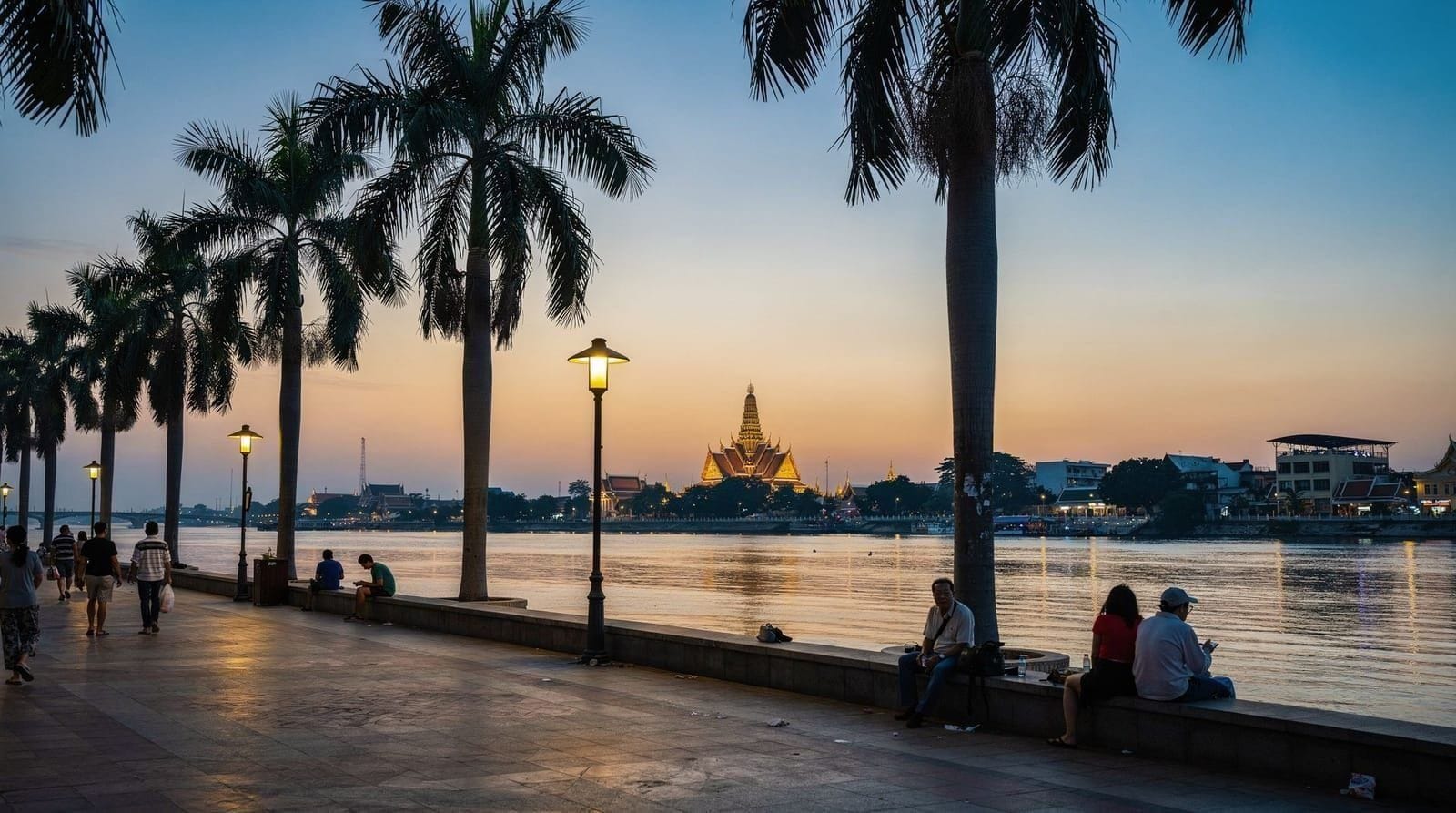
Battambang is Cambodia’s second-largest city, roughly 170 km southwest of Siem Reap, and it offers something the Angkor temple circuit simply doesn’t: well-preserved French-colonial shophouse architecture along the Sangkae River, a noticeably calmer, less tourist-saturated pace, and a set of specific attractions — most famously the bamboo train — found nowhere else in the country. We treat it here explicitly as a Siem Reap extension, not a standalone city trip, because that’s how the overwhelming majority of visitors actually experience it: a day trip or one-overnight add-on to a Siem Reap-based Angkor trip, not a separate base.
Getting there — the real travel time
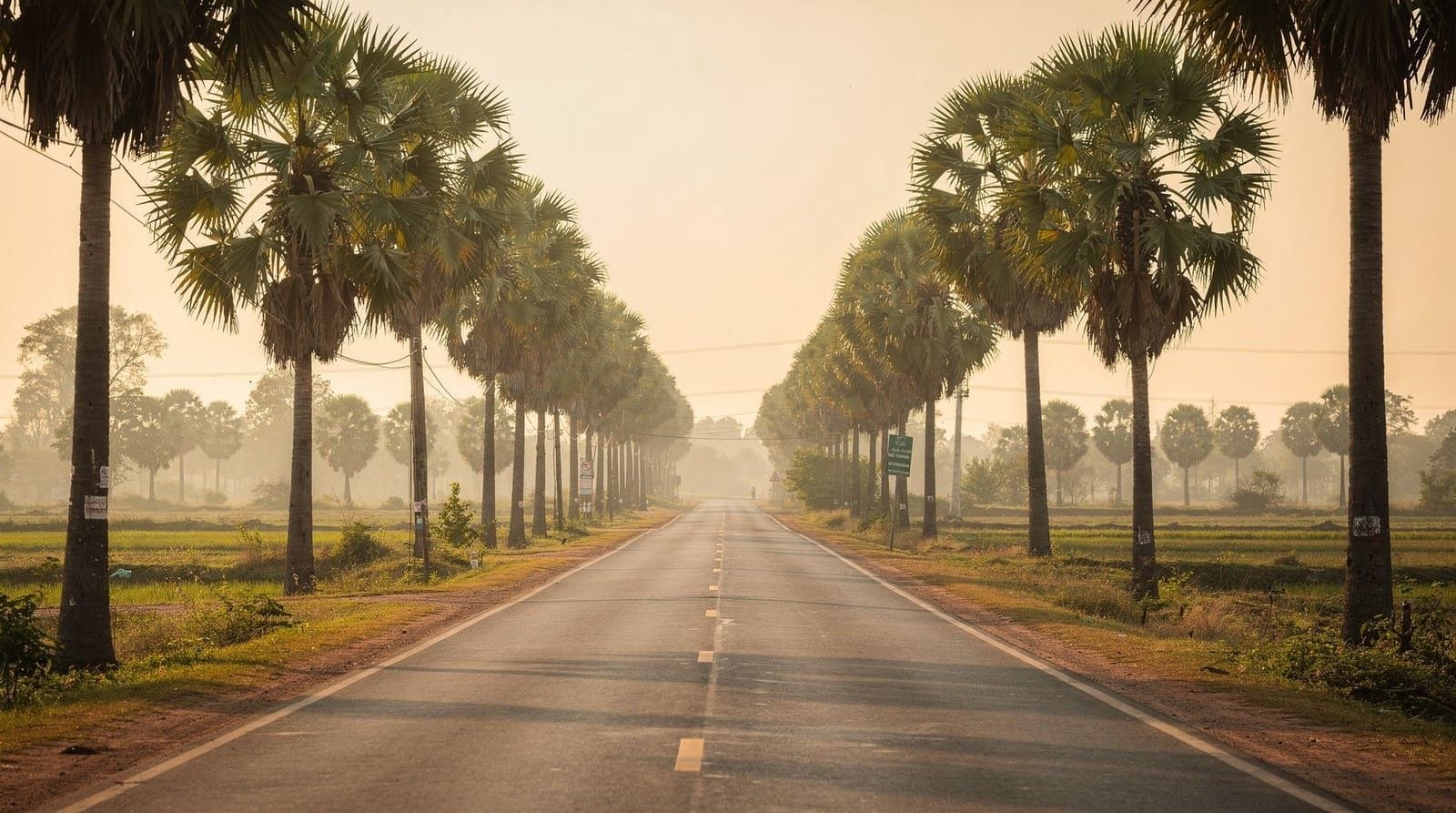
Battambang is about 170 km from Siem Reap, and realistically 3 hours by road regardless of whether you go by private car, shared taxi, or the public bus (National Road 5 is paved and in reasonable condition). There’s no meaningful shortcut — no direct flight, and the river-boat route that used to connect the two cities (a scenic but very slow option) has become unreliable and seasonal, largely dependent on Tonlé Sap water levels, and isn’t a dependable option for most trip planning. For the full transport comparison — bus operators, private car cost, timing — see our Siem Reap to Battambang guide.
Given the 3-hour each-way drive, a same-day round trip means roughly 6 hours in transit alone, which is a genuinely long day if you’re also trying to see the city’s highlights. We recommend either committing to a long day (dawn departure, return after dark) or — better, if your schedule allows — one overnight in Battambang, turning it into a 2-day extension rather than a single exhausting day trip. Our Battambang day trip guide and the Siem Reap and Battambang 4-day itinerary both lay out realistic versions of each structure.
The bamboo train — what it actually is
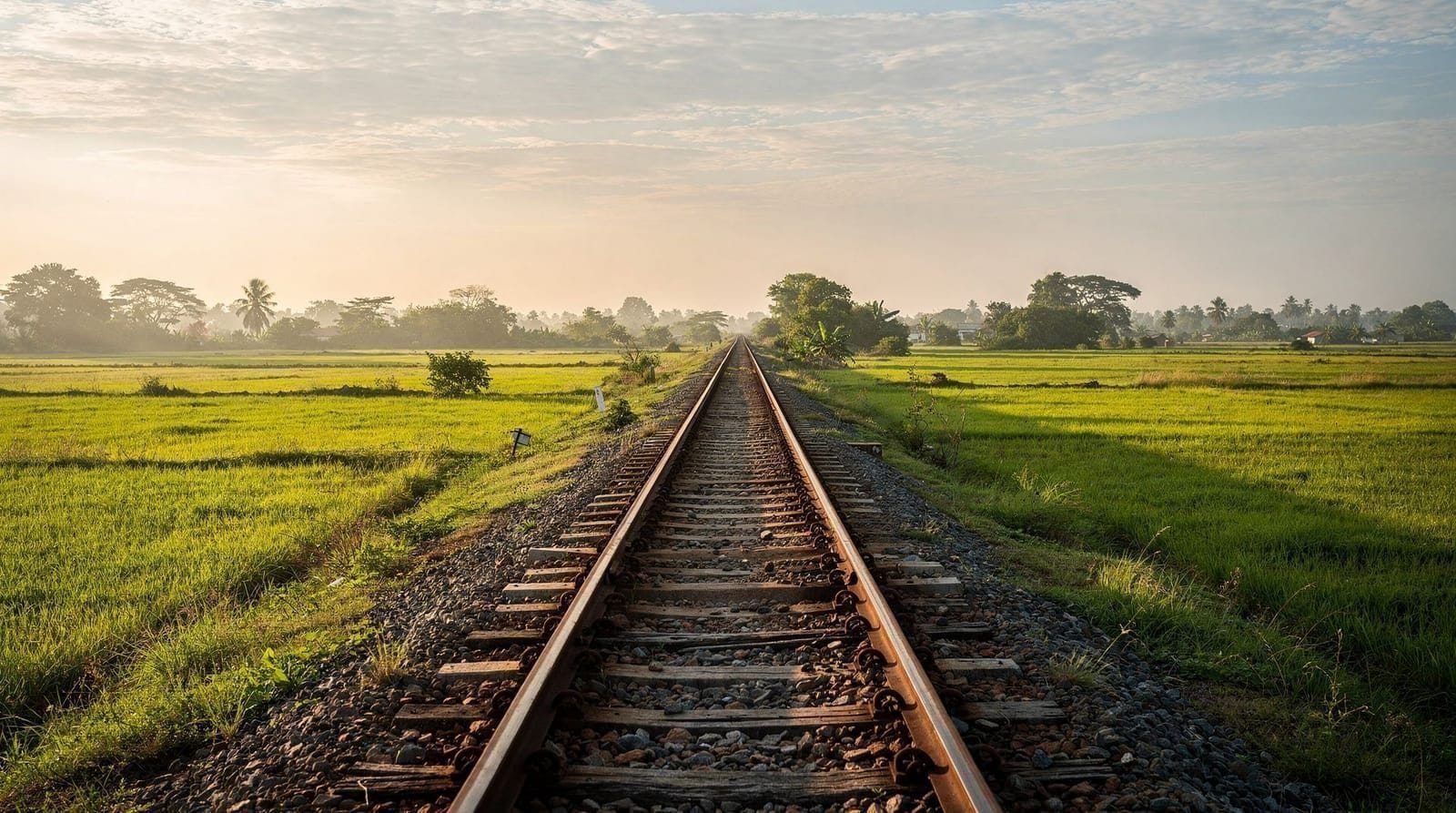
Battambang’s bamboo train (nori) is a genuinely unique experience: a flat bamboo platform mounted on rail bogies, powered by a small motor, running on repurposed narrow-gauge rail track originally built for freight. It costs $5 and covers a roughly 15-minute stretch each way at a decent clip through countryside and past small villages — when two carts meet on the single track, the lighter one is quickly disassembled and lifted off to let the other pass, then reassembled, which is as much a part of the experience as the ride itself. It’s touristic by nature at this point (the original freight function has been fully superseded by tourism), but it’s a legitimately fun, distinctive half-hour that doesn’t overstay its welcome.
Killing Caves and Phnom Sampov
Phnom Sampov, a hill outside the city, holds the Killing Caves — a somber Khmer Rouge-era site where victims were killed and their bodies thrown into the cave system, now marked with a memorial stupa containing skulls and bones recovered from the site. It’s a genuinely heavy stop, worth approaching the way you would Phnom Penh’s Killing Fields — quietly, respectfully, not as a quick photo-op. The same hill offers good sunset views over the surrounding countryside, and at dusk, millions of bats stream out of a nearby cave in a dramatic, sustained exodus lasting 20-30 minutes — a genuinely spectacular natural sight that’s become a signature Battambang evening activity in its own right.
The old town’s colonial architecture, in more detail
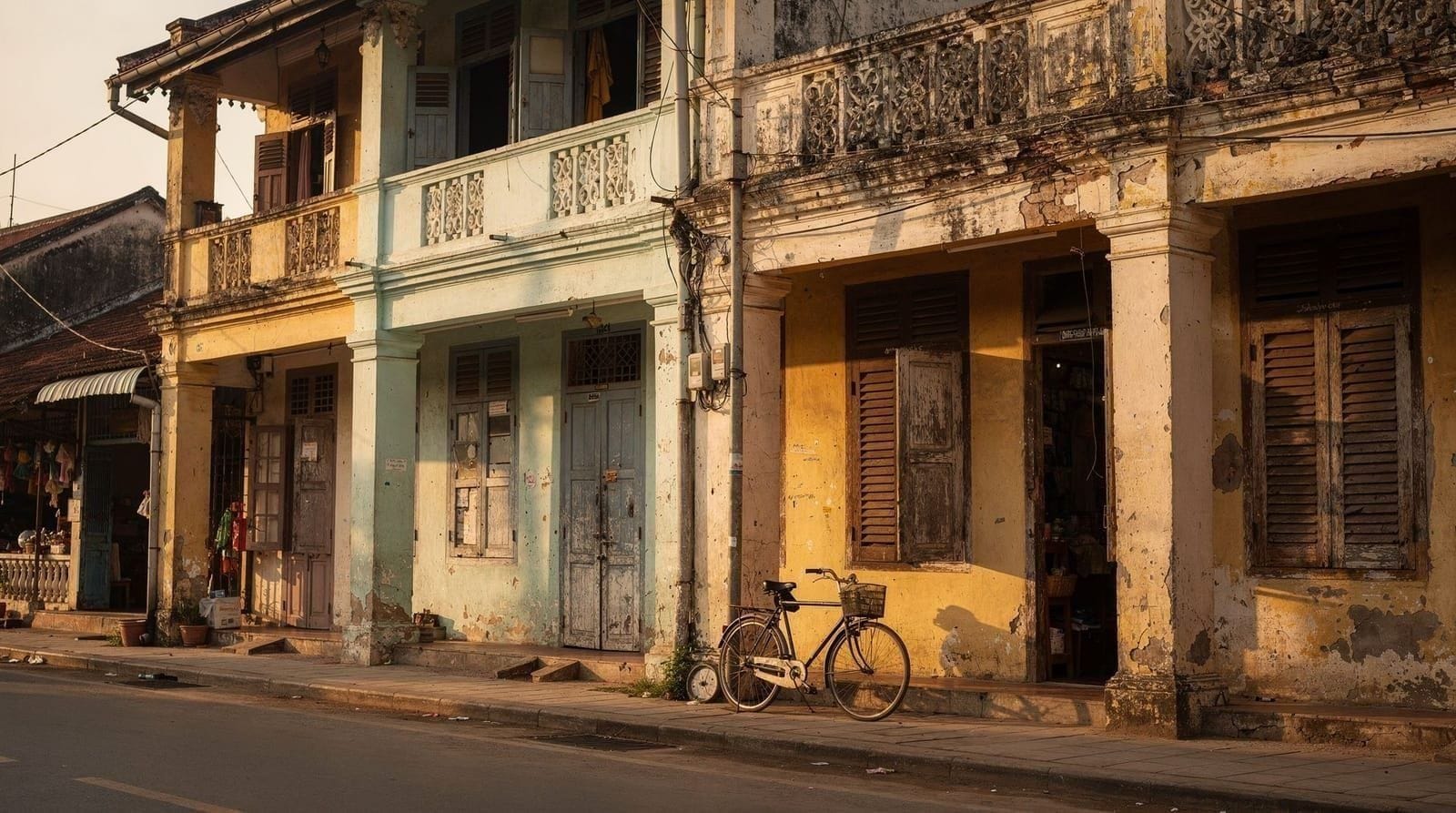
Battambang’s riverside old town holds one of the best-preserved collections of French-colonial and early-20th-century shophouse architecture in Cambodia, largely because the city avoided the worst of the physical destruction that hit Phnom Penh during the Khmer Rouge period and its aftermath. Streets running parallel to the Sangkae River are lined with two-and-three-story shophouses in a mix of colonial European and Chinese-influenced shophouse styles, many still in active commercial use on their ground floors rather than preserved as museum pieces.
A slow walk through this area — genuinely underrated relative to the bamboo train and Killing Caves in most day-trip itineraries — gives a sense of a mid-20th-century Cambodian provincial city that’s largely disappeared elsewhere in the country. Governor’s Residence, a restored colonial-era building near the river, and the Battambang Provincial Museum (a modest but useful primer on the region’s Angkorian-era temples, including Wat Banan and Ek Phnom) round out a worthwhile few hours in the old town proper.
Wat Banan — the “other” Angkorian temple worth knowing about
A short distance outside the city, Wat Banan is a 10th-11th century Angkorian-era temple, sometimes described as a smaller, steeper “mini Angkor Wat” thanks to its five towers arranged in a similar quincunx pattern atop a hill requiring a genuine climb (roughly 350 steps) to reach.
It predates several of the temples inside the main Angkor park and offers a genuinely different experience from anything in Siem Reap — far fewer visitors, a rural hilltop setting overlooking rice paddies, and none of the crowd-management infrastructure of the in-park temples. It’s a worthwhile add-on for visitors who haven’t tired of temples yet, though those who’ve already spent several days in the Angkor park may reasonably decide they’ve seen enough stepped-pyramid architecture and prioritize Battambang’s other, non-temple attractions instead.
Battambang’s contemporary art and circus scene
Less known to short-stay visitors, Battambang has developed a genuine reputation within Cambodia as an arts hub — home to Phare Ponleu Selpak, the original arts and social circus school that later expanded to Siem Reap as the better-known Phare Cambodian Circus. Battambang’s original campus offers its own performances and a broader look at the social mission behind the organization (arts education for at-risk youth), worth considering for visitors with an overnight stay and a specific interest in contemporary Cambodian culture beyond the Angkorian-era temples.
What’s overrated, what’s underrated
The bamboo train delivers on its reputation and isn’t overrated, though it is brief — some visitors expect a longer experience and are surprised by the roughly 15-minute one-way ride. The city’s colonial shophouse architecture along the riverside is comparatively underrated; most day-trip itineraries rush straight from bamboo train to Killing Caves without much time for an unhurried walk through the old town, which is arguably the most distinctive part of Battambang relative to anywhere else in Cambodia.
How to combine it with the rest of your trip
For a single very long day trip from Siem Reap, our Battambang highlights day tour covers the bamboo train, Killing Caves and city highlights with transport included — worth it given the 6-hour round-trip drive, so you’re not also managing logistics. The bamboo train, bat cave and killing cave tour by tuk-tuk specifically times the day to include the bat exodus at Phnom Sampov, worth prioritizing if a dusk departure back to Siem Reap fits your schedule.
For a more complete single-day package, the full-day tour covering the bamboo train, Wat Banan and Phnom Sampov adds Wat Banan, a smaller Angkorian-era temple sometimes called a miniature Angkor Wat, worth the detour if you haven’t yet decided you’ve had enough temples. The tuk-tuk tour with the bamboo train, caves and sunset at Phnom Sampov is a similar full-experience option worth comparing on timing.
A realistic overnight itinerary
Day 1: Depart Siem Reap by mid-morning (a later, more relaxed start than a day-trip requires), arrive early afternoon, check into accommodation, and spend the afternoon on the bamboo train and a walk through the riverside old town before dinner in the city.
Day 2: Morning at Wat Banan (best done early to beat the heat on the 350-step climb) or the Battambang Provincial Museum, followed by the Killing Caves and Phnom Sampov in the afternoon, timed to include the bat exodus around dusk before the drive back to Siem Reap or onward to Phnom Penh, depending on your broader itinerary. This structure spreads the same set of activities a rushed day trip compresses into one exhausting day across a much more comfortable two days, with genuine time for the old town and Wat Banan that a single-day visit typically has to skip.
Accessibility
The bamboo train involves a step up onto the platform, which sits low and can be boarded without much difficulty; the ride itself is seated. Wat Banan’s roughly 350-step climb is the most physically demanding stop on a standard Battambang itinerary — steep, uneven in places, with limited shade — and is a reasonable one to skip for visitors with mobility concerns, since the temple’s base structures aren’t separately viewable without the climb the way some Angkor temples allow.
The Killing Caves require a moderate walk up Phnom Sampov’s hillside path to reach the cave entrance and memorial; it’s manageable for most visitors but not wheelchair-accessible. Battambang’s old town, by contrast, is flat and easily walkable, making it the most accessible part of a standard itinerary.
Where to eat
Battambang’s food scene is smaller than Siem Reap’s but includes several well-regarded options clustered around the riverside old town — a mix of Khmer restaurants serving provincial specialties less commonly found on Siem Reap’s more tourist-oriented menus, plus a handful of cafés in restored colonial shophouses. Street-food stalls near the central market (Psar Nat, a distinctive Art Deco-style market building itself worth a look) offer a cheaper, more local alternative. Compared to Siem Reap’s Pub Street density, expect fewer options overall but generally lower prices for a comparable quality level, reflecting Battambang’s smaller tourist footprint.
Practical notes
Bring more cash than you’d carry for a Siem Reap day — Battambang has fewer ATMs and card-friendly venues relative to its size. Dress respectfully at the Killing Caves memorial, as you would at Phnom Penh’s Tuol Sleng or Killing Fields — this is a genuine memorial site, not a general tourist attraction. If doing the long day trip, confirm your return departure time in advance, since a late-afternoon Phnom Sampov bat-watching stop pushes your Siem Reap arrival well into the evening.
Battambang’s accommodation options, while fewer than Siem Reap’s, include several well-regarded boutique guesthouses in and around the old town at prices generally lower than a comparable standard in Siem Reap — a reasonable additional incentive toward the overnight option rather than a rushed single day.
Frequently asked questions about visiting Battambang from Siem Reap
How long does it take to get from Siem Reap to Battambang?
About 3 hours each way by road, roughly 170 km — by private car, shared taxi, or public bus on National Road 5.
Is Battambang worth a day trip, or should I stay overnight?
Given the 6-hour round-trip drive, an overnight stay makes for a noticeably more relaxed visit. A long single day (dawn departure, return after dark) is workable and common, but tighter than most visitors expect.
How much does the bamboo train cost?
$5 per person for a roughly 15-minute ride each way on repurposed rail bogies.
Is the boat route from Siem Reap to Battambang a good option?
It’s scenic but seasonal and increasingly unreliable, dependent on Tonlé Sap water levels — not a dependable choice for most trip planning. Road transport is the more consistent option.
What are the Killing Caves?
A Khmer Rouge-era memorial site at Phnom Sampov, outside Battambang, marking a location where victims were killed and their remains later recovered — approach it with the same respect you’d bring to Phnom Penh’s Killing Fields.
Can I combine Battambang with Phnom Penh in one trip?
Yes, though it requires careful routing given both are significant detours from Siem Reap in different directions — see our Siem Reap and Battambang 4-day itinerary for a structured version, and our Phnom Penh destination guide for that leg separately.
What is Wat Banan, and is it worth visiting?
A 10th-11th century Angkorian-era temple outside Battambang, often called a smaller “mini Angkor Wat” for its similar five-tower layout atop a hill requiring a genuine climb. It’s a worthwhile add-on for visitors who haven’t tired of temples, offering a rural, uncrowded setting distinct from the Angkor park.
Is Battambang’s old town architecture different from Siem Reap’s?
Yes — Battambang has one of Cambodia’s best-preserved collections of French-colonial and early-20th-century shophouse architecture, largely because the city avoided the worst physical destruction of the Khmer Rouge period and its aftermath. It’s a genuinely different architectural character from Siem Reap’s more purpose-built, tourism-driven central area.
Is there a Phare Circus in Battambang too?
Yes — Battambang is home to Phare Ponleu Selpak, the original arts and social circus school that later expanded to Siem Reap as the more widely known Phare Cambodian Circus. The Battambang campus offers its own performances and a fuller look at the organization’s social mission.
How many days should I spend in Battambang if I’m not just doing a day trip?
One overnight (2 days total including travel) covers the bamboo train, Killing Caves, Phnom Sampov and a reasonable old-town walk at a comfortable pace. Visitors specifically interested in Wat Banan, the arts scene, or a slower exploration of the riverside architecture may want a second night.
Top experiences
Bookable activities with verified prices and instant confirmation on GetYourGuide.
Siem Reap: Battambang Highlights Day Tour

Battambang: Bamboo Train, Bat Cave and Killing Cave by Tuk-Tuk

Battambang: Day Trip to Bat Cave with Bamboo Train Ride

Cambodia: Full-Day Original Bamboo Train, Wat Banan and Phnom Sampov

Battambang: Tuk-Tuk Tour with Bamboo Train, Killing and Bat Caves at Sunset
More tours on Viator
Top-rated experiences with verified reviews, bookable on Viator (a Tripadvisor company).