Siem Reap street food guide
Siem Reap: Guided Authentic Street Food Tour
Where is the best street food in Siem Reap?
The Old Market (Psar Chaa) area for breakfast noodles and grilled pork, Psar Leu market for a more local, less touristy scene, and the streets around the Angkor Night Market in the evening for skewers and fruit shakes. Eat where locals are queuing, choose stalls cooking to order, and stick to bottled or filtered water.
Street food is where Siem Reap actually eats
Restaurant menus near Pub Street cater to the volume of foreign visitors passing through — pizza, pad thai, and a “Khmer specialties” section that’s often simplified for unfamiliar palates. Street food is where the everyday town eats: breakfast noodle stalls that sell out by mid-morning, grilled meat carts that appear the same time every evening, and market vendors who’ve been cooking the same three dishes for twenty years. It’s also the cheapest way to eat in Siem Reap by a wide margin — most street dishes cost $1-3, against $4-10 for the same dish at a sit-down restaurant.
This guide covers where to find it, what to order, and how to eat it without getting sick. For the dishes themselves, see our Khmer cuisine guide; for sit-down options, see best restaurants in Siem Reap.
Where to go
Psar Chaa (the Old Market) and its side streets
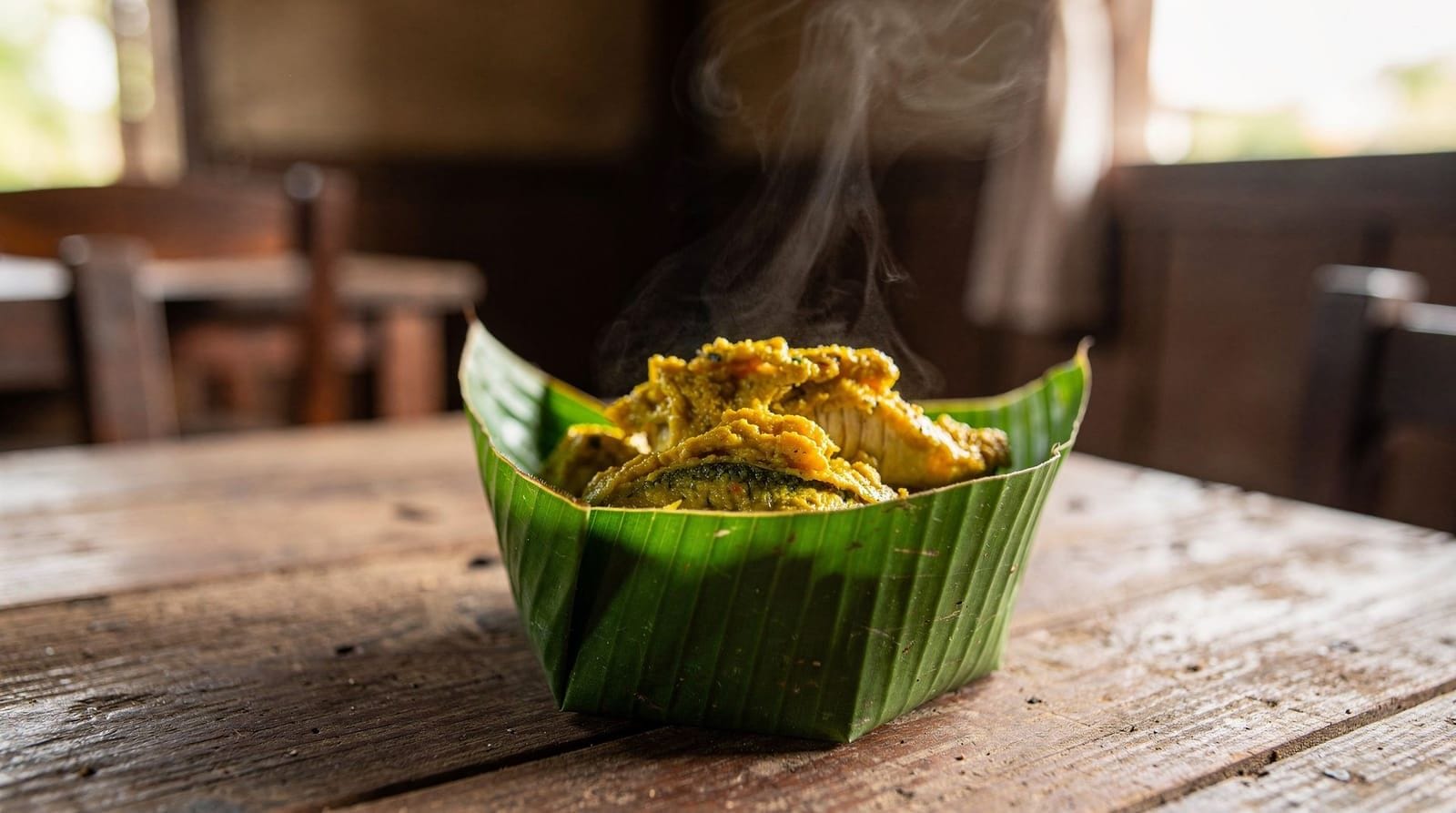
The Old Market itself is mostly a covered produce and souvenir market (see our full Old Market guide), but the streets immediately around it — particularly the alleys toward the river — have a cluster of food stalls and small local restaurants that cater to market workers and residents rather than tourists. Mornings are best: num banh chok (rice noodles with fish-based green curry sauce) vendors set up with baskets or fixed stalls, and bai sach chrouk (grilled pork and rice) carts appear from around 6am. By 9-10am, the good stalls have often sold out of their morning batch.
Psar Leu
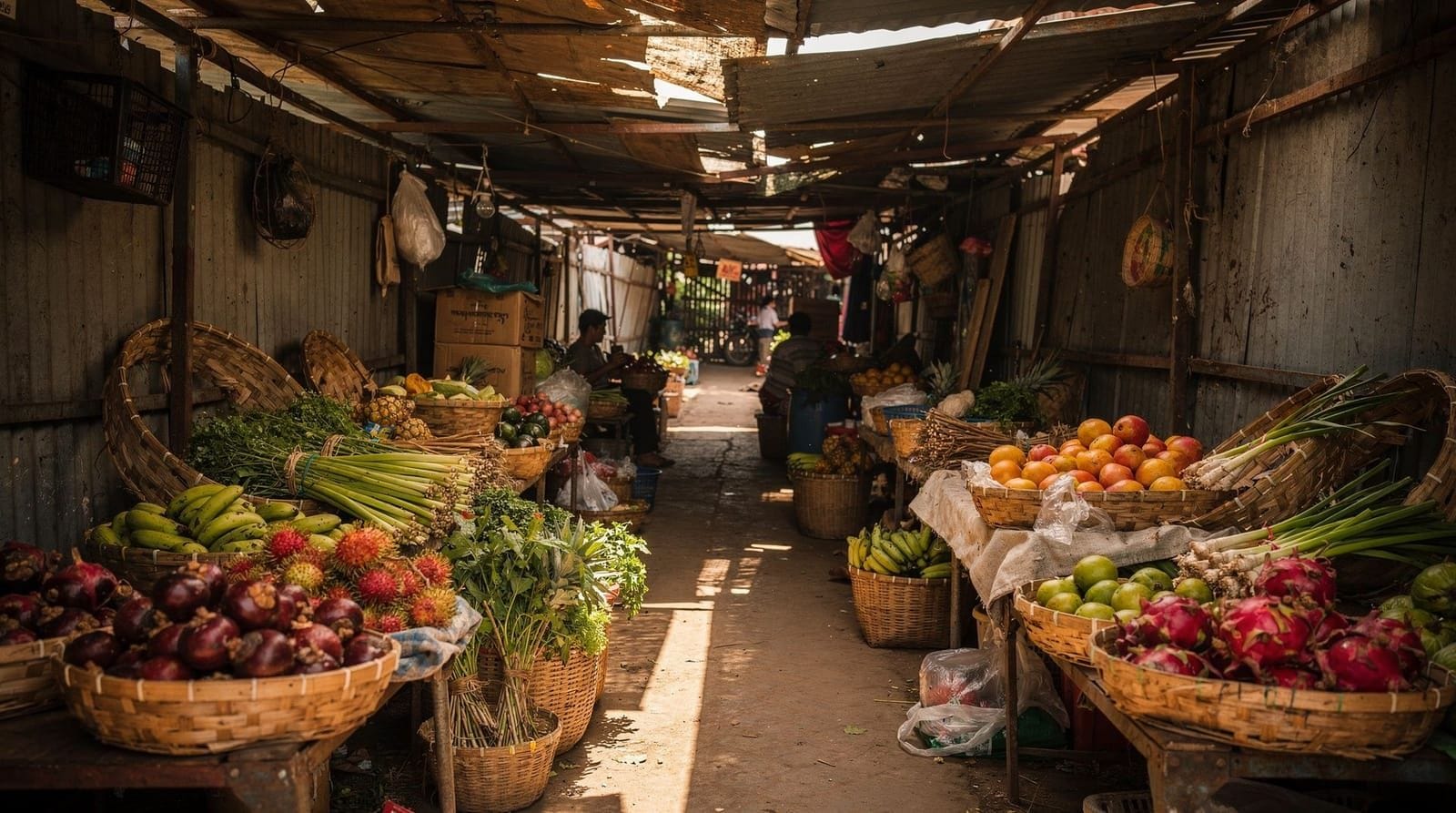
A larger, more residential market a 10-15 minute tuk-tuk ride east of the center, on National Road 6 toward the airport direction. Far fewer tourists than the Old Market, cheaper prices, and a wider range of prepared curries and soups sold by the scoop for locals doing their daily shopping. It’s a better pick than the Old Market if you want to see how Siem Reap actually eats rather than a tourist-adjacent version of it, though English is spoken less here — pointing and photos work fine.
Angkor Night Market and Pub Street side streets
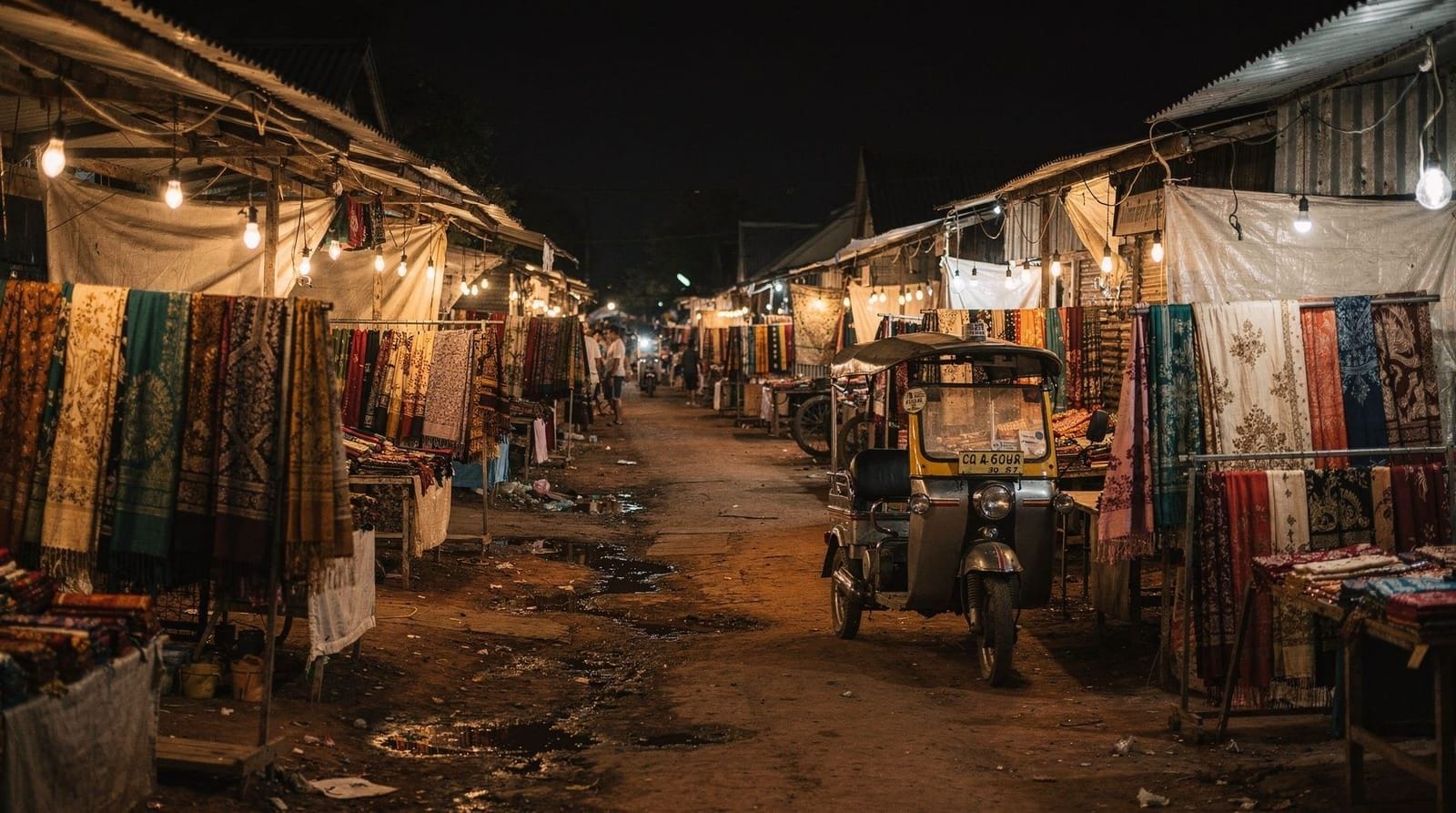
In the evening, the streets around the Angkor Night Market and the alleys off Pub Street fill with mobile carts selling skewers (pork, chicken, and less commonly beef), grilled corn, fruit shakes, and Cambodian donuts (nom kachai and similar fried snacks). This is more tourist-oriented than the morning markets — prices run slightly higher and the food is simplified for a broad audience — but it’s convenient, well-lit, and an easy way to graze after a temple day without committing to a sit-down meal. See our night markets guide for the layout.
Kandal Village area
A quieter cluster of streets between the Old Market and the river, increasingly home to small cafés and a handful of food stalls with a slightly more curated feel — good for a calmer version of the street food experience without Pub Street’s volume. See our nightlife guide for how Kandal Village fits into an evening out.
Comparing the three main areas
| Area | Best time | Vibe | Price level |
|---|---|---|---|
| Old Market (Psar Chaa) side streets | Early morning (6-9am) | Local, working market | Low |
| Psar Leu | Morning | Local, few tourists, less English | Lowest |
| Angkor Night Market area | Evening (6-10pm) | Tourist-friendly, well-lit, easy | Moderate |
| Kandal Village | Evening | Quieter, more curated | Moderate |
If you only have time for one street food outing, pick the Old Market in the morning for the widest range of genuinely local dishes in the least amount of walking, since it’s also central to most accommodation.
A typical street-food day
A realistic rhythm for building street food into a Siem Reap day: start at a bai sach chrouk or kuy teav stall before 8am, ideally near your accommodation or the Old Market, since the best stalls sell out early. Spend the middle of the day at the temples, where lunch options are limited to tourist-priced restaurants near Angkor Wat and Angkor Thom (bring a bottle of water and a snack rather than counting on much variety there).
Return to town by late afternoon and use the early evening, before the heat breaks, for a market wander at Psar Leu or the Old Market, picking up fruit or a quick skewer. As it cools down after sunset, head to the Angkor Night Market area or Kandal Village for a proper grazing session — several skewers, a fried snack, and a fruit shake — before or instead of a sit-down dinner.
This rhythm also avoids the two dead zones for street food: the temples themselves (where food carts are scarce and overpriced when they exist) and the hottest hours of early afternoon (roughly 11am-2pm), when many stalls take a break.
Seasonal notes
Fruit availability shifts through the year and is worth timing if you’re a fruit lover: rambutan and mangosteen peak May-July, durian April-June, and dragon fruit and papaya are available nearly year-round. During the rainy season (May-October), some outdoor evening stalls close early or relocate under cover during downpours — the Angkor Night Market and Kandal Village, with more permanent stall infrastructure, tend to keep operating more reliably than pop-up carts. See our weather by month guide for how this affects the rest of your trip planning.
What to order
- Bai sach chrouk (grilled pork and rice) — breakfast, $1.50-2.50, look for a charcoal grill and a queue of locals.
- Kuy teav (noodle soup) — breakfast, $1.50-3, ask for beef or pork broth.
- Num banh chok (Khmer noodles) — morning, $1-2, sold from baskets or fixed market stalls.
- Skewers (pork, chicken, sausage) — evening, $0.50-1.50 each, grilled to order over charcoal.
- Nom kror pom and other fried snacks — evening, $0.50-1.50, sold from mobile carts.
- Fresh fruit shakes — anytime, $1-2, made to order with ice; ask for no added sugar if you prefer it less sweet.
- Grilled corn (poat aing) — a common street snack, brushed with a savory-sweet glaze, $0.50-1.
- Sugarcane juice (tuk ampeou) — pressed to order, under $1, one of the most refreshing options in the midday heat.
How to eat street food safely
The core rules are the same across Southeast Asia, but worth stating plainly for Siem Reap specifically:
- Follow the queue. A stall with a line of Cambodians eating there is turning over food fast — nothing sits out long enough to spoil. An empty stall at a busy hour is a warning sign, not a bargain.
- Watch it cook. Food grilled, fried, or boiled in front of you is safer than pre-made dishes sitting at room temperature, especially in Siem Reap’s heat.
- Skip the tap water and ice from unclear sources. Siem Reap tap water is not safe to drink. Bottled and filtered water are sold everywhere for $0.50-1; most established stalls use filtered or store-bought ice, but if in doubt, ask or choose a cold canned drink instead.
- Carry small bills. Street vendors rarely have change for large notes; keep a stock of $1s and small riel notes ($1 ≈ 4,000 riel).
- Wash or sanitize hands before eating — most street food is eaten with your hands or a single fork, and hand-washing stations aren’t standard at every stall.
- Ease in on day one. If your stomach is untested with Cambodian street food, start with cooked, hot dishes (noodle soups, grilled meat) before raw or cold preparations, and keep rehydration salts or activated charcoal in your bag as a just-in-case.
None of this means street food is riskier here than a mediocre restaurant — a busy stall cooking to order is often a safer bet than a half-empty tourist restaurant reheating food from a steam table.
Reading a stall before you order
A few practical tells separate a good stall from one worth skipping, beyond just “is there a queue”:
- Turnover of oil and water. At fried-food carts, oil that’s dark and smoking rather than light and clear has been reused too many times — a minor quality issue rather than a safety one, but a sign of a rundown operation.
- Covered ingredients. Raw meat and prepared sauces kept under a glass or mesh cover, out of direct sun and away from open exhaust fumes from the road, is a good sign; exposed trays sitting in the sun for hours are not.
- Cash handling. Vendors who handle raw meat and then money without any gap (no gloves, no separate tongs) aren’t unusual in Cambodia and isn’t itself a red flag — this is normal across most of Southeast Asian street food — but it’s worth choosing stalls where the vendor at least uses tongs or a scoop for the food itself rather than bare hands throughout.
- Consistency. Stalls that have clearly been in the same spot for years (locals will often point you toward them if asked, even without shared language) are a safer bet than a cart that just appeared for the tourist season.
Street food vs. restaurants — what you actually gain
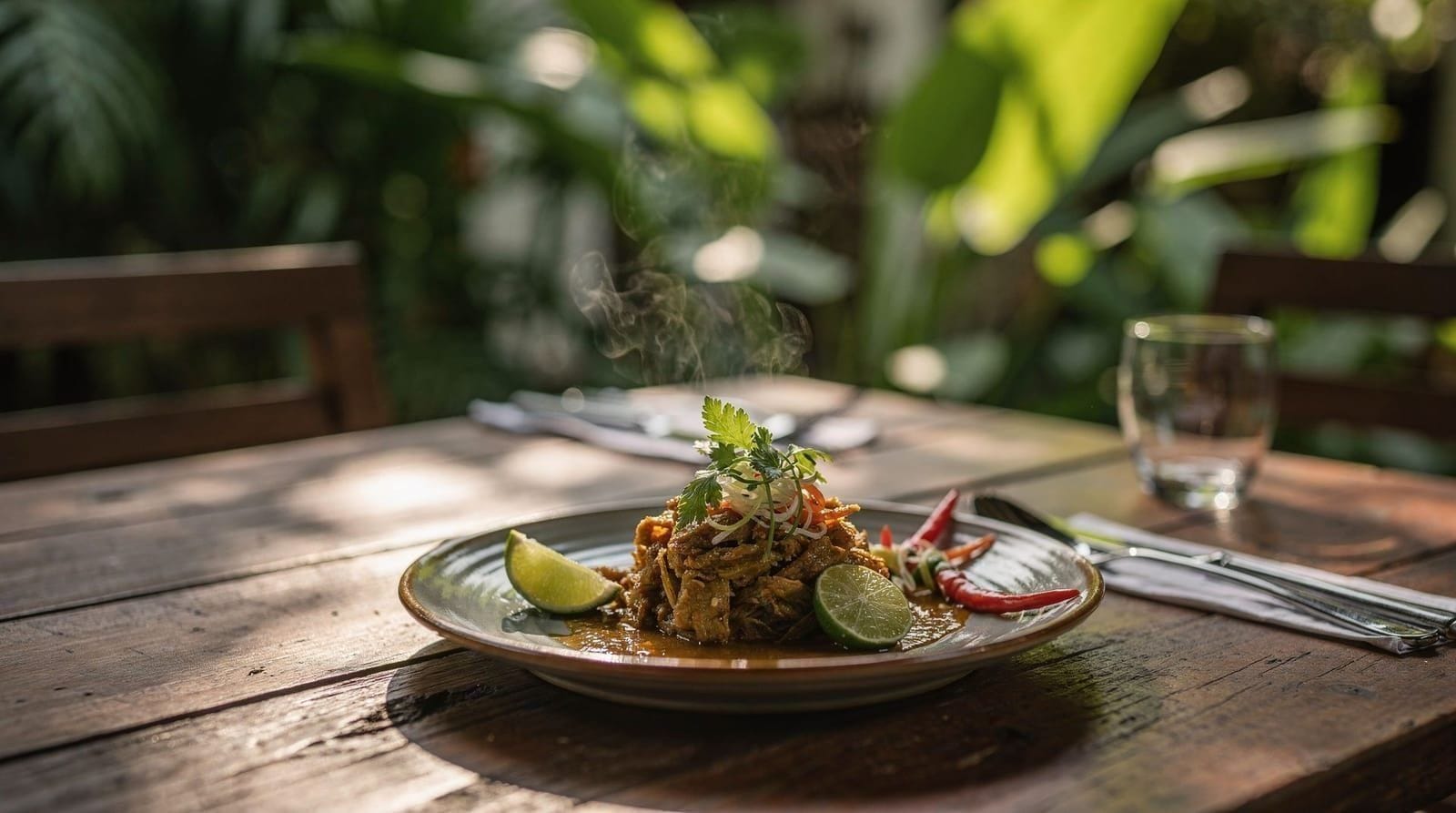
Beyond the price difference, street food gives you dishes that rarely appear on printed restaurant menus at all — num banh chok, bai sach chrouk, and the full range of market curries sold by the scoop are largely a market and street phenomenon, not a restaurant one. A restaurant’s “Khmer set menu” typically covers three or four crowd-pleasers (amok, lok lak, spring rolls) aimed at first-time visitors; a morning at Psar Leu or the Old Market shows you the other twenty dishes that never make that list.
The tradeoff is comfort and certainty — restaurants have seating, air conditioning, and English menus, while street stalls require more initiative and occasional pointing-and-hoping. Most visitors get the best of both: a couple of sit-down meals for the reliable dishes (see best restaurants in Siem Reap), balanced with street food outings for breadth and price.
Street food vs. a guided tour
Wandering on your own works well once you know roughly what to order and where — the sections above cover that. A guided food tour makes more sense on your first evening, or if you don’t want to figure out which stalls are good through trial and error: a guide takes you to a set route of vetted vendors, explains what you’re eating, and handles the language barrier at less English-friendly stalls.
Book a guided street food tour by tuk-tuk Join a sunset food tour through Old Siem ReapBudgeting for street food
A full day of eating almost entirely from street stalls and markets — breakfast noodles, a market lunch, evening skewers and a fruit shake — typically runs $6-10 per person, well under the $15-25 a day you’d spend eating at sit-down restaurants throughout. This matters for trip budgeting: see our Siem Reap travel budget guide for how food costs fit into a full daily budget across accommodation, tuk-tuks, and the Angkor Pass.
Frequently asked questions about street food in Siem Reap
Is street food in Siem Reap safe for tourists?
Generally yes, if you follow basic precautions: eat where there’s a visible local queue, choose stalls cooking food fresh in front of you, and avoid tap water and unfiltered ice. Most visitors who get sick in Cambodia trace it to water rather than street food specifically.
What time do the best breakfast stalls sell out?
Most bai sach chrouk and kuy teav stalls start around 6am and can sell out of their morning batch by 9-10am, especially the well-known ones. Go early if you want the freshest version.
Is the Angkor Night Market a good place for street food?
It’s a reasonable, convenient option for grazing in the evening — skewers, fruit shakes, fried snacks — but it’s more tourist-oriented and slightly pricier than the morning markets. For a more local experience, Psar Leu or the Old Market’s side streets in the morning are better picks.
Do I need to speak Khmer to order street food?
No — pointing at what you want, or showing a photo on your phone, works at almost every stall. Basic English is understood at tourist-adjacent carts near Pub Street and the night market; it’s less reliable at Psar Leu and residential-area stalls, where a translation app helps.
How much should I budget for street food per day?
$6-10 per person for a full day of breakfast, lunch, and evening snacks eaten almost entirely from stalls and markets, versus $15-25 a day if you mix in sit-down restaurant meals.
Is it rude to bargain over street food prices?
Prices at food stalls are generally fixed and low enough that bargaining isn’t expected or worthwhile — it’s more common (and more accepted) when buying souvenirs or crafts at the market, not food.
What should I avoid ordering as a first-timer?
Nothing is off-limits health-wise if the stall is busy and cooking fresh, but if your stomach is untested with Cambodian food, ease in with hot, cooked dishes like kuy teav or grilled skewers before trying raw preparations or unfamiliar fermented items like straight prahok.
Are there vegetarian options at street stalls?
Some — fried noodles, vegetable soups, and fruit are widely available — but many broths and sauces include fish sauce or prahok by default. Ask specifically for no fish sauce if you’re vegetarian; see our Khmer cuisine guide for more on navigating this.
Top experiences
Bookable activities with verified prices and instant confirmation on GetYourGuide.


More tours on Viator
Top-rated experiences with verified reviews, bookable on Viator (a Tripadvisor company).