Getting around Siem Reap: every transport option compared
Siem Reap: Angkor Wat Private Tuk-Tuk Tour
What is the best way to get around Siem Reap?
A private tuk-tuk (remorque) is the default choice for temple days — roughly $15-20/day for the standard circuit, with a driver waiting between stops and no navigation required. Bicycles work well for the town center and the flatter small circuit for confident riders. Cars/vans suit families, hot-season comfort, or farther outlier temples. Walking covers only the compact town core itself.
The short version
For temple days, a private tuk-tuk with a waiting driver is the default and generally the best option for most visitors — flexible, open-air (genuinely pleasant in the heat compared to a sealed car), and priced reasonably at $15-20/day for the standard circuit. For getting around town itself, walking and short tuk-tuk hops cover everything. This guide compares every realistic option honestly, including where each one falls short.
Tuk-tuk (remorque) — the default choice
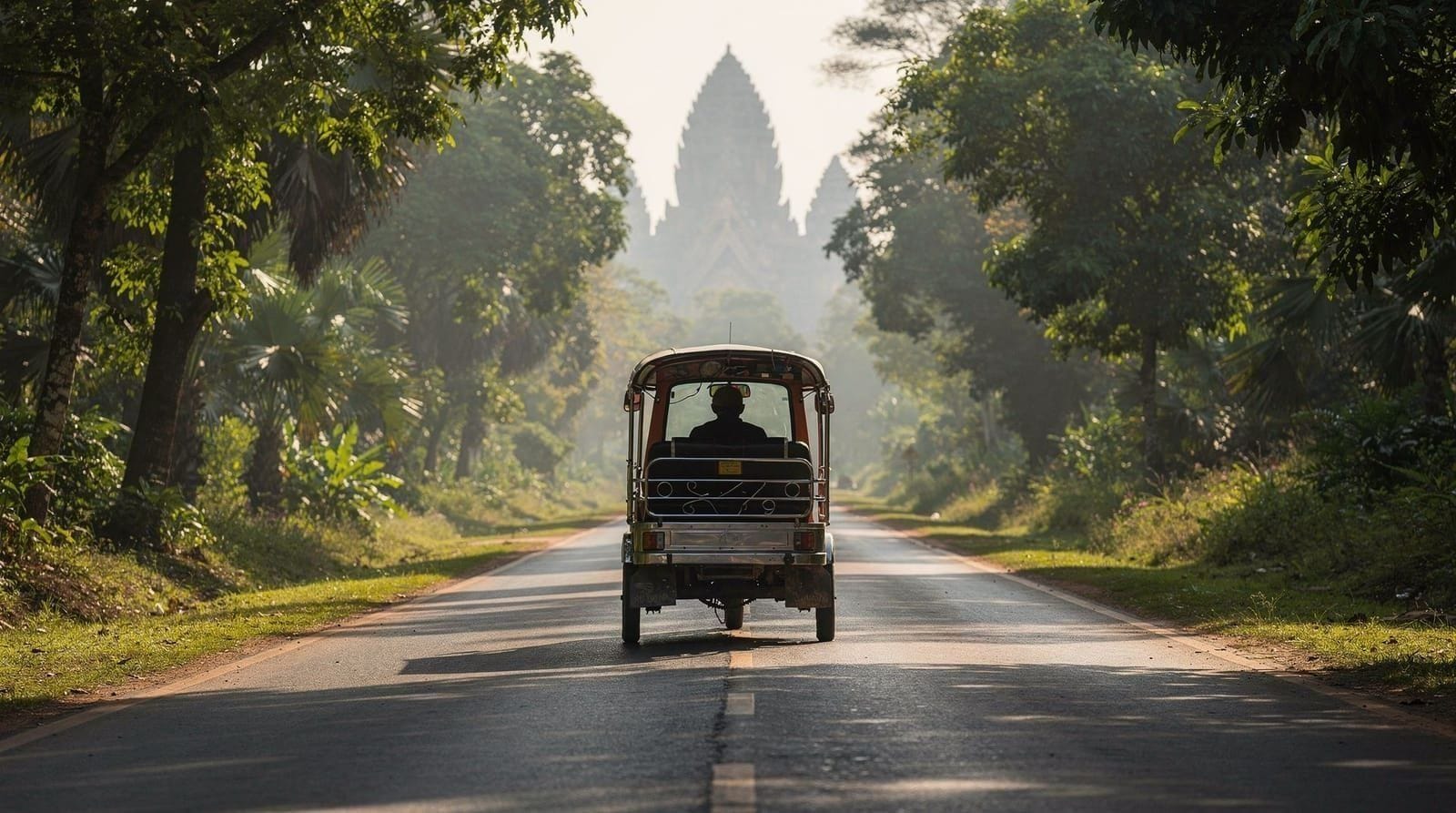
The standard Siem Reap tourist vehicle: a small open-air trailer cab towed behind a motorbike, distinct from the enclosed auto-rickshaw called “tuk-tuk” in Thailand or India. A private driver for the day, hired directly or through your hotel, is the most common way visitors cover the temple circuit.
Cost: roughly $15-20/day for the standard small/grand circuit temples, more ($20-30+) for farther outliers like Banteay Srei or Beng Mealea given the extra distance and time. See the full tuk-tuk pricing guide for negotiation tips and typical scam patterns to avoid.
Pros: open-air and genuinely comfortable in the heat compared to a sealed vehicle, a waiting driver between temple stops removes any need to arrange return transport, flexible stops and timing within the agreed day.
Cons: exposed to rain in wet season without much protection beyond a basic cover, less comfortable than an air-conditioned car for very long drives (farther outliers, day trips to Battambang), no seatbelts in the traditional sense.
Best for: the large majority of visitors doing the standard temple circuit — this is genuinely the default recommendation, not just the cheapest option.
A private tuk-tuk tour for the day is the most common way to book this in advance rather than negotiating on arrival.
Private car or van with driver
An enclosed, air-conditioned vehicle with a driver, typically arranged through a hotel or tour operator.
Cost: noticeably higher than a tuk-tuk — often $40-80+/day depending on vehicle size and distance covered.
Pros: genuine relief from heat and any rain, more comfortable for longer drives to farther outlier temples or day trips (Battambang, Phnom Penh), better for families with young children or travelers with mobility considerations who benefit from AC and a smoother ride.
Cons: meaningfully more expensive than a tuk-tuk for a similar route, loses some of the open-air, closer-to-the-environment feel many visitors enjoy about tuk-tuk temple days.
Best for: families, hot-season travel (April-May) where AC genuinely matters, farther day trips, and travelers prioritizing comfort over cost or atmosphere.
Bicycle
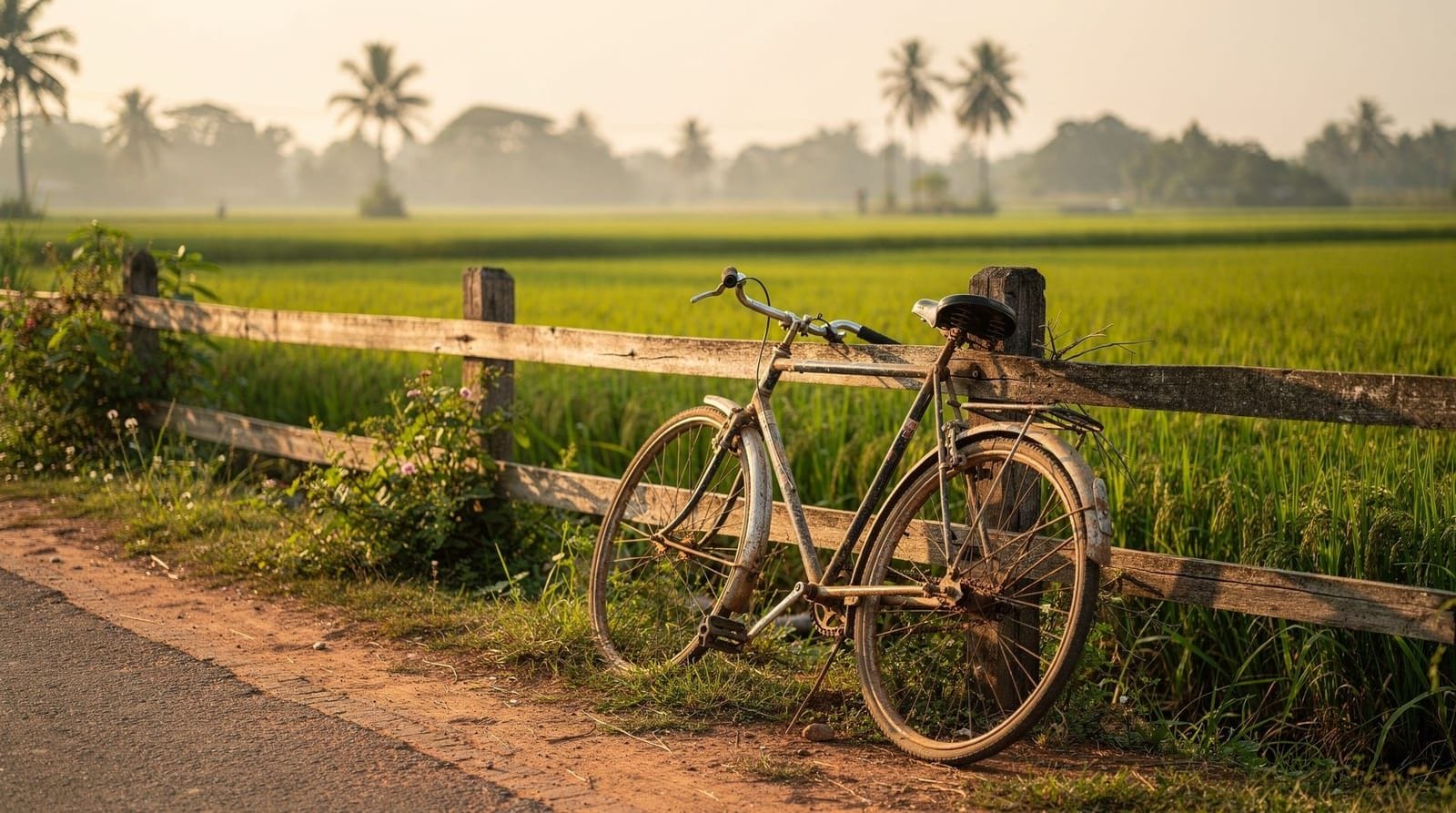
Bicycle rental is widely available in town, and the flatter small circuit temples are a realistic cycling distance for confident, fit riders comfortable with Southeast Asian road conditions.
Cost: a few dollars a day for a standard bicycle rental; e-bikes cost somewhat more but flatten the physical effort significantly.
Pros: genuinely satisfying way to cover the small circuit at your own pace, low cost, a different and more immersive way to experience the temple grounds between stops compared to being driven.
Cons: heat is a real factor — cycling multiple temples in a single day under direct sun is physically demanding even for fit travelers, farther outlier temples aren’t realistic by standard bicycle given distance, and traffic conditions on Siem Reap’s connecting roads require confidence and caution.
Best for: fit, confident cyclists specifically wanting a self-paced small-circuit day, ideally in cooler months (November-February) rather than the hot season. See the dedicated bicycle and scooter rental guide for rental logistics and route specifics.
Motorbike or scooter (self-drive)
Legally the most complicated option for visitors. Cambodia technically requires an International Driving Permit plus a Cambodian motorbike license for scooters over 125cc, and travel insurance policies frequently exclude injuries sustained while riding without correct licensing — a detail that matters considerably if an accident occurs.
Cost: rental itself is inexpensive, but the legal and insurance risk is the real cost consideration, not the rental fee.
Pros: maximum flexibility and independence for experienced riders already comfortable with the licensing requirements.
Cons: the licensing/insurance complication genuinely matters — many visitors ride without realizing their insurance wouldn’t cover them, and Siem Reap’s traffic patterns and road conditions differ enough from many visitors’ home countries to add real risk for inexperienced riders.
Best for: experienced riders who hold the correct international permit and have confirmed their travel insurance covers motorbike use in Cambodia specifically — a smaller group than the number of visitors who actually rent scooters informally.
Ride-hailing apps (Grab, PassApp)
Grab and PassApp both operate in Siem Reap town, offering app-based booking similar to rideshare platforms used elsewhere.
Pros: familiar interface for travelers used to these apps, useful for short, single-destination trips (a restaurant, a specific shop, back to the hotel from town).
Cons: less practical for a full temple day involving multiple stops and waiting time — repeated app bookings for each leg of a multi-stop day tend to cost more and take more coordination than a single day-rate tuk-tuk driver.
Best for: short, single-leg trips within town rather than full temple-circuit days.
Walking
Siem Reap’s tourist core (Old Market, Pub Street, the immediate surrounding streets) is genuinely walkable, and many visitors cover the town’s restaurant and market scene entirely on foot in the evenings.
Pros: free, flexible, and the compact town center rewards unhurried wandering.
Cons: the heat limits comfortable walking distance during the day, and the temples themselves are too far from town (the closest, Angkor Wat, is roughly 6-8 km) to reach on foot.
Best for: evenings in the Old Market/Pub Street area, short hops between nearby restaurants or shops.
No public transit — and that’s normal here
Siem Reap has no fixed-route public bus or metro system serving the town or the Angkor park — tuk-tuks, private cars, ride-hailing apps and bicycles fill the transportation role public transit would play in a larger city. This isn’t a gap unique to Siem Reap; it’s standard for a destination of this size and character across the region, and the tuk-tuk network functions efficiently enough that most visitors don’t miss a formal transit system.
Matching transport to your itinerary
- Standard 3-day temple circuit: private tuk-tuk, day rate, arranged through your hotel or booked in advance.
- Farther outliers (Koh Ker, distant Phnom Kulen sections): a car with AC is worth the extra cost given the longer drive times.
- A single self-paced day exploring the small circuit: bicycle or e-bike, ideally in cooler months.
- Multi-city trip (Battambang, Phnom Penh): bus or private car for the intercity leg — see Siem Reap to Battambang and Siem Reap to Phnom Penh for those specific routes.
- Wanting a change of pace from a standard tuk-tuk day: a guided vespa or tuk-tuk countryside adventure combines transport with a genuinely different sightseeing format.
Cost comparison at a glance
| Option | Typical cost | Best for |
|---|---|---|
| Tuk-tuk (day rate) | $15-20 (more for outliers) | Standard temple circuit |
| Private car/van | $40-80+/day | Families, hot season, farther outliers |
| Bicycle | A few dollars/day | Small circuit, fit riders, cooler months |
| E-bike | Somewhat more than a standard bike | Small circuit with less physical effort |
| Motorbike/scooter self-drive | Low rental cost, high legal/insurance risk | Licensed, insured experienced riders only |
| Grab/PassApp | Variable, per-trip | Short single-leg town trips |
| Walking | Free | Old Market/Pub Street evenings only |
Common mistakes when planning transport
Assuming a tuk-tuk driver will “figure out” your full day’s route without discussing it first. Agree the specific temples, approximate timing, and total price before departure — drivers generally know the standard circuits well, but a vague “take me to the temples” invites either an inefficient route or a driver defaulting to the shortest, least useful option.
Booking a private car for a standard small-circuit day out of an abundance of caution about heat. For most of the year, a tuk-tuk’s open-air breeze while moving is genuinely more comfortable than it sounds, and the extra cost of a sealed car isn’t always worth it outside the hottest months (April-May) or for travelers with specific heat sensitivity.
Not confirming a scooter rental’s licensing requirements before riding. This is the transport mistake with the most serious potential consequences — verify the specific requirements for your rental’s engine size and your own documentation before assuming a rental shop’s willingness to hand over a scooter means it’s straightforwardly legal and insured for you to ride it.
Trying to walk between the town and any temple. Even the closest major temple (Angkor Wat) is roughly 6-8 km from most town accommodation — walkable in theory, impractical in the heat, and not how any local or repeat visitor actually approaches temple access.
Getting around at night
Tuk-tuks remain readily available in the Old Market/Pub Street area well into the evening, and short hops back to nearby accommodation are easy to arrange on the spot or through Grab/PassApp. For destinations slightly further from the tourist core after dark, arranging a driver in advance (or asking your hotel to call one) is more reliable than expecting to flag one down on a quieter residential street. Standard caution applies — confirm the fare or use a metered/app-based option for late-night trips, and avoid unmarked vehicles offering rides outside the established tuk-tuk and ride-hailing network.
Accessibility considerations
Travelers with mobility limitations should know that tuk-tuks require a small step up into the cab, without dedicated accessibility features, and that Siem Reap’s temple terrain itself (uneven stone, stairs without handrails at several sites) is the bigger accessibility challenge than the transport getting you there. A private car with a driver willing to accommodate a slower pace and more frequent stops is generally the more practical transport choice for travelers with mobility considerations, even though it costs more than the standard tuk-tuk default.
Frequently asked questions about Getting around Siem Reap
Do I need a private driver every day?
Not necessarily — for temple days, yes, a tuk-tuk or car with a waiting driver is close to essential given the distances between sites and the heat. For days spent entirely in town (markets, restaurants, the Old Market area), walking or a short tuk-tuk hop covers everything without needing a driver for the full day.Is it safe to rent a scooter and drive yourself in Siem Reap?
Legally complicated and generally not recommended for visitors — an International Driving Permit plus a Cambodian motorbike license are technically required for scooters over 125cc, traffic patterns differ from many visitors' home countries, and travel insurance often excludes injuries from riding without the correct license. Bicycles and e-bikes don't carry the same licensing requirement and are the more practical self-drive option.How do I find a reliable tuk-tuk driver?
Ask your hotel or guesthouse to arrange one — most have a small network of trusted regular drivers, and a hotel-arranged driver has some accountability the hotel cares about maintaining. Agreeing the day's route and total price before departure, regardless of how you found the driver, is the single most important step to avoid later disputes.Can I use ride-hailing apps like Grab in Siem Reap?
Yes, Grab and PassApp both operate in Siem Reap town, useful for short point-to-point trips within the tourist area. For a full day covering multiple temples with waiting time between stops, a directly arranged private tuk-tuk driver is usually more practical and often better value than repeated app rides.Is public transportation available in Siem Reap?
No fixed-route public bus or metro system serves Siem Reap town or the Angkor park — tuk-tuks, private cars, ride-hailing apps and bicycles fill the role public transit would play elsewhere. This is standard for the destination, not a gap unique to Siem Reap among smaller Southeast Asian tourist cities.What's the difference between a tuk-tuk and a remorque?
In everyday Siem Reap usage, 'tuk-tuk' commonly refers to the remorque-style vehicle — a small trailer cab towed behind a motorbike, the standard tourist transport around town and the temples. This differs from the enclosed three-wheeled auto-rickshaw called a tuk-tuk elsewhere in Asia (Thailand, India); Cambodia's version is open-air and motorbike-towed.
Top experiences
Bookable activities with verified prices and instant confirmation on GetYourGuide.


More tours on Viator
Top-rated experiences with verified reviews, bookable on Viator (a Tripadvisor company).