How to avoid the crowds at Angkor
Angkor: Small-Group Grand Circuit Temples Tour with Banteay Srei
What's the single best trick to avoid crowds at Angkor?
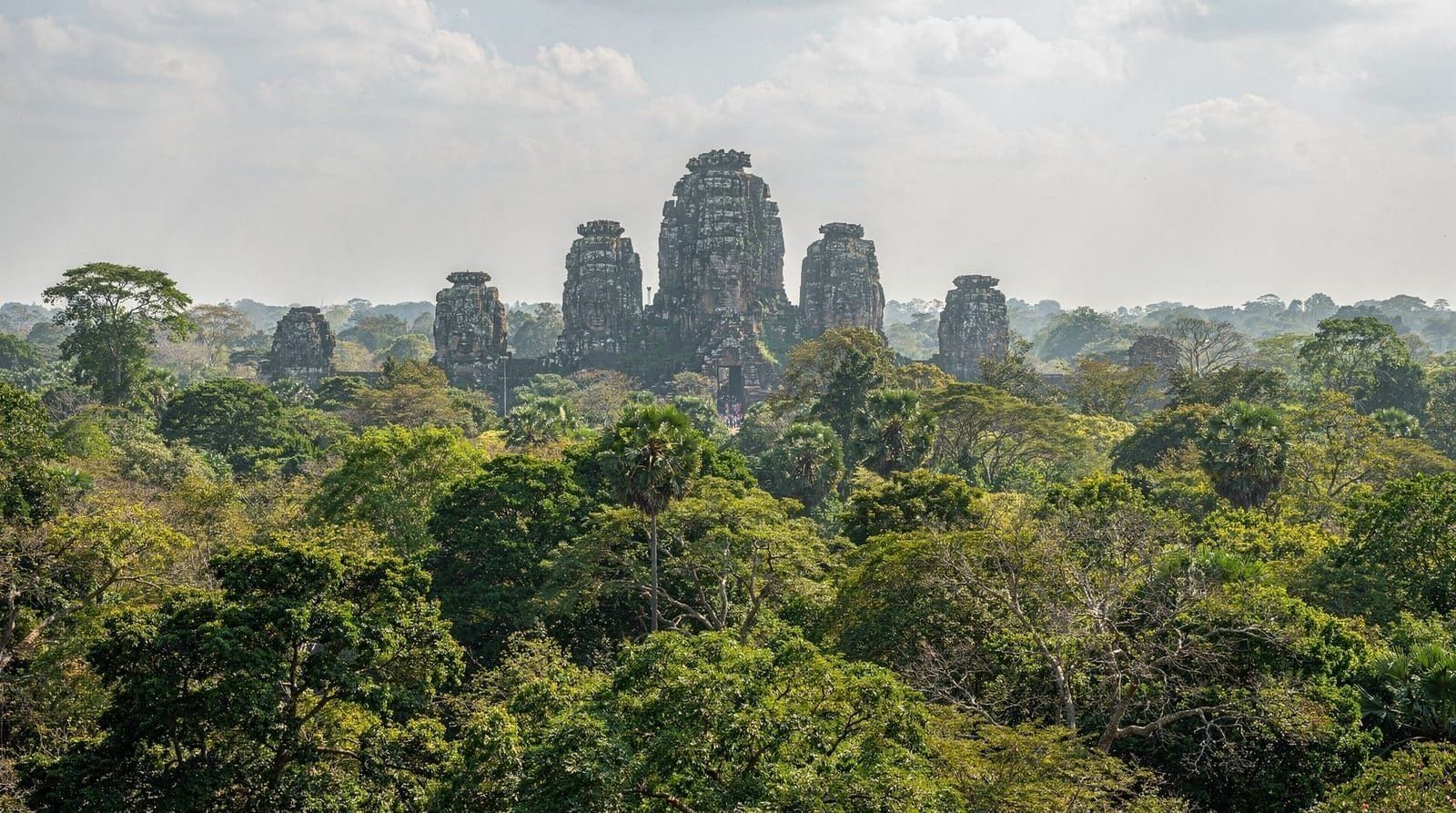
Reverse the standard order — most tour buses hit Angkor Wat at sunrise then Angkor Thom mid-morning. Visiting Angkor Thom and Bayon first thing, then Angkor Wat mid-morning or Ta Prohm in early afternoon, puts you a step ahead of the bulk of the tour-bus traffic at each stop.
Why crowd levels matter as much as which temples you pick
Two visitors can see the exact same five temples and come away with very different impressions purely based on how crowded each stop was at the moment they arrived — a temple experienced nearly alone reads as intimate and impressive, the same temple experienced as one of two hundred people shuffling past a carving reads as a checklist item. Crowd management isn’t a secondary consideration behind “which temples to see” — for many visitors it’s just as important to the overall quality of the day.
Crowds at Angkor follow predictable patterns
Angkor’s visitor flow isn’t random — it follows the same rough daily rhythm across most tour operators, drivers and independent travelers alike, which means the crowd is genuinely predictable and, with a bit of route planning, genuinely avoidable at specific points during the day. This guide focuses purely on timing and routing tricks, not on which temples to prioritize (see our temples worth visiting guide for that).
How crowd size actually varies through the year
Beyond the daily hour-by-hour pattern, overall crowd volume shifts substantially by month. December and January, the peak dry-season months with the most reliable weather, see the heaviest crowds of the year at every major temple, often noticeably denser than the already-busy shoulder months of November and February.
By contrast, the wettest months (August-September) can see Angkor Wat’s sunrise crowd thin by a meaningful margin compared to peak season, even on a clear morning, simply because fewer travelers build a Cambodia trip around the rainier stretch of the calendar. If your travel dates are flexible at all, shifting even a week or two away from the exact December-January peak can noticeably improve the crowd experience without sacrificing much on weather reliability.
The standard crowd pattern, hour by hour
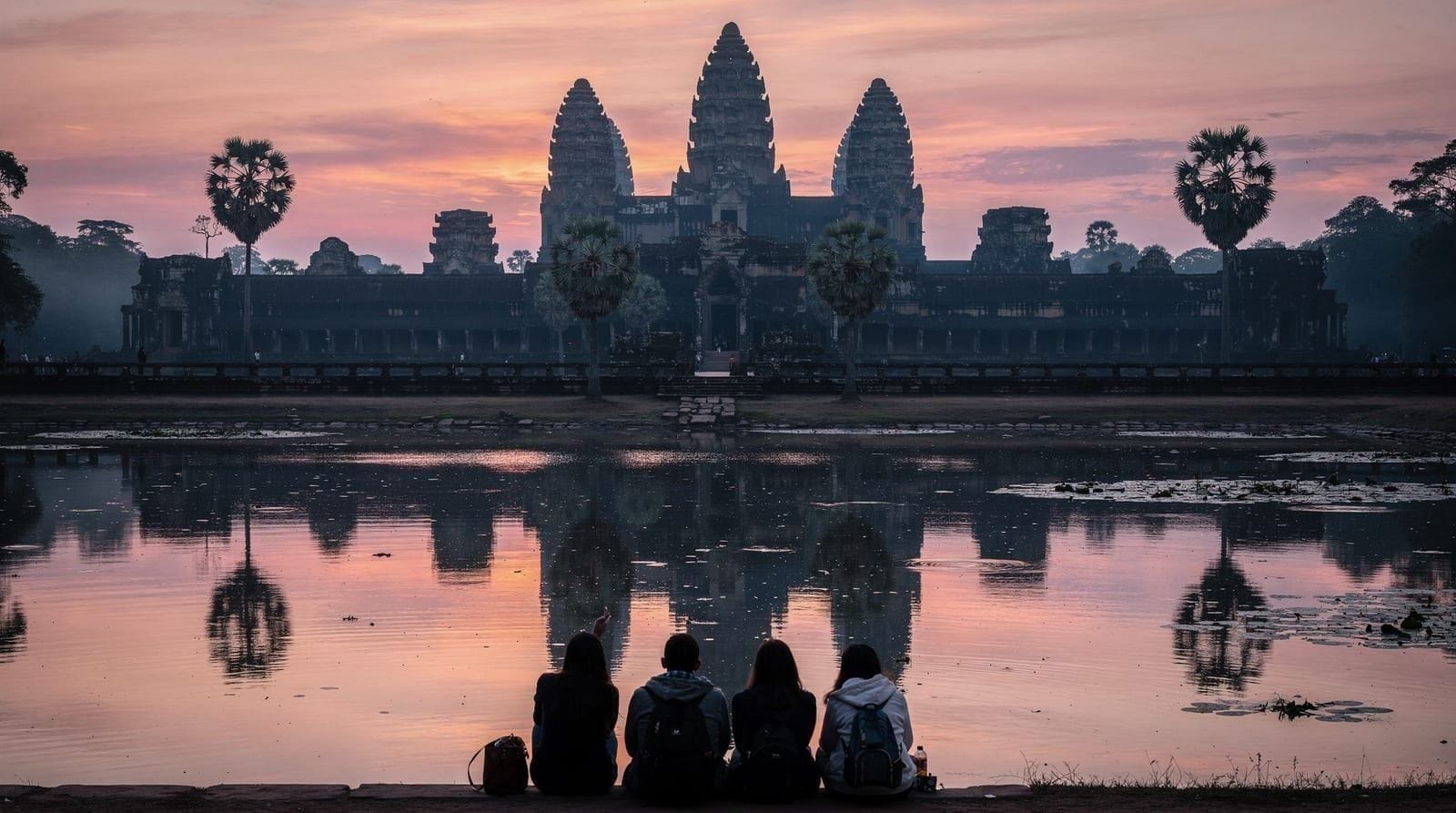
Most visitors follow a near-identical sequence: arrive for Angkor Wat sunrise around 5am, stay through the morning light, then move to Angkor Thom and Bayon by 8:30-9am just as the day-tripper tour buses from town arrive fresh, creating the single densest crowd window of the entire day roughly between 8:30am and noon. By early-to-mid afternoon, much of that crowd has either headed back to town for lunch or moved on to Ta Prohm, which sees its own secondary peak between roughly 1pm and 3pm. After 3pm, crowds thin noticeably across the whole park as day-trippers wrap up and head back toward town.
Reverse the order
The single most effective trick is deliberately going against this standard flow: visit Angkor Thom and Bayon first, right at park opening, before the 8:30am tour-bus wave arrives — you’ll have Bayon’s carved faces with a fraction of their usual crowd. Save Angkor Wat itself for mid-morning (roughly 9-10am), once the sunrise crowd has dispersed but before an even later midday surge. Push Ta Prohm to late afternoon, after 3pm, when its own secondary peak has passed. This reversed sequence trades the (real, worthwhile) sunrise experience for meaningfully thinner crowds at every other major stop — a trade some visitors are happy to make, particularly on a second Angkor day after already doing a standard sunrise visit once.
Time-of-day tricks that work at any temple
- Before 8am or after 3pm, almost every temple in the park sees noticeably fewer visitors than the 8:30am-noon window, regardless of which specific route you follow.
- Lunch hour (roughly 11:30am-1:30pm) thins crowds slightly at some sites as day-trippers head to restaurants, though Ta Prohm’s own secondary peak often overlaps this window given its popularity as an early-afternoon stop.
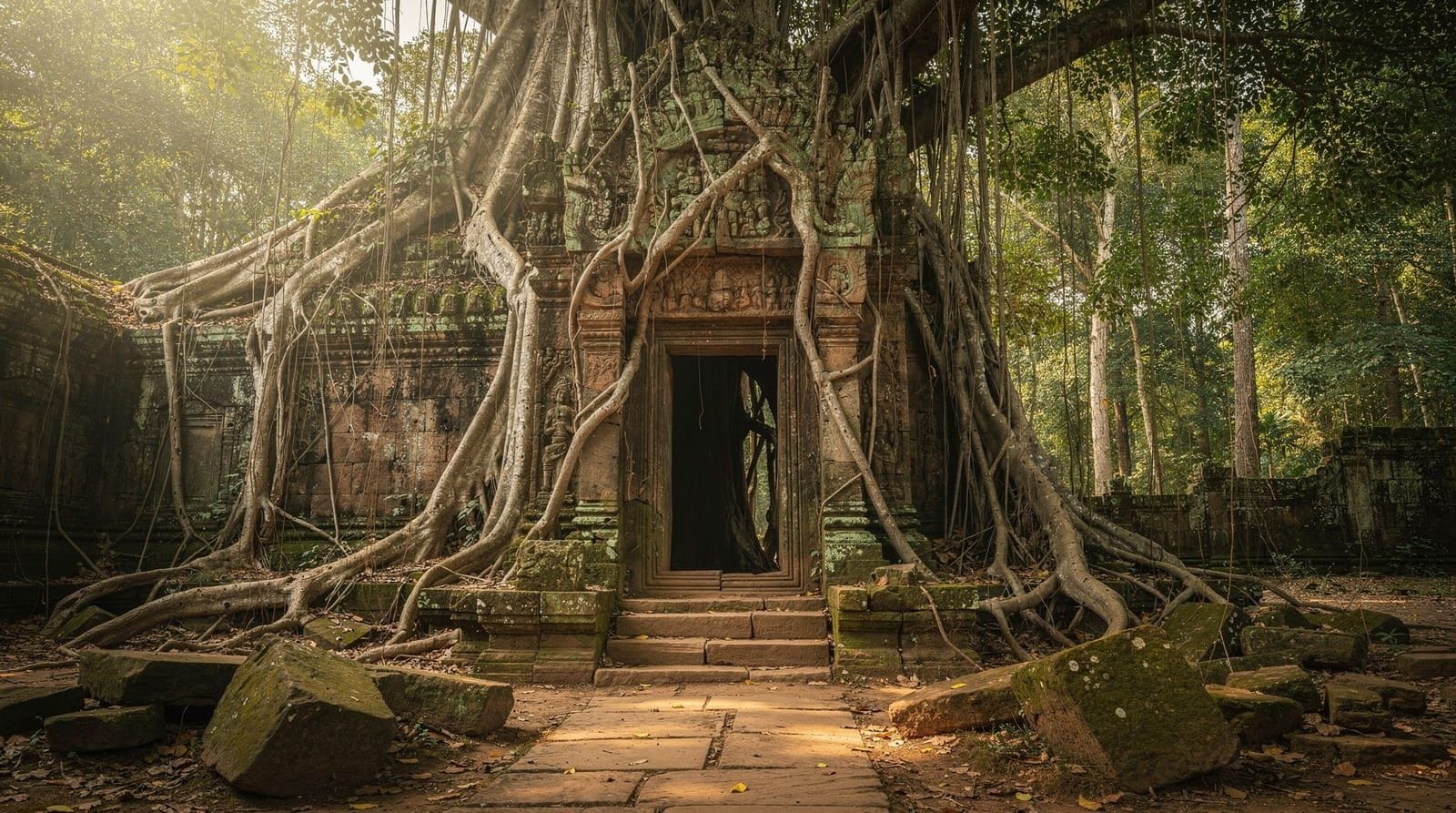
- A second, less obvious entrance exists at several temples — Ta Prohm in particular has an exit route that doubles as a quieter alternative entry point, avoiding the main crowd bottleneck at its most famous entrance.
Which temples reward crowd-avoidance tactics most
Angkor Wat, Bayon and Ta Prohm see meaningful crowds at nearly any hour given their global fame — timing tricks reduce but don’t eliminate the crowd at these three. The Grand Circuit’s Preah Khan, Neak Pean and Ta Som, by contrast, are consistently calm throughout the day simply because they’re less universally known, meaning crowd-avoidance effort is better spent on the big three rather than temples that are already quiet by default. A Grand Circuit and Banteay Srei tour leans into this naturally, since the whole route sees lighter traffic than the Small Circuit.
Season matters as much as time of day
Visiting during the rainy season (May-October) delivers meaningfully thinner crowds across the entire park compared to the December-January peak, since rainy months fall outside the weather window most travelers specifically target. Showers tend to be intense but short rather than day-long washouts, and the tradeoff — occasional rain interruptions for substantially calmer temple visits — is one more visitors should seriously weigh rather than defaulting to peak season by habit.
An off-the-beaten-path route
A sunrise and off-the-beaten-path jeep tour is built specifically around avoiding the standard tour-bus route, mixing well-known stops with quieter access points and timing. If crowd avoidance is your top priority for the trip, a guide or driver explicitly briefed on a reverse or off-peak sequence adds more value than simply booking any generic guided tour, since many standard tours follow the exact same crowded default route as everyone else.
Entry point tricks specific to each major temple
At Angkor Wat, entering via the less-used side causeways rather than the main western entrance during the busiest mid-morning hours can shave real time off the walk-in queue, though the main causeway remains the standard and most direct route for sunrise. At Ta Prohm, a secondary route near the temple’s eastern side functions as an alternative to the main crowd bottleneck at the most-photographed root-and-stone entrance, giving a calmer first impression before joining the busier central path.
At Angkor Thom, entering through the South Gate (the most iconic and consequently busiest of the five gates, lined with carved figures) during peak hours means sharing that photogenic approach with the most people — the Victory Gate or North Gate, less commonly used by tour groups, offer a quieter alternative approach to Bayon for visitors willing to trade the classic South Gate photo for a calmer arrival.
How much crowd-avoidance actually changes the experience
It’s worth being honest about the limits of timing tricks: Angkor Wat, Bayon and Ta Prohm are globally famous enough that even off-peak hours during high season will still involve other visitors, sometimes in meaningful numbers. What timing and routing tricks reliably deliver is a difference in degree, not a transformation into an empty temple — going from “shoulder to shoulder” to “comfortably shared with dozens rather than hundreds of people” is a real and worthwhile improvement, but shouldn’t be oversold as guaranteeing solitude.
For visitors who prioritize low crowds above almost everything else, the Grand Circuit’s naturally quieter temples (Preah Khan, Neak Pean, Ta Som) will more reliably deliver a near-empty experience than any timing trick applied to the Small Circuit’s headline sites.
Crowd schedule by temple, at a glance
| Temple | Busiest window | Calmest window | Why |
|---|---|---|---|
| Angkor Wat | 5:00-6:30am (sunrise) and 9:30-11:30am | Before 5am gate or 1:00-3:00pm | Sunrise draws the single largest single-site crowd of the day, and a second wave arrives once Angkor Thom’s morning crowd loops back |
| Bayon / Angkor Thom | 8:30am-12:00pm | Before 8am or after 3:30pm | Tour buses from town converge here right after checking out of hotels mid-morning |
| Ta Prohm | 1:00-3:00pm | Before 9am or after 3:30pm | It’s the default post-lunch stop for both independent drivers and group tours |
| Banteay Kdei / Sras Srang | Rarely crowded | All day | Sits just off the main Small Circuit sequence, skipped by rushed itineraries |
| Preah Khan, Neak Pean, Ta Som | Rarely crowded | All day | Grand Circuit distance filters out one-day, bus-based group tours |
| Bakong (Roluos Group) | Rarely crowded | All day | 13 km detour east of town, off every standard circuit map |
Where tour-bus timing comes from
Large group-tour buses, most heavily represented by operators serving Chinese, Korean and Vietnamese group-travel markets, run on a near-fixed daily schedule set by hotel pickup times in town — checkout and breakfast typically push a first departure to Angkor Thom between 8:00 and 8:30am, which is exactly why Bayon’s 8:30am-noon window is so consistently the worst of the day.
These buses then move as a block to Ta Prohm after a fixed lunch stop, producing Ta Prohm’s own predictable 1-3pm surge. Independent tuk-tuk travelers and small private tours don’t follow this exact rhythm, but enough of the park’s total daily visitor volume does that avoiding these two windows at these two specific temples delivers most of the available crowd-avoidance benefit on its own, even without a full reversed-route plan.
Temples that stay calm literally all day
A specific subset of Angkor’s temples sees meaningfully lower crowds not just at off-peak hours but essentially around the clock, regardless of when you arrive: Preah Khan, Neak Pean and Ta Som on the Grand Circuit, Banteay Kdei just off the main Small Circuit sequence, and Bakong in the Roluos Group, roughly 13 km east of town.
None of these require special timing tricks — their distance from the standard one-day tourist route does the crowd-filtering automatically. If your schedule genuinely has zero flexibility for early starts or reversed routing, prioritizing a visit to one or two of these over squeezing in a fourth headline temple is a more reliable way to get a low-crowd experience than any timing trick applied to Angkor Wat, Bayon or Ta Prohm.
Putting it together
For a single day at Angkor prioritizing crowd avoidance over the sunrise experience, start at Angkor Thom, move to the Grand Circuit’s quieter temples mid-morning, visit Angkor Wat around 9-10am, and finish at Ta Prohm after 3pm. For a multi-day visit, doing a standard sunrise-first day once and a reversed, crowd-light day on a subsequent visit gives you both experiences without compromising either. See our Small Circuit vs. Grand Circuit guide for how this crowd-avoidance thinking maps onto a full multi-day plan.
Frequently asked questions about How to avoid the crowds at Angkor
What time of day has the worst Angkor crowds?
Roughly 8:30am to noon is the single busiest window across the whole park, once the post-sunrise crowd disperses from Angkor Wat and merges with the day-tripper tour buses arriving fresh from town. Early morning (before 8am) and mid-to-late afternoon (after 3pm) are consistently calmer.Is the rainy season a good time to avoid crowds?
Yes, meaningfully — May through October sees far fewer visitors overall than the December-January peak, since it falls outside the ideal-weather window most travelers target. Rain showers tend to be short and intense rather than all-day, and the tradeoff of occasional rain for genuinely thinner crowds is worth it for many visitors.Which temples are always crowded no matter the timing?
Angkor Wat, Bayon and Ta Prohm see meaningful crowds at almost any daytime hour given their fame, though the difference between their busiest and calmest hours is still substantial. The Grand Circuit's Preah Khan, Neak Pean and Ta Som see consistently lower crowds throughout the day by comparison, simply due to being less universally known.Does visiting on a weekday vs weekend matter?
Less than you'd expect for international tourism, since foreign visitor patterns aren't strongly tied to the local work week — but weekends do see a bump in domestic Cambodian visitors at some sites, particularly Phnom Kulen, so weekday visits skew marginally calmer overall.Can I avoid the Angkor Wat sunrise crowd entirely and still see it well-lit?
Yes — visiting Angkor Wat mid-morning (roughly 9-10am) after the sunrise crowd disperses but before the heaviest midday tour-bus wave gives good light and a noticeably thinner crowd than either the 5am rush or the 11am-1pm peak.Do guided tours avoid crowds better than independent visits?
Not automatically — many tours follow the same standard route as everyone else, arriving at Angkor Wat for sunrise and Bayon mid-morning along with every other tour. A guide or driver who explicitly plans a reverse or off-peak route is more valuable for crowd avoidance than a tour simply because it's guided.
Top experiences
Bookable activities with verified prices and instant confirmation on GetYourGuide.


More tours on Viator
Top-rated experiences with verified reviews, bookable on Viator (a Tripadvisor company).