Old Market (Psar Chaa) guide
What is Psar Chaa (the Old Market)?
Siem Reap's oldest and most central market — a real working market for produce, fish, and household goods on the inside, ringed by a tourist-facing shell of souvenir, textile, and jewelry stalls on the outer streets. Morning (before 9am) is when it functions most as a genuine local market; by mid-morning it's dominated by the tourist shopping layer.
What Psar Chaa actually is
Psar Chaa — “Old Market” in Khmer, and the name most locals and drivers use interchangeably with the English translation — is Siem Reap’s oldest and most central market, and unlike the purpose-built Angkor Night Market, it’s a genuine working market at its core, not a tourist-only construction.
Inside the covered central hall, vendors sell fresh produce, fish, meat, and household goods to Cambodian shoppers, largely unchanged in function even as the surrounding streets have filled with souvenir shops, tailors, art galleries, and restaurants aimed squarely at visitors. This dual identity — real market inside, tourist shopping district around it — is the single most useful thing to understand before visiting, since arriving expecting one and finding the other is the most common source of disappointment in reviews.
Layout
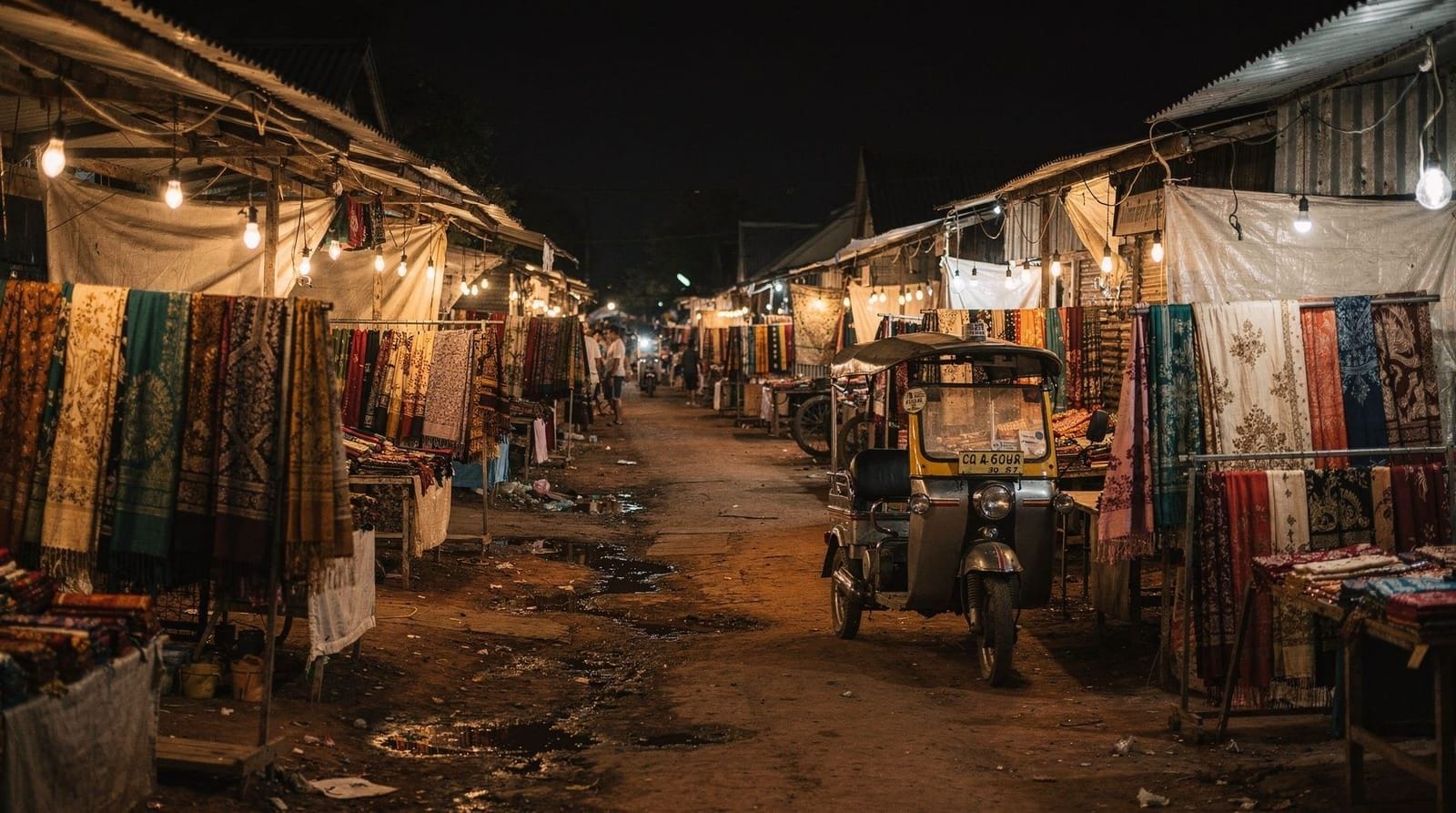
The market sits at the geographic and informal social center of town, at one end of Pub Street and within easy walking distance of the river, Kandal Village, and most central accommodation. The covered central hall houses the working produce and fresh-food market; the streets radiating outward and the market’s outer stalls carry the tourist-facing layer — clothing, silk, wood and stone carvings, jewelry, spices packaged for travel, and a dense cluster of art galleries and tailor shops in the immediate surrounding blocks. It’s compact enough to walk end to end in 15-20 minutes, though a proper browse of both the market interior and surrounding streets takes an hour or more.
Best time to visit
Early morning (6-9am) is when Psar Chaa functions most as a genuine local market — vendors setting up, fresh produce at its best, and food stalls (see the food section below) serving breakfast to market workers and residents rather than tourists. This is also the coolest, least crowded time to visit. Mid-morning through afternoon sees the tourist-facing souvenir layer take over as the dominant activity, with the fresh produce section continuing to operate but drawing less visitor attention.
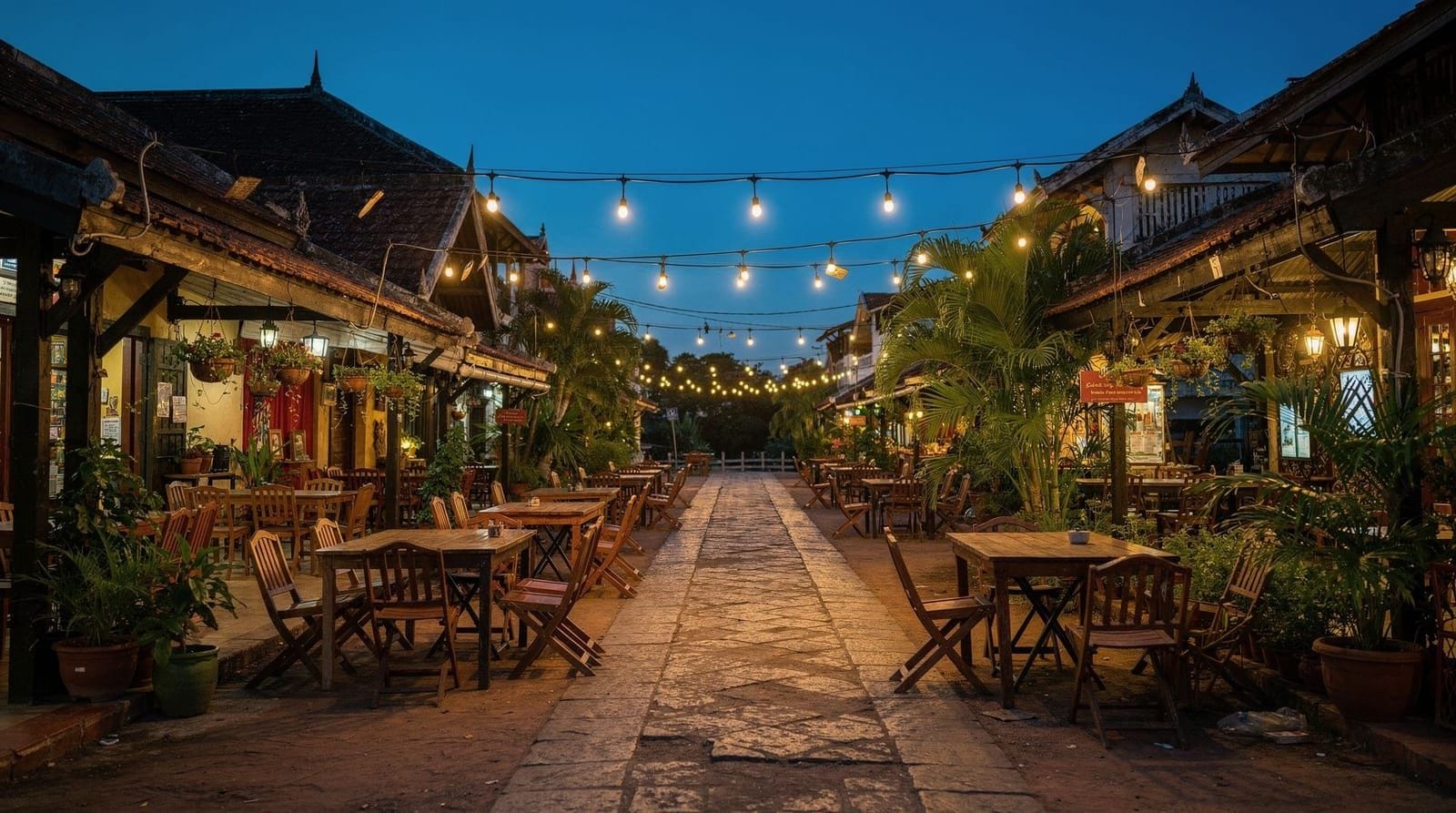
Evening the market itself winds down, though the surrounding restaurant and bar streets pick up as part of the broader Pub Street area (see our Pub Street guide). If you only have time for one visit and want the fullest sense of what the market actually is, go before 9am.
Food at the Old Market
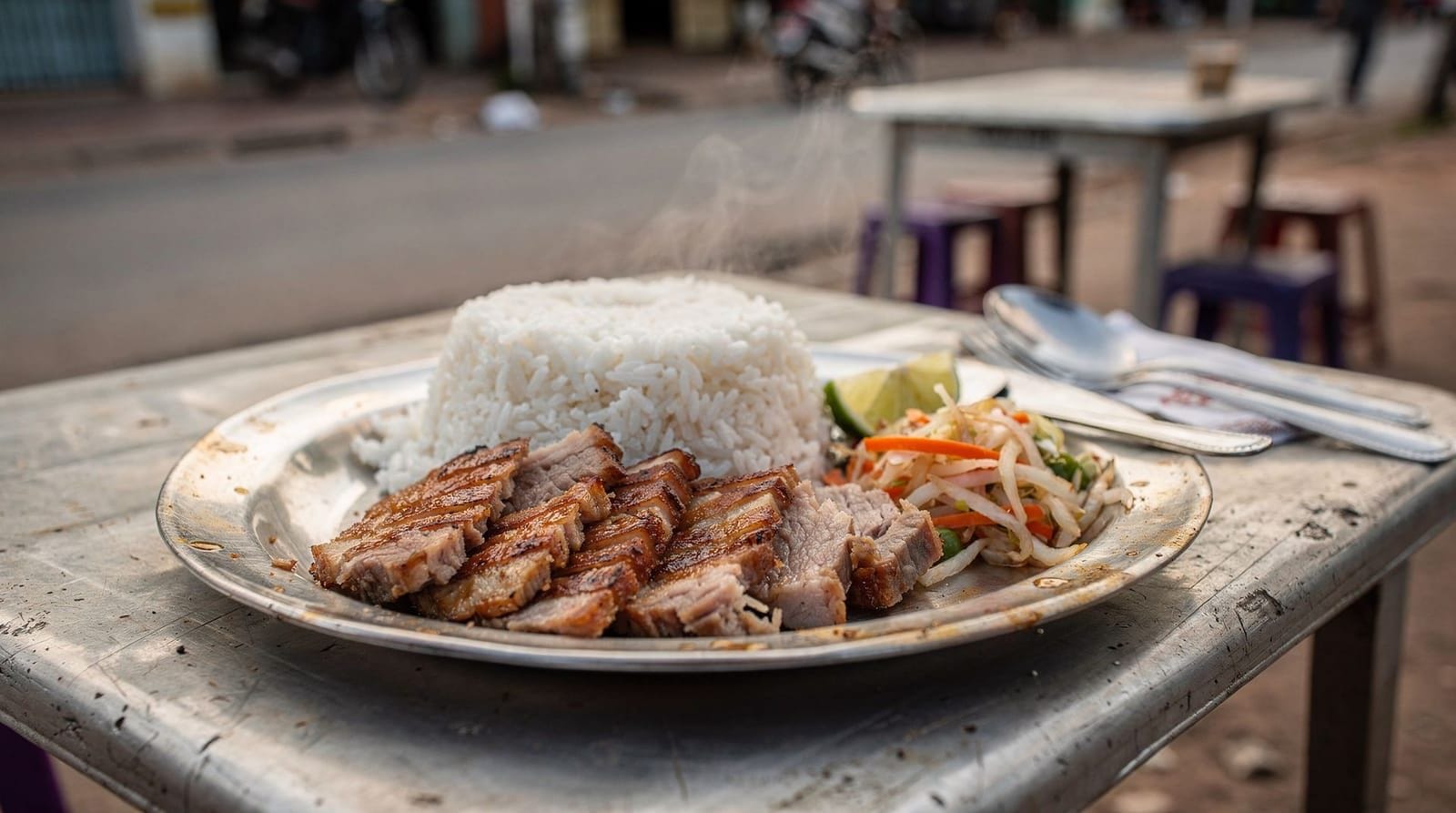
The streets immediately around Psar Chaa, particularly toward the river side, have a genuine cluster of food stalls and small local restaurants serving market workers and residents — num banh chok (Khmer noodles) vendors and bai sach chrouk (grilled pork and rice) carts appear from early morning, generally sold out by mid-morning. This is covered in more depth in our street food guide; the short version is that Psar Chaa’s morning food scene is one of the best, most convenient introductions to real Khmer street food in town, precisely because it’s still primarily serving locals rather than a tourist-adapted version.
What’s sold, and what’s genuinely local
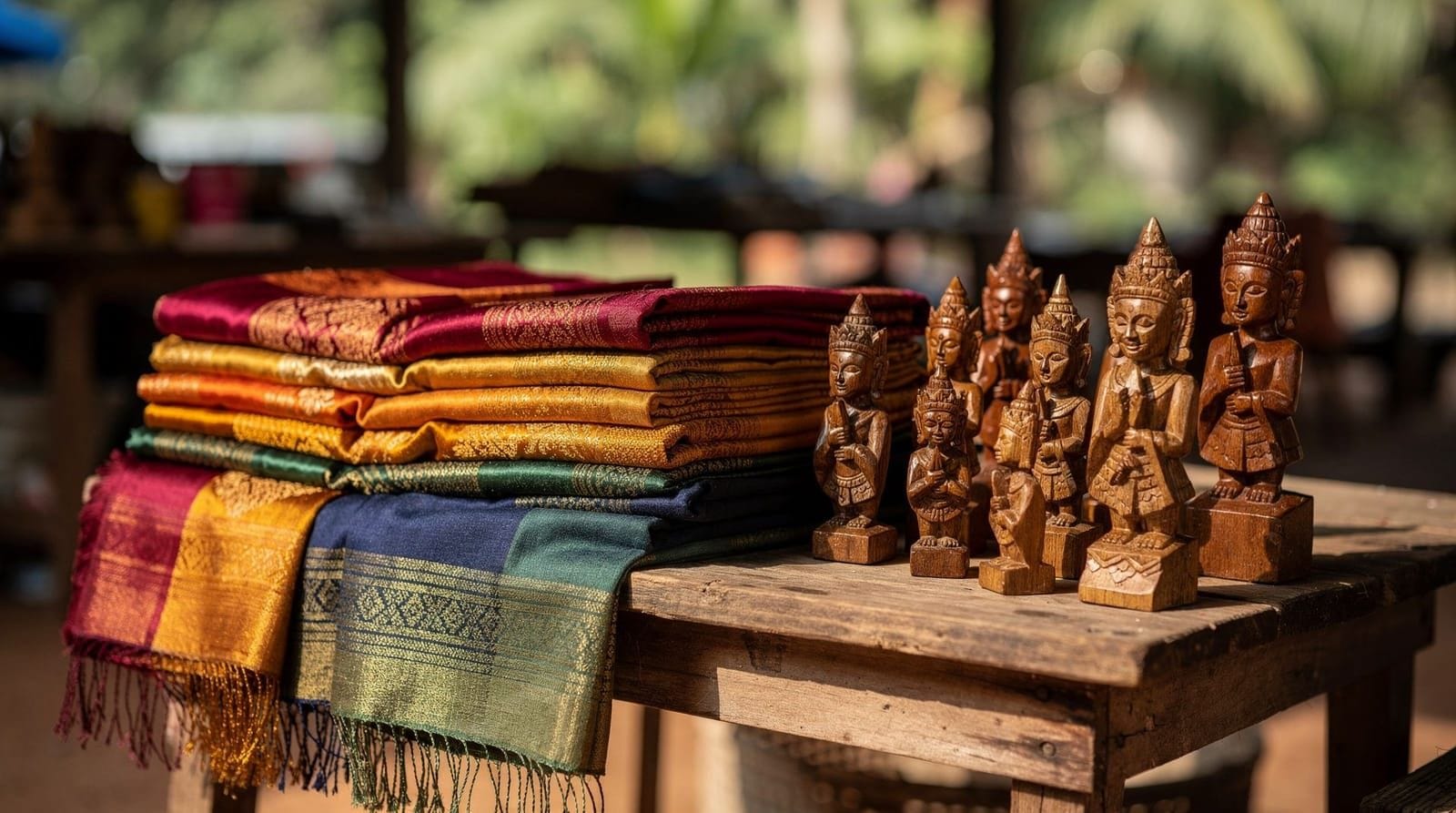
Inside and around the market: fresh produce, fish, and meat (the working core); dried goods and spices, including Kampot pepper; silk scarves and textiles of varying authenticity; wood and stone carvings; clothing, both cheap tourist items and better-made pieces; jewelry; and a dense concentration of art galleries in the surrounding blocks, some showing genuinely skilled local painters and photographers alongside more mass-produced tourist art.
As with the Angkor Night Market, not everything marketed as local actually is — imported textiles and carvings are common enough that assuming authenticity from a stall’s presentation alone is a mistake. See our souvenirs guide for how to tell the difference and where to buy verified Khmer crafts if that matters to your purchase.
A brief history
Psar Chaa’s core structure dates to the French colonial period, and the surrounding blocks retain some of Siem Reap’s older colonial-era shophouse architecture, a contrast with the newer, purpose-built tourist infrastructure (like the Angkor Night Market) that’s grown up around town since. Its name — “Old Market,” as opposed to “Psar Leu” (upper/new market) — reflects its status as the town’s original central marketplace, predating Siem Reap’s growth into a mass tourism destination by decades. Walking the blocks immediately behind the tourist-facing stalls, particularly toward the river, still shows some of this older architecture if you’re interested in the town’s pre-tourism layout.
Photography at the market
The fresh produce and fish section is visually striking and popular with photographers, but it’s also where vendors are working, not performing — a quick smile, a nod, or a small purchase before photographing someone directly tends to go over much better than photographing a stallholder without any acknowledgment. The surrounding streets, with their mix of colonial-era architecture, market stalls, and street life, are generally fine to photograph freely. Early morning light, before the heat and crowds build, is also simply the best time of day for photography here, another reason the early-morning visit recommended above serves double duty.
Combining a market visit with a cooking class
Several Siem Reap cooking classes (see our cooking classes guide) build their market-visit component around Psar Chaa or the larger Psar Leu, walking you through ingredient identification — kroeung components, prahok, fresh fish varieties — before heading to the kitchen. If you’re planning a cooking class anyway, it’s a natural way to see the market with expert context rather than browsing blind, though an independent early-morning visit on a separate day still gives you more unstructured time to wander at your own pace.
Bargaining
The same norms apply as at the Angkor Night Market and most Southeast Asian markets: prices in the tourist-facing sections are not fixed, and bargaining is expected — a reasonable opening counter is 40-50% of the first quoted price, settling somewhere in between after some back-and-forth, kept friendly rather than aggressive. Prices in the fresh-produce section (where you’re less likely to be buying anyway as a visitor) are generally closer to fixed local rates, since that section serves Cambodian shoppers who know the going price.
Tailors and custom clothing
The streets around Psar Chaa have a notable concentration of tailor shops offering custom-made clothing, often with same-day or next-day turnaround for simple items — a reasonable option if you want a made-to-measure shirt or dress at a fraction of home-country prices, though quality varies significantly between shops. Ask to see finished samples of previous work and confirm turnaround time and total price (including any fabric cost) before committing, since add-on charges are a common source of dispute afterward.
Art galleries
Several serious art galleries, alongside more tourist-oriented print shops, cluster in the blocks around the Old Market, showing contemporary Cambodian painting and photography — a worthwhile detour if you’re interested in modern Khmer art rather than only traditional crafts. Prices at genuine galleries run considerably higher than market stalls, reflecting original or limited-edition work rather than mass-produced pieces, and bargaining is generally less expected (though not unheard of) in a proper gallery setting compared to a market stall.
Old Market vs. Angkor Night Market
The core distinction: Psar Chaa is a real, functioning local market with a tourist shopping layer built up around it, active mainly during the day; the Angkor Night Market (see our night markets guide) is a purpose-built evening tourist market with no local-market function at all. If authenticity and a morning local atmosphere matter to you, prioritize Psar Chaa early; if you want a relaxed evening browse after dinner, the Angkor Night Market fits that better. Many visitors do both, on different days or at different times of the same day, since they serve genuinely different purposes rather than duplicating each other.
Frequently asked questions about the Old Market
What is Psar Chaa?
Siem Reap’s oldest and most central market — a real working market for fresh produce and household goods at its core, surrounded by a tourist-facing shell of souvenir stalls, tailors, and galleries on the outer streets.
What’s the best time to visit the Old Market?
Early morning, before 9am, when it functions most as a genuine local market and the food stalls are freshest — bai sach chrouk and num banh chok vendors typically sell out by mid-morning.
Is bargaining expected at the Old Market?
Yes, in the tourist-facing sections (souvenirs, textiles, carvings, clothing) — not in the fresh-produce section, where prices are closer to fixed local rates.
How is the Old Market different from the Angkor Night Market?
Psar Chaa is a genuine, functioning local market with a tourist shopping layer around it, active mainly by day; the Angkor Night Market is a purpose-built evening tourist market with no local-market function. See our night markets guide for more.
Is everything sold at the Old Market made in Cambodia?
No — similar to the night market, some textiles, carvings, and jewelry sold around Psar Chaa are imported rather than locally made. See our souvenirs guide for how to identify genuine Khmer crafts.
Can I get custom clothing made near the Old Market?
Yes — the surrounding streets have a concentration of tailor shops offering made-to-measure clothing, often with same- or next-day turnaround. Quality varies significantly by shop, so check samples and confirm total pricing before committing.
How long should I budget for visiting the Old Market?
The market itself can be walked end to end in 15-20 minutes, but a proper visit including the surrounding streets, a food stop, and some browsing typically takes an hour or more.
Is the Old Market safe?
Yes — it’s busy, central, and well-trafficked. The realistic precautions are the ordinary market ones: watch your bag in crowds, agree prices before handing over items, and be cautious of anyone overly insistent about a specific shop, tailor, or gallery, which can indicate a commission arrangement rather than genuine recommendation.
Is it okay to photograph vendors at the Old Market?
The market streets and architecture are generally fine to photograph freely; for close-up photos of vendors, especially in the working produce section, a quick acknowledgment or small purchase first tends to be better received than photographing without any interaction.
How old is the Old Market building?
The core market structure dates to the French colonial period, making it one of the older commercial buildings in central Siem Reap, predating the town’s growth into a major tourism destination by decades.
More tours on Viator
Top-rated experiences with verified reviews, bookable on Viator (a Tripadvisor company).