Koh Ker
Koh Ker's 7-tier pyramid and separate $15 ticket: real distance from Siem Reap, road conditions, and what else the site includes.
Siem Reap: Koh Ker and Beng Mealea Temples Tour
Quick facts
- Distance from Old Market
- ~120 km, ~2 hours by car
- Ticket needed
- Separate $15 ticket — NOT covered by the Angkor Pass, managed by NAPV not Angkor Enterprise
- Time to allow
- 1.5-2 hours at the pyramid and surrounding temples
- Highlight
- Prasat Thom, a 7-tier sandstone pyramid you can climb
- Combine with
- Beng Mealea, on the way out
Cambodia’s short-lived 10th-century capital, and its one climbable pyramid
Koh Ker was the capital of the Khmer Empire for a brief but significant stretch — roughly 928 to 944 AD — under King Jayavarman IV, who moved the seat of power away from Angkor entirely before it shifted back under his successor. In that short window, Koh Ker’s builders produced Prasat Thom, a seven-tier sandstone pyramid roughly 36 metres tall that visitors are permitted to climb via a steep wooden staircase built onto one face — genuinely unusual, since most of the park’s temple-mountains (Angkor Wat’s upper level, Phnom Bakheng) either restrict climbing or manage it with strict capacity limits.
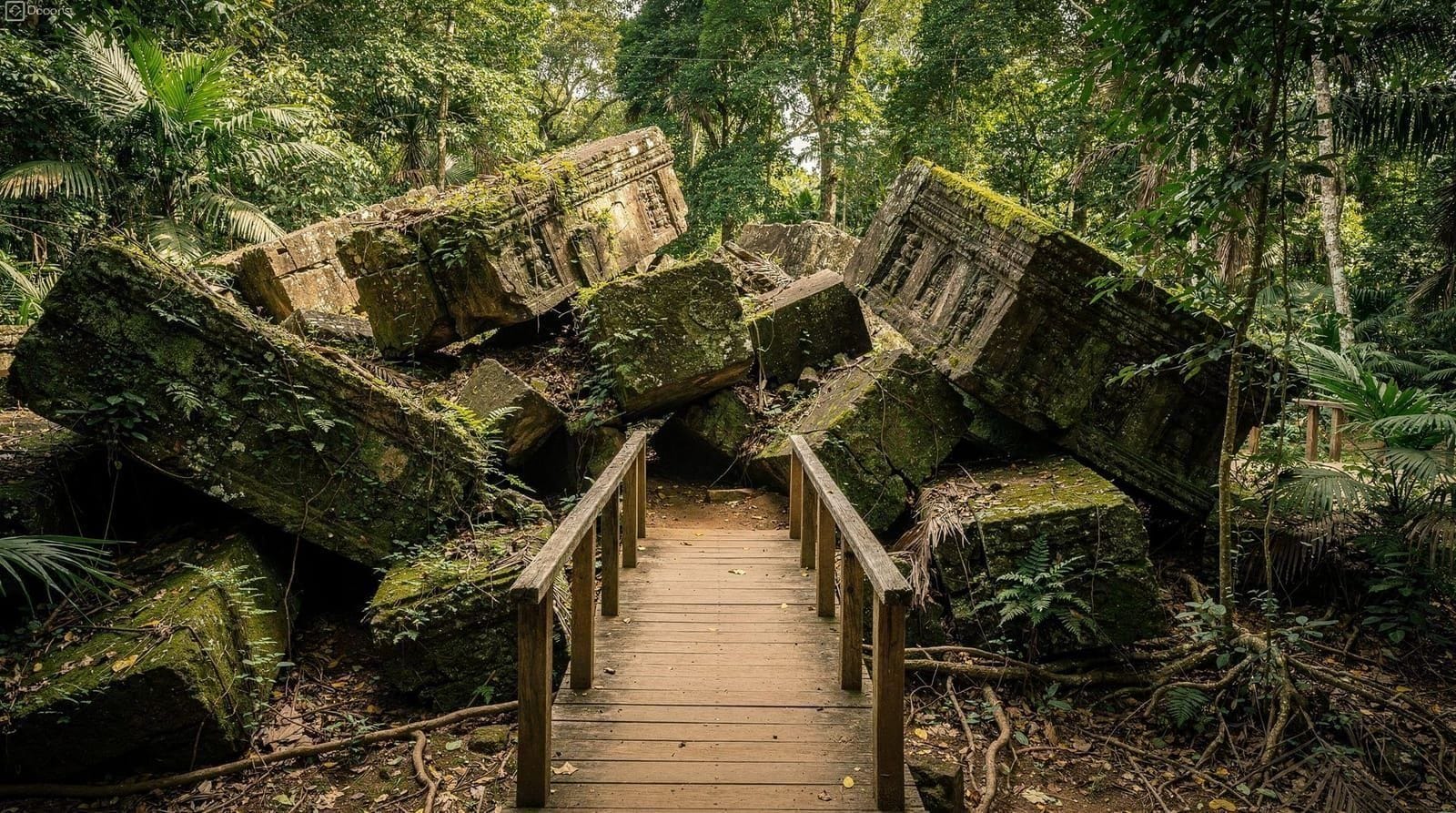
The wider site includes over 180 recorded temples and structures scattered across the surrounding forest, though most visitors focus on Prasat Thom and a handful of the nearer structures given the travel time already invested to get there.
The rediscovery and modern conservation of Koh Ker
Like several outer temples on this site, Koh Ker’s post-Angkorian history includes a long period of relative obscurity followed by renewed scholarly attention in the 20th century, complicated further by the site’s location in an area that remained landmine-affected and difficult to safely access for years during and after Cambodia’s civil conflict period. Systematic demining and site clearance work through the 2000s and 2010s gradually opened Koh Ker to safer general visitor access, and archaeological research — including a notable joint Cambodian-Japanese survey project — has continued mapping and studying the wider 180-plus-structure site well into the 21st century.
This is worth knowing because it explains why Koh Ker feels, in a genuine sense, less “finished” as a tourist destination than Angkor Wat or even Beng Mealea — active archaeological and conservation work is still ongoing across parts of the site, and what’s presented to visitors today represents a comparatively recent, still-evolving level of access and understanding.
Distance, road, and the ticket that catches people off guard
Koh Ker is about 120 km from central Siem Reap, roughly 2 hours by car each way on a paved but rural road — the longest drive of any destination on this site short of Phnom Penh. It’s not realistically doable by tuk-tuk for most visitors given the distance; a car or organized tour is the practical option.
Ticket: Koh Ker requires a separate $15 ticket, not covered by the standard Angkor Pass, because the site is managed by NAPV (the National Authority for Preah Vihear), not Angkor Enterprise. This is a genuinely common point of confusion — visitors sometimes assume their multi-day Angkor Pass covers every temple in the region, and it doesn’t. Factor the separate cost into your trip budget; our Angkor Pass calculator includes Koh Ker’s $15 in the total-cost math so you’re not surprised at the gate.
Climbing Prasat Thom
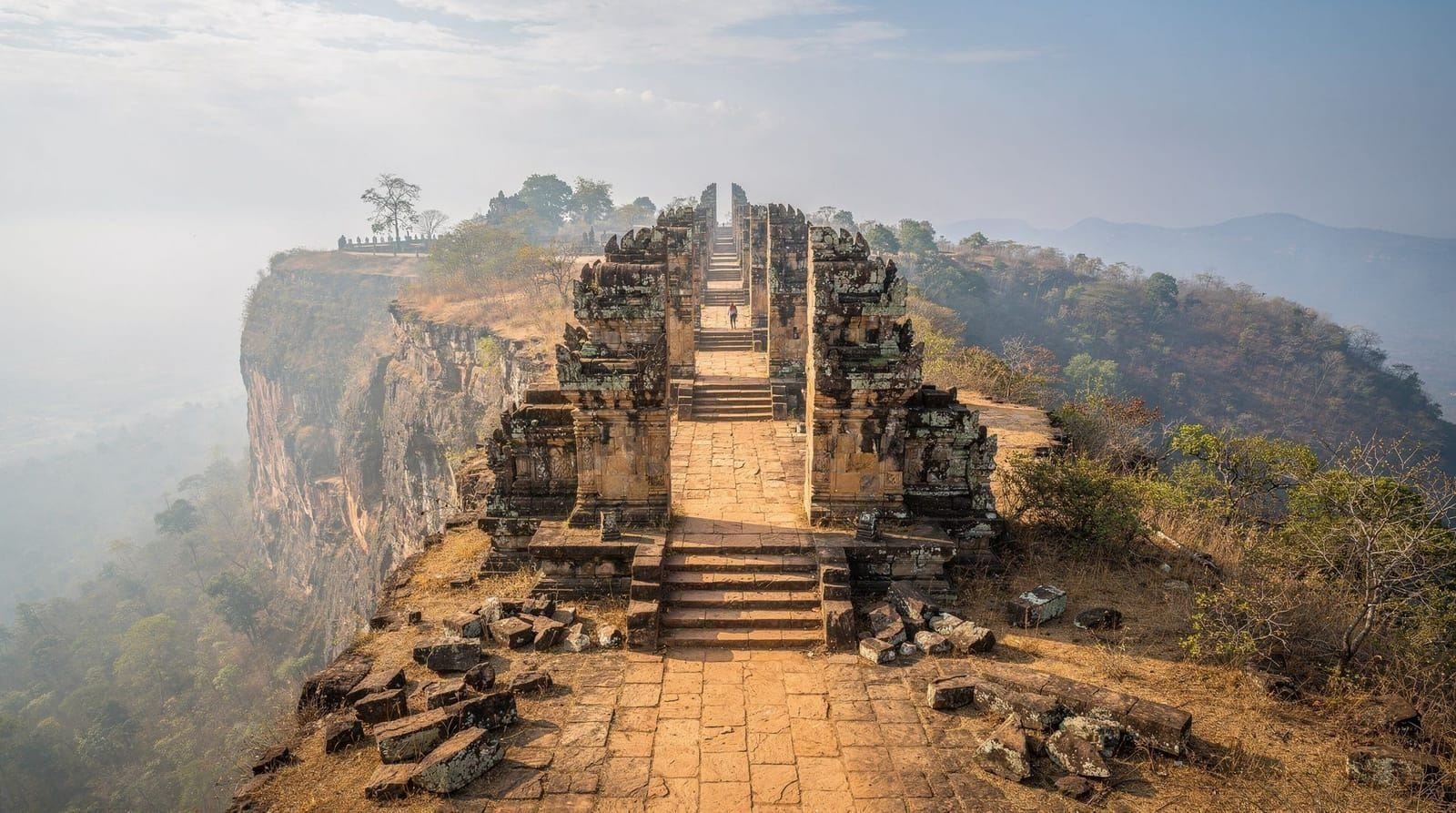
The staircase up Prasat Thom’s western face is steep, narrow and has handrails but no real shade — climbing is best attempted in the morning before the day’s heat peaks, especially given how much driving already precedes the climb itself. The view from the top, across the surrounding forest canopy with almost no other visible structures, is one of the more striking elevated views available anywhere on the Angkor Pass region’s extended temple network, in part because so few visitors make it out this far.
What else to see nearby
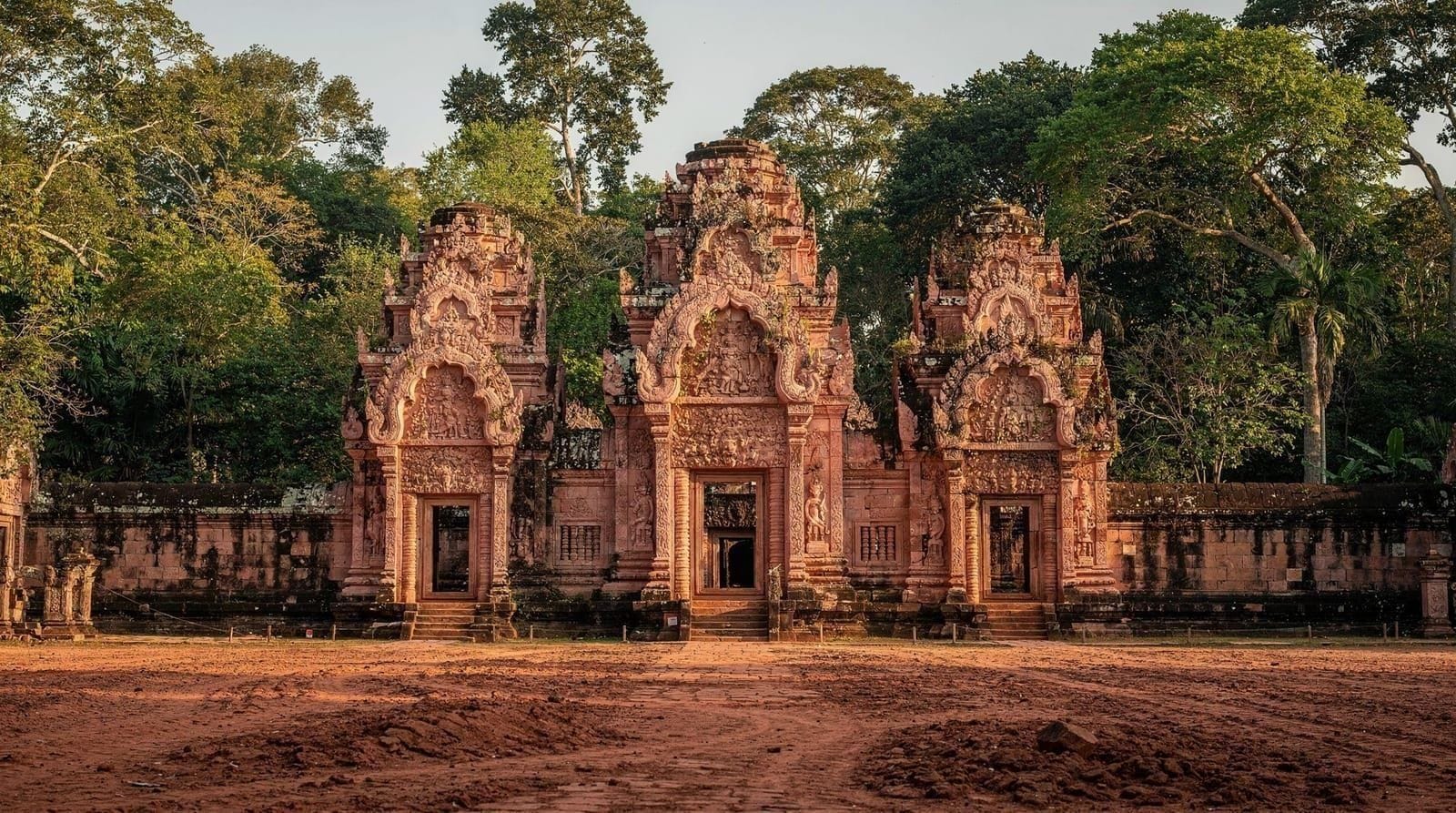
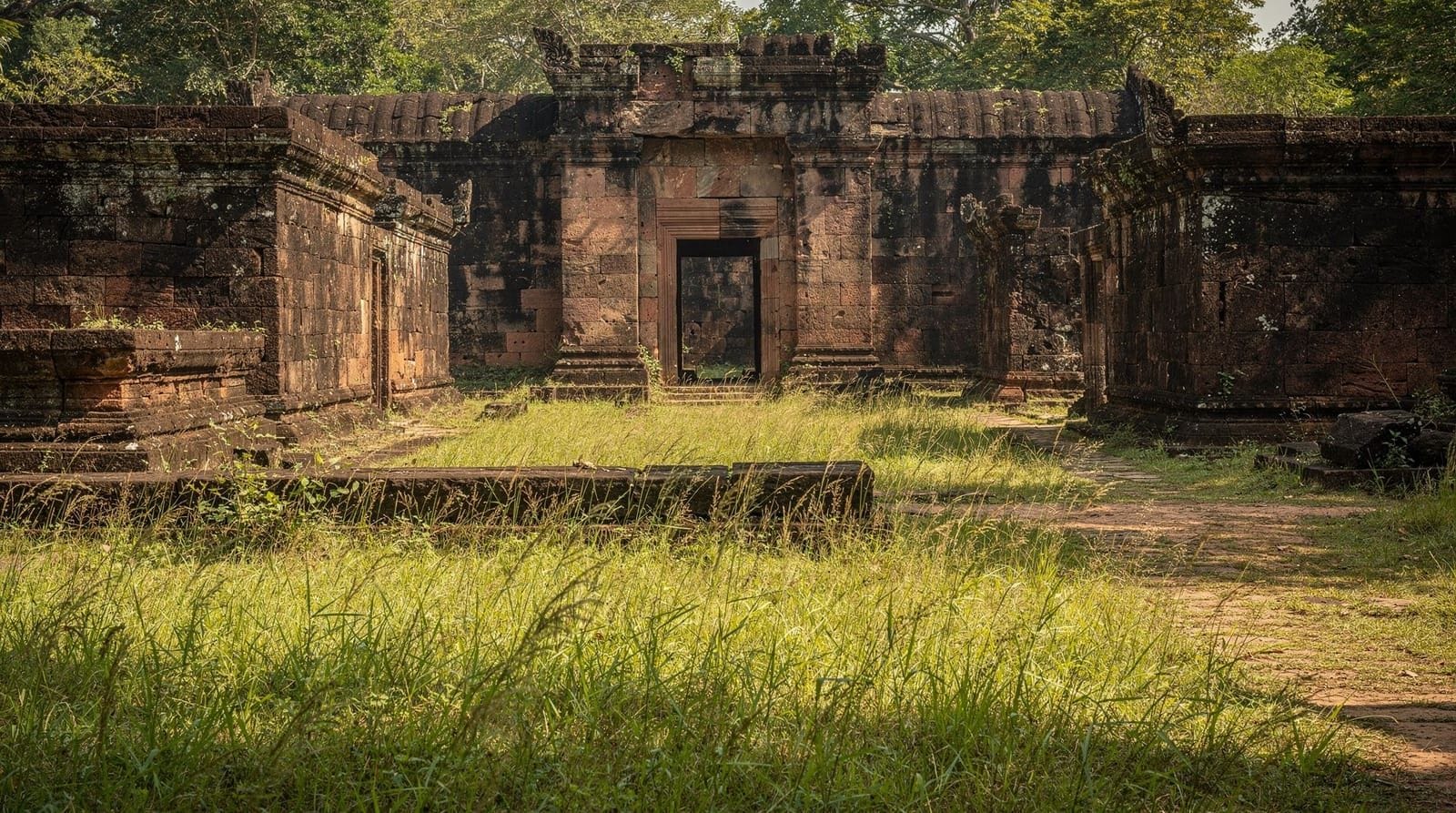
A cluster of smaller temples close to Prasat Thom — including Prasat Krahom (the “Red Temple,” named for its reddish laterite) and several linga-and-yoni shrine structures — are typically included in a standard visit and add relatively little extra time given their proximity. Most guided day trips budget 1.5-2 hours total for the immediate Koh Ker area, which is enough for Prasat Thom plus two or three of the closer secondary structures.
Why Jayavarman IV moved the capital here
Koh Ker’s brief stint as the Khmer Empire’s capital is one of the more genuinely puzzling episodes in Angkorian history. Jayavarman IV came to power under contested circumstances — most historical reconstructions suggest he was not the direct heir by conventional succession and may have seized the throne from a rival branch of the royal family, which would explain relocating the capital roughly 120 km northeast of Angkor rather than simply asserting control over the existing seat of power.
In the roughly 16-20 years Koh Ker functioned as capital, its builders produced not just Prasat Thom but a remarkably dense concentration of temples, reservoirs and infrastructure for such a short window, suggesting significant resources were mobilized quickly — an ambitious, possibly legitimacy-seeking building programme rather than a gradual, organic development. After Jayavarman IV’s death, his successor moved the capital back to the Angkor area, and Koh Ker’s moment as the empire’s political center closed as quickly as it had opened, leaving the pyramid and its surrounding temples as an unusually concentrated snapshot of a single, short reign.
The engineering of Prasat Thom
Prasat Thom’s seven-tier design is structurally distinct from the more famous temple-mountains inside the main park — its stepped profile is steeper and less ornamented than Angkor Wat’s central towers or even Bakong at the Roluos Group, built more for dramatic vertical impact than for surface decoration.
Sandstone blocks were quarried and transported to the site specifically for this project during Koh Ker’s brief capital period — a logistics undertaking that gives some sense of the resources a usurping or newly legitimizing king was willing to commit to a visible, dramatic architectural statement. Some archaeologists believe the pyramid originally supported a large freestanding liṅga (a cylindrical symbol of Shiva) at its summit, now lost, which would have made the completed structure considerably taller and more visually dominant than what survives today.
What’s overrated, what’s underrated
Nothing at Koh Ker is overrated — it’s a genuinely underrated stop specifically because the distance filters out casual visitors, leaving a site that feels more like a discovery than a checklist item. The climb itself is the single most memorable moment most visitors report from the whole outer-temple region.
How to combine it with the rest of your day
Koh Ker is almost always paired with Beng Mealea, roughly 45 minutes back toward Siem Reap on the same road — see our Beng Mealea and Koh Ker day trip guide for full logistics. Our Koh Ker and Beng Mealea temples tour is the standard way most visitors do this combined trip, with both entrance tickets and transport handled.
For a slower multi-day version that doesn’t compress everything into one very long day, the 3-day Beng Mealea and Koh Ker group tour spreads the outer temples out; a private option, the Koh Ker and Beng Mealea private day tour, gives more control over pacing, which matters given the amount of driving involved either way. The guided Koh Ker and Beng Mealea temple tour is a reasonable middle option with narration included for both sites.
What a full Koh Ker day actually looks like
Roughly 7:00-7:30 AM — depart Siem Reap; the early start matters given the roughly 4-hour round-trip drive alone. 9:30-10:00 AM — arrival, allowing for a rest stop en route. 10:00-11:30 AM — Prasat Thom and the immediate temple cluster, including the pyramid climb. 11:30 AM-12:00 PM — a look at the smaller nearby structures if energy and time allow.
12:00-1:00 PM — return drive begins, or a stop at Beng Mealea if combining both sites, roughly 45 minutes back toward Siem Reap. By 5:00-6:00 PM — arrival back in Siem Reap, depending on whether Beng Mealea was included. This is a genuinely long day by any Angkor-region standard, longer than a full Small Circuit day once total driving time is accounted for, and it’s worth being honest with yourself about whether you’re up for that much time in a vehicle before committing.
Who Koh Ker is — and isn’t — right for
Koh Ker rewards visitors specifically motivated by two things: wanting a genuinely different physical experience (climbing an ancient structure, not just walking through one) and being comfortable with a long day mostly spent traveling to and from a single remote site. It’s a poor match for anyone tight on time, anyone prioritizing breadth over depth in their Angkor-region sightseeing, or families with young children who may struggle with both the driving duration and the exposed, unshaded climb.
For visitors weighing Koh Ker against a second Small or Grand Circuit day, the honest comparison is: Koh Ker delivers one singular, memorable experience (the climb) at the cost of an entire day’s travel time, while a second in-park day delivers several solid but less singular experiences with far less time lost to driving.
Practical notes
Bring significantly more water than a standard Angkor day — there are far fewer facilities along the route and at the site itself compared to the main park. Snacks and basic drink stalls exist near the Koh Ker parking area but aren’t extensive, and there’s nothing resembling a proper restaurant on-site — pack a real lunch or plan to eat at one of the simple roadside stops along the route rather than expecting to find food once you’ve arrived. Dress code (shoulders and knees covered) still applies. Given the total round-trip time (around 4 hours of driving plus site time), plan for a full day and avoid stacking Koh Ker onto other major activities the same day.
Frequently asked questions about Koh Ker
Is Koh Ker covered by the Angkor Pass?
No — it requires a separate $15 ticket, because it’s managed by NAPV, not Angkor Enterprise, unlike the temples inside the main Angkor Archaeological Park.
How far is Koh Ker from Siem Reap?
About 120 km, roughly 2 hours each way by car — the longest drive of any temple destination on this site.
Can I climb the pyramid at Koh Ker?
Yes — Prasat Thom has a wooden staircase built onto its western face specifically for visitor access, unlike most other Angkor-region temple-mountains where climbing is restricted or capacity-limited.
Is Koh Ker worth the long drive?
Most visitors who make the trip say yes, specifically because the distance keeps crowds low and the climbable pyramid is a genuinely different experience from anything inside the main park.
Can I visit Koh Ker on a tuk-tuk?
Not practically — the 120 km distance each way makes a car or an organized tour the realistic option rather than a tuk-tuk.
Should I combine Koh Ker with Beng Mealea or visit it alone?
Combining with Beng Mealea is standard practice, since the two sit on the same road roughly 45 minutes apart, and splitting the long drive across two significant sites makes better use of the travel time.
Why was Koh Ker briefly the capital of the Khmer Empire?
King Jayavarman IV, whose claim to the throne is generally understood to have been contested, relocated the capital here for roughly 16-20 years in the 10th century, likely as part of establishing his own legitimacy away from the existing power center at Angkor. His successor moved the capital back after his death.
Is the pyramid at Koh Ker safe to climb for visitors with a fear of heights?
The staircase has handrails, but it is steep, narrow, and offers an exposed, uninterrupted view down as you climb — visitors with significant vertigo or height anxiety may want to skip the climb and view the pyramid from ground level instead.
How many temples are there at Koh Ker in total?
Over 180 recorded structures are scattered across the surrounding forest, though most visitors, given the travel time already invested, focus on Prasat Thom and the small cluster of nearby temples like Prasat Krahom rather than the full site.
Is there mobile phone signal or connectivity at Koh Ker?
Coverage is inconsistent given the remote, rural location — worth downloading offline maps or confirming your driver’s return plans before you lose reliable signal on the drive out.
Top experiences
Bookable activities with verified prices and instant confirmation on GetYourGuide.

Siem Reap: Koh Ker and Beng Mealea Temples Tour

Angkor: 3-Day Beng Mealea and Koh Ker Group Tour

Cambodia: Koh Ker and Beng Mealea Guided Temple Tour

Siem Reap: Koh Ker and Beng Mealea Private Day Tour

Siem Reap: Beng Mealea and UNESCO-Listed Koh Ker Temple Tour
More tours on Viator
Top-rated experiences with verified reviews, bookable on Viator (a Tripadvisor company).