Angkor Small Circuit vs. Grand Circuit: which order to visit them
Angkor: Small-Group Grand Circuit Temples Tour with Banteay Srei
What's the difference between the Small and Grand Circuit at Angkor?
The Small Circuit is a roughly 17 km loop covering Angkor Wat, Angkor Thom (Bayon), and Ta Prohm — the essential highlights, doable in one day. The Grand Circuit is a roughly 26 km loop covering Preah Khan, Neak Pean, Ta Som and Pre Rup — quieter, more spread out temples, best as a second day.
Two loops, one park
Angkor Archaeological Park’s temples are organized, informally but consistently, around two driving loops that most tuk-tuk drivers, guides and maps refer to by name: the Small Circuit and the Grand Circuit. Both loops start and end near Angkor Wat and use the same road network, but they cover almost entirely different temples, which makes the question of order — not just which circuit, but which one first — one of the most practical planning decisions for any multi-day Angkor visit.
The Small Circuit: what’s on it
At roughly 17 km, the Small Circuit is the shorter, more compact loop and covers the temples most people picture when they think of Angkor:
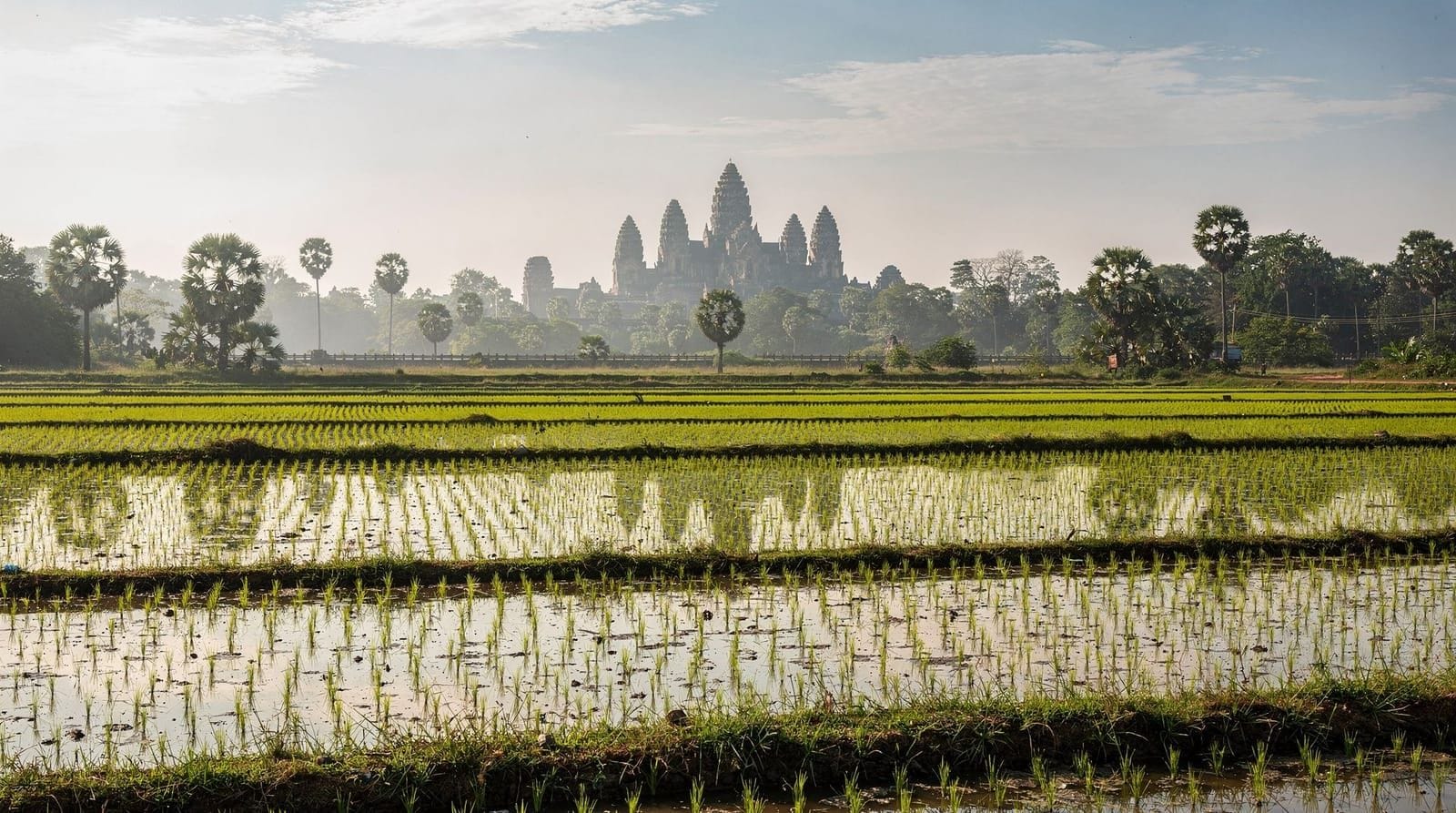
- Angkor Wat — the largest religious monument on earth by land area, and almost everyone’s starting point, ideally at sunrise.
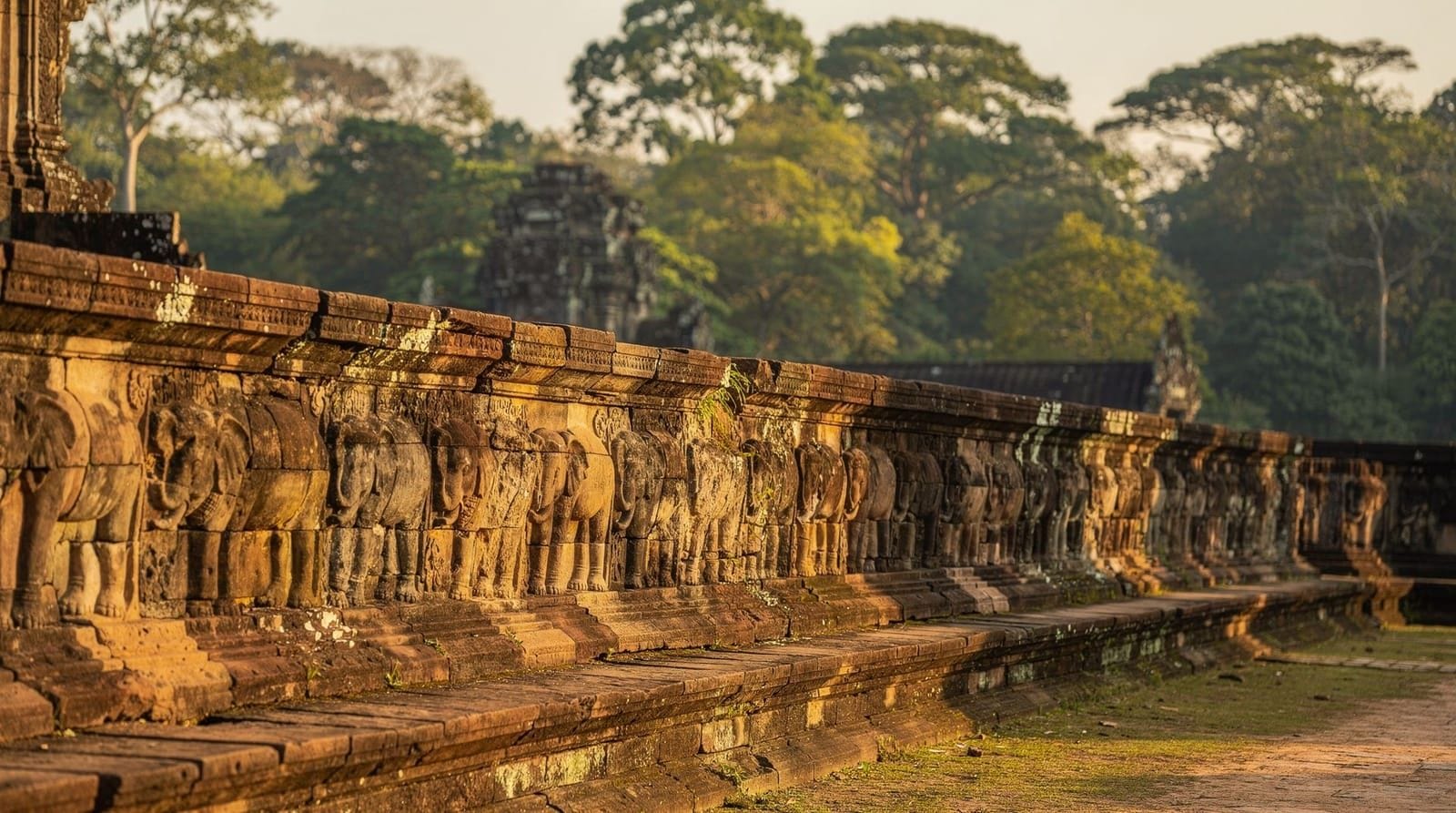
- Angkor Thom — the walled royal city, entered through one of five monumental gates, containing Bayon (the temple of the smiling stone faces), Baphuon, the Terrace of the Elephants and the Terrace of the Leper King.
- Ta Prohm — the jungle-swallowed temple made famous by Tomb Raider, where strangler fig and silk-cotton tree roots grow directly through the stonework.
- Frequently extended with Ta Keo (a stark, unfinished temple-mountain) and Banteay Kdei plus the adjacent Sras Srang reservoir.
This is the circuit built for a single day, and it’s also the circuit carrying the heaviest crowds in the entire park — Angkor Wat, Bayon and Ta Prohm are the three most photographed and most visited sites at Angkor by a wide margin, particularly between 8am and noon once the tour buses from town arrive.
The Grand Circuit: what’s on it
At roughly 26 km, the Grand Circuit loops further out and covers a set of temples that, while less universally famous by name, are frequently rated by repeat visitors as more rewarding precisely because they’re quieter:
- Preah Khan — a sprawling, partially unrestored temple complex with long processional corridors, often compared favorably to Ta Prohm for its jungle atmosphere without Ta Prohm’s crowds.
- Neak Pean — a small, striking temple built on an artificial island in the middle of a square pool, reached by a raised wooden walkway.
- Ta Som — a modest, atmospheric temple with a tree-swallowed gate similar in spirit to Ta Prohm but almost empty of visitors.
- East Mebon and Pre Rup — two elevated temple-mountains, with Pre Rup in particular functioning as one of the better sunset alternatives to the overcrowded Phnom Bakheng viewpoint.
The Grand Circuit is a genuinely different Angkor experience: fewer people, longer stretches of quiet, and temples that reward slower exploration rather than a quick photo stop.
Which order to visit them in
For the overwhelming majority of visitors, the Small Circuit comes first — it contains Angkor Wat itself, and pairing it with a sunrise start (see our Angkor Wat sunrise guide) makes for the natural first full day in the park. The Grand Circuit works best as a second day once you have a feel for the park’s scale, the checkpoint system, and your own pace inside a temple complex.
There’s a practical reason beyond sequencing logic too: doing the Grand Circuit second means you arrive at Preah Khan and Neak Pean already calibrated against the crowd density of Angkor Wat and Bayon, which makes the Grand Circuit’s relative quiet feel even more pronounced — a contrast that’s harder to appreciate if you happen to do the Grand Circuit first and the Small Circuit second.
Distances and realistic timing
| Small Circuit | Grand Circuit | |
|---|---|---|
| Loop distance | ~17 km | ~26 km |
| Core temples | 3-5 (Angkor Wat, Bayon, Ta Prohm + extensions) | 4-6 (Preah Khan, Neak Pean, Ta Som, Pre Rup + extensions) |
| Typical time needed | Full day, 6-8 hrs with walking | Full day, 5-7 hrs, less walking per stop |
| Crowd level | High, especially 8am-noon | Moderate to low |
| Best paired with | Sunrise start | Sunset finish at Pre Rup |
Both circuits are comfortably covered by any tier of the Angkor Pass — there’s no separate ticket for either loop, and the pass’s multi-day flexibility (non-consecutive days within a 10- or 30-day window) is exactly what makes splitting the two circuits across separate days practical without buying anything extra.
Should you combine both in one day?
It’s done, particularly by visitors with only a single day in Siem Reap overall, but it comes at a real cost: doing both circuits in one day means roughly 43 km of driving and eight to ten temple stops, which leaves most of them at 10-15 minutes rather than the 30-90 minutes that Angkor Wat, Bayon, Ta Prohm or Preah Khan reward. If a single day is genuinely all you have, our Angkor in one day guide lays out a curated route that prioritizes the Small Circuit’s highlights over an exhausting attempt at both loops — a better trade for most first-time visitors than a rushed, box-ticking version of everything.
Adding Banteay Srei and the Roluos Group
Neither of these sits directly on the Small or Grand Circuit loop, but both are commonly bolted onto one of the two days: Banteay Srei (~37 km, ~1 hour from town) is often paired with the Grand Circuit as a combined day, given its location further out along a similar road corridor, while the Roluos Group (~13 km east, the oldest surviving Angkorian temples) is a quick, low-crowd add-on to either circuit if time allows. A Grand Circuit and Banteay Srei small-group tour is a common way to combine both into a single well-paced day without arranging separate transport.
Guided vs. self-driven circuits
A Small Circuit guided tour or a 2-day Small and Grand Circuit package handles route sequencing, timing between stops and historical context for you — useful if you’d rather not research which gate to enter Angkor Thom from or how long to budget at each Grand Circuit stop. For the tradeoffs between a guided circuit and a self-arranged tuk-tuk driver with no formal guiding, see our guide or no guide breakdown.
A closer look at each Small Circuit stop
Angkor Wat rewards the most time of any single stop on either circuit — budget 90 minutes to two hours if your schedule allows it, covering the outer bas-relief galleries (a kilometer of continuous carved narrative) and, if the queue and your dress allow, the climb to the upper Bakan sanctuary.
Bayon’s appeal is less about total area and more about slow, repeated looking — its 200-plus carved faces reveal themselves gradually as you move through the upper terrace from different angles, so resist the urge to treat it as a quick photo stop. Ta Prohm works best with patience around its most photographed root-and-stone combinations, since a 2-3 minute wait for a clear sightline is normal during busier hours, but the temple is large enough that quieter corners exist even when the main path feels crowded.
A closer look at each Grand Circuit stop
Preah Khan’s long processional corridors reward unhurried walking rather than a fixed route — much of its appeal is atmospheric, and rushing through misses the effect entirely. Neak Pean is a quick stop by comparison, 15-20 minutes typically sufficing to appreciate its unusual island-temple layout and the raised wooden walkway leading to it.
Ta Som’s single famous tree-swallowed gate is worth deliberately seeking out rather than glimpsing in passing — it sits at the temple’s far end from the main entrance, so allow time to walk all the way through. East Mebon and Pre Rup, both elevated temple-mountains, suit visitors willing to climb steep original stairs for the view — Pre Rup in particular is worth timing for late afternoon given its reputation as a strong sunset alternative to Phnom Bakheng, covered in more detail in our sunset spots guide.
Transport between the two circuits
Both circuits are typically covered by the same tuk-tuk or car hire arrangement, with drivers well familiar with the standard loop road for each — there’s no need to arrange separate transport for the Grand Circuit specifically, and most drivers who take you around the Small Circuit on day one are available and willing to do the Grand Circuit on a subsequent day at a similar day rate, generally $15-20 for the Small Circuit and a comparable or slightly higher rate for the Grand Circuit given its longer distance. Confirming a return driver for a second day, rather than starting from scratch with a new driver each morning, often gets you a small loyalty discount and a driver who already knows your pace and preferences from the first day.
Weather considerations for each circuit
The Grand Circuit’s greater distance and more exposed stretches between temples make it marginally more exposed to rain delays during wet season (May-October) than the more compact Small Circuit, where temples sit closer together and a sudden downpour is easier to wait out under a nearby gallery roof. Neither circuit becomes impassable in the rain — Angkor’s roads are paved and well-maintained compared to the dirt tracks leading to outlier sites like Beng Mealea or Koh Ker — but a rainy-season Grand Circuit day benefits from a slightly more flexible schedule than a fixed hour-by-hour plan.
Physical demands compared
Both circuits involve a mix of walking on uneven ancient stone, some steep original staircases (particularly at Angkor Wat’s upper level and the temple-mountains of Pre Rup and East Mebon), and extended time in direct heat outside the cooler December-February window.
The Small Circuit generally demands more total walking within each temple given the crowd-driven pace and the sheer size of Angkor Wat and Angkor Thom, while the Grand Circuit’s demands come more from the driving distance and heat exposure between fewer, more spread-out stops. Neither circuit is technically difficult for a visitor of reasonable fitness, but both benefit from comfortable closed-toe shoes rather than sandals, given uneven stone surfaces and the occasional loose rubble at less-restored sections.
First-timer mistakes on each circuit
On the Small Circuit, the most common mistake is underestimating how long Angkor Wat itself deserves and rushing to Bayon with too little time left for Ta Prohm, which then gets a hurried 20-minute pass instead of the hour it rewards. On the Grand Circuit, the most common mistake is treating Preah Khan as a quick stop comparable to Neak Pean, when its scale and atmosphere genuinely reward 45 minutes to an hour — visitors expecting a brief visit are often surprised by how much there is to see once they’re actually inside its corridors.
What this means for a multi-day itinerary
If you have three or more days in Siem Reap, the cleanest split is Small Circuit on day one (with sunrise), Grand Circuit plus Banteay Srei on day two, and an outlier temple, Tonlé Sap floating village, or rest day on day three. This sequencing also naturally spaces out your Angkor Pass usage across the 3-day pass’s 10-day window, and it avoids the fatigue that comes from trying to absorb both circuits’ worth of carved sandstone in a single 8am-6pm push. See our full 3-day Siem Reap itinerary for exactly how this splits across a complete trip, including where the floating village and town time fit in.
Frequently asked questions about Angkor Small Circuit vs. Grand Circuit
Can I do both the Small and Grand Circuit in one day?
It's physically possible with a full day and a driver, but rushed — most visitors who try it end up spending 10 minutes at temples that deserve 30. If you only have one day at Angkor, the Small Circuit alone (with a sunrise start) gives a far better experience than a compressed version of both circuits.Which circuit should I do first?
The Small Circuit, almost always. It covers Angkor Wat, Bayon and Ta Prohm — the three temples most visitors travel to Cambodia specifically to see — and pairs naturally with a sunrise start. Save the Grand Circuit for a second day once you have a feel for the park's scale and crowd patterns.Is the Grand Circuit worth it if I only have two days?
Yes, for most visitors. The Grand Circuit's temples — particularly Preah Khan and Neak Pean — see a fraction of the Small Circuit's crowds, and Pre Rup is one of the better sunset alternatives to the packed Phnom Bakheng viewpoint. If you enjoyed the Small Circuit's headline temples, the Grand Circuit is where Angkor starts to feel less like a checklist.How long does each circuit take by tuk-tuk?
The Small Circuit typically takes a full day (6-8 hours) once you factor in walking time inside Angkor Wat, Bayon and Ta Prohm, each of which rewards 45-90 minutes on foot. The Grand Circuit is faster in pure driving terms but still runs 5-7 hours if you give Preah Khan and Neak Pean proper time rather than a drive-by stop.Does the Angkor Pass cover both circuits?
Yes — any tier of Angkor Pass covers every temple on both the Small and Grand Circuits, plus the Roluos Group and Banteay Srei. There's no separate ticket for either circuit; the only extra tickets needed at Angkor are for the outlier sites (Koh Ker, Phnom Kulen, Beng Mealea) outside the park boundary.Are the Small Circuit temples more crowded than the Grand Circuit?
Consistently, yes. Angkor Wat, Bayon and Ta Prohm are the three most-visited temples in the entire park and see tour-bus-level crowds especially between 8am and noon. The Grand Circuit's Preah Khan and Neak Pean, despite being comparably impressive, see meaningfully fewer visitors simply because they're farther from town and less universally known by name.
Top experiences
Bookable activities with verified prices and instant confirmation on GetYourGuide.


More tours on Viator
Top-rated experiences with verified reviews, bookable on Viator (a Tripadvisor company).