Angkor Pass math: when the 3-day pass and the 7-day pass actually pay off
Nobody sat down and did this math clearly enough when I was planning my trip, so I did it myself with a spreadsheet, and I’m putting the actual numbers here because “the 3-day pass is a better deal” isn’t specific enough to plan around. This is the real arithmetic: when each Angkor Pass tier pays for itself, and where the separate outlier tickets change the calculation.
If you are still deciding how long to stay at all, start with how many days to spend in Siem Reap and come back here once you know roughly how many of those days belong to the temples. The ticket choice follows the itinerary, not the other way round, and the Siem Reap travel budget shows where the pass sits among your other costs.
The three tiers, exactly as priced
- 1-day pass: $37 — usable on the day of your choice within 5 days of purchase
- 3-day pass: $62 — usable on any 3 days within a 10-day window (not consecutive)
- 7-day pass: $72 — usable on any 7 days within a 30-day window
Children under 12 enter free with a passport for age verification. All passes are sold exclusively by Angkor Enterprise — never through GetYourGuide, Viator, your hotel, or any tour operator, all of whom sell transport and guiding, not the ticket itself. See the Angkor Pass guide for the full official-purchase process.
The per-day cost, laid out plainly
| Pass | Total price | Cost per day if fully used |
|---|---|---|
| 1-day | $37 | $37.00/day |
| 3-day | $62 | $20.67/day |
| 7-day | $72 | $10.29/day |
This table alone tells you most of what you need: the 3-day pass costs $25 more than the 1-day pass but buys two additional temple days for that $25 — $12.50 per extra day, a strong deal if you’ll actually use both extra days. The 7-day pass costs $10 more than the 3-day pass for four additional days — $2.50 per extra day, an even better per-day rate, but only relevant if you’re genuinely planning that many temple days.
The break-even point: 2 days is where the 3-day pass wins
If you’re doing exactly one temple day, the 1-day pass at $37 is correct — don’t overbuy. The moment you’re planning a second temple day, even a light one, the 3-day pass at $62 beats buying two separate 1-day passes ($74 total) by $12. This is the single most common mistake in Angkor Pass planning: buying a 1-day pass “to start” and then a second 1-day pass later, paying $74 for two days instead of $62 for three.
If you know before you arrive that you want the Small Circuit on day one and the Grand Circuit or an outlier temple on another day, buy the 3-day pass from the start. The 10-day validity window is generous enough that you don’t need consecutive days — do the Small Circuit, take a rest day or a floating village day, then return to the temples on your third pass day whenever it suits you.
A useful way to think about it: the Small Circuit and the Grand Circuit are natural separate days, and the Small vs Grand Circuit comparison helps you decide which one deserves your first pass day. If you are tempted to squeeze everything into a single day, read Angkor in one day first and be honest about how tiring that is in the heat. For a ready-made schedule that spends three pass days well, the 3-day Siem Reap itinerary is a good template.
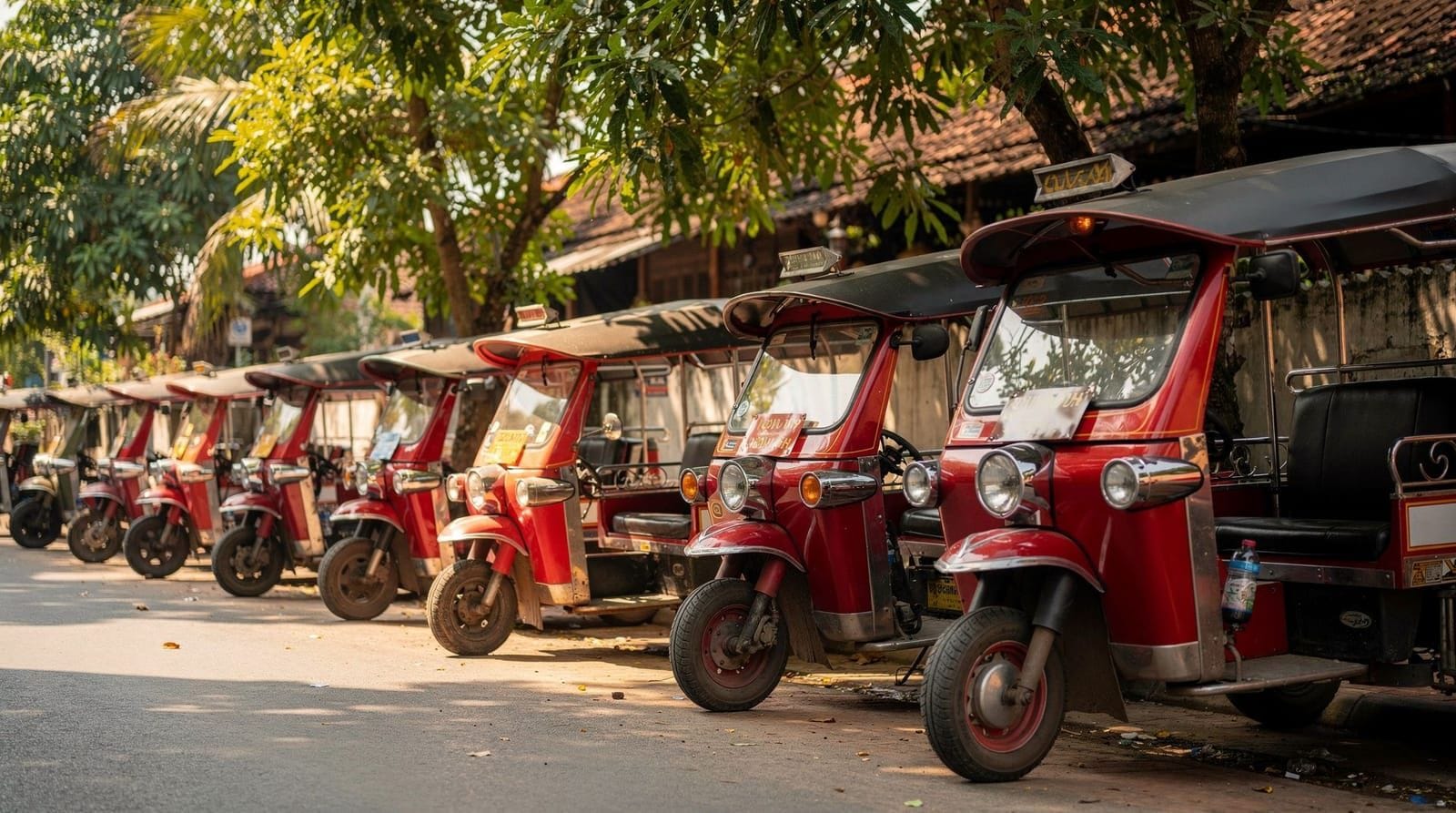
Pass days are also the days you will most want a driver who knows the park. A private tuk-tuk taxi that links Angkor Wat, Bayon and Ta Prohm in one day is one way to cover the main sites without negotiating on the spot, and it fits neatly into a single pass day.
When the 7-day pass actually makes sense
The 7-day pass is not the better deal for most visitors, and treating it as the “smart” choice by default is a common overcorrection. It pays off specifically for slow-travel visitors doing 4+ separate temple visits, or repeat visitors returning to Siem Reap within the 30-day window who want to revisit favorite sites without buying a new pass. For a standard first-time visitor doing 2-3 temple days across a week-long trip, the 3-day pass remains the better fit — you’d be paying $10 extra for validity days you won’t use.
Slow travel also changes how the days feel. With a 7-day pass you can split the big sites into short mornings, skip the midday heat, and come back for sunrise at Angkor Wat on one day and a quieter temple like Ta Prohm on another, rather than rushing both into the same exhausting day. The guide on avoiding the crowds shows how extra pass days let you choose the quiet hours.
| Your actual temple-day count | Best pass |
|---|---|
| 1 day | 1-day pass ($37) |
| 2-3 days | 3-day pass ($62) |
| 4+ days, or repeat visits within 30 days | 7-day pass ($72) |
The outlier temples: never covered, always separate
This is where a lot of otherwise-correct pass math falls apart, because visitors forget these are separate purchases entirely, unrelated to which Angkor Pass tier they’re carrying:
- Beng Mealea: $10 — jungle-swallowed, unrestored, 65 km from town
- Koh Ker: $15 — the 10th-century pyramid capital, 120 km from town
- Phnom Kulen: $20 — waterfall and the River of a Thousand Lingas, 50 km from town
Each of these has its own page if you want to judge whether it is worth the extra ticket: Beng Mealea, Koh Ker and Phnom Kulen. The Beng Mealea and Koh Ker day trip and the Phnom Kulen waterfall guide explain how those days actually run, and the outlier temples overview helps you pick between them.
If your itinerary includes all three (a full “outlier temple” day or two), that’s $45 on top of whatever Angkor Pass tier covers your main-park days. A realistic 5-day trip doing the Small Circuit, Grand Circuit, and one outlier-temple combo day looks like:
- 3-day Angkor Pass: $62
- Beng Mealea + Koh Ker combined day: $25 ($10 + $15)
- Total ticket cost: $87 across the temple portion of your trip
Compare that to doing the same itinerary with three separate 1-day passes instead of the 3-day pass: $111 + $25 = $136. The 3-day pass alone saves $49 here.
A worked 7-day example
For a slow-travel visitor spending a full week with 4 temple days plus outlier temples:
- 7-day Angkor Pass: $72
- Beng Mealea: $10
- Koh Ker: $15
- Phnom Kulen: $20
- Total: $117
Versus a 3-day pass used across 4 separate days would require buying it twice or supplementing with 1-day passes, quickly exceeding the 7-day pass’s flat $72 — this is the scenario where the 7-day tier genuinely earns its place.
Pass days and tour days are different things. If you would rather have someone handle the logistics, a private temple tour of Angkor Wat or a two-day tour from sunrise to sunset covers transport and guiding, but you still need to bring your own pass. The guide-or-no-guide comparison and the GetYourGuide vs Viator booking guide help you decide how much to hand over.
What resellers get wrong (and why to avoid them)
The Angkor Pass is never sold at a markup through legitimate means, and any site or “helper” offering to sell it above the official $37/$62/$72 pricing, or offering to buy it for you in advance for a fee, should be treated with suspicion. The official vs. resellers guide covers this scam pattern in more detail — the short version is: buy it yourself, at the checkpoint or at angkorenterprise.gov.kh, and nowhere else.
The bottom line
Doing more than one temple day: buy the 3-day pass, not two 1-day passes. Doing four or more, or planning a return visit within a month: the 7-day pass’s flat rate wins. Doing exactly one day and genuinely certain you won’t return: the 1-day pass is correctly sized and you shouldn’t overbuy. Whatever your main-park pass tier, budget Beng Mealea, Koh Ker, and Phnom Kulen entirely separately — they’re never included, regardless of pass level.
Once the pass is settled, the next questions are timing and money. The weather by month page tells you when your pass days are most comfortable, and the 5-day itinerary and 7-day itinerary show how the 3-day and 7-day passes look when laid over a real trip.
Frequently asked questions about Angkor Pass math
Is the 3-day pass always better than buying two 1-day passes?
Yes, whenever you’re doing 2 or more temple days — $62 for three days beats $74 for two separate 1-day passes.
Does the 3-day pass need to be used on consecutive days?
No — it’s valid for any 3 days within a 10-day window from first use, giving you flexibility to space out temple days with rest or non-temple activities.
Are Beng Mealea, Koh Ker, and Phnom Kulen ever included in any Angkor Pass tier?
No, never — they’re managed by separate authorities and always require their own tickets ($10, $15, $20 respectively) regardless of which Angkor Pass you hold.
When does the 7-day pass make sense over the 3-day pass?
When you’re doing 4 or more separate temple days, or returning to Siem Reap within a 30-day window and want to revisit sites without buying a new pass.
More tours on Viator
Top-rated experiences with verified reviews, bookable on Viator (a Tripadvisor company).