Beng Mealea
Beng Mealea's collapsed jungle ruins: the separate $10 ticket, real distance from Siem Reap, and what to expect from the wooden walkways.
Siem Reap: Koh Ker and Beng Mealea Temples Tour
Quick facts
- Distance from Old Market
- ~65 km, ~1.5 hours by car (rougher road than the main park)
- Ticket needed
- Separate $10 ticket — NOT covered by the Angkor Pass
- Time to allow
- 1-1.5 hours, plus ~3 hours round-trip travel
- Condition
- Largely unrestored — collapsed stone, wooden walkways, no reconstruction
- Combine with
- Koh Ker, on the same eastern road
Setting expectations before the drive
Because Beng Mealea requires such a significant time investment relative to almost everything else on this site, it’s worth being direct about what kind of visitor gets the most out of it: people who’ve already spent at least a day or two in the main Angkor park, developed a feel for the temples’ general architecture and history, and specifically want to see what a comparable structure looks like without any of the restoration or crowd-management infrastructure applied elsewhere.
First-time Cambodia visitors on a very short trip, or anyone whose main priority is maximizing the number of distinct sights seen per day rather than depth at fewer stops, will generally get better return on their limited time from a Small or Grand Circuit day than from the long drive out to Beng Mealea.
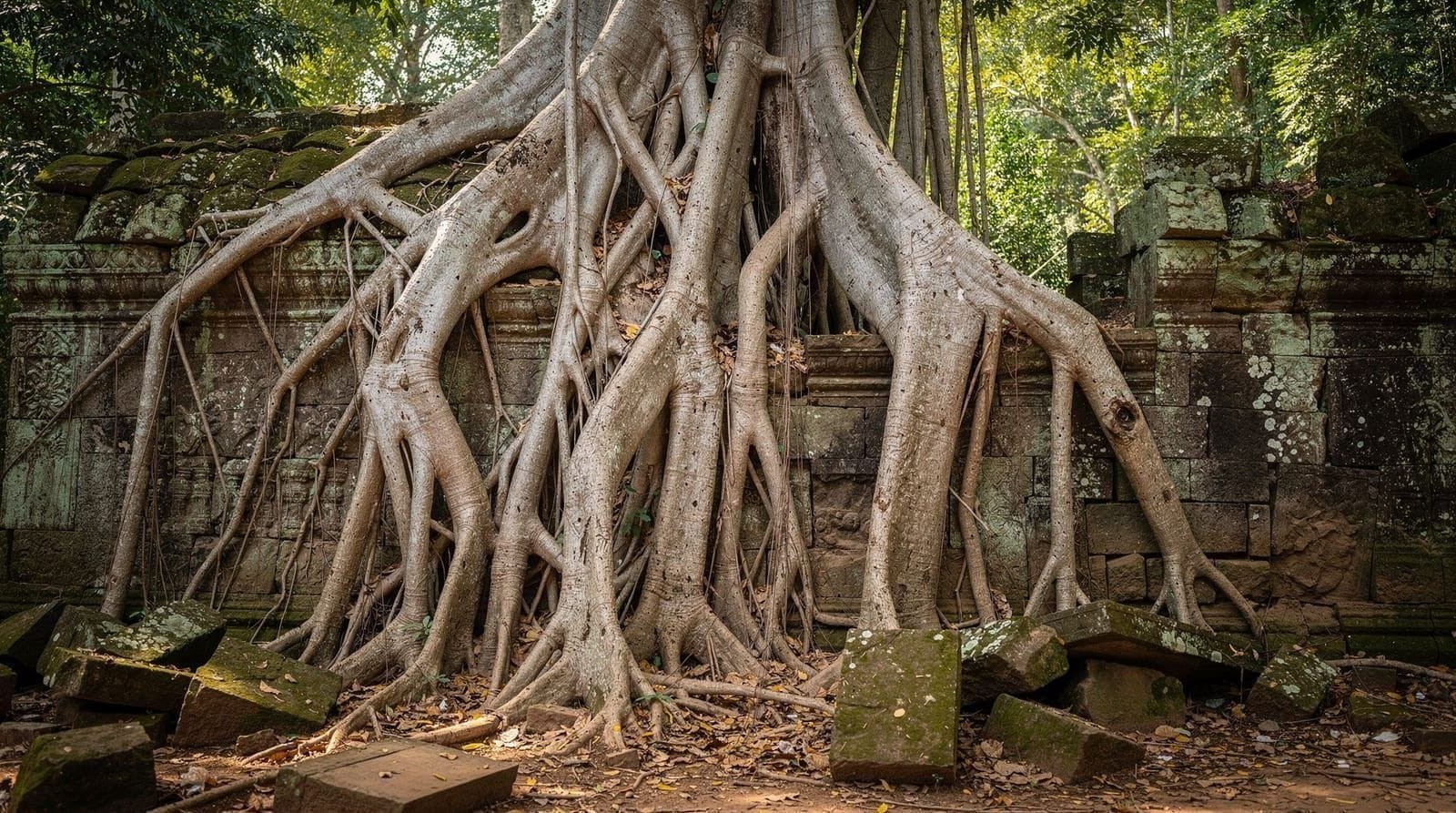
What Ta Prohm would look like without restoration or crowd control
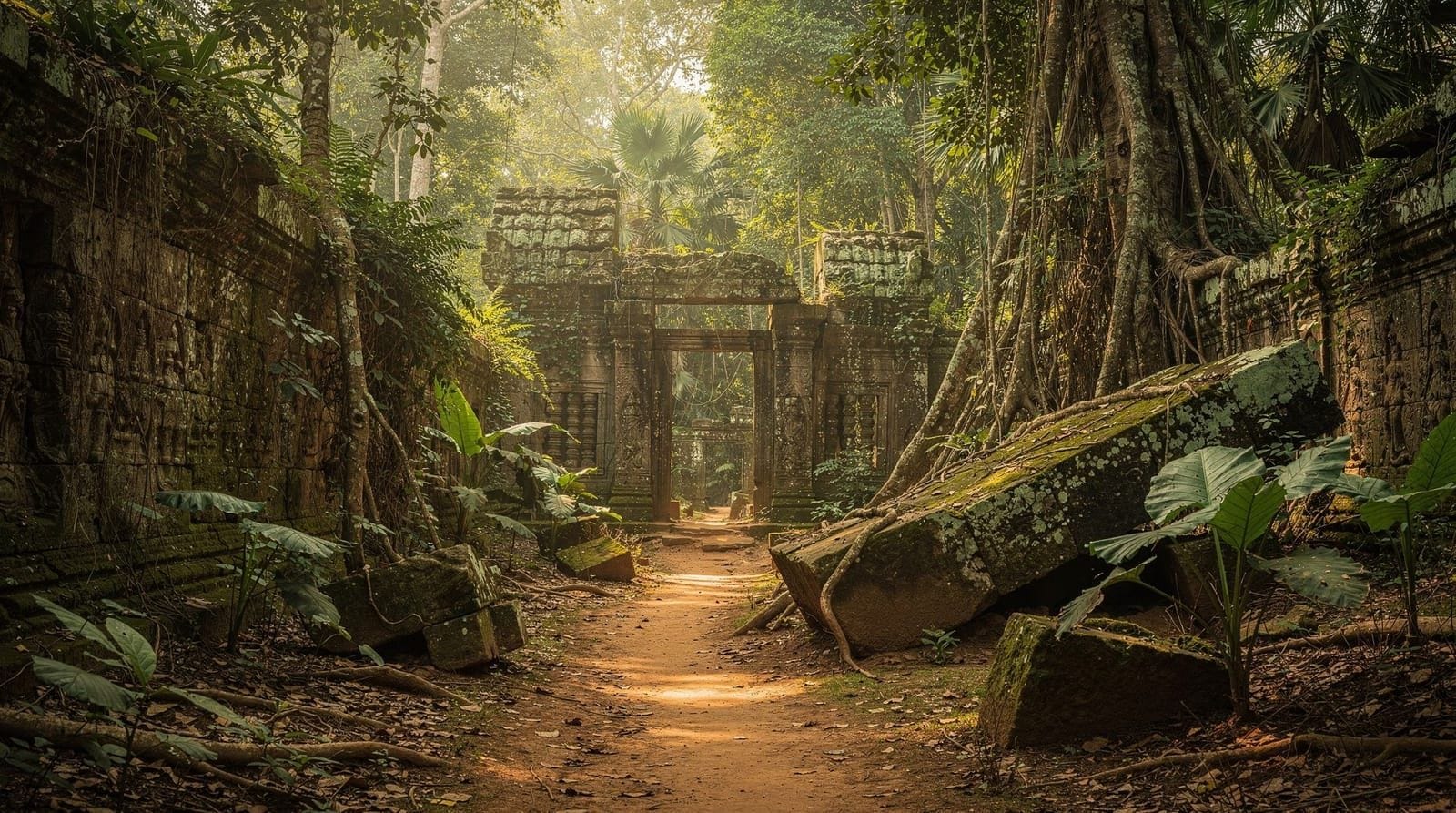
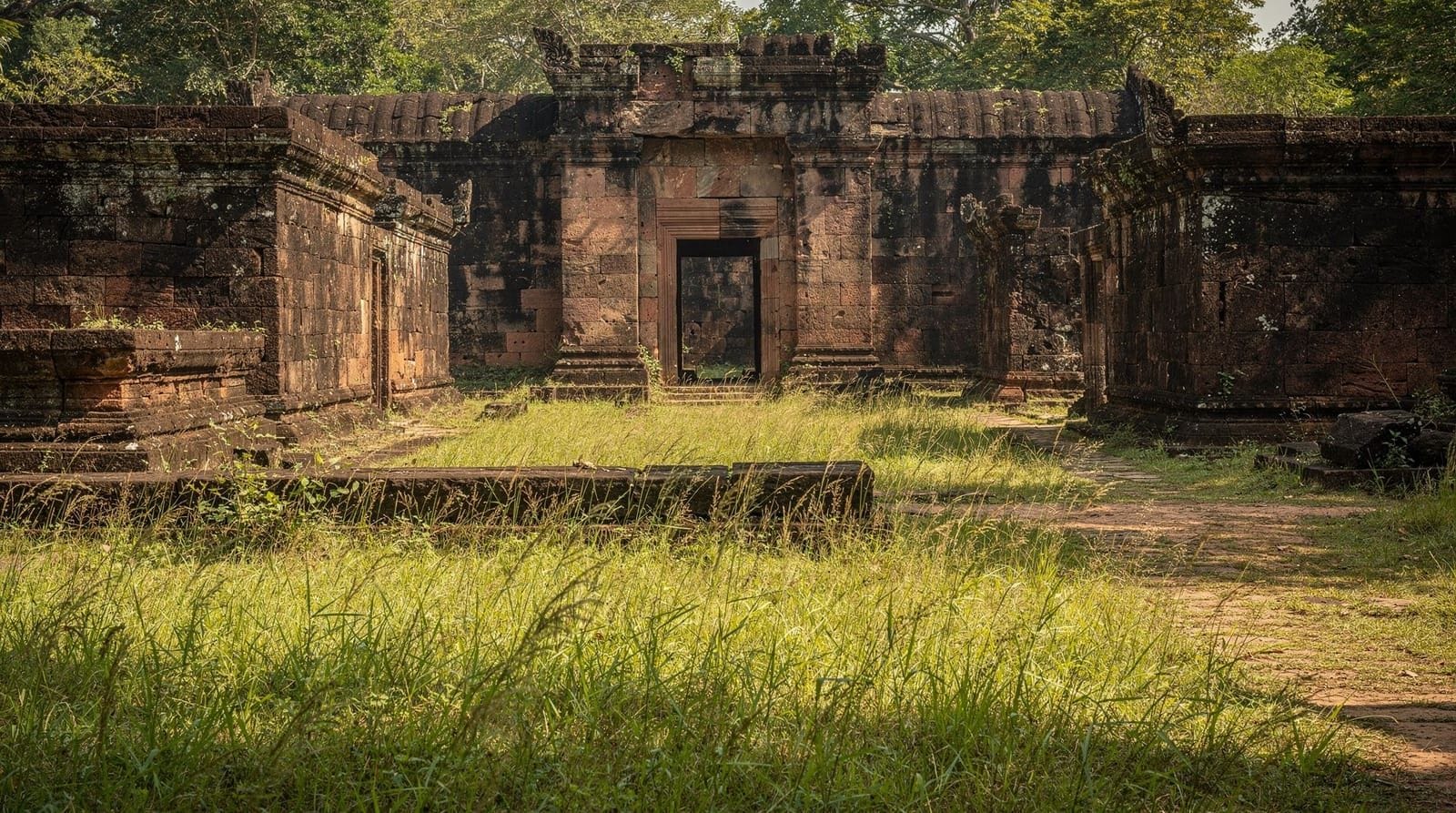
Beng Mealea is an 11th-12th century temple, likely built under Suryavarman II around the same period as Angkor Wat and sharing a similar architectural plan on a smaller footprint — but almost none of it has been cleared, stabilized or restored. Massive sandstone blocks lie collapsed and jumbled across the site, jungle has grown through and over the structure largely unchecked, and there’s no crowd-management infrastructure of the kind you’ll find at Ta Prohm. It’s the closest experience on this list to what 19th-century explorers actually found when they “rediscovered” the Angkor temples, and it’s a genuinely different feeling from anywhere inside the main park.
Distance and ticket — the two things people get wrong
Distance: Beng Mealea is about 65 km from central Siem Reap, roughly 1.5 hours by car each way. This is significantly farther than anything on the Small or Grand Circuits, and the road, while paved, is a longer, more rural drive than the in-park routes.
Ticket: this is the detail most visitors miss — Beng Mealea is not covered by the standard Angkor Pass. It requires a separate $10 ticket, purchased at the site itself, because it’s managed outside the Angkor Enterprise system that covers Angkor Wat and the main park. If you’re budgeting a multi-day trip, factor this in separately from your Angkor Pass cost — our Angkor Pass calculator includes it in the total-cost math specifically because so many first-time visitors are caught off guard by it at the gate.
What to expect once you’re there
A wooden walkway system, built specifically so visitors can move through and around the collapsed stone without climbing on unstable ruins, winds through the site’s central and eastern sections. It’s not comprehensive — much of the temple remains genuinely inaccessible rubble — but it’s enough to get a real sense of the scale and the collapse pattern. Unlike Ta Prohm, where trees growing through stonework are the headline feature, at Beng Mealea it’s simply structural collapse and jungle overgrowth on a scale that makes the whole site feel more like an archaeological expedition than a polished tourist stop.
There’s essentially no shade over long stretches of the walkway, and the ground beneath and around it is genuinely uneven and occasionally unstable off the marked path — sturdy shoes matter here more than almost anywhere else on this list.
Why it was never restored like the temples inside the park
Beng Mealea’s minimal restoration isn’t an oversight — it reflects a combination of resources, priorities and, historically, access difficulty. Located well outside the core Angkor Archaeological Park boundary that received the bulk of French colonial-era and later international restoration funding, Beng Mealea sat lower on the priority list for decades, and its remote location (relative to early-to-mid-20th-century road infrastructure) meant it saw far less scholarly attention than temples closer to Siem Reap.
It was also, like several outer-lying sites, affected by land mines and general instability during Cambodia’s civil conflict period, which delayed safe general access into the 1990s and 2000s. The wooden walkway infrastructure visitors see today is a relatively recent addition — built specifically to allow safe visitor access without requiring the kind of extensive stone-by-stone reconstruction seen at Baphuon or Angkor Wat’s more damaged sections, a deliberate choice to preserve the site’s “as found” character rather than rebuild it.
What the architectural plan tells us, even in ruin
Despite the collapse, enough of Beng Mealea’s layout survives to identify a floor plan closely resembling Angkor Wat’s — concentric rectangular galleries, a moat (largely dry today), causeways lined with naga balustrades, and a central sanctuary tower, now mostly collapsed. Some art historians read this similarity as evidence Beng Mealea may have served as something of an architectural template or trial run for elements later refined at Angkor Wat, though the exact chronological relationship between the two remains debated.
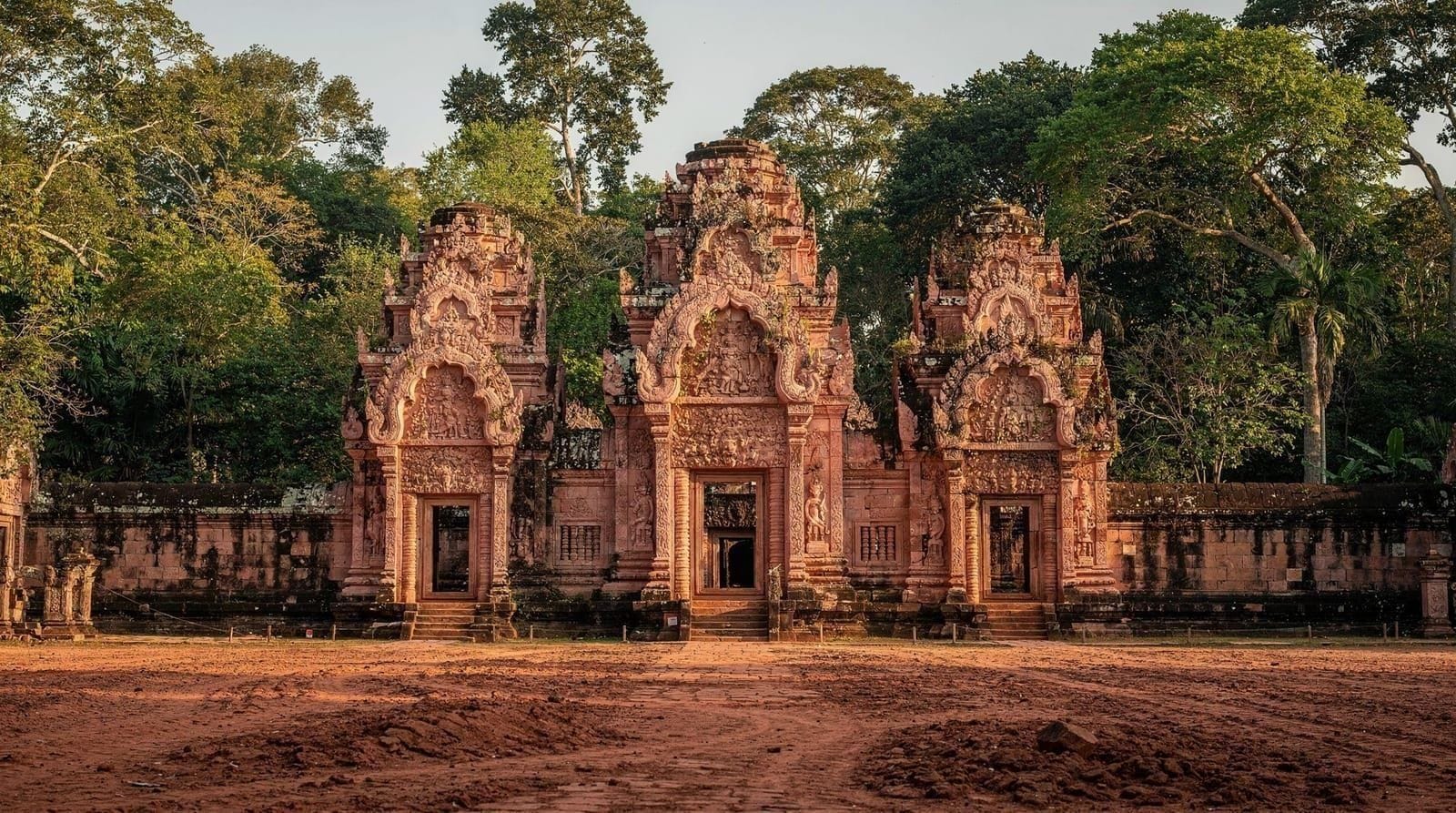
Carved lintels and pediments, where they survive intact among the rubble, show scenes from Hindu mythology comparable in subject matter (though generally less pristine in condition) to the reliefs at Angkor Wat and Banteay Srei — worth specifically seeking out with a guide, since they’re easy to miss amid the sheer volume of undifferentiated collapsed stone.
What’s overrated, what’s underrated
Nothing here is overrated — Beng Mealea is consistently cited by visitors who’ve done both as more atmospheric than Ta Prohm precisely because it lacks Ta Prohm’s crowd bottleneck and manicured feel. It’s underrated mainly in the sense that many first-time, single-day visitors never make it out here at all, assuming (incorrectly) that the in-park temples cover everything worth seeing.
Comparing a Beng Mealea day to a standard temple day
A Beng Mealea trip asks something different of visitors than a standard Small or Grand Circuit day. There’s no sunrise rush, no multi-temple sequencing to plan, and no crowd-timing strategy required — the entire logic of the day is a single long drive out, a slower, more exploratory walk through one large site, and a drive back (or onward to Koh Ker). Visitors expecting the same brisk multi-stop pacing of an in-park Angkor day sometimes find a Beng Mealea trip feels slow by comparison; that slowness is, for most visitors who’ve made the trip, the actual point rather than a downside.
How to combine it with the rest of your day
Beng Mealea sits on the same eastern approach road as Koh Ker, roughly another 45 minutes further, and the two are very commonly combined into one long day trip — see our Beng Mealea and Koh Ker day trip guide for the full logistics. Our Koh Ker and Beng Mealea temples tour covers exactly this pairing with transport and a guide included, which is worth it given the distance and the two separate entrance tickets involved ($15 for Koh Ker, $10 for Beng Mealea).
For a slower-paced multi-day version, the 3-day Beng Mealea and Koh Ker group tour spreads the outer temples across more time; for a private day without a shared group, the Koh Ker and Beng Mealea private day tour gives more flexibility on pacing and photo stops, which matters given how photogenic and slow-moving a Beng Mealea visit tends to be.
The Beng Mealea and UNESCO-listed Koh Ker temple tour is a comparable option worth checking for departure time and group size fit, particularly if you’d rather avoid the largest shared-group vehicles for a site this physically demanding.
Photography at Beng Mealea
Beng Mealea rewards photographers willing to work with harsh conditions rather than avoid them — the near-total lack of jungle canopy over much of the site (unlike Ta Prohm’s shaded interior courtyards) means strong, direct light through much of the day, which can flatten shots taken carelessly but also creates dramatic high-contrast scenes of collapsed stone and encroaching greenery if you compose deliberately.
Early morning arrival, both for the practical reason of avoiding peak heat and for the photographic reason of softer light, is the strongest recommendation for anyone prioritizing photography here. The wooden walkway itself, while necessary for safe passage, is worth keeping out of frame where possible — shots taken looking along or across it read more as a maintained tourist path than the wild, unrestored feeling that makes Beng Mealea distinct in the first place.
Who should prioritize Beng Mealea, and who should skip it
Beng Mealea is the right choice for visitors who’ve already done a Small Circuit day and found themselves wishing Ta Prohm had been less crowded, less manicured and more of a genuine discovery. It’s a poor fit for visitors with limited mobility, young children who tire easily, or anyone unable to commit a full half-to-full day given the round-trip drive — for those travelers, the closer, gentler Banteay Srei delivers a comparably distinct experience with far less physical and time investment.
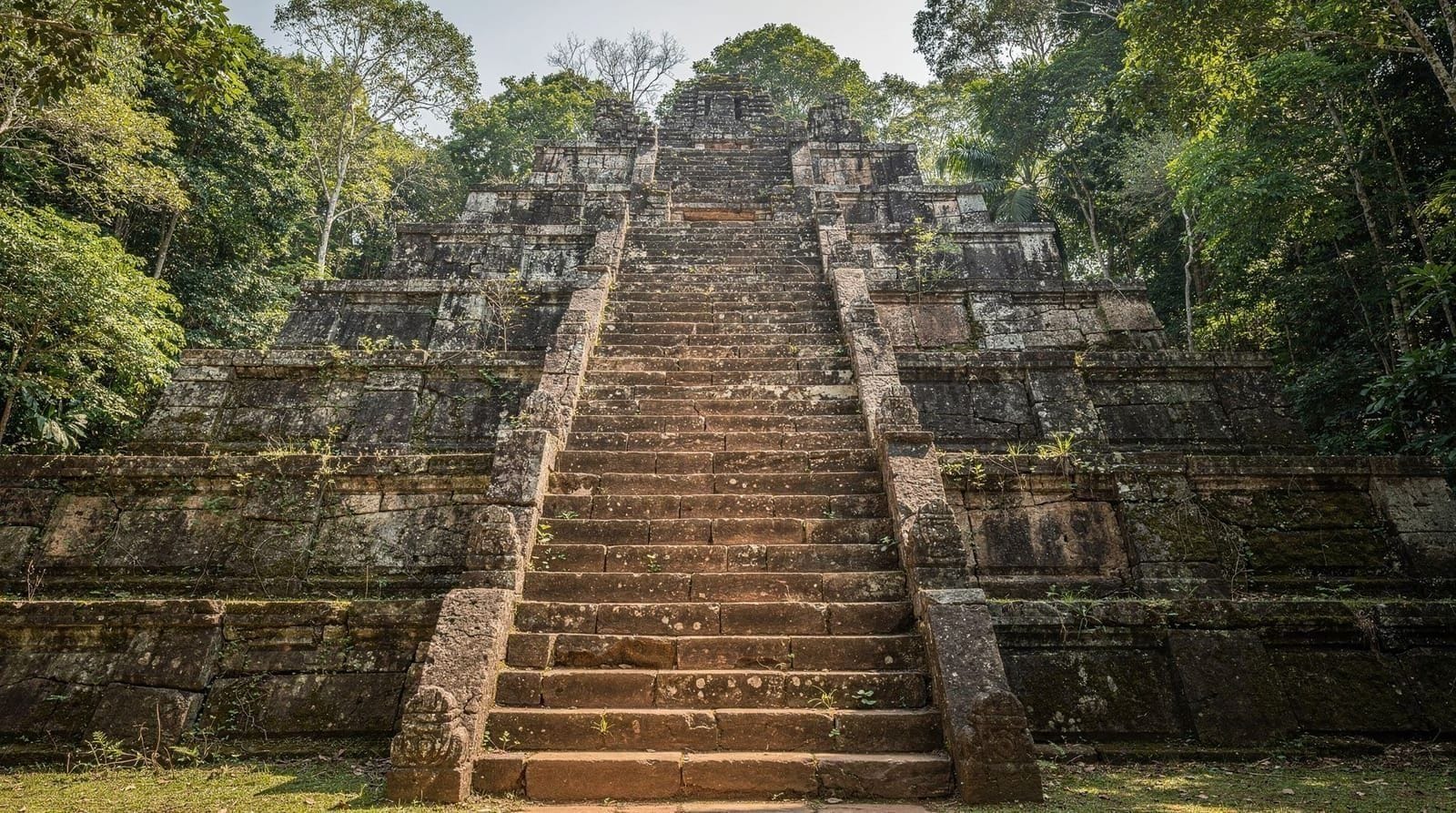
If you’re deciding between Beng Mealea and Koh Ker for a single outer-temple day and can’t do both, Beng Mealea offers the more atmospheric “lost temple” feeling, while Koh Ker offers the more singular experience of climbing a genuine ancient pyramid — different enough that neither is strictly a substitute for the other.
Practical notes
Bring more water than you think you need — there’s little shade and the round-trip travel time alone is around 3 hours. Wear closed, sturdy shoes; sandals are a real liability on the uneven walkways and loose stone. Dress code (shoulders and knees covered) still applies even though this site is outside the main Angkor Enterprise system. There are basic food stalls near the entrance but nothing comparable to what’s available near Angkor Wat.
Frequently asked questions about Beng Mealea
Is Beng Mealea covered by the Angkor Pass?
No — it requires a separate $10 ticket purchased on-site, because it’s managed outside the Angkor Enterprise system that covers Angkor Wat and the main park temples.
How far is Beng Mealea from Siem Reap?
About 65 km, roughly 1.5 hours each way by car — significantly farther than anything on the Small or Grand Circuits.
Is Beng Mealea safe to walk through given how collapsed it is?
Wooden walkways provide safe passage through the central areas. Straying off the marked path onto the loose, collapsed stone is genuinely risky and not recommended.
How does Beng Mealea compare to Ta Prohm?
Both are known for their “jungle-reclaimed” aesthetic, but Beng Mealea is far less restored, far less crowded, and generally considered more atmospheric by visitors who’ve done both — at the cost of a much longer drive and a separate ticket.
Can I visit Beng Mealea and Koh Ker in the same day?
Yes, and it’s the standard way most visitors do it, given they sit on the same eastern road roughly 45 minutes apart. Budget a full day for the combined trip.
Is a guide necessary at Beng Mealea?
Not strictly, but useful for context on the temple’s history and for pointing out safe versus unstable sections of the ruins, since there’s less formal signage than in the main park.
Why hasn’t Beng Mealea been restored like Angkor Wat or Baphuon?
It fell outside the core area that received the bulk of colonial-era and later restoration funding, and land mines and general instability delayed safe general access for decades during and after Cambodia’s civil conflict period. The wooden walkway system is a comparatively recent addition, built to allow safe access while deliberately preserving the site’s unrestored character.
Is Beng Mealea related architecturally to Angkor Wat?
The floor plan is strikingly similar — concentric galleries, a moat, naga-lined causeways and a central sanctuary — leading some historians to consider it a possible architectural precursor, though the exact relationship and dating remain debated among scholars.
Can children visit Beng Mealea?
It’s manageable for older, sure-footed children comfortable with uneven walkways and some genuine physical exertion, but the lack of shade, the distance, and the uneven stone off the marked path make it a more demanding stop than the in-park temples — see our Siem Reap with kids guide for broader family trip planning.
What should I bring specifically for a Beng Mealea visit that I might not need at Angkor Wat?
More water than usual given the near-total lack of shade, closed sturdy shoes rather than sandals, and a physical readiness for a longer, more strenuous walk than the flatter in-park temples require.
Top experiences
Bookable activities with verified prices and instant confirmation on GetYourGuide.

Siem Reap: Koh Ker and Beng Mealea Temples Tour
Angkor: 3-Day Beng Mealea and Koh Ker Group Tour

Cambodia: Koh Ker and Beng Mealea Guided Temple Tour

Siem Reap: Koh Ker and Beng Mealea Private Day Tour

Siem Reap: Beng Mealea and UNESCO-Listed Koh Ker Temple Tour
More tours on Viator
Top-rated experiences with verified reviews, bookable on Viator (a Tripadvisor company).