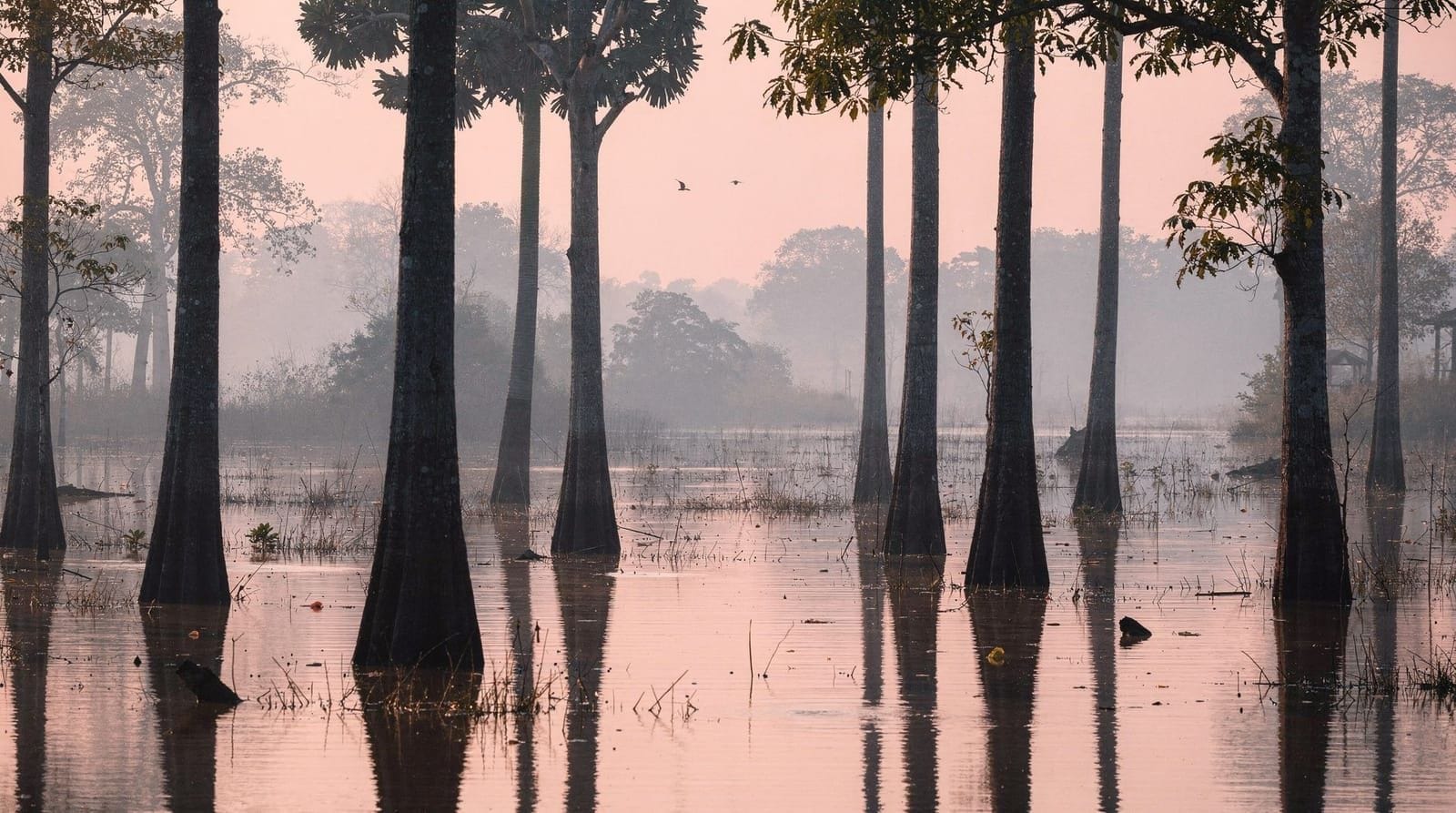
Kompong Khleang
Kompong Khleang, the largest and least touristy Tonlé Sap village: real distance, season, and why it feels like a working town, not a show.
Siem Reap: Sambor Prei Kuk and Kompong Khleang Day Tour
Quick facts
- Distance from Old Market
- ~50 km, 1-1.5 hours by car
- Ticket needed
- Boat tour fee (not the Angkor Pass) — no separate government entry ticket
- Best season
- Mid-August to April, best March-April for lower-water stilt views
- Population
- Roughly 6,000 residents — the largest of the three villages
- Character
- A genuine working market town, least oriented toward tourism
The village that feels like a town, not a tourist stop
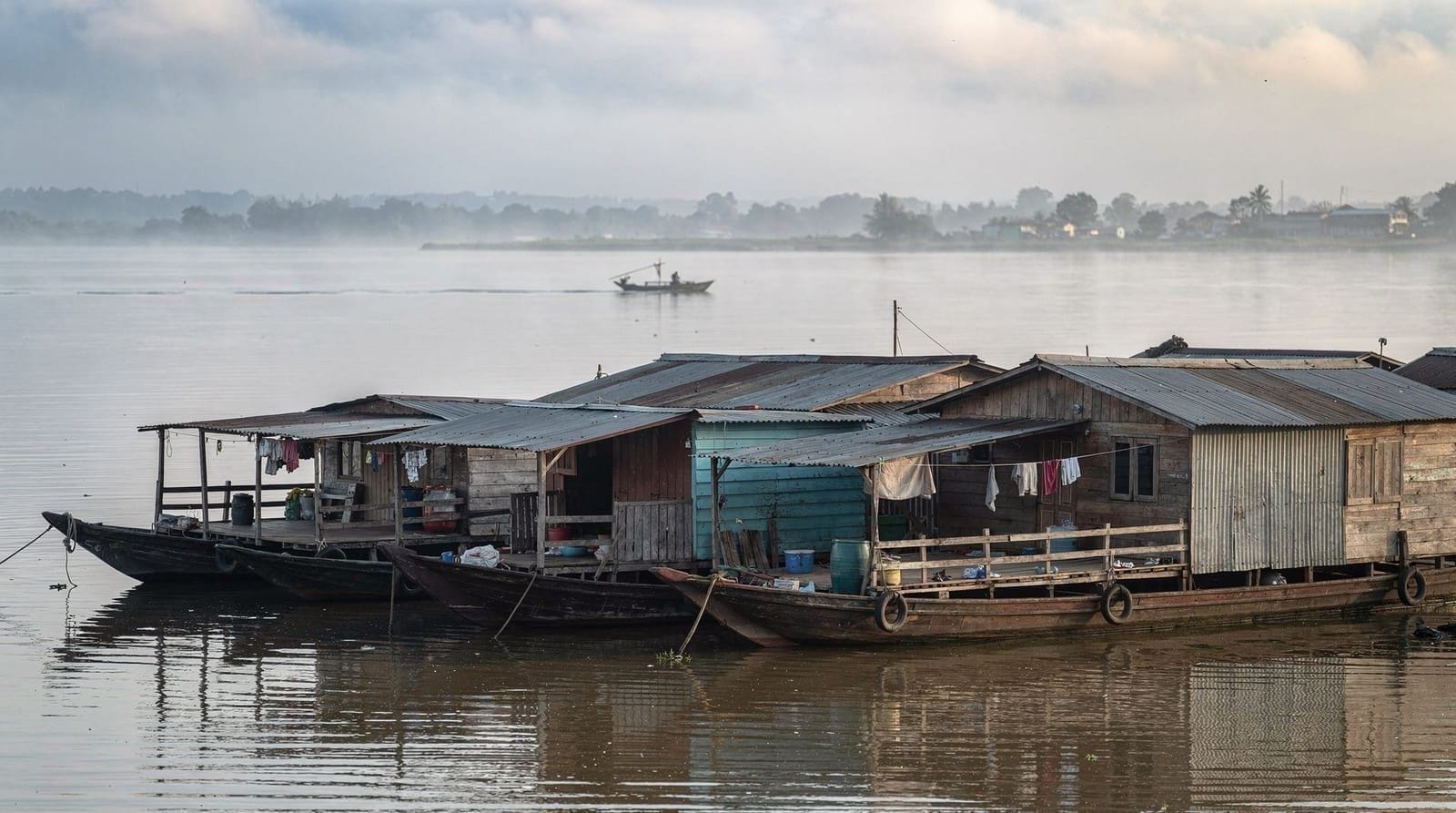
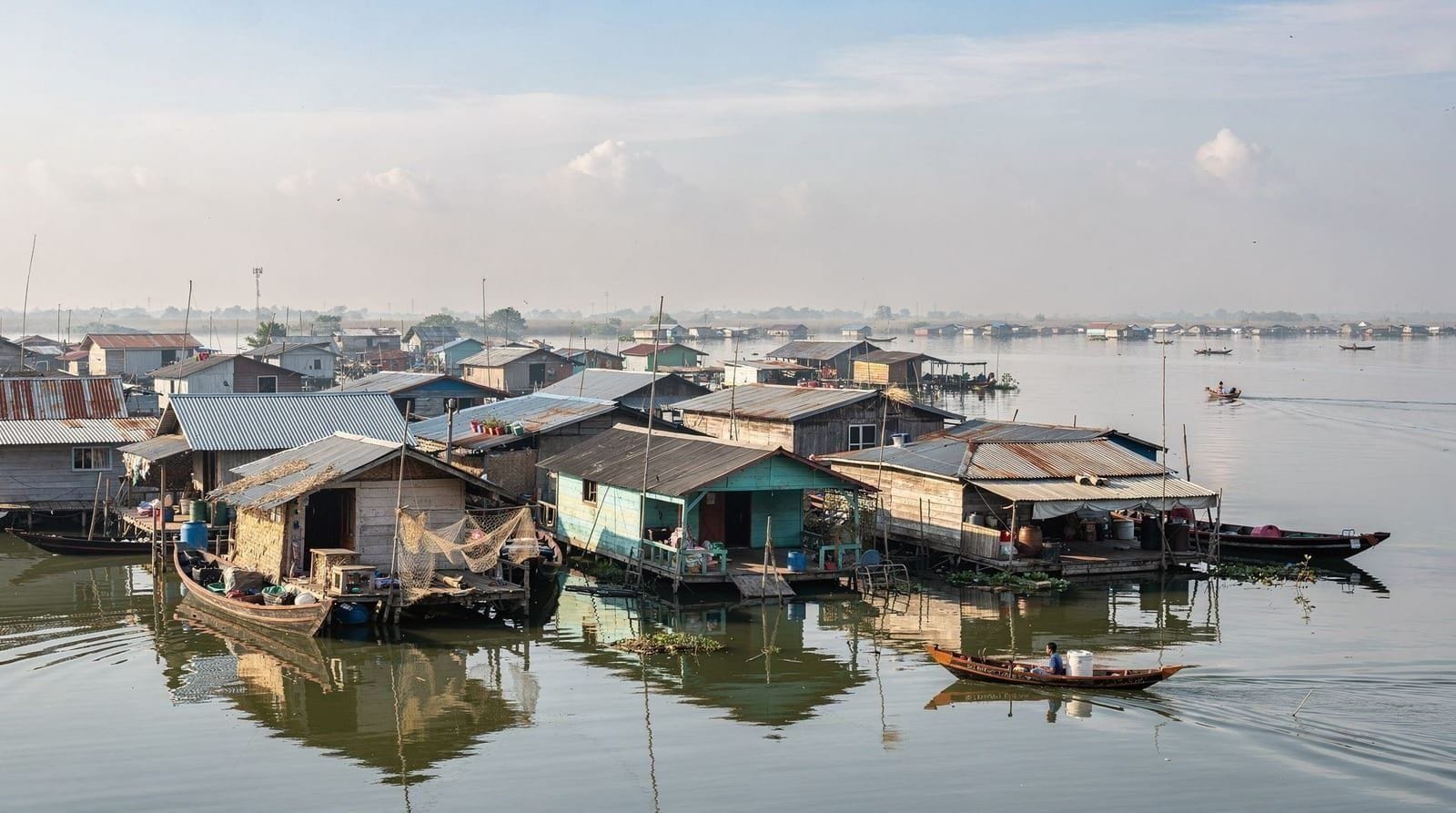
Of the three Tonlé Sap floating villages within reach of Siem Reap, Kompong Khleang is the largest — home to roughly 6,000 residents — and by most visitor accounts the least oriented around tourism. Where Chong Kneas has developed a reputation for overpriced boat packages and pressure-sale tactics, and Kompong Phluk balances accessibility with a reasonably authentic feel, Kompong Khleang is simply a working market town that happens to be built on stilts and, seasonally, partly over water — genuinely more of a “real place” experience than a curated boat-tour circuit, at the cost of significantly more travel time.
The economics of a village this size
At roughly 6,000 residents, Kompong Khleang functions as a genuine regional hub for the surrounding rural area, not just a single village — its market serves nearby smaller settlements, and its scale supports infrastructure (a proper school system, multiple pagodas, a genuine commercial district) that smaller floating communities like Kompong Phluk don’t have at the same level.
This scale is part of why the “working town” description fits Kompong Khleang more accurately than it does the other two villages, both of which are smaller and more singularly organized around fishing and, increasingly, tourism. Understanding this before you visit helps set expectations correctly: you’re not visiting a curated “floating village experience” so much as passing through part of an actual regional economy that happens to be built on stilts and shaped by an extreme seasonal flood cycle.
Distance and how to get there
Kompong Khleang is about 50 km from central Siem Reap, roughly 1-1.5 hours by car — noticeably farther than Kompong Phluk (30 km) and Chong Kneas (16 km), which is the main reason it sees far fewer visitors and, correspondingly, less tourism infrastructure built around it.
Ticket and cost
As with the other Tonlé Sap villages, there’s no separate government ticket like the Angkor Pass — you’re paying for transport and a boat trip, typically as a package. Because Kompong Khleang gets fewer independent tourists showing up unannounced, arranging a boat on the spot without a pre-booked tour can be harder here than at the more visited villages; booking ahead is more advisable than at Chong Kneas or Kompong Phluk.
Season and what you’ll actually see
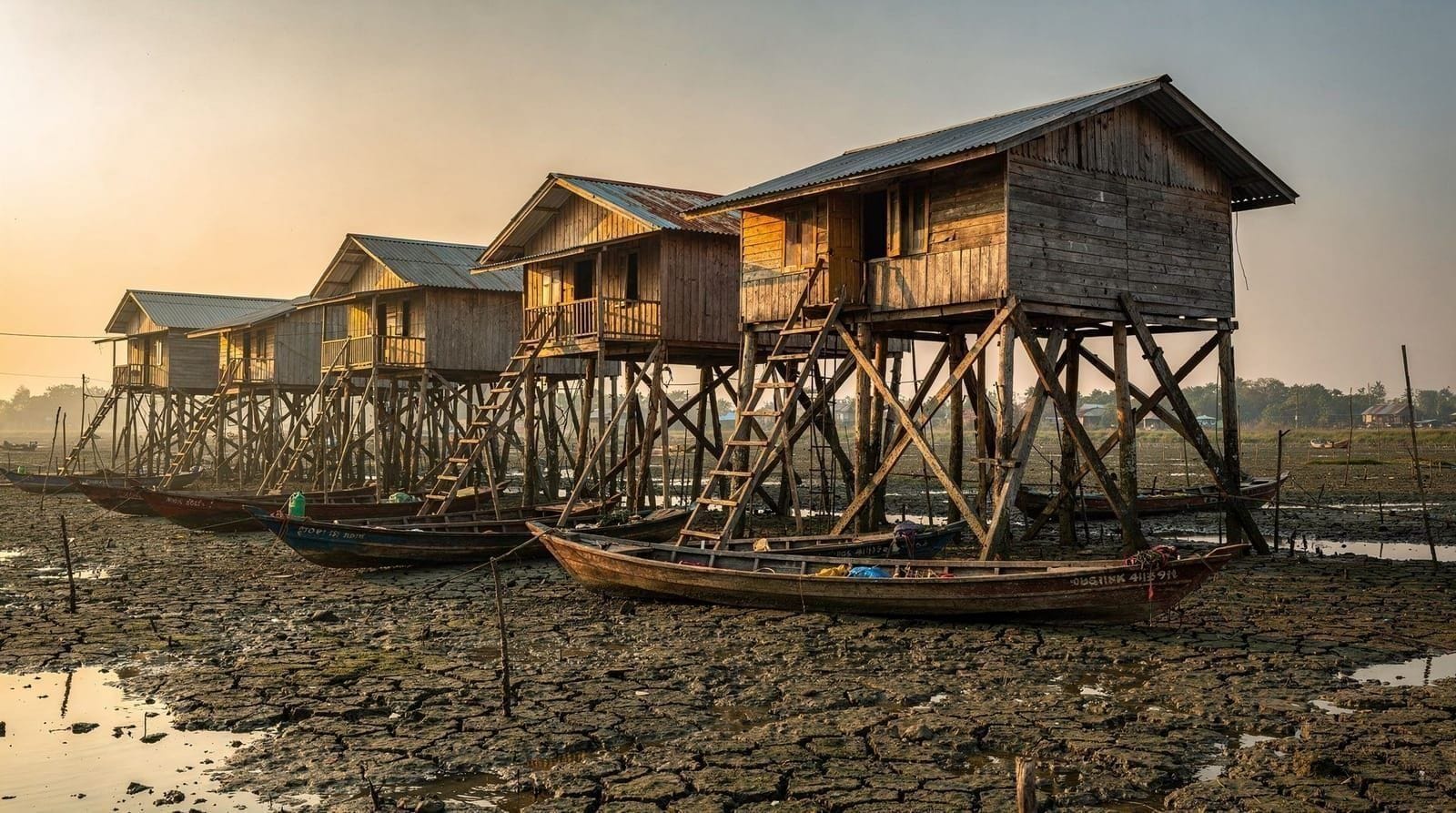
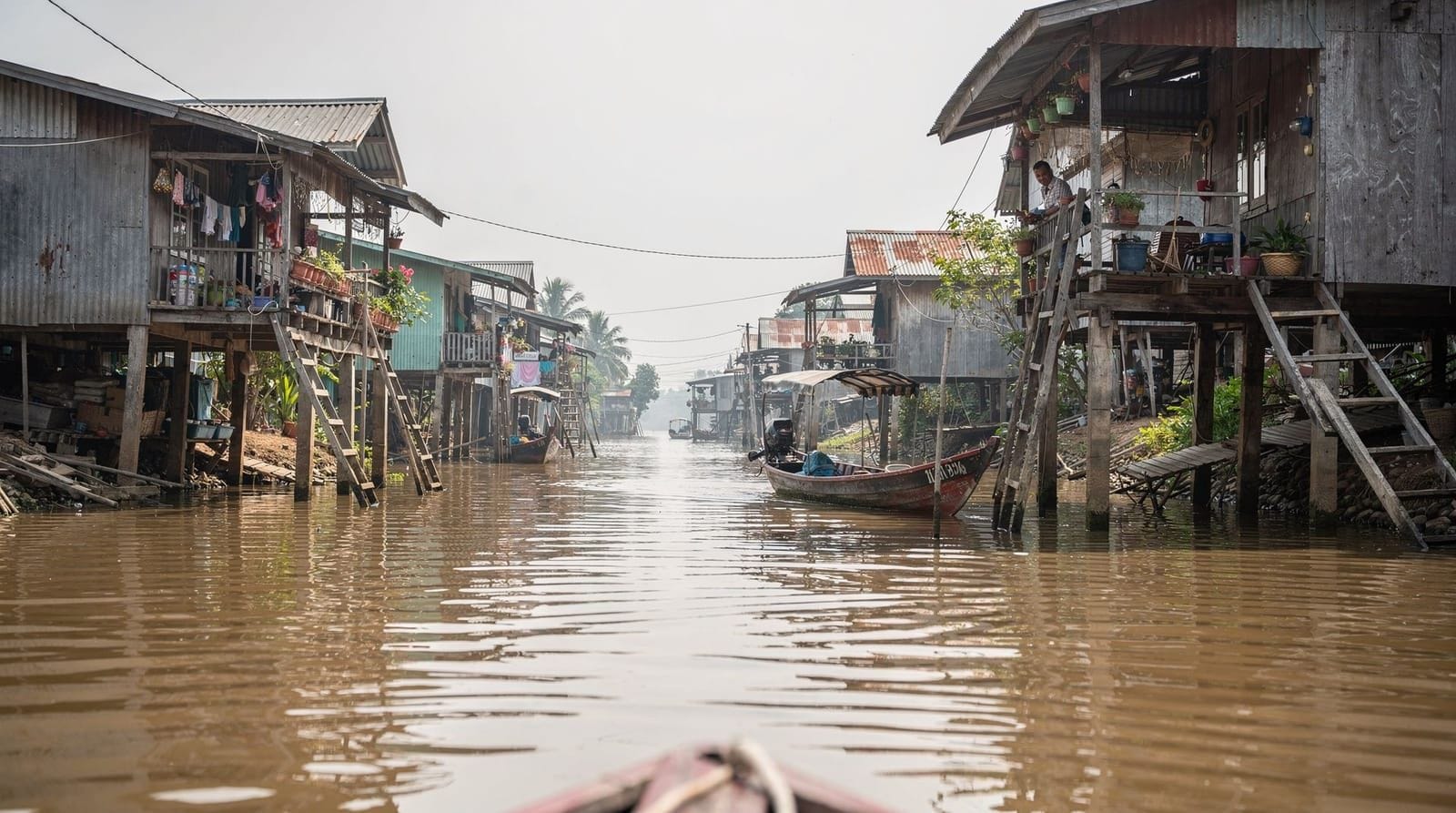
Kompong Khleang is visitable from roughly mid-August through April, with March-April often cited as the best window for a specific reason: as water levels drop through the dry season, the full scale of the village’s stilts becomes visible — houses standing 8-10 metres in the air on their supports, dramatically different from how they look partially submerged during high water. High-water season (roughly August-January) gives the more classic “flooded village” boat-through-the-streets look similar to Kompong Phluk; low-water season gives the more architecturally striking “houses on stilts over dry ground” perspective. Neither is objectively better — they’re simply different, and worth choosing based on which image you’re actually after.
The market and daily life
Unlike the other two villages, Kompong Khleang has a genuine local market that functions as the actual commercial center for the surrounding area — not a tourist-facing souvenir setup, but a working produce, fish and goods market serving residents. Visiting in the morning, when the market is most active, gives a noticeably different texture from an afternoon visit when much of the daily commercial activity has wound down.
Sambor Prei Kuk — the temple pairing most visitors don’t know about
One reason Kompong Khleang rewards the extra travel time is its proximity to Sambor Prei Kuk, a pre-Angkorian temple complex dating to the early 7th century — centuries older than any temple inside the main Angkor Archaeological Park, and a UNESCO World Heritage Site in its own right since 2017. Built during the Chenla period, before the Khmer Empire as commonly understood even existed, Sambor Prei Kuk’s brick towers (over 100 structures spread through forest, far more scattered and unrestored than anything in the Small or Grand Circuit) represent an entirely different, earlier architectural tradition than the sandstone monuments most visitors associate with Angkor.
Combining it with Kompong Khleang in one day trip makes genuine sense given the shared general direction from Siem Reap, and it’s a strong option for visitors specifically interested in the deepest, least-visited layer of Cambodian temple history — well beyond what even Beng Mealea or Koh Ker cover chronologically.
What’s overrated, what’s underrated
Nothing here is overrated — if anything, Kompong Khleang is the most underrated of the three villages precisely because it requires the most effort to reach and gets the least marketing attention among Siem Reap day-trip operators. Visitors specifically seeking an alternative to a “tourist show” floating village consistently rate it as the most rewarding of the three, once they’ve made the longer trip.
How to combine it with the rest of your day
Given the extra distance, Kompong Khleang is usually its own dedicated half-day rather than a quick add-on to a temple morning. Some operators combine it with Sambor Prei Kuk, a pre-Angkorian brick temple complex further afield — our Sambor Prei Kuk and Kompong Khleang day tour covers this combined, more ambitious route for visitors with a full day to spend.
For a more focused visit, the Kompong Khleang floating village full-day tour and guided Kompong Khleang floating village tour both cover the village itself without the temple add-on. A jeep and boat combination tour is worth considering given the rougher, less-traveled roads leading into this village compared to Kompong Phluk’s more direct route.
If you’re planning to combine an outer-temple trip with the floating village in one longer day, the Kompong Khleang and Beng Mealea private tour pairs the two, though be aware this makes for a genuinely long day given both destinations’ distance from Siem Reap.
A realistic half-day itinerary
7:30-8:00 AM — depart Siem Reap; an earlier start than a Kompong Phluk trip given the longer drive. 9:00-9:30 AM — arrival, transfer to boat. 9:30-11:30 AM — boat tour through the village, including the market if timed for morning activity, plus a look at the stilted homes, school and temple. 11:30 AM-12:00 PM — return to the boat launch and depart. 1:00-1:30 PM — arrival back in Siem Reap, in time for lunch and an afternoon activity, or continuing straight into a Sambor Prei Kuk add-on if that’s part of your itinerary. This leaves the afternoon free for a lighter activity, unlike a Beng Mealea/Koh Ker day, which typically consumes the entire day.
Who should choose Kompong Khleang over the other two villages
Kompong Khleang is the right choice for visitors who’ve already read about floating villages and specifically want the version least shaped by tourism — a real functioning market town, not a boat-tour circuit built primarily around visitor experience. It’s the wrong choice for visitors on a tight schedule, families with very young children who may struggle with the longer drive, or anyone who simply wants a quick, easy half-day activity without much logistics planning.
If you’re choosing your one floating-village visit and authenticity matters more to you than convenience, Kompong Khleang consistently earns the strongest feedback among visitors who’ve compared all three; if convenience and a shorter round-trip matter more, Kompong Phluk remains the better-balanced default.
Three villages compared, side by side
| Chong Kneas | Kompong Phluk | Kompong Khleang | |
|---|---|---|---|
| Distance from Siem Reap | ~16 km, ~20 min | ~30 km, 45 min-1 hr | ~50 km, 1-1.5 hrs |
| Population | Small, floating boat community | Smaller stilted village | ~6,000, largest of the three |
| Tourism development | Heaviest — known for pressure sales | Moderate | Lightest — genuine market town |
| Best season | Year-round (fully floating) | Mid-August to end January | Mid-August to April, best March-April |
| Booking on arrival | Easy, often too easy | Moderate | Harder — book ahead |
| Honest take | Skip unless combined with a legitimate cause | Best balance for most visitors | Best for authenticity-focused visitors with time |
Accessibility
The boat ride itself requires stepping down into a narrow wooden boat, typically via a plank or short ladder from the launch point — manageable for most visitors but not ideal for anyone with significant mobility limitations, and there’s no accessible alternative given the terrain. Once on board, most tours involve sitting rather than walking, so the physical demand is lower than a temple visit with stairs to climb. The rougher approach roads mentioned above mean the vehicle portion of the trip can be genuinely bumpy in a standard sedan, which matters for anyone prone to motion sickness or with back problems — a jeep or SUV transfer smooths this out considerably.
Where to eat nearby
Kompong Khleang itself has no tourist-oriented restaurants — food options are limited to what’s sold in the local market, which isn’t really set up for visitor dining. Most day trips either pack a simple lunch, stop at a small roadside eatery on the drive back toward Siem Reap, or return to town in time for lunch given the half-day structure most tours follow. This is a meaningful difference from Kompong Phluk, where a handful of floating restaurants cater more directly to visiting tour groups — another reason Kompong Khleang reads as less built around tourism than its closer neighbor.
Photography notes
The stilt houses themselves are the most striking subject, especially in the March-April low-water window when the full height of the supports — 8-10 metres in places — becomes visible against dry ground rather than partly submerged. A wide-angle lens captures the scale of the stilts well; a longer lens is more useful for the market scenes and daily-life moments, since getting close with a wide lens tends to feel intrusive in a working market that isn’t set up as a photo opportunity. Morning light during the market’s active hours gives both good light and the most genuine, least staged material — an afternoon visit, after market activity has wound down, yields quieter but less dynamic images.
Practical notes
Bring more water and sun protection than for a Kompong Phluk trip, given the longer travel time and generally less-developed rest-stop infrastructure along the way. Roads leading into the village can be rougher than the route to Kompong Phluk, especially in wet season — a reasonable reason to consider a jeep-inclusive tour over a standard car.
See our floating villages guide for broader booking and safety guidance shared across all three villages. As at Kompong Phluk, life jackets should be provided on any legitimate boat and are worth confirming before departure — an operator that skips this basic safety step is a reasonable signal to reconsider, regardless of how good the rest of the package looks on paper.
Frequently asked questions about Kompong Khleang
How is Kompong Khleang different from Kompong Phluk?
Kompong Khleang is larger (roughly 6,000 residents vs. Kompong Phluk’s smaller population), farther from Siem Reap (50 km vs. 30 km), and has a genuine working market that gives it more of a real-town feel rather than a boat-tour circuit.
What’s the best time of year to visit Kompong Khleang?
It’s accessible roughly mid-August through April. March-April is often preferred for the dramatic stilt-house views as water levels drop; August-January gives a more classic flooded-village boat experience.
Is Kompong Khleang covered by the Angkor Pass?
No — like the other floating villages, it’s reached via a separately arranged boat tour, unrelated to temple ticketing.
Do I need to book a boat in advance?
More so than at the other villages — Kompong Khleang sees fewer independent tourists, so arranging a boat on arrival without a pre-booked tour is less reliable here than at Chong Kneas or Kompong Phluk.
Is Kompong Khleang worth the extra travel time compared to Kompong Phluk?
For visitors specifically seeking the least touristy, most “real” village experience, most feedback says yes. For a shorter half-day with less driving, Kompong Phluk remains the more practical choice.
Is there a market I can visit at Kompong Khleang?
Yes — a genuine local market serving the surrounding area, most active in the morning, distinct from the tourist-facing setups at the more visited villages.
What is Sambor Prei Kuk, and is it worth combining with Kompong Khleang?
It’s a pre-Angkorian temple complex from the early 7th century, centuries older than the main Angkor Archaeological Park temples, and a UNESCO World Heritage Site since 2017. Its scattered brick towers offer a genuinely different architectural experience from the sandstone Angkorian temples, and combining it with Kompong Khleang makes sense given their shared general direction from Siem Reap.
Why does Kompong Khleang see fewer visitors than the other two villages?
Primarily distance — at roughly 50 km and 1-1.5 hours from Siem Reap, it requires meaningfully more travel time than either Chong Kneas (16 km) or Kompong Phluk (30 km), which naturally filters out visitors on tighter schedules or day-trip-focused itineraries.
Is the road to Kompong Khleang difficult to travel?
It can be rougher than the more direct route to Kompong Phluk, particularly during wet season — some tour operators use jeeps rather than standard cars for this reason, worth considering when booking if road comfort matters to you.
What’s the difference between visiting Kompong Khleang in high water versus low water season?
High-water season (roughly August-January) gives a flooded, boat-through-the-village experience similar to Kompong Phluk. Low-water season (particularly March-April) reveals the full height of the stilted houses standing 8-10 metres above dry ground — a dramatically different, arguably more visually striking perspective on the same architecture.
Top experiences
Bookable activities with verified prices and instant confirmation on GetYourGuide.
Siem Reap: Sambor Prei Kuk and Kompong Khleang Day Tour

Siem Reap: Kompong Khleang Floating Village Full-Day Tour

Siem Reap: Kompong Khleang Floating Village Tour

Siem Reap: Kompong Khleang Floating Village Jeep and Boat Tour

Siem Reap: Kompong Khleang and Beng Mealea Private Tour
More tours on Viator
Top-rated experiences with verified reviews, bookable on Viator (a Tripadvisor company).