Angkor temple etiquette guide
What's the dress code for Angkor's temples?
Shoulders and knees must be covered to enter Angkor Wat and most major temples — no tank tops, short shorts, or mini-skirts. This is enforced by guards at the entrance, and visitors in violation are turned away or asked to cover up, not just discouraged. Bring a light scarf or sarong as backup even if your main outfit complies, since some sites apply the rule strictly.
Why etiquette matters more here than at most tourist sites
Angkor’s temples are active religious sites, not just archaeological ruins — Angkor Wat itself remains a functioning Buddhist temple, with monks in residence and Cambodian visitors coming to pray, not just sightsee. That changes what’s appropriate in a way many first-time visitors don’t anticipate: this isn’t a museum where casual dress is fine, it’s a place where local visitors are actively practicing their religion around you.
This guide covers the specific, enforced rules (dress code, photography, monk etiquette) as well as the softer norms that make you a more considerate visitor even where nothing is formally enforced. For the ticket and logistics side of visiting, see our Angkor Pass guide.
The dress code, specifically
Shoulders and knees must be covered. This means no tank tops, sleeveless shirts, short shorts, or mini-skirts at Angkor Wat and most major temple sites — the rule is applied to all genders, not just women, despite how it’s sometimes portrayed. A t-shirt or shirt with sleeves and shorts or a skirt reaching at least to the knee generally passes. This is genuinely enforced: guards stationed at Angkor Wat’s entrance specifically check for compliance, and visitors who don’t meet the standard are turned away at the gate or asked to cover up before being let in, not merely given a disapproving look. See our companion Angkor Wat dress code guide for outfit-specific detail.
Bring backup coverage regardless. Even if your main outfit complies, packing a light scarf, sarong, or long shirt in your bag is worth the negligible weight — temperatures and humidity make it tempting to dress lighter than the rule allows, and having a quick fix avoids losing entry time arguing at the gate or scrambling to buy an overpriced cover-up from a vendor stationed conveniently outside for exactly this situation.
Enforcement varies slightly by site. Angkor Wat applies the rule most strictly, since it’s the most visited and most actively used as a religious site; some of the further-flung outlier temples (Beng Mealea, Koh Ker) are less consistently monitored, though the same standard technically applies everywhere and showing up dressed appropriately is the simplest approach regardless of site.
Footwear
Sturdy, closed or semi-closed shoes are more practical than sandals for most of the park — stone surfaces are uneven, often worn smooth and slippery (especially after rain), and some structures require climbing steep, narrow stairs. At a small number of specific structures, particularly steeper staircases at temples like Ta Keo or Pre Rup, you may be asked to remove shoes, so slip-on footwear has a practical advantage over lace-ups in those spots.
Photography rules and courtesy
Photography is permitted at nearly all temple areas, including with tripods in most cases, though drone use requires separate permits that most casual visitors won’t have arranged and should not assume are covered by a standard Angkor Pass — check current drone regulations before bringing one, as rules have tightened over time.
The more important etiquette point is about photographing people: monks, worshippers, and other visitors praying should not be treated as photo subjects without at least a nod of acknowledgment or, ideally, a quick ask if practical — a monk in orange robes making an interesting photo composition is still a person engaged in worship, not a prop. Flash photography near active shrine areas, where locals are actively praying, is worth avoiding regardless of whether it’s formally restricted at that specific spot.
Interacting with monks
If you encounter monks at Angkor Wat or elsewhere, a few specific norms matter, particularly for women: women should not touch a monk or hand him anything directly — if you want to give a monk something (a donation, an item), place it down for him to pick up, or have a male companion hand it over instead. This is a genuine, widely observed rule in Theravada Buddhism, not an exaggerated tourist-guide caution. More generally, monks are due a basic level of deference — don’t sit higher than a seated monk if avoidable, and keep interactions respectful rather than treating an encountered monk as a photo opportunity or curiosity.
Touching carvings and structures
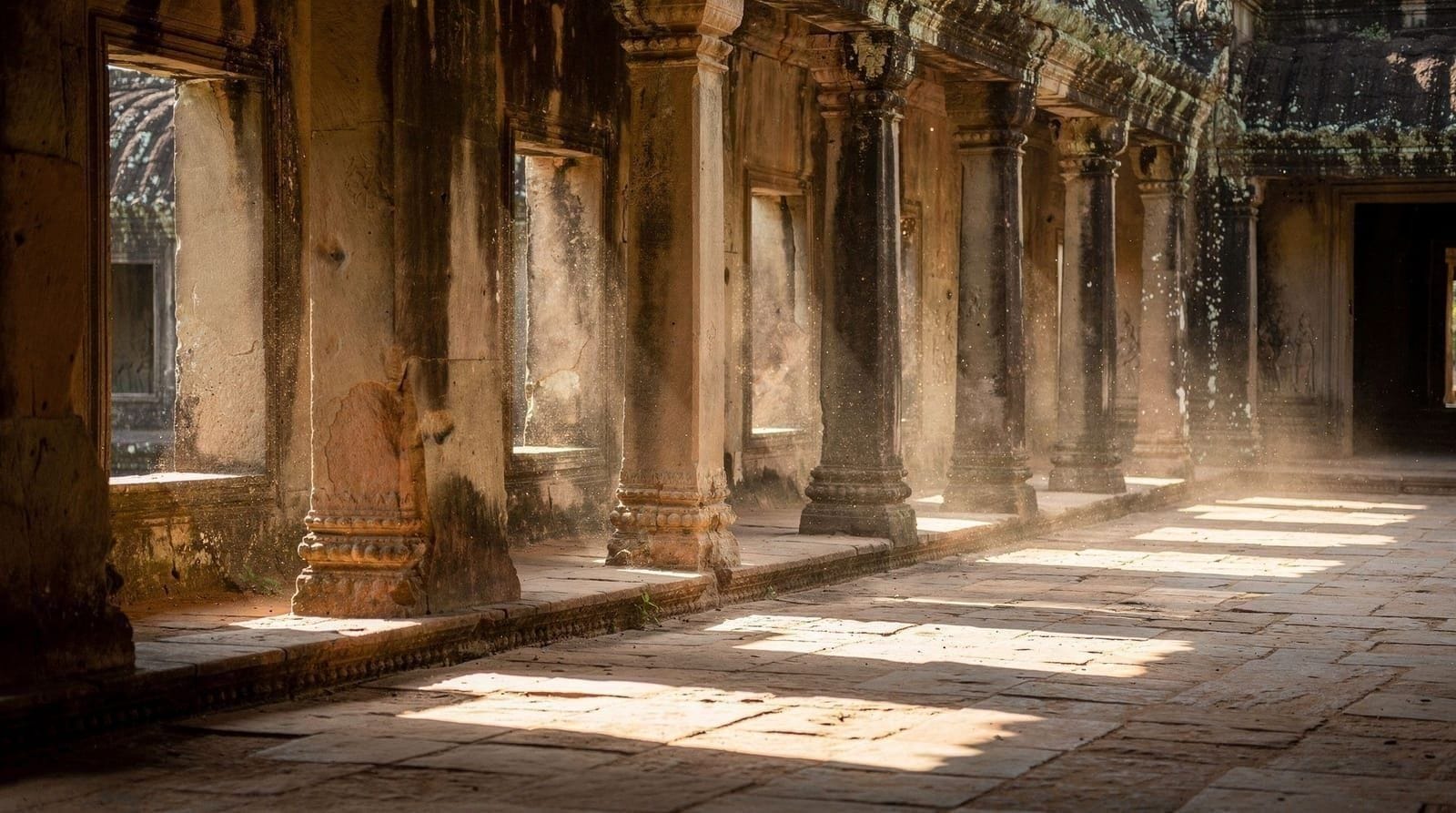
Angkor’s sandstone carvings, some over 900 years old, are more fragile than their scale suggests — oils and repeated contact from millions of annual visitors’ hands accelerate erosion on reliefs that have survived centuries of weather. Avoid touching carved surfaces even when it’s not explicitly roped off, and never climb on structures, ledges, or fallen stone blocks for a photo, both for the site’s preservation and your own safety on genuinely unstable, centuries-old stonework.
Why the dress code exists
The shoulders-and-knees rule isn’t an arbitrary tourism regulation — it reflects the same modesty standards Cambodians themselves observe when entering an active Buddhist temple (a wat) anywhere in the country, applied to Angkor because several of its temples, Angkor Wat foremost, remain functioning religious sites rather than purely historical ones.
Cambodian visitors dress accordingly by habit; the posted rule exists mainly because foreign visitors, without that context, otherwise show up in beach or hiking clothes suited to the climate but not the setting. Understanding it as a religious-site standard rather than a tourism-board rule makes it easier to comply with without resentment, and explains why enforcement is taken seriously rather than treated as a minor suggestion.
Buying or renting cover-ups near the temples
If you arrive underdressed despite planning ahead, vendors stationed near Angkor Wat’s entrance and parking areas sell scarves, sarongs, and light cover-up shirts specifically for this situation — functional, but priced at a real premium over what the same item costs in town (often 3-5 times more). It’s cheaper and less stressful to sort this out before leaving your hotel; a $2-3 scarf from a Siem Reap market covers the same need as a $10-15 one bought under time pressure at the gate. Some tour operators and drivers carry spare sarongs for exactly this situation — worth asking your tuk-tuk driver or guide if you’re unsure about your outfit before you arrive.
Etiquette for children and families
The dress code applies to children too, though enforcement is generally more lenient for younger kids than adults — a general standard of reasonable coverage is expected rather than a strict inspection. Teaching kids the basics beforehand (not touching carvings, quiet voices near active shrine areas, no climbing on ruins) tends to work better than correcting them on the spot, and most children adapt quickly once they see the pattern of how other visitors and Cambodian families behave around them. See our Siem Reap with kids guide for more on managing a family temple day.
Accessibility and mobility considerations
Angkor’s temples vary enormously in accessibility — Angkor Wat and Angkor Thom’s main areas have relatively level, if uneven, walking surfaces suitable for most mobility levels, while sites like Ta Keo, Pre Rup, and parts of Angkor Wat’s upper level involve steep, narrow, unrailed stone staircases that are genuinely difficult or unsafe for visitors with mobility limitations, and are sometimes closed outright during and after rain. There’s no formal accommodation system at most temples; if mobility is a concern, discussing a realistic route with your driver or guide in advance, and being willing to skip specific structures rather than attempt a stairway that looks unsafe, is the practical approach.
Donations
Small donation boxes are present at active shrine areas within several temples, typically for temple upkeep or monk support; donating is entirely optional and never expected of visitors, but a small note ($1 equivalent or a bit of local currency) is a reasonable, low-pressure way to contribute if you’re moved to. Be wary of individuals outside temple gates (rather than at an official donation box) soliciting money for a monk, an orphanage, or a school — this is a documented scam pattern in Siem Reap, and legitimate donations are made through official channels, not to an individual approaching tourists directly. Our broader honest-planner content covers this and similar scam patterns in more depth.
Noise and general conduct
Angkor Wat and the larger temples draw large volumes of visitors, especially at sunrise, but the site remains a place of worship for many Cambodians moving through it at the same time — keeping voices reasonably low near active shrine areas, not using speakers or playing music, and not smoking or eating inside temple structures (as opposed to the surrounding grounds, where it’s generally fine) are all expected, sometimes formally posted, sometimes simply understood.
Sunrise-specific etiquette
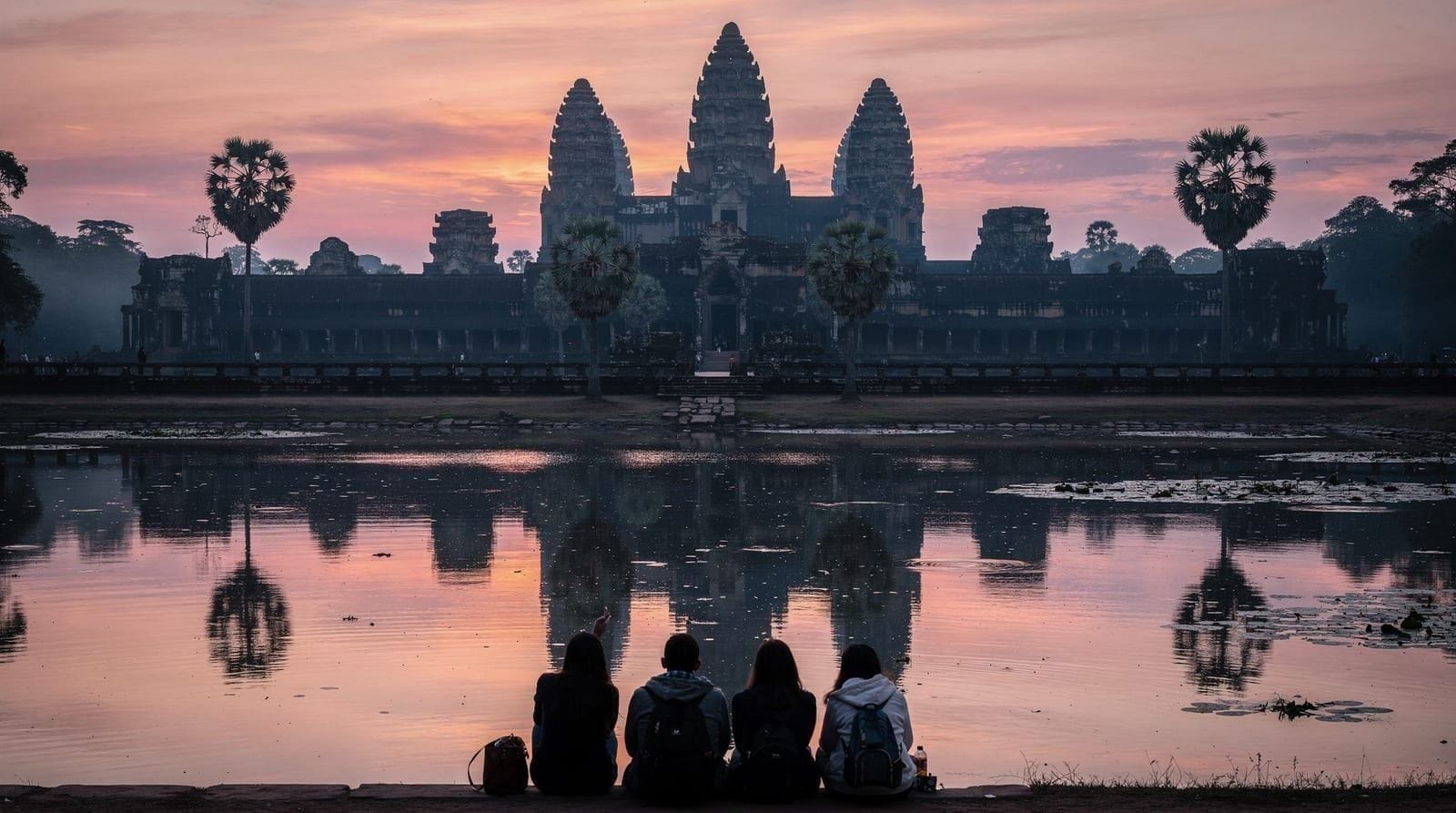
At Angkor Wat’s sunrise viewing, hundreds of visitors gather at the same reflecting pools in the dark — a specific etiquette applies beyond the general temple rules: arrive early enough to find a spot without pushing past people already settled (see our Angkor Wat sunrise guide for timing), avoid holding up phones or tablets directly in front of people behind you for extended periods, and be mindful that tripods, while generally allowed, take up shared space in an already crowded viewing area.
Frequently asked questions about Angkor temple etiquette
What happens if I show up at Angkor Wat with shoulders or knees uncovered?
You’ll be turned away at the entrance or asked to cover up before being allowed in — this is actively enforced by guards, not just a suggestion. Vendors near the entrance sometimes sell cover-ups at inflated prices for exactly this situation, so it’s cheaper to bring your own.
Can women touch a monk in Cambodia?
No — this is a genuine rule in Theravada Buddhist practice. If you need to give a monk something, place it down for him to pick up rather than handing it directly, or have a male companion do so.
Is photography allowed inside the temples?
Yes, generally, including with tripods in most areas — but be respectful when photographing monks or worshippers actively praying, and check current rules before bringing a drone, since permits are required and not automatically covered by a standard ticket.
Do I need to take my shoes off at the temples?
Not at most sites, but a small number of specific structures with steep or narrow staircases may ask you to remove shoes — slip-on footwear is more practical than lace-ups for these spots.
Is it okay to touch the carvings at Angkor?
No — avoid touching carved surfaces even where it isn’t explicitly roped off. The stone is more fragile than it looks, and repeated contact from millions of visitors accelerates erosion on reliefs that have survived for centuries.
Should I give money to people asking for donations outside the temples?
Be cautious — individuals soliciting money outside temple gates for a monk, orphanage, or school are a documented scam pattern in Siem Reap. Legitimate donations go through official donation boxes inside active shrine areas, not to individuals approaching you directly.
Is the dress code enforced at all temples or just Angkor Wat?
Angkor Wat enforces it most strictly since it’s the most visited and most actively used religious site; the same standard technically applies everywhere in the park, and dressing appropriately regardless of which temple you’re visiting is the simplest approach.
What should I wear to stay cool while still meeting the dress code?
Lightweight, breathable long-sleeve or three-quarter-sleeve shirts and loose linen or cotton trousers or a below-knee skirt work well in the heat while meeting the coverage requirement — see our Angkor Wat dress code guide for specific outfit recommendations and our packing guide for the wider list.
More tours on Viator
Top-rated experiences with verified reviews, bookable on Viator (a Tripadvisor company).