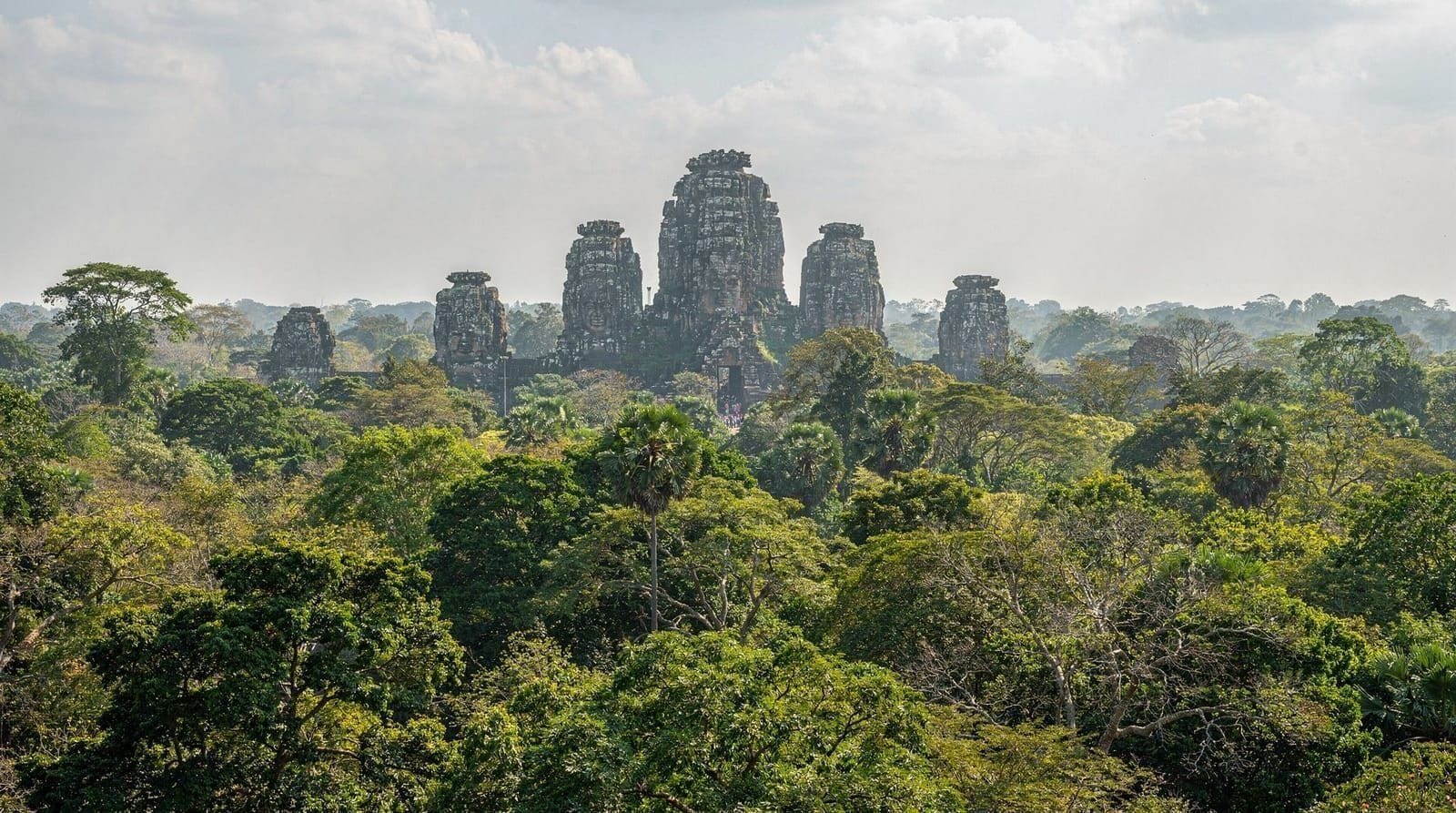
Khmer New Year in Siem Reap: what actually happens in mid-April
I landed in Siem Reap two days before Khmer New Year on my second trip, not entirely on purpose — I’d booked flights around a work schedule and only realized afterward what week I’d picked. It turned out to be one of the more interesting stretches I’ve spent in the city, and also one where a few things I’d normally rely on simply weren’t running. If you’re weighing a mid-April trip, here’s what Choul Chnam Thmey actually looks like on the ground, not the festival-brochure version.
If you’re still deciding whether the city suits you at all, my take on whether Siem Reap is worth visiting and the broader best time to visit guide are good companions to this one.
When it actually falls
Choul Chnam Thmey runs three days, officially 14-16 April 2026, though the lead-up and the days immediately after carry a lot of the same energy — expect the effect to stretch across most of the second and third weeks of April. It’s the single biggest holiday on the Cambodian calendar, roughly equivalent to how Christmas or Lunar New Year functions elsewhere: the country doesn’t just mark it, it empties out toward home villages.
The other thing worth knowing is that Siem Reap is a city of people who mostly come from somewhere else in the country, so the holiday pulls on the local workforce harder than you might expect. That is why the quiet corners of town feel so different from the busy ones.
What actually closes
This is the part that catches visitors off guard. A meaningful share of small, family-run businesses — the kind of guesthouse restaurant, tailor shop, or independent tuk-tuk operation that isn’t part of a chain — close for several days so staff can travel home. Bigger hotels, the main restaurant strips around Pub Street, and the Angkor Archaeological Park itself stay open and staffed, since this is peak domestic tourism season, not a shutdown.
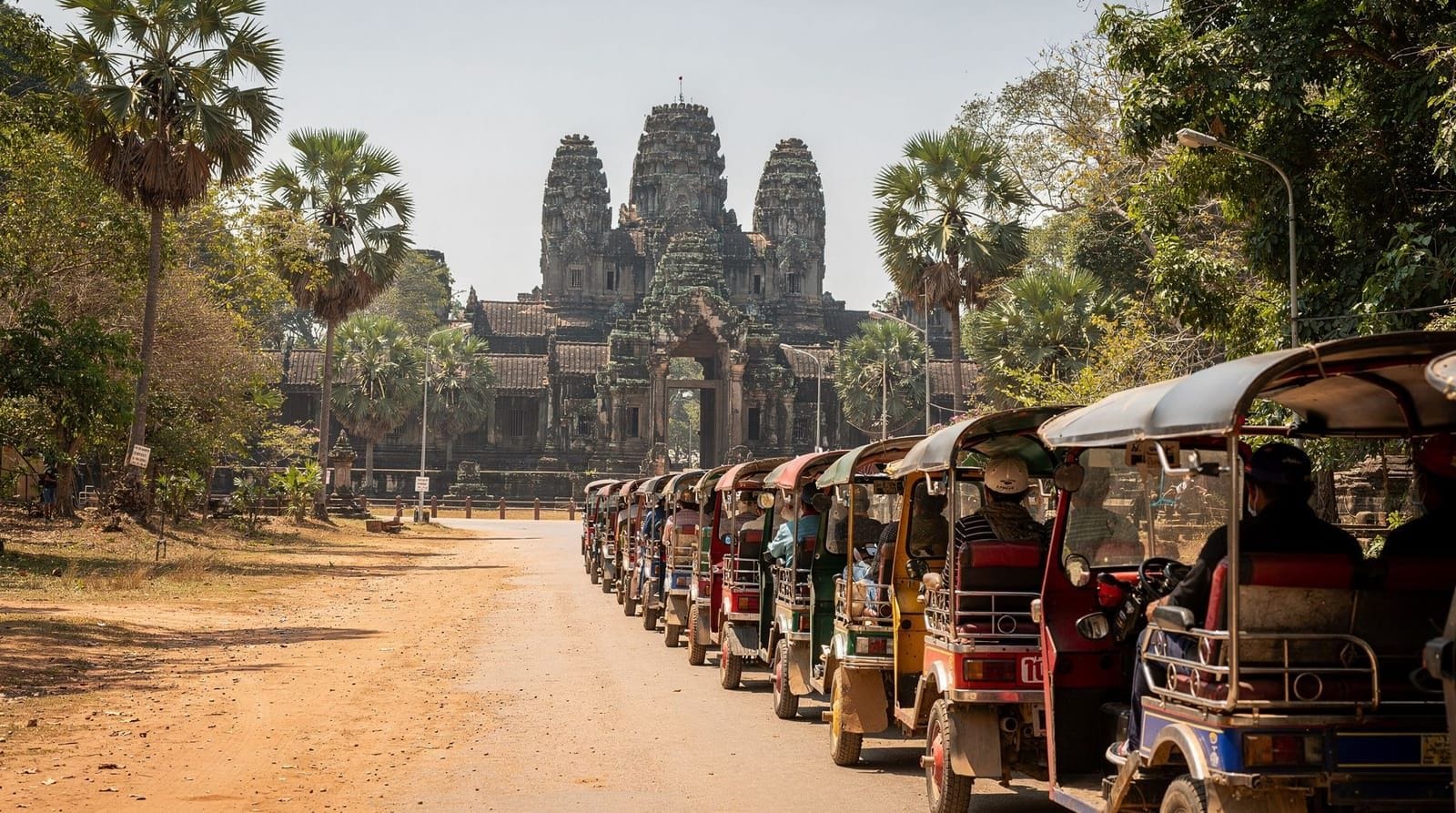
But if you’ve built your trip around a specific small restaurant or a particular independent guide, it’s worth confirming directly that they’ll be operating those exact days rather than assuming. If you rely on tuk-tuks to get around, read up on getting around Siem Reap and how tuk-tuk pricing works before you go, because with fewer drivers working, agree the fare and the plan before you climb in. The Old Market and Pub Street area is where you’ll find the most reliably open places to eat, and the restaurant guide will help you pick a few fallback options.
Festive periods are also when opportunistic pricing creeps in, so it helps to keep the tourist traps guide and the page on common Siem Reap scams in mind.
Angkor Wat gets a wave of domestic visitors, not fewer people
International low season around April (driven by the heat, which hits 35-39°C) usually means thinner crowds at the temples. Khmer New Year breaks that pattern locally. Cambodians travel to Angkor in large numbers during this window — for many, it’s a pilgrimage as much as a holiday, and Angkor Wat itself holds real religious and national significance beyond being a photo backdrop. Expect the temple complex to feel busier with domestic families than the April heat alone would suggest, particularly at Angkor Wat and Angkor Thom on the 14th and 15th. If you’re chasing a quiet sunrise, this isn’t the week for it — see the honest version of that in my sunrise reality check.
Because this is a religious and national occasion, dress and behaviour matter a little more than usual. The temple etiquette guide and the Angkor Wat dress code cover what to wear and how to behave around people who are there to pray. If you want to dodge some of the crush, the advice in avoiding the crowds at Angkor still applies, even if it won’t make the festival days quiet. For the temple itself, the Angkor Wat destination page has the layout and context.
The water and powder
Water-throwing and talcum-powder smearing are the parts of Khmer New Year most visitors have heard about, even if they’re thinking of the Thai or Lao versions. In Siem Reap it’s real but noticeably more contained than Songkran in Bangkok or Chiang Mai — this isn’t a city-wide soaking event with hose trucks on every corner. It happens in pockets: around Wat Bo, near neighborhood gatherings, occasionally along Pub Street in the evenings. Carry your phone and cash in a dry bag if you’re out walking during the festival days, and expect good-natured splashing rather than aggression. Wearing clothes you don’t mind getting wet (or powdered) is a reasonable precaution, not a certainty you’ll need it.
Is it a good time to visit the temples?
Honestly, it’s mixed. The upside: you’ll see a side of Angkor that most tourist-season visitors never do — Cambodian families in their best clothes, offerings at the temples, a genuinely festive, unstaged atmosphere that no organized show recreates. The downside: it’s also one of the hottest weeks of the year, the temples carry extra domestic crowds on top of the usual tour groups, and some of the small businesses you might have researched won’t be open.
If your priority is photography and quiet, mid-April is a poor match regardless of the festival — see the weather by month guide for just how brutal the heat gets. If your priority is culture and atmosphere over comfort, it’s genuinely worth timing a trip around.
Book a sunrise tuk-tuk tour with breakfastIf you’d rather have someone else handle the logistics on a crowded day, a private tuk-tuk day around the main temples keeps your route and timing in one place. Sorting out your pass in advance also helps, so check the Angkor Pass ticket guide first.
What to actually plan around it
Book hotels and any pre-arranged transport further ahead than usual — domestic travel demand spikes and rooms fill with Cambodian families and Phnom Penh visitors, not just foreign tourists. Confirm restaurant and shop hours a day or two ahead rather than relying on posted hours from earlier in the year. And build slower days into the schedule than you would in December — between the heat and the crowds, this isn’t a week to try to hit every outlier temple. A day trip to somewhere quieter, like Beng Mealea or Koh Ker, tends to feel calmer than the main circuit during the festival itself. The outlier temples guide and the Beng Mealea and Koh Ker day trip lay out how those days work.
For packing and pacing, the packing guide is worth a look, and a 2-day itinerary or 3-day itinerary gives you a slower baseline you can loosen further around the holiday. Compare it with the dry versus rainy season post if you’re also weighing other months, and see the Water Festival write-up for the other big national celebration.
What I’d do differently
I’d build in one dedicated “just watch the city” day rather than treating the whole trip as a temple checklist. Some of the best moments were unplanned — a family inviting me to join a small water-blessing outside their home near Wat Bo, a food stall set up only for the three festival days selling a dessert I never saw again on the rest of the trip. None of that shows up in a typical itinerary, and none of it happens if you’re rushing between Angkor Thom and Ta Prohm on a fixed schedule.
Frequently asked questions about Khmer New Year in Siem Reap
What are the exact dates for Khmer New Year 2026?
The official holiday runs 14-16 April 2026, though the atmosphere and some closures extend a few days on either side.
Will Angkor Wat be open during Khmer New Year?
Yes — the Angkor Archaeological Park operates normally and sees heavy domestic visitor numbers during the festival, since it holds religious significance for many Cambodians.
Is it safe to be out during the water-throwing?
Yes, it’s generally good-natured and localized rather than city-wide. Keep phones and cash protected if walking through areas where it’s happening, and expect it mainly in neighborhood pockets rather than every street.
Is April a good month to visit Siem Reap overall?
It’s the hottest month of the year (35-39°C+), which matters more to most travelers’ comfort than the festival itself. If heat tolerance is a concern, weigh that against the cultural upside before booking mid-April specifically for Khmer New Year.
More tours on Viator
Top-rated experiences with verified reviews, bookable on Viator (a Tripadvisor company).