Siem Reap packing guide: what to actually bring
What should I pack for Siem Reap?
Lightweight, breathable clothing that covers shoulders and knees for temple entry, sturdy closed-toe walking shoes for uneven stone, sun protection (hat, high-SPF sunscreen, sunglasses), DEET insect repellent for dengue prevention, and a compact rain layer if traveling May-October. Bring undamaged USD bills — torn notes are often refused — and a printed copy of your e-visa approval.
Pack for heat first, everything else second
Siem Reap’s climate drives almost every packing decision. Daytime temperatures stay above 30°C for most of the year, peaking at 35-39°C+ in April-May, and even the “cool” season (November-February, 20-31°C) is warm by most travelers’ standards. That reality — not fashion, not a generic tropical-destination checklist — should guide what goes in the bag. The two other factors that matter specifically to this destination: the temple dress code (shoulders and knees covered, enforced at the gate) and, if you’re traveling May-October, the rainy season.
Clothing
- Lightweight, breathable tops and bottoms — natural fibers (cotton, linen) or moisture-wicking synthetics both work; avoid anything heavy or non-breathable given the consistent heat.
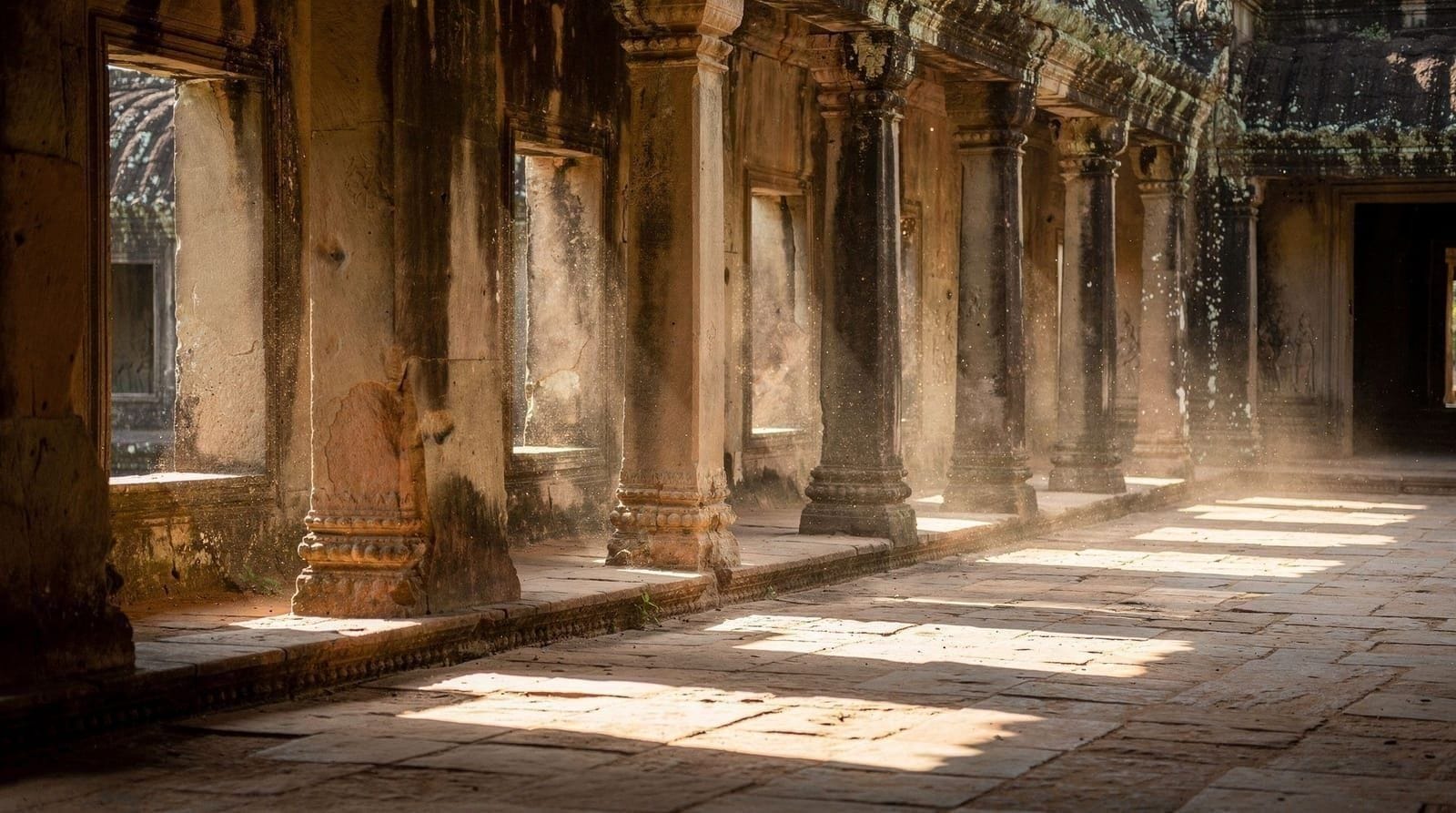
- At least two temple-appropriate outfits: shoulders and knees covered. Loose linen trousers or a midi skirt with a t-shirt, or a lightweight long-sleeve shirt, satisfy the dress code without overheating. See the full dress code guide for exactly what passes and what gets turned away at the gate.
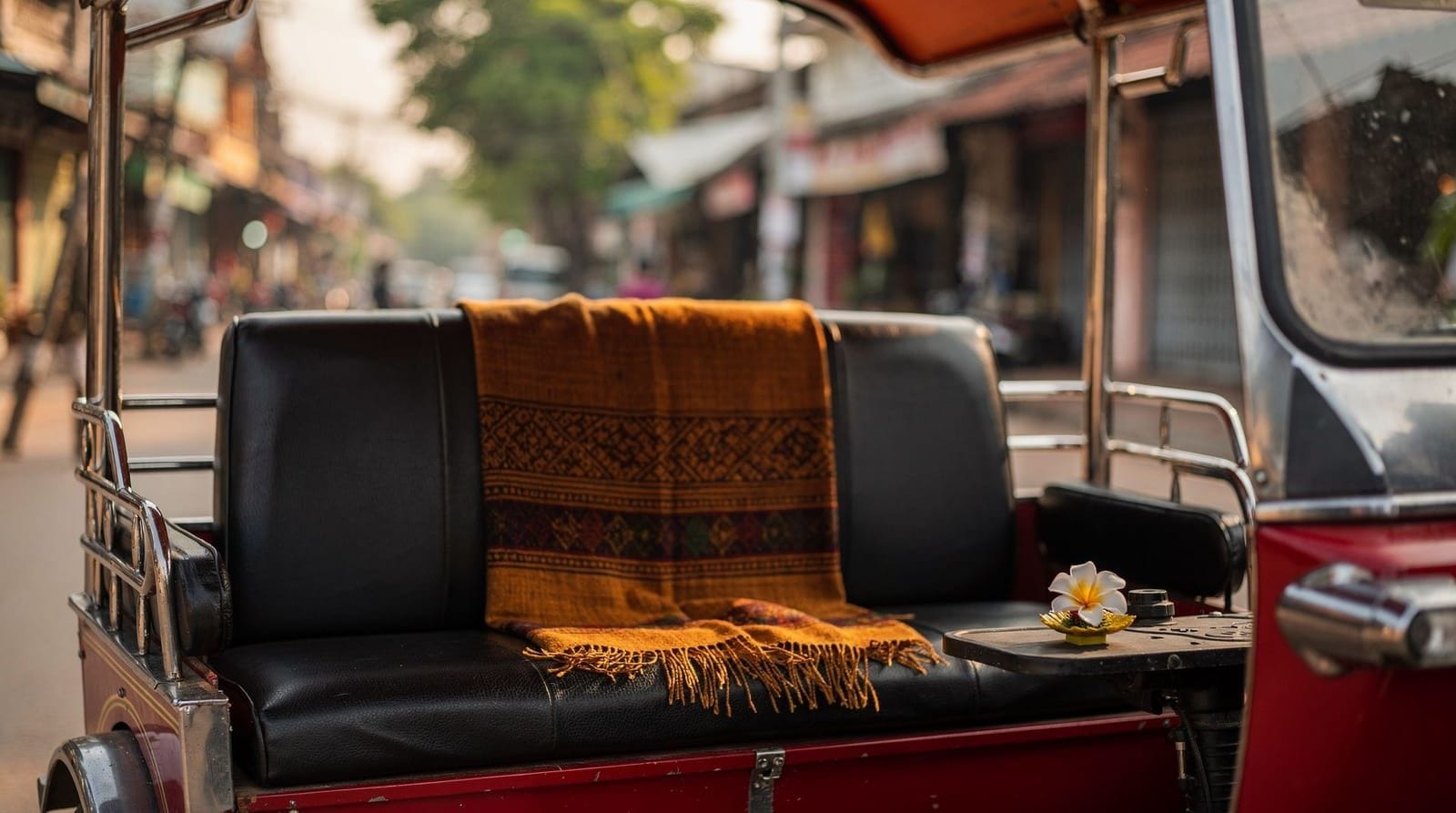
- A light scarf or sarong — doubles as an improvised shoulder cover if you’re caught in town-casual clothing near a temple, and is useful as a light layer on air-conditioned tuk-tuks or buses.
- Swimwear if your hotel has a pool — genuinely useful for cooling down after a hot temple day, not just a resort nicety here.
- One light rain layer (packable poncho or a compact rain jacket), essential if traveling May-October, useful even in the dry season for sudden showers.
- Minimal warm layers: even December-January nights rarely dip below 20°C — a light layer for early 4:45am sunrise starts (it’s cooler before dawn) is enough; leave heavy jackets home.
Footwear
- Sturdy closed-toe walking shoes or trail sandals with grip. Angkor’s stone surfaces are worn smooth by centuries of foot traffic, and several temples (Ta Keo, Pre Rup, parts of Angkor Wat’s upper level) involve steep, narrow stairs without handrails. Flip-flops are fine for town evenings but genuinely risky on temple stairs.
- A second, more casual pair for evenings in town — flip-flops or light sandals are fine for Pub Street and restaurant dinners.
Sun and insect protection
- High-SPF sunscreen (SPF 50 recommended given the intensity and duration of sun exposure on a full temple day) — reapply through the day, especially on exposed temple visits with minimal shade.
- A wide-brimmed hat and sunglasses — genuinely more useful here than at most destinations given how many hours you’ll spend outdoors without shade cover.
- DEET-based insect repellent. Dengue, spread by day-biting mosquitoes, is present year-round in Siem Reap and is the more relevant mosquito-borne risk (malaria is minimal in the main tourist zone). Apply repellent through the day, not just at dawn/dusk, and pack long sleeves for early morning temple starts when mosquito activity often peaks.
Health and toiletries
- A basic travel health kit: rehydration salts (heat and occasional stomach upset are the two most common minor health issues travelers report), any personal prescription medication in original packaging, basic pain relief, and motion sickness tablets if you’re prone to it for the longer drives to outlier temples.
- Reusable water bottle — tap water isn’t potable, but bottled and filtered water is widely available; a reusable bottle with a filter or purification tablets reduces plastic waste on multi-day temple circuits.
- Hand sanitizer and wet wipes — useful after temple visits and before eating street food, given variable restroom facilities at some rural sites.
- No mandatory vaccines for most travelers, though routine vaccinations plus hepatitis A and typhoid are commonly recommended by travel clinics — consult one 4-6 weeks before departure if unsure.
Documents and money
- Printed and digital copies of your approved e-visa — apply only at evisa.gov.kh; see the full e-visa guide for the process and the reseller-markup trap to avoid.
- E-Arrival Card confirmation, submitted online within 7 days before arrival — a separate, newer requirement from the visa itself.
- Passport valid 6+ months from your arrival date with at least one blank page.
- US dollars in small, clean, undamaged bills. Cambodia runs on USD for most tourist transactions; torn or heavily worn notes are frequently refused, which surprises many first-time visitors. Bring some cash from home and supplement with ATM withdrawals in town if needed.
- Travel insurance details and a copy of key contact numbers, stored both digitally and on paper in case of phone loss or a dead battery.
Electronics
- A universal or Cambodia-compatible power adapter (Cambodia uses primarily Type A/C/G sockets, 230V).
- A portable charger/power bank — long temple days with heavy phone-camera use drain batteries faster than expected, especially in heat.
- An eSIM or physical SIM for data — kiosks at the airport arrivals hall (Metfone, Smart, Cellcard) sell packages from $5-20 with passport required, or activate an eSIM like Airalo before arrival.
- A dry bag or waterproof phone pouch if traveling in rainy season, particularly for the Tonlé Sap boat trips where splash exposure is common.
Daypack essentials for a temple day
A compact 20-25 liter daypack covers a full day comfortably: water (or an empty bottle to refill), sunscreen, the rain layer, a spare temple-appropriate top if your outfit needs covering up on arrival, insect repellent, a portable charger, and small cash for entrance to sites outside the Angkor Pass (Koh Ker, Phnom Kulen, Beng Mealea). Avoid packing anything that requires an awkward search or repacking at temple entry checkpoints, since dress-code and bag checks happen right at the gate on busier days.
What to skip
- Heavy jackets or cold-weather layers — unnecessary even in the coolest months.
- Formal wear — Siem Reap’s dining and social scene is casual even at nicer restaurants; smart-casual covers virtually every situation.
- Large amounts of cash beyond a daily buffer — ATMs dispensing USD are accessible throughout town if you need more, at a $4-6 fee per withdrawal.
- A large hard-shell suitcase for the temple days themselves — leave it at the hotel and use a daypack; tuk-tuks and temple terrain don’t suit rolling luggage.
A one-page checklist
Clothing: 2+ temple-appropriate outfits (shoulders/knees covered), breathable everyday clothing for 4-5 days with laundry mid-trip, swimwear, a packable rain layer, a light scarf/sarong, minimal warm layer for pre-dawn starts.
Footwear: sturdy closed-toe walking shoes or grippy trail sandals, a casual second pair for evenings.
Sun/insect: SPF 50 sunscreen (travel size for the daypack, larger size for the room), wide-brimmed hat, sunglasses, DEET repellent, long sleeves for dawn/dusk.
Health: rehydration salts, personal medication, basic pain relief, motion sickness tablets, hand sanitizer, reusable water bottle.
Documents/money: printed and digital e-visa approval, E-Arrival Card confirmation, passport with 6+ months validity and a blank page, clean undamaged USD bills, travel insurance details.
Electronics: power adapter, portable charger, eSIM or plan to buy a local SIM at arrival, dry bag if traveling in rainy season.
Packing differently by season
If traveling November-February (cool dry season), prioritize sun protection and a light layer for pre-dawn starts. If traveling March-May (hot dry season), sun and heat protection become the top priority — consider a cooling towel and extra electrolyte supplies. If traveling May-October (rainy season), the rain layer and a dry bag for electronics move to essential status, and quick-dry fabrics are worth prioritizing over cotton, which stays damp longer in humidity. See the month-by-month weather guide for exact conditions in your travel window.
Common packing mistakes first-timers make
The single most common mistake is packing as though for a generic “tropical beach” trip rather than a multi-day walking-and-temple itinerary. Beachwear-focused packing lists that circulate for Southeast Asia broadly tend to under-emphasize two things Siem Reap specifically demands: genuinely supportive closed-toe footwear (not just sandals) for hours of walking on uneven ancient stone, and enough temple-appropriate coverage that you’re not scrambling to buy an overpriced scarf from a vendor outside Angkor Wat’s entrance after being turned away at the gate.
Both are avoidable with 10 minutes of planning before departure, but both catch a meaningful number of first-time visitors who arrive prepared for a resort trip rather than an archaeological walking tour.
A second common mistake is under-packing sun protection relative to actual exposure. Temple visits routinely run 3-5 hours with limited shade, particularly at Angkor Wat’s central causeway and the exposed upper terraces — sunscreen applied once in the morning is rarely enough for a full day, and travelers who plan to reapply typically forget to actually carry the bottle rather than leaving it at the hotel. Packing a travel-size bottle specifically for the daypack, separate from a larger bottle left at the hotel, solves this simply.
A third: over-packing cash in large denominations without checking bill condition. Many travelers arrive with perfectly valid but slightly worn $50 or $100 notes, expecting them to work the way they would at home — and are surprised when a hotel or exchange counter declines them. Check your bills before departure if possible, or plan to rely more heavily on ATM withdrawals (which dispense fresh notes) than on cash brought from home.
What locals and guides notice tourists forgetting most
Ask a Siem Reap-based guide what visitors most often turn up without, and a few answers come up repeatedly: a genuine sun hat (not just sunglasses), enough drinking water for a full day rather than relying on buying it as needed (some outlier temple sites have limited or no vendors nearby), and — surprisingly often — a spare change of clothes for the return trip after a rainy-season downpour catches a group mid-visit. None of these are exotic items; they’re simply the details a beach-trip or city-break packing habit doesn’t naturally anticipate, and they’re worth deliberately adding to a Siem Reap list rather than assuming a generic “hot country” checklist already covers them.
Laundry and packing light
Given the heat, most visitors sweat through clothing faster than on a typical trip, which makes laundry logistics worth planning rather than over-packing to compensate. Most hotels and guesthouses offer affordable laundry service (often priced by the kilogram, commonly $1-3/kg), and a handful of independent laundry shops around the Old Market area offer same-day or next-day turnaround at lower cost. Packing for roughly 4-5 days of rotation with a laundry drop mid-trip is more practical than trying to bring enough clothing for a full week or more without doing laundry — particularly relevant if you’re also visiting Battambang or Phnom Penh on the same trip and want to keep luggage manageable across multiple transfers.
Frequently asked questions about Siem Reap packing guide
Do I need to cover my shoulders and knees the whole time, or just at temples?
Just at temples — Angkor Wat and other active temple sites enforce a dress code covering shoulders and knees for entry, checked by guards at the gate, but the town itself (restaurants, markets, hotels) has no such requirement. Most visitors pack one or two temple-appropriate outfits and dress more casually elsewhere.What shoes are best for the temples?
Closed-toe walking shoes or trail sandals with good grip — Angkor's stone surfaces are uneven, often worn smooth by centuries of foot traffic, and some temples involve steep, narrow stairs without handrails. Flip-flops work fine in town but are genuinely risky on temple stairs; bring at least one sturdier pair.Do I need malaria pills for Siem Reap?
Generally not for the main temple/town/Tonlé Sap tourist zone — malaria risk there is minimal, and dengue (spread by day-biting mosquitoes, no vaccine widely used) is the more relevant risk. DEET repellent and covering up at dawn/dusk matter more than antimalarial medication for a standard Siem Reap trip; consult a travel clinic if your itinerary includes overnight rural or deep-forest travel.Should I bring US dollars or exchange at the airport?
Bring some USD cash from home if possible, in small, clean, undamaged bills — Cambodia's economy runs on USD for most tourist transactions, and worn or torn notes are frequently refused by vendors, hotels and even some ticket counters. ATMs dispensing USD are available in town if you need to withdraw more.What should I NOT bother packing?
Heavy jackets or cold-weather layers (even the coolest months rarely dip below 20°C at night), formal wear (Siem Reap's dress culture is casual even at nicer restaurants), and large amounts of cash beyond a reasonable daily buffer — ATMs are accessible in town if you need more.Do I need a specific type of daypack for temple days?
A small, breathable daypack (20-25 liters) works well — enough for water, sunscreen, a light rain layer, and a spare temple-appropriate top if you're wearing something that needs covering up. Avoid anything requiring you to remove items awkwardly at temple entry checkpoints, since dress-code checks happen right at the gate.
More tours on Viator
Top-rated experiences with verified reviews, bookable on Viator (a Tripadvisor company).