Beng Mealea and Koh Ker day trip: routing, tickets and what to expect
Siem Reap: Koh Ker and Beng Mealea Temples Tour
Can I visit Beng Mealea and Koh Ker in one day?
Yes, and most visitors combine them since they sit on the same general road loop. Expect roughly 4 hours of driving total: about 2 hours from Siem Reap to Koh Ker, then 1.5 hours from Koh Ker to Beng Mealea, plus the return to Siem Reap. Each site has its own separate ticket, not covered by any Angkor Pass tier: Koh Ker $15, Beng Mealea $10.
Why these two sites get combined
Koh Ker and Beng Mealea are the two farthest ticketed temples commonly visited from Siem Reap, and both sit roughly along the same eastern road corridor, which is why nearly every operator packages them together rather than as separate trips, rather than requiring travelers to piece together two independent excursions on different days. Doing them separately means two long round trips from Siem Reap, each burning most of a day on driving alone; combining them on one loop — Siem Reap to Koh Ker to Beng Mealea and back — covers both without the redundant return-and-depart.
Travel times and route order
| Leg | Distance | Time |
|---|---|---|
| Siem Reap → Koh Ker | ~120 km | ~2 hours |
| Koh Ker → Beng Mealea | ~65 km | ~1.5 hours |
| Beng Mealea → Siem Reap | ~65 km | ~1.5 hours |
The standard route visits Koh Ker first, since it’s the farthest point, then works back toward Siem Reap via Beng Mealea rather than returning all the way to town and heading back out. Total driving: roughly 5 hours across the day, against maybe 3–3.5 hours actually at the two sites — a long day, similar in shape to a Battambang day trip, but spent almost entirely among ancient ruins rather than split between driving and a modern city.
Koh Ker: the pyramid capital
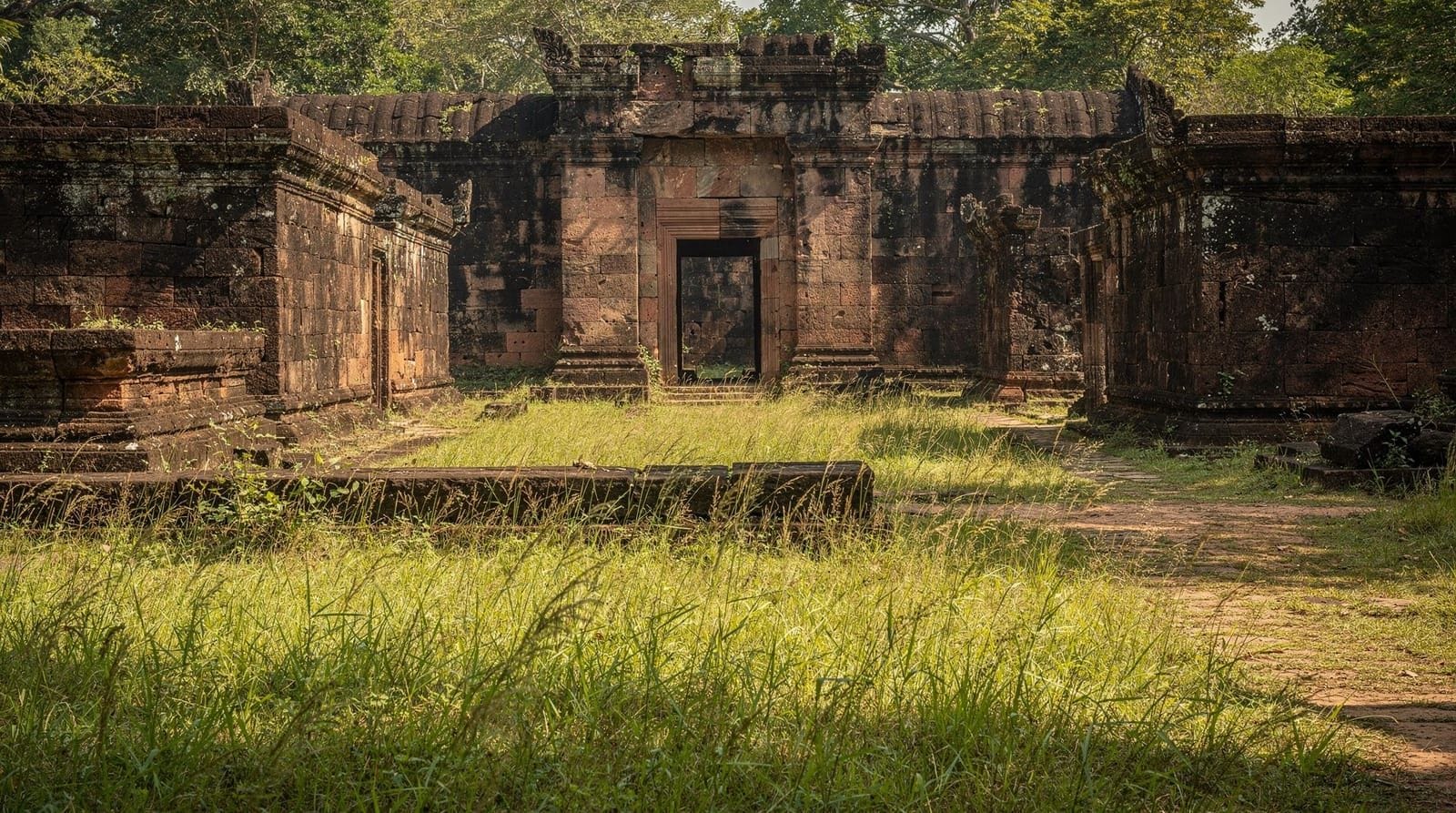
Koh Ker was briefly the capital of the Khmer Empire in the 10th century under King Jayavarman IV, and its centerpiece, Prasat Thom, is a seven-tier sandstone pyramid unlike anything on the main Angkor circuits — a genuinely different architectural style from the temple-mountain layouts at Angkor Wat or Bayon. A wooden staircase allows visitors to climb to the pyramid’s summit for a wide view over the surrounding forest. Beyond Prasat Thom, Koh Ker’s wider site includes dozens of smaller, scattered structures across a forested area, many still only partially cleared or documented — most visitors focus on the pyramid and a handful of the closest secondary sites rather than attempting the full complex.
Ticket: $15, bought at Koh Ker’s own entrance gate. Not covered by any Angkor Pass tier.
Beng Mealea: the unrestored jungle temple
Beng Mealea is an 11th-century temple left largely unrestored — collapsed galleries, tumbled sandstone blocks, and jungle growth reclaiming much of the structure. It’s often compared to how Ta Prohm looked before conservation work began there; unlike Ta Prohm, Beng Mealea has had minimal restoration, so the atmosphere is rawer and more overgrown. A wooden boardwalk threads through and around the ruins, giving elevated views over the collapsed stonework without requiring visitors to scramble over unstable rubble, though some sections still involve uneven footing.
Ticket: $10, bought at Beng Mealea’s own entrance gate. Not covered by any Angkor Pass tier. Keep your ticket accessible throughout the visit, since spot checks along the boardwalk aren’t unusual given the site’s less formally staffed layout compared to the main Angkor circuits.
Angkor Wat film-set comparisons worth knowing
Beng Mealea in particular has drawn comparisons to Angelina Jolie’s 2001 film “Tomb Raider,” partly filmed at Ta Prohm rather than Beng Mealea itself, but the visual similarity — jungle roots overtaking collapsed stone galleries — is close enough that the comparison sticks in a lot of trip-planning content, sometimes creating a slight expectation mismatch for visitors who assume Beng Mealea was the actual filming location.
It wasn’t, but the atmosphere it evokes is genuinely comparable, arguably more dramatic in places given Beng Mealea’s more extensive state of collapse relative to Ta Prohm’s more selectively conserved ruins. Setting this expectation correctly beforehand — a Ta-Prohm-like atmosphere rather than a literal film location — avoids a minor but recurring point of visitor confusion.
What makes these two sites different from the main circuits
The core value proposition of a Koh Ker/Beng Mealea day is contrast, not just distance. Angkor Wat, Bayon, and even the Grand Circuit temples have been extensively restored and are managed with paved paths, clear signage, and steady visitor flow. Koh Ker and Beng Mealea sit at the opposite end of that spectrum — minimal restoration, forested surroundings, and a genuine sense of discovery that’s harder to find at the more polished main-circuit sites, especially in peak season when those temples can feel more like crowd management than exploration. This is also why both sites reward a slower pace than a checklist visit: budget real time at each rather than treating them as photo stops on the way to somewhere else.
Koh Ker’s UNESCO status and ongoing archaeological work
Koh Ker was added to Cambodia’s UNESCO World Heritage tentative list, reflecting its recognized significance as a brief but architecturally distinct Khmer capital, and active archaeological and conservation work continues at portions of the wider site — visitors may occasionally see research or restoration activity underway around some of the smaller structures beyond Prasat Thom itself, a reminder that this is a still-developing archaeological zone rather than a fully mapped and finished heritage park in the way the main Angkor circuits are. This ongoing-discovery character is part of what gives Koh Ker its distinct feel relative to the more thoroughly documented and visited main-circuit temples.
Total entrance cost for the day
Combined with a 3-day Angkor Pass used on other days of your trip, a Koh Ker and Beng Mealea day adds $15 + $10 = $25 in separate tickets — a genuinely modest addition given how far outside the standard circuits these two sites sit. Neither pass tier applies here, so don’t expect any discount for holding an Angkor Pass at either gate.
A realistic day schedule
| Time | Stop |
|---|---|
| 7:30am | Depart Siem Reap |
| 9:30am | Arrive Koh Ker |
| 11:00am | Depart for Beng Mealea |
| 12:30pm | Lunch near Beng Mealea |
| 1:15pm | Beng Mealea |
| 3:00pm | Depart for Siem Reap |
| 4:30pm | Arrive back in Siem Reap |
Lunch options near both sites are simple roadside stalls rather than destination restaurants — treat this as a day where the food is functional, not part of the experience.
Booking a tour vs. a private driver
A Koh Ker and Beng Mealea day tour bundles transport and guiding into one price and is the simplest option for most travelers, since neither site is reachable by any public transport route and the driving distances make a standard in-town tuk-tuk booking impractical. For more flexibility on timing — an earlier start, more time at one site over the other — a private Koh Ker and Beng Mealea day trip lets you set the pace rather than following a fixed group schedule.
How this fits into a longer trip
This combined day trip is the natural Day 4 addition once you’ve completed the core three-day Angkor circuit — see the 5-day itinerary, which places it right after the Small Circuit, Grand Circuit, and a Tonlé Sap floating village. For a fuller discussion of whether Koh Ker, Beng Mealea, and the other outlier temples earn their extra ticket and travel time, see our outlier temples worth visiting breakdown.
Rainy-season road conditions on this specific route
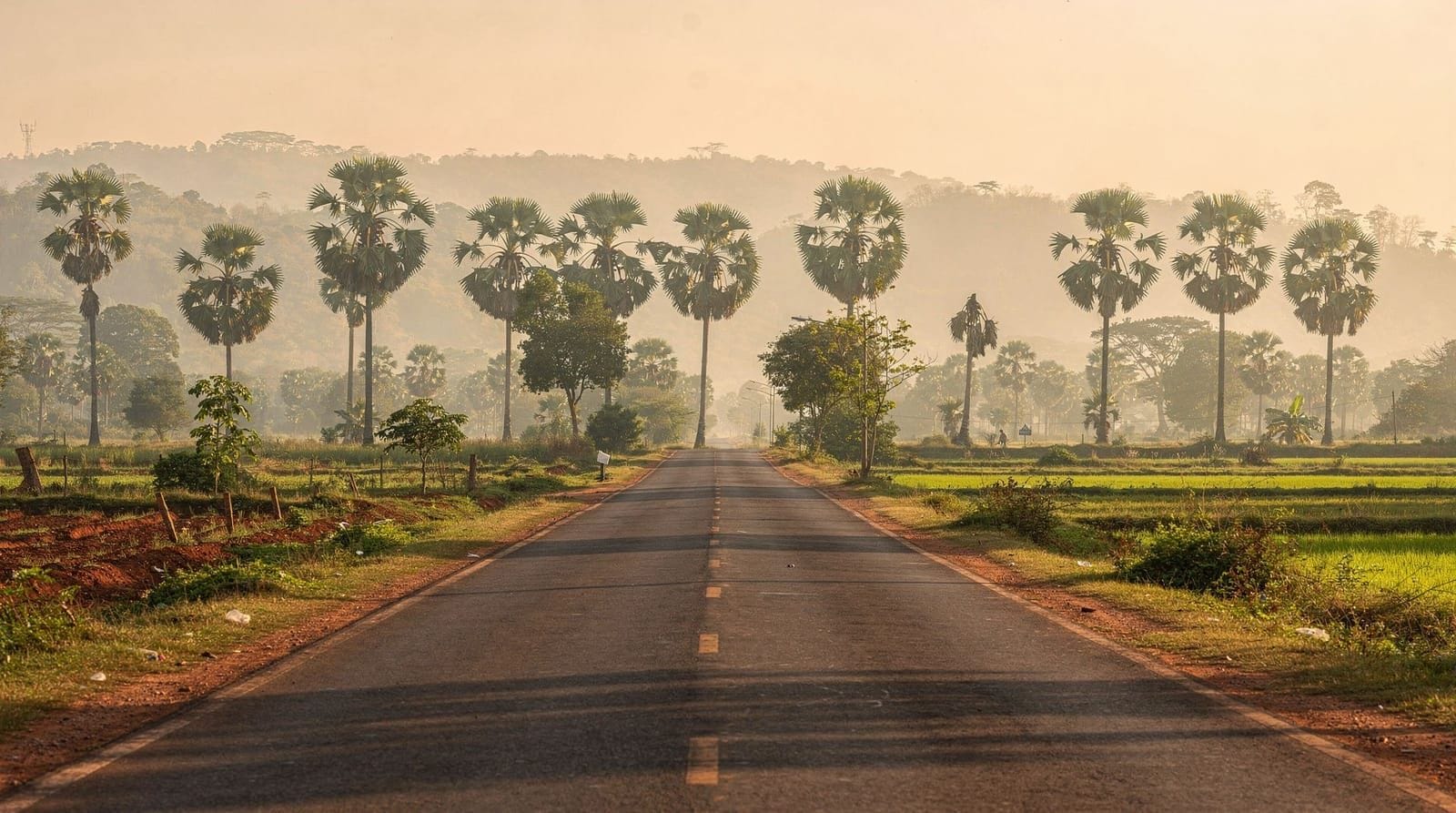
Because the roads to Koh Ker and Beng Mealea are less consistently maintained than the paved routes serving the main Angkor park, rainy season (roughly May-October) can meaningfully affect both travel time and comfort on this route more than it does inside the park itself. Sections of unpaved or poorly maintained road toward Koh Ker in particular can become muddy or, in unusually heavy rain, briefly difficult to pass, occasionally adding real time to the drive beyond the dry-season estimate.
This isn’t a reason to avoid a rainy-season visit outright — the sites themselves remain accessible in the large majority of conditions, and the surrounding jungle is genuinely more lush and atmospheric during the wet months — but it’s worth building extra schedule buffer into a rainy-season booking of this specific route, and confirming current road conditions with your driver or operator before departure if heavy rain has been forecast.
A note on Preah Vihear
Preah Vihear, another outlier temple sometimes mentioned alongside Koh Ker and Beng Mealea, sits directly on the Thailand–Cambodia border — an area currently affected by an active territorial dispute and a fragile ceasefire in place since late 2025. This is not a routine addition to a Koh Ker/Beng Mealea day; check current official travel advisories before considering a visit, and don’t treat older blog content describing it as a standard side trip as still accurate.
What to bring
Sun protection matters more here than at the main Angkor circuits, since both Koh Ker and Beng Mealea have less shaded walking than Angkor Wat’s galleries or Ta Prohm’s canopy. Sturdy shoes are worth prioritizing over sandals given Koh Ker’s staircase climb and Beng Mealea’s uneven boardwalk sections. Bring more water than you’d pack for an in-town temple day — there are fewer stalls and rest stops along the route than on the Small or Grand Circuit. A physical map or offline map download is useful, since mobile signal thins out noticeably once you’re past the main park boundary.
Booking notes and timing
Both sites open early and this route benefits from an early departure regardless of season — arriving at Koh Ker before the handful of other day-tour groups converge gives a genuinely quieter first hour. Neither site has anywhere near Angkor Wat’s crowd density even at peak times, so the early-start advantage here is more about beating the heat than beating a crowd, unlike the sunrise rush at Angkor Wat itself.
Real transport costs beyond the tour price
For travelers weighing an organized tour against arranging a private car independently, it’s worth knowing the underlying cost structure. A private car and driver for the full Koh Ker/Beng Mealea loop — roughly 185 km round trip once both legs and the return are counted — typically runs in a similar range to a Battambang day trip’s private-car cost, reflecting comparable total distance, though pricing varies by operator and vehicle type.
Organized group tours bundle this transport cost with a guide and typically a fixed group size, which usually works out cheaper per person for solo travelers or couples than arranging a private car independently, while a private driver becomes more cost-competitive for a group of three or more splitting the vehicle cost. Neither option is a clear universal winner — the calculation depends mainly on your group size and how much you value setting your own pace versus a lower per-person cost.
What’s genuinely feasible in a single day, and what isn’t
Given the roughly 5 hours of driving involved, it’s worth being explicit about the realistic limits of this day. Koh Ker and Beng Mealea themselves are comfortably feasible together, as this guide describes. What isn’t feasible on the same day: adding a third significant stop, such as Banteay Srei (itself a worthwhile detour but requiring its own meaningful time and slightly different routing), or extending the day to include Preah Vihear, which sits considerably farther and carries its own separate safety considerations covered below.
Attempting to compress a third major site into this itinerary tends to produce a rushed, unsatisfying version of all three rather than a genuinely fuller day — the two-site combination in this guide is close to the practical ceiling for a single day trip at this distance from Siem Reap.
Comparing this day trip’s demands to the main Angkor circuits
Visitors coming straight from a Small or Grand Circuit day inside the main park sometimes underestimate how different Koh Ker and Beng Mealea feel physically and logistically. The main circuits benefit from paved paths, consistent signage, and a tuk-tuk driver waiting at each stop along a well-established loop; this route involves considerably more time in the vehicle relative to time on foot, less shade and fewer rest facilities at each site, and a genuinely more remote feel once you’re past the edge of the standard park boundary.
Framing this day mentally as closer to a countryside expedition than an extension of your temple circuit sets more accurate expectations than assuming it’s simply “two more temples” on the same pattern as your Angkor Wat or Ta Prohm visits.
Guides and interpretation at both sites
Unlike Angkor Wat or Bayon, where extensive existing knowledge and abundant on-site information (plus widely available guidebooks and apps) mean a guide is more of a convenience than a necessity, Koh Ker and Beng Mealea carry considerably less on-site signage and interpretive information given their more remote, less-visited status.
A knowledgeable guide adds proportionally more value at these two sites than at the main circuits — explaining Koh Ker’s brief but historically significant role as the Khmer Empire’s capital under Jayavarman IV, and Beng Mealea’s uncertain original purpose and dedication, which remains less definitively documented than most major Angkor-era temples. Travelers with a genuine interest in the history behind what they’re seeing, rather than just the visual experience, get meaningfully more out of a guided visit here than at temples with abundant independent information available.
Frequently asked questions about Beng Mealea and Koh Ker day trip
Are Koh Ker and Beng Mealea covered by the Angkor Pass?
No. Both sites sit outside Angkor Enterprise's jurisdiction and require their own tickets bought at their own gates — Koh Ker $15, Beng Mealea $10 — regardless of which Angkor Pass tier you hold. See our full Angkor Pass guide for what the pass does and doesn't cover.Which should I visit first, Koh Ker or Beng Mealea?
Most day trips visit Koh Ker first since it's the farther site (about 2 hours from Siem Reap), then stop at Beng Mealea on the return route (about 1.5 hours from Koh Ker, and closer to Siem Reap from there). This avoids backtracking.How much walking is involved at each site?
Koh Ker involves a genuine climb up Prasat Thom's seven-tier pyramid via a wooden staircase, plus walking between scattered smaller structures across a forested site. Beng Mealea is explored via a wooden boardwalk through collapsed galleries, less strenuous but with uneven footing in places.Is a private driver necessary, or can I do this by public transport?
A private driver or organized tour is the practical choice — there's no public transport route covering both sites, and the driving distances (roughly 120km to Koh Ker, then another 65km to Beng Mealea) make a hired tuk-tuk for the whole day impractical compared to a car.Is Preah Vihear worth adding to this route?
Not currently. Preah Vihear sits directly on the Thailand–Cambodia border, an area affected by an active territorial dispute and fragile ceasefire — check current official travel advisories before considering it, and don't treat it as a routine addition to a Koh Ker/Beng Mealea day.How does this compare to visiting Angkor's main circuits?
Both sites are quieter and far less restored than the Small or Grand Circuit temples — expect fewer visitors, less crowd management, and a more raw, unrestored feel, especially at Beng Mealea.
Top experiences
Bookable activities with verified prices and instant confirmation on GetYourGuide.


More tours on Viator
Top-rated experiences with verified reviews, bookable on Viator (a Tripadvisor company).