Angkor in one day: how to see the essentials
Angkor: One-Day Small Circuit Tour, Angkor Wat, Bayon and Ta Prohm
Can I see Angkor Wat properly in just one day?
Yes, if you focus on the Small Circuit only — Angkor Wat, Bayon and Ta Prohm — starting at sunrise. Trying to add the Grand Circuit or an outlier temple like Banteay Srei on the same day means rushing every stop; one focused day covers the highlights well, two spreads them out comfortably.
The reality of one day at Angkor
Angkor Archaeological Park covers over 400 square kilometers and holds dozens of individually significant temples — trying to see “Angkor” in a single day the way a checklist implies is the fastest route to a disappointing, exhausting visit. The honest version of a one-day Angkor plan isn’t “see everything,” it’s “see the three or four temples that define the site well, at a pace that lets each one register.” Done right, that’s Angkor Wat, Angkor Thom’s Bayon, and Ta Prohm — the Small Circuit’s core — and it’s genuinely enough to leave with a real sense of what Angkor is.
The route, hour by hour
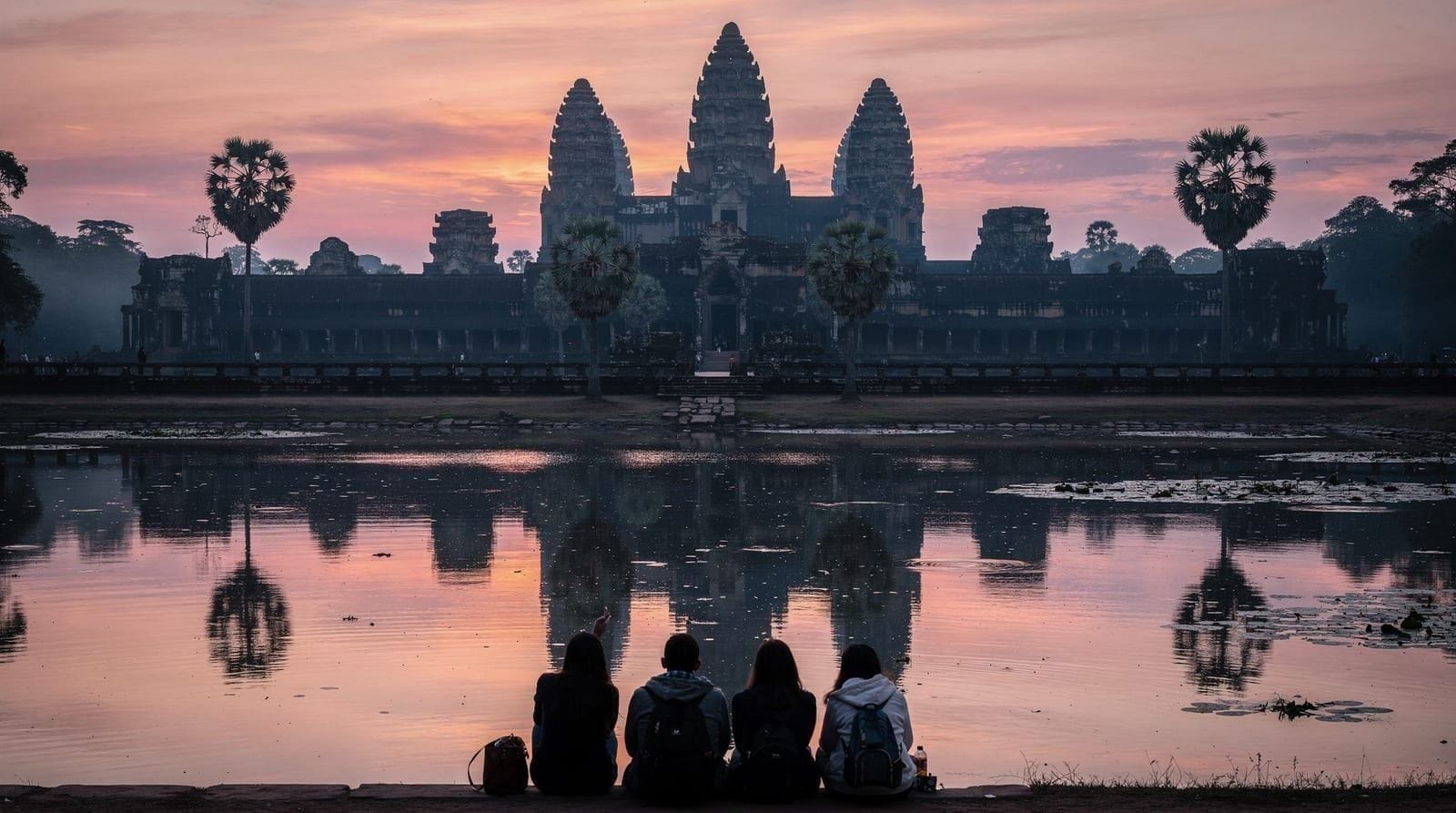
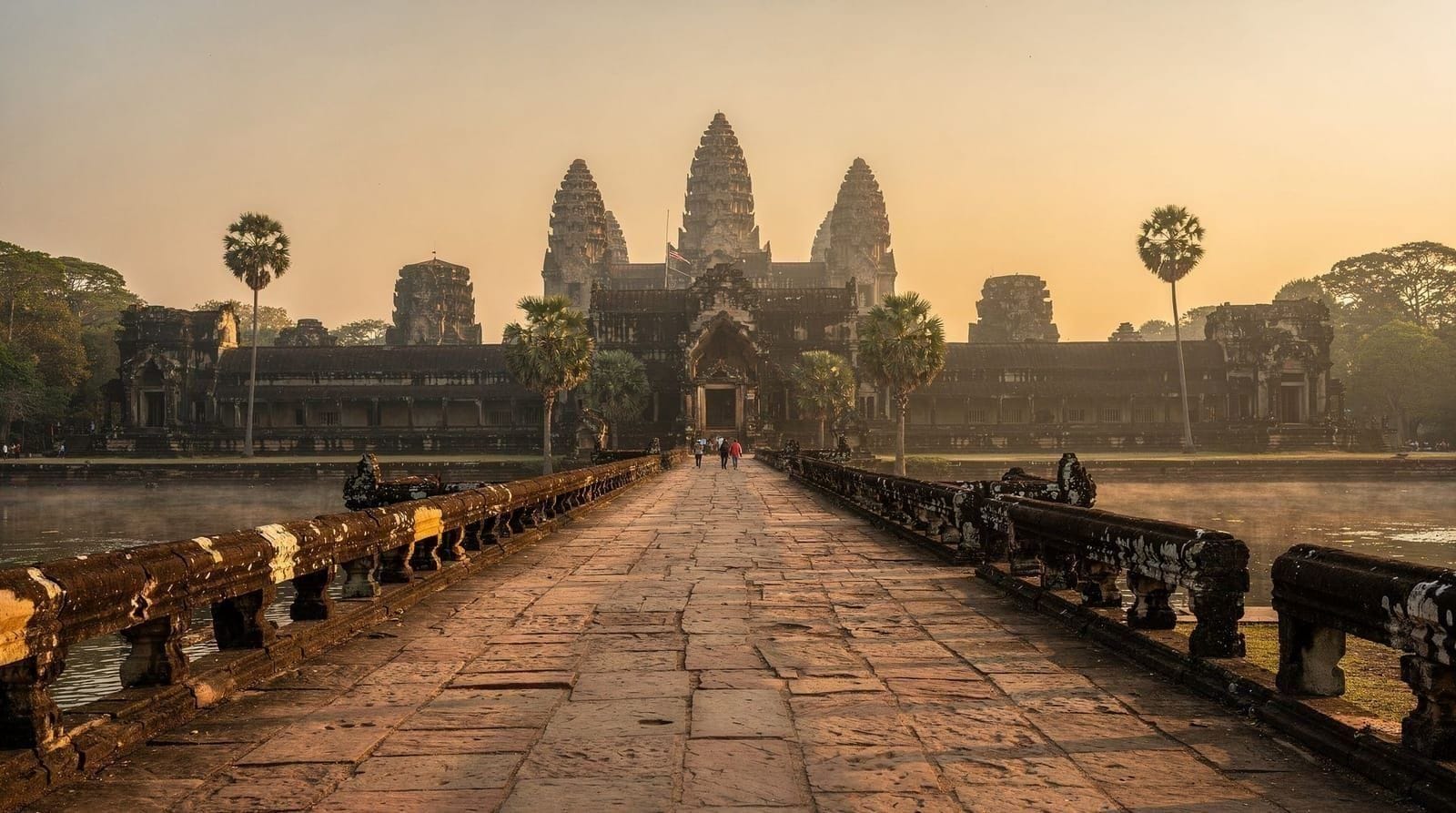
5:00am — Park entry, Angkor Wat. Arrive at the gate as it opens and walk the causeway to the reflecting pools for sunrise, typically landing between 5:45 and 6:15am depending on season. See our sunrise guide for pool choice and crowd timing specifics.
6:30-8:00am — Angkor Wat’s inner galleries. Once the immediate sunrise crowd disperses toward the exits or toward Angkor Thom, spend an hour or more inside the temple itself — the bas-relief galleries wrapping the outer enclosure depict scenes from Hindu epics in extraordinary detail, and the climb to the upper Bakan sanctuary (dress code strictly enforced here) rewards an early visit before the queue for the summit staircase builds.
8:30-10:30am — Angkor Thom and Bayon. A short drive brings you to Angkor Thom’s South Gate, one of five monumental gates into the walled royal city, flanked by rows of stone figures pulling a mythical serpent. Inside, Bayon’s 200-plus enormous carved faces are the morning’s second must-see stop; budget 45-60 minutes here alone, plus time for the nearby Baphuon and the Terrace of the Elephants if the pace allows.
11:00am-12:30pm — Lunch. Small restaurant clusters along the route between Angkor Thom and Ta Prohm serve straightforward Khmer and Western lunches at reasonable prices — a genuine break here, rather than pushing straight through, keeps the afternoon from feeling rushed.
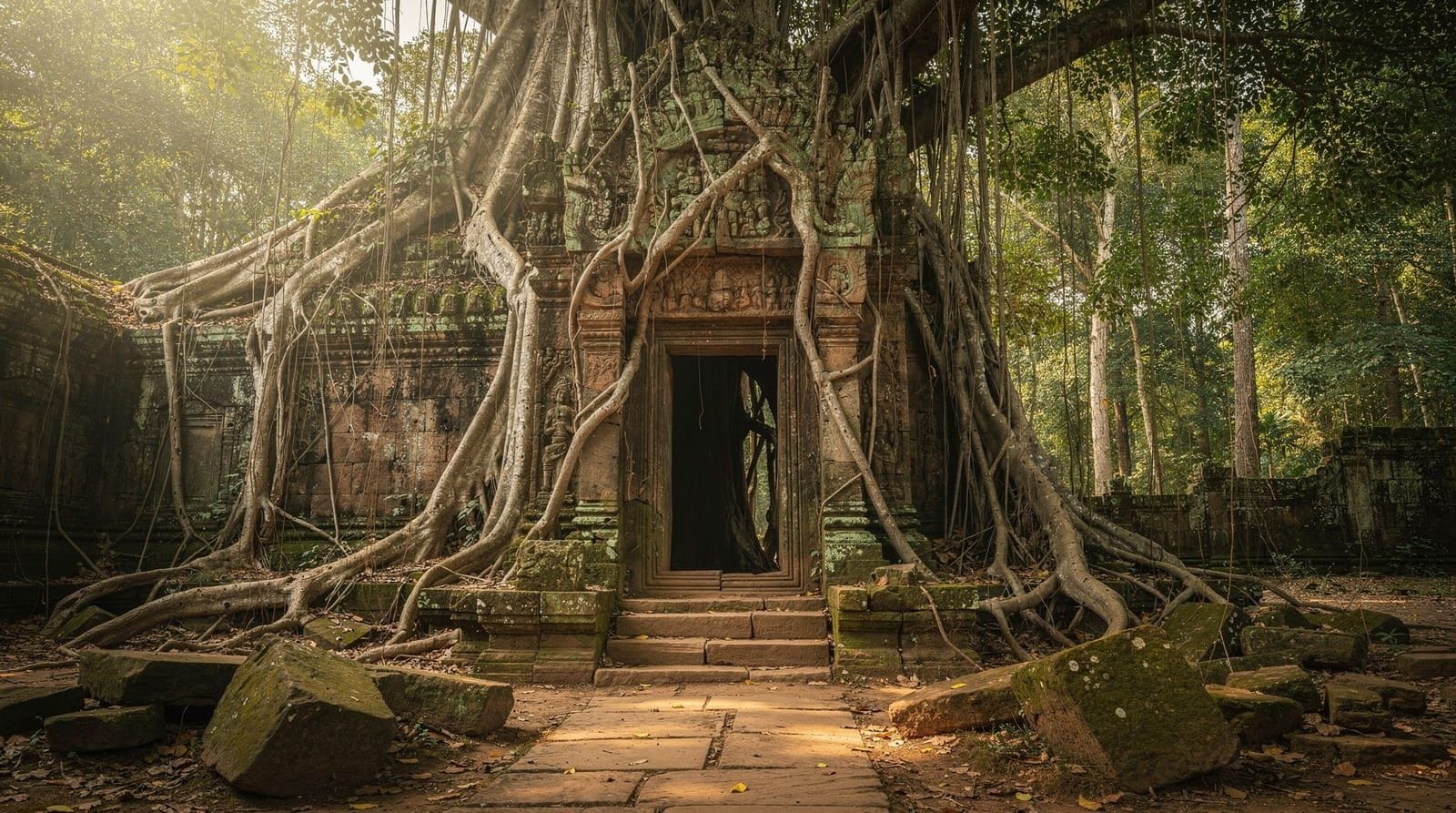
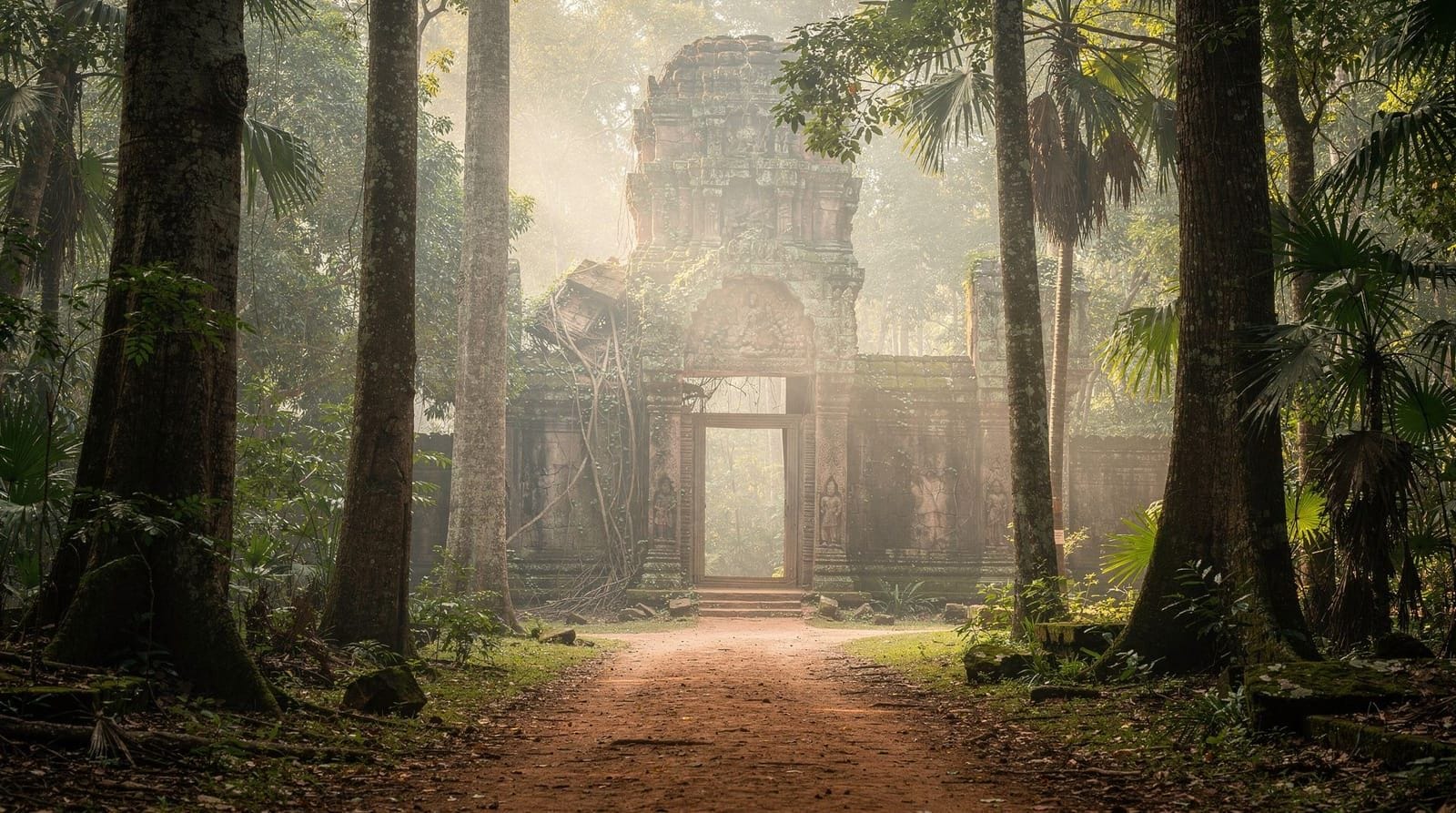
1:00-3:00pm — Ta Prohm. The jungle-reclaimed temple where strangler fig roots grow directly through the stonework, and the single most photographed non-Angkor-Wat site in the park. Afternoon light filtering through the tree canopy works well here, though midday crowds can be dense — 15-20 minutes of patience for a clear shot at the most photographed root-and-stone combinations is normal.
3:30pm onward — Optional extension or rest. If energy allows, a quick stop at Ta Keo or Banteay Kdei on the way out extends the day without major extra driving. Otherwise, heading back to town by mid-afternoon for a rest before dinner is the more sustainable choice after a 5am start.
What to skip if you only have one day
The Grand Circuit (Preah Khan, Neak Pean, Pre Rup) and any outlier temple (Banteay Srei, Beng Mealea, Koh Ker, Phnom Kulen) don’t fit into a single well-paced day alongside the Small Circuit’s core three. Trying to add even one of them typically means cutting 20-30 minutes from Angkor Wat, Bayon or Ta Prohm to make the driving time work — a bad trade, since those three temples are exactly what most one-day visitors came for. If a second day is possible at all, even a shortened one, it’s a better use of time than compressing a fourth major stop into day one. Our Small Circuit vs. Grand Circuit guide covers how to split things properly across two days if your schedule allows even a partial extension.
For a broader view of which temples are worth prioritizing regardless of how many days you have, see Angkor temples worth visiting — a decision guide rather than a fixed route.
If your one day falls in rainy season
A one-day visit during rainy season (May-October) carries its own specific planning considerations beyond the general weather note above. Showers in this region tend to be short and intense rather than day-long, often clustering in the afternoon — which means a rainy-season one-day plan that front-loads the more crowd-sensitive stops (sunrise, Angkor Thom) in the morning and treats Ta Prohm’s afternoon slot as more weather-flexible tends to work better than a rigid hour-by-hour schedule.
Ta Prohm in particular photographs beautifully in the diffuse light right after a rain shower, when wet stone and foliage take on a deeper, richer color than under harsh dry-season sun — treat a brief afternoon shower as a photography opportunity rather than purely an inconvenience.
What visitors typically regret about a one-day visit
The most common regret reported by visitors after a rushed single day at Angkor isn’t missing a specific temple — it’s not having spent enough unhurried time at the ones they did see. A 15-minute stop at Ta Prohm to get “the shot” rather than 45 minutes to actually wander its quieter corners is the kind of compromise that seems reasonable in the moment but reads as a missed opportunity in hindsight. If your schedule allows even a small amount of flexibility, err toward seeing fewer temples more thoroughly rather than padding the day with an extra stop at the expense of time at the core three.
Guided vs. self-arranged for a single day
A guided Small Circuit tour is a reasonable choice for a one-day visit specifically, since it removes the planning overhead of sequencing gates, drivers and lunch stops when you have zero slack to lose to logistics. A half-day option with a local guide also works if you’d rather split sunrise and the circuit across a morning-only push and spend the afternoon in town instead of pushing through Ta Prohm on tired legs. Either way, agree on the exact stop order and lunch timing with your driver or guide before 5am, not once you’re already at the gate.
Alternative one-day routes worth considering
The sunrise-to-Ta-Prohm sequence above is the standard, and for good reason, but two variations are worth knowing about. If sunrise isn’t a priority for you specifically, starting at Angkor Thom around park opening and visiting Bayon before the 8:30am tour-bus wave arrives gives you the same three core temples with a calmer Bayon experience, at the cost of skipping the sunrise moment — see our avoiding the crowds guide for the full logic behind this reversed order.
Alternatively, if you’re staying in Siem Reap only one full day but arriving the evening before, buying your Angkor Pass that first evening and getting a genuinely early 4:45am start maximizes every minute of the single day you have, versus losing 15-20 minutes to a same-morning ticket purchase.
What a one-day visit costs
Budget the Angkor Pass 1-day tier at $37 as your baseline entrance cost, plus transport — a full-day tuk-tuk hire runs roughly $15-20 if arranged independently, negotiated the evening before. A full-day sunrise-to-sightseeing tour bundles transport, sometimes lunch, and occasionally a guide into a single price, which can work out similarly or slightly higher than arranging pieces independently, with the tradeoff of less logistics overhead on a day where you have zero time to spare fixing problems.
If weather disrupts your one day
A single-day visit has no slack for a rained-out morning the way a multi-day pass does — if you wake to heavy rain on your one Angkor day, the realistic options are pushing through anyway (Angkor’s stone temples handle rain reasonably well, and a rain-cooled visit avoids the worst heat) or, if your schedule genuinely allows zero flexibility, accepting a compromised day. This is one of the strongest arguments for building in a second day if your overall trip length allows even one extra night in Siem Reap — a single point of weather failure against a single ticket is a real risk that a 3-day pass eliminates almost entirely.
Fueling and pacing a long, hot day
A 5am start followed by walking-heavy temple visits through the hottest part of the day is genuinely tiring, and pacing matters as much as route choice. Carry more water than feels necessary — 1.5-2 liters per person is a reasonable minimum, more in the hottest months (March-May) — and don’t skip the lunch break described above even if you feel you could push through; a proper seated rest with food meaningfully improves energy and mood for the afternoon’s Ta Prohm visit.
Electrolyte packets or coconuts, widely available from vendors near the major temples, help more than plain water alone once you’ve been sweating for several hours. If anyone in your group is prone to heat fatigue, building in a genuine 20-30 minute shaded rest between Angkor Thom and Ta Prohm, rather than pushing straight through, prevents the kind of exhaustion that colors the whole day negatively in hindsight.
What you sacrifice at one day vs. two or three
| Trip length | What’s covered | What’s sacrificed |
|---|---|---|
| 1 day | Angkor Wat, Bayon, Ta Prohm (Small Circuit core) | The Grand Circuit’s quieter temples, any outlier temple, unhurried pacing at any single stop |
| 2 days | Small Circuit + Grand Circuit or an outlier temple | Depth at every temple is still capped by having only one shot at each; no room for a rained-out day |
| 3 days (3-day Angkor Pass) | Small Circuit, Grand Circuit, plus Banteay Srei or a floating village | Real slack to revisit a favorite temple in different light, and a buffer against one bad-weather day |
This is the clearest way to frame the tradeoff: one day isn’t a compromised version of a longer visit so much as a genuinely different kind of trip, optimized for depth at three temples rather than breadth across the park. If your total Siem Reap time allows even one extra day, moving from the one-day plan to a two-day version (see the 3-day itinerary for how a third day extends it further) delivers a disproportionately better experience relative to the modest extra cost of one more night and one more Angkor Pass day.
A realistic mindset for the day
One day at Angkor, done at the Small Circuit’s pace, is genuinely enough to understand why the site draws the crowds it does — but it’s not enough to “do Angkor” in the completionist sense some blogs imply is achievable. If this trip is a one-time visit, prioritizing depth at three temples over a rushed pass through six or seven is consistently what leaves visitors satisfied rather than exhausted and vaguely disappointed by evening.
Frequently asked questions about Angkor in one day
What's the best route for a single day at Angkor?
Start at Angkor Wat for sunrise (park opens 5:00am), explore its inner galleries once the crowd thins around 6:30-7am, then move to Angkor Thom (South Gate, Bayon, Terrace of the Elephants) mid-morning, and finish at Ta Prohm in the early-to-mid afternoon before the light gets too harsh. This is the Small Circuit's core, in the order most tuk-tuk drivers and guides default to.Should I skip sunrise if I only have one day?
Skipping sunrise frees up roughly two hours you could spend elsewhere, but it also means starting your day into the peak 9am-noon crowd window at Angkor Wat instead of ahead of it. Most one-day visitors still find sunrise worth the early start, even without a full circuit afterward — it's the calmest Angkor Wat will feel all day.Is one day enough to add Banteay Srei or Beng Mealea?
Not comfortably. Banteay Srei alone adds roughly 2 hours of round-trip driving on top of the Small Circuit's own demands, and Beng Mealea is over an hour each way. Squeezing either in means cutting time at Angkor Wat, Bayon or Ta Prohm — the three temples most one-day visitors specifically came to see. If you can add a second day instead, do that rather than compress a fourth stop into day one.What should I eat during a one-day Angkor visit?
Small restaurant clusters sit near Ta Prohm and along the road between Angkor Thom and the main circuit, serving simple Khmer and Western lunch options at reasonable prices — a practical, unhurried lunch stop between the morning's Angkor Thom visit and the afternoon at Ta Prohm works well without derailing the day's pace.Do I need a guide for a single day at Angkor?
Not strictly, but a guide adds meaningful context to Bayon's 200+ carved faces and Angkor Wat's bas-relief galleries that's easy to miss walking through alone with just a map. See our guide-or-no-guide breakdown for the tradeoffs if you're deciding for a single tightly-packed day specifically.
Top experiences
Bookable activities with verified prices and instant confirmation on GetYourGuide.


More tours on Viator
Top-rated experiences with verified reviews, bookable on Viator (a Tripadvisor company).