Common Siem Reap scams and how to actually avoid them
Siem Reap is, by most measures, a low-crime destination for tourists — the real risks aren’t dangerous, they’re financial and mostly avoidable once you know the patterns. This is a straightforward list of what actually comes up repeatedly in traveler reports, not a fear-mongering “everyone is out to get you” piece. Most people, including most tuk-tuk drivers and vendors, are not running scams. A specific, recognizable minority are, and this is how to spot them.
The tuk-tuk day-rate padding scam
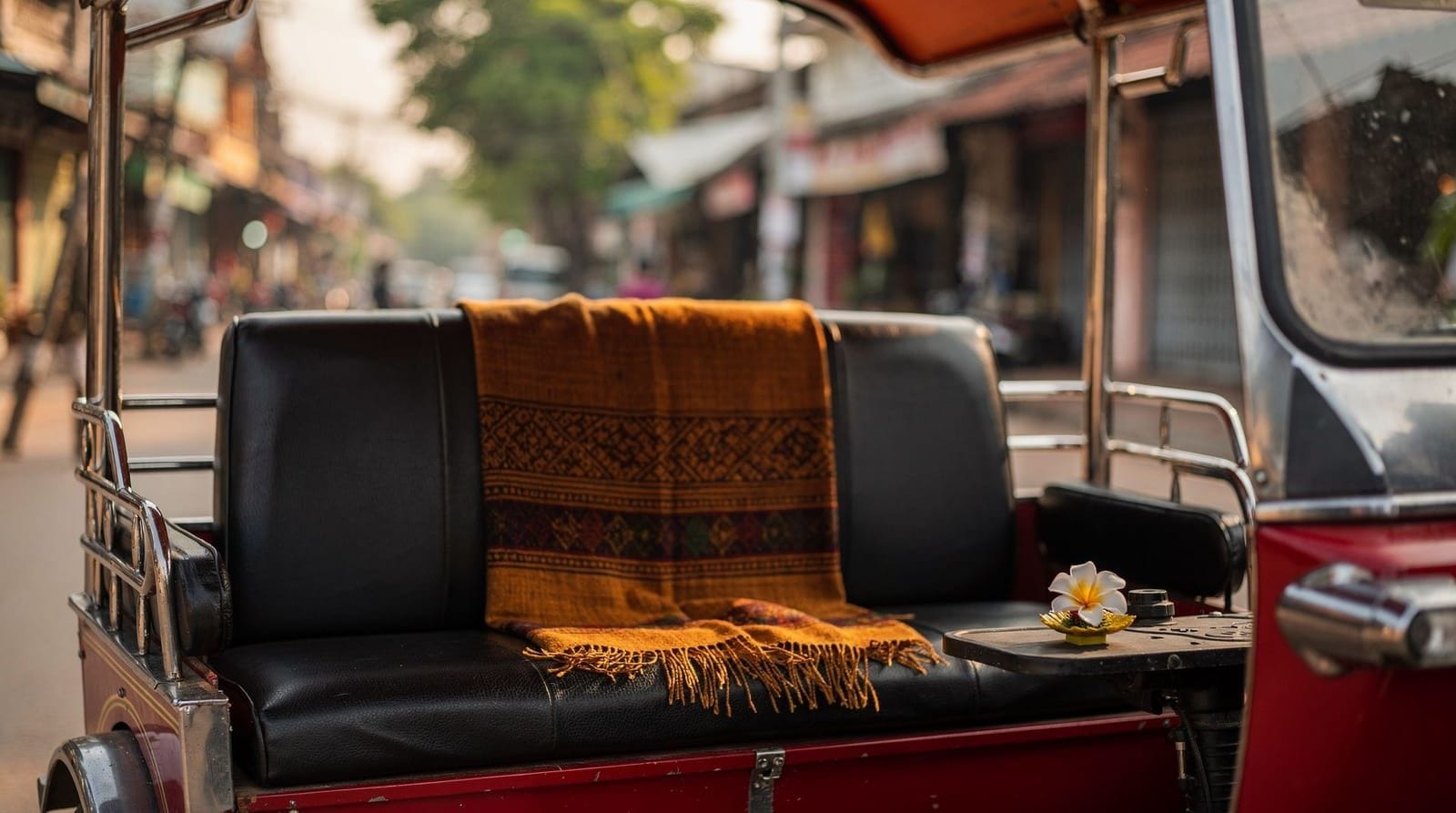
The pattern: a driver quotes a low day rate, then partway through the day suggests — or insists — on stopping at a gem shop, silk shop, or tailor “for just five minutes,” collecting a commission for bringing tourists through the door. Sometimes this escalates to pressure or a changed attitude if you decline. The fix is simple and works almost every time: agree the exact day rate and itinerary before you get in the tuk-tuk, state clearly that you’re not interested in shop stops, and if a driver pushes back hard on that condition before you’ve even started, choose a different driver. The tuk-tuk pricing guide has the full negotiating script.
The “no network” fare hike
Reported with ride-hailing apps (Grab, PassApp) more than with traditional tuk-tuks: a driver accepts a fare at the app’s quoted price, then claims the app “isn’t working” or there’s “no network” once you’re in the vehicle, demanding a higher cash fare instead. If this happens, you can insist on the app rate, take a photo of the quoted fare screen before the ride starts as a reference, or simply end the ride and rebook if the driver won’t honor it. This is far from universal — most ride-hailing trips in Siem Reap are uneventful — but it’s common enough to know the pattern.
Staged “orphanage” and charity stops
This is specifically associated with Chong Kneas floating village tours, though it can appear elsewhere. The pattern: a tour stops at what’s presented as an orphanage or school, with a strong push to buy supplies (often overpriced) or donate cash on the spot. Legitimate child welfare organizations in Cambodia generally discourage drop-in tourist visits to children’s institutions entirely, for child-protection reasons — a “spontaneous” stop framed as a heartwarming charitable moment is itself a red flag, not a feature.
If you want to support legitimate causes in Cambodia, research established, vetted organizations in advance rather than donating on the spot during a tour stop. My floating village tour review covers this specific pattern in more detail.
Angkor Pass resellers and “helper” scams
The Angkor Pass is sold exclusively by Angkor Enterprise, at the official checkpoint on Vithei Charles de Gaulle or online at angkorenterprise.gov.kh, at fixed prices ($37/$62/$72). Any site, agent, or person offering to sell it at a markup, or offering to “help” you buy it for a fee, is adding an unnecessary cost to something that’s straightforward to buy yourself. This pattern shows up most in pre-trip online searches — third-party sites ranking for “Angkor Wat tickets” that aren’t the official government site. The official vs. resellers guide covers how to spot these before you pay.
E-visa reseller sites
The same pattern applies to Cambodia’s e-visa: only evisa.gov.kh is official, priced at $30. Search results for “Cambodia visa” or “Cambodia e-visa” routinely surface third-party sites charging a markup for a service you can complete yourself directly. Double-check the URL before entering any payment information — this is a well-documented pattern across many countries’ e-visa systems, not unique to Cambodia, but worth flagging explicitly since Cambodia’s SERP is particularly crowded with these lookalikes. See the e-visa guide for the direct official link and process.
Fake “visa stamping fee” requests
Occasionally reported at land border crossings rather than the airport: an official or someone presenting as one requests an unofficial “stamping fee” or “processing fee” in cash beyond the standard visa cost. Legitimate visa and entry fees at Cambodia’s official checkpoints don’t include informal cash add-ons. If this happens, politely ask for a receipt — legitimate fees always come with documentation, and the request for an undocumented cash payment is itself the signal something’s off.
Overpriced or double-priced floating village boats
Boat rides at any of the three floating villages are typically priced per boat, not per person, and a small number of operators exploit this by quoting an unclear price upfront and then charging a surprising total once you’re already on the water. Confirm the total price — not just a per-person estimate — before boarding, at whichever village you visit. My floating village tour review has the specific breakdown by village.
Damaged or “unacceptable” currency
Not a scam exactly, but a common source of frustration: US dollar bills with even minor tears, heavy creases, or marks are sometimes refused by vendors and money changers in Cambodia, a stricter standard than many travelers expect from their home country. Check your USD bills before you travel, and avoid accepting visibly damaged bills as change where possible, since you may struggle to spend them onward.
Fake “guides” at temple entrances
Unlicensed individuals occasionally approach visitors near temple entrances offering guiding services, sometimes implying an official affiliation with the site that doesn’t exist. Legitimate licensed guides are generally arranged through your tour operator, hotel, or a recognized booking platform in advance — a licensed guide won’t need to solicit you at the gate. If you want a guide and haven’t arranged one, ask your hotel or the ticket checkpoint staff for a legitimate referral rather than accepting an unsolicited offer on the spot.
The general rule that covers most of these
Nearly every pattern above shares a common thread: pressure to decide or pay quickly, without time to verify, confirm a total price, or check an official source. Slowing down — asking for a written or displayed price, checking a URL is genuinely official, declining an unscheduled stop — defuses almost all of these before they become a real problem. None of this should discourage you from visiting; it’s a short list precisely because these are the well-documented, recurring patterns, not evidence of a uniquely risky destination.
Frequently asked questions about Siem Reap scams
Is Siem Reap generally safe for tourists?
Yes — the risks documented here are financial and avoidable scam patterns, not indicators of dangerous crime. Most visitors, drivers, and vendors have no involvement in any of these patterns.
What’s the single most common scam a first-time visitor should watch for?
Tuk-tuk day-rate padding through unscheduled shop stops — agree the rate and itinerary before you get in, and it’s almost entirely avoidable.
Where should I buy the Angkor Pass to avoid reseller markups?
Only at the official Angkor Enterprise checkpoint on Vithei Charles de Gaulle or online at angkorenterprise.gov.kh — never through a third-party site or “helper” service.
Should I donate to an orphanage I visit on a tour?
Research established, vetted Cambodian child welfare organizations in advance rather than donating during an unscheduled tour stop — legitimate organizations generally discourage drop-in tourist visits to children’s institutions for child-protection reasons.
More tours on Viator
Top-rated experiences with verified reviews, bookable on Viator (a Tripadvisor company).