Is Siem Reap worth visiting? An honest answer
Siem Reap: Angkor Wat Sunrise Small-Group Tour
Is Siem Reap worth visiting?
Yes, for the vast majority of travelers — the Angkor temple complex is genuinely as impressive as its reputation, and Siem Reap town has developed a strong food, market and cultural scene around it. It's worth skipping only for travelers with under 2 days total in Cambodia (the airport transfer and pass logistics don't suit a rushed visit) or those with limited mobility on uneven stone terrain in heat.
The short answer
Yes, for nearly everyone with more than a day or two to spend in Cambodia. Angkor Wat and the wider Angkor archaeological park are one of the small handful of “world wonder” sites that reliably meet or exceed the expectations built up by decades of photos — the scale of the complex (over 400 km² across dozens of individual temple sites) and the density of detail (kilometers of carved bas-relief at Angkor Wat alone) are hard to fully absorb from images. This isn’t marketing language for the site; it’s the honest consensus among first-time visitors and repeat travelers alike.
That said, “worth visiting” depends on what you’re comparing it to and how you’ll actually spend your time there, so here’s the case broken down honestly rather than as a blanket yes.
The case for visiting
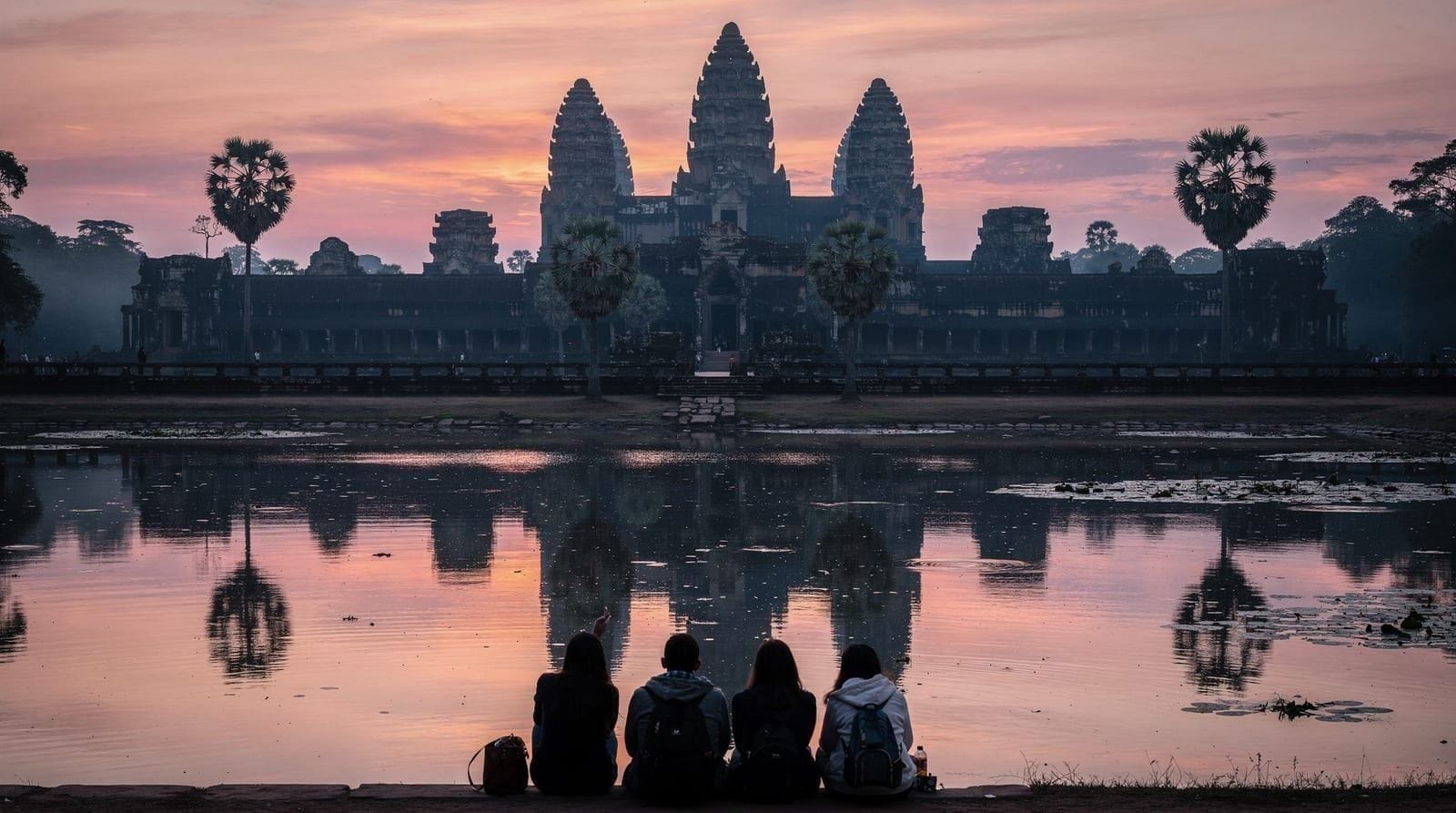
The temples exceed the hype. Angkor Wat itself, Bayon’s carved stone faces at Angkor Thom, and Ta Prohm’s tree-root corridors (the “Tomb Raider temple”) are each individually striking, and seeing all three in sequence — the standard small circuit — gives a sense of architectural range that a single iconic photo can’t. A guided sunrise tour is the classic way to experience Angkor Wat at its most atmospheric, before the midday heat and crowds build.
It’s not just one temple. Unlike many “bucket list” sites that are a single structure or view, Angkor is a multi-day destination if you want it to be — outlier temples like Banteay Srei (intricate pink sandstone carving), Beng Mealea (jungle-reclaimed ruins with minimal restoration) and Koh Ker (a step pyramid unlike anything else in the park) each offer a genuinely different experience from the core circuit.
Siem Reap town has developed real depth beyond the temples. A strong restaurant scene, night markets, cooking classes, and the well-reviewed Phare Cambodian Circus give the town its own reasons to stay an extra day or two beyond a pure temple visit.
Tonlé Sap adds a genuinely different dimension. A floating village visit — Kompong Phluk’s stilt-and-floating houses being the most commonly recommended — shows a side of Cambodian daily life that has nothing to do with temples, and rounds out a trip that would otherwise be purely archaeological.
It’s genuinely affordable relative to the experience. Even accounting for the Angkor Pass ($37/$62/$72), Siem Reap remains inexpensive by international “world wonder” standards — see the full budget breakdown for real numbers.
The honest downsides
The heat and physical demand are real. Multiple temple complexes involve walking on uneven, often ancient stone in direct sun, frequently in 30-35°C+ heat. This isn’t a stroll — a full small-circuit day is genuinely tiring, and travelers with limited mobility or heat tolerance should plan a slower pace or fewer sites per day rather than skip the trip.
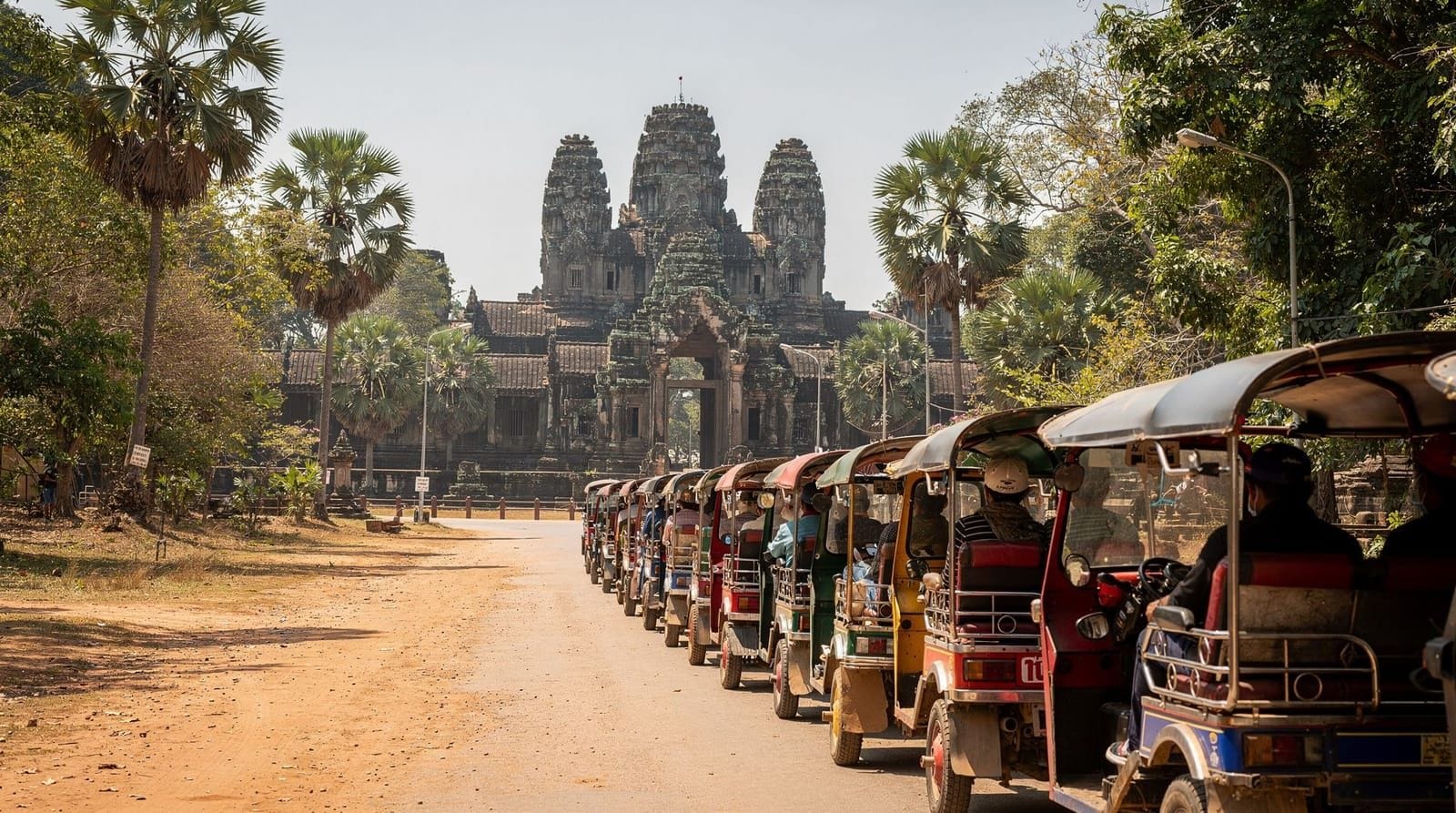
Tourist traps exist and catch first-timers. Commission-driven “traditional village” detours, overpriced tuk-tuk add-ons, and unlicensed guides operating near temple entrances are real issues — see Siem Reap tourist traps for what to watch for. None of these are reasons to skip the trip, but they’re reasons to arrive prepared rather than improvising on the ground.
It’s genuinely a multi-day commitment to feel “worth it.” A single rushed day — arriving, seeing one temple, leaving — undersells the site significantly. If your total trip time in Cambodia is under 2 days including the airport transfer (40-50 km, 45-60 minutes from the new airport), consider whether it’s the right stop for this specific trip, or whether it deserves a dedicated future visit instead.
The new airport adds a real logistics step. Since October 2023, Siem Reap–Angkor International Airport (SAI) sits 40-50 km from downtown, not the walkable in-town airport some older guides still describe. This isn’t a reason to skip the visit, but it does mean budgeting an hour each way that older trip-planning content sometimes fails to account for.
Who should think twice
- Travelers with under 2 days total available for Cambodia. The airport transfer alone eats a meaningful chunk of a very short trip; a rushed single-temple visit doesn’t do the site justice.
- Travelers with significant mobility limitations and no flexibility on pace. Angkor’s terrain is largely unaccommodating — uneven stone, stairs without handrails at several temples, minimal shade. A slower, guide-supported pace can work, but it requires planning rather than showing up expecting an easy day.
- Travelers who have already visited multiple times and are looking for something entirely new, rather than a repeat visit to see outlier temples or return during a different season — worth asking whether the marginal value of a third or fourth trip matches a first-time destination elsewhere.
For everyone else — and that’s the large majority of travelers considering the trip — the honest answer is that Siem Reap earns its reputation, and the main risk to the experience is under-preparing (heat, tourist traps, unrealistic single-day pacing) rather than the destination itself falling short.
Comparing Siem Reap to the alternative — skipping it
For travelers weighing Siem Reap against simply staying in Phnom Penh or skipping Cambodia entirely on a wider Southeast Asia trip, it’s worth being specific about what’s actually being traded off. Phnom Penh offers the Killing Fields, Tuol Sleng, the Royal Palace and a genuinely different, more urban Cambodian experience — worthwhile in its own right, but not a substitute for Angkor.
There is no equivalent temple complex anywhere else on a typical Southeast Asia route; Bagan in Myanmar is the closest comparison in scale and atmosphere, but political instability has made it a far less accessible alternative for most travelers in recent years. In practical terms, skipping Siem Reap on a Cambodia trip means skipping the single most internationally recognized reason travelers add Cambodia to their itinerary in the first place — worth acknowledging plainly rather than treating as a neutral trade-off.
What the site actually delivers versus the marketing image
Much of the pre-visit skepticism travelers arrive with comes from oversaturated single-image marketing — the classic Angkor Wat reflection-pool sunrise photo appears so often that some visitors expect a single dramatic moment rather than a multi-day, multi-site experience.
The honest recalibration worth doing before you go: Angkor Wat’s sunrise is genuinely worthwhile, but it’s one moment among many across a 2-3 day visit, and several visitors report that the quieter, less-photographed corners — a nearly empty Preah Khan on a grand-circuit afternoon, or Beng Mealea’s collapsed jungle-reclaimed galleries — leave a stronger impression than the crowded, widely-photographed sunrise pool itself. Arriving with expectations calibrated to “a rich multi-day site” rather than “one iconic photo opportunity” tends to produce a more satisfied visitor.
What repeat visitors say changes their view
Ask travelers who’ve been more than once, and a consistent pattern emerges: first visits tend to focus almost entirely on the “big three” (Angkor Wat, Bayon, Ta Prohm), and it’s the second visit — often including an outlier temple, a floating village, or a slower unstructured day in town — that produces the strongest overall impression of the destination. This is worth knowing before your first trip: if the big three alone don’t fully land for you, it doesn’t necessarily mean Siem Reap “isn’t for you” — it may mean the fuller version of the destination, beyond the postcard sites, hasn’t been seen yet.
Does the season change whether it’s worth it?
Yes, meaningfully, though not in the direction some travelers assume. The dry season (November-March) offers the most comfortable walking conditions and the classic clear-sky sunrise photos, but it’s also peak crowd season — Angkor Wat’s reflection pools can be genuinely packed at sunrise in December and January, which changes the experience from serene to logistically competitive.
The rainy season (May-October) trades some temple accessibility (a few dirt-road outliers can be briefly harder to reach after heavy rain) for dramatically thinner crowds, greener surroundings, and full moats and reflection pools at their most photogenic. Neither season makes the trip “not worth it” — but travelers prioritizing a quiet, contemplative experience over ideal weather sometimes find the rainy season the better trade, while those prioritizing comfort and predictable conditions should stick to the dry season window.
What it costs to find out for yourself
Given how central this question is, it’s worth being concrete about what “trying it” actually costs: a 3-day Angkor Pass is $62, a mid-range 3-day trip runs roughly $400-450 per person excluding flights (see the full budget breakdown), and the airport transfer from SAI adds $10-35 each way depending on how you book it. Relative to many other “bucket list” destinations — a Galápagos cruise, an African safari, an Antarctic expedition — Siem Reap is a remarkably low-cost way to test whether a genuinely world-class site lives up to its reputation, which lowers the stakes of the decision considerably compared to how it’s sometimes framed.
How to make sure it’s worth it for you specifically
- Give it at least 2-3 days, ideally using the 3-day itinerary as a starting structure rather than a single rushed day.
- Time it to avoid the worst heat if possible — see best time to visit for the November-March window most travelers find most comfortable.
- Budget the Angkor Pass and outlier tickets honestly rather than treating them as an afterthought — the pass calculator makes the real cost visible up front.
- Read the tourist-trap guide before you arrive, not after being approached by an unlicensed “guide” at a temple gate.
- Add at least one non-temple element — a floating village, a cooking class, or a Battambang day trip — so the trip isn’t purely a temple marathon.
Frequently asked questions about Is Siem Reap worth visiting? An honest answer
Is Angkor Wat overhyped?
No — it's one of the rare 'bucket list' sites that consistently meets or exceeds expectations, even among travelers who arrive skeptical after years of seeing the same photos. The scale (the temple complex covers over 400 square kilometers) and detail (kilometers of bas-relief carving) are difficult to fully convey in photos, and walking through Angkor Thom's south gate or Ta Prohm's tree-root corridors tends to land differently in person than expected.How many days do you actually need to feel it was worth it?
Two to three days is enough to feel the trip was worthwhile — one day covers the highlights but at a rushed pace; three days lets you see the small circuit, grand circuit or an outlier temple, and Tonlé Sap without exhaustion. See the full breakdown in how many days you need in Siem Reap.Is Siem Reap safe?
Yes, for standard tourist activity in town and the Angkor park. The main safety-adjacent issues are petty scams (overcharging, fake guides, pressure to visit commission-paying shops) rather than serious crime, and dengue rather than malaria as the relevant health risk in the main tourist zone. The one area requiring genuine caution is travel near the Thailand-Cambodia border, unrelated to the temples or town themselves.Is Siem Reap worth it if I'm not that interested in temples?
Less clearly, but still often yes — the town itself has a genuinely good food scene, the Tonlé Sap floating villages, cooking classes, a well-regarded circus (Phare), and countryside cycling. A visitor who does one or two temples rather than a full multi-day circuit and spends the rest of the trip on food, villages and culture can still have a strong trip; it's the extensive multi-day temple-only itinerary that suits temple enthusiasts specifically.What's the biggest letdown for visitors?
Usually one of two things: underestimating the heat and physical demand of walking multiple temple complexes on uneven stone, or falling for a tourist trap (an overpriced 'traditional village' tour, a commission-driven shopping stop, or an unlicensed guide) that a bit of research would have avoided. Neither is really about Siem Reap itself falling short — both are avoidable with preparation.How does Siem Reap compare to other Southeast Asia 'must-see' destinations?
Among the region's headline sites (Bagan, Bali, Halong Bay, Luang Prabang), Angkor is arguably the single most consistently rated by returning travelers, largely because of its scale and the sheer number of distinct temples rather than one iconic site — you're not just seeing 'the' temple, you're seeing dozens across several days if you choose to.
Top experiences
Bookable activities with verified prices and instant confirmation on GetYourGuide.


More tours on Viator
Top-rated experiences with verified reviews, bookable on Viator (a Tripadvisor company).