Siem Reap weather by month: a full-year reference
Siem Reap: Kompong Phluk Floating Village Half-Day Tour
What is Siem Reap's weather like throughout the year?
Siem Reap has a tropical climate with two seasons: a dry season (November-April, 20-39°C depending on the month) and a rainy season (May-October, 27-33°C with regular afternoon downpours). January is driest and coolest, April/May are hottest, and September is wettest with around 286mm of rain and 18 rain days. Humidity stays high year-round but peaks during the rains.
How to use this reference
This page is a month-by-month climate reference for Siem Reap — temperature, rainfall, humidity, crowd levels and Tonlé Sap water conditions for every month of the year. If you’re trying to decide which month to book, the companion best time to visit guide walks through the decision by traveler priority (comfort vs. price vs. crowds). This page is for travelers who already have a date range and want to know exactly what to expect.
Siem Reap’s climate splits into two broad seasons: a dry season (November-April) and a rainy season (May-October), with the transition months at each end carrying characteristics of both.
Month-by-month reference
January — Driest month of the year (~10mm rain), 20-31°C, low humidity. Peak season: highest hotel prices, heaviest sunrise crowds at Angkor Wat. Best overall weather conditions of the calendar year.
February — Still dry, gradually warming, 21-32°C. Peak season tapering toward shoulder pricing by month’s end. Excellent, reliable temple-touring weather with slightly thinner crowds than January.
March — Dry, noticeably hotter, up to 34°C. Shoulder season: prices easing from peak, crowds lighter, still comfortable enough for full days of temple walking with normal precautions.
April — Hottest month, 35-39°C+, still dry. Crowds thin meaningfully mid-month as heat deters some visitors. Khmer New Year (Choul Chnam Thmey), roughly 14-16 April 2026 — Cambodia’s largest domestic holiday, with water-throwing celebrations and a genuinely festive local atmosphere; some local businesses close for several days around the holiday, so confirm hours if visiting this specific week.
May — Rains begin, still very hot. Low season starts, hotel prices begin dropping. A transition month — sudden storms possible, but plenty of dry stretches remain, particularly early in the month.
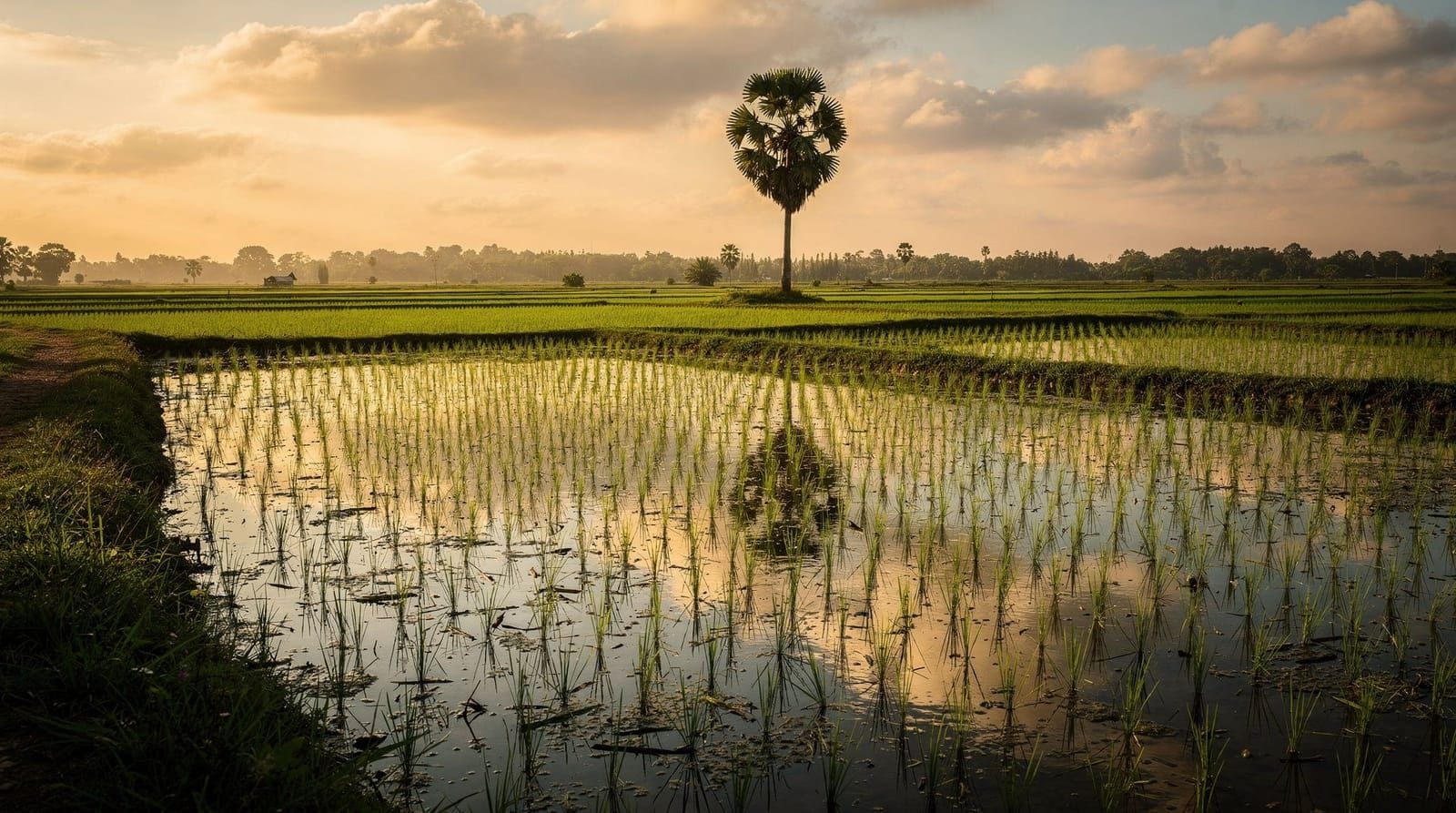
June — Rainy season established, 27-33°C, humid. Low season, among the best hotel-rate deals of the year. Landscapes turn green; Angkor Wat and other sites see noticeably fewer visitors than the dry-season peak.
July — Heavy rain periods, high humidity. Low season continues. A strong window for photographers — mist over the temples in early morning light, fewer crowds for unobstructed shots.
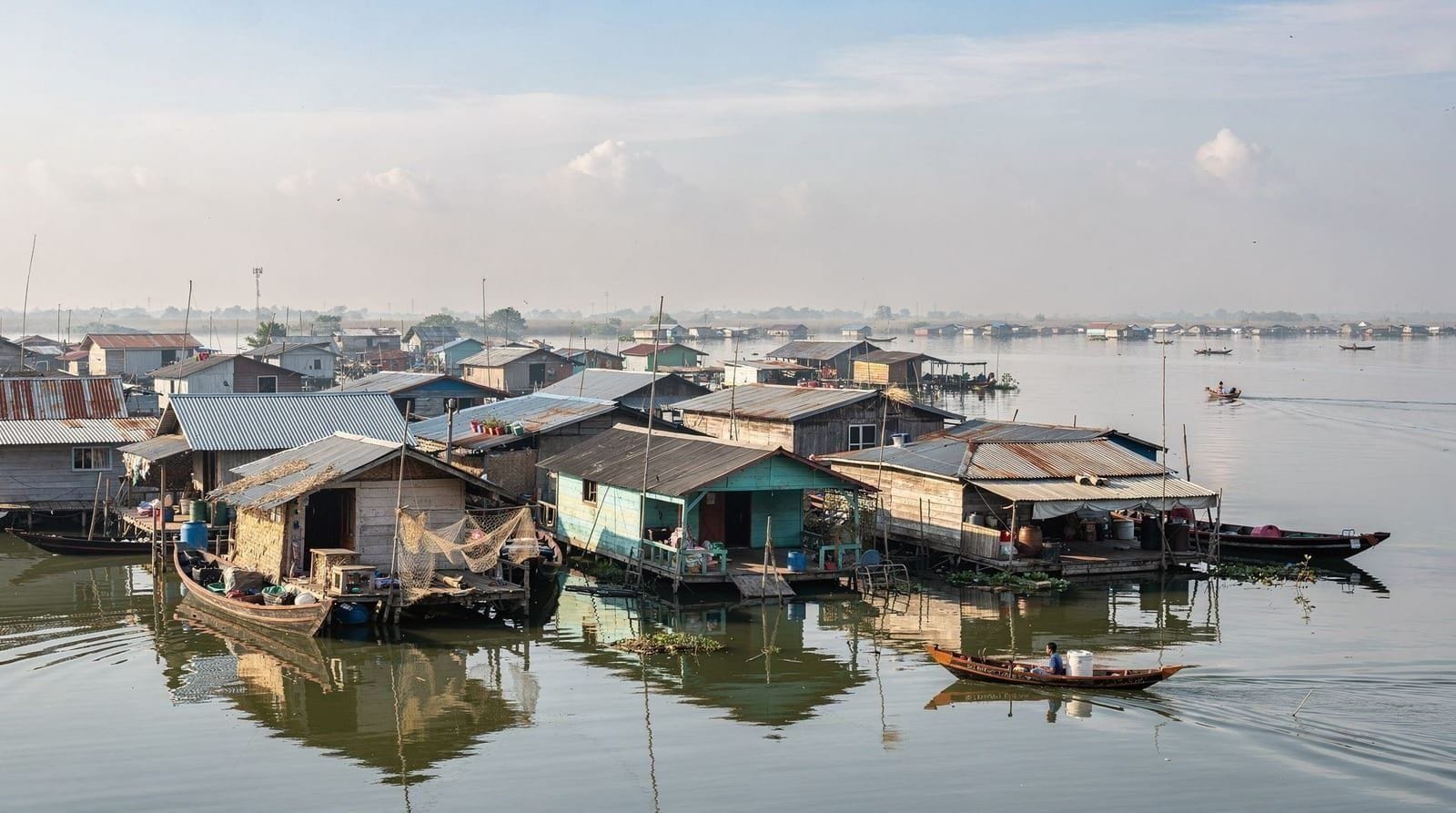
August — Peak rain intensity begins building toward September. Low season. Kompong Phluk and the other Tonlé Sap floating villages start showing their full “floating” character as water levels rise, from roughly mid-August onward.
September — Wettest month of the year (~286mm, around 18 rain days). Lowest season, cheapest hotel rates. Some rural dirt-road temples (Phnom Kulen, parts of Koh Ker) may be briefly harder to reach after the heaviest rain.
October — Rain tapering, still humid. Rebuilding season as the dry months approach. Pchum Ben, a 15-day ancestor-honoring festival (2026 main day roughly mid-to-late September, with some sources placing part of the window into early October), drives a spike in domestic family travel.
November — Dry season resumes, cooling, roughly 25-30°C. Shoulder-to-peak transition: prices rising, crowds building back up. Bon Om Touk (Water Festival), 2026: 23-25 November — centered mainly in Phnom Penh (boat races, fireworks), worth knowing about if combining both cities on the same trip.
December — Cool, dry, sunny, 20-29°C. Peak season, with Christmas/New Year premium pricing on top of the already-elevated December rates. Along with January, the single best weather window of the year.
Temperature and rainfall at a glance
| Month | Temp range | Rainfall | Season |
|---|---|---|---|
| January | 20-31°C | ~10mm (driest) | Peak dry |
| February | 21-32°C | Low | Peak dry, tapering |
| March | Up to 34°C | Low | Shoulder |
| April | 35-39°C+ | Low, dry | Hot season, Khmer New Year |
| May | Very hot | Rains begin | Transition |
| June | 27-33°C | Established rains | Low season begins |
| July | 27-33°C | Heavy periods | Low season |
| August | 27-33°C | Peak building | Low season |
| September | 27-33°C | ~286mm (wettest) | Lowest season |
| October | Cooling | Tapering | Rebuilding |
| November | 25-30°C | Low, resuming dry | Shoulder-to-peak |
| December | 20-29°C | Very low | Peak dry |
Tonlé Sap water levels across the year
The Tonlé Sap lake’s dramatic annual flood-and-recede cycle is one of the more distinctive climate-linked phenomena in the region, and it directly affects what a floating village visit actually looks like depending on when you go. Water levels are at their lowest in the driest months (roughly March-May), when the “floating village” character of sites like Kompong Phluk is far less pronounced — houses on tall stilts sit well above a receded waterline, and boat access into the flooded forest is limited or unavailable.
From around mid-August through the following months, as the rainy season fills the lake, water levels rise dramatically, and the floating and stilt houses take on their full, widely-photographed character, with boat routes extending deep into the flooded forest canopy. A floating village half-day tour booked in this higher-water window shows a genuinely different, more dramatic version of the village than the same tour in April.
What the weather means for temple photography
Each season offers a different visual character worth knowing before packing camera gear. The dry season, especially December-February, delivers the clearest skies and the most reliable golden-hour light for sunrise and sunset shots — the trade-off being the crowds competing for the same shots at Angkor Wat’s reflection pools.
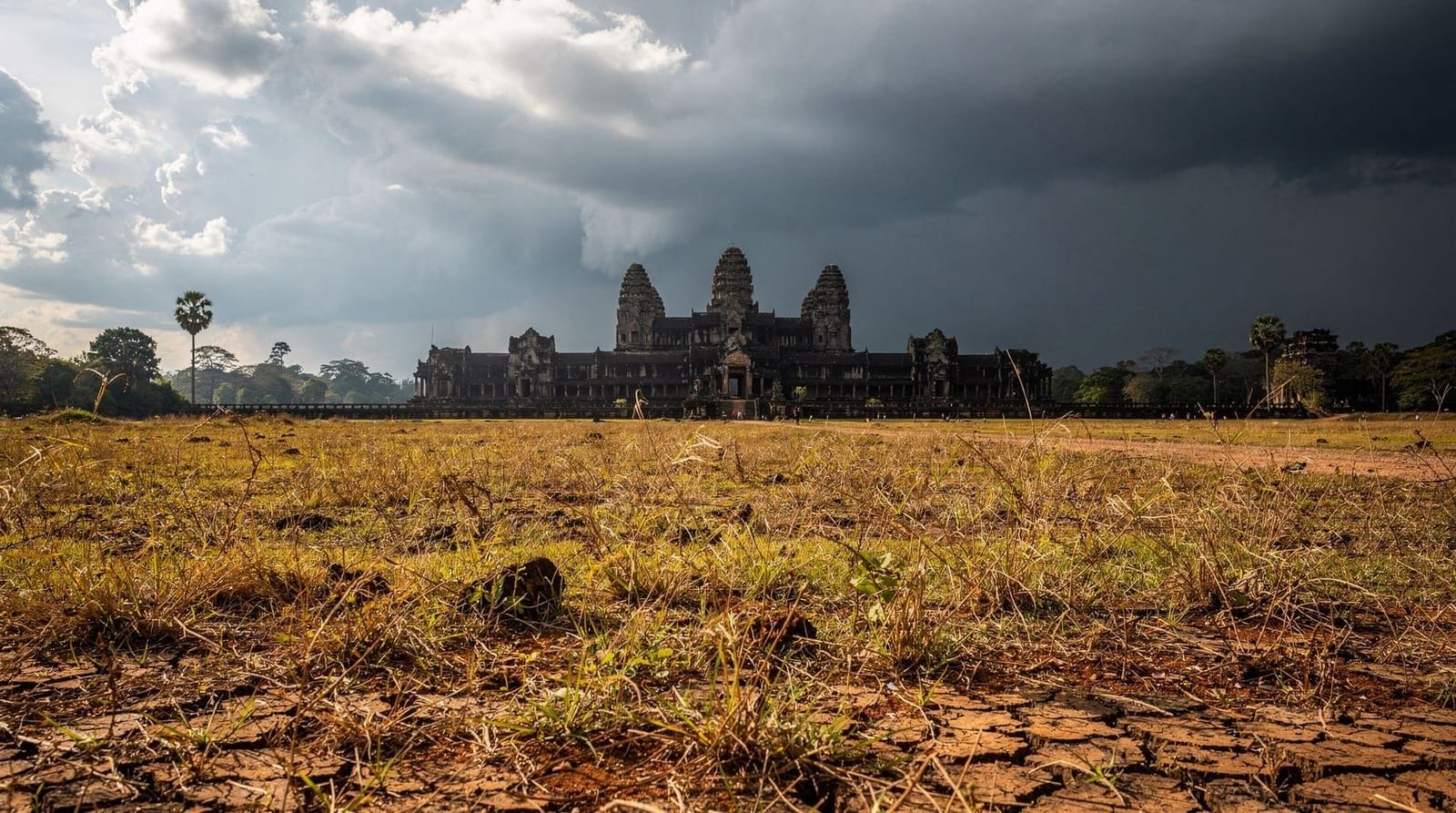
The rainy season, by contrast, offers dramatic cloud formations, mist over the temple canopy in early morning light, and — genuinely underrated — fuller moats and reflection pools than the dry season produces, since water levels in the temple’s surrounding pools can run low by the end of a long dry spell. A dedicated Angkor Wat photography tour timed for either season’s specific strengths, rather than a default dry-season booking, is worth considering for photographers with flexible dates.
Humidity — the factor temperature numbers don’t capture
Raw temperature figures understate how the rainy season actually feels compared to the dry season, because humidity swings substantially between the two. December-February combines relatively lower temperatures with the year’s lowest humidity, producing conditions that feel meaningfully more comfortable than the numbers alone suggest. By contrast, the rainy season’s high humidity means even a “moderate” 30°C day in July or August can feel more draining than a 32°C day in February — worth factoring into pacing and hydration planning regardless of which season you’re traveling in. See the packing guide for how to adjust gear by season accordingly.
Health considerations that track the weather
A few health-relevant risks in Siem Reap follow the seasonal pattern closely enough to be worth planning around specifically. Dengue, spread by day-biting mosquitoes, is present year-round but peaks during the rainy season (roughly June-October) when standing water from rain creates more breeding sites — DEET repellent and covering up matter somewhat more during these months than in the drier stretch of the year, though the precaution is worth taking regardless of season.
Heat-related risk (dehydration, heat fatigue) follows the opposite pattern, peaking in April-May’s dry heat rather than the wetter months, since the combination of high temperature and low humidity in the hot season can mask how much fluid the body is actually losing compared to the more “obviously” sweaty feeling of humid rainy-season heat. Both risks are manageable with the standard precautions covered in the packing guide, but it’s worth knowing which season shifts which risk higher.
How this data compares to nearby regional climates
Travelers arriving from elsewhere in Southeast Asia sometimes assume Siem Reap’s seasons track identically to neighboring Thailand or Vietnam, but there are meaningful local differences worth knowing. Siem Reap’s dry season runs slightly longer into what would be considered “shoulder” season in parts of coastal Vietnam, and its rainy season, while intense in September specifically, is generally less prone to the sustained multi-day tropical storm systems that can affect Vietnam’s central coast in the same months.
Bangkok, at a broadly similar latitude, follows a comparable dry/rainy split to Siem Reap, which makes combined Bangkok-Siem Reap itineraries relatively easy to plan around a single seasonal logic rather than needing to track two very different climate patterns.
A note on how these figures are used
The temperature and rainfall figures throughout this reference are seasonal averages drawn from multiple independent climate data sources, intended to set realistic expectations rather than predict any specific day. Actual conditions on any given date can vary from these averages — a “dry season” week can still see an isolated shower, and a “rainy season” week can run several days without rain. Use this page to calibrate what to pack and how to pace a trip in your travel month, not as a guarantee of specific daily conditions; check a short-range forecast closer to your actual travel dates for day-to-day planning once the broader seasonal picture from this guide has shaped your packing and scheduling decisions.
Frequently asked questions about Siem Reap weather by month
What is the coolest month in Siem Reap?
January, with temperatures ranging roughly 20-31°C and the lowest humidity of the year. December is a close second. Neither month brings genuinely cool weather by most travelers' standards, but both are meaningfully more comfortable than the hot season months.What is the hottest month in Siem Reap?
April, with highs regularly reaching 35-39°C or higher, still largely dry. May is nearly as hot while the rains begin to build toward the end of the month.What is the wettest month in Siem Reap?
September, with approximately 286mm of rainfall across around 18 rain days — the peak of the rainy season, when some dirt-road outlier temple sites can become briefly harder to reach.Does it rain all day during the rainy season?
Rarely — rainy season showers in Siem Reap are typically afternoon or evening events lasting one to a few hours, not all-day washouts. Mornings, already the preferred temple-visiting window regardless of season, are frequently dry even at the height of the rains in August and September.When is the Tonlé Sap lake and its floating villages at their most impressive?
From around mid-August through the following months, as water levels rise through and after the rainy season, Kompong Phluk and the other floating villages show their full character with stilt houses appearing to float and boat access reaching deep into the flooded forest. In the driest months (March-May), water levels drop significantly and the 'floating' character is far less pronounced.How does humidity change across the year?
Humidity stays elevated year-round in Siem Reap's tropical climate but is markedly higher during the rainy season (May-October) than the dry season, particularly December-February, which is both the driest and least humid stretch of the year.
Top experiences
Bookable activities with verified prices and instant confirmation on GetYourGuide.


More tours on Viator
Top-rated experiences with verified reviews, bookable on Viator (a Tripadvisor company).