Siem Reap travel budget: what a trip really costs
Siem Reap: Angkor Wat Private Tuk-Tuk Tour
How much does a trip to Siem Reap cost per day?
Budget travelers spend roughly $35-50/day (dorm or guesthouse, street food, shared tuk-tuk), mid-range travelers spend $80-140/day (3-star hotel, restaurant meals, private tuk-tuk), and luxury travelers spend $250+/day (5-star resort, private car and guide, fine dining). All figures are in USD, the de facto currency for tourism transactions in Cambodia, and exclude flights into Siem Reap.
Everything is priced in US dollars
Before the numbers: Cambodia uses the US Dollar as its de facto tourism currency. Hotels, the Angkor Pass, most restaurants and the majority of tuk-tuk drivers quote prices in USD, not Cambodian riel (KHR). Riel appears mainly as small change — roughly 4,000 KHR to $1 — for amounts under a dollar. This guide gives every figure in USD for that reason; if you’re arriving with euros or another currency, convert once at an ATM or exchange counter and think in dollars for the rest of the trip.
Bring US bills in reasonable condition — Cambodian businesses, including hotels and ticket counters, commonly refuse torn, heavily creased or visibly worn notes. This catches first-time visitors off guard more often than any pricing issue.
Three traveler profiles, real numbers
Backpacker: ~$35-50/day
- Accommodation: $6-15/night for a dorm bed or basic private guesthouse room, often with fan only (no AC) at the low end.
- Food: $1-3 per street food meal (noodle soups, rice dishes, fruit shakes); $3-6 for a simple restaurant meal on Pub Street’s cheaper side streets.
- Transport: shared tuk-tuk or bicycle rental (~$1-3/day) instead of a private driver; some backpackers split a private tuk-tuk 2-3 ways to bring the per-person cost down to $5-7/day.
- Angkor Pass: the fixed cost that doesn’t shrink — $37/$62/$72 regardless of budget tier.
- Alcohol/extras: $1-2 draft beers on Pub Street keep evening costs low if that’s part of the plan.
Mid-range: ~$80-140/day
- Accommodation: $35-80/night for a 3-star hotel or boutique guesthouse with AC, pool access, and breakfast included.
- Food: $5-12 per restaurant meal, with one or two nicer dinners per trip in the $15-25 range.
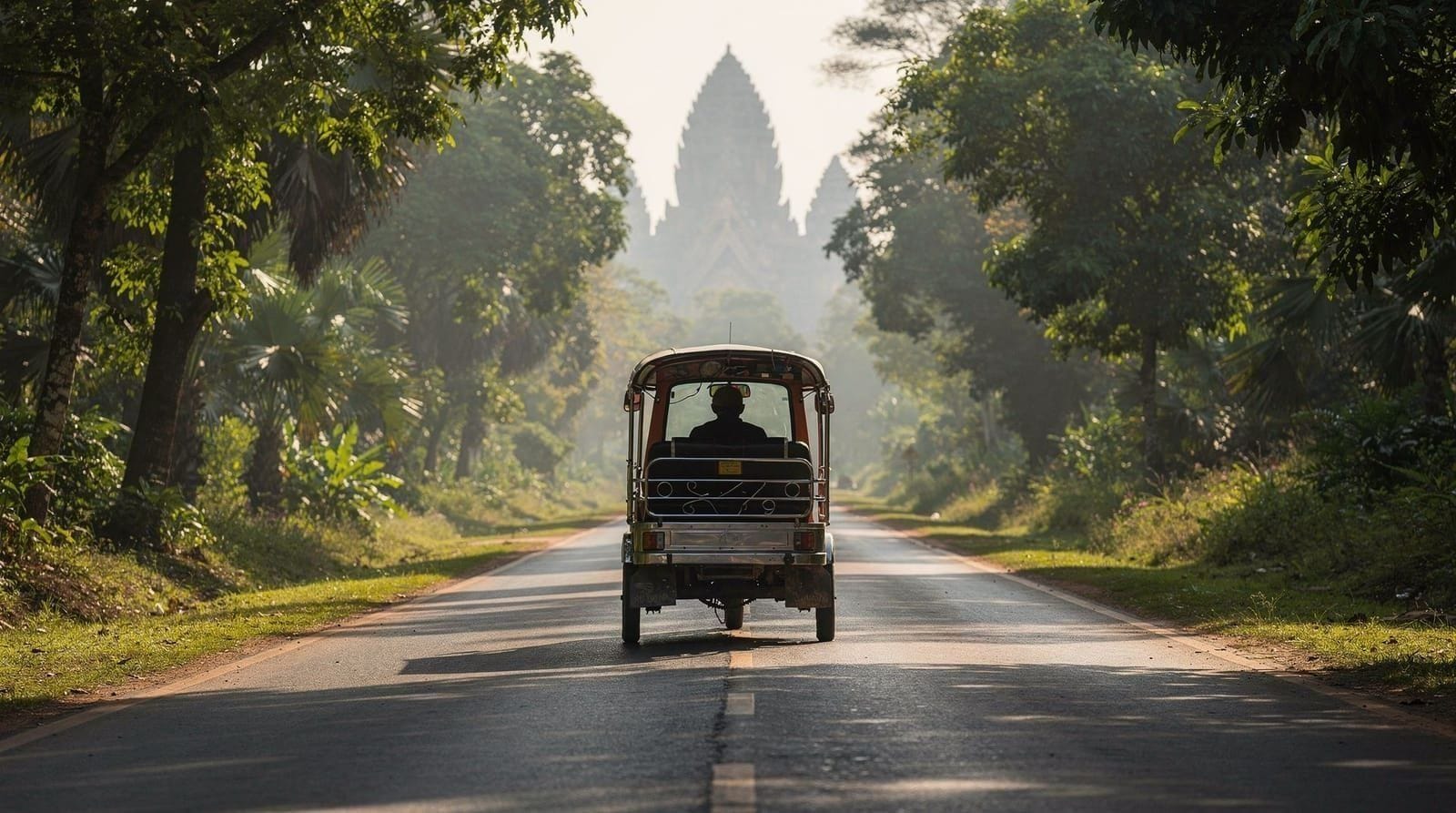
- Transport: a private tuk-tuk for the day at the standard $15-20 rate for the main circuit, more for outlier temples.
- Extras: a cooking class, a Phare Circus ticket, spa treatments — this tier is where most discretionary activity spending happens.
Luxury: $250+/day
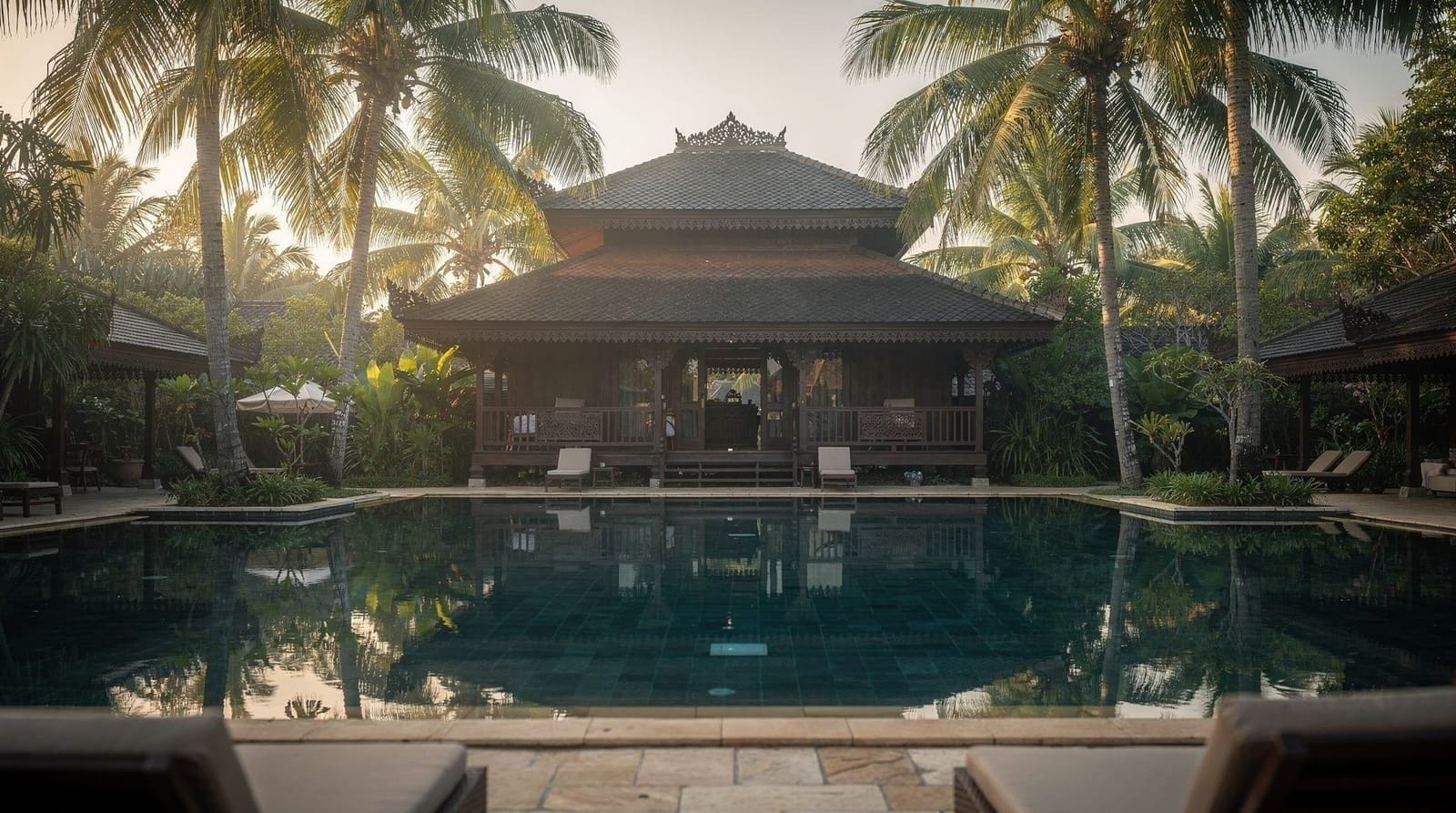
- Accommodation: $150-500+/night at 5-star resorts (several internationally branded properties operate in Siem Reap, priced well below equivalent properties in Bangkok or Bali but still a significant daily cost).
- Food: fine-dining tasting menus $30-80+ per person; private chef experiences and high-end wine lists push this further.
- Transport: private air-conditioned car with driver and guide for the full day, often $60-120/day depending on vehicle and itinerary complexity.
- Extras: private sunrise access arrangements, a dedicated English-speaking licensed guide for every temple day, spa packages.
Fixed costs everyone pays
Regardless of budget tier, a handful of costs don’t scale down:
| Item | Cost | Notes |
|---|---|---|
| E-visa | $30 | Official evisa.gov.kh only — see the visa guide for the reseller-markup trap |
| Angkor Pass (1/3/7-day) | $37 / $62 / $72 | Same price for every budget tier |
| Koh Ker separate ticket | $15 | Not covered by the Angkor Pass |
| Phnom Kulen separate ticket | $20 | Not covered by the Angkor Pass |
| Beng Mealea separate ticket | $10 | Not covered by the Angkor Pass |
| Airport transfer (one way) | $10-35 | Shuttle bus cheapest, private transfer most convenient — see the SAI airport guide |
Use the Angkor Pass calculator to total the pass plus whichever outlier temples you’re planning, and the trip budget calculator to model a full daily budget across your chosen length of stay — both tools take your actual itinerary rather than a generic average.
Where the three tiers diverge most
Accommodation is where the gap is widest in absolute dollars — $10/night versus $300/night is a 30x spread, more than food or transport ever produce. If you’re trying to stretch a mid-range budget further, downgrading one hotel tier saves more than any other single lever.
Transport differs less in cost than in convenience: a shared or self-driven bicycle costs a few dollars a day; a private driver for the same temples costs $15-20/day. The comfort difference (AC, no navigation stress, someone waiting at each temple gate) is real, but budget travelers regularly do the full circuit on a rented bicycle or by joining a shared tuk-tuk group.
Food is the tier where Siem Reap is genuinely cheap across the board — even “expensive” restaurant meals in town rarely exceed $20-25 per person outside a handful of destination fine-dining spots, so food rarely blows a budget the way accommodation or a private car can.
A sample 3-day cost breakdown (mid-range)
| Day | Angkor Pass share | Tuk-tuk | Food | Accommodation | Extras |
|---|---|---|---|---|---|
| 1 | included in 3-day pass | $18 | $25 | $55 | — |
| 2 | included in 3-day pass | $18 | $28 | $55 | Cooking class $30 |
| 3 | included in 3-day pass | $22 (outlier) | $30 | $55 | Phare Circus $18 |
| Total (3 days) | $62 | $58 | $83 | $165 | $48 |
Trip total: ~$416 for 3 days mid-range, excluding flights and the $30 e-visa — roughly $139/day, within the stated $80-140 mid-range band once averaged with a lighter final evening.
How season changes your budget
Siem Reap’s pricing swings meaningfully with the season, more than most destinations at this price point. See the full seasonal breakdown for weather and crowd context; the budget implications are worth spelling out separately.
December-January (peak dry season): hotel rates run 20-40% above shoulder season, and the more sought-after boutique properties can sell out weeks ahead around Christmas and New Year. Tuk-tuk and guide rates stay roughly flat — this is a market where demand pressure shows up mainly in accommodation, not services.
June-September (rainy/low season): hotels frequently discount 25-40%, sometimes with breakfast or airport transfer thrown in as an incentive. This is the best window to stretch a mid-range budget into near-luxury territory, or a backpacker budget further still. The trade-off is weather — afternoon downpours are common, and a few dirt-road outlier temples (Koh Ker, parts of Phnom Kulen) can become harder to reach after heavy rain.
April (Khmer New Year, mid-April): a genuine exception — some local businesses close for several days around the holiday, and domestic travel demand pushes up availability pressure on buses and some hotels even though it isn’t the international peak season. Book accommodation and any Battambang/Phnom Penh transport further ahead than usual if your trip overlaps this window.
Common budget mistakes
- Forgetting the Angkor Pass is per-person, non-negotiable, and separate from any tour price. GetYourGuide and Viator listings sell transport and guiding — never the pass itself. Budget the $37/$62/$72 as its own line item even when booking a “full package” tour; see what GYG/Viator actually sell for the exact split.
- Under-budgeting outlier temple tickets. Koh Ker ($15), Phnom Kulen ($20) and Beng Mealea ($10) are easy to forget because they’re bought separately from the main pass, at the site or through a tour operator — they add up to $45 for all three if you’re doing the full outlier circuit.
- Not accounting for ATM fees on a multi-week Cambodia trip. At $4-6 per withdrawal, frequent small withdrawals quietly erode a backpacker budget; larger, less frequent withdrawals are cheaper overall even with more cash on hand at once.
- Assuming card payment is universal. Even mid-range restaurants and virtually all tuk-tuk drivers expect cash. Carry enough USD for a full day out — cards are unreliable outside hotels and larger restaurants.
- Booking a private multi-day tour without pricing the DIY alternative first. A private driver and guide package can run $60-150/day; the same temples reached by a self-arranged tuk-tuk and the Angkor Pass alone can cost a third of that. The convenience is real, but it’s worth knowing what you’re paying for it.
Budgeting for a family
Families traveling with children get one significant break: children under 12 enter the Angkor park free with the Angkor Pass system (passport required as proof of age at the gate), which meaningfully lowers the fixed-cost side of a family budget compared to adults-only groups.
Beyond that, family budgets tend to run closer to the mid-range tier even for otherwise budget-minded travelers, mainly because of two factors: AC accommodation becomes less optional with young kids in Cambodia’s heat, and a private tuk-tuk or car (rather than a shared one) is worth the extra $5-10/day for the flexibility to leave a temple early if a child is tired or overheated. The Siem Reap with kids guide covers the practical side of this in more depth — pacing, shade breaks, and which temples work best for younger visitors.
How to save without sacrificing the experience
A few adjustments meaningfully lower cost without touching the parts of a trip most visitors actually value:
- Split a private tuk-tuk with other travelers. Most guesthouses can connect solo travelers or pairs into a shared group, bringing a $15-20/day driver down to $5-7/person while keeping the convenience of a private vehicle over a shared shuttle.
- Eat where locals eat, not just where the tour groups stop. Street food and local restaurants a block or two off Pub Street cost a fraction of the tourist-strip prices for often better food — see the street food guide for specific recommendations.
- Travel in the rainy season if your schedule allows. The 25-40% hotel discounts common from June to September outweigh the inconvenience of afternoon rain for many travelers, and temples are noticeably less crowded.
- Buy the Angkor Pass yourself rather than through a marked-up reseller. It’s sold only at the Angkor Enterprise counter or angkorenterprise.gov.kh at face value — some third-party sites and tour packages quietly add a markup on top; see official pass vs. resellers for how to spot it.
- Skip the private car for outlier temples if budget matters more than time. A shared or group tour to Banteay Srei or Beng Mealea costs meaningfully less per person than a private car and covers the same ground.
Sample daily cost, backpacker and luxury
For comparison against the mid-range table above, here’s roughly what a single active temple day looks like at the other two tiers.
Backpacker day: dorm bed $8, street food breakfast/lunch/dinner $6 total, shared tuk-tuk $6/person, no extras — ~$20 plus the day’s share of the Angkor Pass.
Luxury day: 5-star resort $300, private car and English-speaking guide $100, fine-dining lunch and dinner $90, spa add-on $60 — ~$550 plus the day’s share of the Angkor Pass.
The spread between these two figures — roughly 27x — is almost entirely accommodation and the guide/car upgrade; food and the pass itself barely move the needle by comparison, which is why most travelers land somewhere in the mid-range band rather than at either extreme.
How Siem Reap compares to nearby destinations
For travelers weighing a wider Southeast Asia itinerary, Siem Reap sits toward the affordable end even by regional standards. Bangkok and Phnom Penh accommodation and food run comparably or slightly higher at the mid-range tier; Siem Reap’s differentiator is really the Angkor Pass, a fixed cost with no regional equivalent in scale ($37-72 depending on tier, versus most single-site entry fees elsewhere in the region running $5-20). Once that fixed cost is absorbed, daily spending in Siem Reap tracks close to Phnom Penh and noticeably below Bangkok’s tourist-zone prices, particularly for accommodation.
Practical money tips
- ATMs dispense USD in Siem Reap town and near the airport; expect a $4-6 fee per withdrawal on top of your own bank’s foreign transaction fee — withdraw larger amounts less frequently to minimize total fees.
- KHQR mobile payment works at a growing number of restaurants and shops, but cash is still essential for tuk-tuks, small vendors, and rural areas around the outlier temples.
- Best exchange rates are typically at Old Market-area exchange shops or Phsar Leu market, not hotels or the airport.
- Negotiate transport before you commit, not after — see the tuk-tuk pricing guide for what a fair day rate actually looks like and the common overcharge tactics to watch for.
Frequently asked questions about Siem Reap travel budget
Is Siem Reap cheap to visit?
Yes, relative to most Southeast Asian tourist hubs — a budget traveler can comfortably manage on $35-50/day including a guesthouse, street food, and a shared tuk-tuk for temple days. The main fixed cost that doesn't scale down is the Angkor Pass ($37/$62/$72), which is the same price regardless of travel style.How much cash should I bring to Siem Reap?
US Dollars are the de facto currency for almost all tourist transactions — hotels, restaurants, the Angkor Pass, and most tuk-tuk drivers price in USD. Bring small, undamaged USD bills (torn or heavily worn notes are often refused); ATMs dispensing USD are widely available in town but charge withdrawal fees (typically $4-6 per transaction). Riel is used mainly for change under $1, at roughly 4,000 KHR to the dollar.What is the single biggest expense in a Siem Reap trip?
For most travelers it's accommodation, followed by the Angkor Pass if staying 3+ days ($62). Tuk-tuk transport for temple days ($15-20/day for the standard circuit) is the next largest recurring cost. Food is comparatively cheap even at restaurant level.Do I need cash for the Angkor Pass or can I pay by card?
The Angkor Enterprise ticket counter accepts both cash (USD) and card. Buying online in advance at angkorenterprise.gov.kh also works by card. Either way, budget the full $37/$62/$72 as a fixed line item — it's not negotiable or discountable regardless of season or how you book.How much should I tip in Siem Reap?
Tipping isn't traditional in Cambodia but is increasingly expected in tourism. A rough guide: $2-5/day for a full-day tuk-tuk driver, $10-20/day for a licensed guide, round up restaurant bills or add ~10%, and $1-2/night for hotel housekeeping. Tip in USD for amounts above $2; smaller tips can be given in riel.Are GetYourGuide or Viator tours more expensive than arranging things independently?
Usually somewhat more, since you're paying for a guide and coordination, but the price difference is often smaller than expected once you account for the time saved negotiating tuk-tuk rates and finding an English-speaking guide independently. Neither platform sells the Angkor Pass itself — that's always bought separately from Angkor Enterprise. See the full comparison in booking Angkor tours: GYG vs Viator.
Top experiences
Bookable activities with verified prices and instant confirmation on GetYourGuide.


More tours on Viator
Top-rated experiences with verified reviews, bookable on Viator (a Tripadvisor company).