The Angkor Grand Circuit
The Grand Circuit route explained: Preah Khan to Pre Rup, temple order, timing, and how it pairs with a multi-day Angkor Pass.
Siem Reap: 2-Day Angkor Wat Tour, Small and Big Circuit with Banteay Srei
Quick facts
- Loop distance
- ~26 km, driven counter-clockwise
- Ticket needed
- Angkor Pass, 3-day or 7-day recommended
- Time to allow
- One full day (6-7 hours)
- Core temples
- Preah Khan, Neak Pean, Ta Som, East Mebon, Pre Rup
- Crowd level
- Noticeably quieter than the Small Circuit
The quieter loop, for a second or third Angkor day
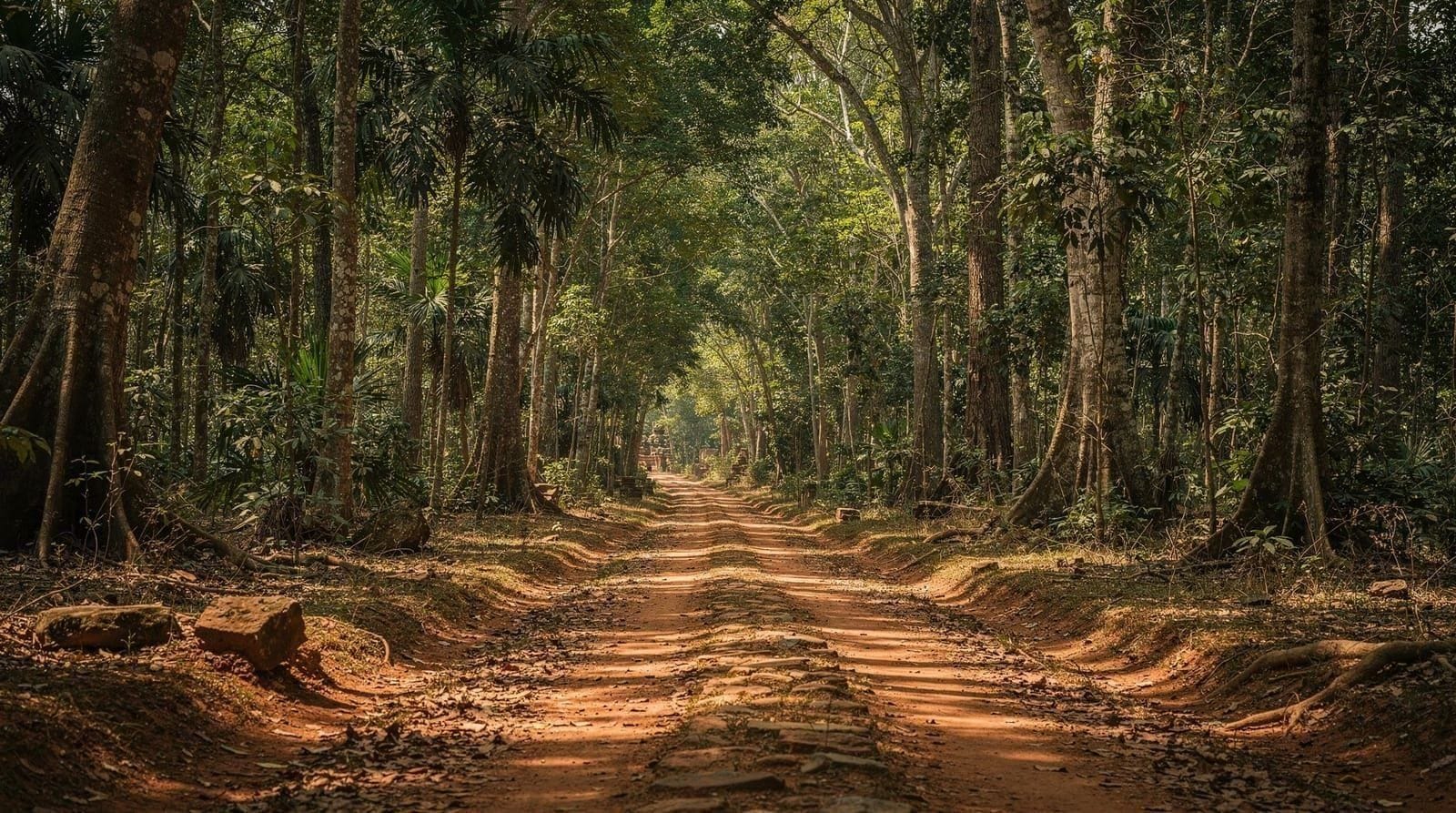
The Grand Circuit is a roughly 26 km loop, typically driven counter-clockwise, that covers a different set of temples from the more famous Small Circuit: Preah Khan, Neak Pean, Ta Som, Krol Ko, East Mebon and Pre Rup. None of these are as instantly recognizable as Angkor Wat or Ta Prohm, which is exactly why the loop stays comparatively quiet — and exactly why it’s worth a dedicated day rather than a rushed add-on to your Angkor Wat sunrise morning.
If you’re deciding how to split time between the two circuits, our Small Circuit vs Grand Circuit guide breaks down the trade-offs in more detail. The short version: do the Small Circuit if you only have one day; add the Grand Circuit on a second day if your pass allows it.
The standard order, west to east
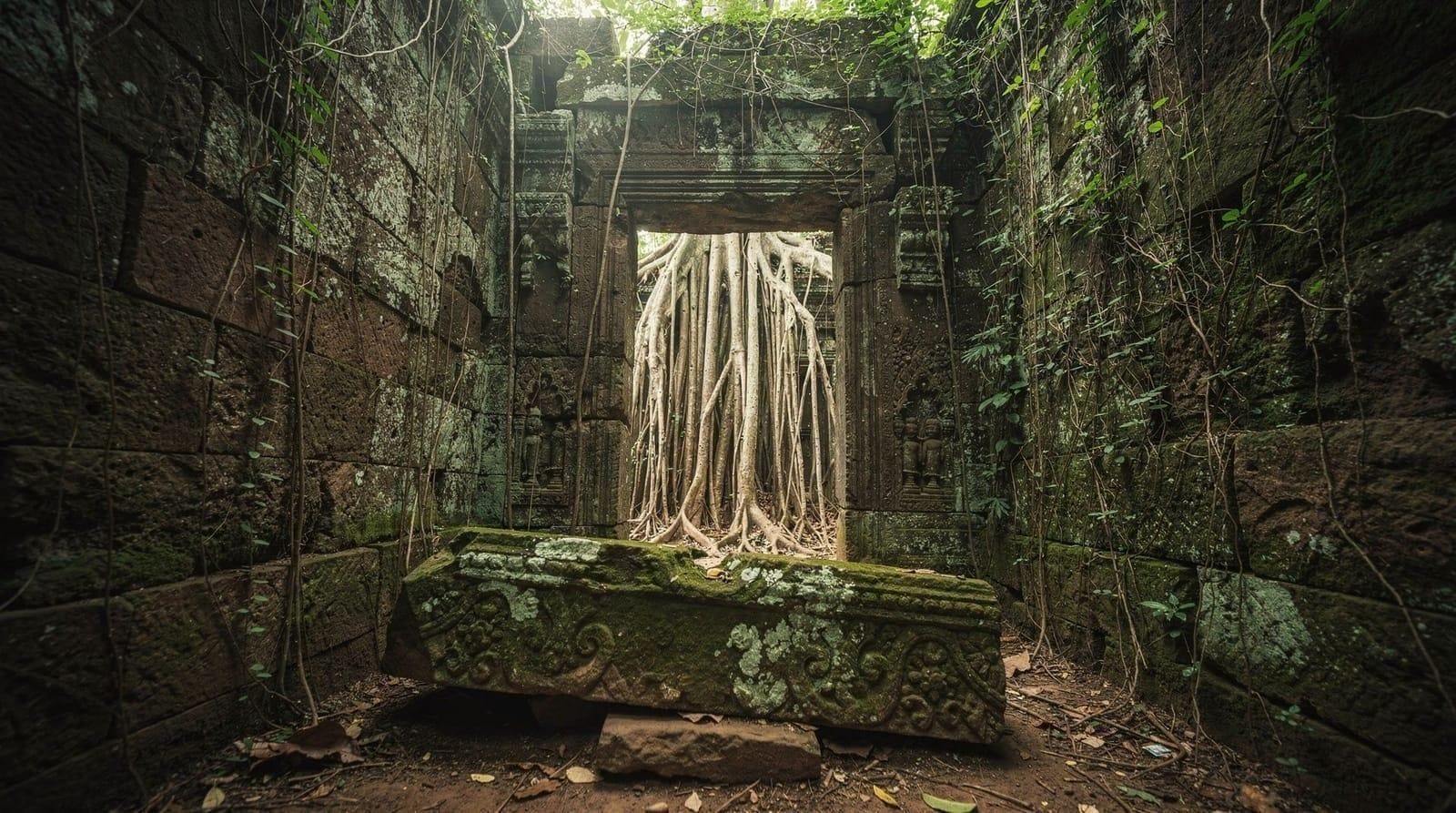
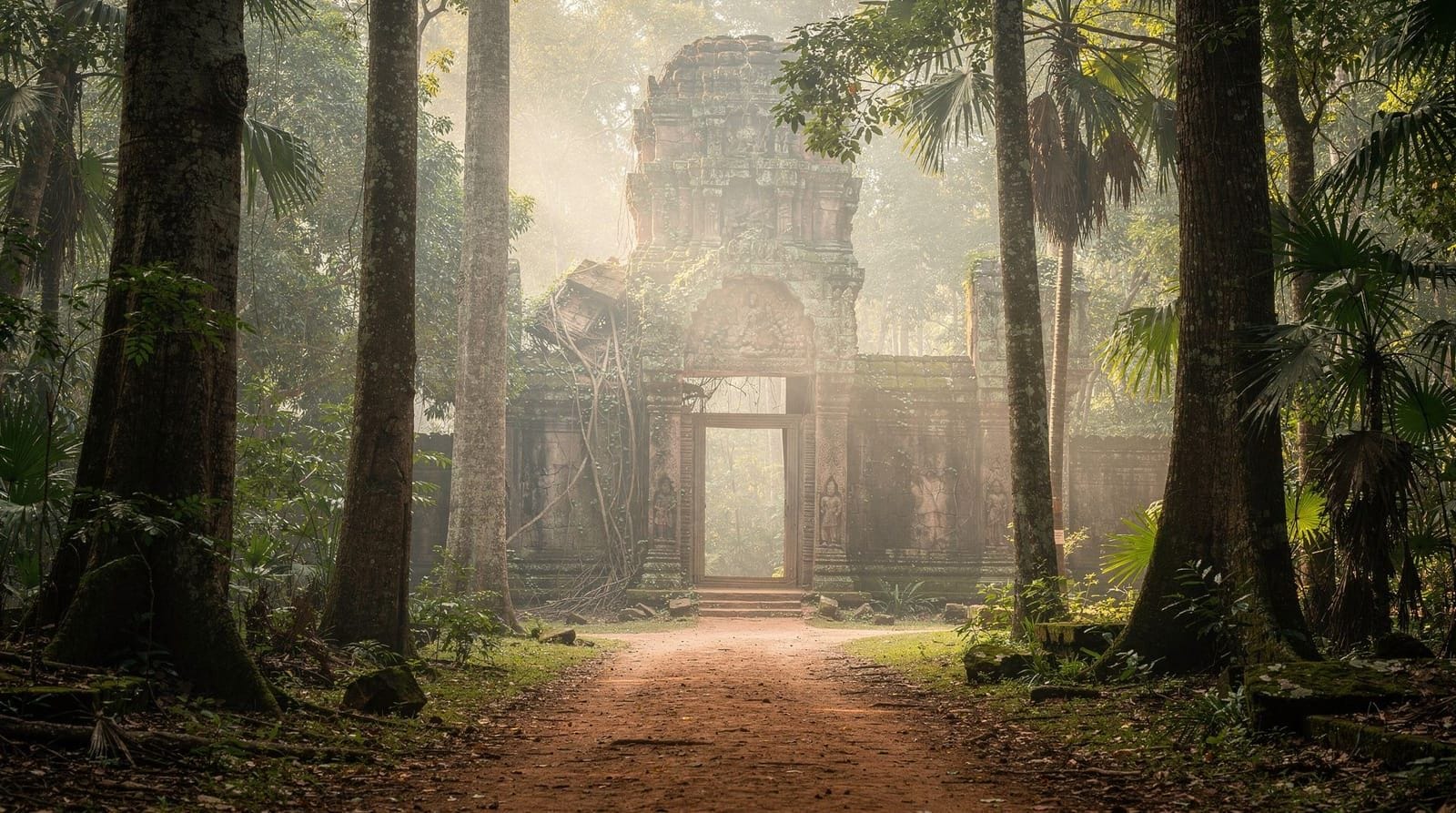
1. Preah Khan (morning). A jungle-reclaimed 12th-century temple-university, comparable in atmosphere to Ta Prohm but with a fraction of the visitors. See our full Preah Khan and Neak Pean guide for what to look for, including the unusual two-story “library” building most visitors miss.
2. Neak Pean. A short drive from Preah Khan, this small island shrine built around therapeutic water symbolism is one of the most distinct structures in the whole park — nothing else on the Angkor Pass looks quite like it.
3. Ta Som. A smaller, single-enclosure Buddhist temple in the Bayon architectural style (face towers on some gopuras), notable for a large strangler-fig tree entirely engulfing its east gate — a quieter, less-visited version of the “tree over stone” image most people associate with Ta Prohm.
4. East Mebon. A temple-mountain built on what was originally an artificial island in the now-dried Eastern Baray reservoir, guarded by large stone elephant statues at its corners — structurally a close cousin of Pre Rup, built a few years earlier by the same king.
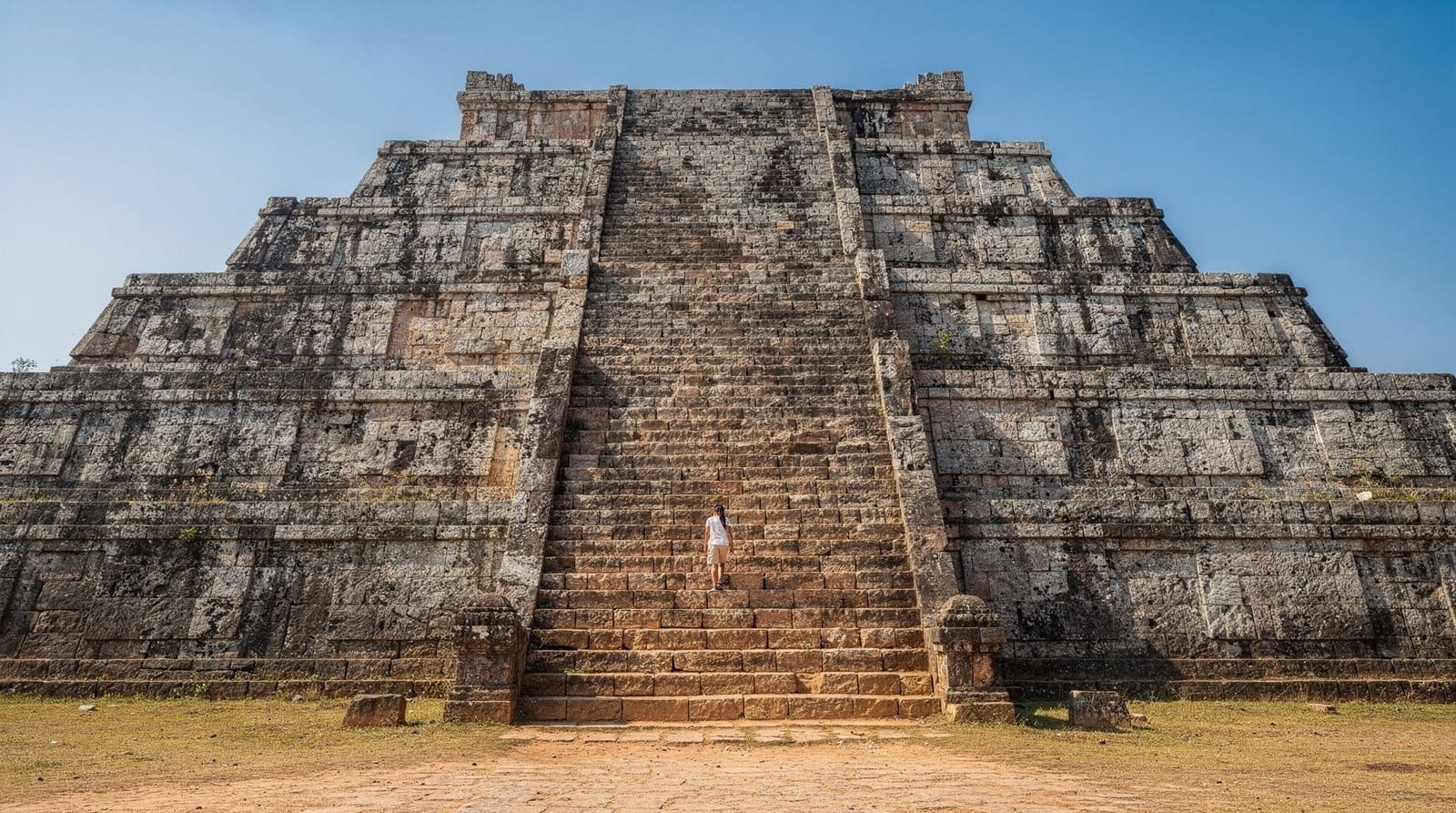
5. Pre Rup (afternoon/sunset). The loop’s natural finishing point. Its reddish laterite and brick catch late-afternoon light well, and its broad summit terrace makes it a genuine, less-crowded sunset alternative to Phnom Bakheng — see our full Ta Keo and Pre Rup guide and our Angkor sunset spots guide.
How long the loop takes
A full Grand Circuit day, done at a comfortable pace with time at each of the five main stops, runs 6-7 hours. Because none of these temples has the queue-and-crowd bottlenecks of Angkor Wat or Ta Prohm, the day feels noticeably less rushed even at a similar total duration — you’re not fighting for space at any single stop the way you might on the Small Circuit.
How it fits a multi-day Angkor Pass
The Grand Circuit isn’t a realistic fit for a 1-day pass — trying to combine it with the Small Circuit’s headline temples in a single day means shortchanging both. It’s the natural day two of a 3-day pass ($62), after the Small Circuit on day one, with Banteay Srei and the Roluos Group or an outer-temple trip on day three. See our Angkor Pass guide and Angkor Pass calculator for the full ticket math across pass tiers.
Why the Grand Circuit temples were built where they are
The Grand Circuit’s temples span a wider range of dates and purposes than the Small Circuit’s more tightly clustered group. Preah Khan and Ta Som were both built under Jayavarman VII in the late 12th century, part of the same massive post-invasion rebuilding programme that produced Angkor Thom and Ta Prohm. East Mebon and Pre Rup, by contrast, are considerably older — built in the 10th century under Rajendravarman, roughly two centuries before Jayavarman VII’s reign, and originally positioned in relation to the Eastern Baray, a vast artificial reservoir (roughly 7 x 1.8 km) that has since dried up entirely.
East Mebon’s placement, in particular, only makes full sense once you understand it originally sat on an island in the middle of that reservoir — accessed by boat, not causeway, in its working period. That the water is now entirely gone is itself a useful reminder of how much the Angkorian landscape has changed since these structures were functioning temples rather than archaeological sites.
A realistic hour-by-hour version
8:00 AM — depart Siem Reap (no need for the 5:00 AM sunrise rush that governs a Small Circuit day, since none of these temples has a comparable sunrise draw). 8:30-9:30 AM — Preah Khan, budgeting real time for the interior courtyards and the unusual two-story structure on the north side. 9:45-10:15 AM — Neak Pean, including the walk across the wooden causeway. 10:30-11:00 AM — Ta Som, worth a specific stop for its engulfed east gate. 11:15-11:45 AM — East Mebon and its corner elephant statues.
12:00-1:00 PM — lunch, either back toward town or at one of the simpler stalls along the loop. 1:00-2:30 PM — a rest period or a visit to Banteay Srei or the Roluos Group if you’re combining destinations in one longer day. 4:45-5:45 PM — return to Pre Rup for sunset. This pacing is noticeably more relaxed than a Small Circuit day, with fewer time-pressure decisions forced by crowd bottlenecks.
Comparing the Grand Circuit to an outer-temple day trip
Some visitors weigh a Grand Circuit day against an outer-temple trip to Beng Mealea or Koh Ker when planning a second or third Angkor day. The Grand Circuit is the easier, closer, less physically demanding choice — no separate ticket, shorter drives, better road quality — and rewards visitors who want more 12th-century Jayavarman VII-era architecture in the same vein as Ta Prohm and Angkor Thom.
An outer-temple trip is the better choice for visitors who specifically want a change in kind, not just a change in crowd level — Koh Ker’s climbable pyramid or Beng Mealea’s unrestored collapse offer an experience genuinely different from anything inside the main park, at the cost of a longer, more tiring day.
What’s overrated, what’s underrated
Nothing on this circuit is overrated in the way some Small Circuit crowd bottlenecks are — the whole point of the Grand Circuit is that it’s consistently underrated relative to the Small Circuit’s fame. If pressed, Neak Pean is the single most distinct and most-missed stop for visitors who only do the Small Circuit and never add a second Angkor day.
Doing it with a driver vs. a guided tour
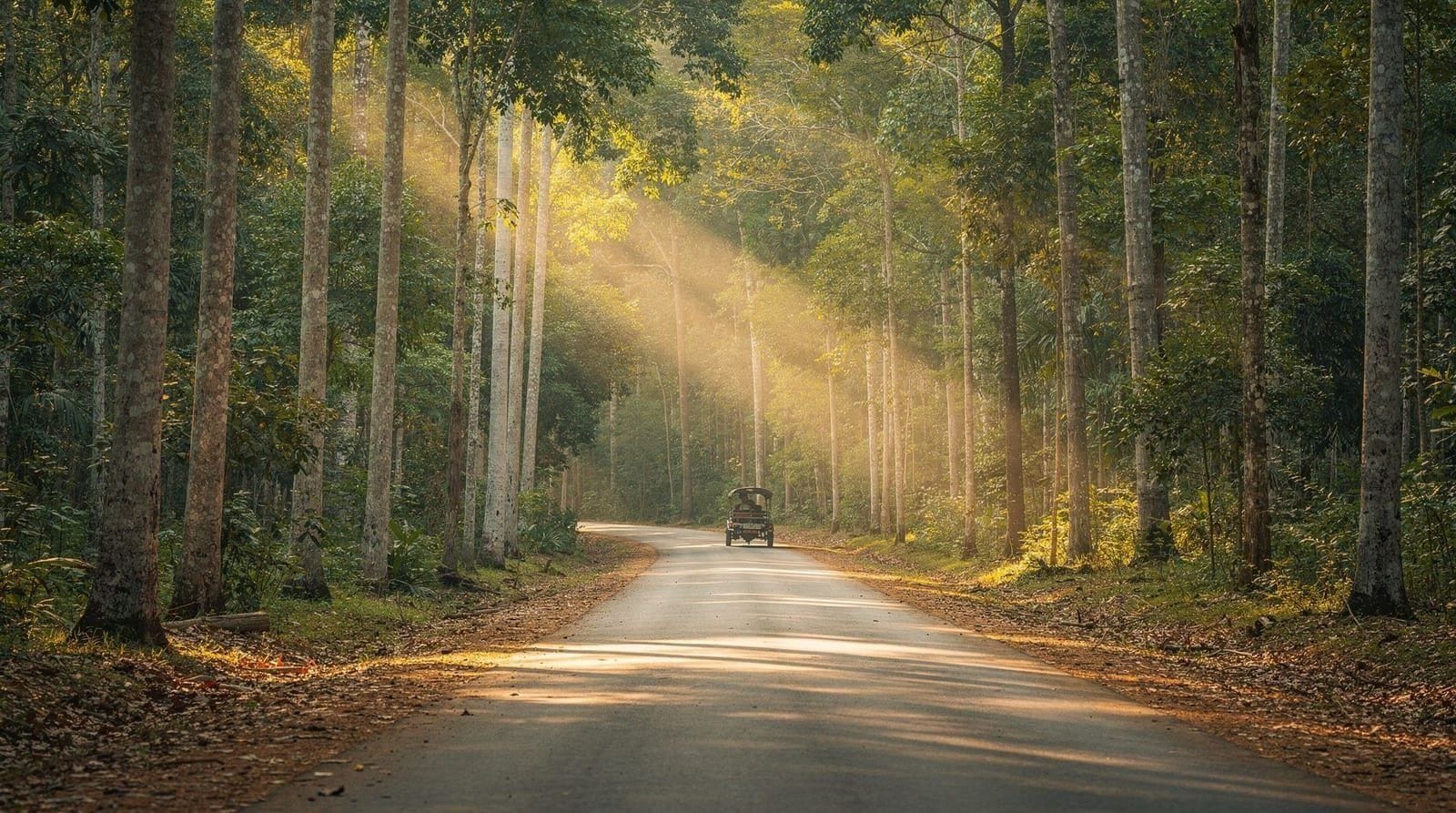
A tuk-tuk driver for the day (roughly $15-20, agree the price first — see tuk-tuk pricing) manages the Grand Circuit’s longer distances comfortably; the loop’s roads are in good condition and don’t require a car the way Phnom Kulen or Koh Ker sometimes do. If you want the whole Small and Grand Circuit combined into one structured trip, the 2-day Small and Big Circuit tour with Banteay Srei covers both loops plus the outer temple.
For a private, unhurried pace on the Grand Circuit specifically, the Angkor Wat and Big Circuit private tour and the 2-day Angkor Wat and Grand Circuit tour both structure the loop with an included guide — useful given how much less signage and English-language context there is at these stops compared to Angkor Wat. A small-group option, the Grand Circuit and Banteay Srei small-group tour, combines the loop with the outer temple for visitors on a tighter schedule.
Photography on the Grand Circuit
The Grand Circuit rewards photographers specifically because the lack of crowds means you can compose shots without other visitors in frame, take your time with tripod setups where allowed, and revisit a spot for a second attempt without holding up a queue behind you. Neak Pean’s wooden causeway across the reservoir photographs particularly well in the hour after sunrise or before sunset, when the water (when present — levels vary seasonally) catches warmer light.
East Mebon’s corner elephant statues, weathered but largely intact, are an underused subject relative to how photogenic they are. Pre Rup’s summit at sunset remains the circuit’s single best-known photo opportunity, and unlike Phnom Bakheng, you won’t be fighting for a spot on the terrace even in peak season.
What most first-time visitors get wrong about this circuit
The most common mistake is treating the Grand Circuit as optional — something to add only if there’s spare time on a longer trip — rather than recognizing it as a genuinely different, complementary experience to the Small Circuit rather than a lesser version of it. A second common mistake is rushing it the way visitors sometimes rush the Small Circuit under crowd pressure; since there’s no comparable crowd pressure here, a rushed Grand Circuit day usually reflects poor time budgeting rather than any external constraint, and it’s worth deliberately slowing down to get the benefit the quieter pace actually offers.
Practical notes
Fully covered by the standard Angkor Pass — see the Angkor Pass guide for pricing (1-day $37 / 3-day $62 / 7-day $72). Facilities (toilets, drink stalls) are sparser on this loop than the Small Circuit — plan accordingly and bring more water than you think you’ll need. Shade varies significantly by stop; Preah Khan has more tree cover than East Mebon or Pre Rup, both fairly exposed.
Frequently asked questions about the Grand Circuit
What temples are on the Angkor Grand Circuit?
The core stops are Preah Khan, Neak Pean, Ta Som, East Mebon and Pre Rup — a roughly 26 km loop, separate from the Small Circuit’s Angkor Wat, Angkor Thom and Ta Prohm.
Is the Grand Circuit worth it if I’ve already done the Small Circuit?
Yes, especially for visitors who found the Small Circuit’s crowds frustrating — the Grand Circuit covers comparably significant 12th-century architecture with far fewer people at each stop.
Can I combine the Small and Grand Circuits in one day?
It’s physically possible but rushed and not recommended — most visitors find one circuit per day more comfortable, particularly in Cambodia’s heat. A 3-day Angkor Pass comfortably fits both circuits plus a third outer-temple day.
Which temple on the Grand Circuit should I prioritize if I’m short on time?
Preah Khan and Neak Pean are the most distinct and rewarding stops — Preah Khan for its Ta Prohm-like atmosphere without the crowds, Neak Pean for architecture found nowhere else in the park.
Is Pre Rup a good sunset spot?
Yes — it’s one of the better-kept sunset alternatives to the far more crowded Phnom Bakheng, with a broad summit terrace and reddish stone that catches late light well.
Do I need a car, or is a tuk-tuk fine for the Grand Circuit?
A tuk-tuk is entirely sufficient — the loop’s roads are paved and well-maintained, unlike some of the outer-temple routes to Phnom Kulen or Koh Ker.
How old are the Grand Circuit temples compared to the Small Circuit?
It’s a genuine mix — Preah Khan and Ta Som date to the late 12th century, the same Jayavarman VII building programme that produced Angkor Thom and Ta Prohm. East Mebon and Pre Rup are older, built in the 10th century under Rajendravarman, roughly two centuries before Angkor Wat.
Why is East Mebon positioned the way it is, seemingly in the middle of nowhere?
It originally sat on an artificial island in the Eastern Baray, a vast reservoir that has since completely dried up. What looks today like an ordinary temple on dry land was, in its working period, accessed by boat.
Should I do a Grand Circuit day or an outer-temple day trip if I only have one extra day?
The Grand Circuit is closer, easier and requires no separate ticket — a good match if you want more of the same architectural era as Ta Prohm and Angkor Thom with fewer crowds. An outer-temple trip to Koh Ker or Beng Mealea offers a more different experience at the cost of a longer, more tiring day.
Is there anywhere to eat along the Grand Circuit route?
Facilities are sparser than on the Small Circuit — a handful of simple food and drink stalls exist near some of the stops, but it’s worth planning either a return to town for lunch or packing snacks, rather than assuming a proper restaurant will be nearby.
Top experiences
Bookable activities with verified prices and instant confirmation on GetYourGuide.

Siem Reap: 2-Day Angkor Wat Tour, Small and Big Circuit with Banteay Srei

Siem Reap: Angkor Wat and Big Circuit Temples Private Tour
Siem Reap: 2-Day Angkor Wat and Grand Circuit Temples Tour

Angkor: Small-Group Grand Circuit Temples Tour with Banteay Srei
More tours on Viator
Top-rated experiences with verified reviews, bookable on Viator (a Tripadvisor company).