Phnom Kulen waterfall: the complete visitor guide
Phnom Kulen: Waterfall and the Sacred 1,000 Lingas Tour with Lunch
How much does it cost to visit Phnom Kulen waterfall?
$20 for the separate Phnom Kulen entrance ticket, not covered by any Angkor Pass tier. The mountain is roughly 50 km / 1.5 hours from Siem Reap and combines a waterfall, the River of a Thousand Lingas carved riverbed, and a large reclining Buddha carved into a boulder near the summit.
A different kind of day near Siem Reap
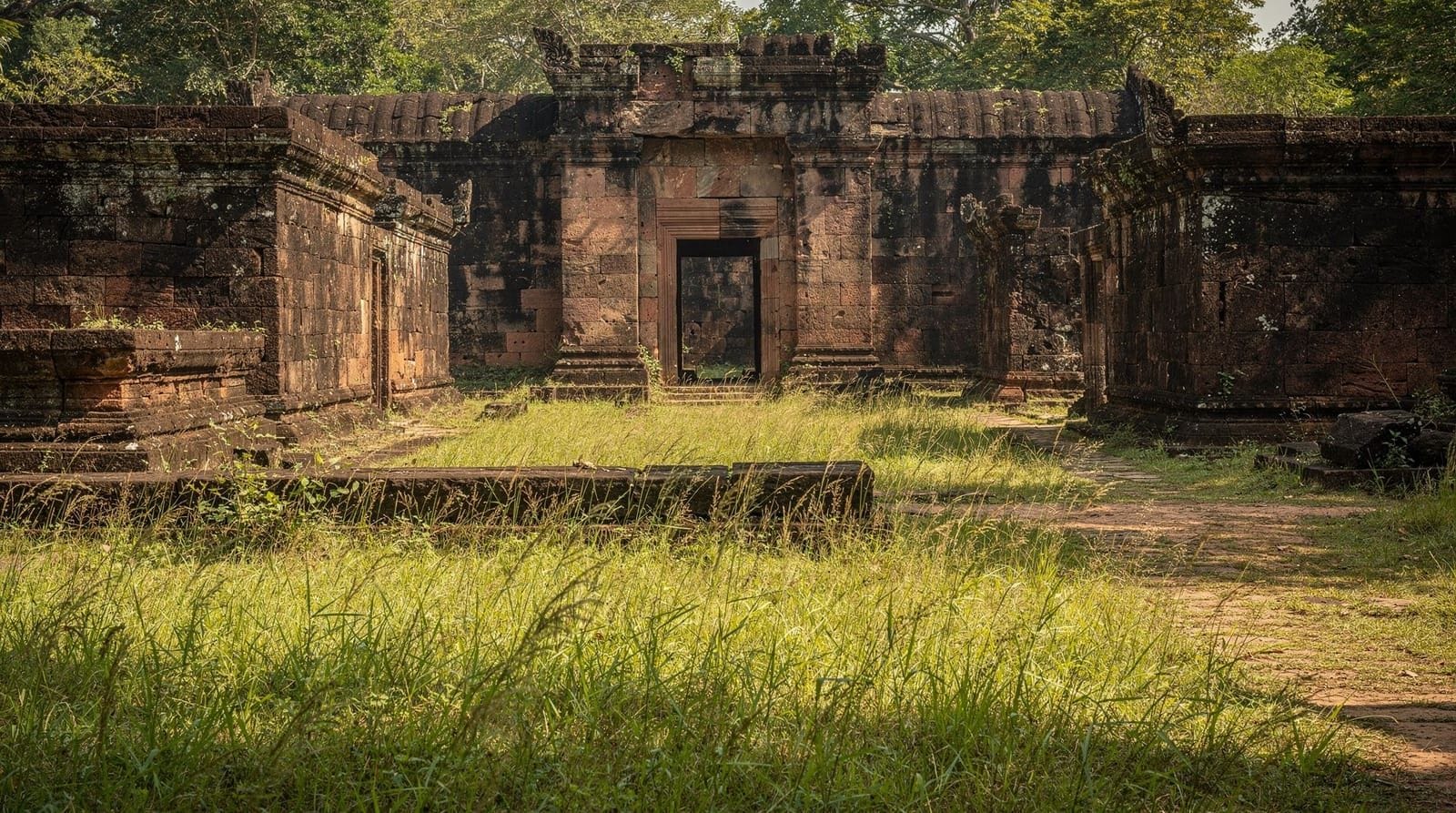
Phnom Kulen is unlike anything else within easy reach of Siem Reap: a sacred mountain considered the birthplace of the Khmer Empire, where King Jayavarman II declared himself a universal monarch in 802 AD, combined with a genuine waterfall you can swim in, a riverbed carved with hundreds of Hindu religious symbols, and a large reclining Buddha cut directly into a mountaintop boulder. It’s not part of the Angkor Archaeological Park and isn’t covered by the Angkor Pass — it requires its own $20 entrance ticket, bought at its own gate roughly 50 km / 1.5 hours from town.
How Phnom Kulen differs from a temple-circuit day
If your Angkor days so far have followed the standard Small or Grand Circuit rhythm — a series of stone temple complexes visited on foot with a driver waiting between stops — Phnom Kulen is worth mentally recategorizing as a different kind of outing entirely rather than “one more temple stop.” The mountain setting, the swimming component, and the more spread-out, hike-adjacent layout between sites make it closer in feel to a nature excursion with some historical and religious sites along the way than to a dedicated archaeological visit. Packing accordingly — swimwear, a change of clothes, sturdier footwear than sandals for the walking sections — matters more here than for a standard temple day.
What’s actually on the mountain
The reclining Buddha: near the summit, a large image of the Buddha carved directly into a natural boulder, one of the mountain’s most visited single sites and typically an early stop on the standard route up.
The River of a Thousand Lingas (Kbal Spean-adjacent but a distinct site on Kulen itself): a stretch of riverbed where 11th and 12th-century carvers cut hundreds of small lingas — a symbol associated with the Hindu god Shiva, tied to fertility and the river’s life-giving water — directly into the sandstone bed, along with carved images of Hindu deities visible when water levels allow. It’s a short, relatively easy walk from the main waterfall area.
The waterfall: the mountain’s main draw for most visitors, a genuine multi-tier waterfall with a swimmable pool at its base, most impressive during and shortly after rainy season.
Ticket and getting there
The Phnom Kulen entrance ticket costs $20, separate from any Angkor Pass tier and bought at the mountain’s own gate. The drive from Siem Reap takes roughly 1.5 hours each way along a route that climbs into the hills northeast of the temple complex — noticeably different terrain from the flat approach to Angkor itself. Most visitors arrange transport through a driver, tuk-tuk, or guided tour rather than self-driving, given the mountain road conditions and the spread-out layout of the main sites.
When to go for the best waterfall
Water flow at Phnom Kulen’s waterfall depends directly on recent rainfall, which makes seasonality the single biggest factor in whether your visit delivers a powerful cascade or a modest trickle. Rainy season, roughly June through October, produces the strongest and most reliable flow, particularly at the smaller upper falls that can reduce significantly by the peak of dry season (February-April). The larger main waterfall generally holds reasonable flow further into the dry months than the upper sections, but if seeing the falls at their most dramatic is your priority, plan a rainy-season visit and accept the tradeoff of occasional showers during the day itself.
Swimming at the falls
Swimming is permitted and genuinely popular at the base of the main waterfall — a welcome break from temple walking in Siem Reap’s heat, especially outside the cooler December-February months. Wear a swimsuit under your regular clothes for convenience, since changing facilities are basic. The pool gets busy on weekends with both tourists and Cambodian visitors, particularly during Khmer New Year and other domestic holiday periods, so a weekday visit if your schedule allows one tends to be calmer.
Comparing Phnom Kulen’s ticket against the park’s other separate tickets
Phnom Kulen’s $20 entrance fee sits at the higher end of Siem Reap’s separate, non-Angkor-Pass tickets — Beng Mealea costs $10, Koh Ker costs $15. The higher price reflects the mountain’s larger, more developed visitor infrastructure (marked paths, changing areas, food stalls) relative to Beng Mealea and Koh Ker’s more minimal on-site facilities, rather than reflecting any difference in historical significance. None of these three tickets are covered by any tier of the Angkor Pass, and none offer a combination discount for visiting more than one — each is priced and sold entirely independently at its own gate.
A note on dress code away from the water
The mountain’s dress code (shoulders and knees covered) applies at the reclining Buddha and the river-carving sites, which are active religious and archaeological sites respectively — the same standard covered in our Angkor Wat dress code guide applies here too, even though Phnom Kulen sits outside the main park. The swimming area itself is more relaxed, but bring a change of clothes for the religious sites if you’re planning to swim earlier in the day.
What rainy-season road conditions actually mean for the trip
Because Phnom Kulen’s access road climbs into hill terrain rather than the flat approach roads serving the main Angkor park, rainy season (roughly May-October) can meaningfully affect the drive itself, not just the waterfall’s flow. Sections of the mountain road are more prone to mud and reduced traction after heavy rain than the paved routes to Angkor Wat or the Small Circuit, and a tour or driver may adjust timing or, in rare cases of unusually severe weather, postpone a scheduled visit for safety.
This is a genuine trade-off against the stronger waterfall flow rainy season delivers — dry season gets you a more reliable, faster drive with a less dramatic waterfall; rainy season gets a better waterfall with a small but real chance of weather-related delay. Neither choice is objectively wrong; it depends on which variable matters more for your specific trip.
Realistic time budget
A full day is the honest budget once the roughly 3-hour round-trip drive is factored in, plus several hours on the mountain itself to see the reclining Buddha, the river carvings and the waterfall without rushing between them. It doesn’t combine well with a full Angkor temple circuit on the same day — treat it as its own dedicated outing rather than an add-on. For how it compares against Siem Reap’s other two major outlier tickets, see our best outlier temples breakdown.
Facilities and what to expect on-site
Phnom Kulen is more developed for visitors than either Beng Mealea or Koh Ker, with basic food stalls, changing areas near the main swimming pool, and marked walking paths between the major sites. That said, facilities remain fairly basic by international resort standards — expect simple Khmer food options rather than an extensive menu, squat-style toilets at some stops, and limited shade in certain sections of the walk between sites during the hottest hours. Bringing your own snacks, a reusable water bottle, and a change of clothes if you plan to swim gives you more comfort and flexibility than relying entirely on what’s available on-site.
Safety notes for the swimming area
The main pool is generally calm and shallow enough near the edges for casual, non-strenuous swimming, but current and depth vary depending on recent rainfall and the specific spot within the pool — deeper, faster sections exist closer to the falls themselves. There are no lifeguards stationed at the pool in the way a resort or managed beach would have, so the same self-supervision standards that apply to any natural swimming spot apply here: know your own swimming ability, keep an eye on children in the water, and treat the area immediately beneath the falling water with more caution than the calmer pool edges, particularly during or shortly after rainy-season high-flow periods when the current is noticeably stronger.
Crowd patterns at Phnom Kulen
Weekends, particularly during Cambodian public holidays like Khmer New Year (mid-April) and Pchum Ben (September-October), see a significant increase in domestic visitors specifically drawn to the waterfall and the mountain’s religious significance — expect a considerably livelier, more crowded atmosphere at the swimming pool during these periods compared to a typical weekday. International tourist volume, by contrast, is fairly steady across the week without a strong weekend spike, since most foreign visitors build the trip around their overall Siem Reap schedule rather than local holiday timing. For the calmest overall experience, a weekday visit outside major Cambodian holiday periods is the best bet.
Booking a tour vs. going independently
A Phnom Kulen day tour including the River of a Thousand Lingas and lunch covers the full standard route — reclining Buddha, river carvings, waterfall, and a meal — in one booking, useful given how spread out the mountain’s sites are.
A small-group waterfall tour is a lighter-weight option if the swimming and waterfall are your main interest rather than the full historical-site circuit. Independent tuk-tuk or driver arrangements work too, but confirm your driver knows the mountain route and the order of stops, since the reclining Buddha, river carvings and waterfall sit at different points along the access road rather than clustered together.
The one-way access road, and why it dictates your schedule
Phnom Kulen’s road up the mountain operates on a one-way traffic control system for a meaningful stretch of the day, a detail that surprises visitors who haven’t planned around it: vehicles are typically only permitted to travel up the mountain during a morning window and only permitted to travel back down during an afternoon window, rather than two-way traffic running continuously throughout the day.
In practice this means your departure time from Siem Reap and your return time from the mountain aren’t fully flexible the way they would be on a standard two-way road — arriving too late for the morning “up” window, or trying to leave before the afternoon “down” window opens, isn’t simply inconvenient, it can mean waiting at a checkpoint until the scheduled direction change. Confirm the current up/down window times with your driver or tour operator before finalizing a departure time, since this single detail shapes the whole day’s schedule more than any other logistical factor on the mountain.
Historical context: why 802 AD matters here
The date carved into Phnom Kulen’s origin story — 802 AD — marks the ceremony where Jayavarman II declared himself a “universal monarch” (chakravartin) under the Hindu devaraja concept, an act historians treat as the symbolic founding moment of the Khmer Empire that would go on to build Angkor over the following centuries. This makes Phnom Kulen chronologically the starting point of the civilization whose later, larger monuments (Angkor Wat, Angkor Thom, the Roluos Group) draw the vast majority of Siem Reap’s visitors — a detail that reframes the mountain from “an add-on waterfall day” to “the origin site of everything else you’re seeing this trip,” worth knowing before you go rather than as a footnote at the site itself.
Food and facilities in more detail
On-site food options cluster near the main waterfall and parking areas — simple stalls serving grilled meats, rice dishes, and cold drinks rather than a sit-down restaurant experience, priced modestly but noticeably above what the same dishes cost in Siem Reap town given the captive-market setting on the mountain. Bottled water is available but worth bringing your own supply of as a backup, particularly during hot-season visits when a day largely spent outdoors and swimming increases fluid needs beyond what a single on-site purchase covers. Toilet facilities near the main sites are basic and functional rather than well-maintained by international standards — a detail worth setting expectations around rather than being caught off guard by.
Combining Phnom Kulen with other outlier temples
Phnom Kulen sits geographically closer to Banteay Srei than to Beng Mealea or Koh Ker, and some multi-day itineraries pair a Banteay Srei visit (on the standard Angkor Pass) with a separate Phnom Kulen day given their relative proximity, rather than attempting to combine Phnom Kulen with the farther Beng Mealea/Koh Ker loop on the same day. Given Phnom Kulen’s own realistic full-day time budget, combining it with any other major site on the same day is not recommended regardless of geographic proximity — treat it as a dedicated day either way. For how Phnom Kulen compares against Beng Mealea and Koh Ker on the “which outlier tickets are worth it” question, see our best outlier temples guide.
What first-time visitors underestimate
The single most common miscalculation on a Phnom Kulen day is underestimating how spread out the mountain’s main sites actually are relative to how compact they appear on a map — the reclining Buddha, the river carvings, and the waterfall each require a genuine walk or a short drive between them along the mountain’s access roads, not a five-minute stroll between adjacent attractions.
Visitors expecting an Angkor-park-style compact layout with everything within easy walking distance sometimes find themselves rushing the final site to make the one-way road’s afternoon departure window. Building in more transition time between the three main sites than intuition suggests, and confirming your itinerary with your driver at the start of the day rather than improvising the order on the fly, avoids this specific and common frustration.
Frequently asked questions about Phnom Kulen waterfall
Is Phnom Kulen waterfall worth the $20 ticket?
For most visitors wanting a break from temple-only days, yes — it's a genuinely different kind of outing (swimming, mountain scenery, a carved riverbed) rather than another circuit of stone galleries. Visitors purely focused on maximizing temple time, or visiting outside the higher-water months, may find the payoff less compelling relative to the ticket and drive time.When is the best time to visit for the waterfall itself?
Rainy season (roughly June-October) delivers the strongest, most dramatic water flow, since the falls depend directly on recent rainfall. By the driest months (February-April), flow can reduce to a trickle at the smaller upper falls, though the larger main waterfall generally retains reasonable flow later into the dry season than the upper sections.Can I swim at Phnom Kulen waterfall?
Yes, swimming is permitted and popular at the base of the main waterfall, particularly during and after rainy season when flow and pool depth are at their best. Bring a swimsuit under your clothes (dress code applies at the temple and Buddha sites on the mountain, not at the swimming area itself) and expect the pool to be busy with both tourists and local visitors on weekends.What is the River of a Thousand Lingas?
A stretch of riverbed carved with hundreds of small lingas (a symbol associated with the Hindu god Shiva) directly into the sandstone bed, along with carved images of Hindu deities, dating to roughly the 11th and 12th centuries. It's a short walk from the main falls and a distinctive site found nowhere else in the Angkor region.How long should I budget for a Phnom Kulen visit?
A full day is the realistic budget once travel time is included — roughly 1.5 hours each way plus several hours on the mountain itself to see the reclining Buddha, the River of a Thousand Lingas, and the waterfall without rushing. It doesn't combine well with a full temple circuit on the same day.Is Phnom Kulen accessible without a tour?
It's possible by hired tuk-tuk or private car, but the mountain access road and site layout mean most visitors find a guided or driver-included tour more practical than arranging everything independently, particularly for navigating between the reclining Buddha, the river carvings and the waterfall itself, which are spread across different points on the mountain.
Top experiences
Bookable activities with verified prices and instant confirmation on GetYourGuide.


More tours on Viator
Top-rated experiences with verified reviews, bookable on Viator (a Tripadvisor company).