Preah Khan and Neak Pean
Preah Khan's corridors and Neak Pean's island shrine on the Grand Circuit: distances, ticket, timing and why they're quieter than the Small Circuit.
Phnom Bakheng: Sunset Tour with Pre Rup, Neak Pean and Preah Khan
Quick facts
- Distance from Old Market
- ~11 km to Preah Khan, ~13 km to Neak Pean; 25-30 min by tuk-tuk
- Ticket needed
- Angkor Pass (same pass as Angkor Wat)
- Time to allow
- 45-60 min at Preah Khan, 20-30 min at Neak Pean
- Circuit
- Grand Circuit — a separate loop from the Small Circuit
- Crowd level
- Noticeably quieter than Angkor Wat, Bayon or Ta Prohm
A brief note on scale
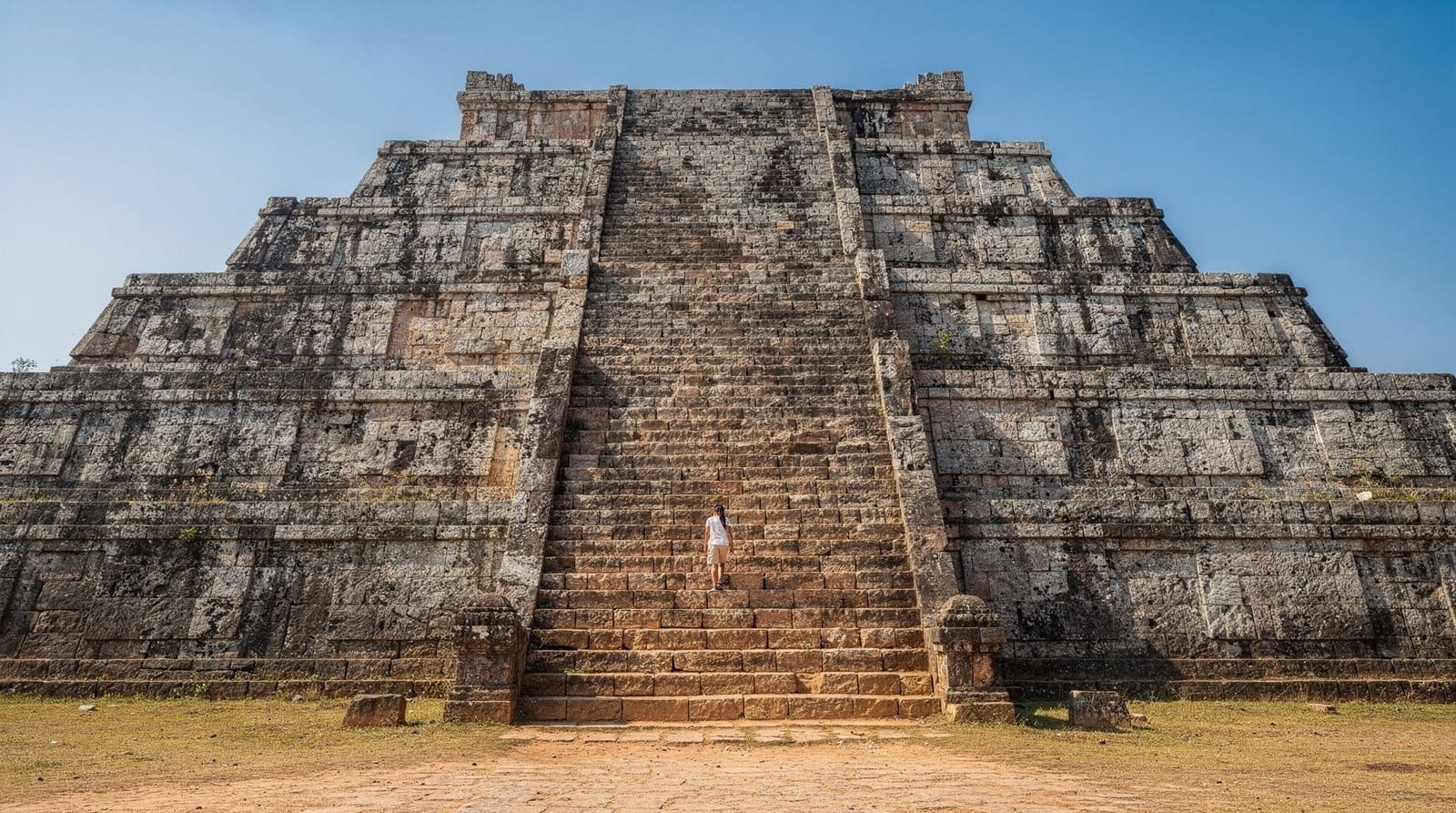
It’s worth setting expectations before you arrive: neither Preah Khan nor Neak Pean approaches Angkor Wat’s sheer scale, and visitors arriving with that specific comparison in mind sometimes feel briefly underwhelmed on first impression. Preah Khan is genuinely large as a footprint — its outer enclosure covers a substantial area — but its low-rise, corridor-heavy layout reads as more intimate and enclosed than Angkor Wat’s soaring towers, closer in feel to Ta Prohm’s ground-level maze than to a monumental single structure.
Neak Pean is deliberately small and precise rather than expansive — its impact comes from concept and symbolism rather than scale. Visitors who adjust their expectations accordingly, treating these stops as a different kind of experience rather than a smaller version of Angkor Wat, tend to rate them considerably higher than those expecting more of the same monumental scale.
The Grand Circuit’s two most rewarding stops
Preah Khan and Neak Pean sit on the Grand Circuit, the roughly 26 km counter-clockwise loop that most first-time visitors skip in favor of the more famous Small Circuit (Angkor Wat, Angkor Thom, Ta Prohm). That’s the whole reason to prioritize these two if you have a second or third day: the temples are comparably significant, and the crowds are a fraction of what you’ll find at the headline sites.
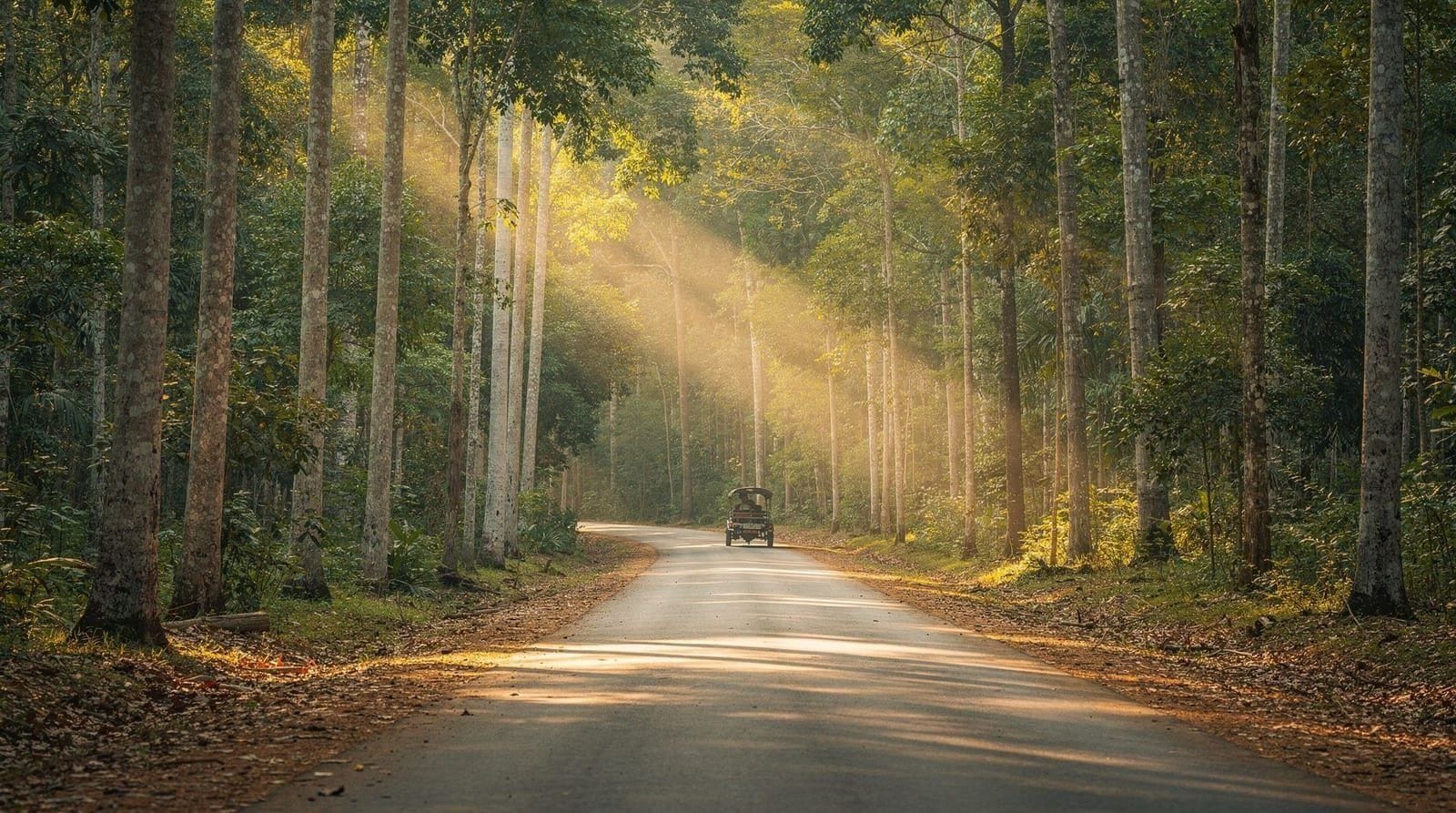
Both are roughly 11-13 km from central Siem Reap — 25-30 minutes by tuk-tuk, a bit further than the Small Circuit stops and in a different direction, which is part of why they get skipped on rushed one-day itineraries. See our Angkor in one day guide for why the Grand Circuit typically needs its own separate day.
Preah Khan — a temple-monastery-university built for a king’s father
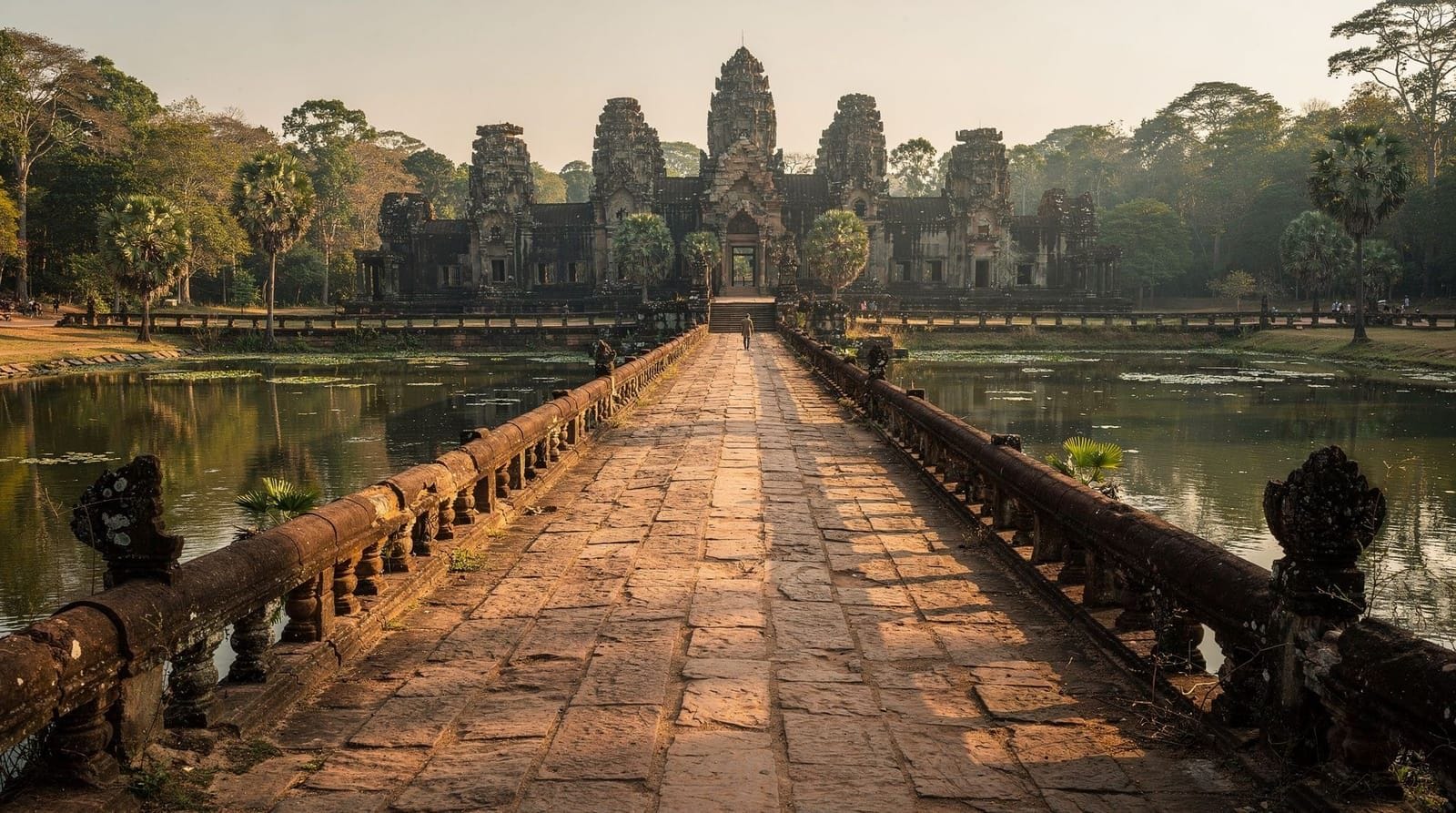
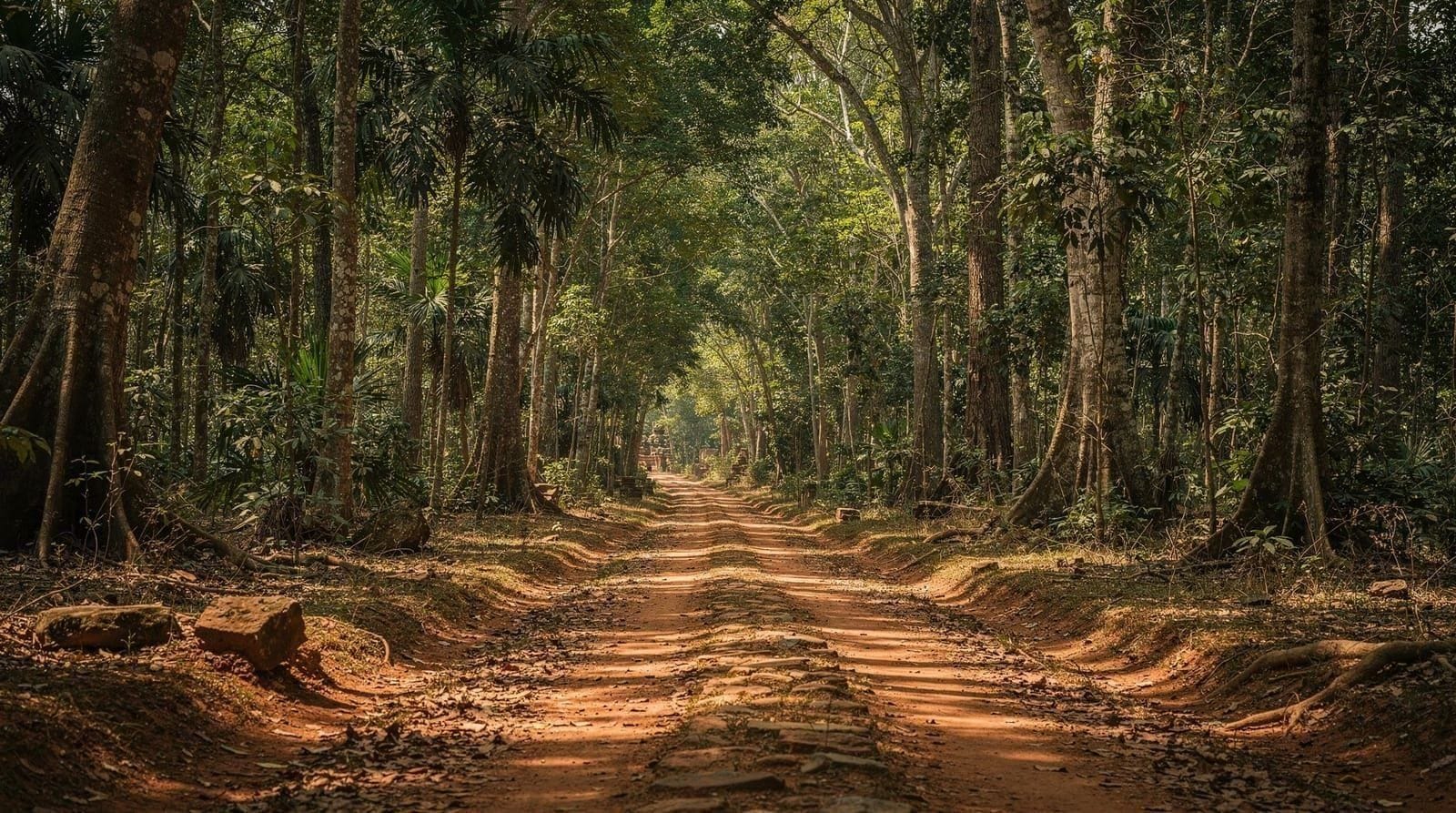
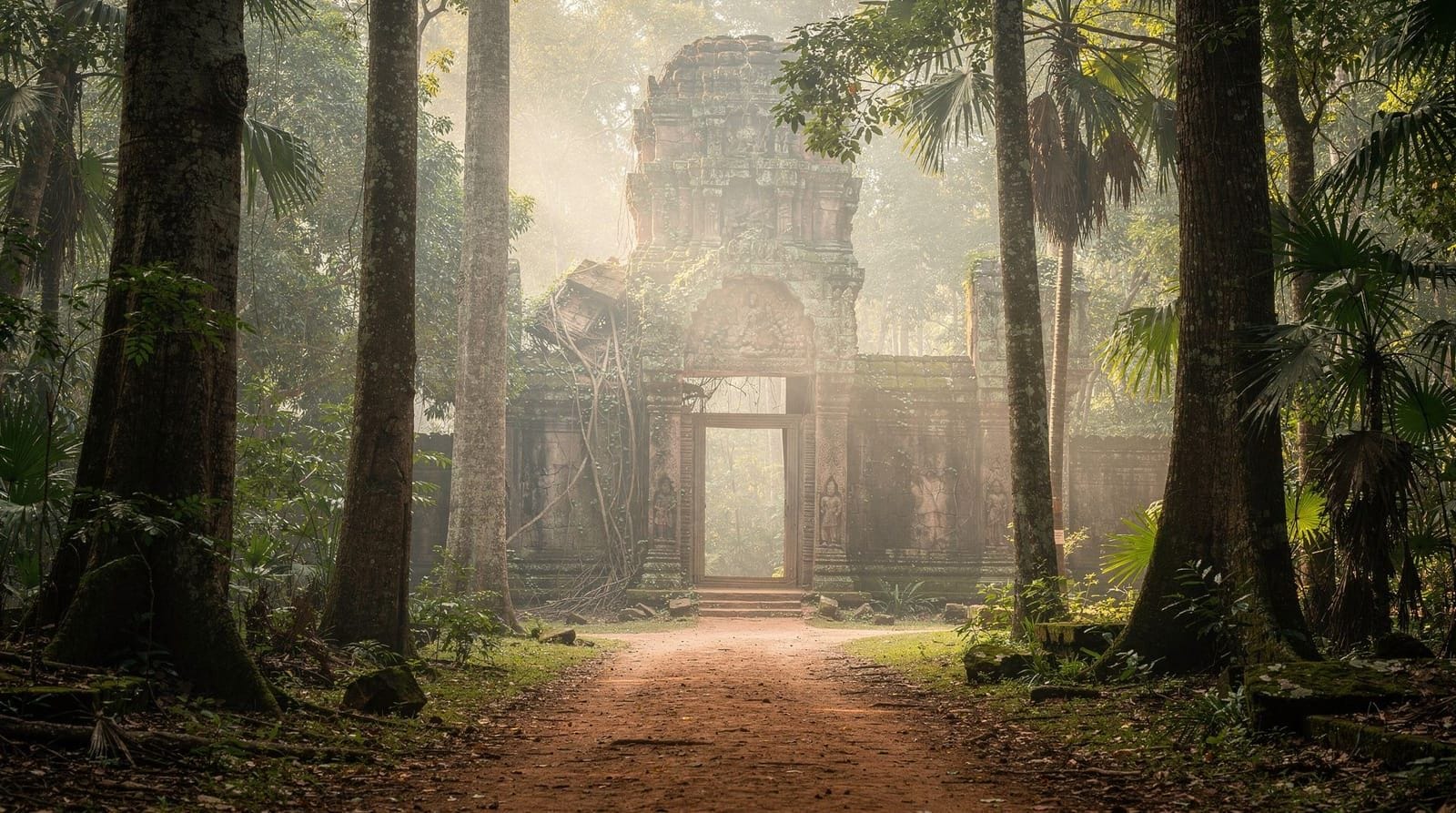
Built in 1191 by Jayavarman VII, dedicated to his father, Preah Khan (“Sacred Sword”) functioned as a Buddhist university and temple complex, with an inscription claiming over 1,000 teachers once worked there. Structurally, it shares Ta Prohm’s jungle-reclaimed aesthetic — tree roots grown into walls, partially collapsed corridors — but with far fewer visitors, which makes it one of the best places in the whole park for unhurried photography of exactly the kind of overgrown-ruin scene most people associate with Ta Prohm.
The temple’s layout is a long east-west axis with four entrance gopuras (gate towers), each guarded by giant garuda statues, and a central sanctuary that was later converted for Buddhist worship — you can see where later Hindu-era carvings were deliberately altered. A distinctive two-story structure with round columns near the north side (sometimes called the “library” or “granary”) is unlike anything else in the park and worth seeking out specifically; most visitors miss it because it sits off the main through-path.
Budget 45-60 minutes here; photographers and history-minded visitors regularly spend 90 minutes or more given how few other groups you’ll be sharing the space with.
Neak Pean — a small island shrine built around water symbolism
A short drive from Preah Khan, Neak Pean is a small circular island temple built by Jayavarman VII in the center of a man-made reservoir (baray), originally designed with four smaller pools around the central one, each linked by a carved spout representing an element (earth, water, fire, wind) believed to have therapeutic properties — bathing in the correct pool was meant to treat a specific ailment. It’s named for the two intertwined nāga (serpent) statues that ring the central pond’s base.
Access is via a wooden walkway across the (seasonally variable) water — during the dry season the reservoir can run low or dry, changing the visual effect significantly from the flooded wet-season views. It’s a quick stop, typically 20-30 minutes, but genuinely distinct from every other temple on this list of 20 — no other Angkor site uses water symbolism this explicitly, and it’s worth the detour purely for how different it feels.
Preah Khan’s role as a hospital and infrastructure hub
Beyond its function as a temple and Buddhist university, Preah Khan’s founding inscription describes it as the administrative center of a genuinely impressive public infrastructure programme — Jayavarman VII is credited with building 102 hospitals across the empire, along with rest-houses spaced along major roads for travelers, and Preah Khan is understood to have played a coordinating role in this network.
This is a useful corrective to a common misconception that Angkor-era temples were purely religious monuments; several of Jayavarman VII’s major building projects, Preah Khan included, functioned as combined religious, educational and administrative institutions serving practical public functions, not just ceremonial ones. Traces of this broader function are harder to read directly in the stone than the religious carvings are, which is another reason a guide adds real value here — the “public hospital network hub” story isn’t something most visitors would piece together from the architecture alone.
Water symbolism at Neak Pean, decoded
Neak Pean’s design is built around a specific, coherent piece of ancient medical and cosmological symbolism worth understanding before you visit, since the site is easy to underrate as “just a small pond temple” without the context. The central pool represents Anavatapta, a mythical lake in Hindu-Buddhist cosmology believed to be the source of four great rivers, each flowing out through a carved spout in the shape of an animal head (human, horse, lion and elephant, corresponding to the four smaller surrounding pools) representing earth, water, fire and wind respectively.
Visitors — historically believed to include royalty and elites — would bathe in the specific pool corresponding to whichever element was thought to address their particular ailment, a practice tying the site directly to the same hospital-and-healing infrastructure Preah Khan helped coordinate. Today, water levels permitting, you can still see the four carved spouts, though the pools themselves are usually not accessible for actual bathing.
What’s overrated, what’s underrated
Neither is remotely overrated — if anything, both are the textbook example of what gets skipped by rushed one-day-park visitors chasing only the Small Circuit highlights. Preah Khan in particular deserves the same reputation Ta Prohm has for atmospheric jungle-ruin photography, minus the crowd bottleneck.
How to combine them with the rest of your day
Preah Khan and Neak Pean sit early on the standard Grand Circuit route, usually followed by Ta Som, East Mebon and Pre Rup — see our Grand Circuit destination page for the full loop order. Our Grand Circuit sunset tour combines both temples with Pre Rup and a Phnom Bakheng sunset finish in one day — a well-sequenced option if you don’t want to manage the loop’s driving order yourself.
For visitors wanting the Small and Grand Circuits both covered without splitting into two separate trips, the 2-day Small and Big Circuit tour pairs this with Banteay Srei; a private option, the Angkor Wat and Big Circuit private tour, gives more flexibility on pacing at Preah Khan specifically.
Photography notes for both stops
Preah Khan’s long central east-west corridor, especially the sections where fallen stone and tree roots frame the view down the axis, is one of the more reliably atmospheric single shots available anywhere on the Grand Circuit — and because visitor numbers stay low even in peak season, you can generally wait a few minutes for a clear frame rather than fighting a crowd the way you might at Ta Prohm’s famous doorway.
Neak Pean rewards a wider, more graphic composition — the central tower rising from the pool, framed by the wooden walkway leading to it — and works particularly well in the golden-hour light either shortly after the Grand Circuit’s typical late-morning arrival or, for visitors doing a later loop, in the softer late-afternoon light before a Pre Rup sunset finish.
Why these two stops are the ones to prioritize if you’re short on Grand Circuit time
If you can’t do the full Grand Circuit loop but want a taste of what it offers beyond the Small Circuit’s headline temples, Preah Khan and Neak Pean are the two stops worth prioritizing over Ta Som, East Mebon or even Pre Rup. Preah Khan delivers the closest equivalent to Ta Prohm’s atmosphere without the crowd, and Neak Pean is structurally unlike anything else in the entire Angkor Pass region — no other temple uses water symbolism this explicitly or has a comparable island-shrine design. Together they take roughly 1.5 hours and can, in a pinch, be visited as a shorter add-on to a longer day rather than requiring the full Grand Circuit commitment, though most visitors find the full loop worthwhile once they’re already out this way.
Practical notes
Ticket: both are fully covered by the standard Angkor Pass — no separate charge, same pass used at Angkor Wat. See the Angkor Pass guide for pricing. Water levels at Neak Pean vary by season — see when to visit if the flooded reservoir look matters to your trip photos; roughly August through January tends to have higher water. Shade is more available at Preah Khan than at most Angkor sites thanks to the tree cover, but bring water regardless, since Neak Pean and the walk between the two sites offer considerably less protection from direct sun. Dress code (shoulders and knees covered) applies at both.
Frequently asked questions about Preah Khan and Neak Pean
Are Preah Khan and Neak Pean on the same ticket as Angkor Wat?
Yes, both are covered by the standard Angkor Pass (1-day $37 / 3-day $62 / 7-day $72) — no separate entrance fee.
Why are these temples less crowded than Angkor Wat or Ta Prohm?
They sit on the Grand Circuit, a longer, separate loop from the Small Circuit that most one-day, first-time visitors skip due to time constraints — see our Small Circuit vs Grand Circuit guide for how the two loops differ.
Is Neak Pean worth visiting if the reservoir is dry?
It’s still visually interesting — the nāga carvings and central tower are unaffected — but the reflective water effect is best seen roughly August-January when reservoir levels are higher.
How much time should I set aside for both temples?
About 1.5 hours combined — 45-60 minutes at Preah Khan, 20-30 at Neak Pean — as part of a half-day Grand Circuit visit that also typically includes Ta Som, East Mebon and Pre Rup.
Can I visit Preah Khan and Neak Pean on the same day as Angkor Wat?
It’s possible but rushed — the two circuits go in different directions from the ticket checkpoint, and most visitors find one circuit per day (Small Circuit one day, Grand Circuit another) more comfortable, especially in the heat.
Is a guide necessary at Preah Khan?
Not essential, but useful — the layout’s symbolism (the four gopuras, the unusual two-story “library” building, the Hindu-to-Buddhist conversion evidence in the carvings) is easy to miss without context.
What does “Neak Pean” mean, and why is it named that?
It translates roughly to “the entwined serpents,” referring to the two intertwined nāga statues that ring the base of the central pond — a common protective motif in Khmer temple architecture, here specifically framing the site’s central water feature.
Was Preah Khan really used as a hospital?
Not directly as a hospital building itself, but its founding inscription describes it as coordinating a network of 102 hospitals Jayavarman VII built across the empire, alongside functioning as a Buddhist university — a combined religious, educational and administrative role typical of several of his major temple projects.
How does Preah Khan compare to Ta Prohm in terms of atmosphere?
Very similar in aesthetic — tree roots grown into stonework, partially collapsed corridors — but with a fraction of Ta Prohm’s visitor numbers, since it sits on the less-visited Grand Circuit rather than the Small Circuit.
Can I still bathe in Neak Pean’s pools like ancient visitors reportedly did?
No, the pools are not open for bathing today; they’re preserved as an archaeological and architectural site, viewed via the wooden walkway rather than entered.
Top experiences
Bookable activities with verified prices and instant confirmation on GetYourGuide.

Phnom Bakheng: Sunset Tour with Pre Rup, Neak Pean and Preah Khan

Siem Reap: 2-Day Angkor Wat Tour, Small and Big Circuit with Banteay Srei
Siem Reap: Angkor Wat and Big Circuit Temples Private Tour

Siem Reap: 2-Day Angkor Wat and Grand Circuit Temples Tour

Angkor: Small-Group Grand Circuit Temples Tour with Banteay Srei
More tours on Viator
Top-rated experiences with verified reviews, bookable on Viator (a Tripadvisor company).