Siem Reap with kids: an honest family planning guide
Siem Reap: Kompong Phluk Floating Village Half-Day Tour
Is Siem Reap good for a family trip with kids?
Yes, with real pacing adjustments — children under 12 enter the Angkor park free (passport required), and several temples (Angkor Thom/Bayon's faces, Ta Prohm's tree roots) genuinely capture children's imagination. The main adjustment from an adults-only itinerary: one temple cluster per day instead of two, an earlier finish before peak heat, and non-temple breaks (pool time, the floating village, a quad bike ride) built into every day rather than back-to-back temple visits.
The honest starting point
Siem Reap with children is genuinely doable and, for many families, a rewarding trip — but it requires real adjustments from a standard adults’ itinerary, not just a lighter version of the same plan. The heat, the walking distances between temple structures, and the early sunrise starts that make Angkor so appealing to adults are the exact factors that wear children down fastest. This guide is built around what actually changes when kids are in the group, not a generic “family-friendly” gloss on the standard temple circuit.
The one real financial perk: free entry under 12
Children under 12 enter the Angkor park free, which meaningfully changes the cost math for a family compared to an all-adult group paying $37-72 per person. The requirement is strict on one point: bring the child’s actual passport to the ticket counter as age proof — not a copy, not a birth certificate, not a parent’s verbal confirmation.
Staff at the Angkor Enterprise counter check this consistently, and arriving without it can mean either paying full price or a frustrating delay while it’s sorted out. Children 12 and over pay the standard adult rate regardless of being minors, so double-check ages against pass tiers if traveling with a mix of younger and older children — see the full Angkor Pass guide for the exact pricing and validity windows.
Which temples actually work for kids
Best for children: Angkor Thom’s Bayon (the temple with dozens of giant carved stone faces, visually dramatic and instantly understandable without historical context) and Ta Prohm (massive tree roots growing through and over ancient stone structures — the “Tomb Raider temple,” reliably popular with children who’ve seen the roots in photos or videos beforehand). Both offer clear, tangible “wow” moments that don’t require appreciating architectural history to enjoy.
Manageable with supervision: Angkor Wat itself — impressive at ground level and across the causeway, though the steep upper-level climb (requiring a queue and a strict dress code) is optional and can be skipped with younger children without missing the temple’s main visual impact.
Best saved for older or more adventurous children: temples with steep, unprotected stone stairs — Ta Keo, Pre Rup, and the upper terraces some families choose to skip entirely with young children. These aren’t unsafe with careful supervision, but they demand more caution and slower pacing than a family with a full day planned may have patience for.
Skip or treat as optional with young kids: the farthest outlier temples (Koh Ker, roughly 2 hours’ drive each way) are a long day in a moving vehicle for a temple visit that, while genuinely spectacular, may not register the same way for a young child as it does for an adult who understands what they’re seeing.
Managing heat — the real constraint
Heat, not temple content, is the actual limiting factor on a family day at Angkor. Temperatures climb quickly after 9-10am, and by early afternoon even adults find the heat draining; children fatigue faster and show less obvious warning signs before it becomes a real problem. The practical adjustments that work:
- Start at the 5am opening, not for the sunrise photo necessarily, but because the first two hours are the coolest window of the entire day.
- Plan to be finished with outdoor temple activity by early-to-mid afternoon. Treat anything after 1pm as optional, not part of the default plan.
- Carry more water than feels necessary — for both children and adults, and encourage regular drinking rather than waiting for thirst.
- Watch for early heat-fatigue signs: irritability, flushed skin, reduced energy or enthusiasm — these typically show up well before a child would articulate feeling unwell, and are the practical cue to head back rather than push through one more temple.
- Use the tuk-tuk ride between temples as a genuine rest break, not just transit — the open-air breeze while moving is meaningfully cooler than standing still at a temple.
A realistic family day structure
Rather than the adult small-circuit pattern (Angkor Wat → Bayon → Ta Prohm in one long day), a family day works better split and paced:
Morning (5:00am-10:30am): Angkor Wat sunrise (optional — some families skip the pre-dawn wake-up and arrive after sunrise instead, still well within the cool morning window) followed by Bayon’s faces.
Midday (10:30am-2:00pm): return to the hotel for lunch, pool time, and a rest — this is the single biggest difference from an adult itinerary, which typically pushes through the midday heat to fit in more sites.
Afternoon/evening (4:00pm onward): a lighter second activity once temperatures ease — Ta Prohm if not already covered, the Old Market for an easy walk and an early dinner, or simply more pool time if the morning was full.
This structure fits comfortably into a 3-4 day trip; see the dedicated 3-day family itinerary for a full day-by-day version built around exactly this rhythm.
Non-temple activities that work well with children
Breaking up the temple schedule with activities that don’t involve walking on hot stone keeps energy and enthusiasm higher across a multi-day trip:
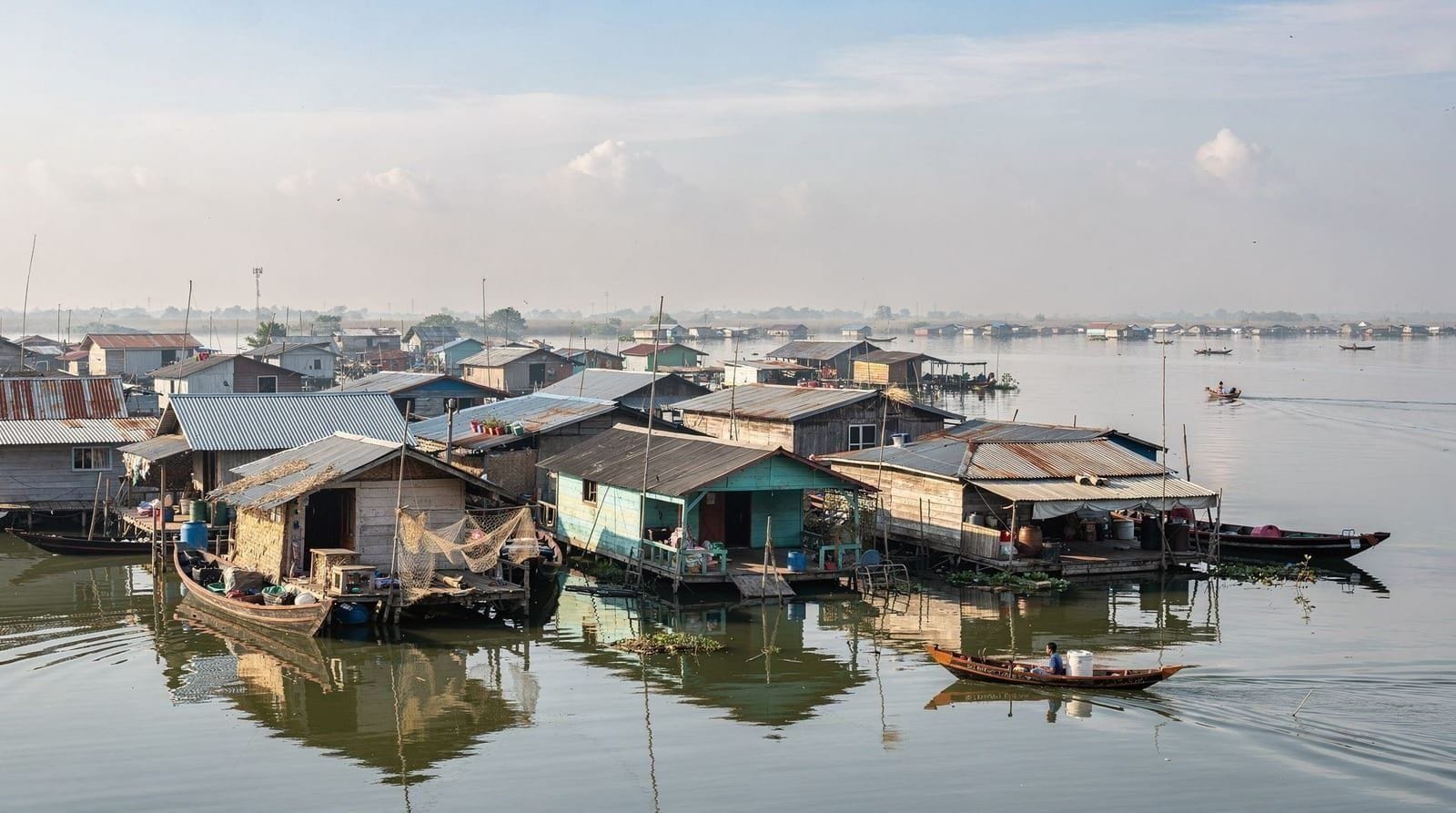
- A Tonlé Sap floating village boat trip — the boat ride itself, plus stilt houses and floating structures, tends to hold children’s attention well, and it’s a physically restful activity compared to temple walking.
- An elephant sanctuary visit — an ethical, observation-based (not riding) sanctuary experience that many families find to be a trip highlight independent of the temples.
- The Phare Cambodian Circus — an evening show combining acrobatics, live music and visual storytelling with no language barrier, generally well-suited to children and a good lower-energy evening option after a physically active day.
- Countryside cycling or a gentle quad bike outing — a change of pace and scenery from temple visits, and physically engaging in a different way that many children (and tired parents) welcome.
Practical logistics with children
Transport: tuk-tuks are the standard way to move around, with no child car seats available — hold younger children directly, and prioritize a driver who drives at a measured pace. A private tuk-tuk for the full day (roughly $15-20, more for farther outliers — see the tuk-tuk pricing guide) is worth the modest extra cost over a shared vehicle for the flexibility to leave early if needed.
Accommodation: a hotel with a pool is close to essential rather than a nicety — it’s the most effective heat-recovery tool available between temple sessions. Wat Bo or riverside tend to suit families better than the louder Pub Street core, given the value of consistent sleep before early starts.
Health: dengue (not malaria) is the relevant mosquito-borne risk in the main tourist zone — DEET-appropriate repellent for children and covering up at dawn/dusk matter. Pack rehydration salts, given how easily children can dehydrate in the heat without noticing.
Dress code: the shoulders-and-knees rule applies to children as well as adults for temple entry — pack accordingly; see the dress code guide for specifics.
Food with children
Cambodian food is generally mild rather than fiercely spiced, and Siem Reap’s tourist-oriented restaurant scene means familiar options (fried rice, noodle soups that can be requested without chili, grilled meats, fresh fruit) are available almost everywhere, including near the temple entrances. Fresh tropical fruit — mango, dragon fruit, watermelon — is widely available, cheap, and a genuinely useful way to keep children hydrated and fed between meals on a hot temple day.
Street food is generally safe from busy, high-turnover stalls, but families with very young children or known sensitive stomachs may prefer sticking to sit-down restaurants for the first day or two while adjusting. Bottled or filtered water is essential — tap water isn’t potable, and it’s worth carrying more than seems necessary specifically for children, who dehydrate faster and less predictably than adults in this heat.
Common mistakes families make
The single most common mistake is applying an adult-scaled itinerary to a family trip — attempting the small circuit and grand circuit in the same pattern an adult couple would use, then wondering why the afternoon falls apart. The fix isn’t seeing less overall, it’s spreading the same content across more days with a genuine midday break built in, as outlined above.
A second common mistake is underestimating how tiring the 4:45am sunrise wake-up is for children on a multi-day trip. It’s a memorable experience once, but repeating it two or three mornings in a row — common on longer family itineraries that treat every day as a sunrise day — tends to produce cranky, overtired kids by day three. Reserve the pre-dawn start for one, maybe two mornings, and let other days start later.
A third: not packing entertainment for the transit time. Tuk-tuk rides between outlier temples can run 30-90 minutes each way, and while the open-air ride is often novel and enjoyable for children on the first trip, longer combined transit days benefit from a book, a downloaded show, or a simple travel game kept in the daypack.
Safety and scam-awareness specific to families
The general tourist-trap and scam guide applies equally to families, but a few situations come up specifically around children: vendors and informal sellers near temple entrances sometimes target parents with children more persistently, on the assumption a parent is more likely to buy something to placate or distract a child — a polite, consistent “no thank you” works as well here as anywhere else in Cambodia.
Be cautious of anyone offering to “help” carry a child or stroller at a crowded site in exchange for a tip; it’s rarely necessary and creates an opportunity for confusion or petty theft in a crowd. Strollers themselves are of limited use at most temple sites given uneven stone and stairs — a child carrier or simply walking with younger children tends to work better than wheeling a stroller through Angkor’s terrain.
Frequently asked questions about Siem Reap with kids
Do children need an Angkor Pass ticket?
Children under 12 enter free, but a passport (not just a birth certificate or estimate of age) is required as proof at the ticket counter — bring the physical passport for every child, not a copy. Children 12 and over pay the full adult price ($37/$62/$72 depending on pass length).Which temples are best for kids, and which should be skipped?
Angkor Thom's Bayon (giant carved stone faces) and Ta Prohm (tree roots swallowing ancient stone, the 'Tomb Raider temple') are the two most consistently popular with children — visually dramatic and easy to understand without much historical context. Avoid temples requiring steep unprotected stairs with younger children (parts of Angkor Wat's upper level, Ta Keo, Pre Rup) unless your child is a confident, supervised climber.How do you manage heat with kids at the temples?
Start early (the 5am opening isn't just for sunrise photos — it's genuinely the coolest part of the day), plan to be back at the hotel or pool by early-to-mid afternoon, and treat any temple activity after 1pm as optional rather than default. Carry more water than feels necessary, and watch for early signs of heat fatigue in children (irritability, flushed skin, reduced energy) rather than waiting for obvious distress.Are tuk-tuks safe for children?
Yes, tuk-tuks (remorques, the trailer-style version towed behind a motorbike, common for tourist transport) are a standard and generally safe way to move around Siem Reap with children, though there are no child car seats — hold younger children directly, and choose a driver who drives at a measured pace over one who speeds through traffic for a faster trip.What non-temple activities work well for families?
A Tonlé Sap floating village boat trip, a quad bike or countryside cycling outing, the Phare Cambodian Circus (visually striking, no language barrier, generally suitable for children), and a hands-on cooking class adapted for younger participants are all strong non-temple options that break up a heavy temple schedule.How many days should a family plan for?
Plan for roughly one extra day compared to an adults-only itinerary of the same scope — a 3-day adult itinerary often becomes a comfortable 4-day family one once you factor in slower pacing, earlier finishes, and built-in pool or rest breaks between temple visits.
Top experiences
Bookable activities with verified prices and instant confirmation on GetYourGuide.


More tours on Viator
Top-rated experiences with verified reviews, bookable on Viator (a Tripadvisor company).