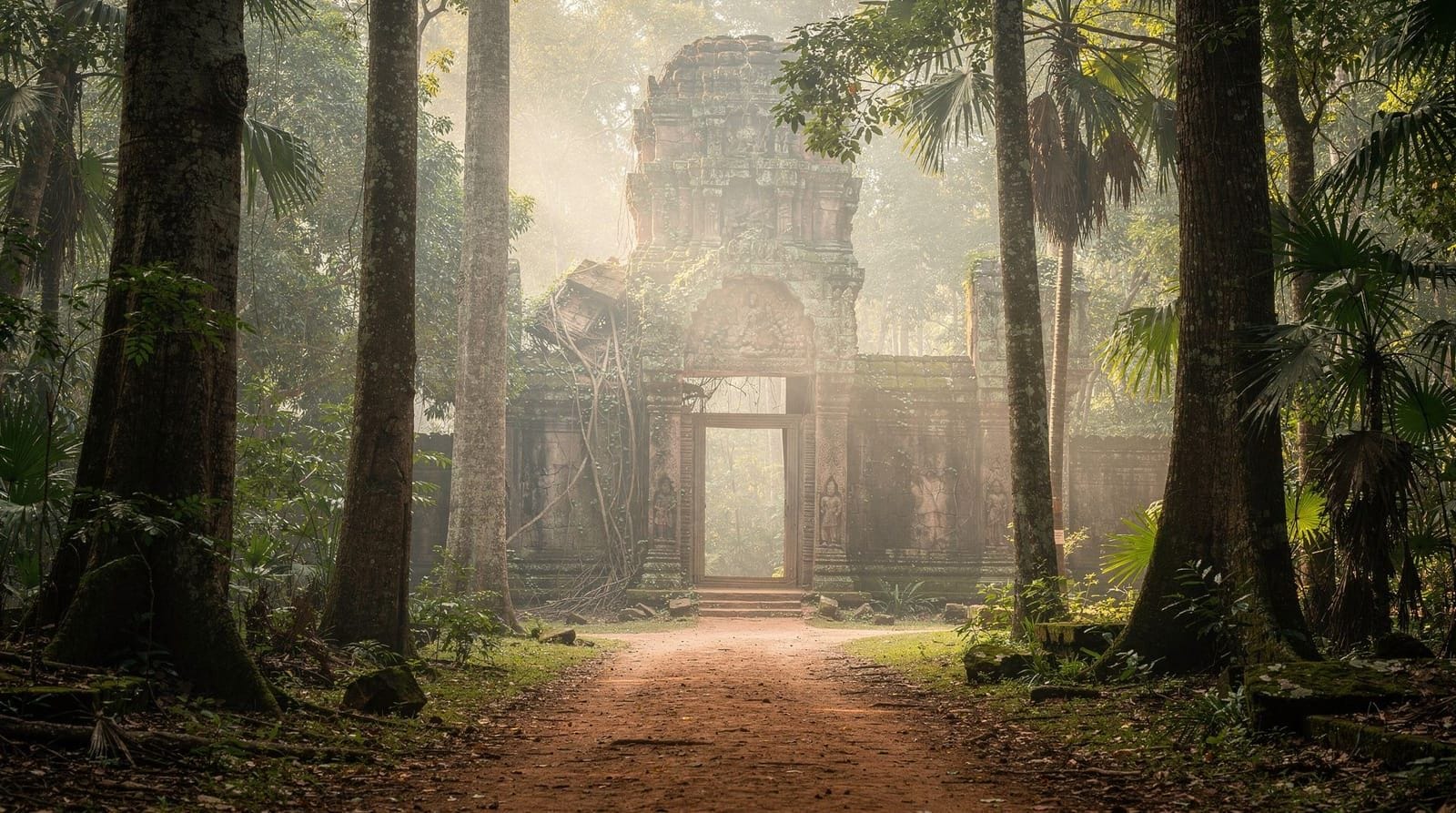
Best Angkor sunset spots beyond Phnom Bakheng
Phnom Bakheng: Sunset Tour with Pre Rup, Neak Pean and Preah Khan
What's a good alternative to Phnom Bakheng for Angkor sunset?
Pre Rup, on the Grand Circuit, is the most commonly recommended alternative — a stepped temple-mountain with genuine elevation and open views, at a fraction of Phnom Bakheng's crowd. Angkor Wat itself at sunset (rather than sunrise) is also far less crowded than its own morning rush.
The sunrise-sunset asymmetry in Angkor trip planning
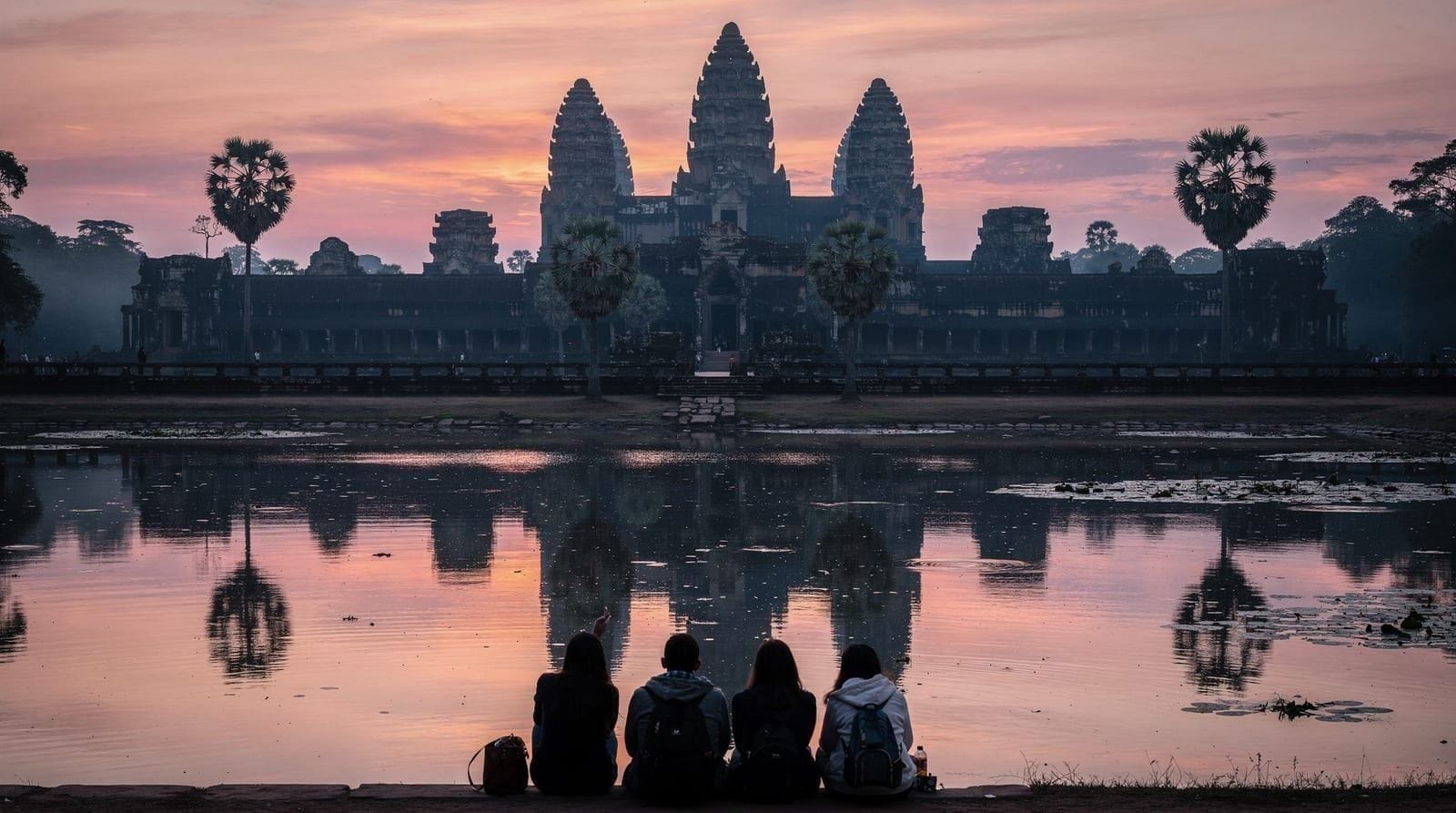
Nearly every Siem Reap itinerary online mentions Angkor Wat sunrise; comparatively few give sunset the same dedicated treatment, despite it offering real advantages for visitors willing to look past the single famous option. Part of this is genuine: sunrise at Angkor Wat has a specific, singular, widely-recognized visual (the towers silhouetted over the pools) that sunset doesn’t replicate in quite the same iconic form. But treating sunset as an afterthought means missing genuinely rewarding alternatives — this guide exists specifically to fill that gap, covering both the famous capped-access option and the quieter spots most itineraries skip past entirely.
Sunset gets less attention than sunrise, but it shouldn’t
Angkor Wat sunrise dominates the conversation around this park’s best light, but sunset offers its own advantages — generally calmer crowds outside of one specific famous exception, warmer and more dramatic sky color on clear days, and the practical benefit of not requiring a 4:30am wake-up. The catch is that the one obvious, famous sunset spot has become a victim of its own reputation.
What to expect physically at each spot
Phnom Bakheng requires a genuine uphill walk or an optional elephant-free hike up a moderately steep path to reach the summit temple — budget 15-20 minutes for the ascent alone, on top of any queue time, and wear appropriate footwear given the uneven original stone steps near the top. Pre Rup’s climb is shorter but steeper, involving original narrow stairs typical of Khmer temple-mountains, manageable for most visitors but worth approaching cautiously, particularly on the way down in fading light. Angkor Wat’s sunset viewing requires no climbing beyond the temple’s outer level, making it the most physically accessible of the three options for visitors with mobility considerations.
Phnom Bakheng: famous, and now managed for a reason
Phnom Bakheng, a small hilltop temple with genuinely excellent panoramic views over the surrounding jungle canopy toward Angkor Wat in the distance, is the classic answer to “where do I watch sunset at Angkor.” It’s also become so popular that park authorities now cap and time-slot access to its summit specifically to manage overcrowding that had degraded the experience — expect a queue system, limited numbers on the hill at once, and a need to plan your visit timing rather than showing up spontaneously 20 minutes before sunset. It’s still worth doing once for the view itself, but go in with realistic expectations about the crowd management process rather than an image of a quiet hilltop.
Pre Rup: the recommended alternative
Pre Rup, a 10th-century stepped temple-mountain on the Grand Circuit, is the most consistently recommended alternative to Phnom Bakheng. Its elevated structure gives genuine open views over the surrounding landscape, late-day light catches its reddish sandstone attractively, and — critically — it sits on the standard Grand Circuit route with no capped access or separate booking system, covered by any tier of the Angkor Pass like any other Grand Circuit stop. A Grand Circuit tour including Pre Rup sunset combines it naturally with Preah Khan and Neak Pean earlier in the day.
Angkor Wat at sunset: an underused option
Because Angkor Wat sunrise draws such an overwhelming crowd, it’s easy to forget the same temple works for sunset too — and does so with a small fraction of the morning crowd, since most visitors have already moved on to other sites by late afternoon. The angle is different (western light hitting the towers more directly rather than a behind-the-tower silhouette), but the causeway and pools are far calmer, making it a genuinely good option for visitors who’ve already done the sunrise crowd once and want a quieter second look at the same towers. A sunset tour combining Angkor Wat with other stops is a useful way to structure this into your itinerary.
What doesn’t work well for true sunset
Bayon and Ta Prohm both close before the most dramatic late-day light develops, since like most Angkor temples they operate on standard daytime closing hours rather than staying open through sunset itself. Both work well for warm, angled late-afternoon light in the hour or two before closing — genuinely good photography conditions — but neither is a “watch the sun set” spot in the literal sense the way Phnom Bakheng, Pre Rup or Angkor Wat’s exterior can be.
Srah Srang: the quiet reservoir alternative
Srah Srang, a large ancient reservoir (baray) near Banteay Kdei on the Small Circuit, is a lesser-known sunset alternative worth mentioning alongside the three main spots above — its open water surface catches reflected sky color in a way similar in spirit to Angkor Wat’s reflecting pools, but with a small fraction of the visitor traffic given its lower profile in most sunset guides.
The stone viewing terrace on its western edge, originally built for royal ceremonial use, offers an unobstructed view over the water toward the sunset with essentially no crowd management or capacity restrictions to plan around. It won’t deliver the iconic temple-silhouette composition of Phnom Bakheng or Angkor Wat, but for visitors who’ve already photographed those and want a calmer, more contemplative final evening at Angkor, Srah Srang is a genuinely underused option.
Sunset beyond the park entirely
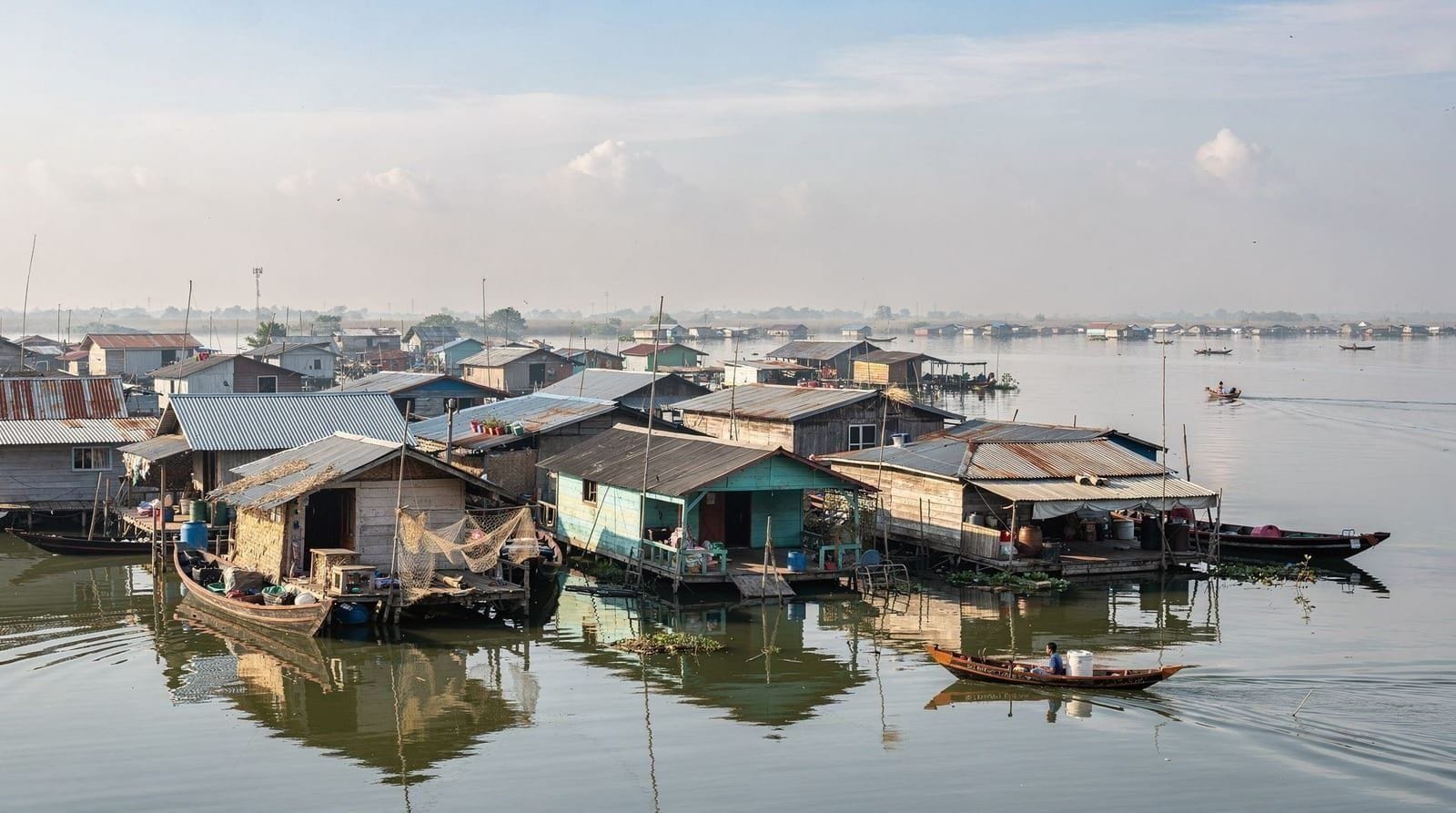
If you’d rather skip the park-ticket requirement altogether for a sunset outing, a Tonlé Sap floating village sunset boat trip trades temple views for open lake water and sky, a popular choice particularly toward the end of a multi-day trip once the temple circuits are done. A Tonlé Sap sunset dinner cruise combines the view with an evening meal on the water. Countryside routes near town also offer unobstructed horizon views over rice fields with no ticket needed at all — see our countryside and rice fields guide for specific route suggestions.
How sunset timing shifts across the year
Sunset in Siem Reap shifts by roughly an hour across the calendar year, from around 5:30pm in the depths of the dry season (December-January) to closer to 6:30pm during the peak of rainy season (June-July) — a meaningful enough swing that a fixed “arrive at 5:30” rule of thumb from an out-of-date source can leave you badly mistimed depending on when you’re actually traveling. Checking the specific sunset time for your travel dates, rather than relying on a rough seasonal memory, is worth the extra minute, particularly for Phnom Bakheng given the tighter arrival-window stakes of its capped-access system.
Sunset light quality by spot
Phnom Bakheng’s elevated, west-facing hilltop position gives it genuinely excellent unobstructed views over the jungle canopy toward the sun itself, which is part of why it earned its reputation in the first place — the sight of the sun sinking behind an unbroken green horizon, with Angkor Wat’s distant silhouette visible on a clear day, is difficult to replicate elsewhere.
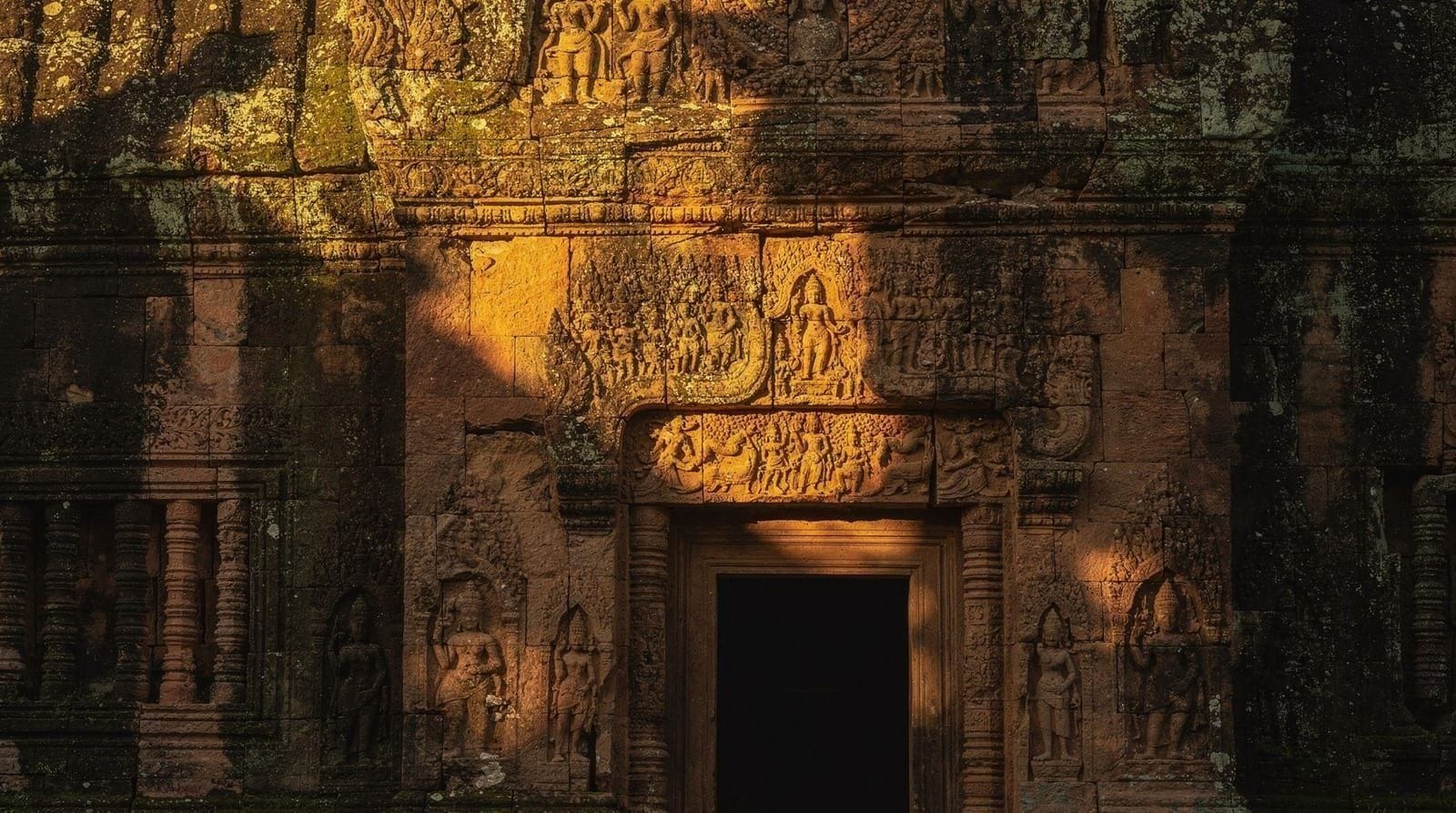
Pre Rup’s light quality is different but comparably strong: its reddish sandstone genuinely glows under late-day light in a way few other Angkor structures do, an effect enhanced rather than diminished by the stone’s already-weathered, textured surface. Angkor Wat’s own sunset light hits the towers and outer galleries at a warm, raking angle that photographs particularly well against the pale grey-gold stone, though without the elevated panoramic view that Phnom Bakheng or Pre Rup offer — a genuine trade-off between ground-level intimacy with the temple and the wider landscape context an elevated viewpoint provides.
Booking Phnom Bakheng’s access in practice
Because of the capped, time-slotted system, the practical mechanics of getting onto Phnom Bakheng’s summit have changed noticeably from the “just walk up” approach that worked in years past. Current practice generally involves a check-in process at the base of the hill, sometimes with a specific entry-time allocation depending on how full the hill already is, rather than a simple queue-and-climb.
Your driver or tour operator, if you’re using one, will typically be more current on the exact same-day process than general online guides, since the specifics of the check-in system have been adjusted more than once as park authorities refine the crowd-management approach — confirming the current process with a local source on the day itself is more reliable than relying solely on a fixed set of instructions from any single guide, this one included.
What time to actually arrive
For Phnom Bakheng, arriving at least 45-60 minutes before sunset is advisable given the capped-access queue system — later arrivals risk being turned away once the hill reaches capacity. For Pre Rup, arriving 20-30 minutes before sunset is generally sufficient given the lack of any access cap, though earlier arrival secures a better position on the temple’s upper level. For Angkor Wat sunset, 30 minutes before is a reasonable buffer, accounting for the walk in from the parking area described in our sunrise guide, which applies equally whether you’re there for the morning or evening light.
Planning a sunset around your day
Sunset works well as the closing stop on a Grand Circuit day (Pre Rup naturally comes near the end of that loop) or as a deliberate return trip to Angkor Wat on a day when you’ve already done the sunrise rush once. For crowd-timing across the whole park, not just sunset specifically, our avoiding the crowds guide covers which hours and entry points consistently see fewer people at every major temple.
Phnom Bakheng’s 300-person capacity in detail
The cap on Phnom Bakheng’s summit is specifically set at roughly 300 visitors at any one time, a number park authorities introduced after years of dangerous overcrowding on a hilltop with limited physical space and a single narrow original staircase as the primary access route.
In practice, this means a genuine possibility of being turned away or held at a lower queue point once the summit reaches capacity, particularly during peak season (December-February) when demand is highest. The system works on a rolling basis — visitors descending free up slots for visitors waiting — so a longer wait during the peak pre-sunset window (roughly the final hour before sunset) is the realistic trade-off for guaranteeing entry rather than being turned away outright.
Equinox alignment and why it matters for photographers
Angkor Wat’s main sanctuary is famously aligned with the equinoxes, when the sun rises directly over the central tower as viewed from the causeway — a phenomenon that draws a specific, additional surge of photographers and astronomy-minded visitors around the spring (roughly March 20-21) and autumn (roughly September 22-23) equinox dates each year.
The same alignment principle applies in reverse for a western-facing sunset view from behind the temple, though this is a less commonly documented or chased phenomenon than the sunrise alignment. If precise solar alignment is a specific photographic goal rather than simply “a nice sunset,” researching the exact date and confirming current-year timing before your trip is worth the extra planning, since the effect is meaningfully different outside a tight window around the equinox itself.
Useful focal lengths for each spot
A wide-angle lens (roughly 16-24mm equivalent) suits Phnom Bakheng and Pre Rup well, where the goal is typically capturing the temple structure itself along with the wide jungle-canopy or landscape backdrop behind it. A standard zoom (24-70mm equivalent) handles Angkor Wat’s sunset shot adequately, given the causeway’s distance from the towers provides natural working room without needing extreme wide-angle distortion.
A longer telephoto (70-200mm equivalent) becomes useful specifically for isolating the setting sun itself within the frame — compressing it against a temple silhouette — a technique that works at any of the three main spots but requires a longer lens than most casual travelers pack. See our full photography guide for the complete gear and technique breakdown across all of Angkor, not just sunset specifically.
Tripod and equipment constraints by spot
Phnom Bakheng’s capped-access summit is the most tripod-restrictive of the three main sunset spots given both the crowd density and the limited physical space on the hilltop itself — a full tripod is often impractical here even where not formally banned, since space is genuinely scarce among the 300-person cap. Pre Rup, with considerably lower crowd density, tolerates a tripod more comfortably, particularly if you arrive early enough to claim a stable position on the temple’s upper level before it fills in. Angkor Wat’s exterior sunset viewing area has more open space than either alternative, making a tripod the most practical of the three locations if stabilized long-exposure shots (twilight sky detail, for instance) are part of your plan.
Weather and sky conditions that produce the best color
Angkor’s most dramatic sunset color tends to come from a specific weather pattern: partial cloud cover rather than a completely clear or completely overcast sky, since scattered clouds catch and reflect the low-angle light in ways a clear sky simply transmits through without much visual drama.
This pattern is more common during the shoulder months bridging dry and rainy season (roughly April-May and October-November) than during the driest peak-season months (December-February), when skies tend toward consistently clear with less dramatic color variation. This isn’t a reason to avoid peak season for sunset photography — clear skies still deliver reliably good light — but it’s worth knowing if chasing the most vivid possible sky color specifically influences your trip timing.
Frequently asked questions about Best Angkor sunset spots beyond Phnom Bakheng
Why is Phnom Bakheng so crowded at sunset?
Phnom Bakheng is the most famous elevated sunset viewpoint at Angkor, and visitor numbers to its small summit are now capped and time-slotted by park authorities specifically because of past overcrowding — book or arrive early, and expect a managed, ticketed queue system rather than open access.Is Angkor Wat a good sunset spot, not just sunrise?
Yes, and it's underused for this purpose — most visitors treat Angkor Wat as a sunrise-only stop, so the same causeway and pools that are packed at 5:15am see a fraction of the crowd at sunset, with warm late-day light on the towers from the opposite angle.Does Pre Rup require an extra ticket?
No — Pre Rup sits on the Grand Circuit and is covered by any tier of the standard Angkor Pass, with no separate fee or reservation required, unlike Phnom Bakheng's capped-access system.What about sunset at Bayon or Ta Prohm?
Both close before the most dramatic late sunset light, along with most temples inside the park, so they work better as late-afternoon rather than true sunset spots — good for warm, angled light in the hour or two before closing, not for watching the sun actually dip below the horizon from inside the temple.Are there sunset spots outside the park entirely?
Yes — a Tonlé Sap floating village sunset boat trip is a popular alternative that trades temple views for open water and sky, and several countryside and rice-field routes near town offer unobstructed horizon views without any park ticket needed at all.Do I need to book Phnom Bakheng in advance?
Given the capped, time-slotted access system, arriving well before your intended viewing time and checking current on-site booking procedures with your driver or hotel is the safer approach — treat it as a managed attraction requiring planning, not a spontaneous stop.
Top experiences
Bookable activities with verified prices and instant confirmation on GetYourGuide.


More tours on Viator
Top-rated experiences with verified reviews, bookable on Viator (a Tripadvisor company).