Where to stay in Siem Reap: neighborhoods compared
Siem Reap: City Walking Tour
Duration: 2 hours
Where should I stay in Siem Reap?
Old Market/Pub Street area for first-timers who want walkable restaurants, bars and easy tuk-tuk pickup. Wat Bo for a quieter, still-central mid-range base 10-15 minutes' walk from Pub Street. The Sala Kamreuk/riverside strip for boutique hotels with a calmer feel that's still an easy tuk-tuk ride from the center. Avoid staying more than 15-20 minutes from the Old Market unless the hotel itself is the destination.
Why area matters more than hotel star rating here
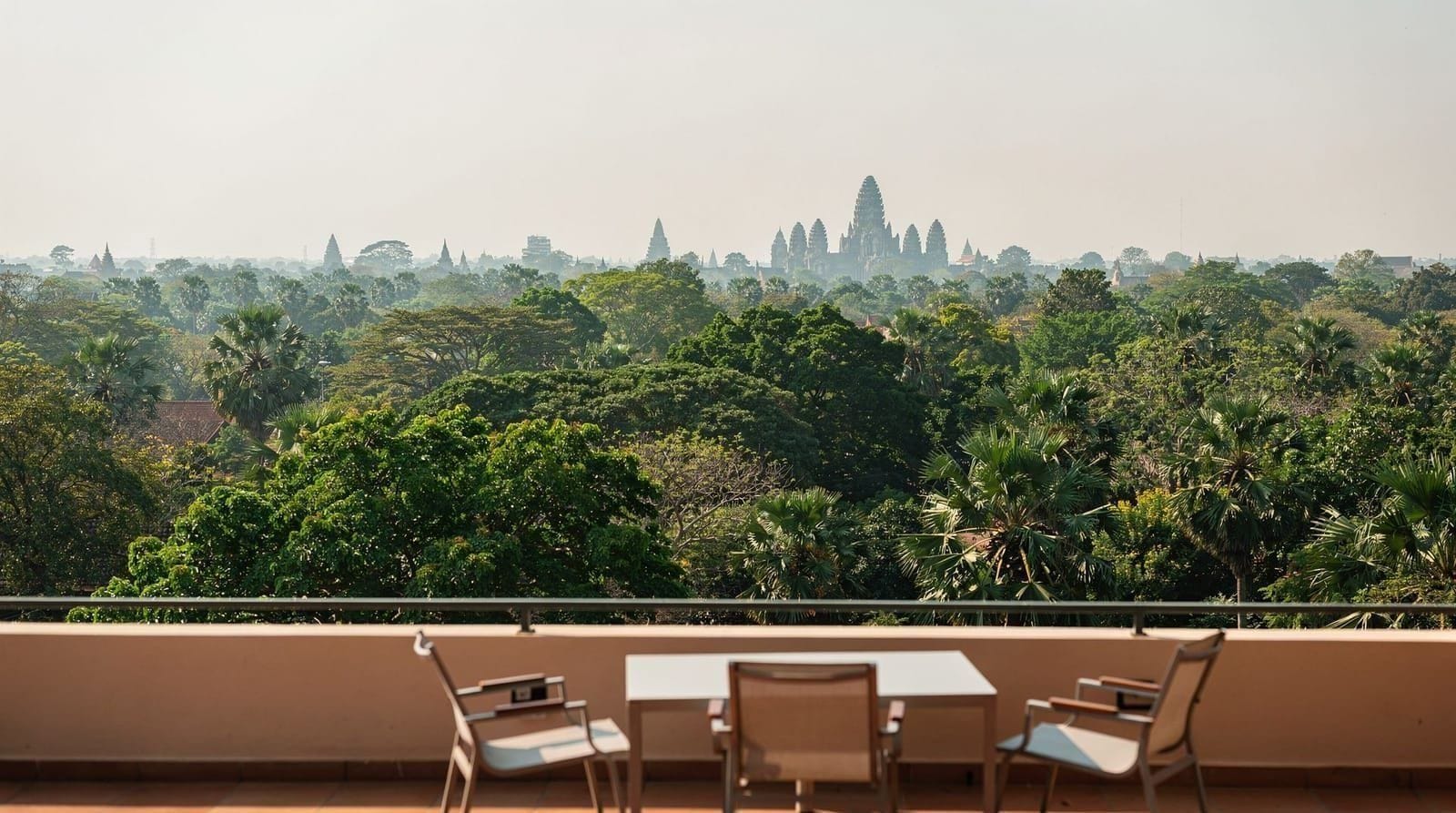
Siem Reap town is compact — every major neighborhood is within a 5-20 minute tuk-tuk ride of every other one, and all of them are roughly the same 15-25 minute distance from the Angkor Wat entrance. That means the real decision isn’t “how close to the temples,” since almost nothing meaningfully changes that number — it’s what kind of evenings you want after a day at Angkor: loud and central, walkable and moderate, or quiet and residential.
This guide compares the main areas honestly, including the trade-offs each one comes with, rather than defaulting to “stay near Pub Street” for every traveler type.
Old Market / Pub Street area
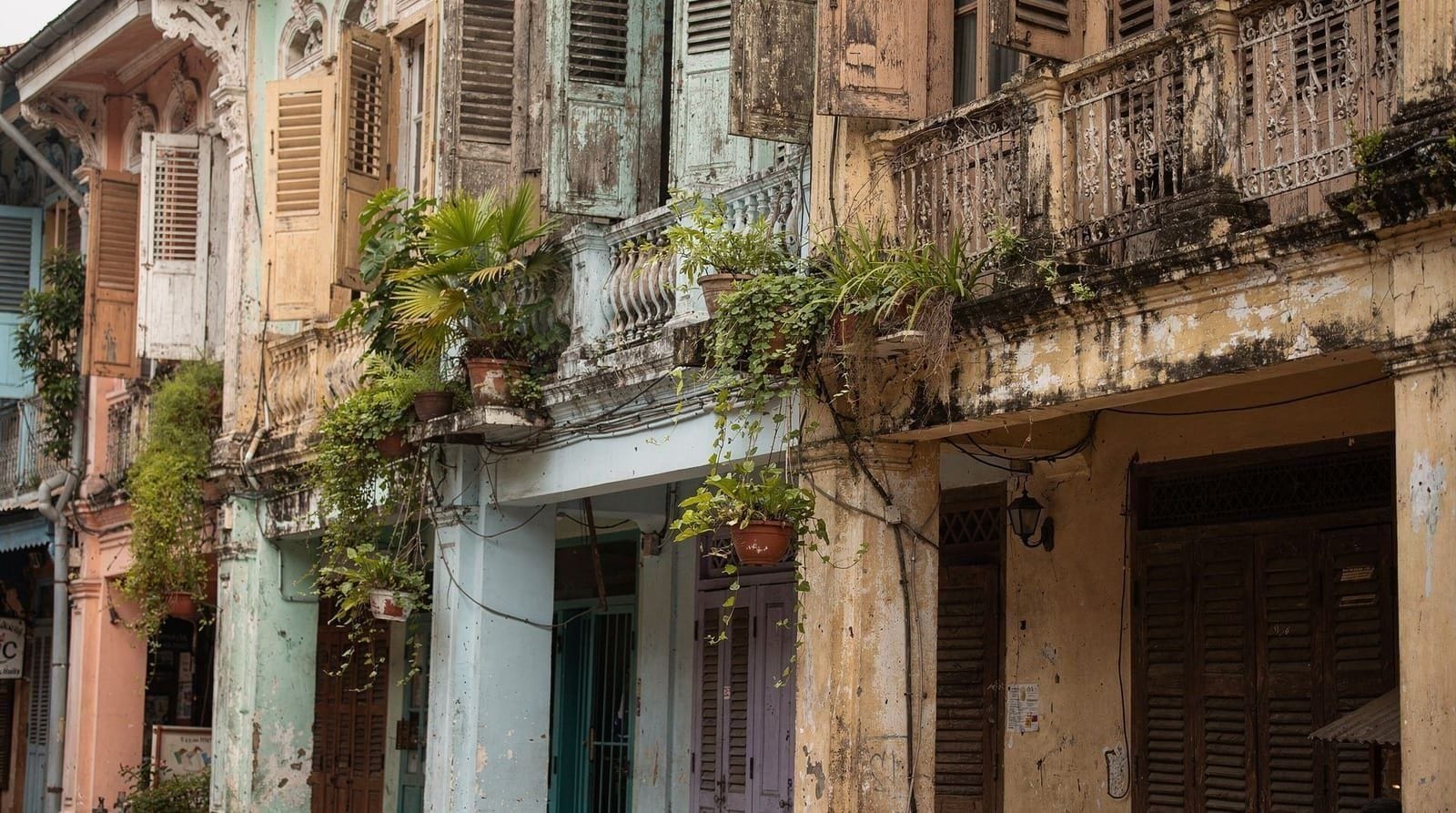
The tourist center of Siem Reap — the Old Market and Pub Street district is where the highest concentration of restaurants, bars, massage parlors, souvenir stalls and night markets sit within a compact walkable grid.
Pros: everything is walkable at night without arranging transport; the widest range of accommodation from hostels to boutique hotels; tuk-tuk drivers are easiest to find here at any hour; the best base for solo travelers wanting a social scene.
Cons: genuine nighttime noise, especially on the Pub Street strip itself, until midnight or later most nights — not ideal before a 4:45am sunrise wake-up; the area can feel touristy and less “local” than other neighborhoods; some streets get crowded with hawkers in high season.
Best for: first-time visitors, solo travelers, short trips (2-3 nights) where convenience outweighs quiet, anyone prioritizing nightlife and walkable dining.
Wat Bo
A 10-15 minute walk (or a quick, cheap tuk-tuk) east of the Old Market, Wat Bo is a genuinely quieter residential-feeling area with its own smaller cluster of good restaurants, cafes, and mid-range boutique guesthouses, named for the historic pagoda at its center.
Pros: noticeably quieter at night than Pub Street while still being close enough to walk in for dinner; often better value for the same hotel quality; a more residential, less overtly touristy atmosphere; good for return visitors who’ve “done” Pub Street already.
Cons: fewer late-night options right on your doorstep; you’ll want a tuk-tuk or a 15-minute walk for the liveliest evening scene.
Best for: couples, families, anyone doing multiple early sunrise mornings who needs real sleep, mid-range travelers wanting quality without Old Market’s premium.
Riverside / Sala Kamreuk
Along the Siem Reap River, this strip mixes some of the town’s most design-forward boutique hotels with a calmer, leafier feel than the market core, while still being an easy 5-10 minute tuk-tuk from Pub Street.
Pros: some of the most attractive boutique and small luxury properties in town; a scenic, walkable riverside path; close enough to the center for an easy night out without living in the middle of it.
Cons: accommodation here skews mid-range to luxury — fewer budget options; still requires a short tuk-tuk for most evening activity, unlike Old Market’s walk-everywhere convenience.
Best for: couples and honeymooners, travelers prioritizing hotel design and quiet mornings, anyone on a mid-range to luxury budget who still wants easy center access.
Wat Damnak / quieter residential pockets
A handful of smaller residential streets south and east of the main tourist grid host a growing number of boutique guesthouses aimed at longer-stay and repeat visitors who want genuine distance from the tourist center.
Pros: the most “local” feeling accommodation option in town; often excellent value; a good fit for stays of 5+ nights where a quieter daily rhythm matters more than nightlife proximity.
Cons: a 15-20 minute tuk-tuk to most restaurants and the temple circuit; fewer amenities within immediate walking distance; not ideal for short trips where every minute of transit cuts into limited time.
Best for: longer stays, digital nomads or slow travelers, anyone who has already stayed centrally on a previous visit.
Orientation landmarks worth knowing
A few fixed points help make sense of how these neighborhoods relate to each other on the ground:
- Psar Chas (the Old Market) itself sits at the geographic and social center of the tourist grid — Pub Street runs directly off it, and most “Old Market area” listings are within a 5-minute walk of this single building.
- The Siem Reap River runs roughly north-south through town, with the riverside boutique cluster following its western bank north of the Old Market bridge, and Wat Damnak sitting further south along the same river.
- Wat Bo Road, running east from the river, gives the Wat Bo neighborhood its name and hosts a growing strip of its own independent restaurants and cafes distinct from the Pub Street scene.
- National Road 6, the main artery north toward the airport and the Angkor park entrance, is the road every tuk-tuk uses regardless of which in-town neighborhood you start from — another reason temple commute times barely vary by area.
Understanding these four reference points makes it easier to judge a hotel’s actual walkability from a map listing rather than relying on marketing descriptions like “steps from the action,” which vary considerably in accuracy between listings.
Why this differs from generic “best areas” advice
Many broader travel guides treat “where to stay in Siem Reap” as interchangeable with “where to stay in [any Southeast Asian city]” advice — nightlife district versus quiet district. The detail that gets lost is that Siem Reap’s entire tourist-relevant footprint is unusually small and walkable compared to, say, Bangkok or Phnom Penh, which changes the calculus: the practical transit-time argument for choosing one area over another largely disappears, and the decision becomes almost purely about noise, atmosphere and hotel quality at your price point rather than genuine logistics.
Guides that don’t make this explicit sometimes overstate the importance of “location, location, location” in a town where every recommended area is, in absolute terms, a short and cheap tuk-tuk ride from every other one.
What almost never changes: temple distance
A common misconception is that some neighborhoods are meaningfully “closer” to Angkor Wat than others. In practice, every town-based neighborhood sits within roughly the same 15-25 minute, 6-8 km tuk-tuk ride from the Angkor Wat checkpoint — the town itself is small enough that this doesn’t vary much between Old Market, Wat Bo, riverside or the quieter residential pockets. Choose your area based on in-town atmosphere and budget, not an assumed temple-proximity advantage that mostly doesn’t exist. A city walking tour on your first evening is a good way to get oriented across these neighborhoods before deciding where you’d stay on a return trip.
Area comparison at a glance
| Area | Noise at night | Walkability | Best budget tier | Best for |
|---|---|---|---|---|
| Old Market/Pub Street | High | Excellent | Budget to mid-range | First-timers, solo, short trips |
| Wat Bo | Low-moderate | Good | Mid-range | Couples, families, sunrise-heavy itineraries |
| Riverside/Sala Kamreuk | Low | Good | Mid-range to luxury | Couples, honeymooners, design-focused stays |
| Wat Damnak/residential | Low | Fair | Budget to mid-range | Longer stays, repeat visitors |
Getting from the airport to your hotel
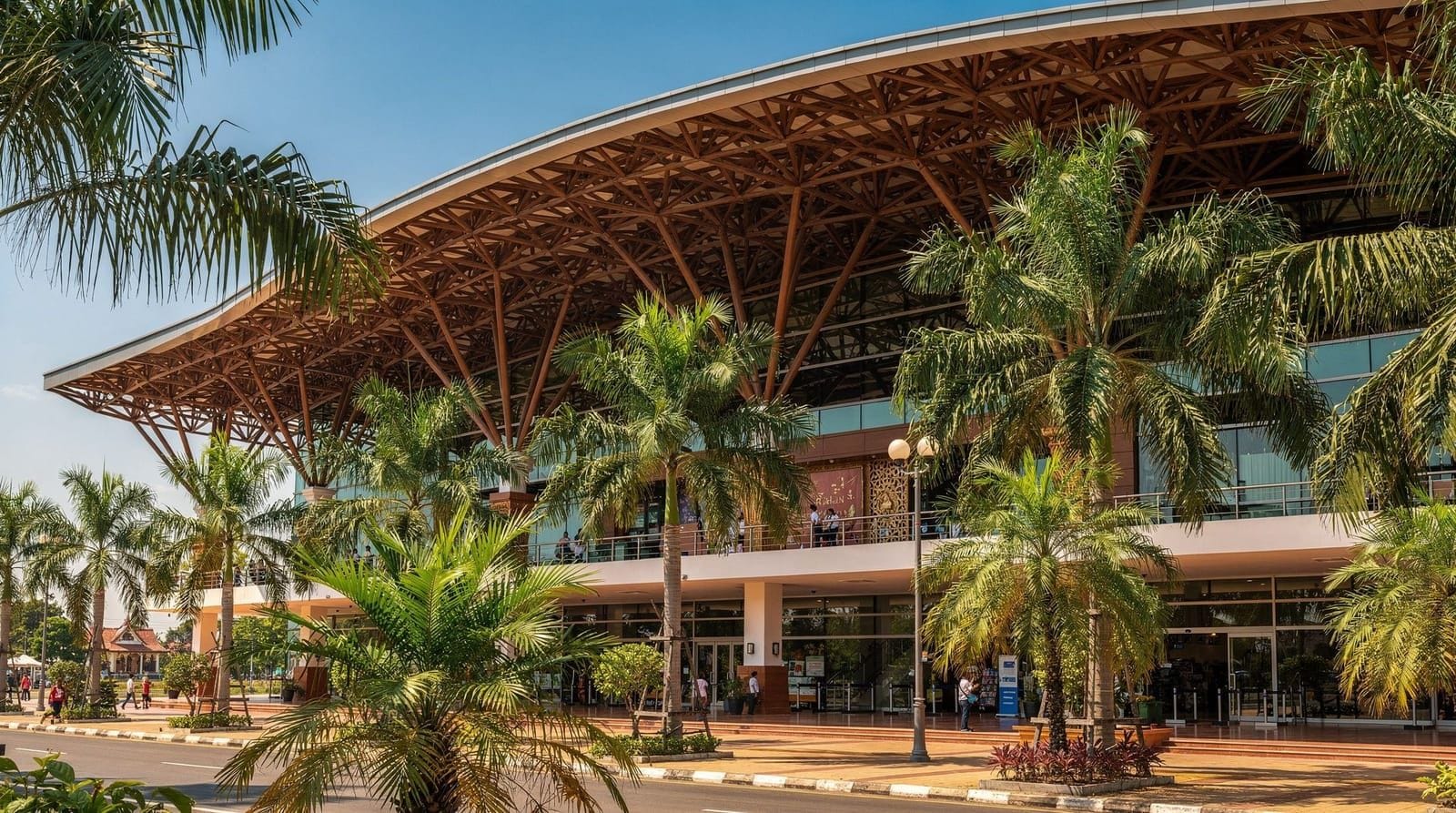
Wherever you stay in town, the transfer from Siem Reap–Angkor International Airport (40-50 km, 45-60 minutes) is roughly the same regardless of neighborhood — the town itself is small enough that the last 10-15 minutes of that drive barely changes between areas. Arrange a private airport transfer in advance if you’re arriving late at night or want a fixed price rather than negotiating on arrival.
What actually matters in Siem Reap’s climate
Two amenities matter more here than in most destinations, regardless of which neighborhood you pick:
Air conditioning. Even in the cooler dry season (November-February), afternoon temperatures regularly reach 30°C+; in the hot season (April-May) they push past 35-39°C. A fan-only room is a genuine hardship for anyone not used to tropical heat — confirm AC is included, not an add-on, before booking any budget guesthouse.
A pool, even a small one. After a 4:45am sunrise start and a full day of temple walking on uneven stone, a midday or late-afternoon pool break is less a luxury than a practical way to cool down and recover before an evening out. Many mid-range hotels in all four neighborhoods above have at least a small plunge pool for exactly this reason — worth prioritizing over a slightly better location if choosing between two similarly priced options.
Beyond those two, look for genuinely reliable Wi-Fi (patchy outside the main tourist grid), breakfast included (common at mid-range and up, and useful given how early temple mornings start), and — for solo travelers — a hotel that can help arrange a tuk-tuk driver directly rather than relying entirely on street pickup.
Typical price ranges by area and tier
| Area | Budget (dorm/guesthouse) | Mid-range (3-star, AC, pool) | Boutique/luxury |
|---|---|---|---|
| Old Market/Pub Street | $6-15/night | $35-70/night | $80-200+/night |
| Wat Bo | $10-18/night | $35-75/night | $70-150/night |
| Riverside/Sala Kamreuk | Limited budget options | $45-90/night | $100-300+/night |
| Wat Damnak/residential | $8-15/night | $30-60/night | Limited |
These ranges shift meaningfully with season — see the travel budget guide for how peak (December-January) and low season (June-September) pricing differs, often by 25-40% at the same property.
Families and accessibility considerations
Families traveling with young children generally do best in Wat Bo or riverside — the reduced nighttime noise matters more with kids needing consistent sleep before early starts, and many mid-range properties in these areas have family rooms or interconnecting options that Old Market’s smaller boutique hotels are less likely to offer. See the Siem Reap with kids guide for pacing and temple selection once you’ve settled on a base.
Travelers with mobility considerations should note that Siem Reap’s older guesthouses, particularly smaller boutique properties, often have limited elevator access and stepped entryways — confirm ground-floor availability or elevator access directly with the property rather than assuming from photos alone, as this varies significantly even within the same price tier.
How area interacts with trip length
For a 1-3 day trip, the convenience of Old Market or Wat Bo usually outweighs the extra quiet of riverside or residential areas — you’ll spend most daylight hours out at the temples anyway, and evenings are short. For longer stays (5+ nights), the calmer neighborhoods start to earn their keep: the daily grind of tuk-tuk noise and hawker traffic right outside a Pub Street hotel wears thinner over a week than over two nights.
When to book
Peak season (December-January, plus the Khmer New Year window in mid-April) sees the best boutique properties in riverside and Wat Bo sell out weeks in advance — book at least a month ahead if traveling then. Old Market’s larger hostel and budget guesthouse supply is more elastic and can usually be booked closer to arrival even in peak months. In low season (June-September), same-week or even same-day booking is realistic across all four areas, and it’s often worth waiting to book once you’re closer to travel dates to catch last-minute discounting.
A two-minute way to decide
- First trip, staying 2-3 nights, want energy and convenience? → Old Market/Pub Street.
- Doing multiple sunrise mornings, or traveling as a couple/family wanting quiet? → Wat Bo.
- Mid-range to luxury budget, want a design-forward hotel and a calmer setting that’s still central? → Riverside/Sala Kamreuk.
- Staying 5+ nights, already familiar with the town, or prioritizing value over nightlife? → Wat Damnak or another quieter residential pocket.
Whichever you choose, none of them meaningfully shortens or lengthens the temple commute — so there’s no wrong answer purely on logistics. The decision comes down to what kind of evenings you want after each day at Angkor.
Frequently asked questions about Where to stay in Siem Reap
Is it better to stay near Pub Street or somewhere quieter?
Depends on your priorities. Pub Street/Old Market puts restaurants, bars, markets and tuk-tuk pickup on your doorstep but comes with nighttime noise most evenings until midnight or later. Wat Bo and the riverside area are a 10-15 minute walk or 5-minute tuk-tuk from the same amenities with meaningfully less noise — the better choice for anyone doing early Angkor Wat sunrise starts and needing real sleep.How far is my hotel from Angkor Wat?
Most Siem Reap town accommodation is 15-25 minutes by tuk-tuk from the Angkor Wat entrance and ticket checkpoint, roughly 6-8 km. This is fairly consistent across the main tourist neighborhoods (Old Market, Wat Bo, riverside) — none of them meaningfully shortens the temple commute, so choose based on in-town atmosphere rather than temple proximity.Should I stay near the new airport instead of downtown?
No. The new Siem Reap–Angkor International Airport (SAI) is 40-50 km from downtown with no meaningful hotel cluster nearby — it exists purely as a transit point. All accommodation should be booked in Siem Reap town itself; budget 45-60 minutes for the airport transfer regardless of which in-town neighborhood you choose.Are the floating villages or countryside worth staying near instead of town?
Not for most visitors. A handful of eco-lodges exist near Tonlé Sap and in the rural outskirts, but they add significant transit time to everything else (temples, restaurants, markets) and are best treated as a one-or-two-night add-on rather than your main base, if at all.What's the best area for a first-time visitor on a 3-day trip?
Old Market/Pub Street or Wat Bo. Both put you within easy tuk-tuk range of the temples and within walking distance of the restaurant and market scene that makes up a meaningful part of a short trip's downtime.Is there a 'wrong' neighborhood to stay in?
The main mistake is booking a hotel more than 20-25 minutes from the Old Market/Pub Street center purely because it's cheaper — the extra tuk-tuk time and cost on every single outing (multiple times a day) usually erases the savings, and it isolates you from the town's food and market scene in the evenings.
Top experiences
Bookable activities with verified prices and instant confirmation on GetYourGuide.


More tours on Viator
Top-rated experiences with verified reviews, bookable on Viator (a Tripadvisor company).