Siem Reap souvenirs — what to actually buy
Siem Reap: Lotus Silk Farm Guided Visit and Craft Workshops
What souvenirs are actually made in Cambodia?
Kramas (checkered cotton scarves), Kampot pepper, hand-woven silk from verified workshops like Artisans Angkor or a silk farm tour, and carved wood or stone pieces with visible hand-tool marks are genuinely Khmer-made. A large share of market "silk," jewelry, and carvings sold in Siem Reap is imported from Thailand, Vietnam, or China and resold as local — and buying real Angkorian antiquities or artifacts is illegal, full stop.
The honest version of this list
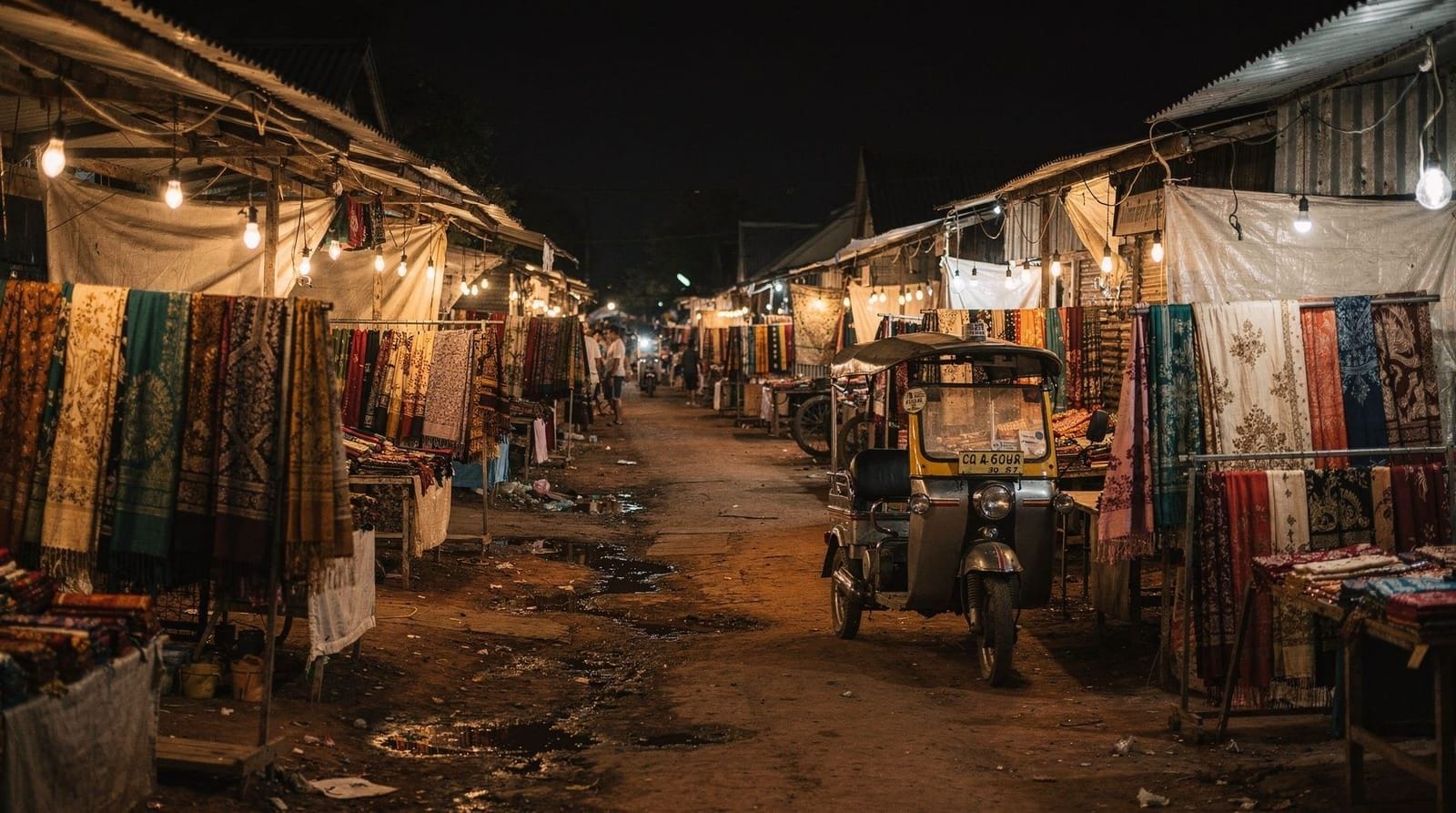
Siem Reap’s souvenir market has a real authenticity problem, and it’s worth naming plainly rather than writing a generic “best souvenirs” list that ignores it: a significant share of what’s sold at the Old Market, the Angkor Night Market, and smaller souvenir shops around town is imported — commonly from Thailand, Vietnam, or China — and sold as if it were locally made Khmer craft. This isn’t a reason to avoid buying souvenirs; it’s a reason to know what to look for, and to know which specific products and sources are reliably genuine. This guide covers both.
Genuinely Khmer: what to actually buy
Kramas (Khmer checkered scarves)
The krama is Cambodia’s most iconic textile — a checkered cotton scarf worn as a headwrap, neck scarf, belt, or sarong, and used practically by Cambodians across the country for generations, not manufactured for tourists. Genuine kramas are cotton, not silk, with a visibly looser, more practical weave than a decorative scarf; they’re inexpensive ($2-6 at markets, more at fixed-price craft shops) and among the most authentically Cambodian items you can buy, precisely because they’re a real everyday object rather than a souvenir invented for visitors.
Kampot pepper
Grown in Kampot province in southern Cambodia and holding EU protected-designation-of-origin status since 2016, Kampot pepper (black, red, or white, from the same vine at different ripeness stages) is a genuinely distinctive, verifiably local product that travels well and is hard to convincingly fake. Buy it in sealed packaging from a reputable shop or the better market stalls rather than loose from an unlabelled source, both for freshness and to confirm you’re getting the real thing rather than a generic pepper relabeled.
Hand-woven silk — bought from a verified source
Real Cambodian silk, particularly the golden silk historically associated with the country, has a visibly irregular, slightly uneven weave and a distinct sheen that mass-produced or imported silk lacks — but at a typical market stall, most visitors can’t reliably tell the difference by eye alone, which is exactly the gap that imported “silk” scarves exploit. The safer route is buying from a verified workshop rather than a market stall: Artisans Angkor, Siem Reap’s best-known social enterprise workshop (see below), and dedicated silk farm visits let you see the process — silkworms, hand-reeling, dyeing, and weaving — before buying, which both confirms authenticity and makes the purchase more meaningful.
Book a guided visit to a Lotus Silk Farm with craft workshops Join an Angkor Silk Farm and Lotus Silk Farm discovery tour Visit a silk farm plus Senteurs d’Angkor and Satcha workshopsArtisans Angkor
Artisans Angkor is a well-established social enterprise, founded in the 1990s to revive traditional Khmer craft skills (stone and wood carving, silk weaving, lacquerware, silverwork) and provide training and employment, particularly for young people from rural areas with limited other opportunities. Its Siem Reap workshop and boutique let you watch artisans working before buying, at fixed, clearly marked prices — higher than a bargained market price, but a meaningful premium for verified authenticity, fair wages, and a transparent supply chain. It’s one of the most reliable single answers to “where do I buy something genuinely Khmer” in all of Siem Reap.
Wood and stone carvings
Genuine hand-carved pieces show individual tool marks and slight asymmetry; mold-cast or machine-cut pieces are too uniform and too cheap to be hand-carved, regardless of how they’re described by a vendor. Small, well-made carvings from a workshop or craft cooperative make a better, more honest souvenir than a larger, suspiciously cheap “hand-carved” piece from an unverified stall.
Spices, coffee, and food products
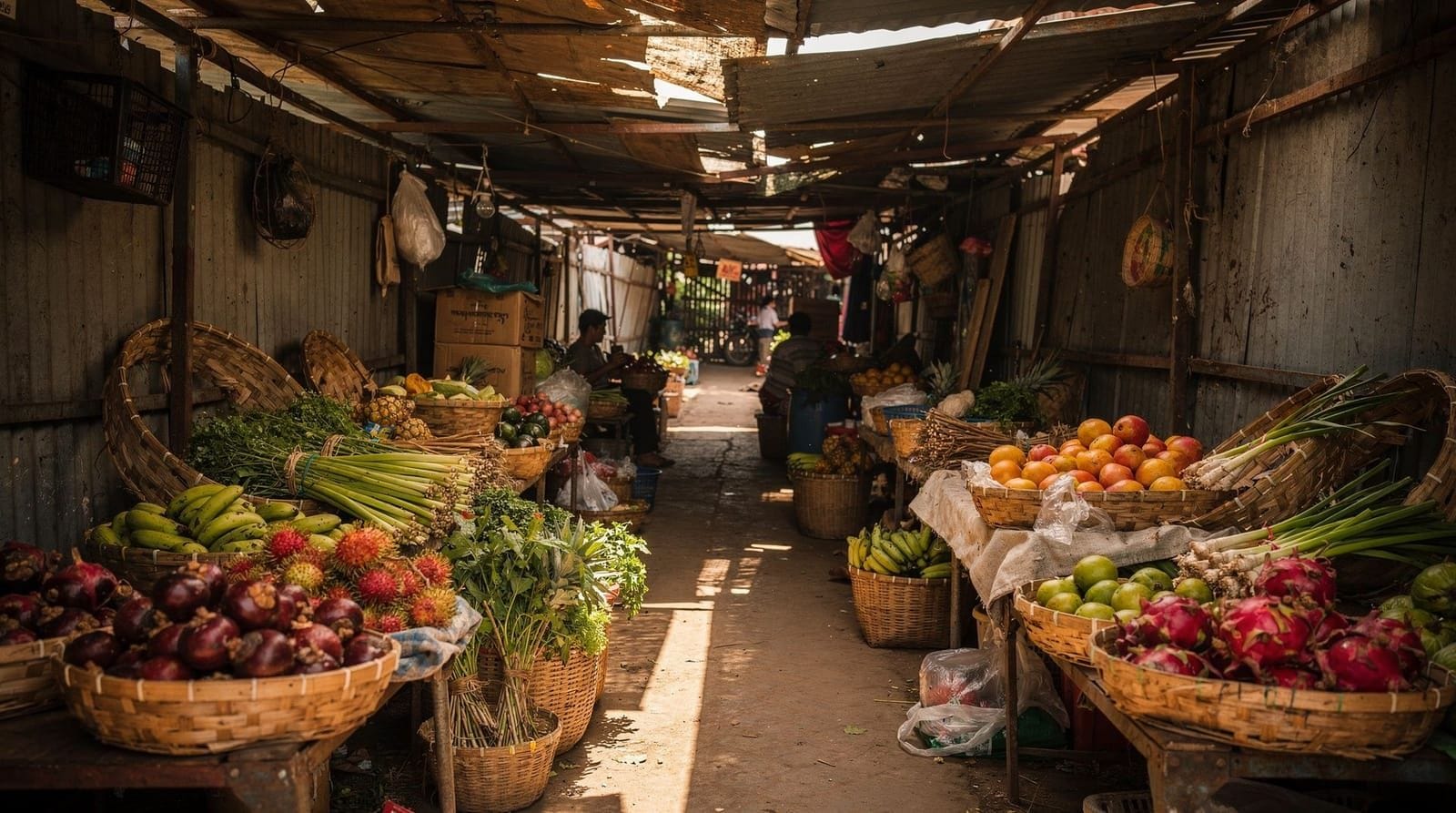
Beyond Kampot pepper, bagged Cambodian-grown coffee (mainly from the Mondulkiri and Ratanakiri highlands — see our coffee guide) and palm sugar are practical, genuinely local, and lightweight souvenirs that don’t raise the same authenticity questions as textiles or carvings.
What’s usually imported, not local
Be more skeptical of: cheap “silk” scarves at a fraction of what real silk costs to produce; branded or logo apparel, which is near-universally counterfeit and can cause problems bringing it back through customs in some countries; generic “ancient-style” bronze Buddha statues sold in bulk at very low prices, typically mass-produced rather than individually cast; and gemstone or “silver” jewelry without any certification or workshop provenance, more reliably bought from an established jeweler than a market stall. None of this means these items are worthless as cheap trinkets — it means they shouldn’t be bought under the belief they’re authentic Khmer craft, and shouldn’t command a premium price on that basis.
Never buy: real or apparent antiquities
This deserves its own clear warning: buying, exporting, or attempting to bring home genuine ancient artifacts — carved stone fragments, ceramics, or anything presented as an authentic piece removed from a temple or archaeological site — is illegal under both Cambodian law and most international agreements on cultural property, and is treated seriously by customs authorities.
Some vendors near temple sites and in a few market corners sell items marketed as “ancient” or “temple relics”; the overwhelming majority are reproductions regardless of the claim, but a genuine piece, if real, means you’re buying stolen cultural heritage and risking serious legal consequences at export or import. There is no legitimate souvenir category here — skip anything marketed this way entirely, however convincing the pitch.
What a silk farm visit actually involves
A guided silk farm tour typically walks you through the full production chain in sequence: mulberry trees (the silkworms’ only food source), the silkworms themselves at various growth stages, the cocoons, the hand-reeling process where raw silk thread is drawn from boiled cocoons, natural dyeing using plant-based dyes in some workshops, and finally hand-loom weaving, often with weavers demonstrating the process on traditional looms you can watch up close.
Most tours run 1-2 hours, sometimes combined with a lotus silk component (a rarer, more labor-intensive silk made from lotus stem fibers rather than silkworm cocoons) or a boat element on a nearby lake. It’s as much an educational stop as a shopping one — genuinely interesting even if you don’t end up buying anything, and useful context for evaluating silk quality anywhere else in town afterward.
Book a half-day visit to a silk farm and Senteurs d’AngkorGift ideas by recipient
A few practical combinations for common gift-giving situations: for a food-focused recipient, Kampot pepper and bagged Cambodian coffee together make a coherent, well-priced gift under $15-20 combined. For textile lovers, a verified Artisans Angkor silk scarf or a set of kramas in different colors covers a range of price points.
For children, small, sturdy wood-carved animal figures or a brightly patterned krama tend to hold up better to rough handling than delicate textiles or ceramics. For someone who appreciates provenance, a piece bought directly at a silk farm or Artisans Angkor, where you can describe exactly how it was made, tends to land better than an equivalent item from an anonymous market stall — the story is genuinely part of the gift.
Shipping larger purchases
For larger items (bigger textiles, furniture-scale wood carvings, or multiple bulk purchases), Artisans Angkor and some established craft shops offer international shipping directly from the point of sale — worth asking about rather than trying to fit an oversized item into checked luggage. Market stalls generally don’t offer this, so factor portability into what you buy from the Old Market or Angkor Night Market specifically, where you’ll be carrying everything yourself.
Where to shop, by goal
| Goal | Best option |
|---|---|
| Cheapest prices, willing to bargain, imported goods acceptable | Angkor Night Market or Old Market outer stalls |
| Verified authentic Khmer craft, fixed fair prices | Artisans Angkor |
| Watching the silk-making process before buying | A guided silk farm tour |
| Genuine everyday Khmer textile | Kramas from any market — low authenticity risk regardless of source |
| Food and spice souvenirs | Kampot pepper and coffee from a sealed, reputable source |
A note on pricing and value
It’s worth resetting expectations on what “expensive” means in this context: a $25-40 Artisans Angkor silk scarf can feel steep next to a $5 market version, but the market version’s low price is itself the tell that it isn’t hand-woven silk — genuine hand-reeled, hand-woven silk simply cannot be produced at that cost given the labor involved. Treating the price gap as information rather than an inconvenience makes the choice easier: decide upfront whether you want an inexpensive decorative item or a verified authentic piece, and shop accordingly rather than expecting market prices for workshop-verified goods.
Packing and customs notes
Textiles and food items (sealed spices, coffee) generally travel and clear customs without issue for most home countries; check your destination country’s rules on food imports specifically for spices in larger quantities. Wood carvings occasionally raise questions under agricultural/pest import rules in some countries — declaring them honestly at customs, as with any wood product, avoids problems more reliably than trying to pack around the question.
Frequently asked questions about Siem Reap souvenirs
What’s the most authentically Cambodian souvenir to buy?
The krama — Cambodia’s checkered cotton scarf — is about as authentically and practically Khmer as a souvenir gets, since it’s a real everyday object used across the country, not something invented for tourists.
Is silk sold in Siem Reap markets real?
Sometimes, but often not — a significant share of “silk” sold at market stalls is imported or synthetic. Buying from a verified source like Artisans Angkor or a guided silk farm visit is the more reliable way to get genuine hand-woven Khmer silk.
Is it illegal to buy ancient artifacts in Siem Reap?
Yes — buying, exporting, or importing genuine ancient Cambodian artifacts is illegal under Cambodian law and international cultural property agreements, and treated seriously by customs. Items marketed as “temple relics” are almost always reproductions, but skip this category entirely regardless of the claim.
What is Artisans Angkor?
A social enterprise founded in the 1990s to revive traditional Khmer craft skills and provide training and employment, particularly for young people from rural areas. Its Siem Reap workshop and boutique sell verified, fixed-price Khmer crafts and let you watch artisans at work.
Is Kampot pepper worth buying as a souvenir?
Yes — it’s a genuinely distinctive, verifiably local product with EU protected-origin status, travels well, and is hard to convincingly fake. Buy sealed packaging from a reputable shop for the best guarantee of authenticity.
Should I bargain at Artisans Angkor the way I would at a market?
No — Artisans Angkor operates on fixed prices reflecting fair wages and verified craftsmanship, unlike market stalls where bargaining is the norm. The higher price there is the point, not a starting offer to negotiate down.
How can I tell if a wood carving is hand-made or machine-made?
Genuine hand-carved pieces show individual tool marks and slight asymmetry; machine-cut or mold-cast pieces are too uniform and are usually priced too low to be genuinely hand-carved, regardless of how a vendor describes them.
Can I bring Cambodian spices and coffee home?
Generally yes, for personal quantities in sealed packaging — check your home country’s specific food import rules if you’re buying in bulk, since some countries restrict agricultural product imports more strictly than others.
Top experiences
Bookable activities with verified prices and instant confirmation on GetYourGuide.

Siem Reap: Lotus Silk Farm Guided Visit and Craft Workshops

Siem Reap: Angkor Silk Farm and Lotus Silk Farm Discovery Tour
Siem Reap: Silk Farm, Senteurs d'Angkor and Satcha Workshops

Siem Reap: Half-Day Visit to Satcha Silk Farm and Senteur d'Angkor
More tours on Viator
Top-rated experiences with verified reviews, bookable on Viator (a Tripadvisor company).