Siem Reap night markets guide
What is the Angkor Night Market?
A covered, permanent market near Pub Street with roughly 200 stalls selling clothing, crafts, souvenirs, and street food, open most evenings from around 4-5pm to midnight. Prices are not fixed — bargaining is expected, and starting around 40-50% below the first quoted price is a reasonable opening move. A meaningful share of what's sold is imported rather than locally made; see our souvenirs guide for how to tell the difference.
What the Angkor Night Market actually is
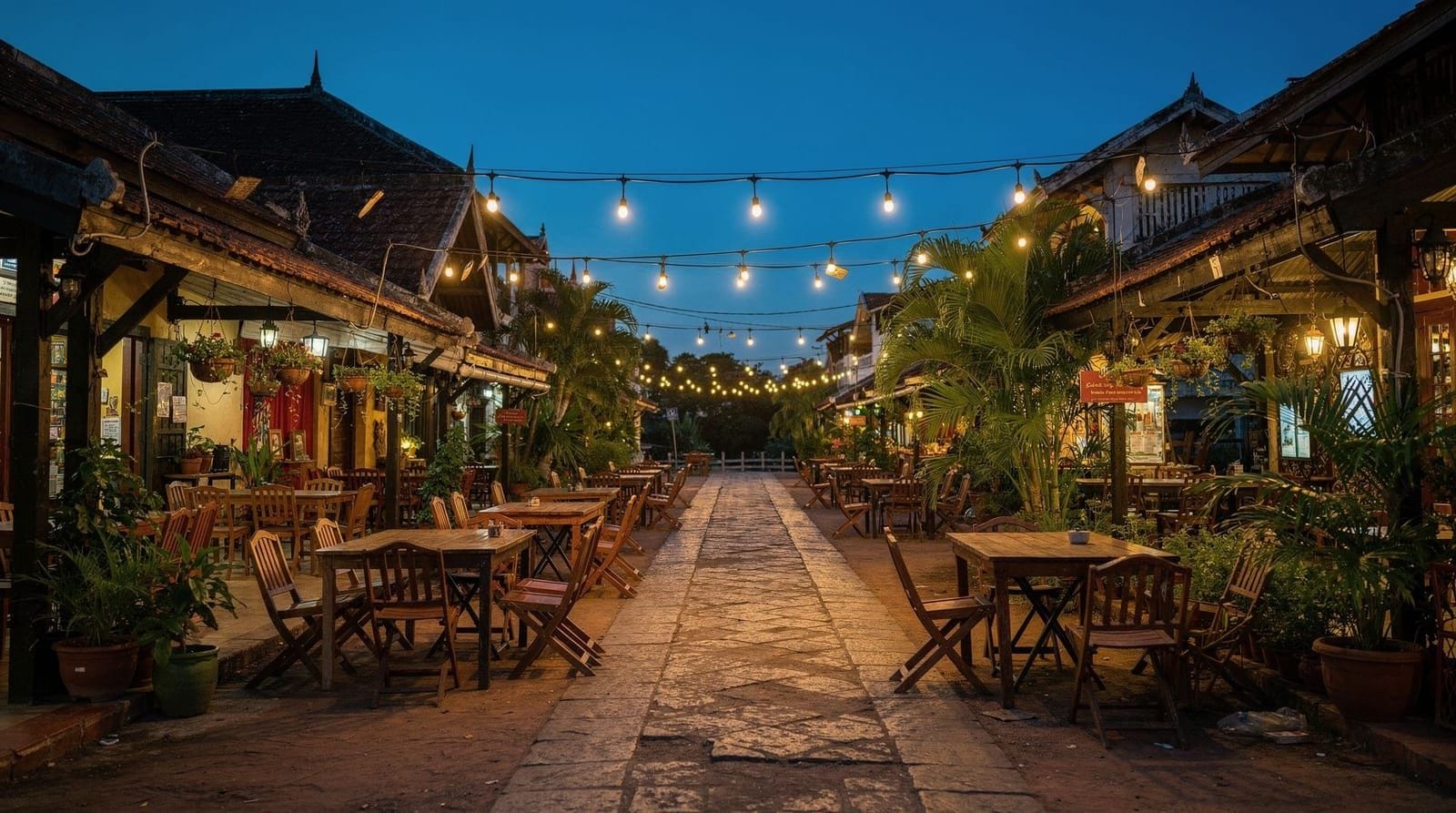
The Angkor Night Market, a short walk from Pub Street toward the river, is Siem Reap’s main organized night market — a covered, semi-permanent complex of roughly 200 stalls under a fixed roof structure, distinct from a pop-up street market. It opened in the mid-2000s as one of the earlier purpose-built tourist markets in town and remains a fixture of most first-time visitors’ evenings.
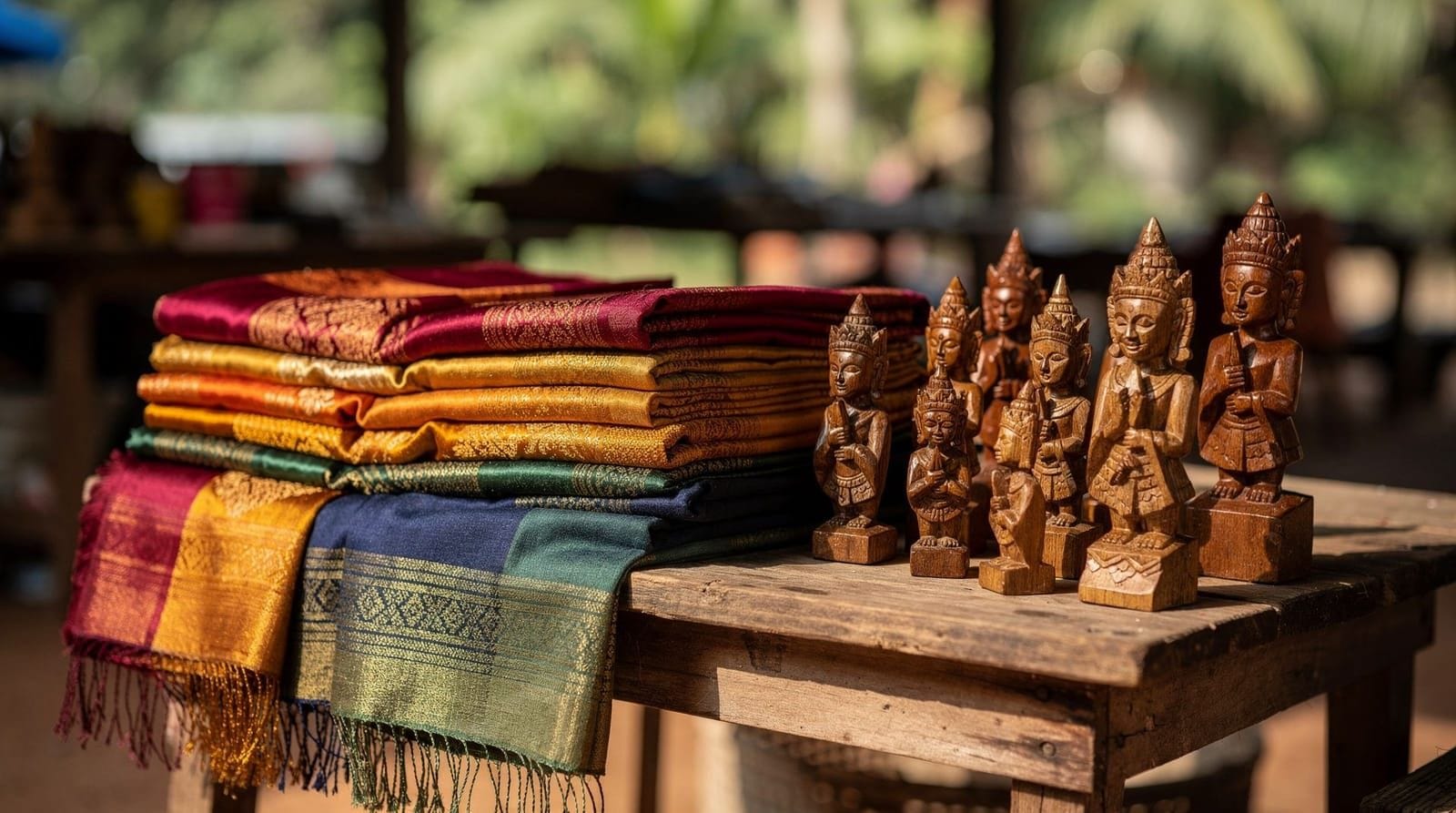
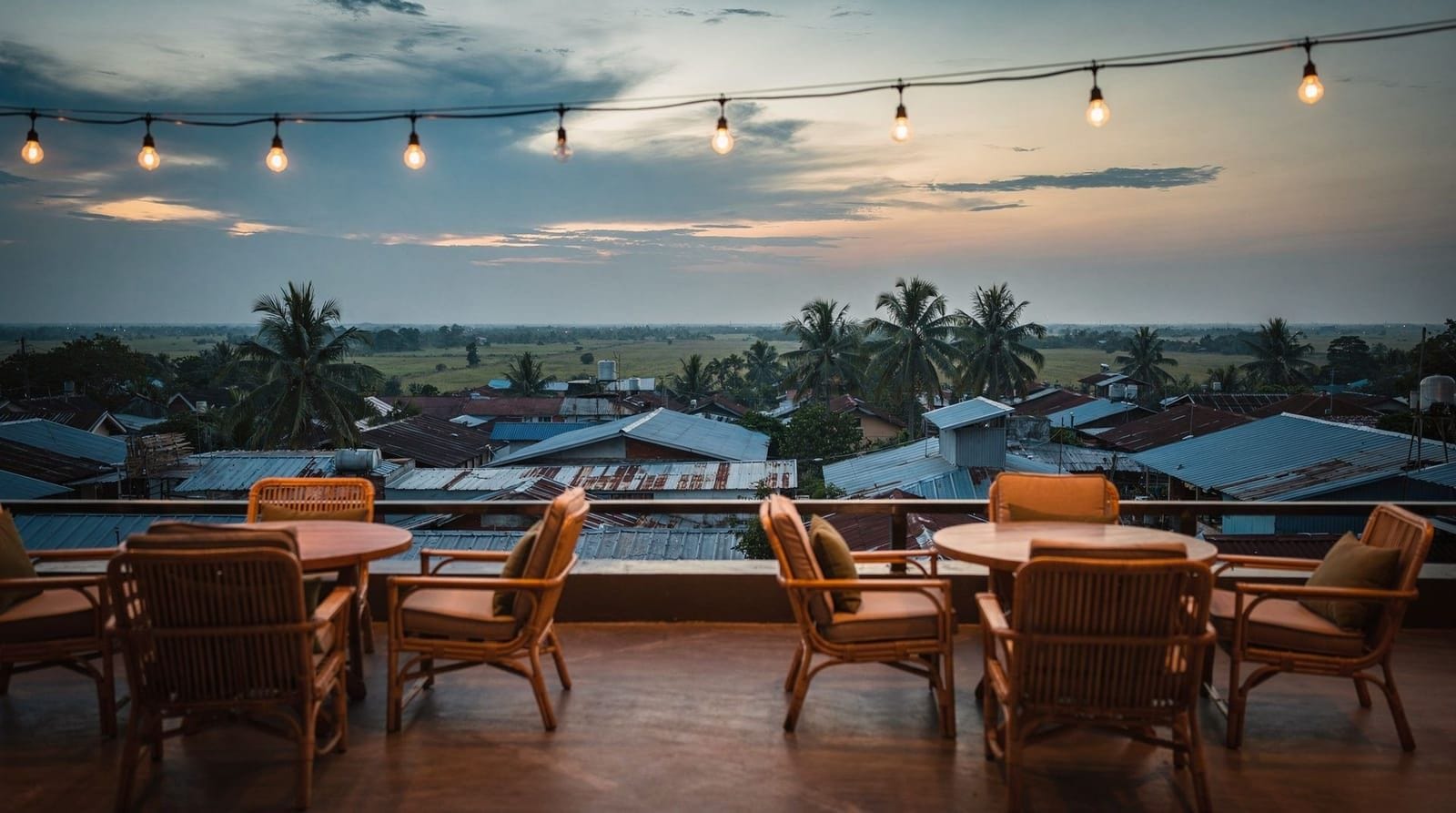
Inside, stalls sell clothing (both cheap tourist tees and better-made pieces), silk scarves, wood and stone carvings, jewelry, bags, spices, and a scattering of genuinely local crafts mixed with clearly imported goods, plus a bar area (The Island Bar, at the market’s center, with a small pool and rooftop-style seating) and food stalls around the perimeter. It’s less about any single standout purchase and more about the browsing experience — a relaxed, well-lit, easy way to spend an hour or two after dinner.
Layout and hours
The market runs most evenings from around 4-5pm to midnight, busiest between 7pm and 10pm. It’s organized into loose sections by stall type rather than a strict grid, and covered throughout, so it operates through rain without disruption — a genuine advantage during the wet season (May-October) when open-air alternatives can be hit or miss. The central bar area makes it easy to combine market browsing with a drink break partway through, rather than treating it as a single continuous shopping trip.
How to bargain
Prices at the Angkor Night Market, like most Southeast Asian markets, are not fixed and bargaining is the norm, expected by vendors rather than seen as rude. A reasonable approach: ask the price, then counter at roughly 40-50% of the first quote as an opening position, and expect to settle somewhere in the middle after a round or two of back-and-forth.
Keep it friendly and unhurried — visibly walking away (not as a bluff, but genuinely willing to) is often the most effective way to get a vendor’s real bottom price, since they’ll frequently call you back with a better offer rather than lose the sale entirely. Bargaining works best with a smile and patience; aggressive haggling tends to get worse results, not better, and isn’t the local norm regardless of what some travel content suggests.
What’s genuinely local vs. imported
This is the market’s real weak point, and worth being direct about: a meaningful share of what’s sold at the Angkor Night Market — certain silk items, some carved pieces, mass-produced jewelry, printed t-shirts — is imported (commonly from Thailand, Vietnam, or China) rather than made in Cambodia, despite being displayed and sometimes described as local. This isn’t unique to this market; it’s standard practice at most tourist markets across the region.
If buying something specifically for its Khmer craftsmanship matters to you, look for genuine hallmarks — hand-woven silk has visible, slightly irregular weave texture that machine-made silk lacks, and stone/wood carvings should show individual tool marks rather than the too-perfect uniformity of a mold or machine cut. Our souvenirs guide covers this distinction in more depth, including where to buy verified Khmer crafts (Artisans Angkor and similar workshops) if authenticity matters more than the market-browsing experience.
What’s actually worth buying there
A short, practical list of categories that tend to hold up well at the Angkor Night Market specifically: hand-fanned or block-printed textiles from stalls that can show you the weaving or printing process; kramas (the checkered Khmer scarf, genuinely useful as a sarong, headwrap, or towel and one of the most authentically Cambodian items sold anywhere in town); spices and dried goods, including Kampot pepper, which travel well and are hard to fake convincingly; and small wood-carved items from stalls where you can see individual tool marks rather than mold-uniform pieces.
Categories to be more skeptical of: “silk” scarves at very low prices (genuine hand-woven silk has a cost floor that a $3 scarf can’t meet), branded or logo apparel (near-universally counterfeit, technically illegal to import back to many home countries), and gemstone or “silver” jewelry sold without any certification, which is more reliably bought from a proper jeweler than a market stall regardless of price.
Combining the night market with the rest of your evening
The Angkor Night Market sits close enough to Pub Street and the Old Market that it slots naturally into a broader evening rather than requiring its own dedicated trip — a common, sensible pattern is dinner in town, an hour or so browsing the market, then either Pub Street for drinks (see our Pub Street guide) or a quieter option via our nightlife guide if you’d rather wind down than wind up. The market’s own central bar, The Island Bar, is also a reasonable stop on its own if you want a drink without leaving the market complex.
Visiting with kids
The Angkor Night Market is genuinely one of the more kid-friendly evening activities in Siem Reap — covered, well-lit, low physical demand, and full of small, visually interesting stalls that hold children’s attention better than a sit-down dinner does. It’s a reasonable choice for a family evening out, particularly after a physically tiring temple day, though the crowds and stall density around peak hours (7-10pm) are worth factoring in if you’re managing a stroller or a tired toddler — an earlier visit, closer to opening, is calmer. See our Siem Reap with kids guide for more.
Food at the night market
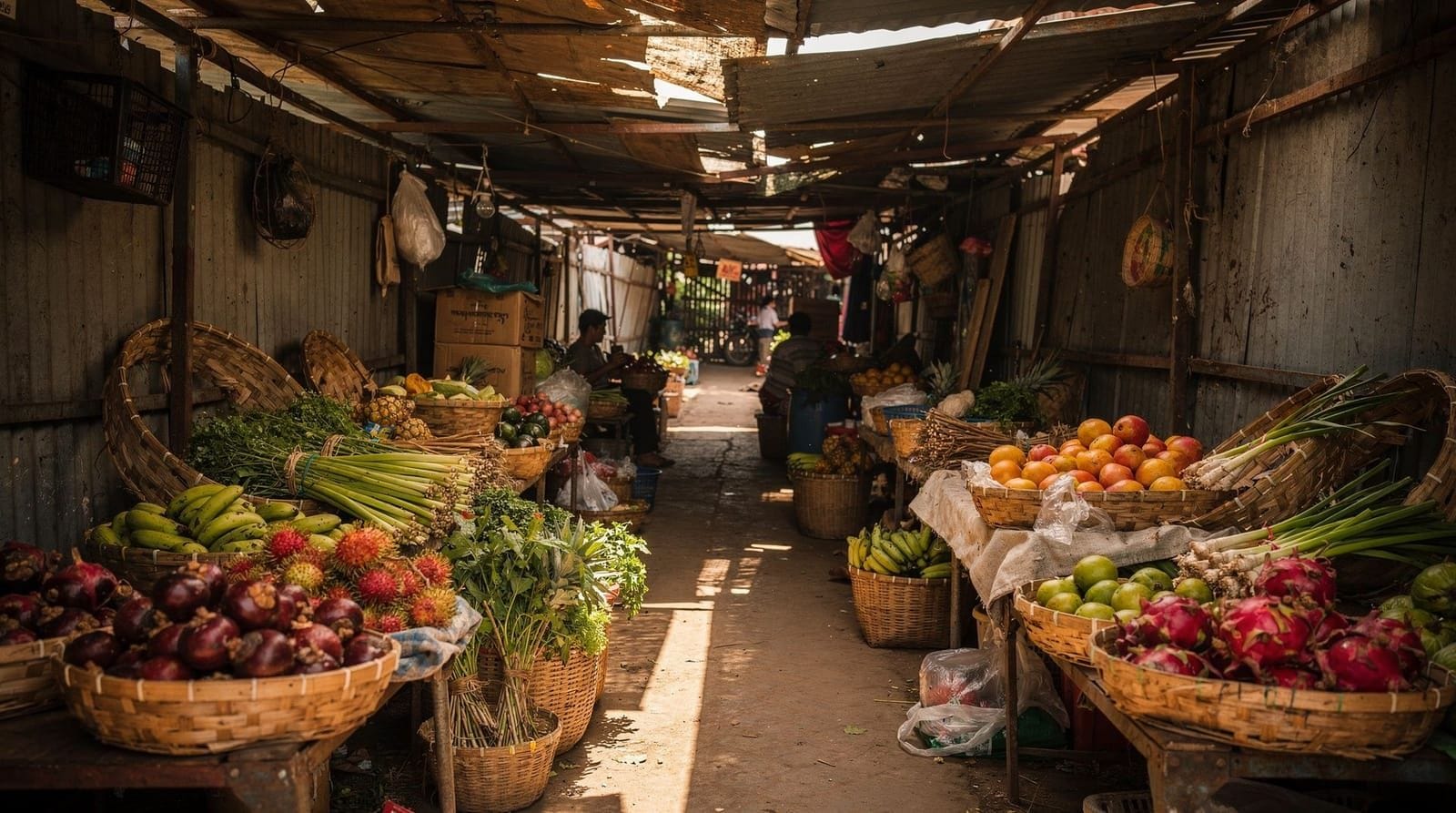
The perimeter of the Angkor Night Market has food stalls selling skewers, fruit shakes, and fried snacks — a reasonable, convenient option for grazing while you shop, though it’s more tourist-oriented and slightly pricier than the morning markets covered in our street food guide. It works well as one stop in a broader evening rather than a dedicated food destination on its own.
Other night market options
Beyond the Angkor Night Market, smaller and more informal evening stalls set up around Pub Street’s side alleys and the streets near the Old Market, generally selling a similar mix of goods with less structure and lower foot traffic. None currently rival the Angkor Night Market in scale, but they’re worth a look if you’re already in the area and want a quieter browse without the main market’s crowds.
Night market vs. Old Market
The Old Market (Psar Chaa) operates primarily during the day as a working produce and goods market for locals, with a tourist-facing souvenir section (see our Old Market guide); the Angkor Night Market is purpose-built for evening tourist shopping and doesn’t function as a local market in the same sense. If you want a more authentic market atmosphere alongside your shopping, the Old Market in the morning is the better pick; if you want a relaxed, well-lit evening browse after dinner, the Angkor Night Market fits that specifically.
A brief history
The Angkor Night Market opened in the mid-2000s, part of a wave of purpose-built tourist infrastructure that followed Siem Reap’s rapid growth as Angkor visitor numbers climbed through the 2000s and 2010s. It predates much of the current Kandal Village and expanded Pub Street ecosystem and was, for years, one of the few organized evening options in town beyond bars — a role it still partly fills, though it now shares the evening tourist economy with a wider spread of restaurants, cafés, and other markets that have grown up around it since.
Understanding it as an early, purpose-built tourist market (rather than an organic local one) helps set expectations correctly: it’s a shopping and browsing venue built for visitors, not a slice of unfiltered local life the way a morning trip to Psar Leu is.
Practical tips
- Bring small USD bills and some riel — vendors rarely have change for large notes, and cash is still the norm at most stalls despite some accepting card or KHQR.
- Carry a tote or day bag if you plan to buy more than a couple of small items — plastic bag use varies by stall and isn’t always offered.
- Check items before buying, particularly electronics-adjacent goods (chargers, small gadgets) and anything claiming a specific material (silk, silver) — as noted above, claims aren’t always accurate.
- Don’t feel obligated to buy after starting to bargain. Vendors expect some negotiations to end without a sale; walking away after haggling isn’t considered rude here.
Frequently asked questions about Siem Reap night markets
What time does the Angkor Night Market open and close?
Roughly 4-5pm to midnight most evenings, busiest between 7pm and 10pm.
Is bargaining expected at the Angkor Night Market?
Yes — prices are not fixed, and vendors expect negotiation. Starting at around 40-50% of the first quoted price and settling somewhere in the middle is a reasonable, normal approach.
Is everything at the night market made in Cambodia?
No — a meaningful share of goods, particularly certain silk items, carvings, and jewelry, are imported rather than locally made, despite sometimes being presented as Khmer craft. See our souvenirs guide for how to distinguish genuine Khmer crafts.
Is the Angkor Night Market covered, or does it close in the rain?
It’s fully covered, so it operates normally through rain — a genuine advantage during the May-October wet season over open-air alternatives.
How is the Angkor Night Market different from the Old Market?
The Old Market (Psar Chaa) is a real working local market operating mainly by day, with a tourist souvenir section; the Angkor Night Market is purpose-built specifically for evening tourist shopping and doesn’t serve the same local function.
Can I pay by card at the night market?
Some stalls accept card or KHQR mobile payment, but cash — small USD bills, with riel for very small change — remains the norm and the safer assumption at most individual stalls.
Is the Angkor Night Market safe?
Yes — it’s well-lit, busy, and heavily trafficked by both tourists and staff, with the ordinary market precautions (watch your bag in crowds, agree prices before handing over items) rather than any specific safety concern.
Is one evening enough to see the Angkor Night Market properly?
Yes — most visitors comfortably cover the market in one to two hours, including a food or drink break at the central bar area, and don’t need repeat visits unless they specifically enjoy market browsing as an activity.
What souvenirs are worth buying at the night market specifically?
Kramas (Khmer checkered scarves), Kampot pepper and other spices, and textiles or carvings from stalls that can show you the making process are the more reliable picks. See our souvenirs guide for the fuller list, including where to buy verified, workshop-made Khmer crafts instead.
Is the Angkor Night Market good for families with kids?
Yes — it’s covered, well-lit, low-effort physically, and visually engaging for children, making it one of the easier evening activities to build into a family itinerary, especially earlier in the evening before peak crowds.
More tours on Viator
Top-rated experiences with verified reviews, bookable on Viator (a Tripadvisor company).