Angkor temples photography itinerary: light, timing and crowds
Angkor Wat: Photography Tour
This plan is built around light, not sights
A standard Angkor itinerary sequences temples by proximity and circuit logic. This one sequences them by sun angle, because the difference between a flat, overexposed midday shot and a temple lit properly is entirely about when you show up, not which temple you chose. Expect earlier mornings and more return visits to the same temple in different light than a typical first-timer plan — this is a 3-day itinerary for a 3-day Angkor Pass ($62), used deliberately rather than efficiently.
Bring a tripod for blue-hour and interior shots (galleries and lower chambers are genuinely dark even at midday), and expect Angkor’s park rules to prohibit drones without prior permit approval — don’t plan on aerial shots without having arranged that well in advance.
Day 1: Angkor Wat’s two faces and Bayon’s morning light
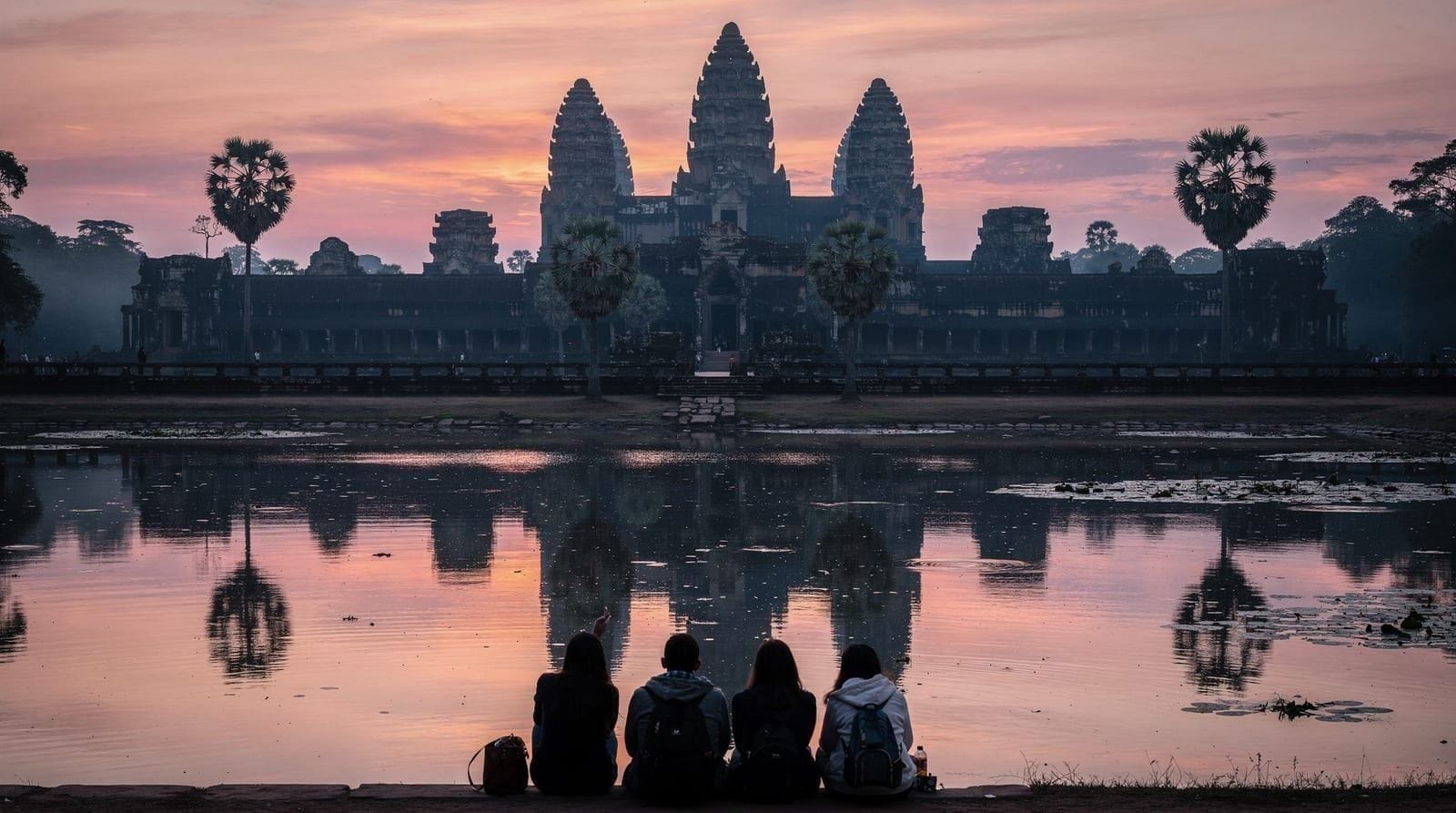
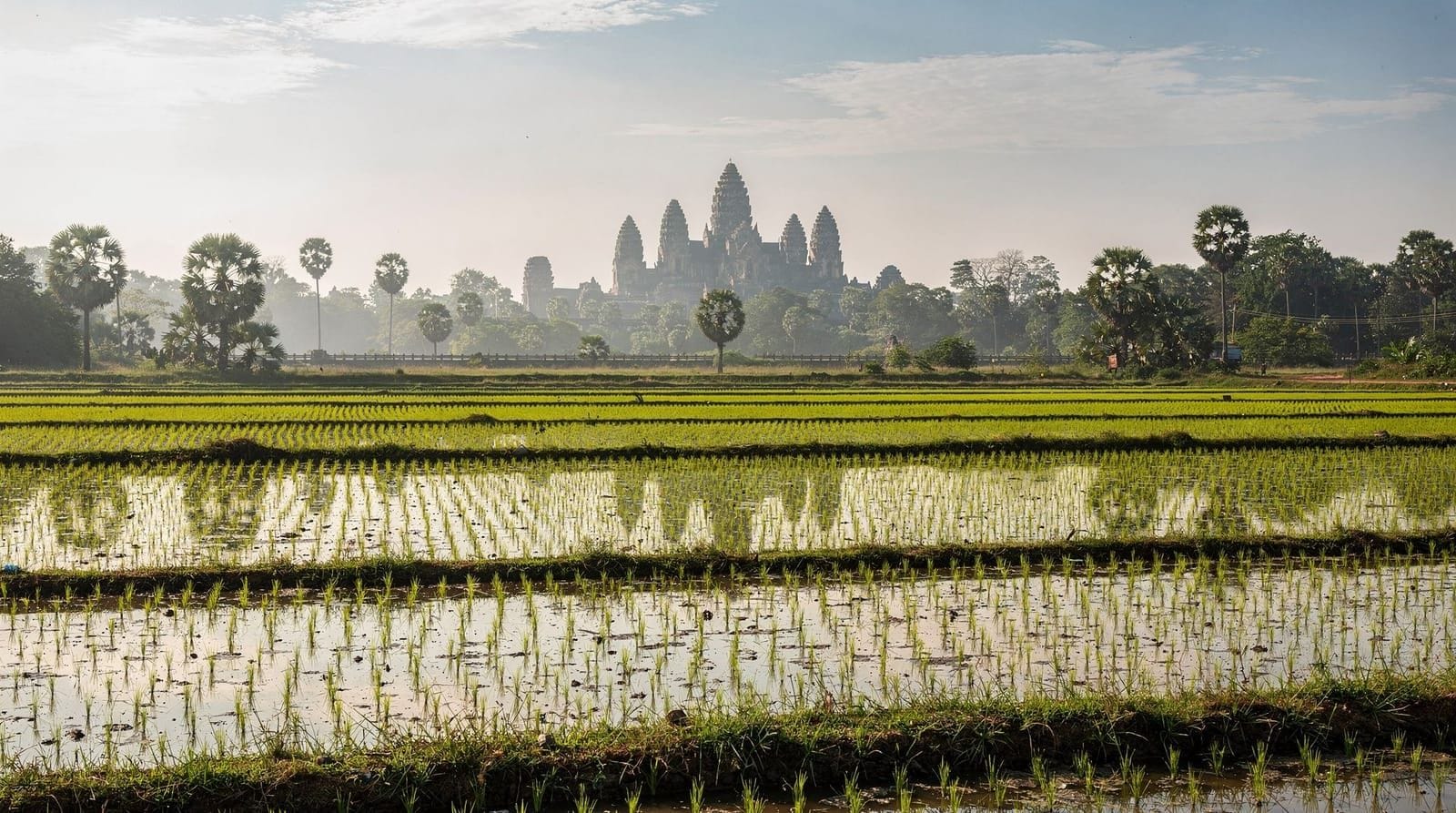
5:00–5:45am — Angkor Wat sunrise at the reflection pools, west-facing entrance. This is the shot everyone comes for, but it’s also the most crowded five square meters in the entire park during December–February — arrive by 4:45am for a clear pool edge, and know that even then you’re framing around other photographers, not avoiding them entirely. Our sunrise guide covers which of the two main pools tends to have fewer heads in frame.
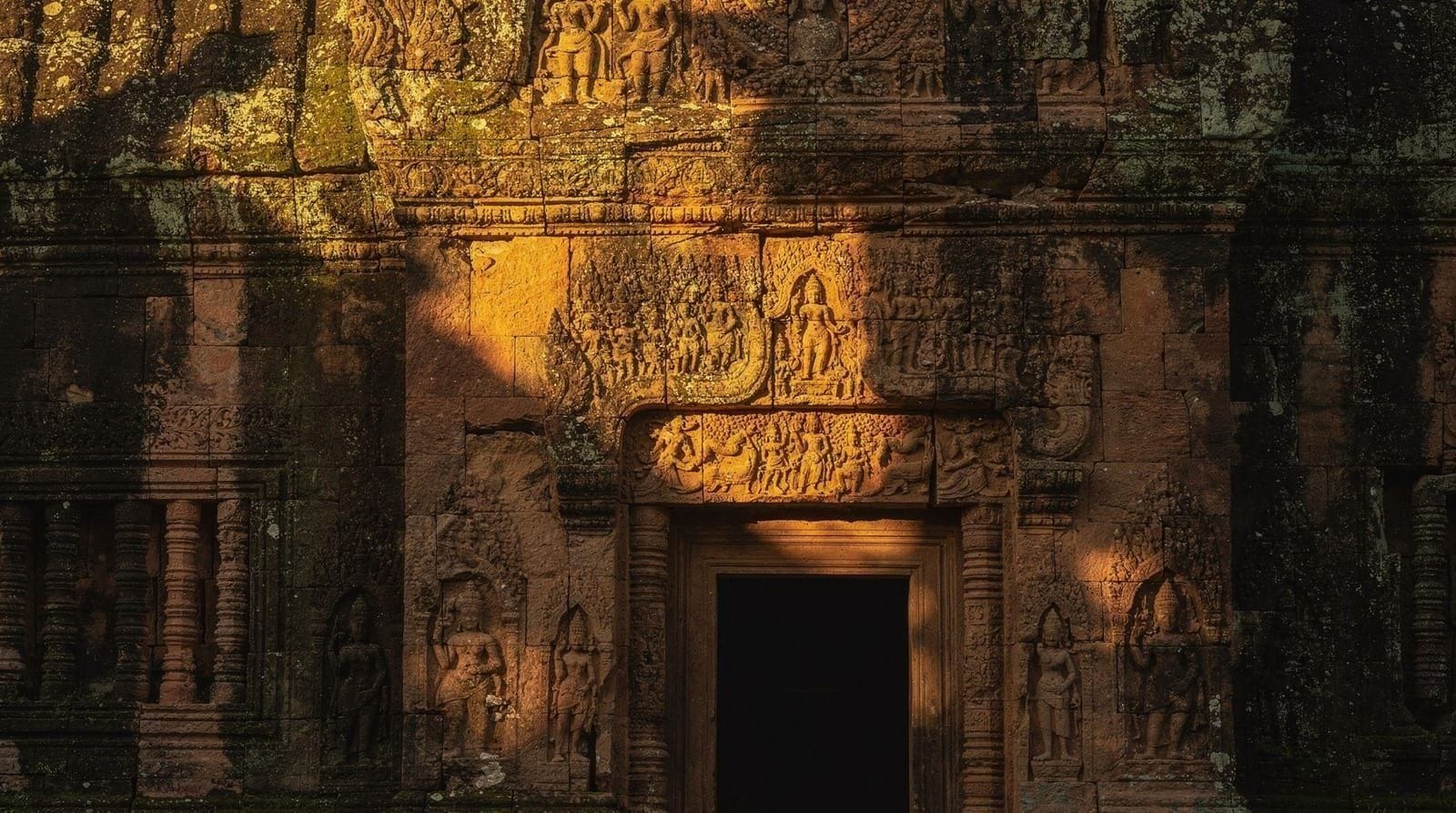
6:15–8:00am — Once the sunrise crowd thins (most leave by 6:30), move into Angkor Wat’s outer galleries. Morning side-light around 7–8am rakes across the bas-reliefs at a low angle that reveals carved depth far better than the flat overhead light of midday — this is arguably a better photography window than sunrise itself for anyone who cares more about the carvings than the silhouette shot.
8:30–9:30am — Bayon, roughly 15 minutes from Angkor Wat. Morning light works well here because the east-facing terraces catch direct sun on the carved faces before roughly 9:30–10am, when the angle flattens and crowds from arriving tour buses start filling every good vantage point. Faces on the upper terrace’s east and southeast corners get the cleanest backlit-versus-frontlit contrast in this window.
10:00–11:00am — Ta Prohm, about 20–25 minutes away. Counter-intuitively, Ta Prohm photographs best in flat or slightly overcast light — direct sun creates harsh dappled patches through the tree canopy that fight with the root-and-stone texture you’re actually trying to capture. If the morning is heavily overcast, move Ta Prohm earlier in your day; if it’s a clear, bright morning, midday’s more diffuse overhead light (rather than the low, harsh angle of early morning) is often more forgiving here than at any other Small Circuit temple.
Midday break — Skip photography between roughly 11:30am and 2pm; the light is flat and the heat is punishing. Review the morning’s shots, eat, rest.
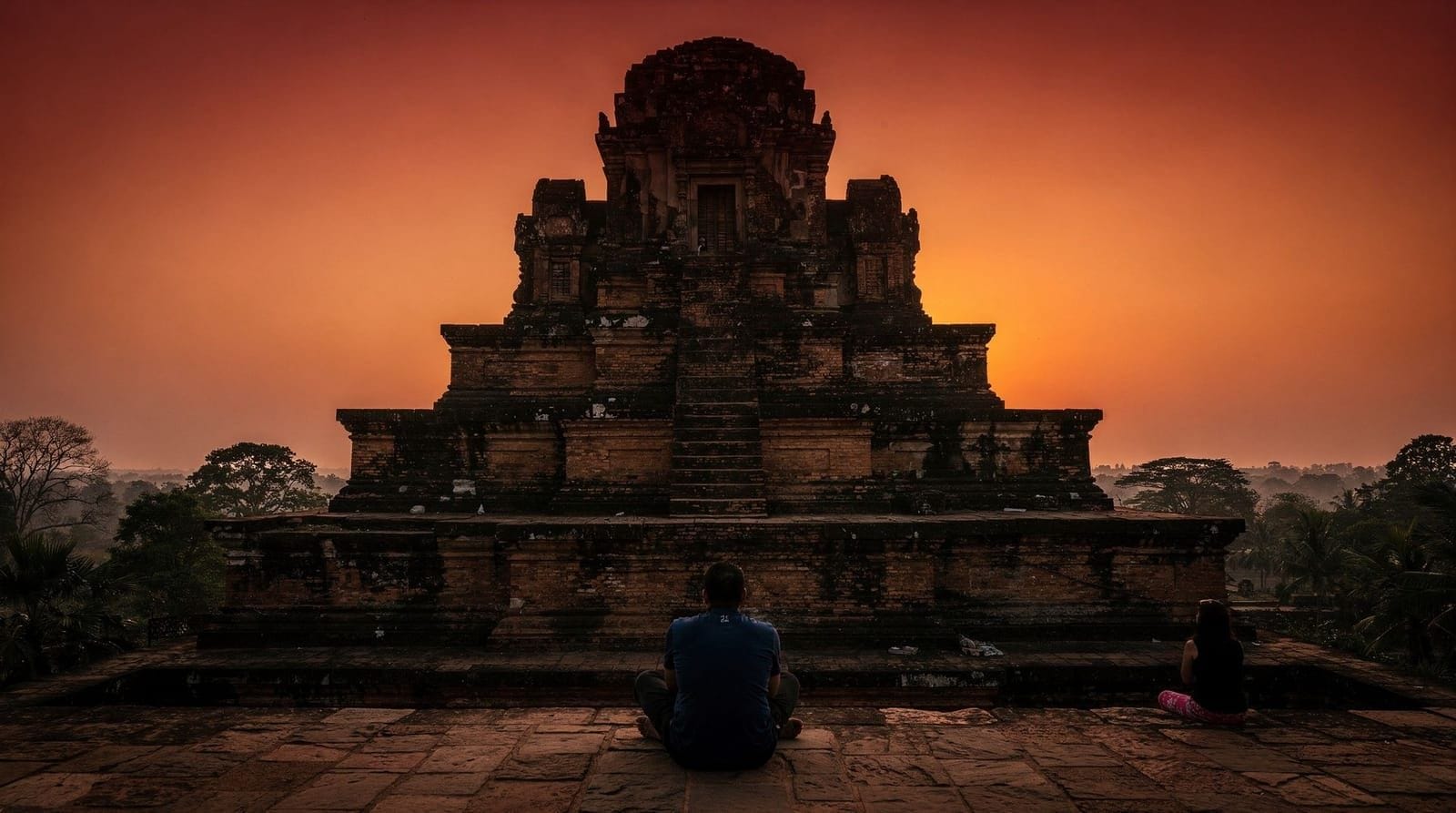
4:30–6:00pm — Pre Rup for sunset, roughly 20 minutes from town. As a brick-and-laterite temple with genuine elevation, Pre Rup takes warm late light better than most Small Circuit temples and draws a fraction of Phnom Bakheng’s crowd, which can reach visitor-capacity limits in high season and turns every wide shot into a study of other tourists’ silhouettes. Arrive by 4:45pm to claim an upper-terrace position before the crowd peaks around 5:15–5:30.
Day 2: Banteay Srei’s soft light and Beng Mealea’s overcast advantage
6:30am — Depart early for Banteay Srei, about an hour from town. This is the single most important early departure of the trip: Banteay Srei’s carving is famous for its depth and precision, and that detail only reads well in soft, low-angle light — by 9am, direct overhead sun flattens the pink sandstone’s texture and the site is also busy with the first wave of day-tour buses.
7:30–9:00am — Banteay Srei. Aim to be inside the site by 7:30–7:45am for genuinely soft light on the carvings with minimal crowd interference — this window closes fast as buses arrive through the morning.
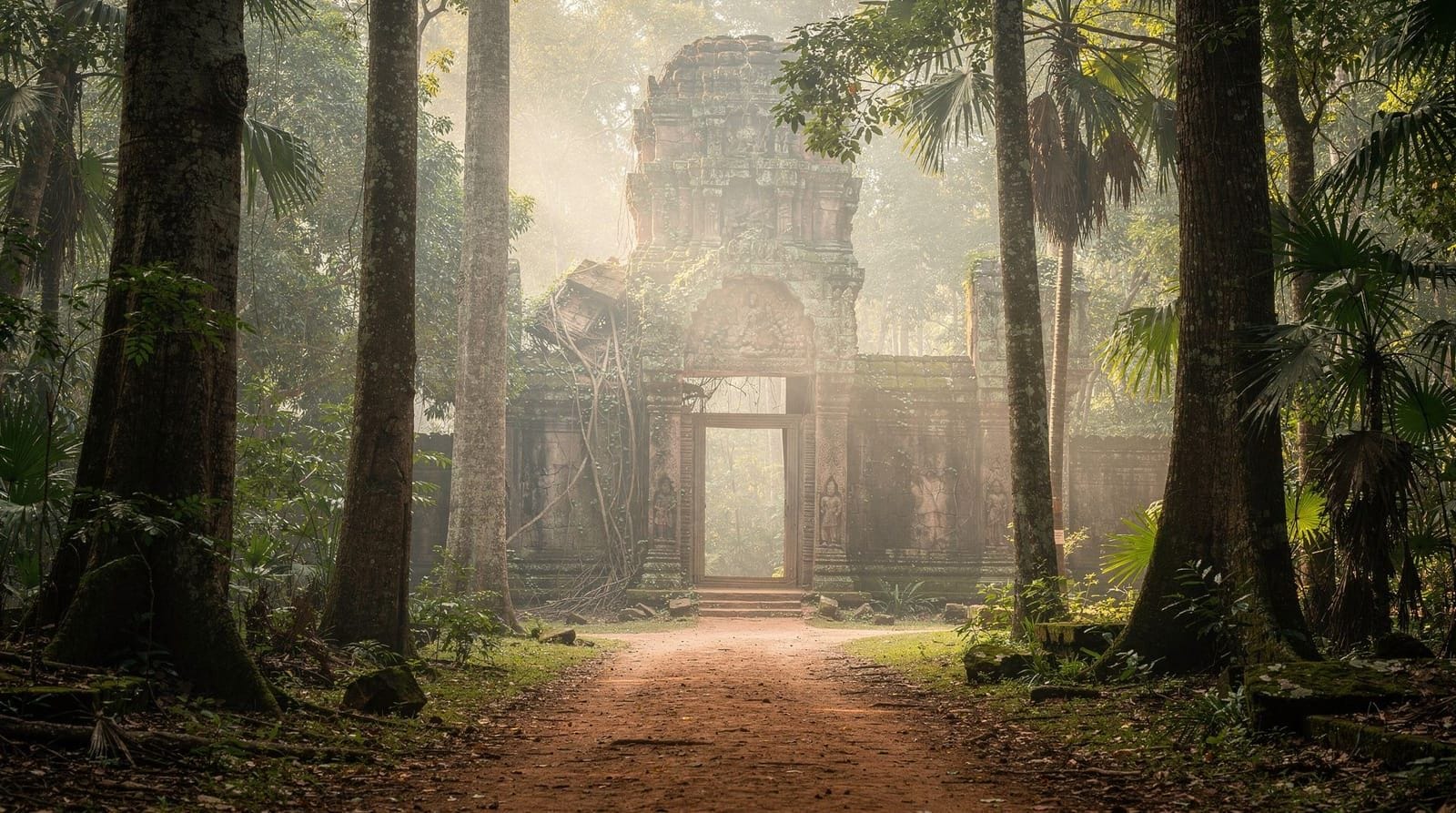
9:30am–12:30pm — Drive to Beng Mealea, roughly 65km from Banteay Srei’s direction (check current routing with your driver; some road combinations run more directly than others depending on season and road conditions). Beng Mealea is genuinely one of the few Angkor-region temples that benefits from overcast conditions rather than suffering from them — its collapsed galleries and jungle overgrowth read as moody and atmospheric under flat grey light, while harsh sun creates blown-out highlights against deep shadow in the rubble that a camera sensor struggles to hold detail across. If your day happens to be cloudy, treat that as a photographic advantage here rather than a scheduling problem.
12:30–1:15pm — Lunch near Beng Mealea’s entrance.
1:15–3:00pm — Beng Mealea exploration and photography. The wooden boardwalk through the ruins offers elevated vantage points over the collapsed stonework that aren’t available at any Small or Grand Circuit temple.
3:00–4:30pm — Return drive to Siem Reap.
Day 3: equinox alignment, blue hour, and a second Angkor Wat pass
Timing note: this day’s centerpiece — solar alignment over Angkor Wat’s central tower — only happens around the March and September equinoxes (approximately March 20–21 and September 22–23). Outside those windows, treat this as a second general sunrise/interior session rather than an alignment shot, and check current-year equinox dates before planning a trip specifically around this.
5:00–6:00am — A second Angkor Wat sunrise visit. Near the equinoxes, the sun rises close to directly above the temple’s central tower when viewed from the causeway — a genuinely different, more symmetrical composition than the classic reflection-pool shot, and one most first-time visitors never realize is date-dependent. Outside the equinox window, use this repeat visit instead to shoot the same reflection-pool composition under different sky conditions than Day 1, or to work the eastern (back) side of the temple, which gets essentially no sunrise crowd at all since everyone gathers on the west-facing entrance side.
7:00–9:00am — Interior galleries and the upper level, worked at a genuinely unhurried pace now that you’ve already secured your headline shots on Days 1 and 2. A tripod earns its weight here — the lower galleries are dark enough that handheld shots at a reasonable ISO struggle for sharpness.
Midday break — Rest.
5:30–6:30pm — Blue hour at Sras Srang, a large royal reservoir near Banteay Kdei with clean reflective water and virtually no crowd compared to any of the named sunset temples. Shooting 20–30 minutes after actual sunset, once the sky deepens to blue but before full dark, gives a genuinely different palette than the golden-hour shots from Days 1 and 2 — and this spot is quiet enough to set up a tripod without negotiating space.
Gear notes for this itinerary
A wide-angle lens (roughly 16-24mm equivalent) covers the classic reflection-pool sunrise and Bayon’s crowded upper terrace, where backing up far enough for a clean composition often isn’t possible. A mid-range zoom (24-70mm) handles the bulk of gallery and portrait-style temple-face work. A longer lens (70-200mm) is genuinely useful at Bayon for isolating individual faces without the surrounding crowd in frame, and at Koh Ker’s Prasat Thom for compressing the pyramid’s tiers from a distance.
Extra batteries matter more here than on a typical trip — three consecutive pre-dawn starts drain batteries faster in the cooler pre-sunrise air, and charging opportunities are limited once you’re out at the temples for a full day. A rain cover for your bag is worth packing even in dry season, since Beng Mealea’s Day 2 detour benefits from overcast conditions that can turn to light rain with little warning.
Where crowds consistently ruin the shot
- Angkor Wat’s main reflection pool, 5:00–5:30am, December–February: expect 200+ photographers in a roughly 20-meter stretch of pool edge; arrive 15 minutes earlier than you think you need to.
- Bayon’s upper terrace, 9:30am onward: tour buses converge here reliably by mid-morning; the 8:30–9:30am window above is genuinely tight.
- Phnom Bakheng at sunset: capacity limits and a narrow hilltop mean this spot can feel more like crowd management than photography in peak season — Pre Rup (Day 1) is the better-value alternative used in this plan.
- Ta Prohm’s “Tomb Raider tree”: a specific root-over-stone composition draws a constant queue for the clean, person-free version of the shot; budget 10–15 minutes of waiting even outside peak hours.
What a guided version looks like
An Angkor Wat photography-focused tour pairs you with a guide who tracks sun position and crowd patterns daily, which matters more here than on a standard sightseeing tour since the entire point is timing. A professional photoshoot walking tour is a different product — aimed at getting good images of you in the temples rather than of the temples themselves — worth knowing the distinction before booking either.
Frequently asked questions about photographing the Angkor temples
What’s the single best photography window at Angkor Wat?
For most photographers, the 7–8am post-sunrise window on the outer bas-relief galleries beats the sunrise silhouette itself — the crowd has thinned, and the low side-light reveals carved depth that both midday flat light and the packed 5am reflection-pool scene don’t offer.
Do I need a tripod?
Yes, for interior gallery shots (genuinely dark, even midday) and for blue-hour work at Sras Srang or any low-light session. A tripod is less essential for the classic sunrise silhouette, where a fast lens and a higher ISO usually suffice given the crowd density around you anyway.
Are drones allowed at Angkor?
Drone use requires prior permit approval through Angkor Enterprise or APSARA and is not something you can plan on doing spontaneously — confirm current drone policy and apply well ahead of your trip if aerial shots matter to your plan, since ad hoc flying at the temples is not permitted.
When exactly does the equinox sunrise align with Angkor Wat’s tower?
Approximately March 20–21 and September 22–23 each year, though the exact date shifts slightly year to year — verify the current year’s equinox date before building a trip specifically around this alignment, and note that even a day or two off the exact date still gives a close, though not perfect, alignment.
Is rainy season good or bad for temple photography?
Genuinely mixed, and not simply bad: overcast skies suit Beng Mealea and Ta Prohm well, moats and reflection pools fill more reliably, and crowds thin substantially. The trade-off is losing the golden-hour color at sunrise and sunset most of the time, and occasional short, heavy downpours that pause outdoor shooting for 30–60 minutes.
Should I buy the 3-day or 7-day Angkor Pass for a photography trip?
The 3-day pass ($62) suits this itinerary exactly. Serious photographers planning multiple return visits to the same temple across a longer stay — chasing specific light on different days — get better value from the 7-day pass ($72), which costs only $10 more for four additional usable days within a 30-day window.
Is it worth hiring a local photography guide instead of a general tour guide?
For this specific itinerary, yes, if one is available — a guide who tracks daily sun position, crowd patterns, and even that week’s tour-bus schedules brings genuine value that a general sightseeing guide doesn’t, particularly for timing the Bayon and Banteay Srei windows precisely rather than approximately.
How does rainy season change this itinerary’s timing?
Golden-hour color becomes less reliable (expect more overcast mornings and evenings, which suit Beng Mealea and Ta Prohm but flatten Angkor Wat’s sunrise silhouette), while midday downpours can pause outdoor shooting for 30-60 minutes without warning — build slack into the schedule rather than treating each timed block as fixed. The trade-off is substantially thinner crowds at every stop in this itinerary, which for many photographers outweighs the lost golden-hour color.
Top experiences
Bookable activities with verified prices and instant confirmation on GetYourGuide.


More tours on Viator
Top-rated experiences with verified reviews, bookable on Viator (a Tripadvisor company).