Siem Reap vs Phnom Penh: which one, or both?
Siem Reap: Angkor Wat 3-Day Tour
Should I visit Siem Reap or Phnom Penh?
If you only have time for one, Siem Reap wins for most first-time Cambodia visitors — it's built around Angkor, one of the world's great archaeological sites, and is easier to navigate as a first stop. Phnom Penh adds a more sobering, historically dense city experience (the Killing Fields, Tuol Sleng) and works best as a genuine extension, not a rushed add-on, if your trip has 2-3 spare days.
Two different Cambodias
This comparison comes up constantly in trip-planning research because most first-time Cambodia visitors assume they’re choosing a single “Cambodia destination” and are surprised to learn the two cities serve almost entirely different purposes. Getting this distinction right early, before flights and hotels are booked, saves a lot of misdirected planning — booking three nights in Phnom Penh expecting Angkor-style temple sightseeing, for instance, or arriving in Siem Reap expecting a walkable capital-city atmosphere.
This confusion is understandable given how Cambodia is often marketed as a single undifferentiated destination in broader Southeast Asia trip-planning content, which tends to blur the two cities’ very different roles into a vague “visit Cambodia” recommendation without specifying which city does what. Siem Reap and Phnom Penh aren’t competing versions of the same experience — they’re genuinely different cities that happen to sit within a 5–6 hour drive of each other.
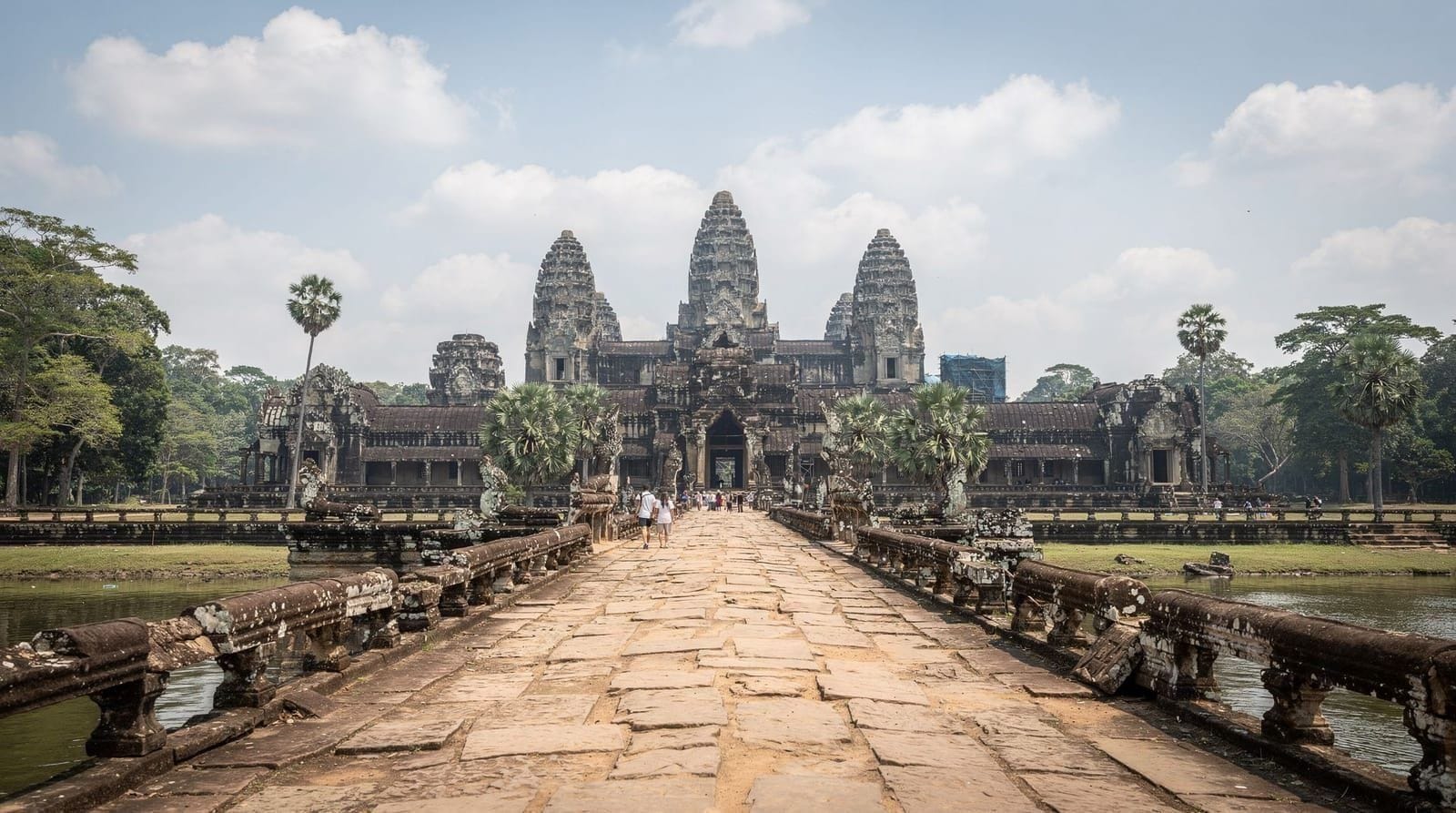
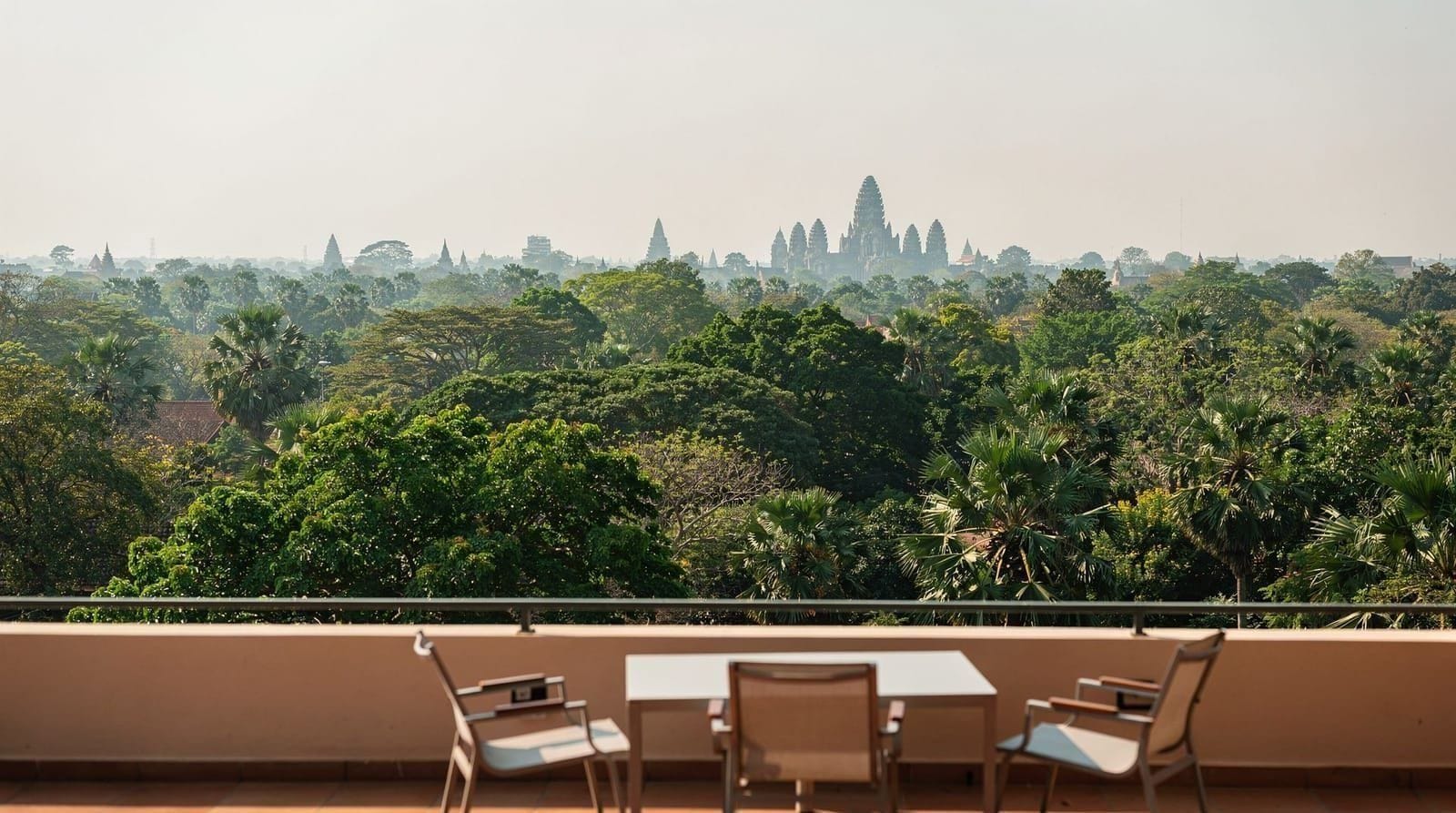
Siem Reap exists largely because of Angkor Archaeological Park next door; strip out the temples and it’s a modest provincial town built around tourism infrastructure. Phnom Penh is Cambodia’s actual working capital — government, business, a larger resident population, and a heavier, more recent layer of history sitting alongside its own French-colonial architecture and riverside charm. Deciding between them, or how to split time across both, comes down to what kind of trip you’re building.
Atmosphere
Siem Reap is compact and tourist-oriented: Old Market and Pub Street form a walkable core, hotels and restaurants cater heavily to international visitors, and the whole town’s rhythm is built around early temple mornings and evening dining. It’s an easy, low-friction first stop in Cambodia.
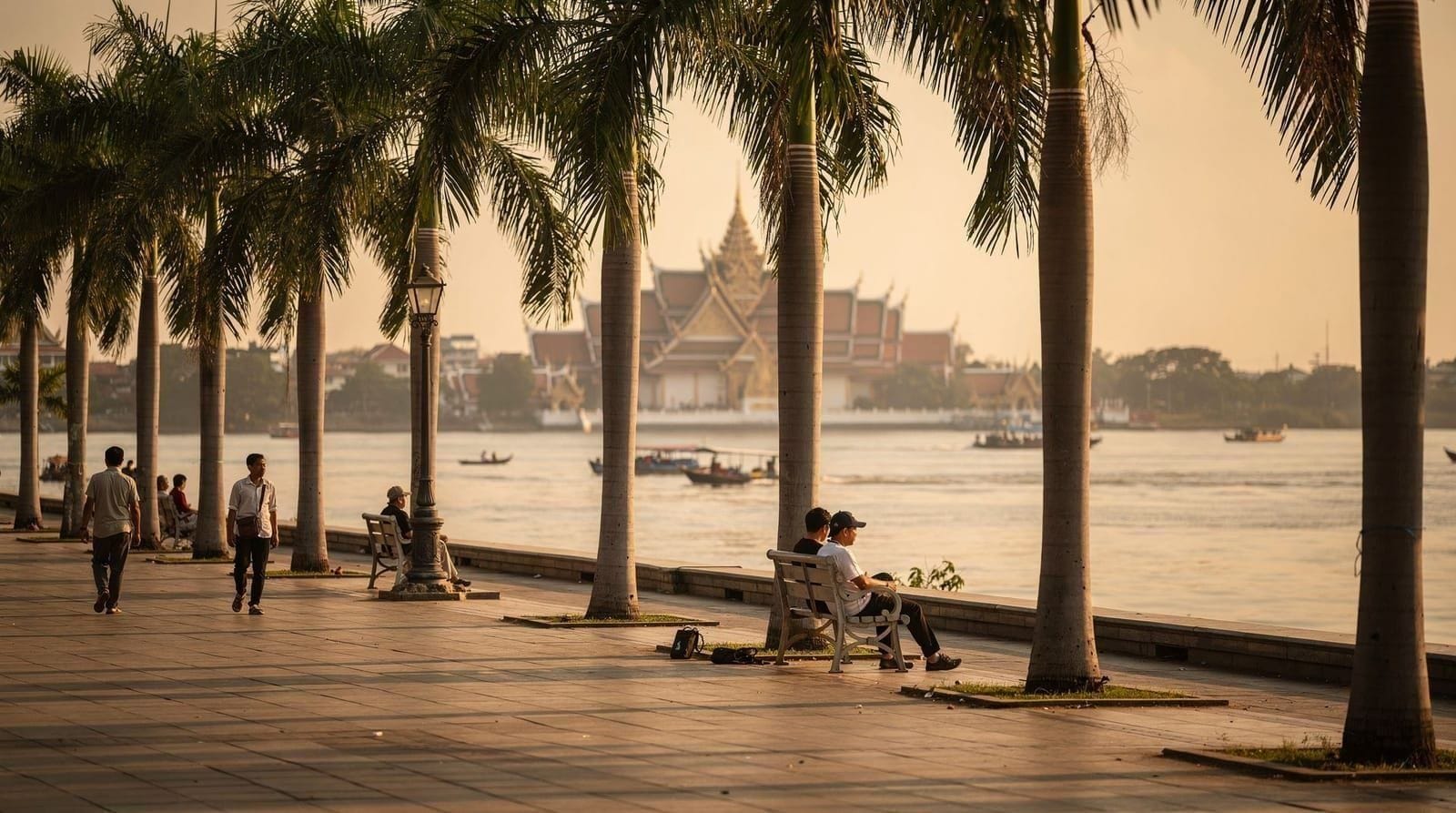
Phnom Penh is a real city — busier traffic, a mix of government buildings, markets, riverside development, and neighborhoods that function for residents first and visitors second. It has its own genuine charm (the riverside promenade at sunset, the Central Market’s art-deco dome, a growing café and restaurant scene) but demands slightly more navigation confidence than Siem Reap’s more contained tourist zone.
What each city is actually for
Siem Reap is for Angkor: the Small and Grand Circuits, Ta Prohm, Banteay Srei, and the outlier temples (Koh Ker, Beng Mealea, Phnom Kulen), plus Tonlé Sap floating villages and countryside day trips. Nearly everything worth doing here radiates outward from the temples.
Phnom Penh is for two things Siem Reap has no real equivalent to: the Royal Palace and Silver Pagoda (living royal and religious sites, unlike Angkor’s archaeological ruins), and the Khmer Rouge-era memorial sites — the Killing Fields at Choeung Ek and Tuol Sleng Genocide Museum. These last two are essential for understanding modern Cambodian history but are heavy, reflective visits, not casual sightseeing.
Weather considerations for choosing when to visit each
Both cities share Cambodia’s broad dry-season (November-April) and rainy-season (May-October) pattern, so seasonal timing doesn’t meaningfully favor one city over the other on its own. Where it matters more is trip sequencing: if visiting both, front-loading the temple-heavy Siem Reap portion during the cooler December-February window and treating Phnom Penh’s more indoor-heavy sites (museums, the palace’s covered areas) as more rainy-season-tolerant gives some scheduling flexibility if your travel dates aren’t fully fixed. See our best time to visit guide for the fuller month-by-month breakdown, which applies with only minor regional variation to Phnom Penh as well.
Food and dining
Siem Reap’s restaurant scene is built heavily around tourism — Khmer restaurants alongside a wide range of international options, most concentrated around Old Market and Pub Street. Phnom Penh’s dining scene is broader and less tourist-concentrated, reflecting its larger resident population, with a genuinely strong contemporary Cambodian and fusion restaurant scene alongside more traditional options. Neither city is a letdown for food; the difference is more about density and concentration (Siem Reap’s tourist core vs. Phnom Penh’s spread across more neighborhoods) than quality.
Getting around each city
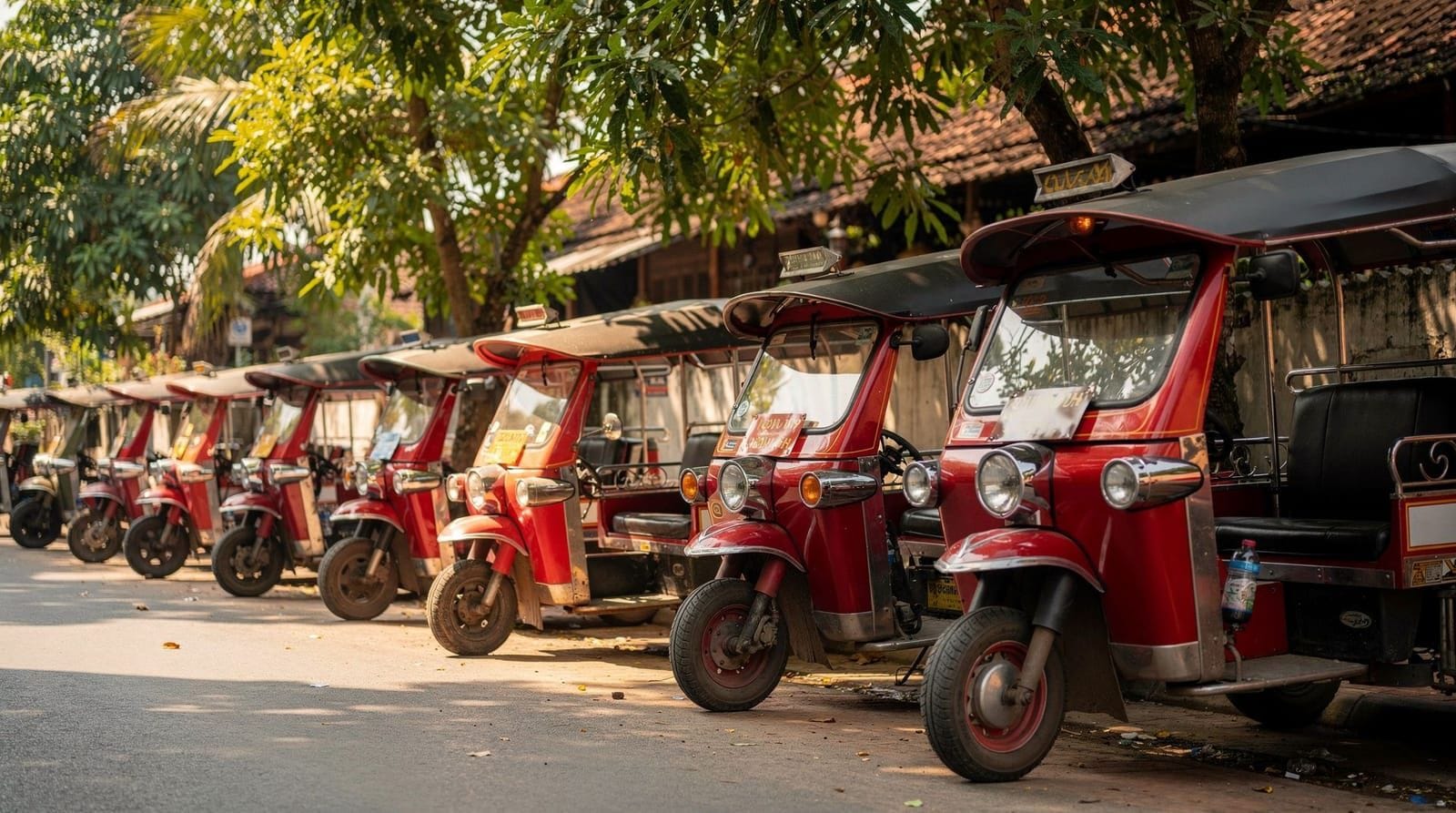
Siem Reap is compact enough to walk between Old Market, Pub Street, and many nearby hotels, with tuk-tuks handling anything farther, including all temple transport. Phnom Penh is larger and more spread out — tuk-tuks and ride-hailing apps (PassApp, Grab) are the standard way to get around, and walking between distant sites like the riverside and the Killing Fields isn’t realistic.
Traffic in Phnom Penh is also noticeably heavier than in Siem Reap, worth factoring into how much you can realistically fit into a day — a cross-town trip that takes 15 minutes in Siem Reap can easily take 30-40 minutes in Phnom Penh during rush hour, so pad transit time generously when planning a multi-stop Phnom Penh day rather than assuming Siem Reap-style transit speeds carry over.
Cost comparison
Both cities are inexpensive relative to most international destinations, and the gap between them is smaller than the gap between either city and, say, Bangkok or Singapore. Phnom Penh’s higher-end restaurants and hotels skew a little pricier than Siem Reap’s tourist-oriented equivalents, reflecting its larger resident expat and business population, but budget and mid-range travel costs are broadly comparable across both — see our Siem Reap travel budget guide for a fuller cost breakdown applicable to either city.
Nightlife and evening options compared
Siem Reap’s evenings center heavily on Pub Street and the surrounding Old Market area — a compact, walkable strip of bars, restaurants and night market stalls that functions as the default evening activity for most visitors, alongside dedicated cultural shows like the Phare Cambodian Circus.
Phnom Penh’s nightlife is more dispersed across neighborhoods (the riverside area, Bassac Lane’s craft-cocktail bars, a broader restaurant scene), reflecting a city built for residents first rather than a single concentrated tourist strip — genuinely good, but requiring more navigation and tuk-tuk time to access the same variety Siem Reap concentrates into a few walkable blocks. Neither city’s evening scene should be a primary factor in the destination decision, but it’s a real quality-of-life difference worth knowing about if evenings matter to your trip.
Ideal trip length for each
- Siem Reap alone: 3-5 days covers the core Angkor circuits and floating villages comfortably; 7 days if adding all outlier temples and Battambang (see our how many days in Siem Reap guide).
- Phnom Penh alone: 2 nights minimum for the Royal Palace, Killing Fields, and Tuol Sleng at an unrushed pace.
- Both combined: for a first Cambodia trip with 10+ days total, a common split is roughly two-thirds Siem Reap, one-third Phnom Penh. For trips under a week, most travelers are better served focusing on one city rather than splitting thin across both plus 5-6 hours of transit each way.
Should you combine them?
If your trip has the days to spare, combining both gives a more complete picture of Cambodia — ancient temples and modern history in one trip. If you’re working with a tight week or less, Siem Reap is the stronger single choice for most first-time visitors, since Angkor is the singular draw that brought most people to Cambodia in the first place. Adding Phnom Penh as a rushed one-night stopover to “tick the box” tends to shortchange both the Killing Fields and Tuol Sleng — sites that genuinely deserve unhurried attention rather than a squeezed half-day between a bus arrival and departure. Our honest verdict on the transport logistics and day-trip feasibility is in the Siem Reap to Phnom Penh guide.
Arrival logistics for each city
Most international visitors now arrive via Siem Reap–Angkor International Airport (SAI), opened October 2023 roughly 40-50 km / 45-60 minutes from downtown Siem Reap — a longer transfer than the old in-town airport it replaced, worth budgeting into your first-day schedule regardless of which city comes first on your itinerary.
Phnom Penh International Airport sits closer to its city center, roughly 30-45 minutes depending on traffic, which is generally heavier and less predictable than Siem Reap’s more consistent transfer times. If your trip includes both cities, flying into one and out of the other (rather than a round trip through a single airport) is a common and sensible routing that avoids backtracking, and is worth pricing against a same-airport round trip when booking flights.
Where each city sits on the honest-planner spectrum
Siem Reap’s tourism economy is more concentrated and, correspondingly, more prone to the specific tourist-trap dynamics covered in our tourist traps guide — inflated tuk-tuk fares, commission-driven shop stops, the Chong Kneas floating-village pressure-sale pattern. Phnom Penh’s larger, more diversified economy means tourism-specific friction is somewhat less concentrated, though standard capital-city precautions (petty theft awareness, confirming taxi or tuk-tuk fares before riding, traffic caution) apply more than they do in Siem Reap’s more contained, tourist-oriented core. Neither city presents an elevated risk profile for a typical, reasonably careful visitor.
A note on the border situation
If your Cambodia trip is also considering onward travel toward the Thailand border, note that Cambodia and Thailand fought a border conflict in 2025, and a fragile ceasefire has held since late December 2025 with ongoing tension near the border zone as of 2026. This affects Preah Vihear temple and the Poipet land crossing specifically, not Siem Reap or Phnom Penh themselves — but it’s worth checking current advisories if your itinerary extends toward the border region in either direction.
Booking either leg
A 3-day Angkor Wat tour covers the core Siem Reap temple circuit if that’s your priority, while a full-day Phnom Penh city tour handles the Royal Palace, Killing Fields, and Tuol Sleng in one guided day once you’ve made the trip to the capital. Neither tour includes the Siem Reap–Phnom Penh transport itself — book that separately based on your preferred balance of time and cost, covered in our transport guide.
Choosing by traveler profile
The honest answer to “which city” depends more on who’s asking than on any universal ranking, so it’s worth breaking the decision down by traveler type rather than treating it as a single verdict:
- First-time Southeast Asia visitors with 7 days or less: Siem Reap alone. Angkor is the singular reason most people book Cambodia in the first place, and a rushed capital-city add-on tends to shortchange both destinations rather than adding meaningfully to either.
- History-focused travelers, even on a tighter schedule: consider trading a day of outlier temples (Koh Ker, Beng Mealea) for a genuine day in Phnom Penh instead, if 20th-century Cambodian history is a specific interest — the Killing Fields and Tuol Sleng aren’t replicated by anything in Siem Reap.
- Families with young children: Siem Reap’s temple exploration and gentler pace generally suits families better than Phnom Penh’s heavier historical sites, which aren’t well-matched to young children’s attention spans or the subject matter’s gravity.
- Travelers with 10+ days and genuine interest in “seeing Cambodia” broadly: combining both cities gives the most complete picture, and is the scenario where the two-thirds/one-third split described above works best.
- Repeat Cambodia visitors who’ve already done Angkor: Phnom Penh, plus possibly a coastal extension, makes more sense as the primary destination on a return trip than repeating the temple circuit.
Budget breakdown by category
| Category | Siem Reap (tourist-oriented) | Phnom Penh |
|---|---|---|
| Budget guesthouse | Broadly comparable | Broadly comparable |
| Mid-range hotel | Slightly lower average | Slightly higher average |
| Street food meal | $2-4 | $2-4 |
| Sit-down restaurant meal | $5-10 | $6-12 |
| Tuk-tuk short ride | $1-3 | $2-4 (larger city, longer average distances) |
| Full-day driver/tuk-tuk | $15-20 (temple circuit) | $25-35 (spread-out sites) |
| High-end dining | Present but limited | Broader, more developed scene |
The overall gap between the two cities is modest — both are inexpensive by international standards — but Phnom Penh’s larger resident expat and business population supports a wider range of higher-end dining and accommodation options than Siem Reap’s more tourism-concentrated economy produces.
What Angkor has that Phnom Penh categorically doesn’t
It’s worth stating this plainly rather than leaving it implied: there is no substitute anywhere in Cambodia, Phnom Penh included, for Angkor Archaeological Park. A UNESCO World Heritage site spanning over 400 square kilometers with hundreds of individual temple structures spanning several centuries of Khmer architectural evolution is a genuinely singular attraction, not one of several comparable options.
Phnom Penh’s Royal Palace and National Museum are worthwhile but operate at an entirely different scale and category — a living royal complex and a curated collection, not a sprawling archaeological landscape. This asymmetry is the core reason Siem Reap wins the “pick one” question for most first-time visitors, independent of any other comparison point in this guide.
What Phnom Penh has that Siem Reap categorically doesn’t
The reverse is equally true and equally worth stating directly: nothing in Siem Reap approaches the historical weight or educational importance of the Killing Fields at Choeung Ek and Tuol Sleng Genocide Museum. These sites document the Khmer Rouge period (1975-1979), during which an estimated 1.5-2 million Cambodians died from execution, forced labor, and starvation — a defining and still-recent trauma in Cambodian national history that shapes the country in ways a temple-focused Siem Reap trip doesn’t surface at all. Visitors who skip Phnom Penh entirely get a genuinely incomplete picture of modern Cambodia, even with a full and satisfying Angkor experience behind them.
Frequently asked questions about Siem Reap vs Phnom Penh
Which city is better for first-time visitors to Cambodia?
Siem Reap, almost always — Angkor Archaeological Park is the reason most people visit Cambodia in the first place, and the town itself is compact, tourist-friendly, and easy to navigate on a first trip. Phnom Penh rewards visitors with slightly more travel experience or a specific interest in recent Cambodian history.Is Phnom Penh worth visiting if I've already seen Angkor Wat?
Yes, if you have the extra days — it's a genuinely different experience, not a repeat: a working capital city with colonial-era architecture, a riverside promenade, and two historically essential sites (the Killing Fields and Tuol Sleng) that Siem Reap has no equivalent to.How much time should I split between the two cities?
A common split for a 10-14 day Cambodia trip is roughly two-thirds Siem Reap, one-third Phnom Penh — for example 6-7 days around Angkor and 3-4 days in the capital including travel time. For shorter trips (under a week), most travelers are better served picking one city rather than splitting thin.Which city is cheaper?
Both are broadly similar and inexpensive by international standards, though Phnom Penh's better restaurants and hotels skew slightly higher than Siem Reap's tourist-oriented equivalents, since Phnom Penh serves a larger resident expat and business population alongside tourism.Is Phnom Penh safe to visit?
Yes, with the same standard precautions as any Southeast Asian capital — be aware of petty theft and traffic, and exercise increased caution consistent with general Cambodia travel advisories. It doesn't carry any elevated risk relative to Siem Reap for a typical tourist itinerary.What's the best way to travel between the two cities?
Bus (5-6 hours), a short domestic flight (45 minutes flying, longer door-to-door with airport transfers), or a seasonal river/lake boat. See our Siem Reap to Phnom Penh guide for the full comparison.
Top experiences
Bookable activities with verified prices and instant confirmation on GetYourGuide.


More tours on Viator
Top-rated experiences with verified reviews, bookable on Viator (a Tripadvisor company).