Phnom Penh from Siem Reap: bus, flight or boat, and whether a day trip works
Siem Reap: Full-Day Phnom Penh Private Tour
Can I visit Phnom Penh as a day trip from Siem Reap?
Not sensibly. The fastest realistic option, a short flight, still means roughly 45 minutes in the air plus airport time on both ends, and the bus takes 5–6 hours each way. Phnom Penh's main sites — the Royal Palace, Killing Fields, Tuol Sleng — need a genuine half-day or more on their own. Plan at least one overnight, ideally two.
The honest answer up front
A Phnom Penh day trip from Siem Reap does not make sense, and it’s worth saying so plainly rather than dressing up a bad idea with a tight schedule and hoping the math works out on the day. Even the fastest option — a domestic flight — eats up half a day once you count airport transfers, check-in, and the flight itself, leaving only a few rushed hours in the capital before you need to head back.
The bus takes 5–6 hours each way, meaning a same-day round trip would mean 10–12 hours of travel for essentially no time in the city. Phnom Penh’s main draws — the Royal Palace, the Killing Fields, and Tuol Sleng Genocide Museum — are sites that reward, and in the case of the genocide-related sites genuinely require, unhurried time. This guide covers how to actually get there, and how to plan the overnight (or two) it deserves.
Bus: the standard option
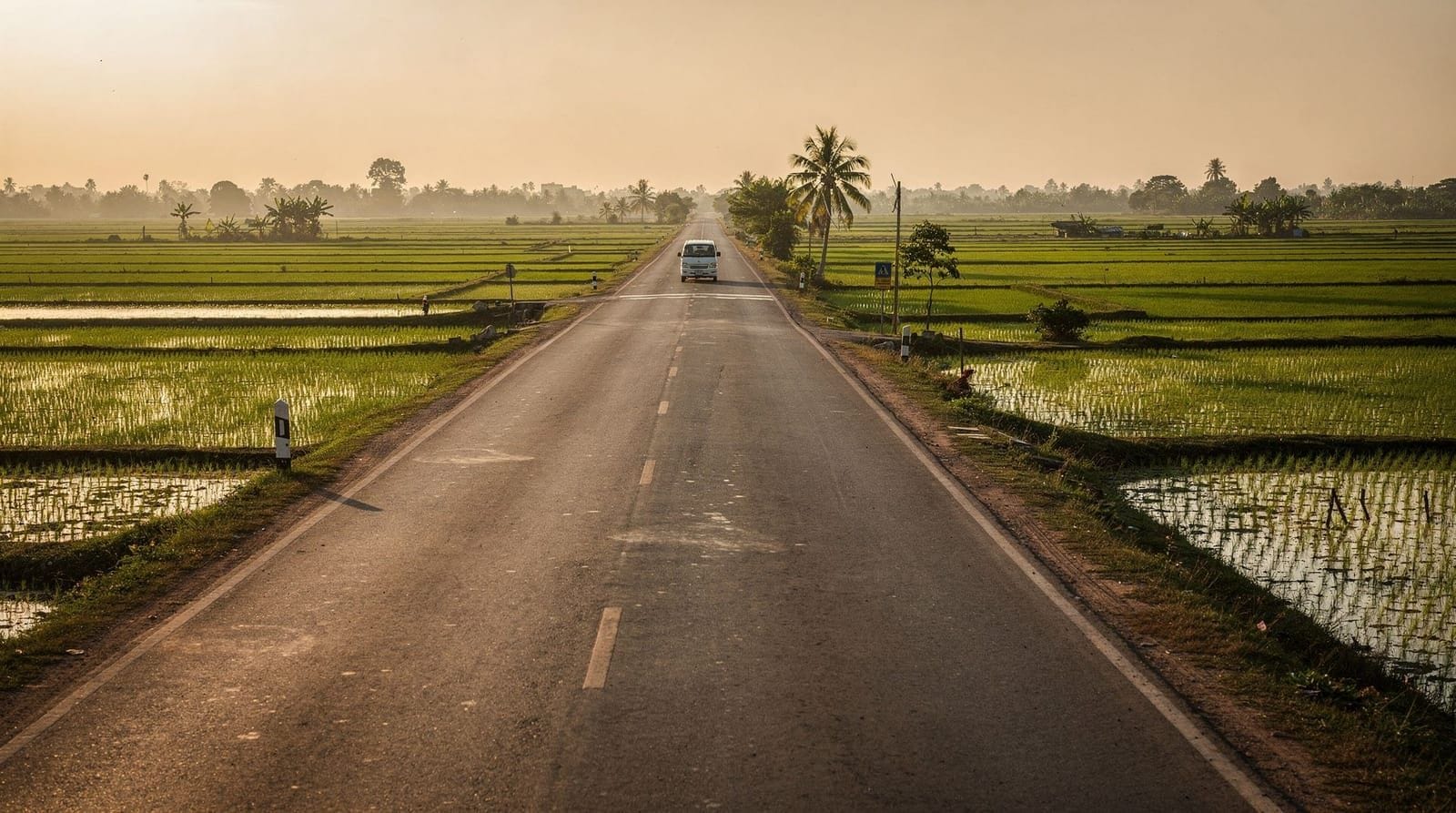
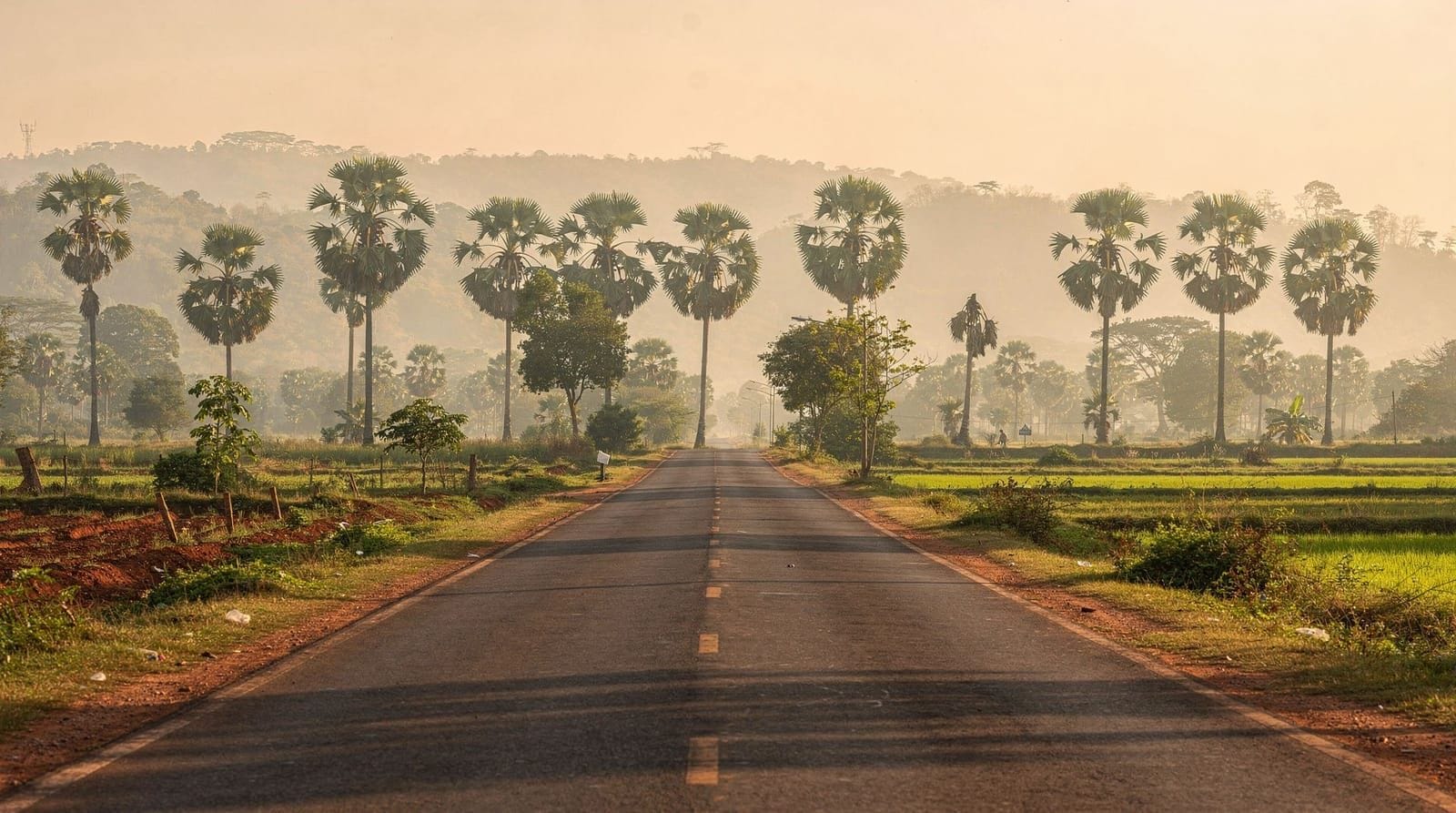
Several operators run daily coach services between Siem Reap and Phnom Penh on a fully paved road, taking roughly 5–6 hours depending on traffic and rest-stop time. Fares are typically $12–15 for a standard air-conditioned coach seat, occasionally more for a VIP or sleeper-style service. This is the most commonly used option for budget-conscious travelers and those who’d rather see some of the Cambodian countryside en route than fly over it — the road passes through smaller towns and rural landscape that a flight skips entirely.
Book a reputable, well-reviewed operator rather than the cheapest listing; bus quality on this route varies more than the price difference suggests, and a genuinely comfortable coach makes a meaningful difference over 5–6 hours.
Flight: the fastest option
A short domestic flight between Siem Reap and Phnom Penh takes roughly 45 minutes in the air, one of the shortest scheduled domestic routes in the country. Once you add airport transfer time on both ends (Siem Reap–Angkor International Airport is itself 40–50 minutes from downtown Siem Reap — see our airport guide) plus check-in and boarding buffers, the realistic door-to-door time is closer to 2.5–3.5 hours total, still meaningfully faster than the bus but not the instant hop the flight time alone suggests.
Fares vary with route demand and how far in advance you book; compare against the bus fare and factor in the airport-transfer time before assuming flying saves as much time as it appears to on paper.
Boat: scenic, not fast
A river and lake boat connection exists between Siem Reap and Phnom Penh via the Tonlé Sap, running seasonally when water levels support the route (broadly the wet season, roughly June–November, with reduced or suspended service in the driest months). This option is genuinely scenic — passing through floating villages and open lake — but it is not a time-saver: journeys commonly run 5 hours or longer depending on water levels, comparable to or slower than the bus, and typically cost more.
Treat the boat as a scenic alternative for travelers with time to spare and an interest in the journey itself, not a practical transport choice for anyone trying to minimize travel time. Confirm current operator schedules directly before planning around this option, since seasonal service can change year to year.
Comparison at a glance
| Option | Time (door to door) | Cost | Best for |
|---|---|---|---|
| Flight | ~2.5–3.5 hours | Variable, often $50–100+ | Minimizing total travel time |
| Bus | ~5–6 hours | $12–15 | Budget travel, seeing the countryside |
| Boat | ~5+ hours (seasonal) | Higher than bus | Scenic travel, not time-sensitive |
| Private car | ~5–6 hours | $80–120 (whole vehicle) | Groups, flexible stops en route |
What to see once you’re there
Phnom Penh’s essential sites — the Royal Palace and Silver Pagoda, the National Museum, the Killing Fields at Choeung Ek, and Tuol Sleng Genocide Museum (a former high school converted into a Khmer Rouge prison and now a museum) — genuinely need a full day between them, and the two genocide-related sites in particular are heavy, reflective visits that don’t suit a rushed schedule squeezed between two long travel days. Budget at least one full day in the city, with two nights giving a noticeably more comfortable pace than one.
A private car: the middle option
A private car or driver for the full Siem Reap–Phnom Penh route runs roughly $80-120 for the vehicle (shared among your group, if traveling together), taking a similar 5-6 hours to the bus but with the flexibility to stop en route — a roadside meal, a photo stop, or simply a break on your own schedule rather than a fixed coach timetable. This suits small groups or families more than solo travelers, for whom the per-person cost of a private car rarely beats the bus fare, though it remains a reasonable choice for a solo traveler simply prioritizing comfort and flexibility over cost.
A suggested two-night Phnom Penh itinerary
For travelers extending their Siem Reap trip with the recommended minimum stay, a straightforward two-night structure covers the essentials without rushing:
- Day 1, arrival: Travel from Siem Reap (bus, flight, or private car), check in, and use the afternoon for a lighter introduction — the riverside promenade, the Central Market’s art-deco building, or the National Museum’s Angkorian-era sculpture collection, a genuinely worthwhile complement to having just seen the temples those sculptures came from.
- Day 2, full day: Morning at the Royal Palace and Silver Pagoda while the day is cooler and before tour groups build up, followed by lunch, then an afternoon dedicated to Tuol Sleng Genocide Museum and the Killing Fields at Choeung Ek — booking these back-to-back on one afternoon, with a driver waiting between them, is the standard approach given Choeung Ek’s distance from the center.
- Day 3, departure: A relaxed morning — a final riverside coffee, any remaining shopping at the Central or Russian Market — before your return journey to Siem Reap or onward travel.
This pacing keeps the Killing Fields and Tuol Sleng together on one dedicated afternoon rather than splitting them across two rushed half-visits, while still leaving room for Phnom Penh’s lighter cultural sites.
Money and costs specific to the Phnom Penh leg
Phnom Penh runs on the same USD-based economy as Siem Reap, so no separate currency preparation is needed for this leg of the trip. Entrance fees at the main sites are modest — the Royal Palace and Silver Pagoda charge a separate ticket from the National Museum, and Tuol Sleng and the Killing Fields each have their own entrance fee, none of which are bundled together the way some travelers assume.
A private guide at either genocide-related site, while optional, is worth strongly considering given how much historical context a knowledgeable guide adds to what would otherwise be a visually spare, hard-to-fully-process memorial visit — this is one of the clearer cases in Cambodia trip planning where paying for a guide substantially changes the depth of the experience rather than simply adding convenience.
Why the genocide-related sites deserve unhurried time
It’s worth being explicit about why this guide repeatedly emphasizes not rushing Tuol Sleng and the Killing Fields, beyond a general respect-the-history platitude. Tuol Sleng was a functioning secondary school converted into S-21, a Khmer Rouge interrogation and torture facility, where thousands of prisoners passed through between 1975 and 1979; the site today preserves classrooms converted into cells and displays photographs of many of the victims, a direct and unavoidable confrontation with the period’s scale.
Choeung Ek, one of the “Killing Fields” sites where many S-21 prisoners were ultimately taken, includes a memorial stupa containing recovered remains and marked mass grave sites across the grounds. Visitors who allocate too little time — squeezing both into an hour each between other activities — commonly report the experience feeling rushed and somehow incomplete relative to the weight of what’s being presented, which is part of the honest reasoning behind this guide’s repeated recommendation against a same-day round trip from Siem Reap.
Where to stay in Phnom Penh
Phnom Penh’s riverside area, near the Royal Palace and National Museum, puts you within walking distance of the city’s most photogenic stretch and a short tuk-tuk ride from Tuol Sleng. The Killing Fields at Choeung Ek sit farther out, roughly 30-40 minutes from the riverside area, and are usually visited as a half-day excursion combined with Tuol Sleng rather than a standalone stop. Budget accommodation in Phnom Penh is broadly comparable in price to Siem Reap’s equivalent tier, though the city’s larger size means neighborhood choice matters more for minimizing daily transit time between sites.
How this fits a Siem Reap trip
If your overall Cambodia trip has room for it, Phnom Penh works best as a genuine extension rather than a squeeze-in — see our Siem Reap vs. Phnom Penh comparison for how the two cities differ and whether combining them suits your trip. The 7-day Siem Reap itinerary is built entirely around Angkor and its surrounding region and deliberately doesn’t include Phnom Penh — if the capital is a priority, plan it as additional days beyond that itinerary rather than trading Angkor time for it.
A private Phnom Penh city tour covers the Royal Palace, Killing Fields, and Tuol Sleng in one guided day once you’ve made the trip — useful for travelers who’d rather have context and logistics handled for a single, information-dense day in the capital rather than navigating independently between historically weighty sites.
Practical booking notes
Bus tickets can be bought a day or two in advance through your hotel or directly with an operator, and same-day booking is usually possible outside peak holiday periods (Khmer New Year in April, Water Festival in November). Domestic flights benefit from earlier booking, as fares tend to rise closer to departure. Whichever option you choose, build in a buffer day in Siem Reap before and after the Phnom Penh leg rather than scheduling it tightly against a temple day or an international flight — travel delays on this route, while uncommon, aren’t unheard of.
Which bus operators actually run this route
Several established coach operators cover the Siem Reap–Phnom Penh corridor daily, with multiple departure times spread across the morning and early afternoon rather than a single fixed schedule. Larger, more established operators generally run newer air-conditioned coaches with more consistent on-time performance than smaller budget operators, and checking recent reviews for the specific operator and departure time you’re considering — rather than only comparing headline prices — meaningfully improves the odds of a comfortable ride.
VIP or “sleeper” service tiers, where offered, add a modest price premium for wider seats or a semi-reclining sleeper-style layout, worth the upgrade specifically for travelers prone to discomfort on a 5-6 hour seated journey.
What the flight route actually involves
Domestic flights between Siem Reap and Phnom Penh are operated on a competitive basis by more than one carrier, with schedules generally offering several daily departures rather than one or two fixed times — useful flexibility if your Phnom Penh plans need to fit around a specific arrival or departure window elsewhere in your trip. Aircraft on this short route are typically regional jets or turboprops sized for the route’s demand rather than wide-body planes, and the flight itself, while short, still requires standard airport arrival buffers (roughly 1-1.5 hours before a domestic departure) on both ends — a detail that closes some of the apparent time gap between flying and taking the bus once total door-to-door time is calculated honestly.
Luggage and border-crossing-adjacent considerations
Since this is a domestic route within Cambodia rather than an international crossing, standard passport or visa formalities don’t apply again once you’re already in the country — a detail worth confirming isn’t confused with actual Cambodia–Thailand border logistics, which do carry the active safety caveats described in our Siem Reap vs. Phnom Penh guide.
Bus operators on this route typically handle luggage with under-coach storage rather than strict weight limits, though larger backpacking-style luggage is worth confirming fits with your specific operator if you’re traveling with an unusually large bag. Domestic flights follow standard Cambodian carrier baggage allowances, generally more restrictive than international allowances, so checking your specific fare’s included baggage weight before flying with a larger pack is worth the few minutes it takes.
A brief note on the historical Khmer Rouge road-building legacy
The paved road connecting Siem Reap and Phnom Penh has been substantially upgraded over the past two decades, part of Cambodia’s broader post-conflict infrastructure recovery following the Khmer Rouge period and the subsequent decades of rebuilding — a detail that adds some context to why the drive, while long, passes through a landscape of visible ongoing development rather than static rural scenery. Travelers with an interest in modern Cambodian history sometimes find this a useful lens for the bus journey itself: the towns and infrastructure passing by the window are themselves part of the same recovery story that the Killing Fields and Tuol Sleng, at the journey’s end, document more directly and more gravely.
Frequently asked questions about Phnom Penh from Siem Reap
What's the fastest way to get from Siem Reap to Phnom Penh?
A domestic flight, roughly 45 minutes in the air, is the fastest option, though airport transfers and check-in time on both ends typically add 2–3 hours to the total door-to-door journey. The bus is the most common choice for travelers not in a hurry, at 5–6 hours each way.Is the bus comfortable for a 5-6 hour journey?
Modern coach operators running this route typically use air-conditioned buses with reclining seats, and the road is fully paved, so the ride itself is straightforward if unremarkable. Book a reputable operator rather than the cheapest option, and expect a rest stop partway.Is there a boat between Siem Reap and Phnom Penh?
Seasonal fast-boat services exist via the Tonlé Sap lake and river, but they're slower than the bus (often 5-6+ hours depending on water levels), pricier, and only reliably operate in the wet season when water levels support the route. Treat the boat as a scenic option rather than a time-saving one, and confirm current operator schedules before planning around it.How many days should I spend in Phnom Penh?
At minimum one full day for the Royal Palace, Killing Fields, and Tuol Sleng Genocide Museum — realistically two nights gives a more comfortable pace given the emotional weight of the genocide-related sites, which aren't places to rush through.Should I fly one way and bus the other?
This is a common and sensible combination — fly one direction to save time, then take the bus the other way if you want to see more of the countryside en route or simply prefer not to pay for two flights.What's the honest verdict on adding Phnom Penh to a Siem Reap trip?
Add it only if you have at least 2-3 spare days beyond your Angkor itinerary. As a rushed add-on squeezed into a tight schedule, Phnom Penh's most important sites — sobering, historically weighty places — don't reward a rushed visit, and you'd be better served spending that time more slowly in Siem Reap or skipping the capital entirely for this trip.
Top experiences
Bookable activities with verified prices and instant confirmation on GetYourGuide.

More tours on Viator
Top-rated experiences with verified reviews, bookable on Viator (a Tripadvisor company).