Bicycle and scooter rental in Siem Reap
Siem Reap: Half-Day Countryside Bike Tour
Can I rent a bicycle or scooter in Siem Reap?
Bicycles rent widely for a few dollars a day and are a genuine way to cover the town and the flatter small circuit temples independently. Scooters are also easy to rent, but Cambodia technically requires an International Driving Permit plus a Cambodian motorbike license for anything over 125cc, and many travel insurance policies exclude injuries from riding without correct licensing — a detail worth confirming before renting one.
Two very different options under one heading
“Bicycle and scooter rental” covers two genuinely different decisions in Siem Reap: bicycles are cheap, low-risk, and a legitimate way to see the town and small circuit independently; scooters carry real legal and insurance complications most visitors underestimate. This guide treats them separately rather than as interchangeable “two-wheeled rental” options, because the practical considerations for each are quite different.
Bicycle rental
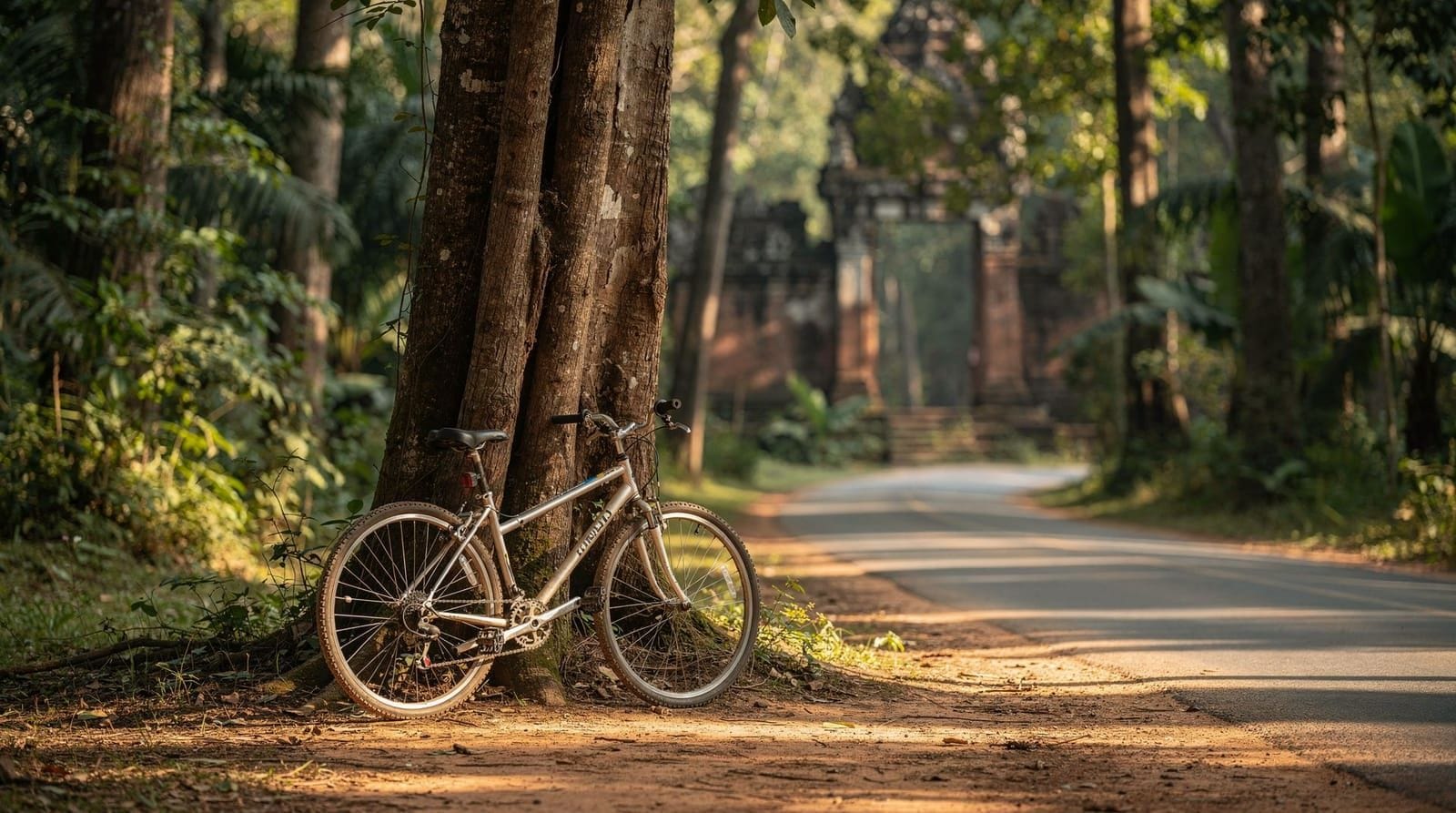
Cost: $1-3/day for a standard bicycle, $5-10/day for an e-bike (electric-assist, flattening the physical effort considerably).
Where to rent: widely available through hotels, guesthouses, and independent rental shops around the Old Market area — no advance booking generally needed, though popular shops can run low on inventory during peak season mornings.
What’s realistic: the town itself and the small circuit (Angkor Wat, Bayon, Ta Prohm and nearby sites) are a genuine cycling distance for fit, confident riders, roughly 15-20 km round trip depending on exact routing. The grand circuit adds meaningfully more distance but remains doable for strong cyclists with an early start. Farther outlier temples (Banteay Srei, Beng Mealea, Koh Ker, Phnom Kulen) are impractical by standard bicycle given their one-to-two-hour driving distances — these require a tuk-tuk, car, or tour regardless of your cycling fitness.
The real constraint is heat, not traffic. Roads connecting town to the small circuit are well-used by cyclists and the route is established, so traffic danger isn’t the primary concern for confident riders. Direct midday sun across multiple temple stops, however, is genuinely demanding — an early start (ideally before 8am) and realistic distance expectations matter more than road caution alone. Cycling in the cooler months (November-February) is meaningfully more comfortable than attempting it during April-May’s peak heat.
E-bikes are worth the extra cost for less-fit riders or anyone wanting to cover the grand circuit’s greater distance without the full physical toll of a standard bicycle — a genuinely good middle ground between a standard bike’s independence and a tuk-tuk’s ease.
A half-day countryside bicycle tour or a guided e-bike and tuk-tuk combination tour are good options for visitors who want the cycling experience with a local guide’s route knowledge, rather than navigating independently.
Scooter rental — the legal complication
Scooter rental shops operate openly around Siem Reap and rarely turn away a tourist customer, which creates a common misconception that renting and riding is straightforwardly legal for any visitor. In practice, Cambodia requires an International Driving Permit (IDP) plus a Cambodian motorbike license for scooters over 125cc — a two-part requirement most casual travelers don’t hold, and one that rental shops generally don’t verify strictly before handing over a bike.
Why this matters beyond a technicality: many travel insurance policies explicitly exclude injuries sustained while operating a motor vehicle without the locally required license. If an accident occurs while riding without correct documentation, the practical consequence isn’t just a legal one — it can mean a denied insurance claim for medical treatment, a real financial risk on top of the physical one.
What to check before renting a scooter:
- Do you hold a genuine International Driving Permit valid for motorbikes, issued in your home country before travel (these cannot be obtained on arrival in Cambodia)?
- Does your travel insurance policy specifically cover motorbike/scooter use in Cambodia, and does it require proof of correct local licensing?
- Is the scooter’s engine size under or over 125cc, since requirements can vary by class?
If you can’t answer all three confidently, a guided vespa or scooter countryside tour with a licensed local driver offers the scooter experience — the open-road feel, the countryside access — without the personal licensing and insurance exposure of self-riding.
Bicycle vs. tuk-tuk vs. scooter — quick comparison
| Option | Cost | Physical effort | Legal/insurance risk |
|---|---|---|---|
| Bicycle | $1-3/day | High | None |
| E-bike | $5-10/day | Low-moderate | None |
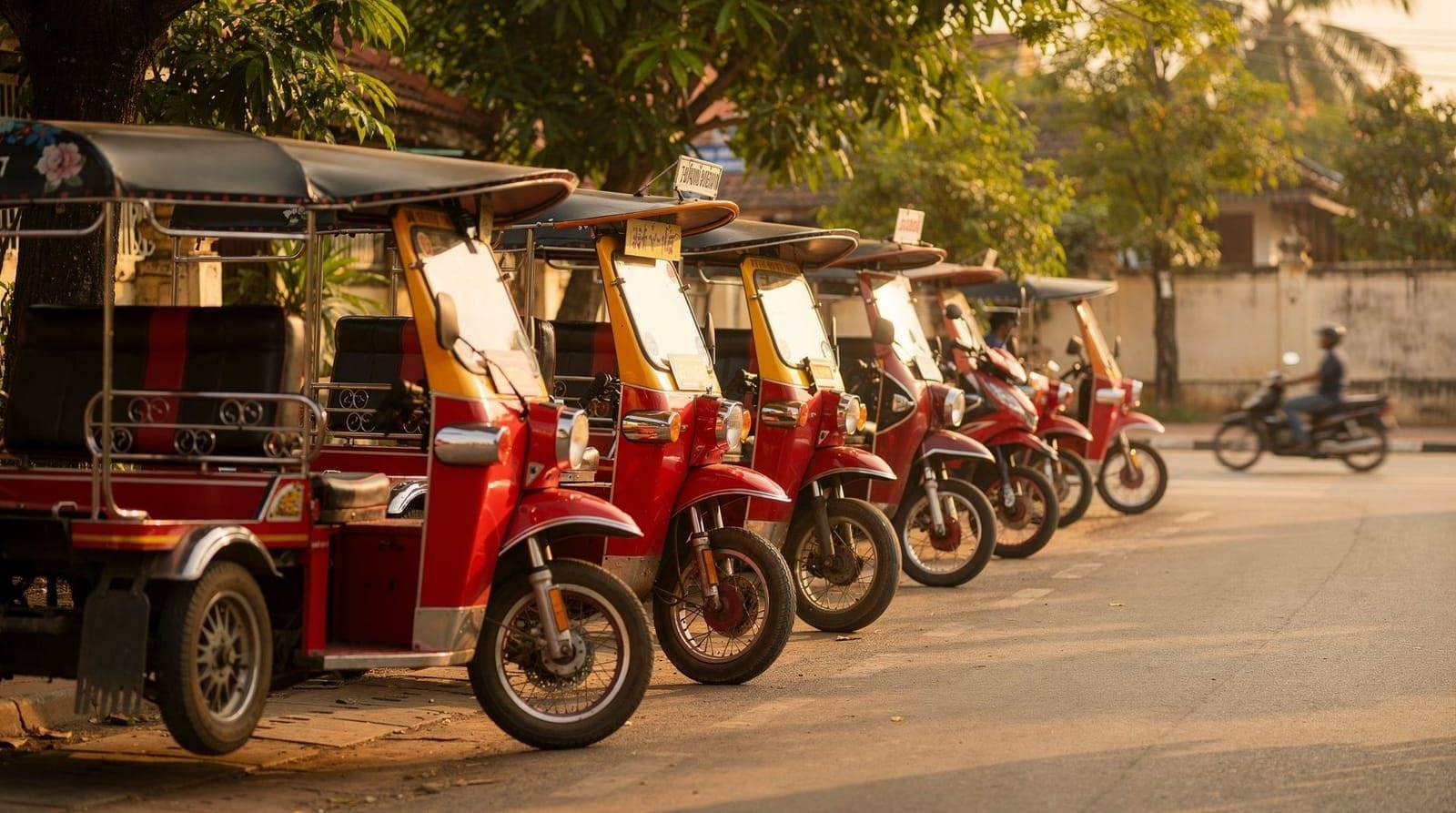
| Tuk-tuk (with driver) | $15-20/day | None | None |
| Self-drive scooter | Low rental cost | Low | Significant if unlicensed |
| Guided scooter/vespa tour | Tour price | Low | None (licensed driver) |
Practical rental tips
Check the bike before riding off — brakes, tire pressure, and seat height are worth a quick test in front of the rental shop rather than discovering an issue on the road. Reputable shops expect and accommodate this.
Carry water and sun protection regardless of distance — even a short cycling outing in Siem Reap’s heat depletes hydration faster than equivalent effort in a cooler climate; see the packing guide for what to bring on a cycling day specifically.
Know the route before setting off, especially for the grand circuit or any route beyond the immediate town center — offline maps or a downloaded route are more reliable than assuming consistent mobile signal throughout the ride.
Lock the bike at every stop. Rental shops typically provide a basic lock; use it at every temple stop, not just overnight, since bicycle theft, while not rampant, does happen at busy tourist sites.
When a tuk-tuk beats a bicycle, even for fit riders
Even confident cyclists should consider a tuk-tuk over a bicycle for specific circumstances: hot-season travel (April-May) where heat risk outweighs the appeal of independent cycling, days combining multiple distant temple clusters where total distance exceeds a comfortable cycling range, and any day where carrying substantial gear (camera equipment, extra layers, purchases) makes a tuk-tuk’s storage space more practical than a bicycle basket. See the full getting-around guide for how bicycles compare against every other transport option, not just tuk-tuks.
Seasonal considerations for cycling
Cycling comfort varies more by season in Siem Reap than most other transport choices, since it’s the one option with no shade, AC, or motor to offset the climate. November-February offers the most comfortable cycling conditions of the year — cooler temperatures and lower humidity make even the grand circuit’s distance manageable for moderately fit riders. March-May, the hot season, meaningfully raises the risk of heat exhaustion on longer rides; if cycling during this window, treat an early-morning-only ride as the default rather than attempting a full day on two wheels.
May-October, the rainy season, adds a different consideration — sudden afternoon downpours can leave both rider and route genuinely soaked, and some cyclists prefer renting for a morning-only outing during these months rather than risking a rain-interrupted afternoon far from town. See the weather by month guide for exact conditions in your travel window.
Rental shop reliability and what to expect
Rental quality varies meaningfully between operators — established shops with a visible storefront and a track record (often recommended directly by hotels) tend to maintain better-conditioned bikes and offer clearer terms on deposits and damage responsibility than informal street-corner rental stands.
A modest deposit (sometimes a passport copy, sometimes a cash deposit) is standard practice across most shops and not a red flag on its own, but clarify the exact deposit-return terms before handing anything over. For scooters specifically, a shop willing to rent without asking for any license verification at all is not a sign of convenience — it’s a sign the shop isn’t taking the legal requirement seriously, which says nothing reassuring about how it would handle a dispute after an accident.
Getting an International Driving Permit before you travel
An International Driving Permit (IDP) cannot be obtained on arrival in Cambodia — it must be arranged in your home country before departure, typically through your national motoring association (AAA in the US, the relevant automobile club elsewhere), usually alongside your existing domestic driver’s license which the IDP doesn’t replace but supplements. If you already know before booking your trip that you want the option of self-driving a scooter, arranging the IDP at home takes a same-day appointment in most countries and costs a modest fee — a trivial step if planned ahead, an impossible one to fix once you’re already in Siem Reap without a license for scooters over 125cc.
Electric vs. gas scooters, and what that changes
Most rental shops in Siem Reap offer standard gas-powered scooters, though electric scooters and e-bikes are increasingly available as a lower-maintenance, quieter alternative — the same IDP-plus-Cambodian-license requirement applies to electric scooters classed similarly to their gas equivalents, so switching to electric doesn’t sidestep the licensing question. What does change is running cost and range: electric models typically cost slightly more per day to rent but eliminate fuel stops, a minor convenience over a single day but a more meaningful one across a multi-day rental.
What a police checkpoint stop actually looks like
Traffic checkpoints do operate periodically around Siem Reap, and a foreign tourist riding a scooter without correct documentation can be stopped and asked for a license — in practice, this sometimes results in an on-the-spot informal fine rather than a formal legal process, a reality worth being aware of even though it’s not something this guide can predict or recommend navigating. The bigger and more consequential risk remains the insurance gap described above: a checkpoint fine is a bounded, known cost, while a denied medical insurance claim after an accident is not.
Frequently asked questions about Bicycle and scooter rental in Siem Reap
How much does a bicycle rental cost in Siem Reap?
A standard bicycle typically rents for $1-3/day; an e-bike, which flattens the physical effort considerably, costs somewhat more, often $5-10/day. Multi-day rentals sometimes come with a modest per-day discount.Is it safe to cycle to the temples yourself?
For confident, fit riders comfortable with Southeast Asian traffic conditions, yes — the roads connecting town to the small circuit are used regularly by cyclists and the route is well-established. The bigger challenge is heat rather than traffic danger; cycling multiple temples in direct midday sun is physically demanding even for fit travelers, so early starts and realistic distance expectations matter more than traffic caution alone.Can I legally rent and ride a scooter as a tourist?
Legally, Cambodia requires an International Driving Permit plus a Cambodian motorbike license for scooters over 125cc — a requirement many visitors are unaware of and many rental shops don't enforce strictly, which doesn't make it legal or insured to ride without it. Confirm your travel insurance policy actually covers motorbike use in Cambodia before assuming a casual rental is a low-risk decision.What's the difference between renting a bicycle and hiring a tuk-tuk?
A bicycle costs a few dollars a day and gives full independence but requires physical effort and heat tolerance; a tuk-tuk with a driver costs roughly $15-20/day, covers more ground with less physical demand, and includes someone waiting between temple stops. Most first-time visitors default to a tuk-tuk for temple days and consider a bicycle mainly for a single self-paced day or getting around town.Are there guided bike tours instead of self-rental?
Yes — guided countryside and temple-area bike tours are widely available, combining a rental bike with a local guide's route knowledge and commentary, useful for visitors who want the cycling experience without navigating independently.Which temples can realistically be reached by bicycle?
The small circuit (Angkor Wat, Bayon, Ta Prohm and the nearby sites) is a realistic cycling distance from town for fit riders. The grand circuit adds meaningful distance but remains doable for strong cyclists. Farther outlier temples — Banteay Srei, Beng Mealea, Koh Ker, Phnom Kulen — are impractical by standard bicycle given the one-to-two-hour driving distances involved.
Top experiences
Bookable activities with verified prices and instant confirmation on GetYourGuide.


More tours on Viator
Top-rated experiences with verified reviews, bookable on Viator (a Tripadvisor company).