Which Angkor temples are actually worth visiting
Siem Reap: Angkor Wat, Angkor Thom and Banteay Srei Tour
Which Angkor temples should I prioritize if I can't see them all?
Angkor Wat, Bayon (Angkor Thom) and Ta Prohm are the non-negotiable three. If you have a second day, add Preah Khan and Banteay Srei. Beyond those five, most other temples inside the park are worthwhile only if you have the time and genuine interest, not because they're essential.
Not all Angkor temples deliver equally
Angkor’s reputation rests on a handful of genuinely exceptional sites, but the park contains dozens of temples of wildly varying condition, scale and visual impact. Some blogs list every named ruin as a “must-see,” which is unhelpful for anyone with limited time and a finite tolerance for heat and walking. This is an honest ranking, organized by what each temple actually delivers rather than by which circuit it happens to sit on.
How this ranking was built
This isn’t a ranking by historical significance alone, nor purely by popularity — both would produce a misleading guide. A temple can be historically crucial to understanding the Khmer Empire’s development while delivering a modest visual experience relative to the time it takes to reach (several of the smaller Roluos Group sites fall into this category), and a temple can be extremely popular for reasons that don’t hold up well against a genuinely alternative-minded visitor’s priorities (crowds are a real cost, not a neutral fact).
The tiers below balance visual and atmospheric payoff, crowd level, preservation state, and time cost against each other, aimed at the practical question most visitors actually have: given limited days, which temples should get my time first.
Tier 1: non-negotiable
Angkor Wat. The largest religious monument on earth by land area, and the temple every other Angkor site is implicitly compared against. Its symmetry, scale, and the bas-relief galleries wrapping its outer enclosure make it worth a genuinely unhurried visit — plan at least 90 minutes to two hours if you can, not a 30-minute photo stop.
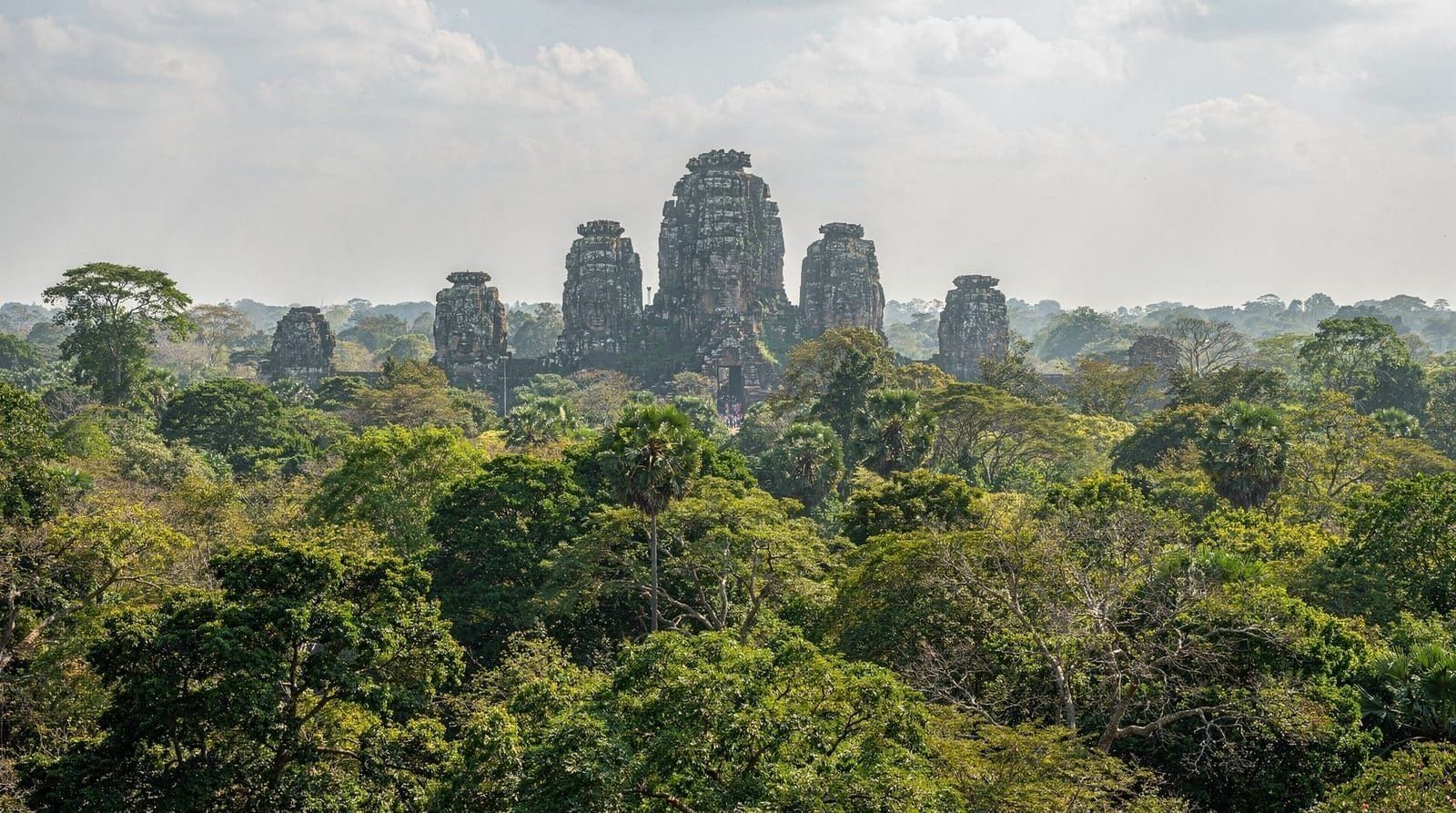
Bayon (Angkor Thom). Over 200 enormous serene stone faces carved into the temple’s towers, unlike anything else at Angkor or arguably anywhere else in Southeast Asia. Its maze-like upper terrace rewards slow wandering rather than a fixed route.
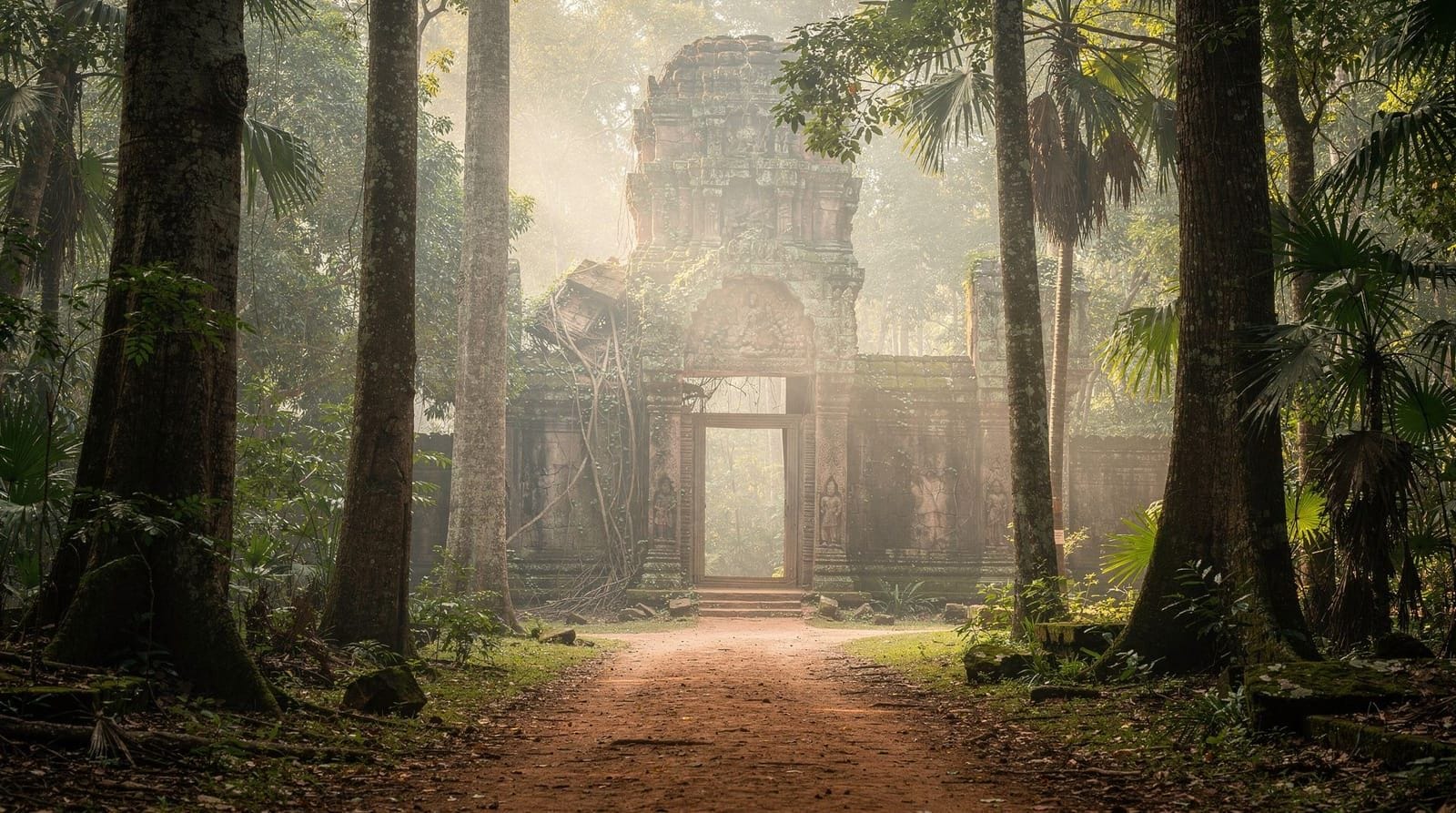
Ta Prohm. The “Tomb Raider” temple, where strangler fig and silk-cotton tree roots have grown directly through and around 12th-century stonework over the centuries the site was left to the jungle. It’s the most crowded of the three at peak hours, but the visual is genuinely unlike anything else in the park.
Tier 2: strongly recommended with a second day
Preah Khan. Long, atmospheric processional corridors and partial jungle reclamation similar in spirit to Ta Prohm, but with a fraction of the crowd. Many repeat visitors rate it above Ta Prohm precisely because you can experience it without fighting for a clear sightline.
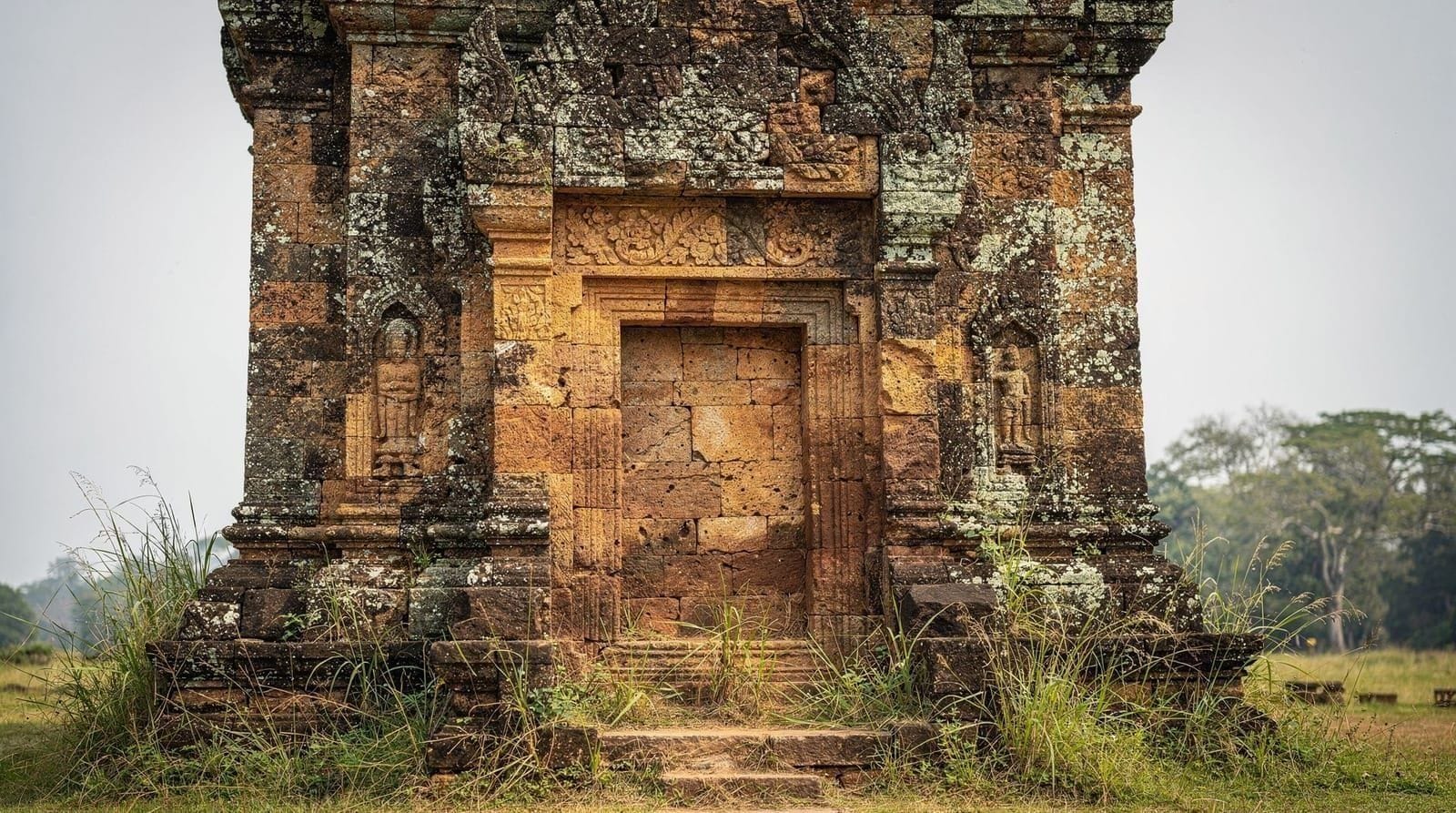
Banteay Srei. About an hour from town, this 10th-century “Citadel of Women” is built from pink sandstone carved with a depth and precision unmatched anywhere else in the Angkor style — smaller in scale than Angkor Wat or Bayon, but arguably the single most intricately carved structure in the entire region. A combined Angkor Thom and Banteay Srei tour is a common way to fit it into a single well-paced day.
Tier 3: worthwhile if you have the time
Neak Pean. A small, distinctive temple on an artificial island reached by a wooden walkway — quick to visit, memorable for its unusual layout rather than its scale.
Pre Rup. A stepped temple-mountain functioning as one of the better sunset alternatives to the crowded Phnom Bakheng viewpoint, with reasonable crowd levels even at peak hours.
Bakong (Roluos Group). The tallest and most historically significant of the Roluos temples, roughly 13 km east of town — one of the earliest Angkorian temple-mountains, and strikingly uncrowded compared to anything on the Small Circuit.
Ta Som. A modest, tree-swallowed gate reminiscent of Ta Prohm’s aesthetic, visited by a fraction of Ta Prohm’s crowd — a good stop for visitors who liked Ta Prohm’s atmosphere but wanted it without the crowd.
A note on Angkor Thom’s secondary sites
Angkor Thom, the walled royal city containing Bayon, also holds several secondary structures worth a brief mention since they sit directly on the standard walking route and cost no extra time: the Terrace of the Elephants, a long raised platform once used for royal ceremonies and decorated with carved elephant reliefs along its base, and the Terrace of the Leper King, a smaller adjacent platform with distinctive carved figures whose original purpose remains debated among historians. Neither warrants a dedicated special trip, but both are worth a few minutes’ attention while walking between Bayon and the Angkor Thom exit, rather than being walked past entirely.
Tier 4: skippable unless you have a specific interest
Ta Keo. An unfinished, stark temple-mountain — historically interesting as an example of incomplete Angkorian construction, but visually less rewarding than almost anything in Tier 1-3, and frequently skipped without regret by time-constrained visitors.
Preah Ko and Lolei (Roluos Group, beyond Bakong). Smaller and less visually striking than Bakong — worthwhile only for visitors with a specific interest in pre-Angkorian architecture, not a default add-on.
Baphuon and the Terrace of the Elephants aren’t skippable exactly, since they sit directly inside Angkor Thom alongside Bayon and cost no extra time to walk past — but neither warrants a dedicated extra stop if your schedule is genuinely tight.
What makes a temple “worth it” — the actual criteria
This ranking weighs four factors that, in practice, determine how a visitor actually experiences a temple rather than how significant it is purely on paper: visual distinctiveness (does it look meaningfully different from other Angkor temples, or a variation on a theme you’ve already seen), state of preservation and walkability (a heavily collapsed, hard-to-navigate ruin scores lower than a well-preserved or thoughtfully stabilized site, even if historically comparable), crowd level relative to payoff (a temple that’s merely good but nearly empty can outscore one that’s excellent but requires fighting through crowds for a clear view), and time cost relative to the rest of your day (a 10-minute detour to a solid secondary temple is an easy yes; a 45-minute round trip for a similar payoff is a harder call).
Comparing crowd-adjusted value
Ranked purely on “visual payoff per minute spent,” Preah Khan and Ta Som punch above their historical fame precisely because their crowd levels are so much lower than Angkor Wat, Bayon or Ta Prohm — you get more unobstructed time actually looking at carved detail rather than waiting for a gap in the crowd or working around other visitors’ photos. This is worth weighing consciously against pure “fame” rankings: a temple you’ve never heard of, visited nearly alone, can leave a stronger personal impression than a world-famous one experienced through a crowd.
Revisiting a favorite on a longer trip
Visitors with four or more days in Siem Reap often find real value in returning to a Tier 1 temple a second time, at a different hour or in different light, rather than adding a new Tier 3 or 4 temple purely for the sake of coverage. Angkor Wat at sunset (see our sunset spots guide) after already having done its sunrise, or Ta Prohm in early morning light rather than the midday crowd, often delivers more genuine enjoyment than a first visit to a lower-tier temple simply to check it off.
How locals and long-term guides rank the temples differently
Ask a licensed guide who’s spent years working at Angkor which temple they personally find most rewarding, and the answer often diverges from the standard tourist ranking — Preah Khan and Ta Som come up disproportionately often, precisely because guides have seen Angkor Wat, Bayon and Ta Prohm hundreds of times each and have come to appreciate the quieter, less-visited temples’ subtler qualities in a way a first-time visitor, naturally drawn to the most famous sites first, hasn’t yet had the chance to.
This isn’t a reason to skip Tier 1 — it remains genuinely essential for a first visit — but it’s worth knowing that “worth visiting” can shift meaningfully with repeated exposure to the park, which is part of why this guide separates a first-visit ranking from what a longer, repeat-visit trip might prioritize differently.
Recommended time on-site, temple by temple
| Temple | Recommended time | What you’d sacrifice by rushing it |
|---|---|---|
| Angkor Wat | 90 min-2 hrs | The full bas-relief gallery and the upper Bakan sanctuary climb |
| Bayon | 45-60 min | Slow wandering of the maze-like upper terrace among the carved faces |
| Ta Prohm | 45-60 min | Waiting out the crowd for a clear shot at the signature root formations |
| Preah Khan | 45-60 min | Its long processional corridors, easy to walk through too fast |
| Banteay Srei | 45-60 min (plus ~2 hrs driving) | The fine-carving detail that rewards close, unhurried looking |
| Neak Pean | 20-30 min | Limited mostly by the single walkway; little to rush here regardless |
| Pre Rup | 30-45 min | The steep climb and the temple-mountain’s panoramic payoff at the top |
| Bakong | 20-30 min | Little; it’s a compact site, but worth the quiet compared to the Small Circuit |
These figures assume unhurried but not leisurely pacing — enough time to actually look, not enough to sit and linger for an hour at each stop. A tightly packed one-day Small Circuit visit (Angkor Wat, Bayon, Ta Prohm) fills a full day at these recommended times once driving and lunch are added; trying to also fit Preah Khan or Banteay Srei into that same single day means cutting meaningfully into one or more of the Tier 1 temples’ recommended time above.
How this maps to your available time
If you have one day, Tier 1 alone — Angkor Wat, Bayon, Ta Prohm — is the complete, correct answer; see our Angkor in one day plan for the route. With two or more days, add Tier 2’s Preah Khan and Banteay Srei, which is roughly how our Small Circuit vs. Grand Circuit breakdown recommends splitting a multi-day visit. Tier 3 and 4 are for visitors with three-plus days, a specific interest in Khmer architectural history, or simply a preference for exploring beyond the headline sites — none of them are essential to “getting” Angkor, but none of them are a waste of time either if you have days to spare.
For temples entirely outside the Angkor Pass boundary — Koh Ker, Phnom Kulen, Beng Mealea, Preah Vihear — see our separate outlier temples worth visiting guide, which weighs each against its separate ticket cost and travel time rather than ranking it alongside the temples covered by the standard pass.
Frequently asked questions about Which Angkor temples are actually worth visiting
Is Banteay Srei worth the extra drive?
Yes, for most visitors. It's about an hour from town, but its pink sandstone carving is the finest and deepest in the entire Angkor style — noticeably more intricate than anything on the Small Circuit. Pair it with the Grand Circuit or a Kbal Spean stop to justify the round trip in one day.Is Ta Prohm overrated because it's so crowded?
The crowds are real and can undercut the atmosphere, especially at the most photographed root-and-stone points. But the temple itself — trees genuinely growing through and around 12th-century stonework — delivers something no amount of crowding fully cancels out. Visiting early afternoon rather than mid-morning meaningfully reduces the crowd without needing a sunrise-level effort.Which Angkor temples are skippable?
Ta Keo, while historically interesting as an unfinished temple-mountain, offers less visual payoff than Angkor Wat or Bayon and is often skipped without regret by time-constrained visitors. Smaller Roluos Group temples beyond Bakong are worth a look only if you have a genuine interest in early Khmer architecture rather than headline sites.Is the Roluos Group worth visiting?
Bakong, the tallest and most significant of the group, is a worthwhile add-on for its status as one of the earliest Angkorian temple-mountains and its near-total lack of crowds — a striking contrast to the Small Circuit. The smaller Preah Ko and Lolei are optional beyond Bakong unless you have a specific interest in pre-Angkorian architecture.Should I prioritize Preah Khan over Angkor Thom's other sites?
If choosing between Preah Khan and a second pass through Baphuon or the Terrace of the Elephants, Preah Khan wins — its long, atmospheric corridors and lower crowd levels make it one of the Grand Circuit's clear highlights, arguably closer in spirit to Ta Prohm than anything else on that loop.Do I need to see every temple to feel like I understood Angkor?
No — five well-chosen, unhurried temples (Angkor Wat, Bayon, Ta Prohm, Preah Khan, Banteay Srei) give a fuller, more memorable sense of Angkor than ten temples rushed through in the same amount of time. Depth beats completeness for almost every visitor's actual experience.
Top experiences
Bookable activities with verified prices and instant confirmation on GetYourGuide.


More tours on Viator
Top-rated experiences with verified reviews, bookable on Viator (a Tripadvisor company).