Siem Reap to Battambang: getting there and back
Siem Reap: Battambang Highlights Day Tour
How do I get from Siem Reap to Battambang?
By road, roughly 2.5-3 hours on a paved route — a shared taxi or minivan costs about $5-10, a standard bus around $5-15, and a private car or day-tour package $60-100 depending on inclusions. It's doable as a long day trip but a one-night stay is more comfortable given the bamboo train, colonial architecture and countryside sights worth unhurried time.
The route in brief
Battambang, Cambodia’s second-largest city, sits roughly 2.5-3 hours by road from Siem Reap on a paved, well-established route. It’s a genuinely worthwhile addition to a Cambodia itinerary — a noticeably calmer, more local pace than Siem Reap’s tourist-oriented center, built around the distinctive bamboo train and a well-preserved stretch of French colonial-era shophouse architecture. This guide covers the transport logistics; for the full destination content (what to actually do once there), see the Battambang destination guide and the Battambang day trip guide.
Transport options
Shared taxi or minivan: the most common budget option, roughly $5-10 per person, departing when full from established pickup points in both cities. Fastest of the budget options given fewer stops than a standard bus.
Standard bus: roughly $5-15 depending on operator, with scheduled departure times rather than a fill-and-go shared taxi model — a reasonable middle ground between cost and predictability.
Private car with driver: $60-100 for a round trip, the most comfortable and flexible option, particularly useful if you want to make stops along the route or need a fixed schedule for a same-day return.
Guided day tour: bundles transport with the bamboo train, Bat Cave, and other stops into a single booking with commentary — a Battambang highlights day tour with the bamboo train is the most efficient option for travelers doing this as a single long day trip rather than an overnight stay.
Day trip vs. overnight
Day trip works for travelers with limited total time in Cambodia — expect an early departure (roughly 7-8am), 5-6 hours of round-trip driving, and enough time on the ground for the bamboo train, a look at the old town architecture, and possibly Phnom Sampov’s Bat Cave at dusk if timed well, before a late return to Siem Reap. It’s a full day, not a relaxed one.
Overnight stay allows a genuinely more comfortable pace — arriving mid-afternoon, exploring at leisure, experiencing Battambang’s quieter evening scene (a real contrast to Siem Reap’s Pub Street energy), and a full second day before returning. For travelers with an extra day in their overall Cambodia itinerary, the overnight version consistently produces a better experience than the rushed day-trip version.
A private full-day Battambang and bamboo train tour works for either approach — bookable as a single day trip or as the first day of a longer overnight stay.
What makes Battambang worth the trip
The bamboo train (norry) is Battambang’s signature experience — a simple bamboo platform on wheels, powered by a small motor, that runs along remnants of a colonial-era rail line through the countryside. It’s a short, distinctive, genuinely fun ride unlike anything in Siem Reap itself, and reason enough on its own for many travelers to make the trip.
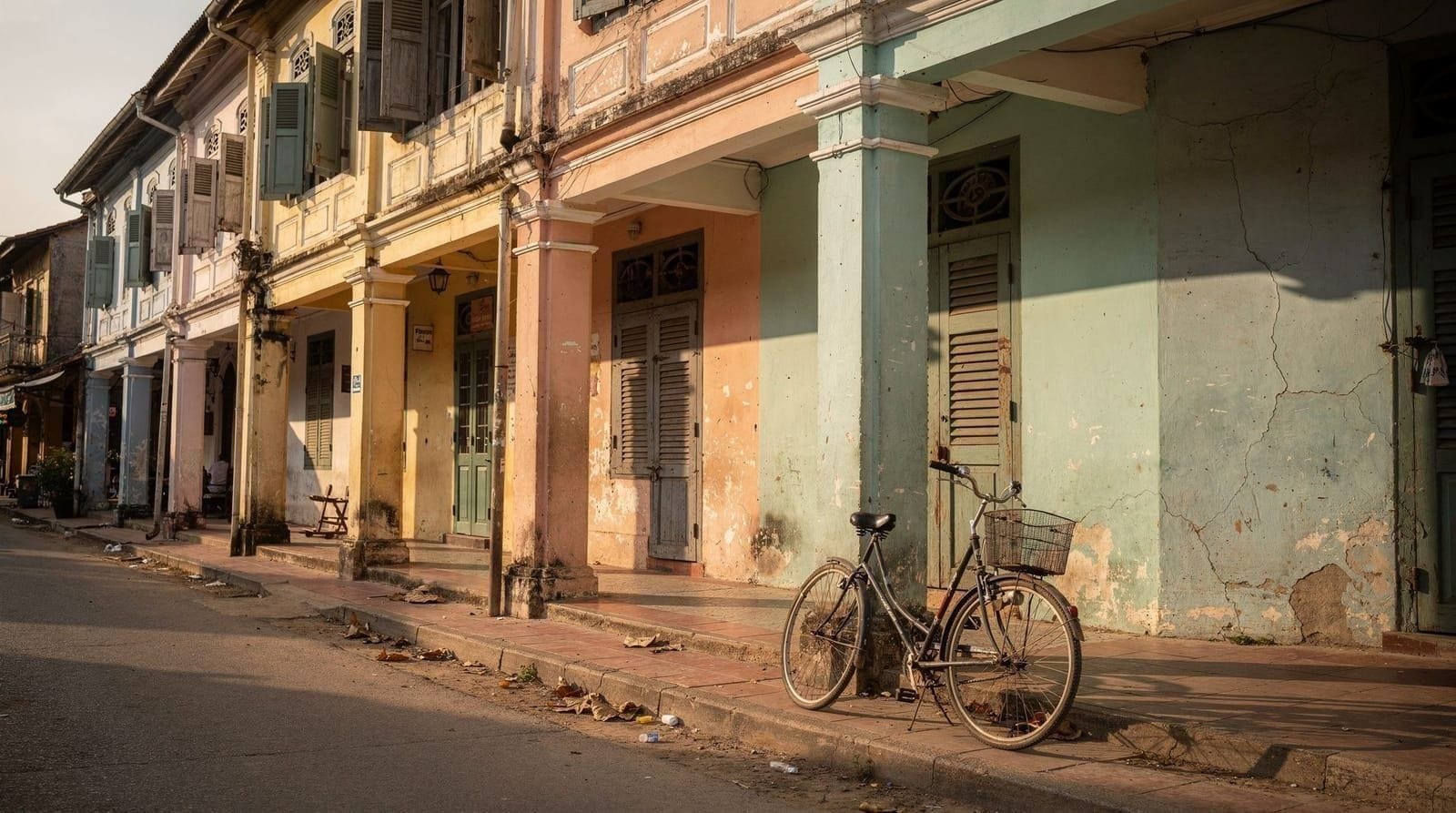
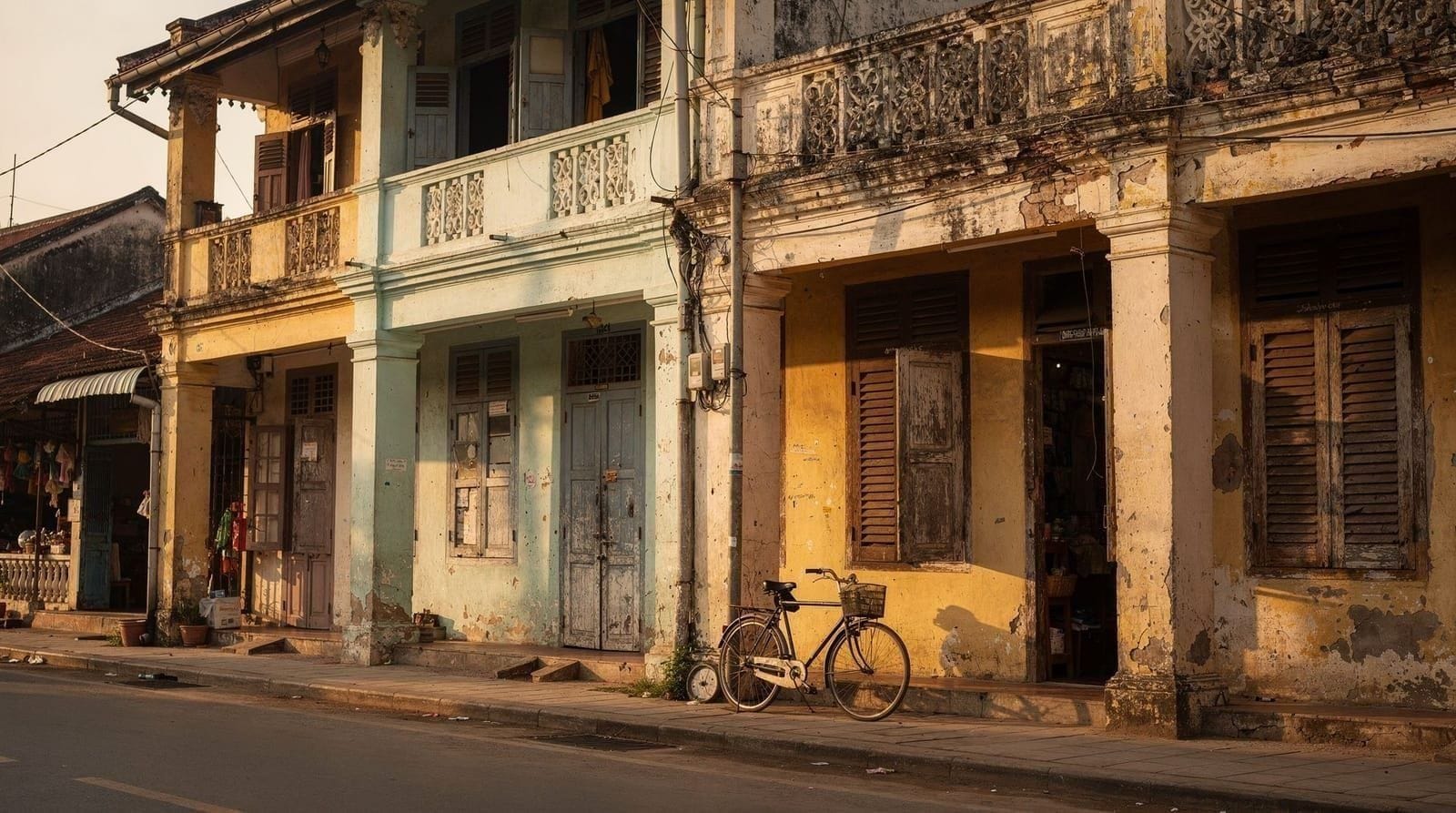
Beyond the bamboo train, Battambang’s old town preserves a meaningful stretch of French colonial-era shophouse architecture, walkable and considerably less crowded than Siem Reap’s tourist center. Phnom Sampov, a hill just outside town, combines cave systems, a hilltop pagoda, and — at dusk — the dramatic sight of thousands of bats streaming out of the Bat Cave, a worthwhile addition if your timing allows an evening stop before heading back.
Cost and time comparison
| Option | Time | Cost (round trip) | Best for |
|---|---|---|---|
| Shared taxi/minivan | 2.5-3 hrs each way | $10-20 total | Budget travelers |
| Standard bus | 2.5-3 hrs each way | $10-30 total | Predictable scheduled departures |
| Private car | 2.5-3 hrs each way | $60-100 | Flexibility, fixed schedule, comfort |
| Guided day tour | Full day, all-inclusive | Varies by tour | Single efficient day-trip booking |
Practical notes
Bring cash for the trip — Battambang, like Siem Reap, runs largely on USD for tourist transactions, and rural stops along the route (roadside food, informal vendors) are cash-only. If doing this as a day trip, confirm your return transport time before departure rather than assuming you can arrange it on arrival — shared taxis and buses run on their own schedules, and a private car or guided tour locks in the return leg as part of the booking, which is one practical advantage of the paid options over fully independent budget transport for a same-day return.
Combining with the rest of Cambodia
Some travelers route Battambang as a stop between Siem Reap and Phnom Penh rather than a there-and-back trip from Siem Reap alone — check current bus schedules for a Siem Reap → Battambang → Phnom Penh path if your itinerary has the flexibility, since not all operators run this exact routing directly and a connection may be required. This works well for travelers who’ve already allocated enough total days to their Cambodia trip and want to see all three cities without doubling back.
Seasonal considerations for the road
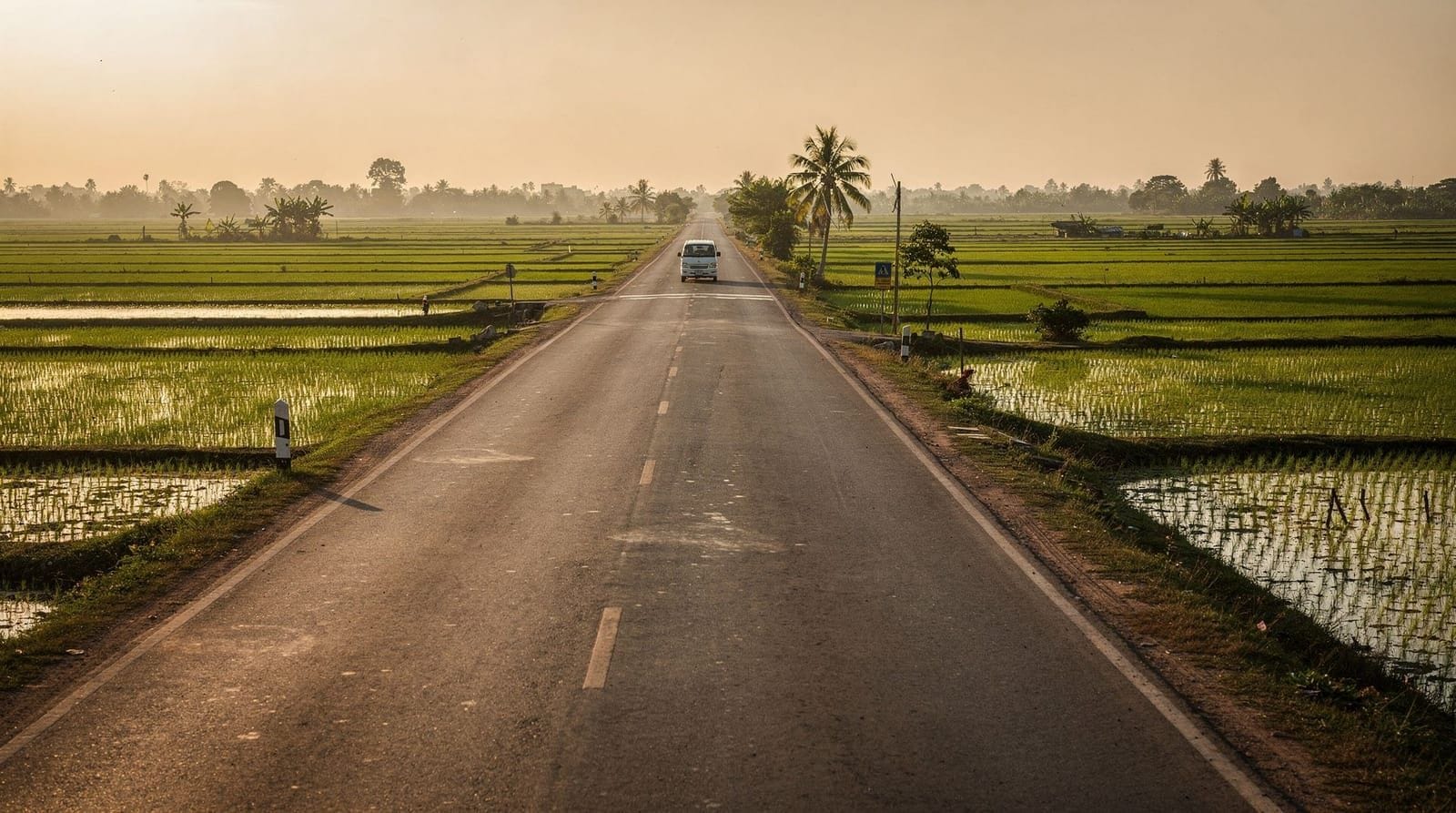
The Siem Reap-Battambang road is paved and generally reliable year-round, unlike some of the dirt-road outlier temple routes (Koh Ker, parts of Phnom Kulen) covered elsewhere on this site — rainy season (May-October) doesn’t meaningfully disrupt this specific route the way it can affect rural temple access roads. That said, heavy downpours can slow traffic and reduce visibility on any Cambodian road, so building in a little extra time buffer during peak rainy months (particularly September, the wettest) is sensible regardless of which transport option you choose. See the weather by month guide for what to expect in your specific travel window.
Why the bamboo train feels different from a typical tourist attraction
The bamboo train’s appeal comes partly from its informal, improvised origin — it developed as a practical local transport solution using war-damaged rail infrastructure, repurposed with simple bamboo platforms and small engines rather than built as a tourist attraction from the outset. Riding it today still carries some of that improvised, slightly rickety character, which is part of what makes it feel distinct from more polished, purpose-built tourist experiences elsewhere in Cambodia.
Operators along the route are generally small, family-run businesses rather than large tour companies, and the modest fare paid for a ride goes directly to sustaining that local operation — worth knowing if you’re deciding between a fully bundled tour package and simply showing up and arranging a ride with a local operator once you arrive.
Packing and practical tips for the trip
Dress comfortably for a warm, sometimes dusty ride — the bamboo train runs open-air through the countryside, and a hat and sunglasses are worth having on hand regardless of season. Bring more cash than you think you’ll need in small denominations; rural vendors and informal operators along the route, including at the bamboo train and Phnom Sampov, are cash-only and don’t always have change for larger bills. If timing your visit to include the dusk bat emergence at Phnom Sampov’s Bat Cave, plan your day-trip schedule backward from sunset rather than forward from your morning departure, since missing the timing means missing one of the trip’s genuine highlights.
Which option suits which traveler
Budget backpackers with flexible schedules do best on a shared taxi or standard bus — cheapest option, frequent enough departures, and the modest discomfort of a shared vehicle is a fair trade for the lower price on a route this short. Families with young kids generally do better with a private car despite the higher cost, since a fixed departure isn’t dependent on a shared vehicle filling up and a private car allows an unscheduled stop if a child needs a break.
Travelers prioritizing comfort or on a tighter overall schedule should default to the guided day tour or a private car — both remove the uncertainty of shared-taxi departure timing and bundle sightseeing stops without needing to negotiate anything locally. Photographers or travelers wanting flexibility at each stop (lingering longer at the bamboo train, timing arrival at Phnom Sampov precisely for the bat emergence) are best served by a private car rather than a fixed-itinerary guided tour, which moves the group along on a schedule that doesn’t bend for one person’s photography priorities.
What a typical shared-taxi departure actually involves
Shared taxis fill from a pickup point rather than running on a fixed timetable, which means departure time depends on how quickly the vehicle fills with other passengers — arriving early in the morning generally means a shorter wait than a mid-morning attempt, since demand and driver availability are both higher earlier in the day.
This unpredictability is the main practical trade-off against the standard bus’s fixed schedule: cheaper and often marginally faster once underway, but with a wait time at the start that’s genuinely hard to estimate in advance. Travelers on a tight same-day return schedule should weigh this uncertainty against the bus’s predictability before committing to the shared-taxi option for a rushed day trip specifically.
Frequently asked questions about Siem Reap to Battambang
Is Battambang worth visiting as a day trip from Siem Reap?
Yes, though it's a long day — roughly 5-6 hours of round-trip driving plus sightseeing time means an early departure and a late return. It works for travelers with limited total days who still want to see the bamboo train and colonial shophouse district, but an overnight stay allows a meaningfully more relaxed pace and time for Battambang's evening scene.What is the bamboo train and is it worth the trip?
The bamboo train (norry) is a distinctive improvised rail vehicle — a bamboo platform on wheels powered by a small motor, running on remnants of a colonial-era rail line — offering a short, genuinely fun ride through the countryside. It's Battambang's best-known attraction and a reasonable centerpiece to build a day trip or overnight visit around.How much does private transport cost between Siem Reap and Battambang?
A private car with driver typically runs $60-100 for the round trip depending on whether you're doing a day trip or one-way, and whether the booking includes guided stops (bamboo train, Bat Cave, Phnom Sampov) along the way rather than just point-to-point transport.Is the road between Siem Reap and Battambang safe and well-maintained?
Yes — this is a well-established, paved route between two of Cambodia's larger cities, with no particular safety concerns beyond standard road-travel caution. Choosing an established transport operator over the cheapest unbranded option is the main practical consideration.What else is there to see in Battambang besides the bamboo train?
The colonial-era French shophouse architecture in the old town, Phnom Sampov (a hill with caves, a hilltop pagoda and, at dusk, thousands of bats emerging from the Bat Cave), and a noticeably calmer, more local pace than Siem Reap's tourist-oriented center — a genuine change of atmosphere within the same day-trip radius.Should I book a guided day tour or arrange transport independently?
A guided day tour bundles transport, the bamboo train, Bat Cave and other stops with commentary into a single booking, generally the more efficient choice for a single long day trip. Independent transport (shared taxi or private car) gives more flexibility and is often cheaper if you're staying overnight and want to explore at your own pace rather than a fixed tour schedule.
Top experiences
Bookable activities with verified prices and instant confirmation on GetYourGuide.


More tours on Viator
Top-rated experiences with verified reviews, bookable on Viator (a Tripadvisor company).