Battambang day trip from Siem Reap: bamboo train, caves and real logistics
Siem Reap: Battambang Highlights Day Tour
Is Battambang doable as a day trip from Siem Reap?
Yes, but it's a long day: roughly 3 hours each way by road, so about 6 hours of driving for 4–5 hours on the ground. A private car or organized tour covers the Bamboo Train ($5), the Killing Caves, and Phnom Sampov in one day, though the sunset bat exodus usually requires staying past a comfortable return time or booking an overnight instead.
The honest time math
Battambang is roughly 3 hours from Siem Reap by road in each direction, which means a day trip is really a 6-hour drive wrapped around 4–5 hours of actual sightseeing — a ratio worth sitting with honestly before committing a full day of a limited trip to it. That’s a real trade-off worth stating plainly before you book anything: it’s a long day, and if you’re already tired from consecutive Angkor temple days, adding a 6-hour round trip on top isn’t automatically the right call.
For travelers who want the bat exodus at dusk or a genuinely unhurried old-town walk without a return-drive clock running, our 4-day Siem Reap and Battambang itinerary with an overnight is the better fit. This guide covers the single-day version.
How Battambang compares to Koh Ker/Beng Mealea as a “long day” decision
Both this Battambang day trip and the Koh Ker and Beng Mealea combined day involve a similarly demanding total time commitment — roughly 5-6 hours of driving either way — which makes them a natural either/or decision for travelers with only one long day-trip slot available in their itinerary.
The core difference is what fills the non-driving hours: Battambang delivers a modern provincial city with colonial architecture and a distinctive tourist activity (the Bamboo Train), while Koh Ker/Beng Mealea delivers two ancient temple sites in a rawer, less-restored state than the main Angkor circuits. Neither is objectively the better choice — it depends on whether more temple time or a genuinely different, non-temple experience better serves the rest of your itinerary at that point in your trip.
Getting there
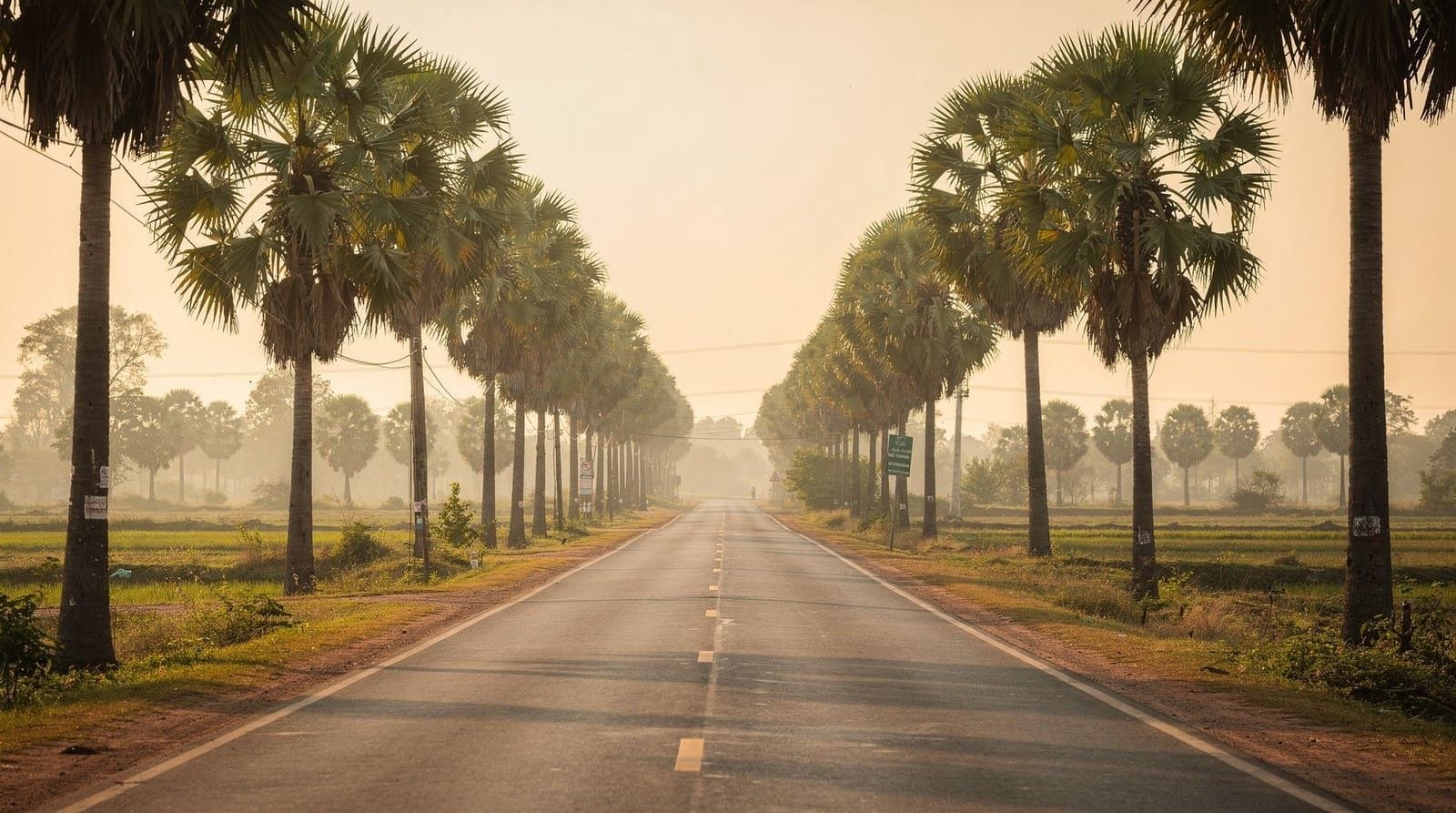
There is no direct rail service between Siem Reap and Battambang — Cambodia’s passenger rail line runs Phnom Penh–Battambang–Poipet, not through Siem Reap. Road is the only practical option:
- Private car or taxi: roughly $70–100 round trip for the vehicle (shared among your group), most flexible on timing.
- Shared taxi or minivan: cheaper per person, typically $10–15 each way, but fixed departure times that don’t accommodate a late bat-exodus return.
- Organized day tour: bundles transport, a guide, and the Bamboo Train/Killing Caves stops into one price, generally $35–50 per person.
See our Siem Reap to Battambang transport guide for a fuller comparison of each option’s pros and cons.
What to see: the Bamboo Train
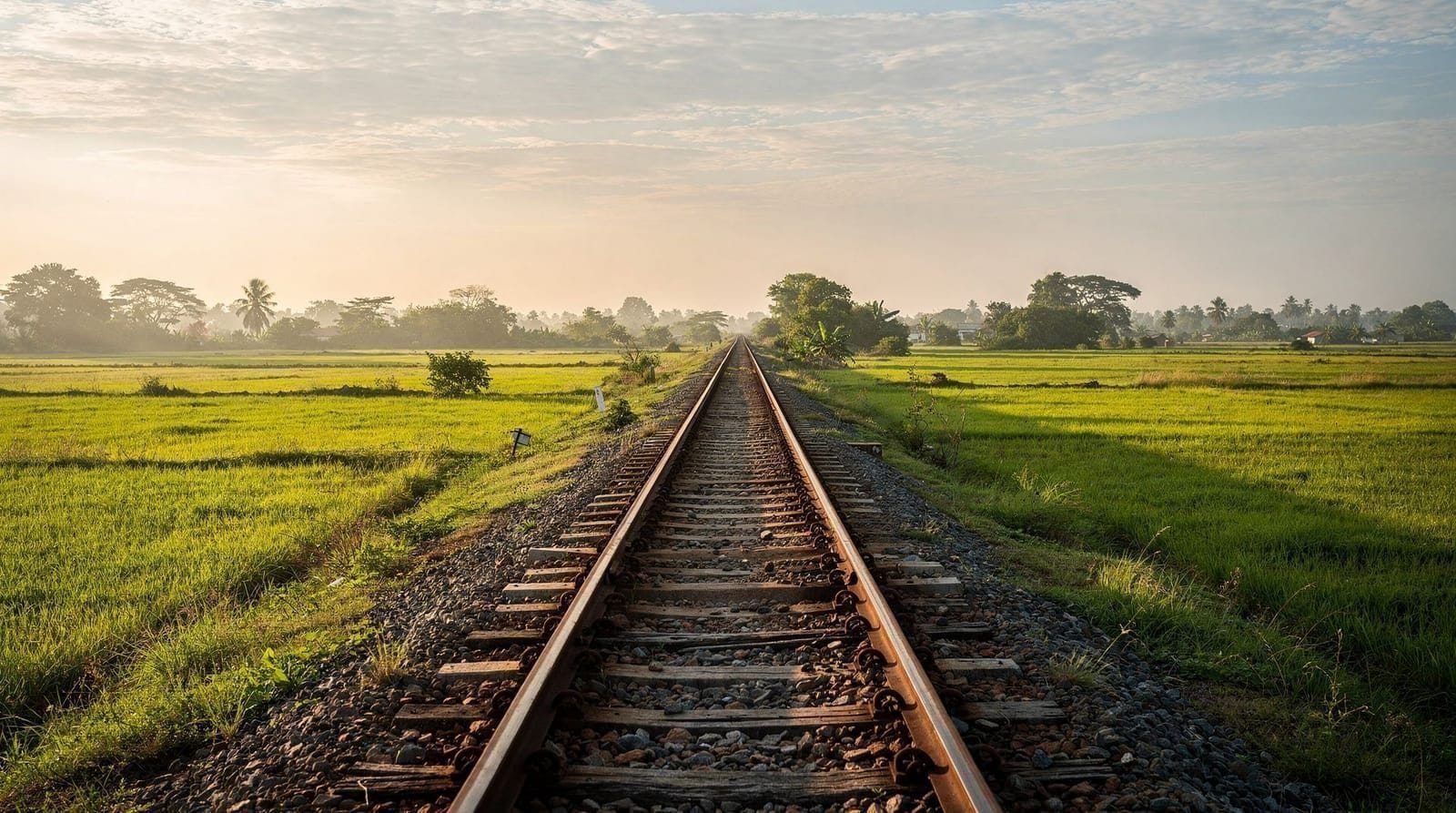
The Norry, Battambang’s signature attraction, is a flat bamboo platform mounted on repurposed rail bogies that runs on a short stretch of otherwise disused track. Rides last about 15 minutes each way, cost roughly $5 per person, and involve an odd, genuinely enjoyable moment when two platforms meet on the single track and one has to be lifted off to let the other pass. It’s a tourist experience rather than functioning transport at this point, but it’s consistently one of the more memorable things visitors do near Battambang, and it doesn’t require much time — 45 minutes to an hour including the ride there and back covers it comfortably.
What to see: Phnom Sampov and the Killing Caves
Phnom Sampov is a hill about 12km outside Battambang with two very different draws. The Killing Caves are a Khmer Rouge-era memorial site — a cave where victims were killed and their remains later collected into a memorial stupa — sobering rather than scenic, and worth visiting with the gravity it deserves rather than rushing through for a photo. The hilltop also has a temple and viewpoint over the surrounding rice fields, a genuinely pleasant contrast after the caves.
At dusk, Phnom Sampov’s cave system releases an extraordinary bat exodus — hundreds of thousands of bats streaming out in a continuous column for several minutes, timed to sunset (roughly 5:30–6:15pm depending on season). This is one of the most striking sights near Battambang, but it doesn’t fit a comfortable day-trip schedule: watching it means starting your return drive around 6:30–7pm and arriving back in Siem Reap around 9:30–10pm. Confirm with your driver or tour operator upfront whether the bat exodus is included — many standard “Battambang day tour” listings are built around an earlier return and skip it by default.
What to see: the colonial old town
Battambang’s center retains a genuine cluster of French-colonial shophouses along the Sangkae River, a noticeably different architectural feel from Siem Reap’s more recently built tourist core. A walk through this area — the central market, the riverside promenade, a handful of small contemporary-art galleries — is one of the more rewarding things to do here, but it’s also the first thing a rushed day-trip schedule tends to compress into 30–45 minutes when it deserves closer to two hours.
A realistic day-trip schedule
| Time | Stop |
|---|---|
| 7:00am | Depart Siem Reap |
| 10:00am | Arrive Battambang, brief old-town walk |
| 11:00am | Bamboo Train |
| 12:00pm | Lunch in the old town |
| 1:00pm | Phnom Sampov: Killing Caves and viewpoint |
| 3:00pm | Depart for Siem Reap (skipping the bats) |
| 6:00pm | Arrive back in Siem Reap |
Shifting the return to 6:30–7pm to catch the bat exodus pushes your arrival back in Siem Reap to roughly 9:30–10pm — plan for a long evening and confirm your driver is comfortable with a late night drive if you choose this option.
What food to expect
Battambang’s old town has a genuine, if smaller, dining scene compared to Siem Reap — riverside restaurants serving Khmer standards, a handful of cafés in restored colonial shophouses, and street food stalls around the central market. On a day-trip schedule, budget a straightforward sit-down lunch rather than seeking out a destination meal; the point of the day is the sights, not a food tour. Bring cash — card acceptance drops noticeably once you’re outside Siem Reap’s more tourist-dense center, and Battambang’s smaller restaurants and market stalls are largely cash-only.
Is it worth the drive?
For travelers with an extra day and genuine interest in Cambodia beyond Angkorian temples — colonial history, a slower provincial pace, recent political history — yes, the drive is worth it. For travelers tightly focused on maximizing temple time or already running a packed Angkor schedule, the 6-hour round trip competes directly with time better spent on outlier temples like Koh Ker or Beng Mealea (see our combined day trip guide), which sit much closer to Siem Reap.
A Battambang highlights day tour covers the Bamboo Train and Killing Caves in one organized trip, while a tuk-tuk-based Battambang tour builds in the bat cave stop specifically for travelers who want to catch the dusk exodus rather than skip it. For maximum flexibility on timing, a private full-day Battambang tour from Siem Reap lets you set your own return time rather than following a group’s fixed schedule.
Alternatives if six hours of driving doesn’t appeal
If Battambang’s round-trip time feels like too much for your remaining days, consider Koh Ker and Beng Mealea instead — a similarly long day, but one spent almost entirely at temple sites rather than in transit either way, given both destinations sit closer together. For a genuinely different city experience without the drive, Phnom Penh from Siem Reap covers the capital, though that comparison comes with its own honest verdict on day-trip feasibility.
What to pack specifically for this day
Beyond the standard Siem Reap essentials, a Battambang day trip benefits from a few specific additions: cash in smaller denominations, since card acceptance drops noticeably once outside Siem Reap’s tourist-dense center and Battambang’s smaller restaurants and market stalls are largely cash-only; sturdy, closed shoes rather than sandals for the uneven, unpaved sections of the Phnom Sampov hill walk; and a headlamp or phone flashlight if you’re planning to catch the bat exodus and the resulting late-evening return, since rural stretches of the drive back have minimal ambient lighting.
A light layer for the return drive is also worth packing if you’re doing the late bat-exodus option, since evening temperatures drop enough in an air-conditioned vehicle after a hot day to feel noticeably cool by the final stretch home.
Common mistakes on a Battambang day trip
The most common misstep is underestimating the drive time and arriving with too little daylight left for a relaxed old-town walk — some day-trip itineraries pack in an early departure but linger too long at the Bamboo Train, leaving the old town rushed. The second is assuming the bat exodus fits a standard day-trip schedule without checking; it doesn’t, unless you explicitly plan for a late return. The third is not confirming upfront whether your tour or driver includes the Killing Caves and Phnom Sampov together — some cheaper listings cover only the Bamboo Train and old town, treating the caves as a separate add-on.
Battambang for a longer stay
If Battambang genuinely interests you beyond the standard day-trip stops — the rural countryside, the art scene, a slower pace than Siem Reap — an overnight opens up meaningfully more, including the bat exodus without a late-night drive back and a full second day for the surrounding countryside. Our 4-day Siem Reap and Battambang itinerary builds this out as a complete plan, pairing an overnight in Battambang with two condensed days of core Angkor temples beforehand.
Breaking down the real cost of a day trip
For travelers comparing the transport options in detail, it helps to see the actual per-person math rather than just headline vehicle prices. A private car at $70-100 round trip splits to roughly $17-25 per person for a group of four, competitive with or cheaper than the $35-50 per-person organized tour price once you account for the tour’s included guide and fixed stops.
For a solo traveler or couple, the shared minivan at $10-15 each way ($20-30 round trip per person) is the clear budget option, though it locks you into fixed departure and return times that don’t accommodate the bat exodus. The organized day tour sits in the middle — a fixed group experience with a guide included, generally the most convenient option for a solo traveler who doesn’t want to negotiate a private car alone but still wants more structure than an independent minivan trip provides.
What the old rail line tells you about the Bamboo Train’s origin
The Norry’s short operating stretch of track is a remnant of Cambodia’s national rail line, itself a product of French colonial-era infrastructure later damaged and left in disrepair through decades of conflict, only partially rehabilitated for standard freight and passenger service in more recent years.
Locals originally improvised the bamboo-platform-on-bogies system as practical transport when standard rail service was unreliable or absent, repurposing the existing rail infrastructure for informal use — the tourist attraction it’s become today grew directly out of that practical, improvised origin rather than being built as a tourist product from the start. Knowing this backstory adds context that most visitors, focused purely on the fun of the ride itself, don’t encounter unless a guide specifically explains it.
Battambang’s contemporary art scene, briefly
Beyond the colonial architecture and the Bamboo Train, Battambang has developed a genuine, if small-scale, contemporary art scene over the past two decades, anchored partly by Phare Ponleu Selpak, a Battambang-based arts and social enterprise organization that’s the origin point for the performers who later founded the Phare Cambodian Circus now based in Siem Reap.
Several small galleries and studios in the old town showcase local contemporary Cambodian art, a different and less commonly covered dimension of the city than its more heavily marketed colonial-architecture and Killing Caves angles. Visitors with a full day or an overnight and a specific interest in contemporary Cambodian art, rather than only the standard highlights, will find this a worthwhile detour beyond the typical day-trip checklist.
A note on physical demands and accessibility
The Bamboo Train involves boarding a low, open platform without seating in the conventional sense — manageable for most visitors but worth knowing about for anyone with mobility limitations, since there’s no ramp or assisted-boarding infrastructure at the rural loading point. Phnom Sampov’s Killing Caves require a walk up a moderate hill path to reach the cave entrance and viewpoint, with some uneven, unpaved sections — comfortable for most visitors in reasonable fitness but a genuine physical undertaking for anyone with significant mobility restrictions, and not accessible by wheelchair. The old town walk itself is flat and comfortable, the most accessible of the day’s three main components.
How Battambang compares to Cambodia’s other secondary cities
Within Cambodia’s broader city landscape beyond Phnom Penh and Siem Reap, Battambang holds a reputation as the country’s best-preserved example of French-colonial provincial architecture, a distinction that separates it from other secondary cities like Kampong Cham or Kratie, which offer their own regional character but without Battambang’s specific concentration of shophouse-lined streets and colonial-era civic buildings.
This is part of why Battambang, despite the 6-hour round-trip time cost from Siem Reap, remains the most commonly recommended day-trip or overnight extension for visitors with a genuine interest in Cambodia beyond the Angkor temple circuit, ahead of other secondary cities that require even longer travel from Siem Reap with less concentrated payoff on arrival.
Frequently asked questions about Battambang day trip from Siem Reap
How long does it take to get from Siem Reap to Battambang?
About 3 hours each way by road, whether by private car, shared taxi, or minivan. There's no direct rail or fast-boat option between the two cities — road is the only realistic connection.Is the Bamboo Train still operating?
Yes. The Norry — a bamboo platform on repurposed rail bogies — runs on a short stretch of track outside Battambang, roughly 15 minutes each way, for around $5 per person. It's a tourist activity rather than functioning transport at this point, but a genuinely fun and slightly absurd one.Can I see the bat exodus on a day trip?
Only if you're willing to return to Siem Reap after dark. The bats leave Phnom Sampov's caves at dusk, roughly 5:30–6:15pm depending on season, which means starting your return drive around 6:30–7pm and arriving back in Siem Reap around 9:30–10pm. Many day-trip itineraries skip the bats entirely to get travelers back at a reasonable hour.Should I hire a private driver or join a group tour?
A private driver gives you control over timing, which matters most if you want the bat exodus or a slower old-town walk. A group tour is cheaper per person and fine if you're comfortable with a fixed schedule built around an earlier return.Is Battambang worth visiting if I've already seen Angkor?
Yes, for a different kind of experience — French-colonial architecture, a slower-paced provincial city, and sites tied to more recent Cambodian history (the Killing Caves) rather than the 9th–13th century Angkorian period. It's a good contrast rather than a repeat.What should I skip if I only have half a day?
Cut the Killing Caves and prioritize the Bamboo Train and a walk through the old town — the caves are a meaningful stop but add real time for a memorial site that rewards a slower, more reflective visit than a rushed half-day allows.
Top experiences
Bookable activities with verified prices and instant confirmation on GetYourGuide.


More tours on Viator
Top-rated experiences with verified reviews, bookable on Viator (a Tripadvisor company).