Phnom Kulen waterfall tour review — ticket, drive time and what's worth it
Phnom Kulen: Waterfall Day Tour
Phnom Kulen is a sacred mountain considered the birthplace of the Khmer Empire — Jayavarman II declared himself universal monarch here in 802 AD — and today it’s visited mostly for its waterfall, swimming spot, and the River of a Thousand Lingas carved riverbed. This review covers the separate ticket cost, the seasonal swimming reality, and what the standard tour actually includes.
| Distance | ~50 km / 1.5 hours from Siem Reap |
| Ticket | $20, separate from the Angkor Pass |
| Best for swimming | Rainy season and just after (roughly June-November) |
| Includes | Usually waterfall, 1,000 Lingas riverbed, reclining Buddha |
What the standard tour includes
Book the Phnom Kulen waterfall day tourMost Phnom Kulen listings cover transport up the mountain road, the main waterfall and swimming area, the River of a Thousand Lingas riverbed carvings, and a large reclining Buddha carved into a single sandstone boulder near the summit. The $20 entrance ticket is separate from the tour price on nearly every listing — confirm this before you go, since it’s easy to assume a “day tour” price is all-inclusive when it’s really transport-plus-guide, with the park’s own fee paid on arrival.
The ticket that trips people up
Phnom Kulen is not on the Angkor Pass. It’s managed as its own national park with its own $20 fee, the highest of the four standard separate outlier tickets (Beng Mealea $10, Koh Ker $15, Phnom Kulen $20, Preah Vihear priced separately and subject to its own access considerations). Budget for this on top of whatever Angkor Pass tier you’re carrying — the Angkor Pass math guide walks through how these separate tickets add up across a multi-day trip.
Swimming: check the season before you pack a swimsuit
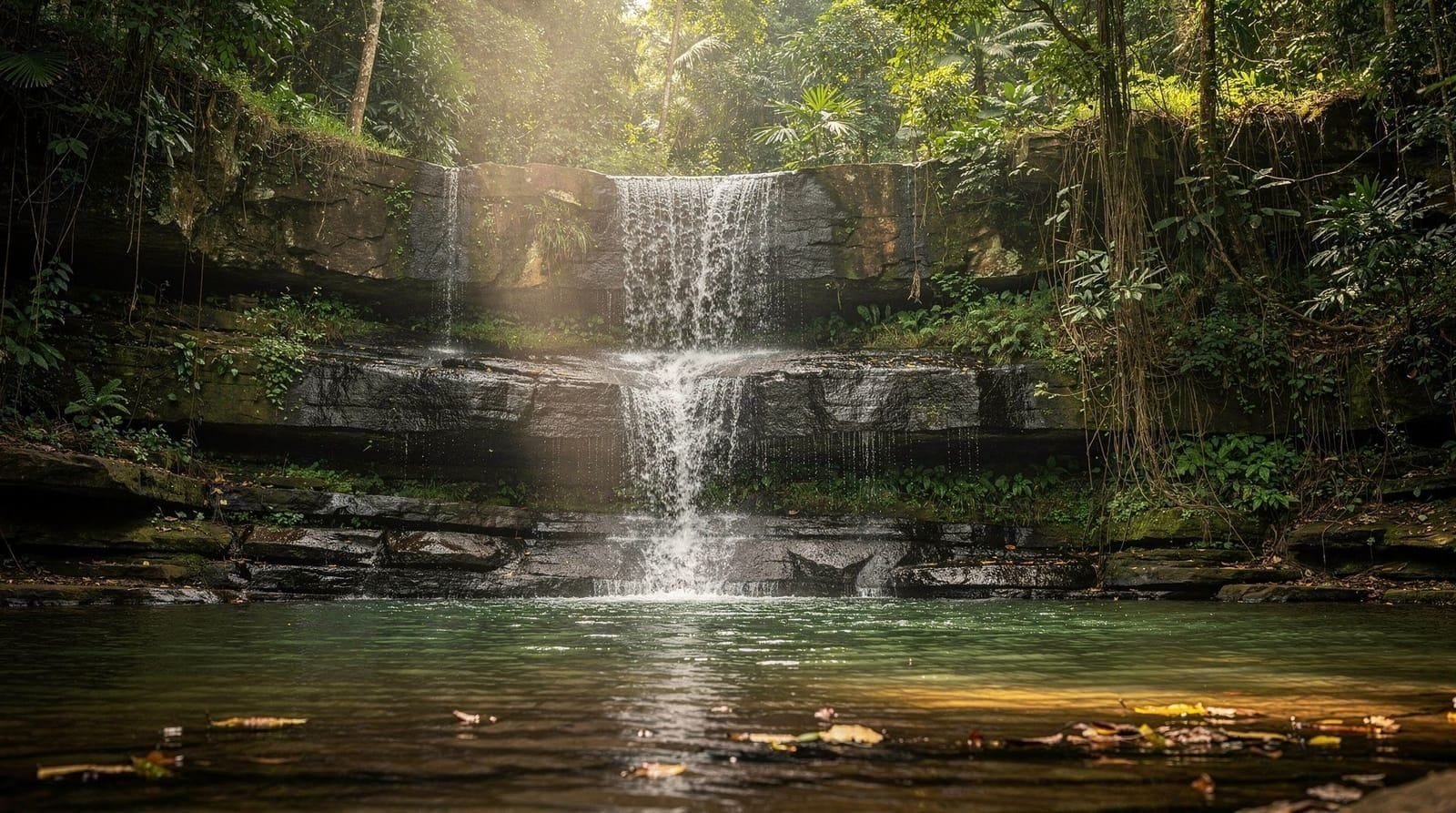
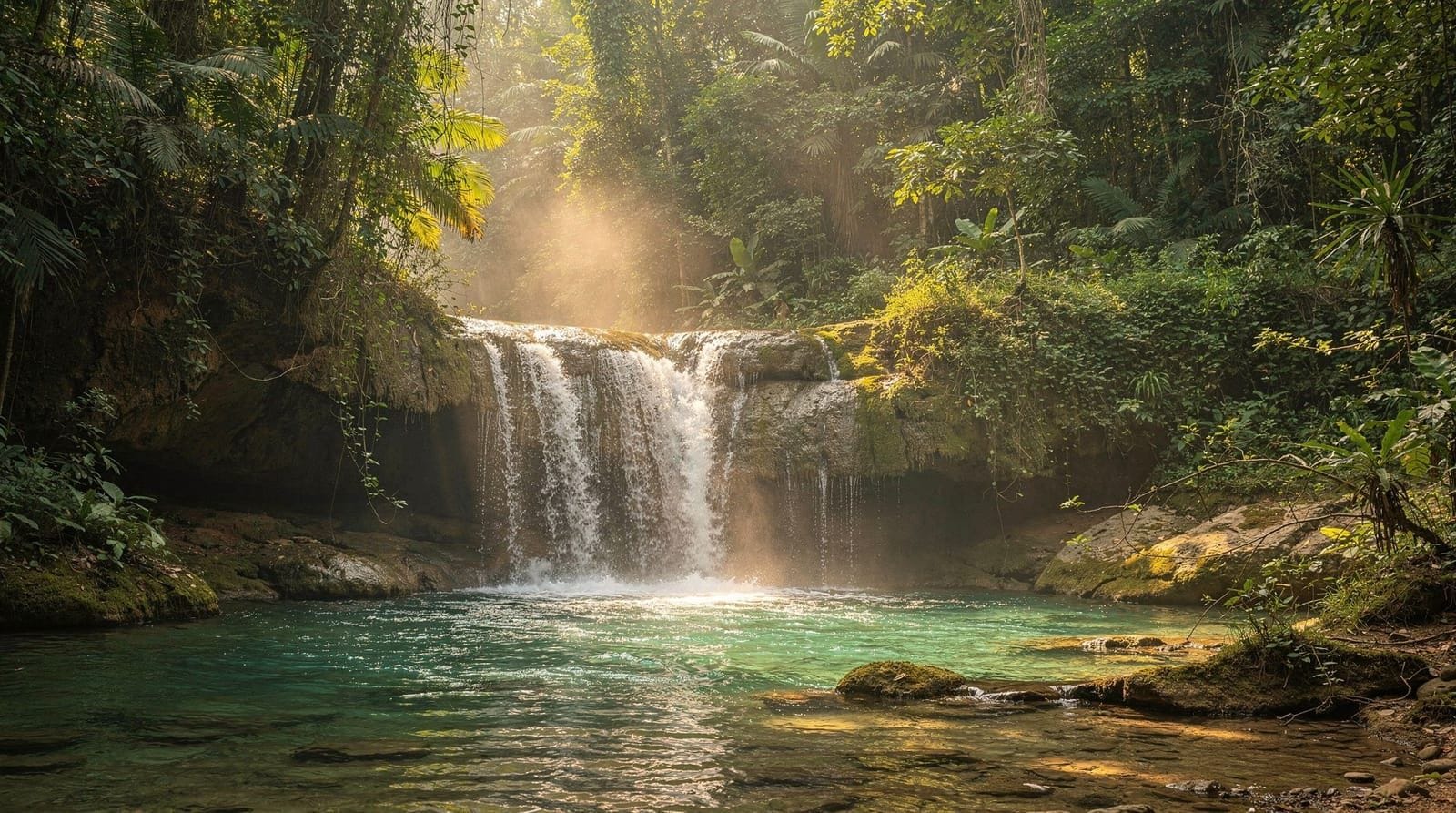
Book the Phnom Kulen waterfall and 1,000 Lingas tour with lunchThe waterfall’s flow varies dramatically by season. During and immediately after the rainy season (roughly June through November), it runs strong and full — genuinely worth the swim. By the tail end of the dry season (March-April), flow can drop to a trickle, and some visitors report the swimming spot being underwhelming or closed depending on conditions that year. If swimming specifically is your priority, check recent reviews on your chosen listing close to your travel date rather than relying on a general seasonal rule, since exact conditions shift year to year.
The River of a Thousand Lingas
A short, mostly flat walk from the main falls leads to a stretch of riverbed carved with hundreds of lingas — phallic symbols representing Shiva — along with depictions of Vishnu, dating to the 11th-12th century under Udayadityavarman II. It’s one of the more unusual sights in the Angkor region precisely because the carvings sit underwater in the riverbed itself rather than on a standing temple structure, and it’s included in essentially every standard Phnom Kulen tour without an extra fee beyond the park ticket.
The road up the mountain
Book the Kulen Mountain waterfall tour (private, full-day)The road to Phnom Kulen is winding and, in the peak of rainy season (roughly August-September), can turn muddy or slower going than usual. Most tour vehicles handle it without difficulty, but it’s genuinely one of the outlier routes most affected by heavy rain, more so than the Banteay Srei or Beng Mealea roads. If you’re visiting during a heavy-rain stretch, check with your operator on current road conditions rather than assuming the trip will run exactly on schedule.
How this compares to Kbal Spean
Phnom Kulen’s Thousand Lingas riverbed is sometimes confused with Kbal Spean, a separate site near Banteay Srei with its own similar riverbed carvings — both feature Hindu iconography carved directly into a riverbed, but they’re different locations roughly an hour apart, requiring different tickets and different drives. If a specific listing mentions “River of a Thousand Lingas,” confirm it’s the Phnom Kulen version and not a Kbal Spean listing using similar marketing language, since the two get conflated in tour descriptions more often than the distinction is made clear.
Language and guide options
Book the Phnom Kulen tour with English/Japanese guideMost listings include an English-speaking guide as standard; a smaller number specifically offer Japanese-language guiding for visitors who prefer it. If English isn’t your first language and a specific language guide matters to you, check the listing details before booking rather than assuming — not every Phnom Kulen operator offers alternatives to English.
Combining Phnom Kulen with other stops
Phnom Kulen is a full-day commitment on its own given the 1.5-hour drive each way, and it doesn’t comfortably combine with a Small or Grand Circuit temple day. It’s occasionally paired with Beng Mealea or Banteay Srei on longer private itineraries, though this makes for a very long day of driving — most visitors do Phnom Kulen as its own dedicated day. See the best outlier temples guide for how it compares against Beng Mealea and Koh Ker if you’re deciding which outlier day to prioritize on a shorter trip.
What’s not included, beyond the ticket
Beyond the $20 entrance fee, check specifically whether lunch is included — some listings bundle a set meal near the waterfall or summit area, others leave you to buy food on-site or pack your own. Locker or changing-room access at the swimming area is basic where it exists at all; don’t expect resort-style facilities. A few operators charge a small extra fee for parking or for the reclining Buddha area specifically, on top of the main park ticket — confirm with your specific operator, since this has varied over time and isn’t consistent across every listing.
Group size and how the day is typically structured
Small-group listings typically run 6-12 travelers sharing a minivan, with the guide managing pacing across the waterfall, the Thousand Lingas riverbed, and the reclining Buddha summit stop. Private tours run as a dedicated vehicle for your party alone, at a higher cost, with more flexibility on how long you linger at each stop — worth it specifically if you want more swimming time and less schedule pressure, since small-group tours generally allocate a fixed window at the waterfall before moving the whole group on to the next stop.
Cheaper DIY alternatives, and who they suit
Hiring a tuk-tuk or private driver for the day, rather than booking a set-departure small-group tour, is a genuine option for independent travelers comfortable navigating the mountain without a guide — you pay for transport and the $20 park ticket, and set your own pace at each stop.
The trade-off: no guide explaining the historical significance of the Thousand Lingas carvings or Jayavarman II’s 802 AD declaration, and less structure if road conditions or waterfall flow turn out to be disappointing on the day, since you won’t have an operator’s local knowledge of current conditions to fall back on. For visitors on a tight schedule who want the swimming time maximized without a group-tour’s fixed pacing, a private driver-only arrangement is often the better value than a full guided package.
Questions worth asking before you book
Confirm whether lunch is included, whether the $20 entrance fee is collected by your guide on arrival or needs to be paid separately in cash, and what the plan is if the waterfall’s flow turns out to be underwhelming on the day of your visit — some operators build in flexibility to extend time at the Thousand Lingas riverbed or the reclining Buddha if swimming isn’t the draw it usually is; others run a fixed itinerary regardless. Ask about vehicle type too, given the road conditions described above — an older or smaller vehicle may handle the mountain road less comfortably than a purpose-suited minivan or 4x4, particularly in wet season.
Who this isn’t for
Visitors specifically chasing a guaranteed dramatic waterfall should treat this as season-dependent, not a sure thing regardless of when you book — anyone visiting in March or April specifically for swimming should manage expectations or reconsider timing if flexible.
Travelers with limited mobility may find the walk to the Thousand Lingas riverbed and especially the climb to the reclining Buddha summit area more physically demanding than a standard temple visit, given uneven natural terrain rather than maintained temple stairways. And anyone trying to combine this with a full Angkor Small or Grand Circuit day in the same 24 hours should reconsider — the 1.5-hour drive each way, on top of a temple morning, makes for an exhausting, rushed day that shortchanges both halves.
What to bring
A swimsuit and a quick-dry towel if you plan to swim, water shoes if you have them (the riverbed and pool edges can be slippery), and cash for the $20 entrance ticket plus lunch if it’s not included in your specific listing. Sun protection matters at the summit areas around the reclining Buddha, which have less canopy cover than the immediate waterfall area.
Why Jayavarman II’s declaration here matters
The 802 AD event most operators mention briefly deserves a bit more context: Jayavarman II’s self-declaration as chakravartin (universal monarch) atop Phnom Kulen is conventionally treated by historians as the founding moment of the unified Khmer Empire that would go on to build Angkor over the following centuries — meaning the mountain you’re climbing for a waterfall swim is, in a real sense, the empire’s symbolic point of origin, predating Angkor Wat’s construction by roughly three centuries.
Few visitors realize this history while focused on the practical logistics of the ticket and the drive, but it’s worth pausing at the summit to register that you’re standing somewhere with a genuinely foundational role in the civilization whose temples you’ve likely spent the rest of your trip exploring.
The reclining Buddha, separately from the waterfall
The reclining Buddha carved into a single sandstone boulder near the summit is a later addition than the mountain’s original 9th-century significance — most estimates place the carving in the 16th century, well after the classical Angkorian period had ended, during a time when Theravada Buddhism had become the dominant religious practice in Cambodia (a shift from the Hindu and Mahayana Buddhist traditions of the Angkorian era itself).
It functions as an active site of Buddhist worship today, not purely a historical curiosity — modest dress applies here as it would at any active religious site, and it’s worth approaching with the same basic respect expected at Angkor Wat’s shrine areas, even though it’s a much later and less architecturally elaborate structure than the main Angkorian temples.
A realistic half-day timeline
8:00-8:30 AM — depart Siem Reap, allowing extra buffer beyond the 1.5-hour drive estimate given the winding mountain road. 10:00-10:30 AM — arrival, ticket processing at the park entrance. 10:30 AM-12:30 PM — waterfall and swimming area, then the short walk to the Thousand Lingas riverbed. 12:30-1:30 PM — lunch, either included or at a nearby stall depending on your listing. 1:30-2:30 PM — reclining Buddha and summit area. 2:30-4:00 PM — return drive to Siem Reap. This leaves the evening free for dinner and a lighter activity, unlike some full-day outlier combinations that run well past dark.
Compare alternative tours
Frequently asked questions about Phnom Kulen waterfall tour review
Is Phnom Kulen covered by the Angkor Pass?
No. Phnom Kulen is a separate national park with its own $20 entrance ticket, managed independently of Angkor Enterprise. It's the most expensive of the standard separate outlier tickets (Beng Mealea $10, Koh Ker $15, Phnom Kulen $20).Can I swim at the Phnom Kulen waterfall?
Yes, at the main waterfall, though conditions vary heavily by season. Flow is strongest and most impressive during and just after the rainy season (roughly June-November); by the dry season's end (March-April) the waterfall can be reduced to a trickle, and swimming may not be worthwhile.How far is Phnom Kulen from Siem Reap?
About 50 km, roughly 1.5 hours each way, mostly on a winding mountain road.What is the River of a Thousand Lingas?
A stretch of riverbed near the waterfall carved with hundreds of lingas (phallic symbols representing the Hindu god Shiva) and depictions of Vishnu, dating to the 11th-12th century. It's a short, easy walk from the main falls and included in most standard Phnom Kulen tour itineraries.Is the road up Phnom Kulen difficult?
It's a winding, sometimes rough mountain road that can be muddy or briefly harder to navigate in the peak of rainy season (roughly August-September). Most tour vehicles handle it without issue, but it's one of the outlier-temple routes most affected by heavy rain.Is lunch included in a Phnom Kulen tour?
It varies by listing — some bundle a set meal near the waterfall or summit area, others leave you to buy food on-site or bring your own. Check the specific booking rather than assuming.Can I visit Phnom Kulen independently without a tour?
Yes, by hiring a private driver or tuk-tuk for the day and paying the $20 park ticket yourself — you lose the guide's historical context and local knowledge of current waterfall conditions, but it gives more flexibility on pacing than a set-departure group tour.