Chong Kneas
Chong Kneas is the closest Tonlé Sap floating village but the most criticized for overpriced tours and pressure sales — here's what to know.
Quick facts
- Distance from Old Market
- ~16 km, ~20 min by tuk-tuk
- Ticket needed
- Boat tour fee (not the Angkor Pass) — widely reported as inflated and inconsistently priced
- Reputation
- Most touristy of the three villages; documented pressure-sale practices around 'orphanage' and school donations
- Better alternatives
- Kompong Phluk (30 km) or Kompong Khleang (50 km)
- Time to allow
- 2-3 hours if you go, less if you decide against it
Read this before you book a Chong Kneas boat tour
Chong Kneas is the closest of the three Tonlé Sap floating villages to Siem Reap — about 16 km, roughly 20 minutes by tuk-tuk — and that proximity is genuinely its only clear advantage over Kompong Phluk or Kompong Khleang.
It’s also the most consistently criticized of the three, across independent traveler reports, for overpriced boat packages with unclear per-person versus per-boat pricing, and documented pressure-sale tactics — most notoriously, being steered toward “donations” to a floating “orphanage” or school that, according to multiple independent investigations and traveler accounts, functions more as a tourist-money collection point than a genuine, transparent charitable operation.
We’re being direct about this because the honest-planner approach this site takes means naming a tourist trap when the evidence for one is this consistent, rather than softening it into vague “mixed reviews” language. If proximity is your only reason for considering Chong Kneas, it’s worth the extra 15-30 minutes of travel to Kompong Phluk instead.
What the pressure-sale pattern typically looks like
Reports describe a fairly consistent sequence: a boat tour that starts reasonably, then detours to a floating structure presented as an orphanage, school, or crocodile farm, where visitors are asked — sometimes quite insistently — to buy overpriced rice, school supplies, or make a cash donation, often framed with urgency or guilt (“the children have no food today”).
Independent investigations into similar setups across Cambodia have found that many of these floating “schools” have few or no actual resident children, and that donated goods are frequently resold rather than distributed. This is not a claim specific to one operator — it’s a pattern reported widely enough about Chong Kneas specifically that we recommend treating any unplanned stop at a floating orphanage or school with real skepticism, and declining firmly if you’re not comfortable.
Where the boat pricing gets murky
Because Chong Kneas sees the highest volume of casual, walk-up tourist traffic of the three villages, it also has the most inconsistent pricing — quoted per-boat prices that turn out to be per-person once you’re already on the water, or “government fee” add-ons of unclear legitimacy. This is less of an issue at Kompong Phluk and considerably less of an issue at Kompong Khleang, both of which see less opportunistic walk-up traffic. If proximity genuinely matters more to you than any of these concerns, booking a fixed-price package in advance through a known operator — rather than negotiating on arrival — significantly reduces exposure to mid-trip price changes.
What Chong Kneas looks like at different times of year
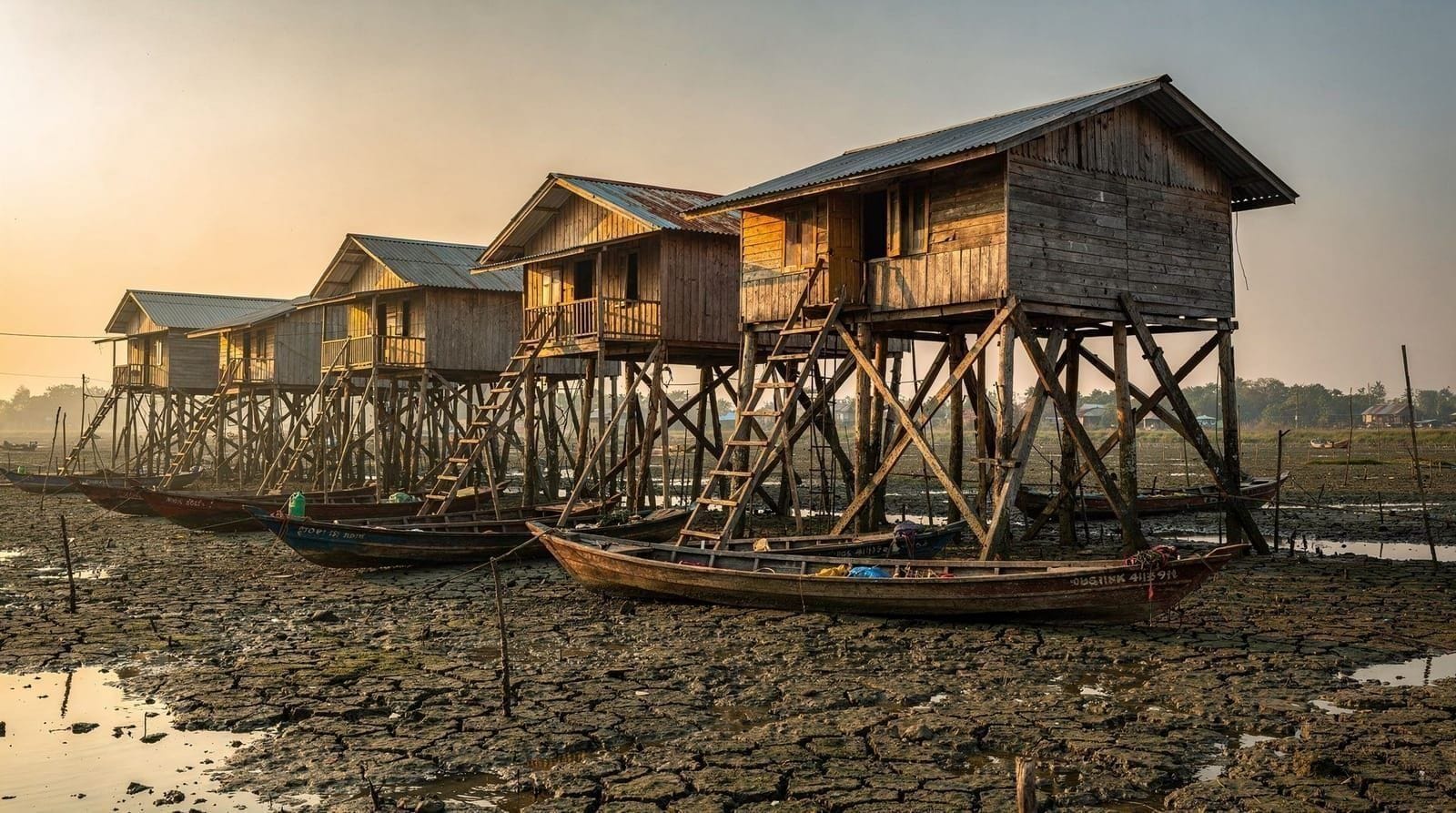
Because Chong Kneas sits closer to the lake’s main channel than Kompong Phluk or Kompong Khleang, its physical location shifts noticeably with the season — during the dry months (roughly February-June), as the Tonlé Sap’s water level drops, the entire floating community, boat docks included, relocates further out toward the retreating shoreline, sometimes a considerable distance from where it sits during high water. This seasonal relocation is a genuine engineering feat in its own right (entire floating structures, moved and reconnected as the water recedes), though it’s rarely presented as a highlight of the visit the way it arguably should be, given how unusual this kind of adaptive infrastructure is anywhere else in the world.
What’s actually there, if you go anyway
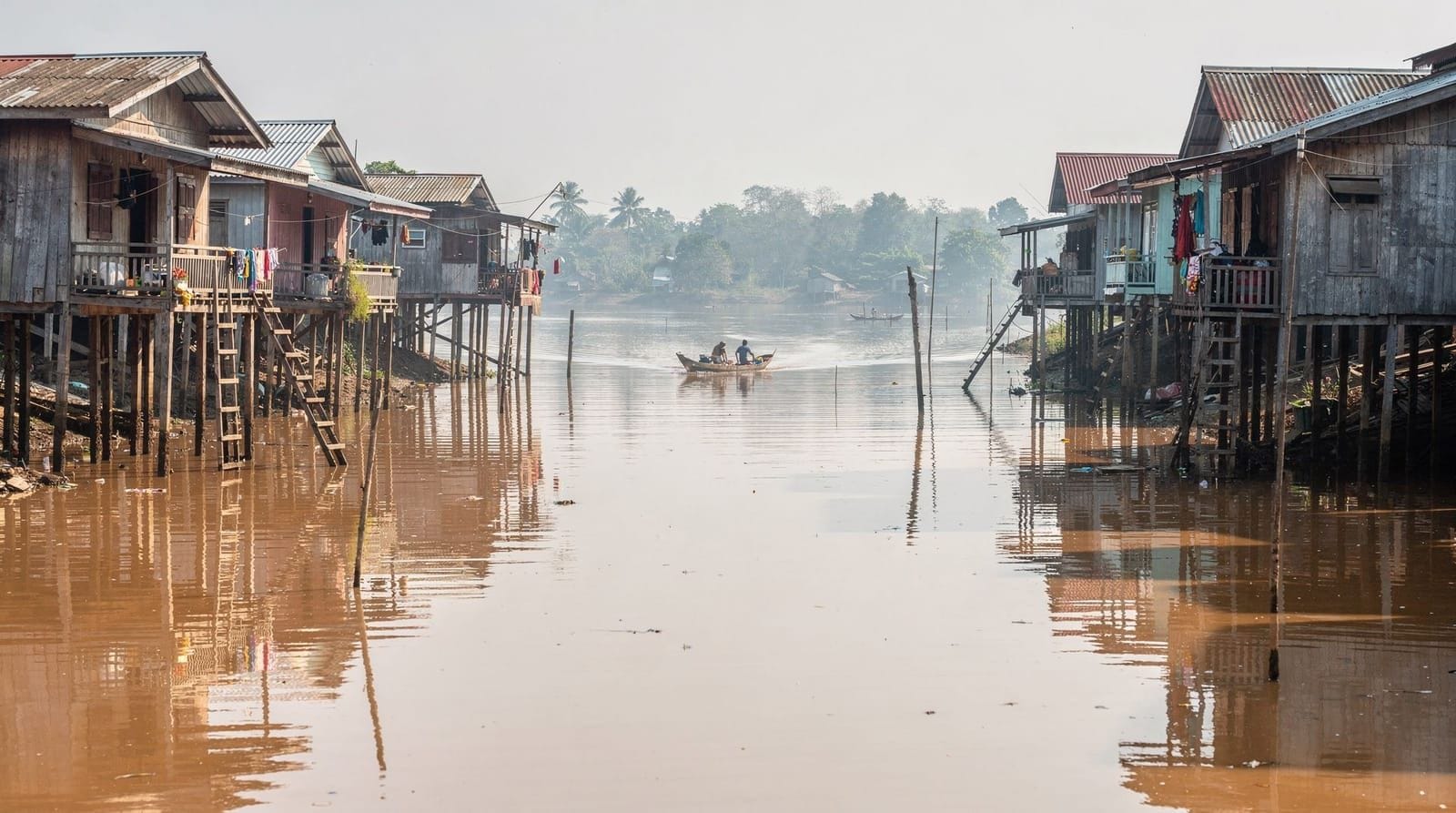
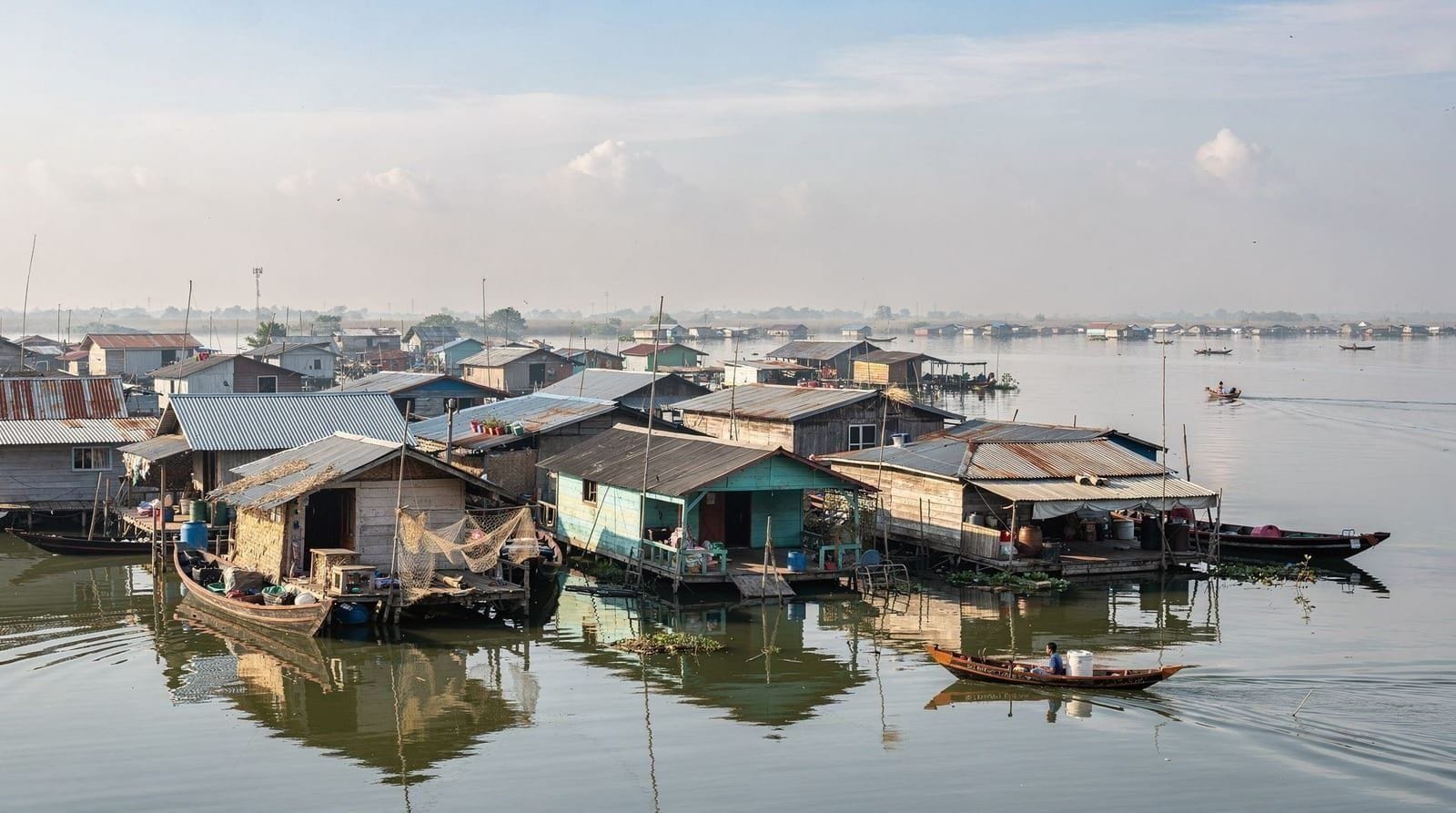
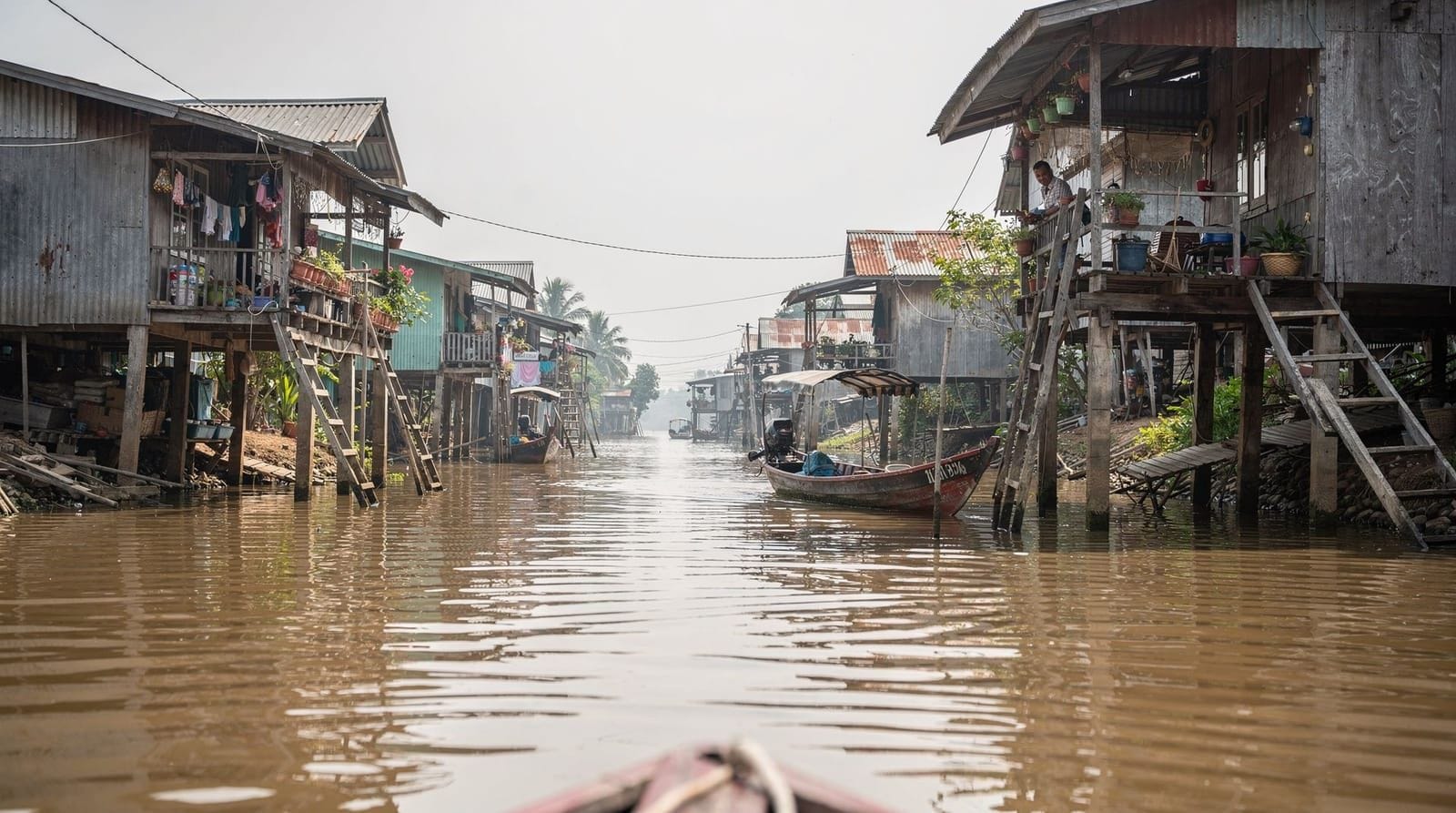
Chong Kneas itself is a floating community on the Tonlé Sap’s edge, with houses, shops, a floating market and often a floating basketball court or school genuinely used by residents, distinct from the specific “orphanage” stops described above. The lake itself is impressive in scale regardless of which village you visit it from. If you do choose Chong Kneas — for genuine time constraints, or simply because you’re aware of the caveats and comfortable navigating them — going with a pre-arranged, fixed-price tour and firmly declining any unplanned “donation” stops gets you a reasonable version of the experience.
Why Chong Kneas developed this reputation in the first place
Chong Kneas’ problems aren’t accidental — they’re a fairly predictable outcome of its position as the closest, easiest floating village to reach from Siem Reap, which for years made it the default option pushed by tuk-tuk drivers, guesthouses and budget tour operators earning commissions on boat bookings. That volume of low-oversight, commission-driven bookings created the conditions for exactly the kind of pricing opacity and pressure-sale tactics documented above: operators competing primarily on who could extract the most from a captive, one-time tourist audience rather than on service quality or repeat business, since most Chong Kneas visitors are first-time, one-off bookings unlikely to return or leave detailed public feedback.
Kompong Phluk and Kompong Khleang, by requiring more deliberate advance planning and longer travel commitments, have simply filtered out much of this opportunistic volume — visitors who make it that far tend to have researched their options more carefully, which in turn supports a more accountable, better-reviewed set of operators.
What responsible travel guidance generally says about this pattern
Cambodia-focused responsible tourism organizations and multiple independent travel journalists have specifically flagged floating “orphanage” tourism as a broader ethical concern, not unique to Chong Kneas — the core problem being that displaying children to tourists for donations, regardless of the specific site’s legitimacy, normalizes a transactional relationship with vulnerable children that child protection experts generally advise against supporting in any form, verified or not.
This is a stronger and more general concern than simply “you might get overcharged,” and it’s worth knowing even if you ultimately decide Chong Kneas’ convenience outweighs the other issues for your trip. If you do want to support genuine, vetted child welfare or education causes in Cambodia, established, transparent organizations with verifiable track records are a considerably better channel than an impromptu boat-tour donation stop.
The one legitimate reason to still use the Chong Kneas boat launch
There’s a genuine exception worth knowing about: the Chong Kneas pier is also the departure point for boats heading to Prek Toal, a bird sanctuary and core zone of the Tonlé Sap Biosphere Reserve, home to some of Southeast Asia’s largest breeding colonies of globally threatened waterbirds, including spot-billed pelicans, milky storks and greater adjutants. A Prek Toal trip typically launches from the same general harbor area as standard Chong Kneas village tours but heads in a different direction across the lake, run by more specialized operators (often connected to the Sam Veasna Center or similar conservation-linked outfits) rather than the volume tour operators responsible for the village’s tourist-trap reputation.
If birdwatching or a more conservation-focused lake visit interests you, booking specifically through a Prek Toal-focused operator — not a generic “Chong Kneas floating village” package — gets you a genuinely different, better-regarded experience departing from the same physical location. See our Prek Toal bird sanctuary guide for details.
How to spot a legitimate operator before booking
A few concrete signals separate a reasonable Chong Kneas (or Prek Toal) booking from a problematic one: the itinerary is specific and written down in advance, rather than “boat tour, flexible,” with no vague donation or shopping stops listed; the price is quoted as a total, not “per boat” with a footnote about per-person surcharges once aboard; reviews mention the operator by name and describe a consistent experience rather than a mix of wildly different accounts (a sign of subcontracted, inconsistent boat crews); and the booking channel is a known platform or established tour company rather than a tuk-tuk driver’s personal recommendation made on the spot, since drivers often receive a commission tied to steering visitors toward specific boat operators regardless of quality.
What we recommend instead
For most visitors, we recommend Kompong Phluk — a 30 km, 45-minute-to-1-hour trip that offers a meaningfully better balance of accessibility and authenticity, with none of Chong Kneas’ documented pressure-sale reputation. For visitors who want the least touristy, most “real working town” experience and don’t mind the extra distance, Kompong Khleang (50 km, 1-1.5 hours) is the strongest option. Our full comparison guide of all three villages walks through the trade-offs in more detail, and our broader Tonlé Sap floating villages guide covers booking and safety practices across all three.
If you’re weighing this decision as part of a longer trip, our tourist traps guide covers Chong Kneas alongside other commonly-flagged patterns in the region, including tuk-tuk fare padding and forced shop stops.
What locals and long-term expats generally say
Ask a Siem Reap-based guesthouse owner or expat guide privately (rather than a tuk-tuk driver with a commission incentive) which floating village they’d recommend to a visiting relative, and Chong Kneas rarely comes up as the first answer — the pattern described above is widely enough known locally that it functions as something close to an open secret in the town’s tourism industry, even though it remains a heavily marketed option to first-time arrivals who haven’t yet had the chance to compare notes.
Practical notes
If you do go, agree the full price — including any claimed “government fees” — before boarding, ideally in writing or via a booking confirmation. Decline firmly and politely if steered toward an unplanned donation stop; a simple “no, thank you” repeated calmly is usually sufficient. Life jackets should be provided; treat their absence as a red flag about the operator generally, not just a safety oversight.
Frequently asked questions about Chong Kneas
Is Chong Kneas safe to visit?
Physically, yes — the safety concern here is commercial (overpricing, pressure-sale tactics), not personal safety. Standard water-safety precautions (life jackets, a reputable boat operator) apply as anywhere.
Are the floating orphanages at Chong Kneas legitimate?
Multiple independent reports and investigations have raised serious concerns about floating “orphanage” and “school” stops along the Chong Kneas boat route, describing them as tourist-money collection points rather than transparent, well-run charitable operations. We recommend declining any unplanned donation requests during a boat tour.
Should I visit Chong Kneas at all?
We recommend Kompong Phluk or Kompong Khleang instead for most visitors, given Chong Kneas’ documented pattern of pressure sales and inconsistent pricing. If proximity is a hard constraint, book a fixed-price tour in advance and decline unplanned stops.
How much does a Chong Kneas boat tour cost?
Pricing is notably inconsistent and a common source of complaints — quoted rates sometimes turn out to be per-person rather than per-boat once on the water. Confirming the total price in writing before boarding is the best protection.
What’s the real difference between Chong Kneas and Kompong Phluk?
Chong Kneas is closer (16 km vs. 30 km) but has a well-documented reputation for pressure sales and pricing issues; Kompong Phluk takes slightly longer to reach but offers a meaningfully more comfortable, transparent experience.
Is it rude to decline a donation request on a Chong Kneas tour?
No — declining politely and firmly is a reasonable, common response, and doesn’t require an explanation. Reputable operators won’t pressure you further once you’ve said no.
Why does Chong Kneas have a worse reputation than the other two floating villages?
Its proximity to Siem Reap made it the default, high-volume option for years, pushed by commission-driven tuk-tuk drivers and budget tour operators competing for one-time, first-visit tourists rather than repeat business — conditions that tend to produce exactly the pricing opacity and pressure tactics documented here. Kompong Phluk and Kompong Khleang’s longer travel requirements have filtered for more deliberate, better-informed visitors and, correspondingly, more accountable operators.
Is visiting a floating orphanage at Chong Kneas ever a good way to help local children?
Responsible tourism guidance generally advises against supporting floating or roadside “orphanage” stops of any kind, since displaying children to tourists for donations raises broader child protection concerns regardless of a specific site’s legitimacy. If supporting child welfare in Cambodia matters to you, donating to an established, transparent, vetted organization is a considerably better channel than an impromptu tour stop.
If I’ve already booked a Chong Kneas tour, what should I do?
Agree the full price in advance if you haven’t already, decline any unplanned donation or shopping detours politely but firmly, and treat the visit as a boat trip on the lake rather than an opportunity to interact closely with any “orphanage” or school stop that comes up mid-tour.
Can I switch my booking from Chong Kneas to Kompong Phluk after the fact?
Depending on how and where you booked, this is often possible — many hotels, guesthouses and tour desks can rebook a floating-village excursion to a different village with enough notice. It’s worth asking directly rather than assuming your original booking is fixed.
Is there any good reason to still go to the Chong Kneas harbor?
Yes — it’s also the departure point for boats to Prek Toal bird sanctuary, a genuinely different, conservation-focused trip run by more specialized operators than the standard village tour boats. Book specifically through a Prek Toal-focused operator rather than a generic village package if this is your interest.
How do I know if a Chong Kneas tour operator is trustworthy before booking?
Look for a specific, written itinerary with no vague “flexible” donation stops, a total price quoted upfront rather than a per-boat figure with hidden per-person surcharges, and consistent reviews naming the operator directly, rather than a same-day recommendation from a tuk-tuk driver who may be earning a commission on the referral.
Top experiences
Bookable activities with verified prices and instant confirmation on GetYourGuide.

Koh Ker: Beng Mealea and Floating Village Day Tour

Siem Reap: Floating Village, Preah Ko and Bakong Tour

Siem Reap: Floating Village Half-Day Tour
Siem Reap: Kompong Phluk Floating Village Half-Day Tour

Kompong Phluk: Tonlé Sap Floating Village Tour
More tours on Viator
Top-rated experiences with verified reviews, bookable on Viator (a Tripadvisor company).